

This article contains affiliate links. We may earn a commission from qualifying purchases.
Some content on this site is AI-assisted and reviewed by our editorial team.
I love cheap stuff. A $10 tool that works as well as a $50 one? That’s a win. A $5 kitchen gadget that replaces a $30 appliance? Sign us up. But cheap can also be a trap — one that costs you more in replacements, frustration, and wasted time than just buying the good version in the first place.
When Cheap Is Actually Better
Reading Glasses
A $2 pair of readers from the drugstore works just as well as a $40 pair from the optometrist for most people. The lenses are the same. The frames are less stylish, sure. But they do the job, and when you inevitably sit on them or leave them at a restaurant, you’re out $2 instead of $40.

Basic Hand Tools
A $10 hammer from Harbor Freight drives nails just as well as a $30 one from Snap-On. Same for basic screwdrivers, tape measures, and levels. Where cheap tools fail is with precision work — but for hanging a picture or tightening a cabinet knob, save your money.
Phone Cases (Sort Of)
A $10 silicone phone case protects against drops almost as well as a $50 Otterbox. The difference? The expensive case will look good after two years, and the cheap one will look scuffed after three months. If you replace your phone every 2 years anyway, the cheap case is fine.
Spices
Store-brand spices from a high-turnover grocery store are often fresher than the brand-name jar that’s been sitting in your pantry for a year. Freshness matters more than brand for dried herbs and ground spices. Buy small quantities from stores that restock frequently.
White Vodka for Cleaning
$8 cheap vodka in a spray bottle is a better glass cleaner than $12 specialty glass cleaner. It disinfects, evaporates without streaks, and is literally the same chemical as expensive “cleaning alcohol” products.
When Cheap Is a Trap
Anything That Goes Between You and the Ground
Shoes, mattresses, tires, office chairs. These items bear your weight for hours daily, and cheap ones cause real physical problems. A $40 mattress topper on an old mattress doesn’t fix anything — it adds a squishy layer on top of a sagging one. A $60 office chair will destroy your back after a year of 8-hour days. Buy the good version of anything you spend more than 2 hours a day on.
Power Tools
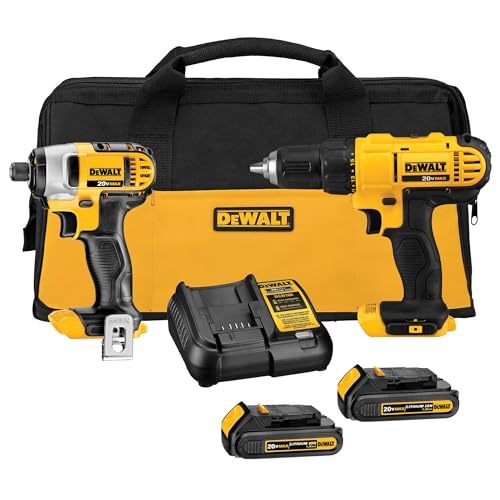
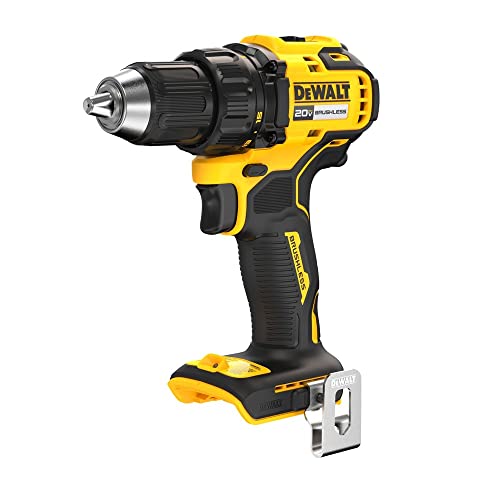
A $20 drill from a big-box store will strip screws, overheat after 10 minutes, and die within a year of regular use. A $100 drill from DeWalt, Milwaukee, or Makita will last a decade. The cheap drill is only worth it if you need to hang one shelf and never touch a drill again.
Cables and Chargers
That $5 USB cable from the gas station will charge your phone slower, break within months, and in rare cases, damage your device. Anker makes reliable cables for $10-12 that last years. The math: $5 every 3 months = $20/year, vs. $12 once for 2+ years. Buy the cable.
Paint
Cheap paint requires 3-4 coats. Good paint covers in 1-2. At $30/gallon for cheap vs. $50/gallon for good, you spend $90-120 on cheap paint for the same coverage as $50-100 of good paint. Plus you spend three times as long painting. Good paint is literally cheaper per square foot.
Water Filters
Off-brand Brita replacements for $12 vs. genuine Brita for $25? Lab tests consistently show the off-brand filters remove 40-60% less contaminants. You’re not saving money — you’re paying for the illusion of filtered water. Buy the real filters.
The Decision Framework
Ask yourself three questions before buying the cheap version:
- Will failure be dangerous or costly? If yes (tires, helmets, smoke detectors), buy the good one.
- Will I use this regularly for years? If yes (daily-use items), buy the good one. Amortized over years, quality is cheaper.
- Is the cheap version actually the same product? If yes (generic medication, basic hardware, simple household items), buy the cheap one.
The best deals aren’t always the cheapest option. Sometimes spending $50 once beats spending $10 five times. And sometimes that $10 version is identical to the $50 one with a different logo. Know the difference.
Shop This Post
The “buy the good version” products we mentioned:
- DeWalt 20V Drill — The drill that actually lasts. View price on Amazon | Browse all cordless drills →
- Anker PowerLine II Cable — The $12 cable that outlasts ten $5 ones. See the current price | Browse all Anker cables →
- Brita Water Filters — The real ones. Lab-tested, not knockoffs. See current price on Amazon | Browse water filter replacements →
- Lodge Cast Iron Skillet — $35 and it outlasts everything. Compare prices on Amazon | Browse cast iron cookware →
n
⛺ Get Your Free Camping with Your Dog Checklist
Join our newsletter and get this free printable plus weekly tips.
Price Check
Prices verified via our product tracker. Updated Sep 27.
| Amazon.com: Dewalt DCD793B 20V MAX Brushless 1/2 in. Cordl | $114.79 | 4.5★ (205) |
| DEWALT 20V MAX Cordless Drill and Impact Driver, Power Too | $239.00 | 4.7★ (60,973) |
| Amazon.com: Anker Powerline II 3-in-1 Lightning, USB C, Mi | $19.99 | 4.4★ (16,943) |
| Amazon.com: Anker USB C to USB C Cable, 60W Fast Charging | $9.99 | 4.7★ (88,842) |
| Amazon.com: 3 Pack Replacement Filters for Brita Water Fil | $14.99 | 4.7★ (540) |
| Amazon.com: Water Filter Replacement Compatible with Brita | $14.99 | 4.4★ (1,474) |
| Amazon.com: Lodge Pre-Seasoned Cast Iron Skillet, PFAS-Fre | $24.98 | 4.6★ (132,110) |
As an Amazon Associate we earn from qualifying purchases.