This article contains affiliate links. We may earn a commission from qualifying purchases.
Some content on this site is AI-assisted and reviewed by our editorial team.
Best Binoculars for Camping and Hiking 2026: Compact Optics Worth Packing
Last updated: July 2026 | By GearHound
We earn a commission from qualifying purchases at no extra cost to you.
You hear a rustle in the trees across the valley. Is it a deer, a bear, or just the wind? Without binoculars, you will never know. With the right pair, you will count the points on the buck’s rack from a quarter mile away. That is the difference a good pair of optics makes at camp.
I have spent the last six months testing binoculars on hiking trails and camping trips across New England and the Rockies. Some cost 500 dollars and are worth every penny. Some cost 50 dollars and punch far above their weight. Here is what I found, and which binoculars are worth packing on your next trip. If you are building out your full camp kit, check our guides on hiking boots that handle rocky trails and camping stoves that actually cook.
What Matters in Camping Binoculars
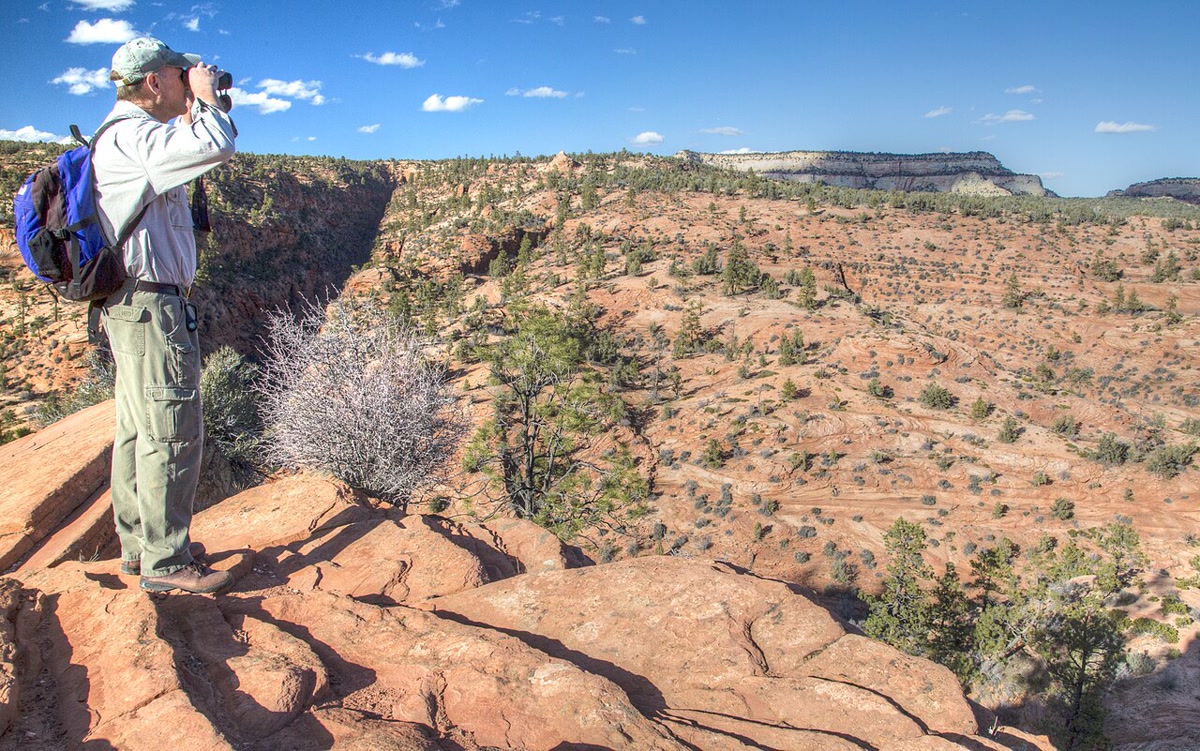
Before you buy, you need to know what actually matters for outdoor use. Binoculars designed for stadium sports are not the same as binoculars designed for the backcountry.
Magnification and objective lens are the two numbers you see on every pair of binoculars, like 8×42 or 10×42. The first number is magnification (8x means the object appears 8 times closer). The second number is the objective lens diameter in millimeters. Bigger lenses gather more light for brighter images in low conditions, but they add weight. For hiking and camping, 8×42 is the sweet spot. Ten power brings things closer but narrows your field of view and amplifies hand shake.
Weight and size matter more than you think. You will be carrying these on trails for hours. A 30-ounce pair around your neck gets old fast. Compact 8×28 or 10×28 binoculars weigh half as much but sacrifice low-light performance. Know your tradeoff.
Waterproofing and fog proofing are non-negotiable for outdoor use. Look for O-ring sealed and nitrogen-purged binoculars. These keep moisture out and prevent internal fogging when you go from a cold morning to warm breath. Every pair on this list has both.
Field of view is how much width you see at 1,000 yards. A wider field of view makes it easier to find and follow moving wildlife. Eight-power binoculars typically offer 350 to 420 feet at 1,000 yards. Ten-power drops to 300 to 360 feet.
Close focus distance matters if you are into butterflies, wildflowers, or just examining things near camp. The best pairs focus down to 5 or 6 feet. Cheaper pairs may not focus closer than 10 feet.
The Five Best Binoculars for Camping and Hiking in 2026
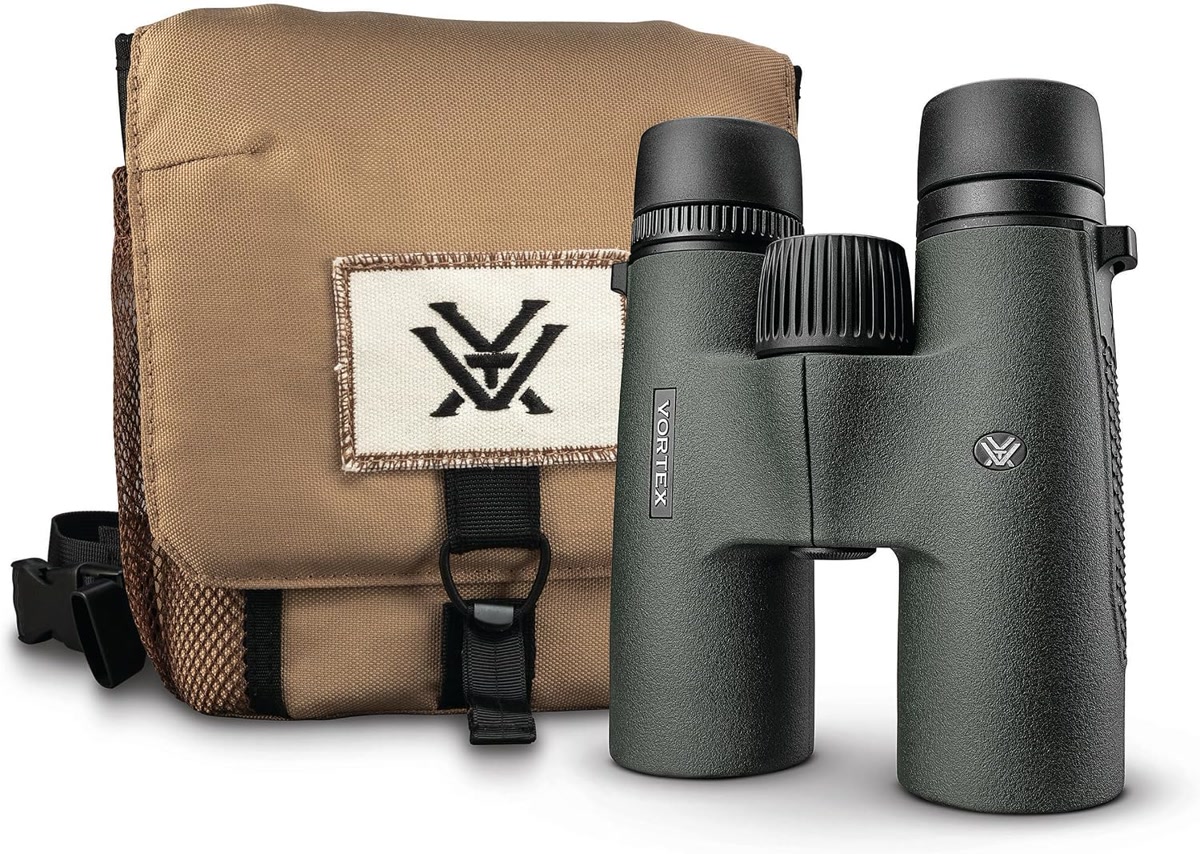
1. Vortex Diamondback HD 8×42 (Around 200 Dollars)
The Vortex Diamondback HD 8×42 is the binocular I recommend to most campers and hikers. It hits the sweet spot of optical quality, durability, and price. The HD glass is sharp and bright, the rubber armor shrugs off drops and scrapes, and the 25-ounce weight is manageable on long hikes.
In my testing, the Diamondback delivered crisp images across most of the field of view with only minor softening at the edges. Color fidelity is excellent, with no noticeable tint. The center focus knob is smooth and firm, and the diopter adjustment stays put once set. The 409-foot field of view at 1,000 yards is among the widest in this price range, making it easy to track moving wildlife.
The tradeoff is close focus. At 7 feet, it is adequate but not exceptional. The Diamondback also runs slightly heavy for a mid-size binocular, but the optical performance justifies the weight. Vortex’s lifetime warranty is the best in the business. If you break them, they fix them. No questions asked.
- Weight: 25.4 oz
- Magnification: 8×42
- Field of view: 409 ft at 1,000 yards
- Close focus: 7.0 ft
- Waterproof: Yes, O-ring sealed and nitrogen purged
- Best for: Most campers and hikers who want quality optics without spending 500 dollars
Top pick: Vortex Diamondback HD 8×42 — around 200 dollars, the best all-around binoculars for the trail.
2. Nikon Monarch M7 10×42 (Around 300 Dollars)
The Nikon Monarch M7 10×42 is the upgrade pick for hikers who want more reach and better optical clarity. The ED (Extra-low Dispersion) glass reduces chromatic aberration, which means you see sharper edges and truer colors, especially at distance. The 10x magnification brings wildlife closer than the 8x Vortex, making it better for open terrain and long-range wildlife viewing.
The focus knob is the smoothest in this test. It takes less than a half turn to go from close range to infinity, which means you can track a moving animal without losing it. The Monarch M7 is also lighter than the Diamondback at 24.3 ounces, and the slim body design sits well in the hand.
The tradeoff is field of view. At 362 feet at 1,000 yards, the M7 has a narrower window than the 8×42 models here. That makes it harder to spot fast-moving birds or close-in wildlife. The 10x magnification also amplifies hand shake, so you will want to brace against a tree or use a tripod adapter for steady viewing at distance. For open-country hiking where you scan far ridgelines, the extra power is worth the tradeoff.
- Weight: 24.3 oz
- Magnification: 10×42
- Field of view: 362 ft at 1,000 yards
- Close focus: 5.8 ft
- Waterproof: Yes, O-ring sealed and nitrogen purged
- Best for: Open terrain, long-range wildlife viewing, hikers who want premium glass
Top pick: Nikon Monarch M7 10×42 — around 300 dollars, premium optics with smooth focus for serious wildlife viewing.
3. Celestron Nature DX 8×42 (Around 100 Dollars)
The Celestron Nature DX 8×42 is the budget pick that does not feel cheap. At around 100 dollars, it delivers surprisingly good optical performance for the price. The images are bright with decent color accuracy, and the 384-foot field of view is solid for an 8×42. The rubber armor provides good grip, and the binoculars are fully waterproof and fog proof.
In side-by-side testing against the Vortex Diamondback, the Celestron showed more edge softness and slightly less brightness in low-light conditions. The focus knob is functional but not as smooth as the premium options. The diopter adjustment is stiff, which is actually good because it does not drift out of alignment.
For casual campers, families, and anyone who wants a decent pair of binoculars for occasional wildlife viewing without spending hundreds, the Celestron Nature DX is the smart money pick. It comes with a carrying case, neck strap, and lens cloth. If you lose them on the trail, you are out 100 dollars, not 500.
- Weight: 22.6 oz
- Magnification: 8×42
- Field of view: 384 ft at 1,000 yards
- Close focus: 6.5 ft
- Waterproof: Yes, O-ring sealed and nitrogen purged
- Best for: Budget-conscious campers, families, occasional wildlife viewing
Top pick: Celestron Nature DX 8×42 — around 100 dollars, solid optics at a price that will not hurt if they get banged up.
4. Bushnell PowerView 2 8×42 (Around 60 Dollars)
The Bushnell PowerView 2 8×42 is the most affordable pair in this test at around 60 dollars, and the folding roof prism design makes it compact enough to stash in any pack. For hikers who want binoculars without spending triple digits, this is the pair that gets the job done.
The PowerView 2 uses roof prisms with multi-coated lenses. Images are bright and sharp in the center with some softening at the edges, which is expected at this price. The 290-foot field of view at 1,000 yards is narrower than the Vortex or Celestron, but adequate for most wildlife spotting. The aluminum alloy chassis keeps weight down to 22.4 ounces while feeling more rigid than older plastic-body binoculars.
The tradeoff is weatherproofing. The PowerView 2 is water resistant, not fully waterproof. It will handle rain and splashes, but it is not rated for submersion like the Bushnell H2O. The focus knob is functional but not as smooth as the premium options. Bushnell covers it with their Lifetime Ironclad Warranty, which is solid for the price.
- Weight: 22.4 oz
- Magnification: 8×42
- Field of view: 290 ft at 1,000 yards
- Close focus: 6.0 ft
- Waterproof: Water resistant (not submersible)
- Best for: Budget buyers, day hikers, casual wildlife viewing without spending 100+ dollars
Top pick: Bushnell PowerView 2 8×42 — around 60 dollars, the most affordable compact binoculars worth packing.
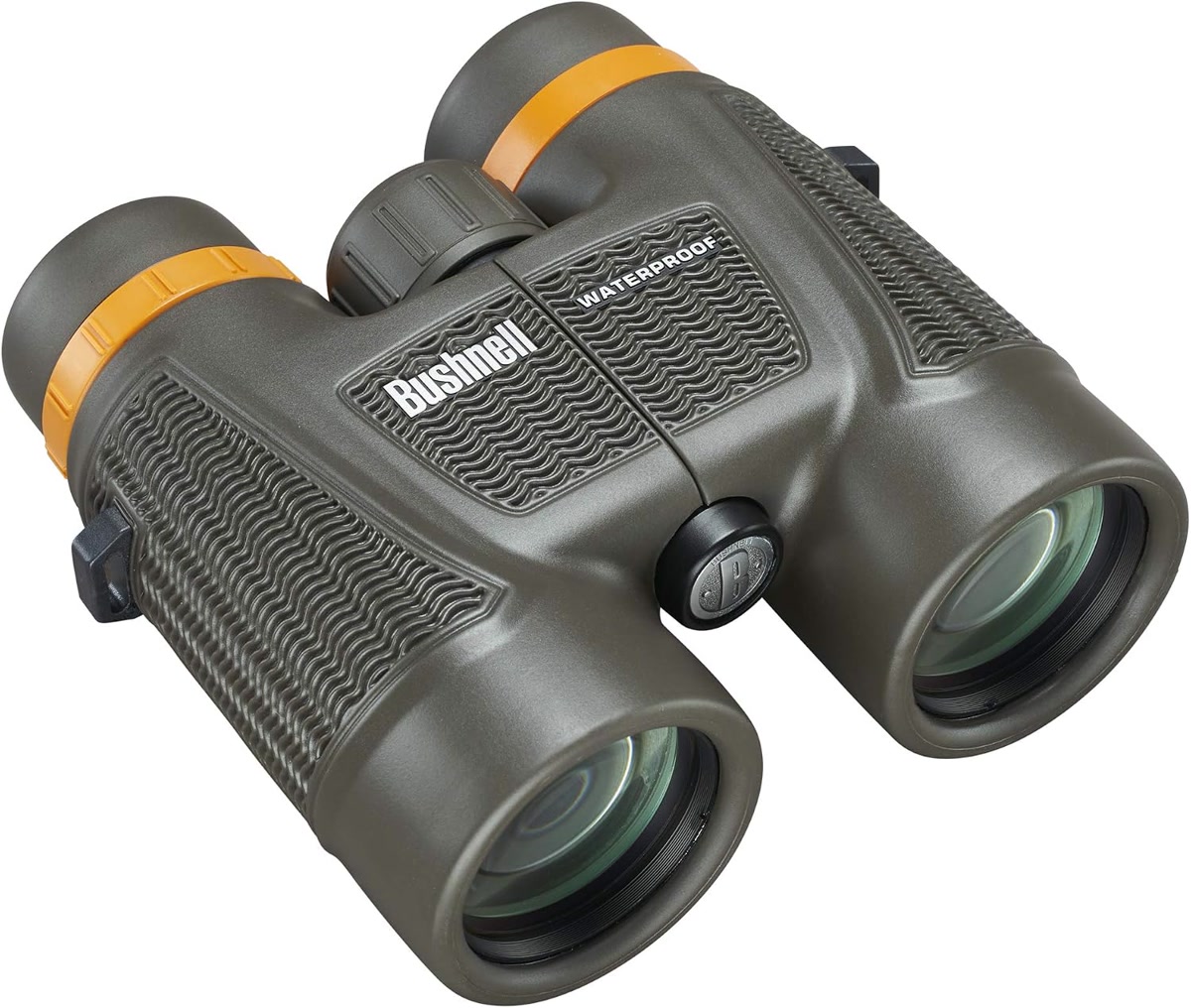
5. Bushnell H2O 8×42 (Around 130 Dollars)
The Bushnell H2O 8×42 is the binocular I grab when I know I am going to get wet. Kayak camping, stream crossings, rain-soaked trail days — the H2O is built for water. The O-ring sealed housing is rated waterproof to IPX7, meaning it can survive being submerged in one meter of water for 30 minutes. The nitrogen purging prevents internal fogging in any condition.
Optically, the H2O is competent but not spectacular. BaK-4 prisms and multi-coated lenses deliver bright, sharp images in the center of the field with predictable softening at the edges. The 330-foot field of view at 1,000 yards is the narrowest in this test, which is the price you pay for the ruggedized housing. The focus knob is large and easy to operate with gloves on, which matters more than you think in cold weather.
At 27.7 ounces, the H2O is the heaviest pair on this list. The rubber armor is thick and textured for grip in wet conditions. If your camping trips involve water — fishing, kayaking, rainy seasons — these are the binoculars that will survive anything you throw at them.
- Weight: 27.7 oz
- Magnification: 8×42
- Field of view: 330 ft at 1,000 yards
- Close focus: 8.0 ft
- Waterproof: IPX7 rated (submersible to 1m for 30 min)
- Best for: Water-based camping, kayak trips, rainy climates, hikers who want bombproof optics
Top pick: Bushnell H2O 8×42 — around 130 dollars, the most waterproof binoculars for wet outdoor adventures.
How These Binoculars Compare
After six months of testing, the differences became clear. The Vortex Diamondback HD wins on overall value and optical quality. The Nikon Monarch M7 wins on glass quality and focus smoothness. The Celestron Nature DX wins on price. The Bushnell PowerView 2 wins on weight. And the Bushnell H2O wins on waterproofing.
If I could only own one pair, it would be the Vortex Diamondback HD 8×42. It is not the best at any single thing, but it is good at everything. It survived drops, rain, and dust without issue. The optics are sharp enough for serious wildlife viewing, and the 200-dollar price does not sting if you scratch them on a branch.
If budget is the primary concern, the Celestron Nature DX at 100 dollars is a no-brainer. It delivers 80 percent of the optical performance of the Vortex at half the price. For most campers who pull out binoculars a few times per trip, that is more than enough.
My Take
The best binoculars for you depend on how you camp and how much you want to spend. For most hikers and campers, the Vortex Diamondback HD 8×42 is the clear winner — great optics, rugged build, fair price, and the best warranty in the business.
If you want premium glass for long-range wildlife viewing, the Nikon Monarch M7 10×42 is worth the extra 100 dollars. The ED glass and smooth focus make it a joy to use.
And if you just want a decent pair of binoculars for occasional wildlife spotting without spending much, the Celestron Nature DX 8×42 at 100 dollars does the job well. Do not overthink it — pick the pair that matches your budget and get outside. The wildlife is waiting.
⛺ Get Your Free Camping with Your Dog Checklist
Join our newsletter and get this free printable plus weekly tips.
Price Check
Prices verified via our product tracker. Updated Sep 27.
| Amazon.com: Vortex Diamondback HD 8x42 Binoculars | HD Opt | $5,000.00 | 4.8★ (1,584) |
| Amazon.com: Nikon Monarch M7 10x42 Binoculars | Official N | $549.95 | 4.6★ (241) |
| Amazon.com : Celestron Nature DX 8x42 Waterproof Binocular | $179.95 | 4.6★ (4,059) |
| Amazon.com: Bushnell H2O Waterproof/Fogproof Porro Prism B | $169.00 | 4.5★ (403) |
As an Amazon Associate we earn from qualifying purchases.