
This article contains affiliate links. We may earn a commission from qualifying purchases.
Some content on this site is AI-assisted and reviewed by our editorial team.
Best Camp Soap 2026: Biodegradable Soaps That Actually Clean Outdoors
By GearHound
For a long time I did not carry soap on backpacking trips. I figured I could go a few days without washing — it was camping, not a hotel. Then I did a 5-day trip where I had to handle raw chicken from a cooler on day one, and by day three my hands smelled so bad I could not eat without losing my appetite. That was when soap became a permanent item in my pack.
Camp soap is not complicated, but there are a few things that matter — mainly that it needs to be biodegradable so you are not contaminating water sources, and concentrated so a small bottle lasts a full trip. Here is what to look for.
Why Biodegradable Matters
Regular dish soap, body wash, and shampoo contain surfactants and chemicals that do not break down quickly in the environment. If you wash with them at a campsite, the runoff ends up in soil and eventually in streams. Biodegradable camp soaps use plant-based ingredients that break down in a matter of days, not years.
Even with biodegradable soap, you should never wash directly in a stream or lake. Always carry water at least 200 feet from the water source, wash there, and dispose of the soapy water by scattering it on the ground. Soil filters biodegradable soap; water does not.
What to Look For
- Biodegradable: Non-negotiable. If the label does not say biodegradable, leave it at home.
- Concentrated: A few drops should be enough for a wash. Super-concentrated soaps last longer and weigh less because you carry less liquid.
- Multi-purpose: The best camp soaps work for dishes, hands, body, hair, and even clothing. One bottle, everything clean.
- Unscented or lightly scented: Strong fragrances attract insects and animals. Peppermint is OK (it actually repels some insects), but avoid floral or fruity scents in bear country.
- Bottle design: Look for a leak-proof cap. Soapy gear is a mess. Squeeze bottles with flip caps are better than screw-top bottles.
The Best Camp Soap Overall
Sea to Summit Wilderness Wash
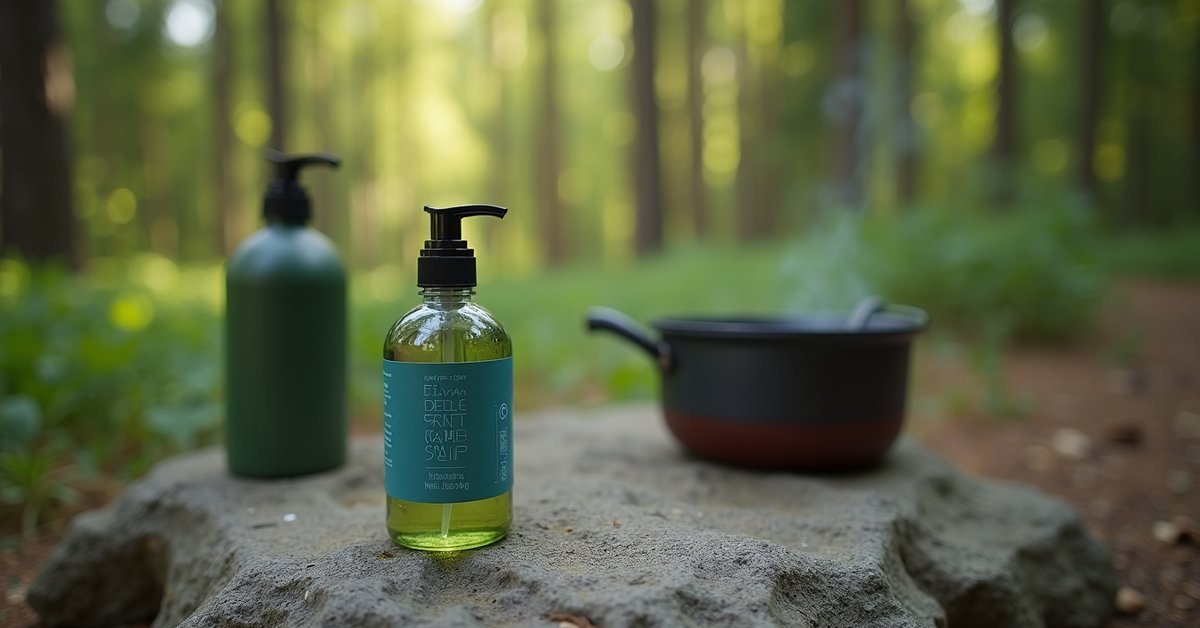
The Sea to Summit Wilderness Wash is the most popular camp soap for a reason. It is a super-concentrated liquid soap that works for dishes, hands, body, hair, and clothing. A small 3-ounce bottle is enough for a week-long trip because you only need a few drops per wash.
It is biodegradable, phosphate-free, and paraben-free. The formula is gentle on skin but tough enough to clean greasy cookware. The bottle is a tough squeeze design with a flip cap that has not leaked in my pack across dozens of trips.
If you want one soap that does everything and lasts, this is the one.
Compare current prices on Amazon
The Best Budget Camp Soap
Coghlan’s Biodegradable Camp Soap
Coghlan’s has been making basic camp gear for decades, and their biodegradable camp soap is about as simple as it gets. A 4-ounce bottle of unscented liquid soap that works for dishes, hands, and body. It is not as concentrated as the Sea to Summit — you need more per wash — but at under $5, it is hard to beat for the price.
The bottle is a basic squeeze design. It works, but the cap is not as secure as the Sea to Summit. I put it in a ziplock bag in my pack just in case. For weekend trips or car camping where weight does not matter, Coghlan’s is fine.
See price and reviews on Amazon
The Best Multi-Purpose Soap
Dr. Bronner’s Pure-Castile Liquid Soap
Dr. Bronner’s is not technically a camp soap — it is a general-purpose castile soap that happens to be perfect for camping. The 18-in-1 uses listed on the bottle include face, body, hair, laundry, pets, and dishes. It is made with organic oils, biodegradable, and concentrated enough that a 2-ounce travel bottle lasts for weeks.
The peppermint scent is the classic choice. It is refreshing, and peppermint oil has mild insect-repellent properties. In bear country, go with the unscented baby mild version instead.
The downside: it is not as good at cutting grease as dedicated camp soaps like the Sea to Summit. For really greasy cookware, you need more soap and hotter water. But for everything else — body, hair, hands, clothes — it is excellent.
Check the latest price on Amazon
The Best Travel Size Camp Soap
Sea to Summit Trek and Travel Liquid Soap
The Trek and Travel is the smaller sibling of the Wilderness Wash — a 3-ounce TSA carry-on compliant bottle with a super-concentrated formula. It has a light green tea fragrance (not strong enough to attract bugs) and a tough bottle with a tight-sealing lid.
It is the same basic formula as the Wilderness Wash but in a travel-specific size. If you are flying to a trailhead and want a soap you can carry through airport security, this is the one. For backpacking, it is also the lightest option — 3 ounces is plenty for a week.
The Best for Dishwashing Only
Coghlan’s Camp Soap 2 oz
If you only need soap for dishes and gear — not body — the 2-ounce Coghlan’s is the smallest, cheapest option. It is a basic biodegradable liquid soap in a refillable squeeze bottle. Not as versatile as the Sea to Summit or Dr. Bronner’s, but for keeping cookware clean on a weekend trip, it works.
At 2 ounces, it is the lightest soap in this guide. The bottle is cheap and the cap can leak, so store it in a plastic bag. For the price and weight, it is a reasonable choice for short trips where you only need to wash dishes.
See price and reviews on Amazon
How to Wash at Camp Without Harming the Environment
Carrying biodegradable soap is only half the equation. How you use it matters just as much:
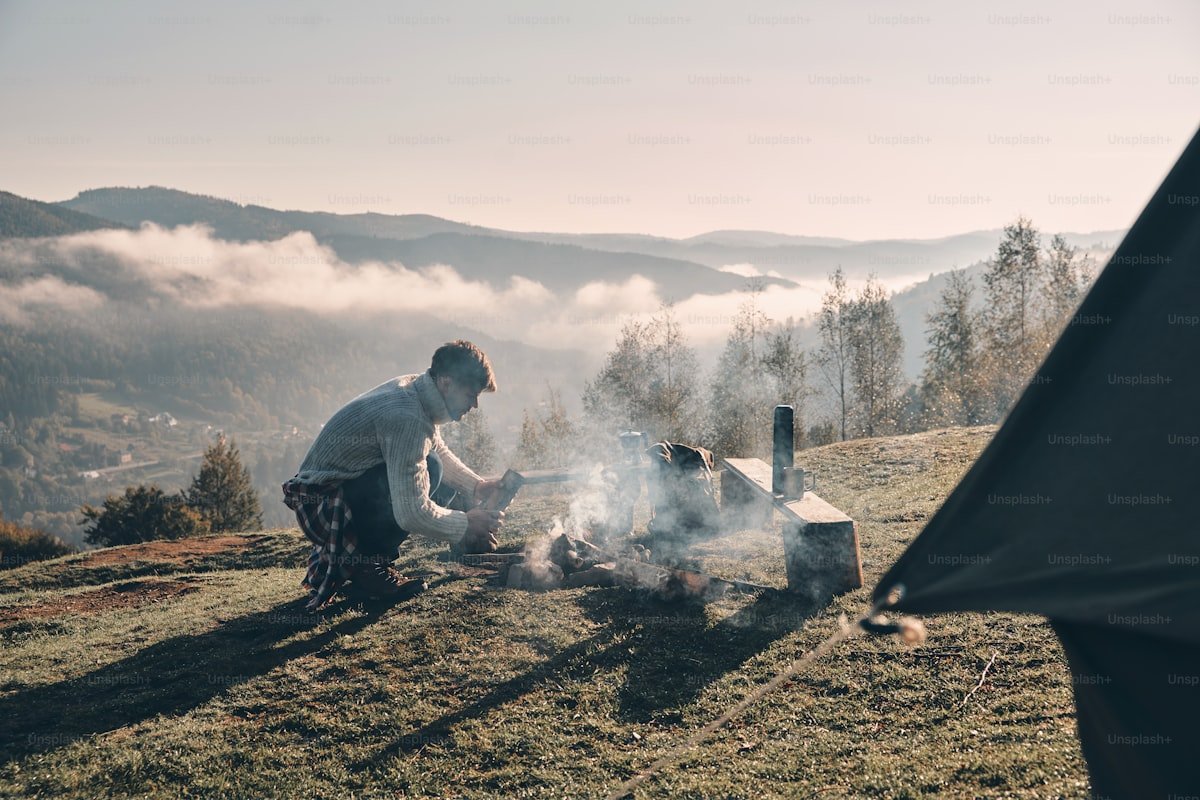
- Carry water away from the source. Fill a water bag or bottle, walk at least 200 feet (about 70 steps) from any stream, lake, or spring.
- Use a basin or pot. Wash dishes in a cook pot or collapsible basin, not in the stream.
- Scatter grey water. Dispose of soapy water by scattering it broadly on the ground. Do not pour it in a concentrated spot or near a water source.
- Strain food particles. If washing dishes, scrape food into a trash bag before washing. Do not put food waste in the water or on the ground — it attracts animals.
- Use as little soap as possible. Camp soap is concentrated. A few drops in a liter of water is usually enough.
What I Recommend
For most campers: the Sea to Summit Wilderness Wash. It is the best all-around camp soap — concentrated, biodegradable, multi-purpose, and reliable. For budget campers: Coghlan’s at under $5. For people who want one soap for everything in life, not just camping: Dr. Bronner’s.
A small bottle of camp soap takes up almost no space and weighs almost nothing. But it makes a multi-day trip significantly more pleasant — clean hands, clean dishes, clean body. Worth carrying.
For more camp essentials, see our guides to camp tables, emergency blankets, and camp stoves.
GearHound is reader-supported. When you buy through links on this site, we may earn an affiliate commission at no extra cost to you.
⛺ Get Your Free Camping with Your Dog Checklist
Join our newsletter and get this free printable plus weekly tips.
Price Check
Prices verified via our product tracker. Updated Sep 27.
| Amazon.com: Sea to Summit Wilderness Wash Liquid Camp Soap | $21.90 | 4.6★ (331) |
| Amazon.com : Dr. Bronner's Peppermint Pure-Castile Liquid | $35.00 | 4.8★ |
As an Amazon Associate we earn from qualifying purchases.