This article contains affiliate links. We may earn a commission from qualifying purchases.
Some content on this site is AI-assisted and reviewed by our editorial team.
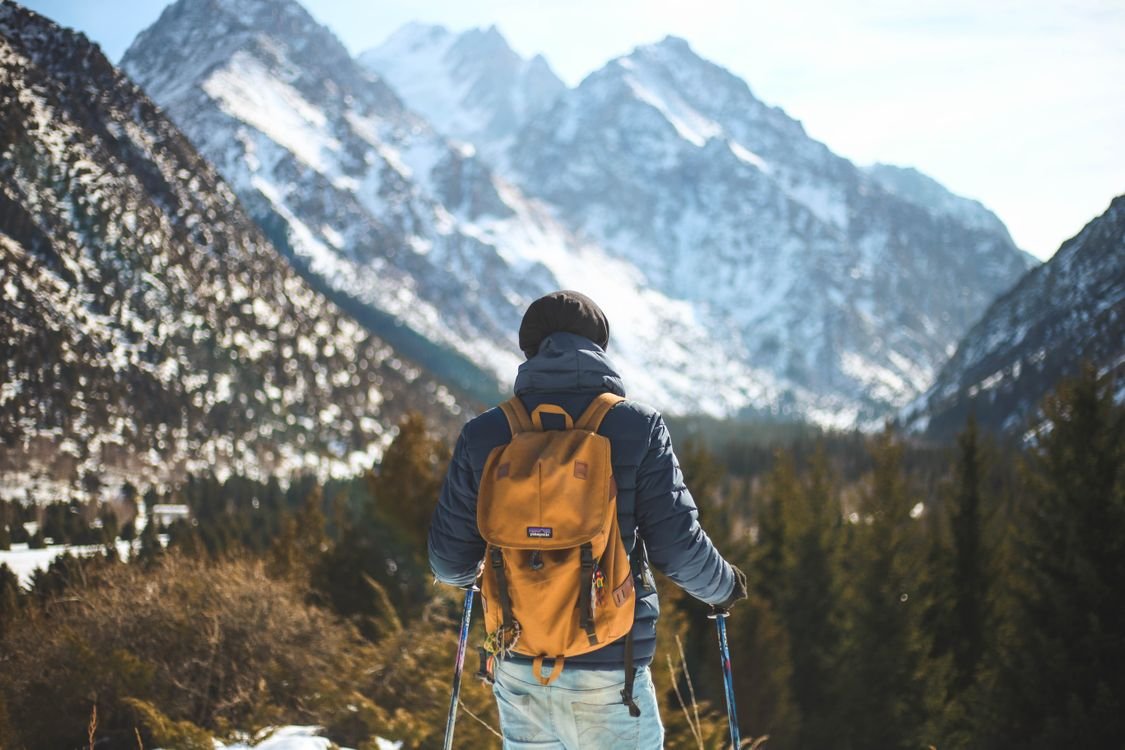
Why Packing Your Backpack Correctly Matters More Than You Think
Most backpackers pack their bag the same way every trip: shove everything in, sit on the lid, and hope the zipper holds. This works until it does not. A poorly packed backpack shifts weight as you hike, pulls your shoulders forward, causes back pain after 3 miles, and makes it impossible to find your rain jacket when the sky opens up. Add a dog to the mix — with their food, water, first aid kit, and gear — and bad packing becomes a serious problem.
The way you pack your backpack affects your balance on technical terrain, your access to essential gear, and your energy expenditure over a full day. Good packing reduces perceived pack weight by 10-15 percent. This guide covers the principles of backpack weight distribution, how to integrate dog gear into your load, and the specific order to pack everything for a smooth trail day.
The Three Zones of Backpack Packing
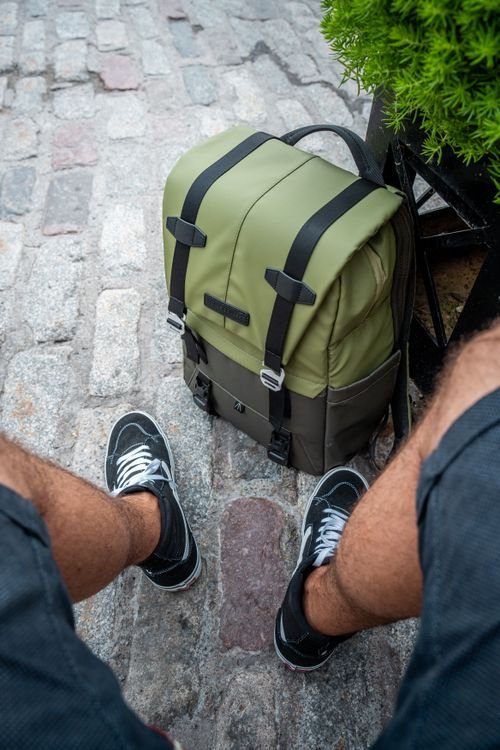
Every backpack has three packing zones, and using them correctly is the single most important thing you can do for comfort and balance.
Bottom zone (lightweight, bulky items): Your sleeping bag goes here, along with any clothing you only need at camp. This zone is about 20 percent of your pack volume. Items here should be things you do not need until you make camp. The sleeping bag is the heaviest item that has no urgency — it can live at the bottom of your pack all day without causing problems.
Middle zone (heavy items, close to your spine): This is the core of your pack. Your heaviest items — food, water, stove fuel, bear canister — go here, positioned as close to your spine and as high in the pack as possible. Heavy items in the middle keep your center of gravity over your hips instead of pulling you backward. This is the most common packing mistake: people put heavy food bags at the top or bottom instead of the middle, which causes the pack to swing with every step.
Top zone (lighter items you need during the day): Your rain jacket, first aid kit, snacks, map, and water filter go here. These are items you might need without fully unpacking. The top zone should be light — under 3 pounds total. Heavy items at the top pull your shoulders down and cause neck pain.
How to Add Dog Gear to Your Pack
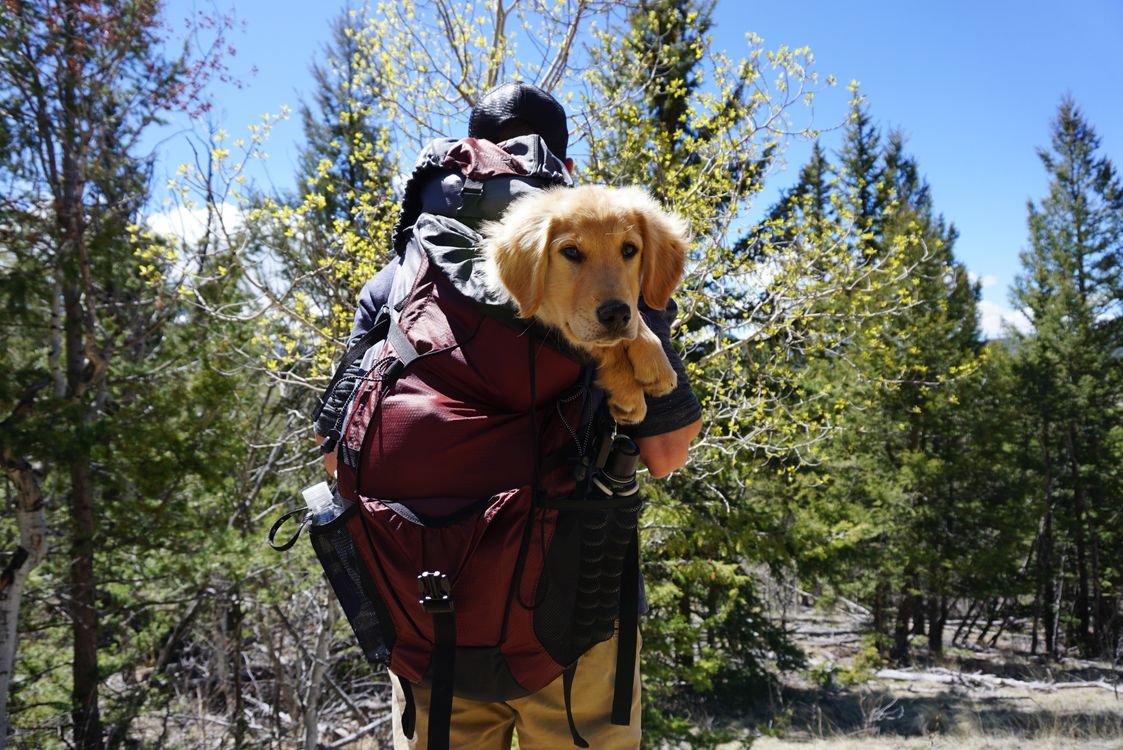
When you hike with a dog, you carry extra weight: dog food, water, bowl, first aid kit, leash, and possibly a dog pack. This adds 3-8 pounds depending on trip length and dog size. Here is how to integrate dog gear without throwing off your pack balance.
Dog food: Pack dog food in the middle zone with your food, in a separate waterproof bag. Measure each meal into ziplock bags before the trip — do not bring a big bag and eyeball it. A 4-day trip for a 50-pound dog needs about 4 cups of food per day (16 cups, roughly 2.5 pounds). Keep it in the middle zone, not the bottom, because you will need it at every meal stop.
Dog water: Dogs drink more than you think on the trail — up to 1 ounce per pound of body weight per hour of hiking. Carry a collapsible silicone bowl (1 ounce) in your top zone or hip belt pocket. Share your water supply rather than carrying separate dog water — it saves weight. Filter water at streams and let your dog drink from the source when safe.
Dog first aid kit: This goes in your top zone or an external pocket. You need to access it fast if your dog cuts a paw or gets a tick. A dedicated dog first aid kit weighs about 8 ounces and fits in a side pocket.
Leash and collar: A 6-foot leash and flat collar weigh under 8 ounces combined. Store the leash in an external pocket or loop it through your pack’s compression straps when not in use. Always have the leash accessible for trailhead areas, wildlife encounters, and stream crossings.
Dog pack (if your dog carries gear): A properly fitted dog hiking pack lets your dog carry their own food and water. A 50-pound dog can comfortably carry 25 percent of their body weight (12.5 pounds). This removes 8-10 pounds from your pack — a significant difference on a multi-day trip. Remove the dog pack at every break to let their back cool down.
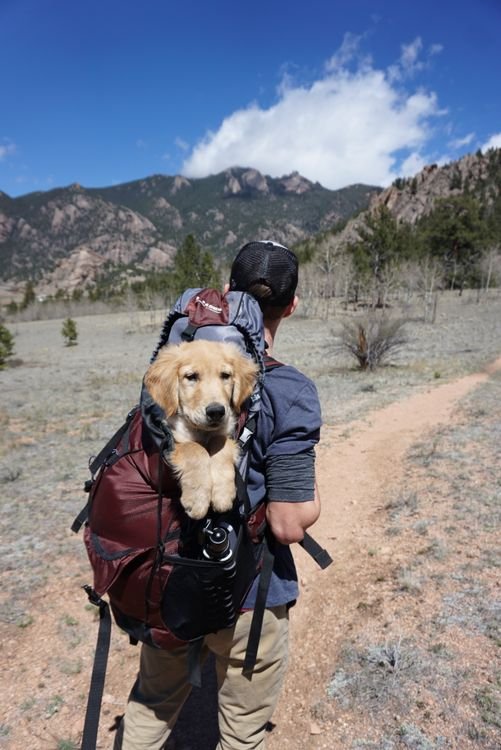
Step-by-Step Pack Order for Hiking with a Dog
Here is the exact order to pack your backpack for a 3-day backpacking trip with a dog, from bottom to top.
Layer 1 (bottom): Sleeping bag in a waterproof stuff sack. Camp clothes (base layer, socks, beanie). Camp shoes if you carry them. This layer is about 6-8 pounds total.
Layer 2 (middle, against spine): Bear canister or food bag (heaviest item). Stove fuel. Water bladder (3 liters = 6.6 pounds). Dog food bag. Position these as high in the pack as possible and flush against your back panel. This layer is 10-15 pounds.
Layer 3 (middle, front of pack): Tent body and fly. Sleeping pad (if not strapped to the outside). Cook pot with stove inside. Dog bowl. This layer fills the remaining middle space, about 4-6 pounds.
Layer 4 (top): Rain jacket. First aid kit (human + dog). Snacks. Map and compass. Water filter. Headlamp. Dog leash. This layer is under 4 pounds.
External pockets: Water bottles in side pockets. Trekking poles in side loops. Hip belt pockets: phone, lip balm, knife, dog treats. Brain lid: sunscreen, bug spray, pack rain cover.
Strapped to outside: Sleeping pad (if too large for inside). Tent poles. Dirty water bag for filtering. Dog pack (empty, for dog to wear on trail).
Common Packing Mistakes to Avoid
Mistake 1: Heavy items at the top or bottom. This is the number one cause of back pain on the trail. Heavy items go in the middle, against your spine. If your pack is swinging when you walk, your heavy items are in the wrong place.
Mistake 2: Not using a waterproof stuff sack for your sleeping bag. If your bag gets wet, you will have a cold, miserable night. A 2-dollar trash compactor bag works as well as a 30-dollar dry sack. Use one.
Mistake 3: Packing dog food with human food. The smell attracts animals and causes the rest of your food to taste like dog food. Pack dog food in a separate odor-proof bag.
Mistake 4: Not testing the pack before the trip. Load your pack at home, put it on, and walk around the block. If it does not feel right, repack it. Do not discover a packing problem at the trailhead.
Mistake 5: Forgetting the dog’s gear at the bottom of the pack. When your dog cuts their paw at mile 4, you do not want to unpack your entire bag to find the first aid kit. Keep all dog gear in the top zone or external pockets.
Disclosure: As an Amazon Associate, GearHound earns from qualifying purchases. This means we may earn a commission when you buy through links on this site, at no extra cost to you. I only recommend gear I have used in the field.
The Short Version
Packing your backpack is not complicated, but it requires intention. Put heavy items in the middle against your spine, keep essentials accessible at the top, and protect your sleeping bag at the bottom. When hiking with a dog, let them carry their own weight with a properly fitted pack, keep their first aid kit accessible, and separate their food from yours to avoid attracting animals. Test your pack at home before the trip, adjust the load until it feels balanced, and you will arrive at camp with energy left for the best part of the day — watching the sunset with your dog beside you.
See also: Best Hiking Gaiters 2026: Keep Rocks, Mud, and Snow Out of Your Boots, Best Camping Cookware 2026: Pots and Pans Worth Packing, How to Choose a Dog Backpack: Sizing, Capacity, and Weight Limits Explained.
⛺ Get Your Free Camping with Your Dog Checklist
Join our newsletter and get this free printable plus weekly tips.
Price Check
Prices verified via our product tracker. Updated Sep 27.
| Pet Supplies : Collapsible Dog Bowls - 4 Pack, Portable Tr | $13.99 | 4.7★ (3,738) |
| Amazon.com : Dog First Aid Kit - Vet-Approved Emergency Ki | $19.95 | 4.7★ (229) |
| Amazon.com: Ruffwear, Approach Pack Dog Backpack, Blue Dus | $59.99 | 4.6★ |
| Amazon.com: Kelty Lowdown Cot, Camping Bed with Aluminum F | $149.95 | 4.6★ |
As an Amazon Associate we earn from qualifying purchases.