
This article contains affiliate links. We may earn a commission from qualifying purchases.
Some content on this site is AI-assisted and reviewed by our editorial team.
Camping with dogs used to mean going dark. No weather radar when the sky turns green, no trail maps when the road forks, no vet lookup when your pup eats something he shouldn’t have at the campsite. For anyone who works from the road or just doesn’t want to be unreachable with a dog in the backcountry, Starlink Roam is the first satellite internet plan that actually makes sense for camping — and the referral program knocks a free month off the experiment.
Quick deal: Sign up for Starlink Roam or Residential through a Starlink referral link and you get one month of free service applied to your second month. The discount applies automatically — no code to type.
What Starlink Roam Actually Is
Roam is Starlink’s mobile plan: the same satellite network as home service, priced for people who move. In 2026 there are two flavors:
- Roam (regional): $50/month. Works anywhere in your home continent while in motion or parked. This is the plan for weekend campers and road-trippers.
- Roam (global): ~$165/month. Cross-ocean coverage for international overlanders.
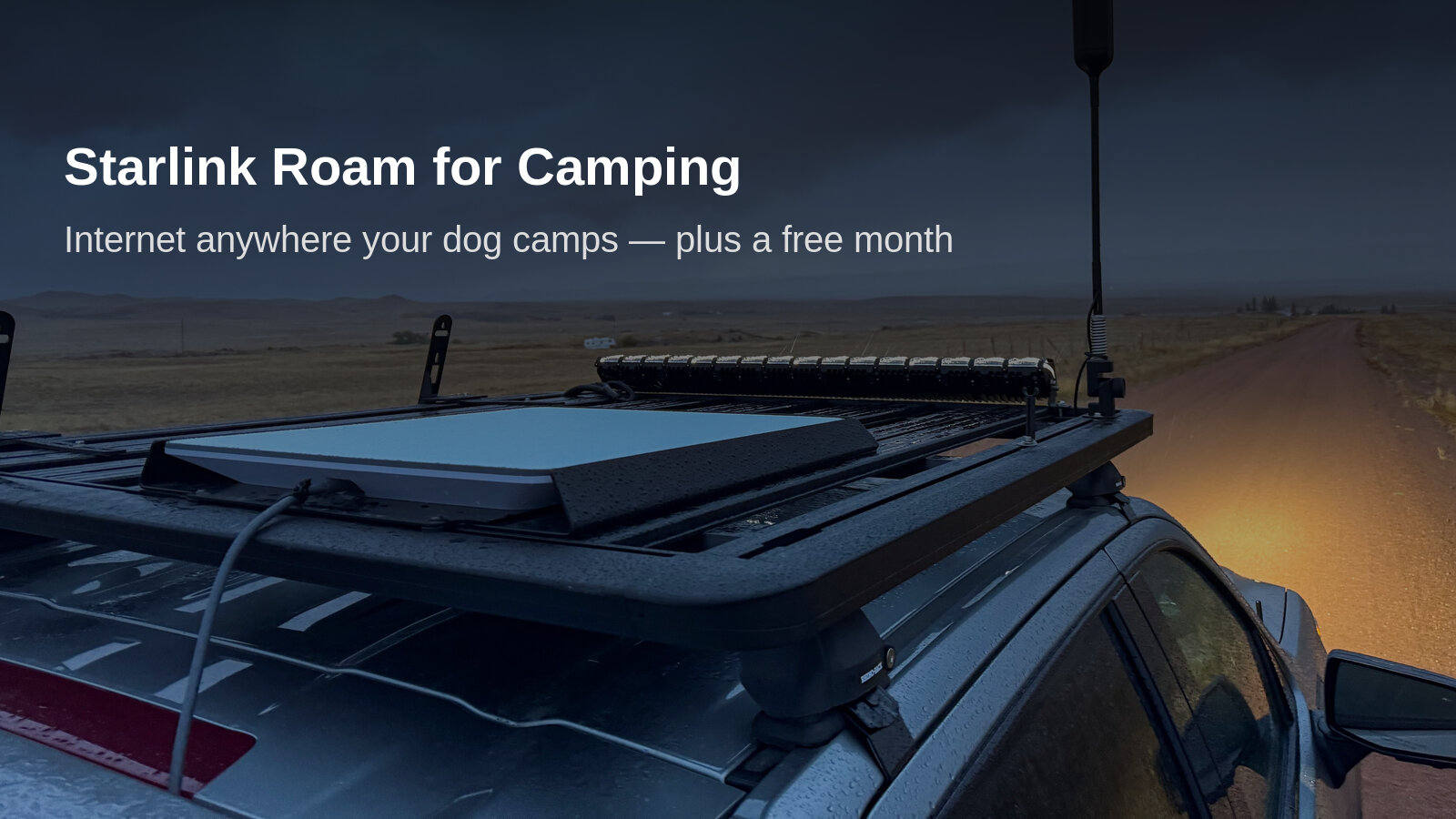
Hardware is the same flat dish residential users get (or the flat high-performance version for in-motion use). It runs off a standard outlet, a decent inverter, or a portable power station — roughly 20–60W draw depending on model and activity, which a 500Wh power station covers for a long weekend.
The difference from the old RV internet playbook — expensive low-orbit alternatives, or cell boosters that depend on towers you passed 40 miles ago — is that Roam doesn’t care where you park. If the dish sees sky, you have internet.
Why Campers With Dogs Specifically Need This
Every dog camper knows the campsite checklist: food, water, leash, tie-out, first aid kit. What’s missing from most lists is connectivity, and it’s not for entertainment:
- Weather alerts. A storm cell 30 miles west is a non-issue; one bearing down on your tent is not. With a dog in tow, you want radar and lightning alerts in real time, not a 2-bar EDGE connection.
- Vet finder when it counts. Trail injuries, foxtail in a paw, a chocolate raid on the cooler — the nearest emergency vet is a search away with real internet and a rumor without it.
- GPS collars that actually report. Fi, Garmin, and Tractive collars sync through your phone. Without service, “live tracking” is a memory.
- Working from camp. A growing number of dog owners camp for weeks, not weekends. Roam makes “remote” mean somewhere with trees instead of a coffee shop.
What It Costs (and What the Referral Saves You)
There’s no hardware discount in the referral — the free month applies to service. Here’s the honest math for a season of camping:
| Roam regional, direct | Roam regional via referral | |
|---|---|---|
| Hardware (standard dish) | $349 | $349 |
| 6 camping months | $300 | $300 |
| Month-2 credit | — | –$50 |
| Season total | $649 | $599 |
For full-timers on Residential service, the credit is worth $120 — the single biggest legit discount on Starlink anywhere. There are no seasonal sales that beat it.
Claim the free month through the referral link →
How the Referral Works (the Fine Print, Up Front)
Starlink’s own help pages spell out the mechanics; here’s the campsite version:
- Order through the referral link — the free month attaches automatically at checkout.
- Activate and pay month one normally. No discount at purchase.
- The credit lands on invoice two. Service credit, not a price cut.
- New customers only, on eligible Residential or Roam plans, same country as the referrer, service address available (not waitlisted). Cancel before month two and the credit’s void.
Disclosure: that’s a referral link. GearHound earns a referral credit if you sign up through it, at zero cost to you — you get the identical free month either way.
What Roam Is Like at a Real Campsite (Field Notes)
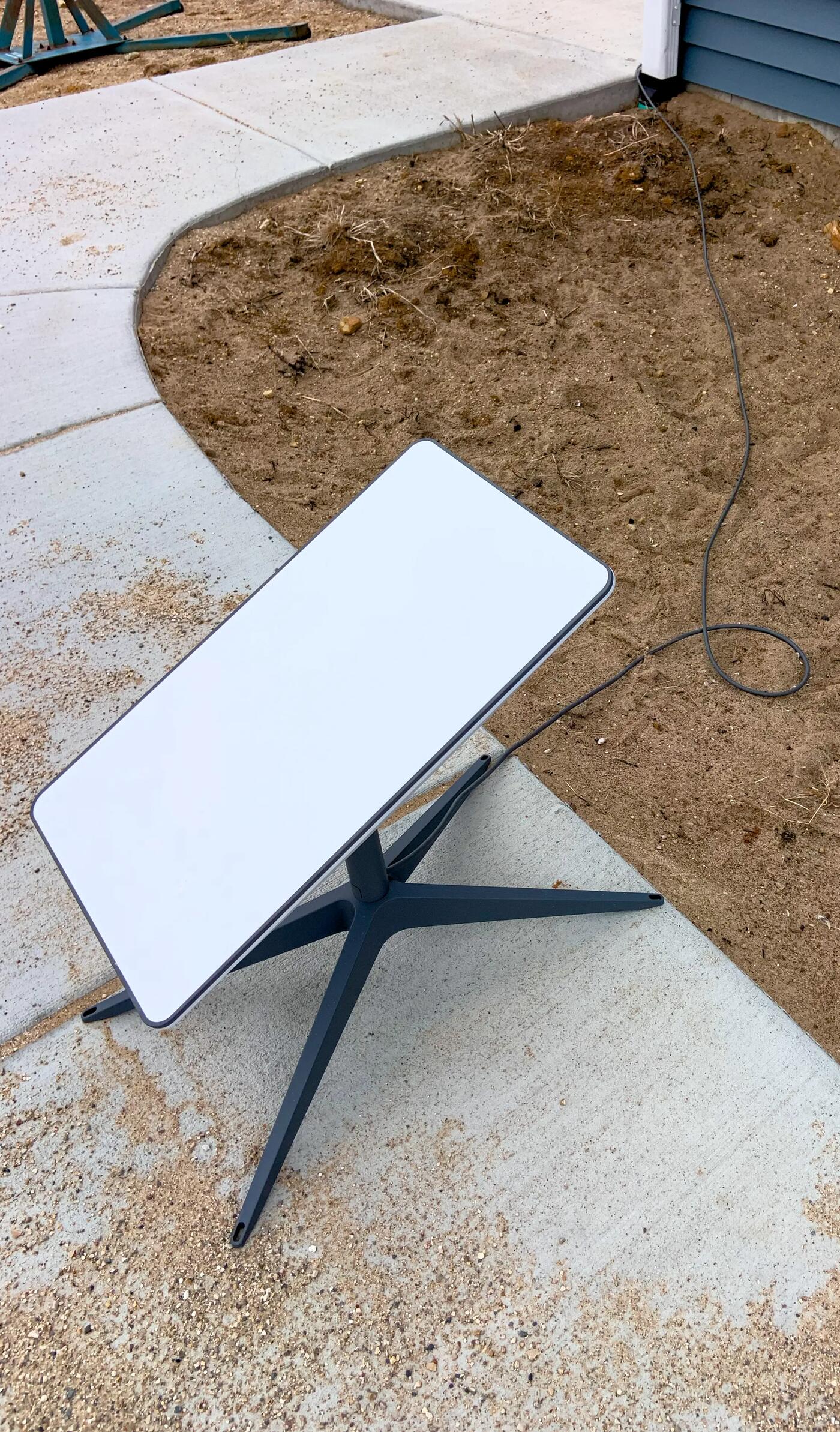
- Trees are the enemy. Starlink’s app has an AR obstruction checker — use it before picking your site. A dish under a pine canopy is a sad, buffering dish. Open meadows and shorelines are perfect.
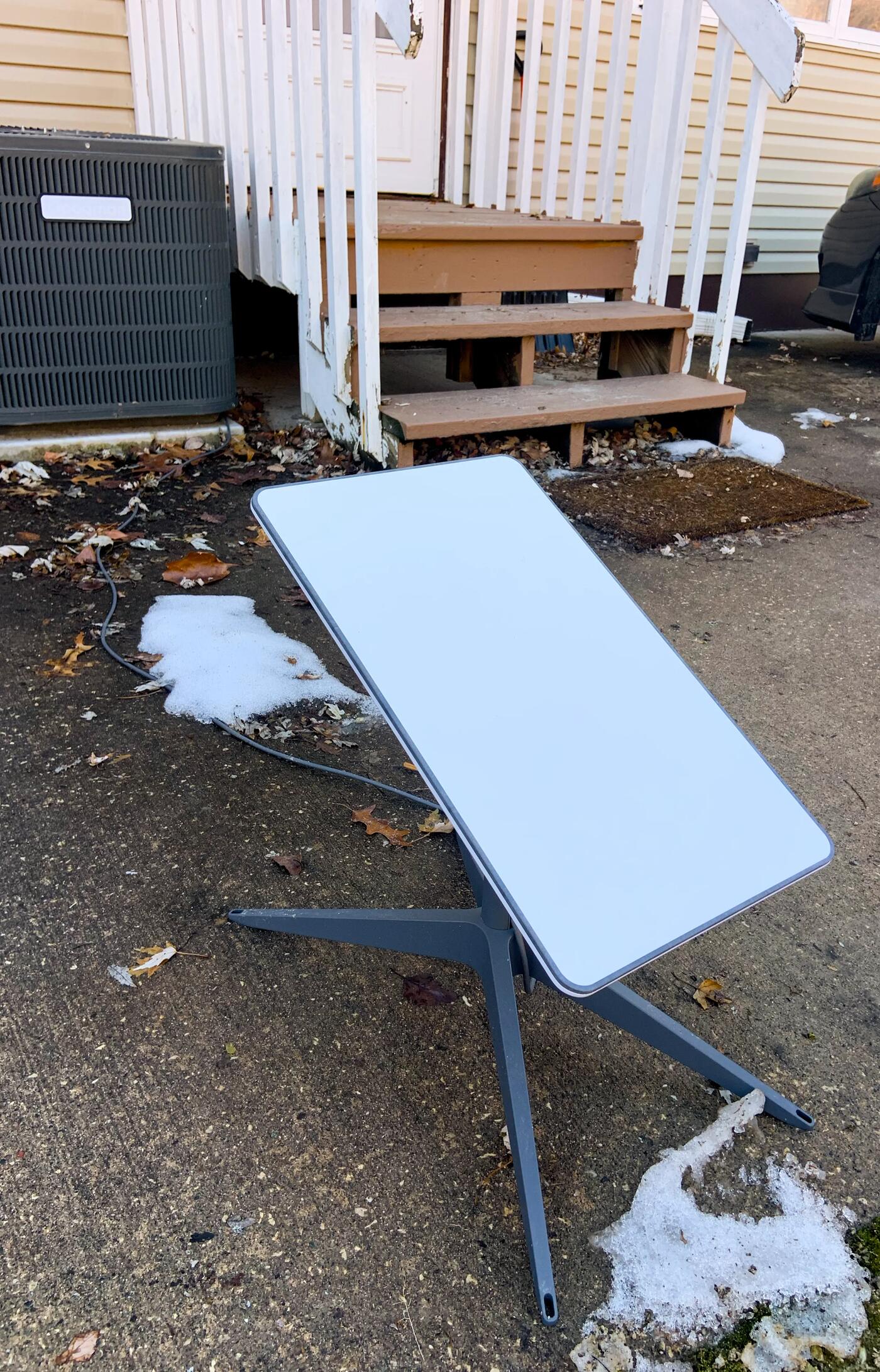
- Set it up in 4 minutes. Kickstand out, cable to power, app walkthrough, done. The dish self-orientates; you’re not aiming anything.
- Power draw is real. Expect ~50–75W while active. On a 500Wh power station that’s 7–10 hours; solar top-up or the truck’s 12V through an inverter covers a weekend comfortably.
- Weather: mostly a non-issue. The dish is heated and melts snow. Heavy rain causes brief fade — minutes, not the all-day washouts of old satellite.
- Speeds at camp: 40–120 Mbps down in our reading of typical user reports — enough for radar, maps, video calls from the tent, and a movie after the dogs crash.
Roam vs. Hotspot vs. Nothing
| Starlink Roam | 4G/5G hotspot | No service | |
|---|---|---|---|
| Works off-grid | Anywhere with sky | Only near towers | — |
| Weather alerts | Real-time | Spotty | None |
| Monthly cost | $50 | $20–60 (data-capped) | $0 |
| Video calls from camp | Yes | Pixelated at best | No |
| Multi-device (family + work) | Yes | Struggles | No |
| Hardware | $349 | ~$100 | — |
Honest take: if you camp at developed sites with good cell coverage twice a year, a hotspot is fine and Starlink is overkill. If you boondock, work from camp, or run a dog-sport schedule across state lines, Roam pays for itself the first time radar saves your trip — or the first time you need an emergency vet at 9pm in the middle of nowhere.
Setup Tips for Dog Campers
- Mount it high, clear of the dog run. The dish’s kickstand is low-profile, but a chewed cable is a real thing. Roof rack or tree-hung at the truck wins with big dogs around.
- Power first, coffee second. A 300–500Wh power station runs the dish all weekend; pair it with a 100W folding panel for stays past two nights.
- Download maps before you lose signal anyway. Roam is great, but canyon country can still block sky. Offline maps + the dish is the combo that never fails.
Frequently Asked Questions
Does the Starlink referral work for Roam plans?
Yes — the free month applies to new-customer Roam subscriptions the same as Residential. The credit equals one month of the plan you chose ($50 for regional Roam, ~$120 for Residential).
Can I pause Roam between trips?
Yes — Roam is the plan built for that. Pause and resume by the month from your account, which is why it works for seasonal campers: you’re not paying for January if you’re not camping in January.
Will Starlink Roam work while driving?
The standard dish is designed for in-motion use at low speeds with the Roam Unlimited tier in some regions, but the flat high-performance dish is the one rated for in-motion use. For most campers: set up at camp, stow while driving.
Is the referral credit per month or one time?
One time per referral — one free month of the plan you signed up for, credited after your first paid month. You can refer other campers once you’re a customer and earn the same credits yourself.
What if I’m camping outside my home country?
Regional Roam covers your home continent. Global Roam (~$165/month) covers international travel. The referral credit applies to the plan you activate on; terms vary by country.
Bottom Line
Starlink Roam removed the last good excuse for going dark at camp, and for dog owners “reachable” beats “rugged” — weather alerts, vet finders, and live GPS collars all depend on it. The referral’s free month ($50–$120 depending on plan) makes the trial nearly free, and it stacks automatically when you order through the referral link.
Pack the dish, power station, and the dog. The internet comes too now.
⛺ Get Your Free Camping with Your Dog Checklist
Join our newsletter and get this free printable plus weekly tips.
Frequently Asked Questions
Does Starlink Roam work while driving?
The standard Roam plan allows use in motion at low speeds, but the flat high-performance dish is what supports highway use. For truck camping you typically set up at camp, not on the road.
Is Starlink worth it for camping with dogs?
If you need to book campsites, check weather radar, or work from the road, yes. It also means you can leave a camera on the dog in the tent. Weekend-only users can pause Roam between trips and only pay for active months.
How much power does Starlink Roam use camping?
About 25-40W continuous, roughly 300Wh per day. A 500Wh power station runs it through dinner and overnight charging with room for phones.