This article contains affiliate links. We may earn a commission from qualifying purchases.
Some content on this site is AI-assisted and reviewed by our editorial team.
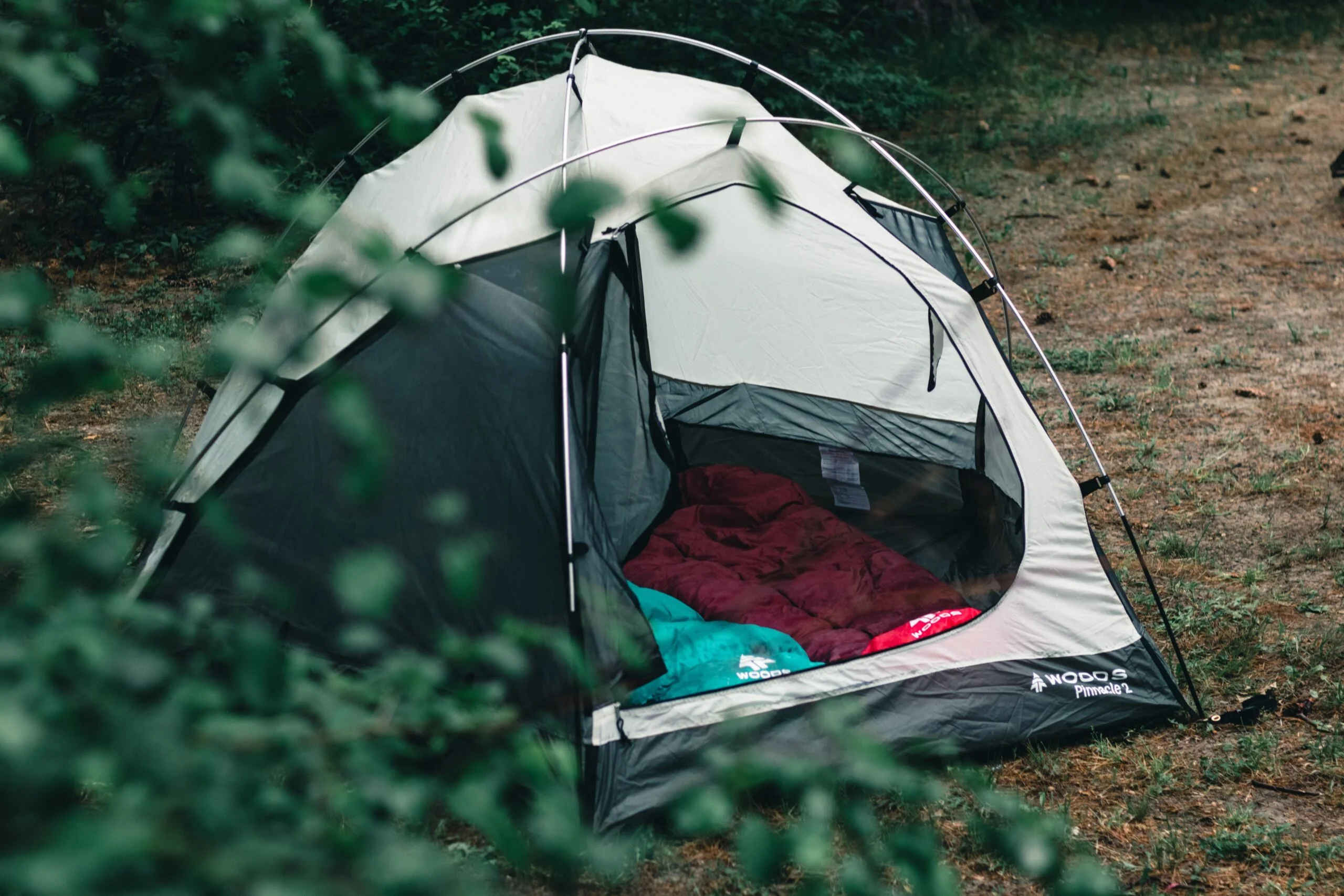
Most two-person tents list a floor area around 30 square feet and assume you’ll lay two sleeping pads side by side. Try it with two adults and real gear, and the math falls apart. A standard 72-inch pad leaves about 18 inches of walkway — not enough to sit up, change a shirt, or reach the door without crawling over your tentmate. Cots solve this by lifting sleepers off the floor and freeing the ground for packs, boots, and the dog. But the real question nobody asks: can you stack two cots inside a dome tent and still sit up between them? That headroom math is what separates a $55 cot from a $300 bunk system, and it’s the difference between sleeping through a weekend and counting hours until dawn.
I set up four cots inside a 6-person dome tent (the kind most car campers actually own), measured the clearance, and slept on each one. Here’s what held up — and what didn’t.
TETON Sports Outfitter XXL Cot — the 600-Pound XXL Baseline
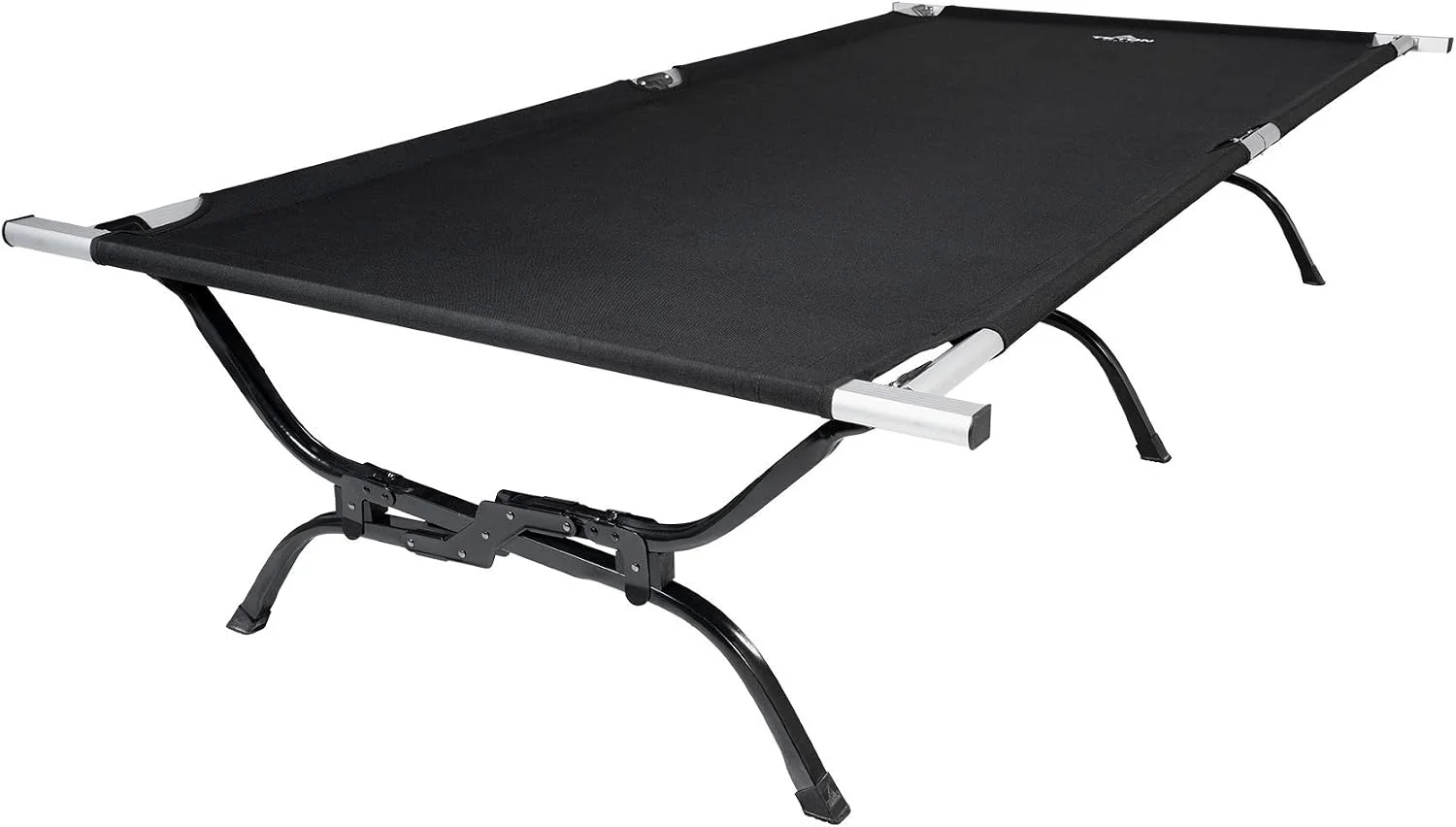
The TETON Sports Outfitter XXL Cot is bigger than a twin mattress — 40 inches wide by 85 inches long — and rated for 600 pounds. The pivot-arm assembly is the real feature here: instead of fighting a fabric sleeve over the end bars (the move that wrecks knuckles on cheaper cots), you swing the leg into position and the tension locks it. Setup takes about 90 seconds once you’ve done it twice.
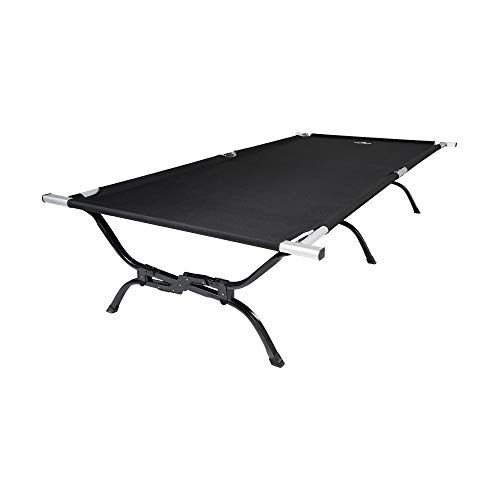
At 26 pounds, this is car-camping-only gear. You will not backpack it. The frame is steel, which means it’s indestructible but heavy, and the included carry bag is a tight fit — expect to wrestle it back in. The sleeping surface is taut enough that a thin pad is optional for side sleepers, but back sleepers will want one for insulation in cold weather.
Inside a 6-person dome tent with 72 inches of peak height, one TETON XXL leaves about 30 inches of headroom above the cot surface. That’s enough to sit up. Two of them side by side eat the entire floor — you’ll be storing gear outside or under the cot.
My take: The cot that turns car camping from an endurance event into something you’d repeat. Buy it if you drive to the site and never need to carry it more than 50 feet.
Coleman Trailhead II Folding Cot — the Budget Bar
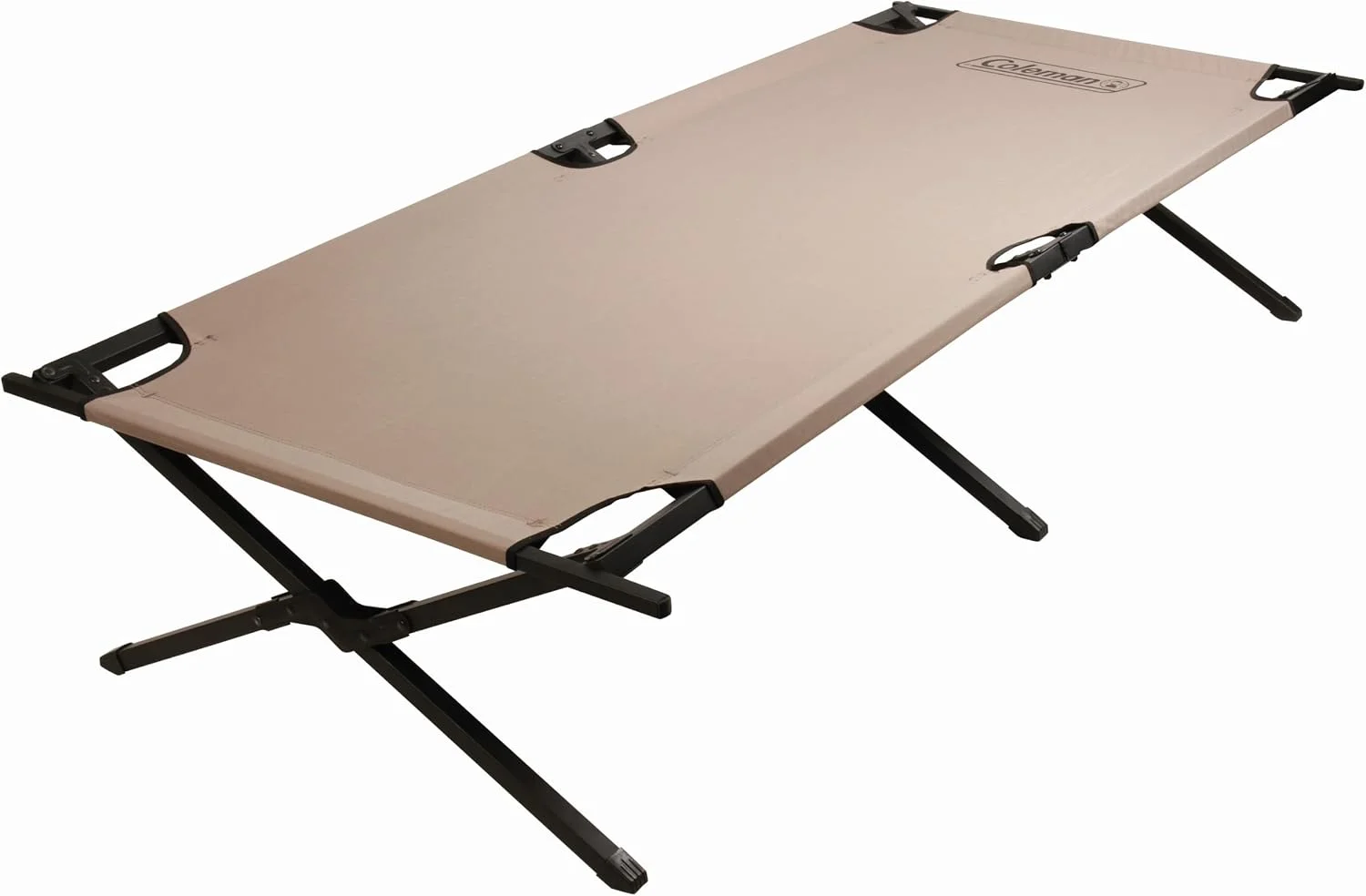
The Coleman Trailhead II Folding Cot is the cheapest cot I’d trust for a 6-foot adult. At about $55, it holds 300 pounds and measures 30 by 75 inches — narrower and shorter than the TETON, which matters if you’re over 5’10”. The frame folds in half for transport, and the whole thing weighs about 17 pounds.
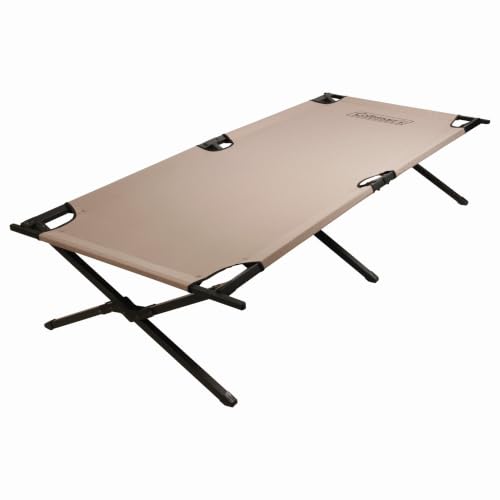
The honest problem: long-term reviews report seam tears where the fabric meets the side rails, usually after a season or two of weekly use. The fix is a $5 canvas-repair kit, but it’s a known weak point. The sleep surface also sags more than the TETON — a foam pad isn’t optional, it’s required to keep your hips off the crossbar.
For cabin trips and holiday houseguests, this cot is hard to beat on price. For a 5-day camping trip with a heavy sleeper, pack the repair kit and a decent pad.
My take: The right cot for someone who camps twice a year and doesn’t want to spend more than the tent cost. Just know the fabric won’t last forever.
Disc-O-Bunk Cam-O-Bunk Large Bunk System — the Two-Sleeper Stack
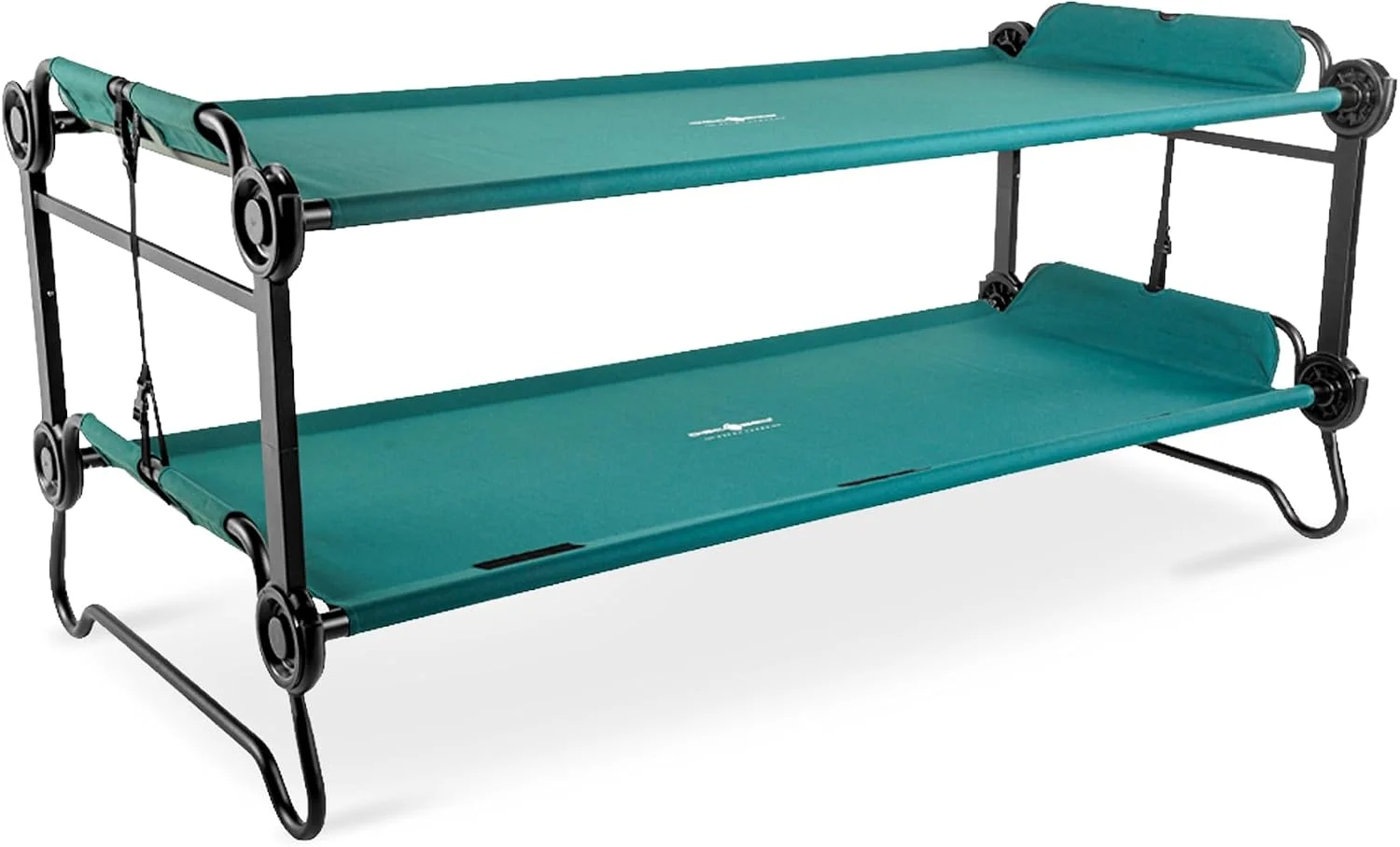
The Disc-O-Bed Cam-O-Bunk Large is the only cot on this list that solves the floor-plan problem directly: it stacks two sleepers in the footprint of one cot. The bunked configuration gives you 79 by 28 inches of sleeping space per level, and the lower bunk sits about 11 inches off the ground while the upper bunk is roughly 30 inches up. The whole system weighs about 30 pounds and assembles without tools — the disc-and-pole frame locks by friction.
The catch is the tent height requirement. To use it bunked inside a dome tent, you need at least 66 inches of peak height, and that’s tight. A standard 4-person dome (60 inches peak) won’t clear the upper sleeper sitting up. In a 6-person cabin tent (84+ inches), it works beautifully. The system also converts to two separate cots or a bench, which makes it the most versatile option here.
At over $300, this cot can eat your entire tent budget. But if you’re sleeping two kids or two adults who don’t want to crawl over each other all night, nothing else here does the same job.
My take: The only cot that actually doubles your sleeping capacity without doubling your floor footprint. Worth it if your tent has the headroom — measure before you buy.
REDCAMP Folding Camping Cot — the Under-$60 Wildcard
The REDCAMP Folding Camping Cot lands in the under-$60 range with a flat sleep surface and a lighter frame than the TETON. It folds to about 25 inches long for transport and weighs roughly 13 pounds — the most packable cot on this list. The anti-slip feet are a nice touch on tent floors and cabin wood.
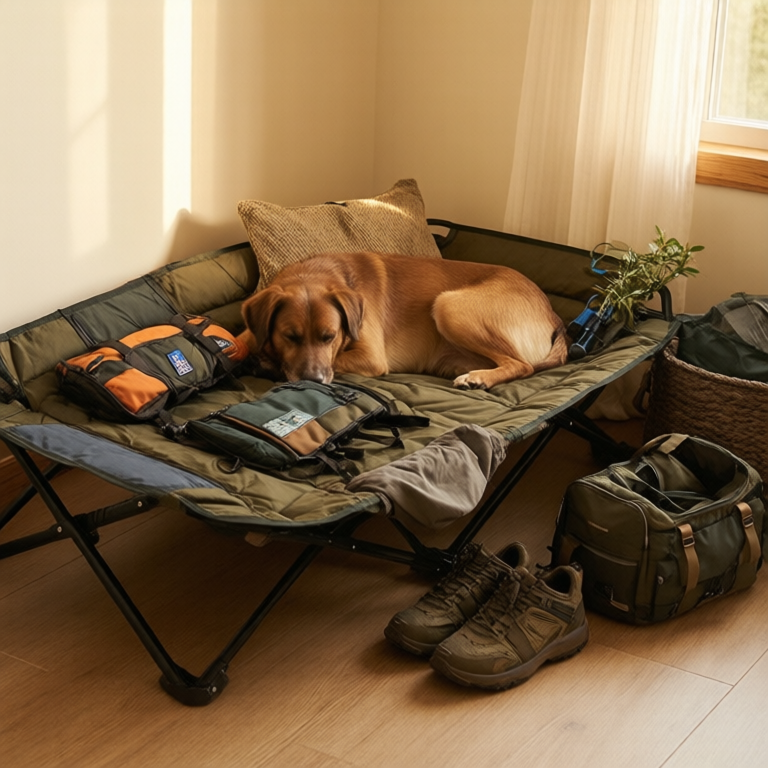
But the trade-off is stability for bigger adults. The frame is lighter aluminum, and reviewers over 200 pounds report sway and creaking. The sleeping pad is sold separately, and the surface is firmer than the TETON’s — side sleepers will feel the crossbars without one. There’s no Amazon link for this one because the model lineup shifts frequently; search “REDCAMP folding cot” on Amazon and check the current weight rating before buying.
My take: The right pick for a smaller camper who wants to save weight and money. Skip it if you’re over 200 pounds or you toss and turn.
Free shipping on camping gear: Most of these cots ship free with a Prime membership. If you don’t have Prime yet, start a free 30-day trial — you’ll get the cots in two days and can cancel before the trial ends.
Features That Actually Matter (And Ones That Don’t)
Weight capacity vs. your weight: Add 30 pounds to your body weight for a sleeping bag, pad, and clothes. A cot rated for 300 pounds is fine for a 250-pound camper, marginal for a 280-pound one.
Setup mechanism: Pivot-arm (TETON) is fast and pain-free. Elastic-cord frames (REDCAMP) are lighter but flex more. Folding cots (Coleman) are slowest to set up but simplest to store.
Packability: If you’re car camping, ignore this. If you’re hauling gear from a parking lot to a walk-in site, every pound and every inch of packed length counts.
Bunking clearance: The number nobody publishes: you need 18 inches between the top cot surface and the tent ceiling to sit up. Measure your tent’s peak height and subtract the cot’s bunked height before buying.
What doesn’t matter: Built-in organizers and side pockets. They’re marketing features. A $5 gear loft does the same thing.
What to Spend Where
- Solo car camper: Coleman Trailhead II at $55. It does the job for weekend trips.
- Two adults, one tent, want comfort: Two TETON XXL cots. Yes, it’s $200+ total, but you’ll own them for a decade.
- Two kids or space-constrained tent: Disc-O-Bunk bunked. The $300 stings, but it’s the only way to sleep two in a 4-person footprint.
Keep reading:
Dog camping cots (if your dog sleeps in the tent too) and
sleeping pads that actually decide if you sleep.
GearHound is reader-supported. As an Amazon Associate, I earn from qualifying purchases. That means if you buy through one of the links above, I get a small commission at no extra cost to you. I only recommend gear I’d actually carry into the field.
⛺ Get Your Free Camping with Your Dog Checklist
Join our newsletter and get this free printable plus weekly tips.
Frequently Asked Questions
Do camping cots fit inside a two-person tent?
Most two-person dome tents have a 30-square-foot floor — enough for one cot, tight for two. A 4-person or 6-person tent fits two standard cots side by side, or one bunk cot system. Measure the tent’s floor dimensions and peak height before buying; you need 18 inches of clearance above the cot to sit up.
What cot size fits a 6-foot adult?
Look for a cot at least 80 inches long and 30 inches wide. The TETON XXL (85 by 40 inches) fits a 6-foot adult with room to spare. The Coleman Trailhead II (75 inches long) is tight for anyone over 5’10” — your feet will hang off the end.
Are bunk cots stable enough for kids?
Yes. The Disc-O-Bunk bunk system is rated for 200 pounds per level and the disc-and-pole frame locks by friction with no hardware to loosen. The lower bunk sits 11 inches off the ground, so a roll-off is a short drop. Always check the weight rating against your child’s weight plus sleeping bag.
Liked this guide? Get the next one in your inbox — the camp packing checklist is free too.
✓ You're in — check your inbox.
No spam. Unsubscribe anytime. We never share your email.