
This article contains affiliate links. We may earn a commission from qualifying purchases.
Some content on this site is AI-assisted and reviewed by our editorial team.
Summer Dog Safety on the Trail: Heat, Hydration, and When to Turn Around
July 2026 — By GearHound
July is the toughest month to hike with your dog. The sun is relentless, trail surfaces radiate heat like a stovetop, and dogs — who cannot sweat the way humans do — are far more vulnerable to heatstroke than most owners realize. I have seen too many trails where a happy dog at the trailhead became a wobbly, overheated mess halfway up the climb. The difference between a great summer hike and a dangerous one almost always comes down to preparation, timing, and knowing when to call it.
This guide is not veterinary advice. It is a trail-tested framework for keeping your dog safe in hot weather, built from real-world experience and the gear that actually works when temperatures climb past 80 degrees. If you are new to hiking with your dog, build up gradually before tackling summer conditions.
How Dogs Cool Themselves (And Why It Matters on the Trail)
Dogs do not sweat through their skin like humans. They cool themselves primarily through panting — rapid, shallow breaths that evaporate moisture from their tongue, nasal passages, and throat. They also release some heat through their paw pads. This system works well enough in moderate temperatures, but it has a hard limit. When ambient air temperature approaches your dog’s body temperature (normally around 101 to 102.5 degrees Fahrenheit), panting becomes dramatically less effective. Add humidity, and the evaporation that drives cooling slows to a crawl.
This is why heat plus humidity is the real enemy, not heat alone. A 90-degree day with 20 percent humidity is challenging but manageable for a fit, acclimated dog with water and shade. That same 90 degrees at 70 percent humidity can be deadly. Before you head out, check the heat index — the “feels like” temperature that combines heat and humidity — not just the raw forecast number.
Breed and Coat Factors
Not all dogs handle heat the same way. Brachycephalic breeds — pugs, bulldogs, French bulldogs — are at severely elevated risk because their compressed airways make panting less efficient. Thick-coated northern breeds like huskies and malamutes are built for cold and struggle above 70 degrees. Dark-coated dogs absorb more solar radiation. Older, overweight, and dogs with heart or respiratory conditions are all at higher risk. Know your dog’s baseline and adjust accordingly.
Recognizing Early Signs of Heat Stress
Heatstroke in dogs does not happen suddenly. It builds through stages, and if you catch the early signs, you can prevent a crisis. The progression looks like this:
- Mild heat stress: Increased panting, bright pink or red tongue, drooling more than usual, seeking shade, slowing down on the trail. Your dog still seems alert and responsive but is clearly working harder to stay cool.
- Moderate heat stress: Heavy, labored panting, wide eyes, anxious or restless behavior, weakness in the hind legs, stumbling or lack of coordination. The gums may feel tacky or dry. Your dog may refuse to keep walking and lie down in whatever shade is available.
- Severe heatstroke: Collapse, vomiting, diarrhea (often bloody), seizures, blue or pale gums, loss of consciousness. Body temperature may exceed 106 degrees. This is a life-threatening emergency.
The critical window is the transition from mild to moderate. That is when you need to stop, find shade, offer water, and start cooling your dog down. If you wait until your dog is stumbling, you have waited too long.
For more on keeping your dog’s paws healthy through tough conditions — which directly affects their ability to regulate temperature — see this guide to dog paw care on the trail.
How Much Water Does Your Dog Need on the Trail?
The old rule of thumb is roughly 0.5 to 1 ounce of water per pound of body weight per day for normal activity. On the trail in summer, that jumps significantly. A practical trail guideline is 1.5 to 2 ounces per pound for a moderate hike in warm weather, and more for strenuous trails or temperatures above 85 degrees.
For a 50-pound dog on a three-hour summer hike, that means carrying at least 75 to 100 ounces of water — roughly one and a half to three liters — just for the dog. Yes, it is heavy. No, you should not skimp on it.
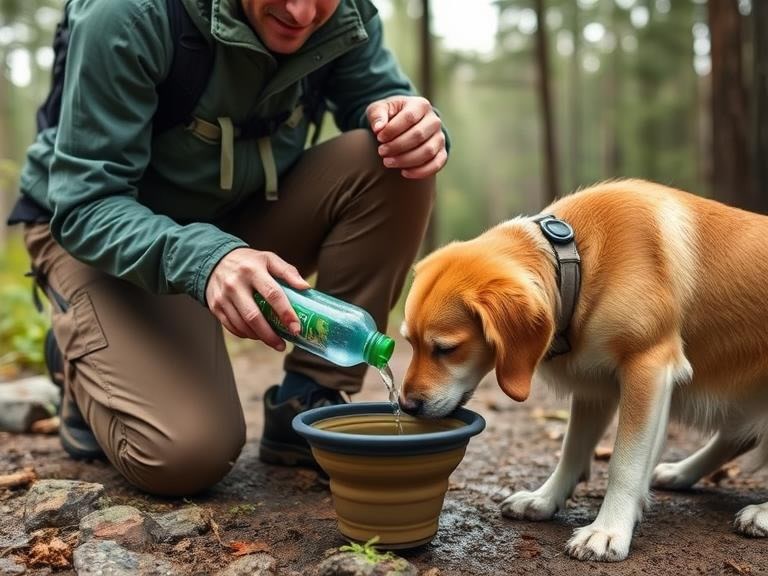
Offer water every 20 to 30 minutes, not just when your dog seems thirsty. Controlled, frequent intervals are better than letting them gulp a full bowl at once. A travel water bottle like the Kurgo Gourd Travel Water Bottle combines a bottle and detachable bowl in one piece. For a no-spill option in the car or at camp, the Kurgo Splash Free Wander Water Bowl holds 24 ounces and will not slosh all over your vehicle on the drive home.
Electrolytes and Trail Water Sources
Plain water is sufficient for most day hikes. For longer outings, canine-specific electrolyte supplements can help, but avoid human sports drinks — they contain too much sugar and the wrong mineral ratios. Never let your dog drink from stagnant trail water. Algae blooms, parasites, and bacterial contamination can turn a great hike into a veterinary emergency.
Cooling Gear That Actually Works
Cooling gear is not a gimmick in summer trail conditions. The right gear can lower your dog’s core temperature by several degrees and extend your safe hiking window significantly. The key is understanding how each type works.
Evaporative Cooling Vests
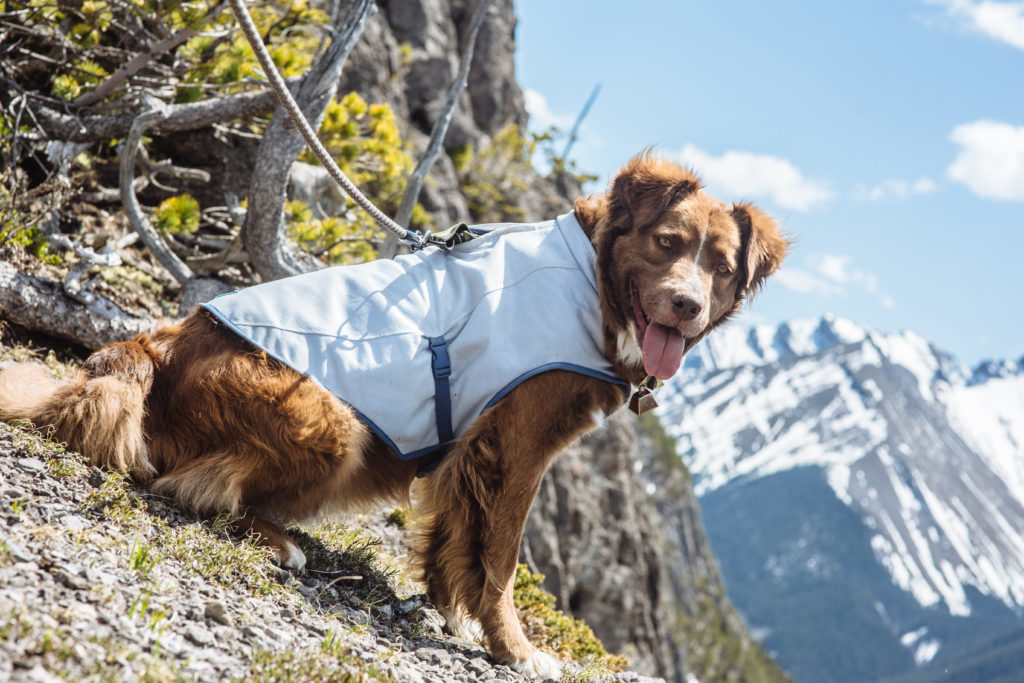
Evaporative cooling vests work by soaking the fabric in water before putting it on your dog. As the water evaporates, it pulls heat from the dog’s body. The Ruffwear Swamp Cooler Dog Vest is the gold standard here. It uses a three-layer construction that holds water against your dog’s torso while allowing airflow for evaporation. It is compatible with most harnesses. Soak it thoroughly before setting out and re-wet it at every water stop. In dry climates, this vest can keep your dog comfortable even in the 90s. In high humidity, evaporative cooling is less effective, so pay extra attention to your dog’s behavior.
For a deeper dive into cooling vest options, check our full review of the best dog cooling vests of 2026.
Cooling Bandanas and Collars
A cooling bandana is a lighter alternative for shorter hikes or dogs who will not tolerate a full vest. Soak it in cold water, wring it out, and wrap it around your dog’s neck. The blood vessels near the surface of the neck benefit from the cooling effect. The ALL FOR PAWS Dog Cooling Bandana is an affordable option that uses gel beads to hold the cool temperature longer than plain fabric. It will not replace a vest on a hard hike, but for casual walks or as a backup, it is worth keeping in your pack.
Paw Protection for Hot Surfaces
Trail surfaces can reach 40 to 60 degrees above air temperature in direct sun. Rock slabs, asphalt trailhead parking lots, and even compacted dirt can burn paw pads. Musher’s Secret Dog Paw Wax creates a breathable barrier that protects against hot surfaces, abrasive rock, and trail debris. Apply it before the hike and reapply every couple of hours. For genuinely hot conditions — above 85 degrees on exposed terrain — dog boots are the better choice. If you are just starting to condition your dog’s paws for trail use, Musher’s Secret is the right first step.
Cooling Mats for Rest Stops and Camp
At rest stops and at camp, a pressure-activated cooling mat gives your dog a cool surface to lie on without electricity or refrigeration. The Green Pet Shop Cool Pet Pad uses a non-toxic gel that activates when your dog lies on it, and works well inside a tent or in the back of your vehicle. For a lightweight camping-specific option, the Ruffwear Highlands Dog Pad is a closed-cell foam pad that gives your dog an insulated resting surface off the hot ground. It packs down small enough to strap to a backpack.
For a full checklist of what to bring when you are camping with your dog, see our dog camping essentials checklist.
Trail Timing: When to Go and When to Stay Home
Timing is the single most important factor in summer dog safety. More than any piece of gear, the time you choose to be on the trail determines whether your hike is safe or risky.
The Golden Window: Dawn to 9 AM
The safest summer hiking window is the first two to three hours after sunrise. Trail surfaces have had all night to radiate heat away, air temperatures are at their lowest, and shade is most effective. If you can be on the trail by 6 AM and off by 9 or 9:30, you can hike in conditions that would be dangerous by noon. Target this window for any hike longer than two miles or with significant elevation gain.
The Acceptable Window: 6 PM to Sunset
Evening hiking is the second-best option. Temperatures drop after 4 PM, and by 6 PM conditions are usually reasonable again. But trail surfaces have been absorbing solar energy all day and stay hot for an hour or more after the air cools. Rock surfaces hold heat well past sunset. Test the ground with the back of your hand for seven seconds — if it is too hot for your hand, it is too hot for their paws.
The Danger Zone: 10 AM to 4 PM
This is the window to avoid entirely with your dog from June through September in most of the United States. Air temperatures peak between noon and 3 PM, trail surfaces peak between 1 PM and 4 PM, and shade is least effective because the sun is nearly overhead. Unless you are above 8,000 feet or in heavy forest canopy, this is not a safe window for dogs.
Absolute Temperature Cutoffs
Here are the thresholds I use, built from trail experience and veterinary guidance:
- Air temperature below 75 degrees: Safe for most dogs with adequate water and shade.
- 75 to 85 degrees: Safe for fit, acclimated dogs with cooling gear, frequent water breaks, and shaded trails. Reduce distance by 25 percent.
- 85 to 90 degrees: Marginal. Only with cooling vest, early morning timing, short distances (under 2 miles), and plenty of shade. Flat, shaded trails only.
- Above 90 degrees: Do not hike with your dog. Period. No exceptions for breed, fitness, or gear. The risk is not worth it.
These are air temperature thresholds. If the heat index is higher than the air temperature — which it almost always is in summer — use the heat index number instead.
Emergency Response: What to Do If Your Dog Overheats
If your dog shows moderate signs of heat stress on the trail, take immediate action. Every minute matters.
- Stop hiking immediately. Find the deepest shade available — under a rock overhang, in dense tree cover, or beneath a stream bank if one is nearby.
- Offer small amounts of cool water. Not ice water — extremely cold water can cause vomiting or shock in an overheated dog. Let them drink small amounts every few minutes rather than gulping a full bowl.
- Wet your dog down. Pour water over their belly, inner thighs, chest, and paw pads. These areas have less fur and allow heat to dissipate faster. If you packed a cooling vest or bandana, soak it and put it on. If you have a cooling mat, set it out and encourage your dog to lie on it.
- Monitor temperature if you can. A rectal thermometer reading above 105 degrees is a genuine emergency. If you do not have a thermometer, rely on behavior: a dog that stops panting and seems calmer after 10 to 15 minutes of cooling is improving. A dog that continues to deteriorate is not.
- Get to a veterinarian. If your dog shows severe signs — collapse, vomiting, seizures, or loss of consciousness — start cooling and get to the nearest vet immediately. Call ahead so they can prepare. Heatstroke can cause organ failure that is not immediately obvious, so even a dog that seems to recover needs a veterinary exam.
Do not pour rubbing alcohol on your dog’s paws — a common internet tip that can cause alcohol poisoning if absorbed through cracked pads. Stick to water.
After the Hike: Post-Trail Recovery
The hike is not over when you reach the trailhead. Your dog’s core temperature may still be elevated, and the car ride home can be dangerous if your vehicle is not cooled. Run the AC before loading your dog, offer water immediately, and consider a cooling mat in the back seat. Once home, let your dog rest in a cool, shaded area and continue monitoring for several hours. Delayed heatstroke can occur even after a dog seems fine.
For a full recovery protocol, read this guide to post-hike recovery for dogs.
What I Recommend
Summer hiking with your dog is one of the best things you can do together, but it demands respect for the conditions. The formula is simple: hike early, carry more water than you think you need, use cooling gear, know the signs of heat stress, and be willing to turn around. No summit, no mileage goal, and no Instagram photo is worth your dog’s life. When the temperature is pushing 90 and the trail is exposed, the right call is to skip the hike, sit in the shade with your dog, and try again at dawn. The trail will still be there tomorrow.
GearHound is reader-supported. When you buy through links on this site, we may earn an affiliate commission at no extra cost to you.
⛺ Get Your Free Camping with Your Dog Checklist
Join our newsletter and get this free printable plus weekly tips.