This article contains affiliate links. We may earn a commission from qualifying purchases.
Some content on this site is AI-assisted and reviewed by our editorial team.
Fall trails are firming up, and every high-drive dog in the neighborhood is about to spend a long winter bouncing off the walls unless it gets a job. Bikejoring is that job: the dog harnessed ahead of the bike, pulling through a bungee line while you pedal support behind. Mushers have run dogs this way for decades — you need three pieces of gear and a dog that already loves to move.
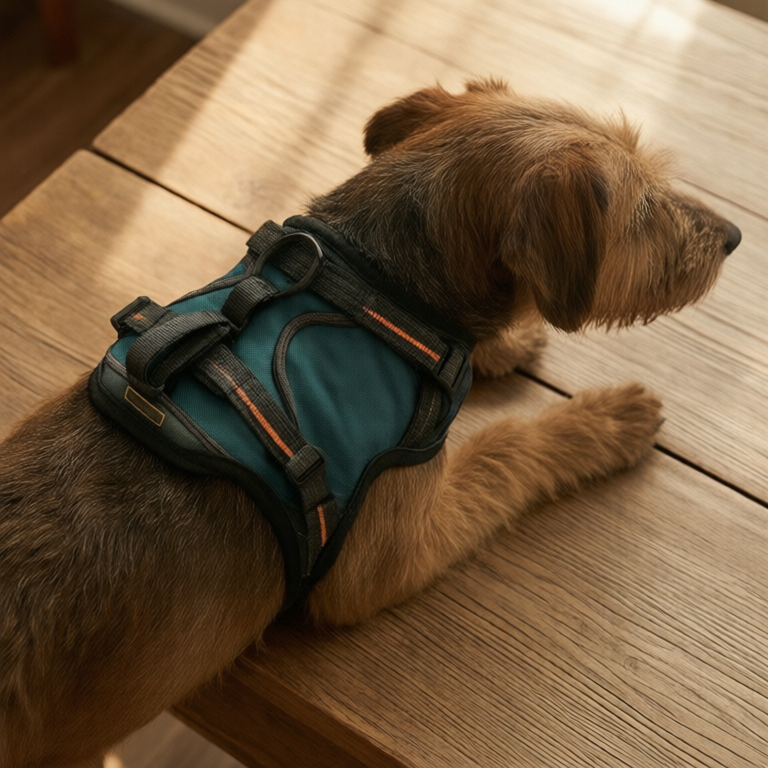
The gear list is short: a pulling harness, a bungee line, and something that connects the two of you — a hip belt if you want to start on foot with canicross, or a bike mount once the commands are solid. The mistakes happen at exactly two points: buy a walking harness instead of a pulling harness and every lunge compresses its chest strap against the throat — hence the sport’s “wrong harness is a choking hazard” reputation — and bolt a rigid leash without real shock absorption and the first squirrel ends the season.
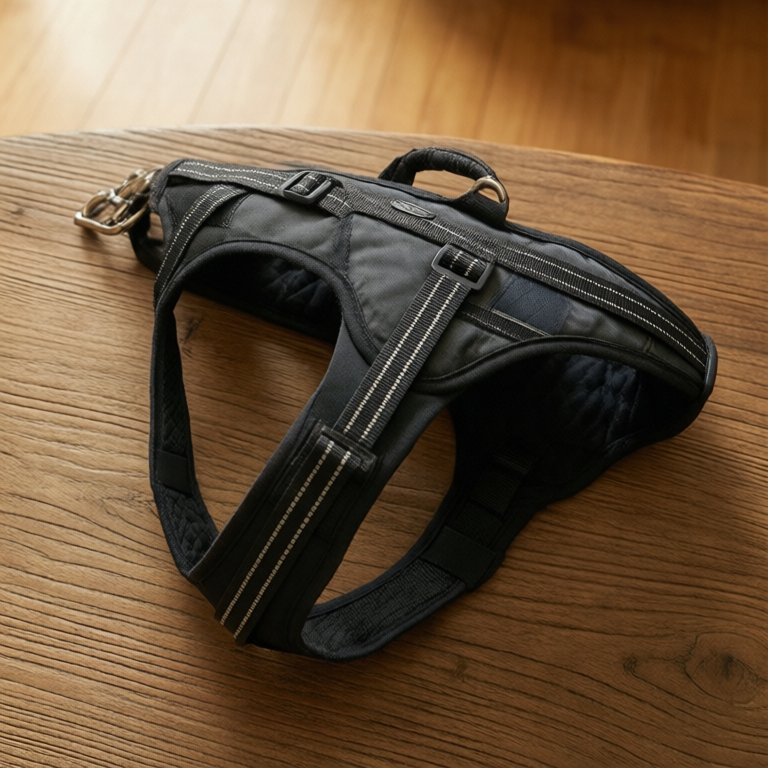
Non-stop Dogwear Freemotion Harness 5.0 — The Sport Standard
The Freemotion Harness 5.0 is the one mushers actually race in: a freestyle cut with the load point riding above and behind the shoulders, so the dog pulls with its body in a full stride instead of dragging its collar into its throat. It is deliberately loose-fitting over the chest, so long-striding dogs reach out fully, and it stays put in both directions. About $100, backed by a 4.3-star record on the listing.
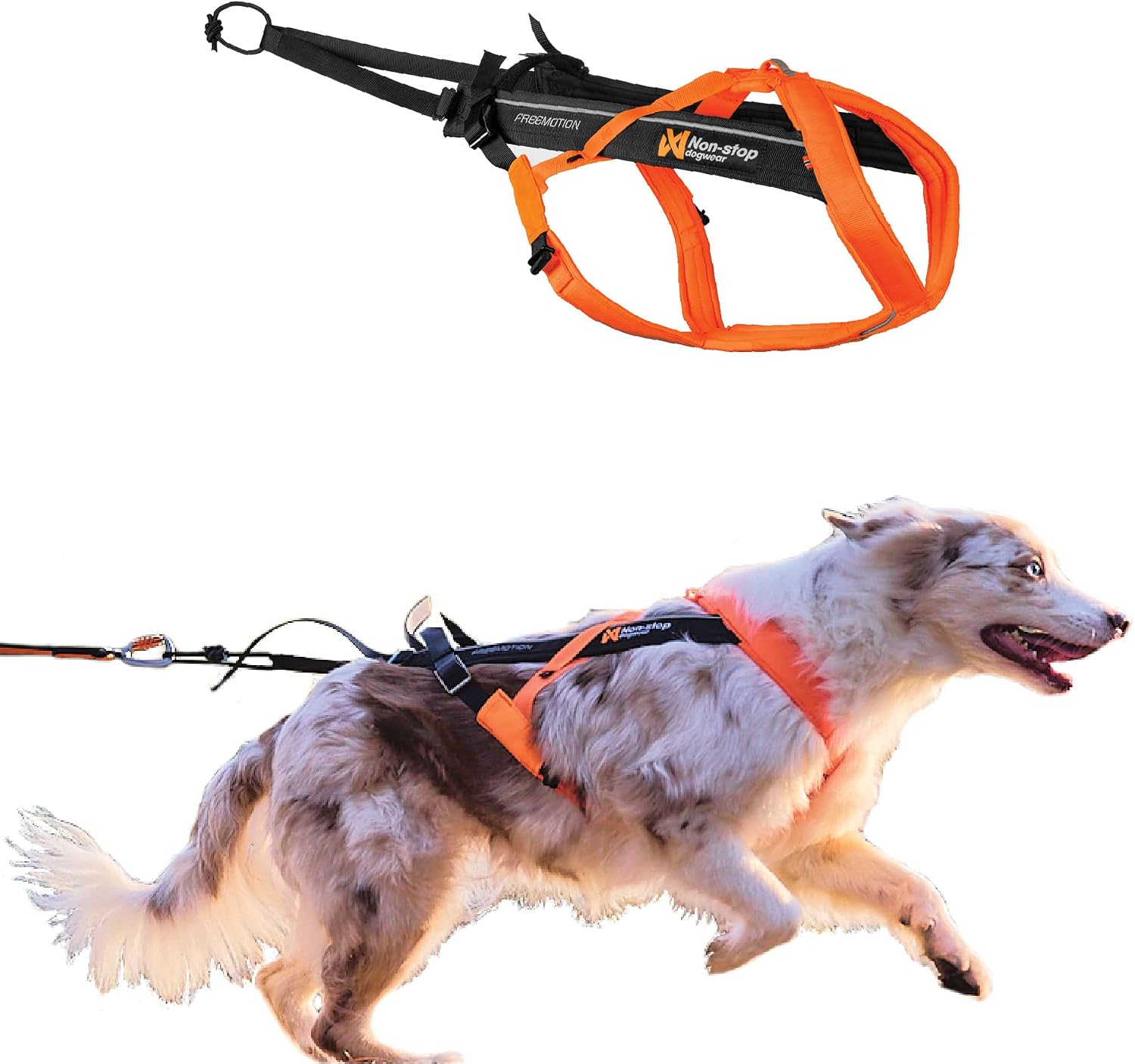
- What it does well: the physics. Pull force goes through the harness body and the dog’s frame, not its windpipe — the one job a pulling harness cannot fail.
- Honest cons: sizing is its own skill. Freemotion fits looser than any walking harness you have owned, and a first-time buyer almost always orders too snug — measure the dog and read the chart twice before you spend a hundred dollars.
My take: for a dog that will pull more than a few miles a week, this is the standard the other makers are compared against.
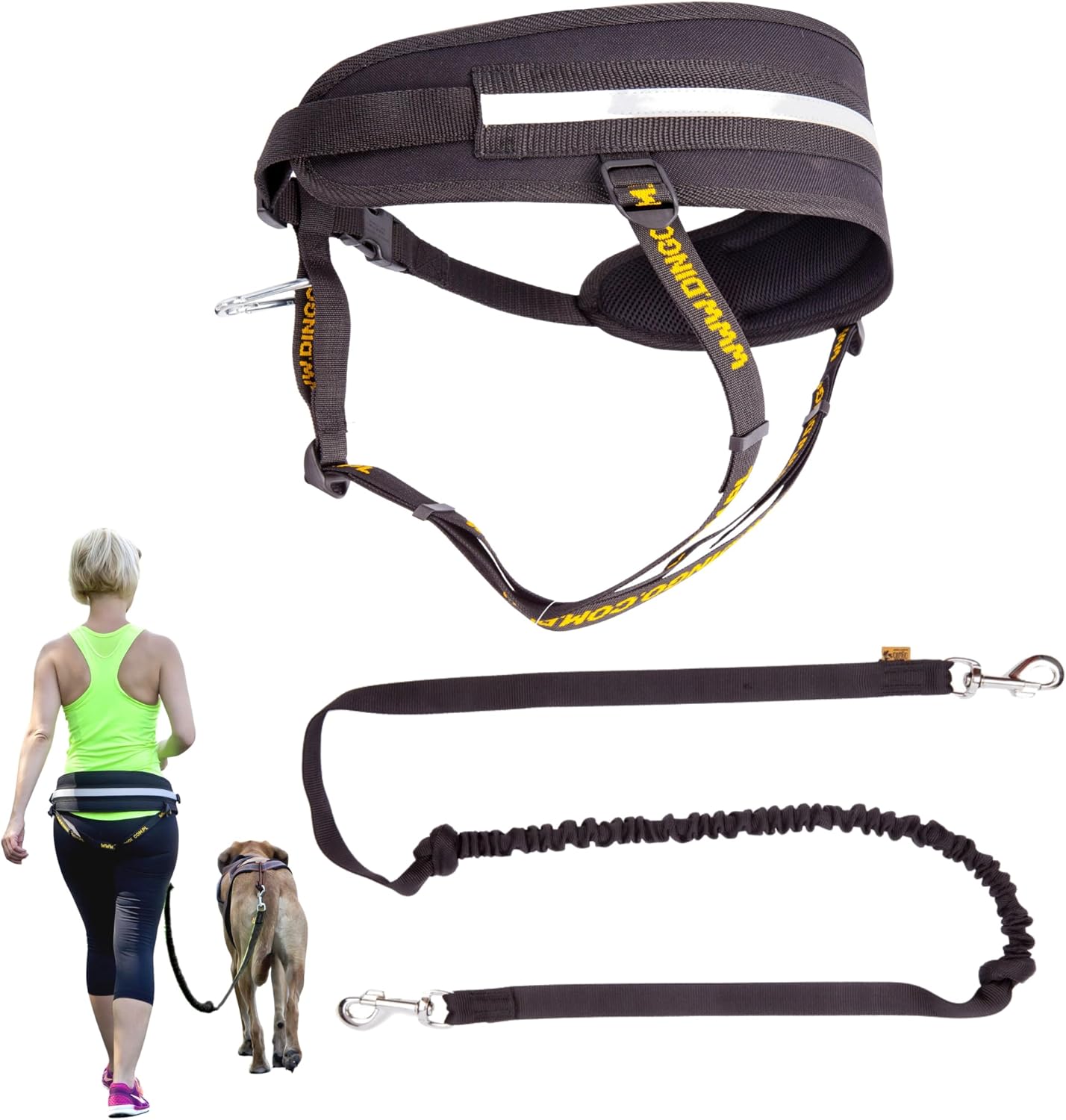
Dingo Canicross Belt with Bungee Leash — The Human Side, Starter Price
Nifty Hands-Free Dog Running Belt — The Everyday Alternative
WalkyDog Plus Bike Leash — The Frame-Mount Classic
The WalkyDog Plus is the bike-mount design copied for twenty years: a stainless wand that bolts to the seat tube, holds a short line out of the pedal arc, and gives the dog springs’ worth of soft travel. It sets up in minutes and holds the dog a fixed distance from your frame — most of the safety case for a city dog, and the cheapest way to convert a bike you already own into a rig.
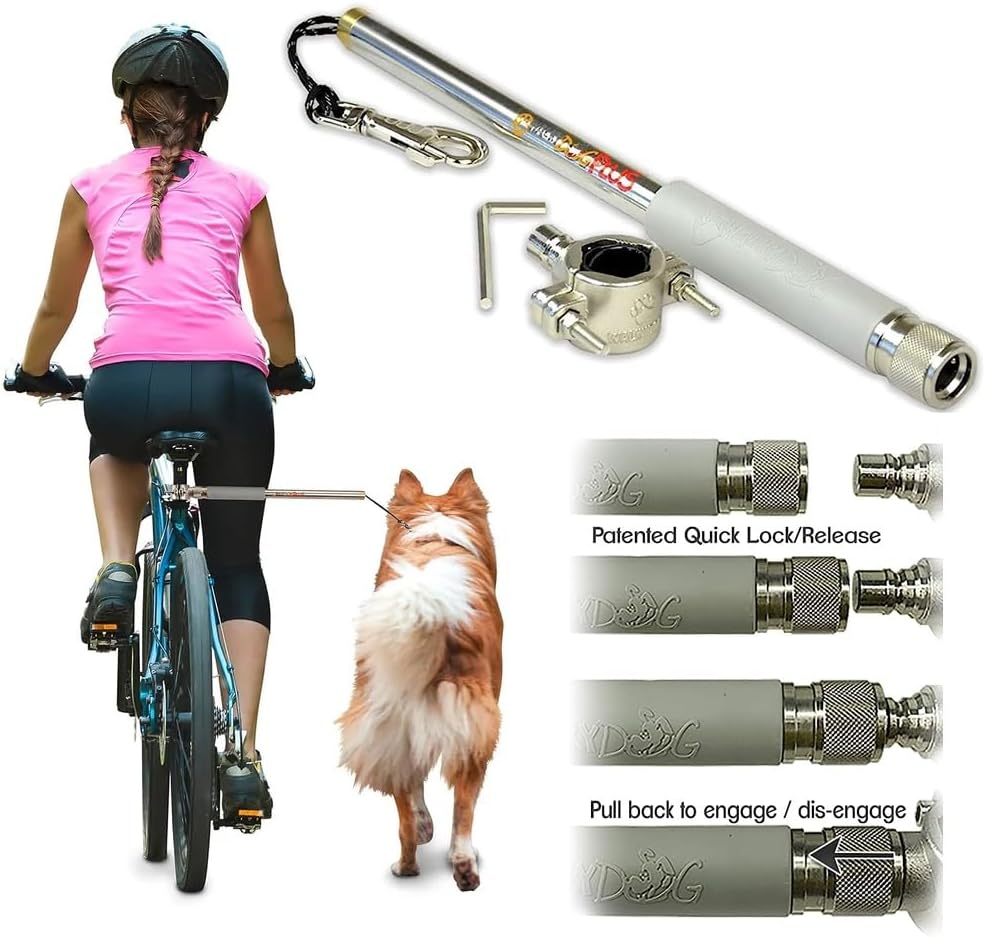
- What it does well: fixed geometry. The dog learns exactly where the safe pocket is, and the springs absorb the small surges that big bungee lines never feel.
- Honest cons: the clamp fits round seat tubes only, which rules out a lot of fat-tube and carbon bikes; unscrew the internal springs to extend the line about 6.5 inches for bigger dogs — and lose the shock absorption when you do.
My take: the sensible default for calm urban dogs on round-tube bikes: cheap, simple, and the springs matter more than you think.
Bike Tow Leash — The Premium Mouse Trap
The Bike Tow Leash is the most stable dog-bike mount made, and it looks it: a solid molded arm that clamps between the frame and the wheel, holding the dog far enough inside the turning circle that a hard lean cannot slam it into your spokes. Strong-pulling pairs — the 80-pound dogs that walk a spring wand around like a noodle — stay put because the arm flexes only where the designer put it. About $225 is real money for a leash, and it is the one piece here whose price tends to rise, not fall.
- What it does well: keeps an enthusiastic dog inside the pedal and wheel arc at speed — the mechanical property every cheap wand imitates and none achieve.
- Honest cons: the price doubles the WalkyDog, and the mount still wants a round-ish steel tube; measure before you dream.
My take: for a strong puller on a road bike over real miles it is worth every dollar — for a pottering city dog, the WalkyDog does the job at a third of the price.
Prime for the season: nobody wants to wait ten days for a harness in trail season. A free 30-day Prime trial gets the kit here this week, and free returns fix a first harness order that ran snug.
Features That Actually Matter (And Ones That Don’t)
- Pull-point geometry — matters most. The load point belongs above and behind the shoulders; chest-clip harnesses are built to stop pulling, not harness it.
- Line length and bungee — matters. Bike lines want roughly 10 to 13 feet of travel with real shock absorption; a solid tether turns a surge into a spill.
- Quick-release on the human side — matters at speed. You will want to separate from a tangle faster than any buckle opens; a one-hand release earns its keep the first wet evening you tangle.
What a Starter Kit Actually Costs
- Canicross first (recommended): Freemotion harness about $100 plus the Dingo belt and bungee about $69 — under $170 to start the sport indoors on foot, where mistakes are cheap.
- Bike-first on a budget: the WalkyDog Plus at about $70 plus the dog’s current harness gets a casual puller going — with the caveat that a proper pulling harness is still the next purchase.
- Full-speed kit: harness $100, Dingo belt $69, Bike Tow Leash $225 — about $394 for the complete rig a strong-puller pair will not outgrow.
Train on foot first, keep every ride short enough that the dog finishes wanting more, and this gear just points an existing motor at the trail.
Keep reading: our hitch cargo basket guide covers hauling the rig to the trailhead, and the hand-pump espresso rundown covers basecamp mornings.
GearHound is reader-supported. As an Amazon Associate, I earn from qualifying purchases. That means if you buy through one of the links above, I get a small commission at no extra cost to you. I only recommend gear I’d actually carry into the field.
⛺ Get Your Free Camping with Your Dog Checklist
Join our newsletter and get this free printable plus weekly tips.
Frequently Asked Questions
What gear do you need to start bikejoring with one dog?
Three pieces: a pulling harness with the load point behind the shoulders, a bungee line in the 10-to-13-foot range, and on your side either a hip belt for canicross or a bike mount for bikejoring. Start on foot with canicross commands, then add the bike at walking speed once the dog has the language down.
Can any dog learn canicross or bikejoring?
Most healthy medium-to-large dogs a year or older can learn. Keep it to walking pace for short-legged and heavy-chested breeds, and skip pulling sports entirely for flat-faced dogs, whose breathing already works harder than it should. A vet chat before the first season is free advice worth taking.
How is a pulling harness different from a walking harness?
A pulling harness puts the load point above and behind the shoulders and transfers force through the dog's frame in full stride. A walking harness clips at the chest, so under pulling pressure it tightens toward the throat — that is the choking-hazard geometry people warn about with joring gear.
How fast should you go when bikejoring?
Real teams cruise at roughly 12 to 15 mph on flat dirt, but speed is the dog's pace plus yours. Start at walking speed for the first rides regardless of breed, and stop the session while the dog still wants more; enthusiasm you preserve now becomes the sport later.
Liked this guide? Get the next one in your inbox — the camp packing checklist is free too.
✓ You're in — check your inbox.
No spam. Unsubscribe anytime. We never share your email.