This article contains affiliate links. We may earn a commission from qualifying purchases.
Some content on this site is AI-assisted and reviewed by our editorial team.
The difference between a campsite that feels like a campsite and one that feels like a parking spot with a tent on it is almost always light. A string of warm LEDs over the picnic table turns a 5 PM sunset into a full evening of cards and chili, and it does it without a fire risk, without a generator, and without draining the battery you need for the coffee setup at 6 AM.
But this is a category with real, measurable differences — and they’re not the ones the listings push. The panel size and the battery decide whether the string still glows at 9 PM. Runtimes run from 15 hours to 40 hours on a single charge, and December trip planning is exactly when the solar-only options start quietly failing you: short days, low sun angles, tree cover. I looked at what’s actually on the market right now and split the honest differences from the marketing.
MPOWERD Luci Solar String Lights + Phone Charger — The solar default
The Luci platform is the one that made solar string lights a real category. This version charges by solar or USB-C, pushes 100 to 140 lumens across a waterproof 18- or 44-foot string, and MPOWERD claims up to 40 hours of runtime on low. The built-in battery doubles as a phone charger, which is the feature nobody plans for and everybody uses by night two.
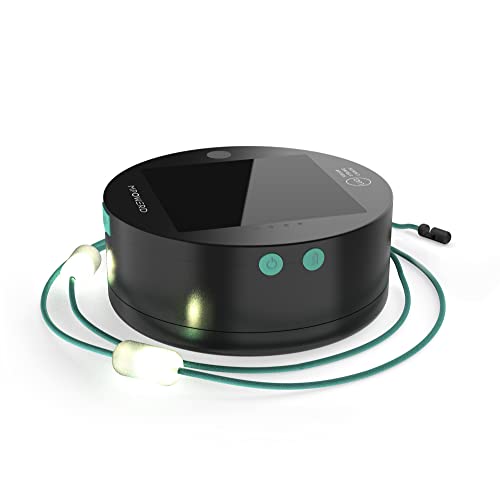
The honest catch is the solar side. The panel needs a genuinely full day of direct sun to fill the battery — and in late November, with maybe nine hours of weak daylight and your campsite half in tree shadow, it won’t get there. My take: this is still the default pick if you top it up over USB-C before you leave the house and treat the sun as a bonus, not the plan.
MPOWERD Luci Color String Lights + Phone Charger — The color-mood pick
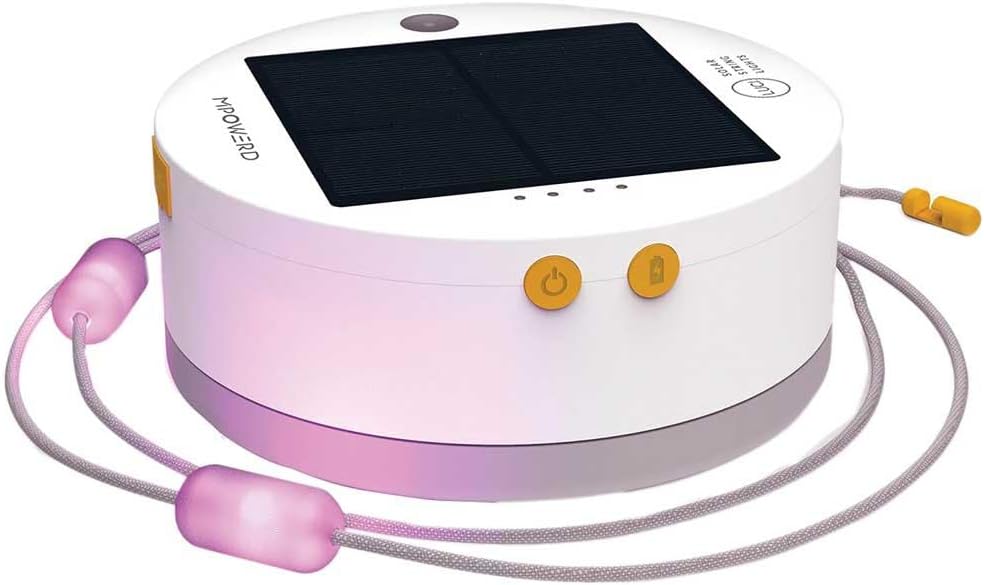
Same 18-foot Luci platform, seven color modes, same phone-charger trick. If your campsite style runs festive — or you’ve got kids who consider a plain white string a personal insult — this is the one. The colors are genuinely good and the unit is every bit as waterproof as the white version.
What the listing won’t emphasize: color modes cut runtime hard, down to about 15 hours, and the color wash makes it useless for task lighting. You can’t dice an onion under a shifting magenta glow. My take: buy this as your second string for the fun zone — the picnic table perimeter — and keep a white light for the kitchen box.
BioLite Solar String Lights 18 ft (Color) — The shatterproof-bulb upgrade
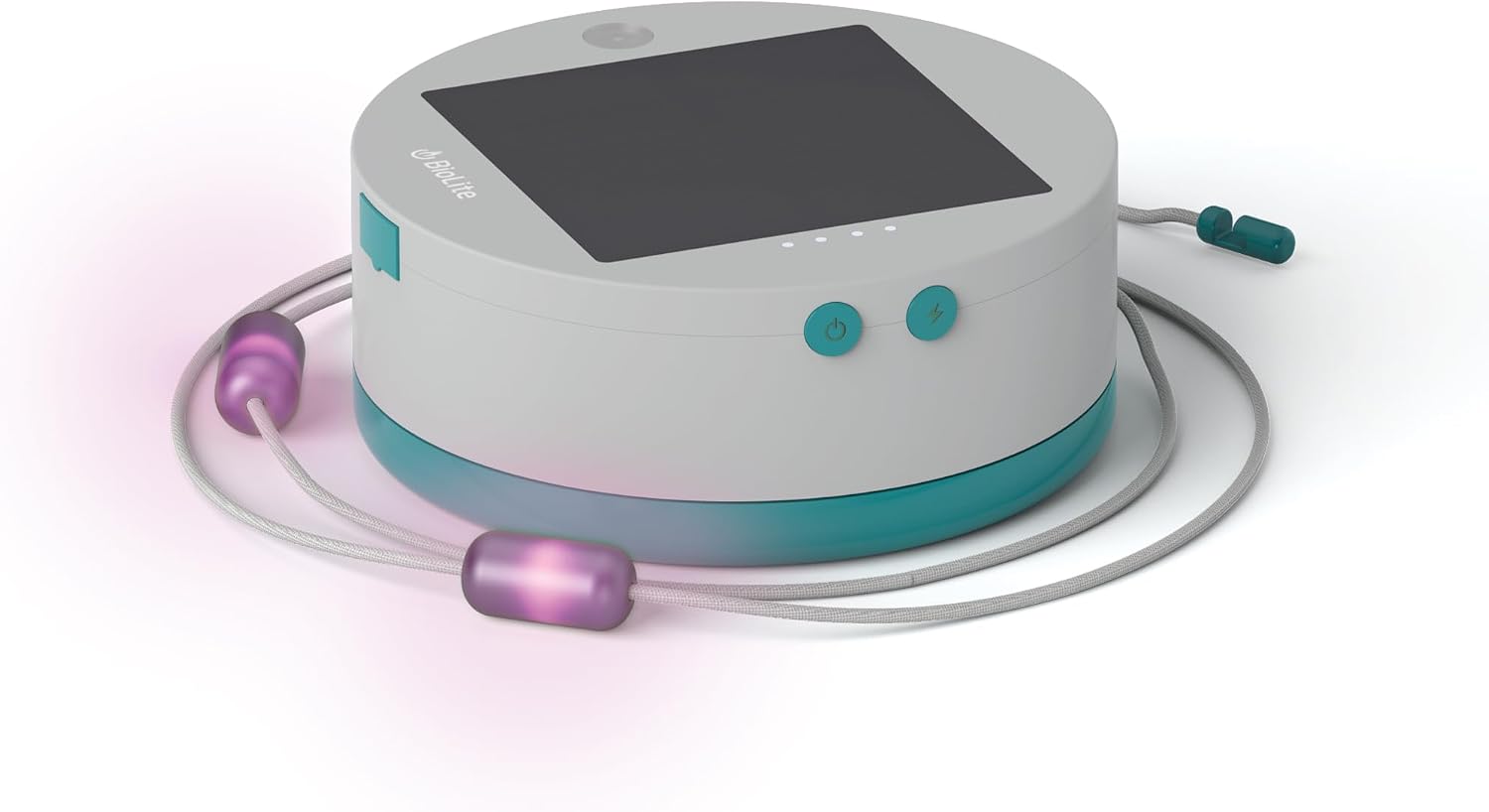
BioLite’s take is the one that looks like real string lighting rather than a gadget — ten shatterproof LED bulbs on an 18-foot strand, IPX4 water resistance, and USB-C recharge, with color modes on this version. The bulbs survive being stuffed into a tote with the cast iron, which is more than I can say for most of the category.
Two honest limits: 18 feet is one awning, full stop — if you’re outlining a big canopy you’ll run short. And the 44-foot version of this exact light carries its own listing, so check which one is actually in your cart before checkout. My take: the best-looking option here, and the one I’d hang where people photograph the campsite.
BioLite Solar Site Lights (Detachable Hub) — The overhead-and-stake system
This is the system pick: a detachable power hub that runs either hangable string bulbs or stake-style path lights, and charges a phone off the same battery. It’s the only option here that solves the walk-to-the-bathroom-in-the-dark problem and the table-lighting problem with one purchase. For vehicle campers setting up a full site — canopy over here, path over there — it’s the coherent answer.
It’s also the most expensive thing on this page, and the hub is one more piece to lose somewhere between the tote and the tent. My take: worth it if you run a big basecamp every trip; overkill if your campsite is one table and a headlamp.
Bylitodt Retractable Camping String Light (32.8 ft) — The budget reel
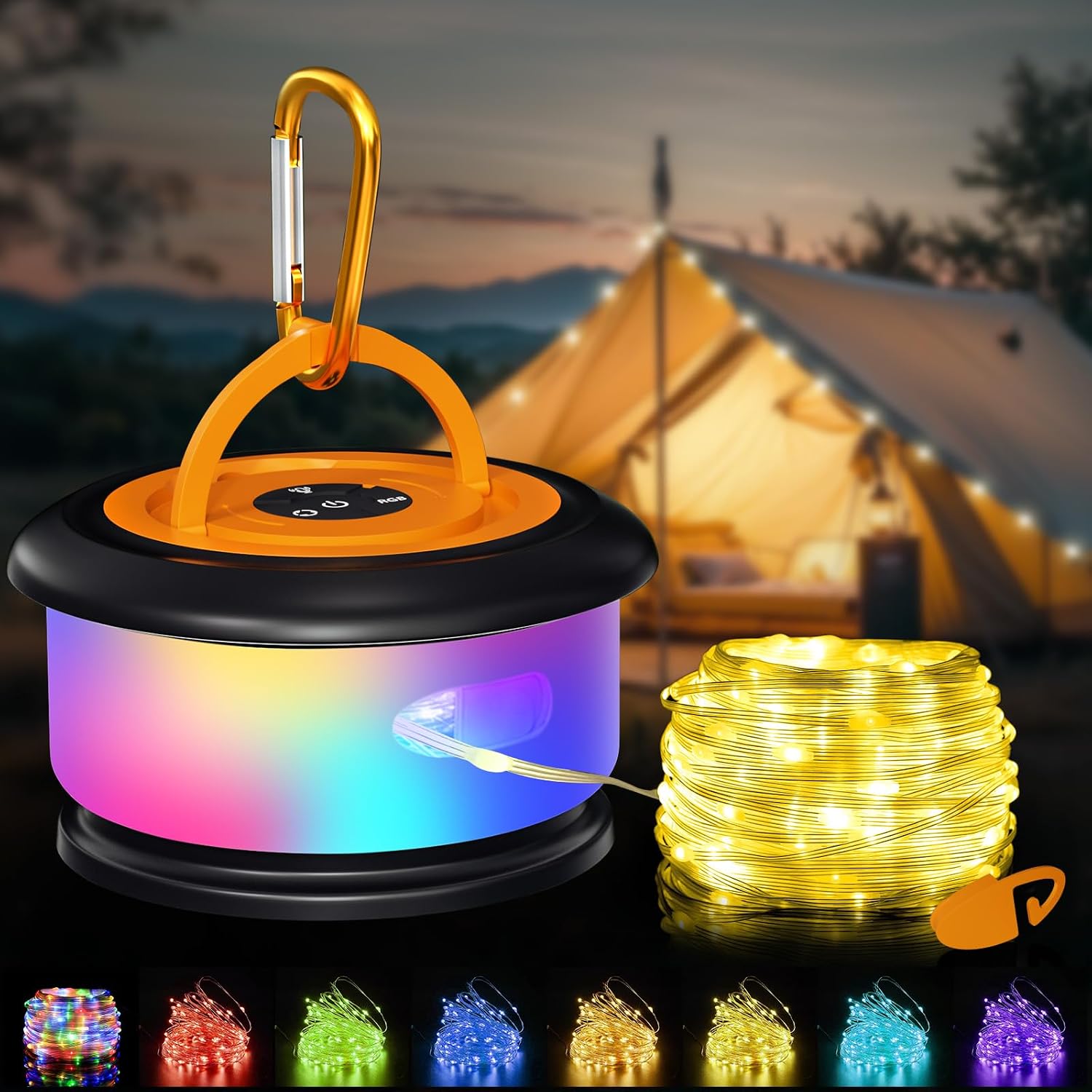
The budget lane’s smartest idea is the reel. This is a 20-dollar-class rechargeable strand that winds back onto its own spool, with eight lighting modes, which means it never comes out of the bin as a knot. Anyone who has spent ten minutes untangling lights in the dark understands why that matters more than a fifth lumen mode.
The honest part: no-name battery claims rarely survive contact with reality, and this one’s runtime won’t match the Luci’s — count on a single long evening, not a weekend. The reel also adds real pack bulk. My take: the cheap second string or the “let’s see if we even use this” trial buy — just pack a USB-C cable.
Prime tip: most of these lights ship free and fast with a Prime trial — worth grabbing before a trip weekend when the forecast is doing something interesting.
Features That Actually Matter (And Ones That Don’t)
Real battery capacity, not claimed hours. A 40-hour low-mode claim is real for the Luci; treat anything cheaper as one evening per charge until proven otherwise.
USB-C input. In winter this is the actual charging method. Solar-only lights are a June product.
Waterproofing on the whole circuit. The lights survive rain; the charging-port cover is what fails first. Check that it seals.
Length honesty. 18 feet = one awning or one table run. 32–44 feet = a real perimeter. Don’t buy 18 feet for a canopy outline.
Ignore: mode counts. Eight modes means seven you’ll never use again after the first night.
What to Spend Where
- One-string camper, summer trips: the Luci solar string, and the sun does the work.
- Winter or tree-covered trips: any of the above, but plan on USB-C top-ups — spend on battery, not panel size.
- Basecamp builders: the BioLite hub system plus a budget reel string as a second run.
- Under a tight budget: the reel light, plus a rule that it gets recharged every morning, no exceptions.
Keep reading: our camp cocoa without a kitchen guide pairs well with a lit table, and the camp pillow roundup covers the other half of a comfortable night.

GearHound is reader-supported. As an Amazon Associate, I earn from qualifying purchases. That means if you buy through one of the links above, I get a small commission at no extra cost to you. I only recommend gear I’d actually carry into the field.
⛺ Get Your Free Camping with Your Dog Checklist
Join our newsletter and get this free printable plus weekly tips.
Frequently Asked Questions
How long do solar string lights last at a campsite?
On a full charge, the better units run 15 to 40 hours depending on mode — the MPOWERD Luci claims up to 40 hours on low, while color modes cut that to about 15. Budget strands realistically give you one long evening per charge.
Can you leave camping string lights out in the rain?
The quality options are genuinely waterproof — the Luci line is rated for full submersion and BioLite's strands are IPX4. What fails first is usually the charging-port cover, so check the seal after every wet trip.
Do solar string lights work in winter?
Only marginally — the panels need a full day of direct sun, and short December days with low angles and tree cover won't get you there. Treat USB-C as your real charging method and the solar panel as a bonus.
What length of string lights do I need for a campsite?
18 feet covers one awning or one picnic-table run. For a full canopy perimeter or a pathway, plan on 32 to 44 feet — buying 18 feet for an outline job is the most common mistake in this category.
Liked this guide? Get the next one in your inbox — the camp packing checklist is free too.
✓ You're in — check your inbox.
No spam. Unsubscribe anytime. We never share your email.