This article contains affiliate links. We may earn a commission from qualifying purchases.
Some content on this site is AI-assisted and reviewed by our editorial team.
Best Dog Whistles 2026: Recall Training That Actually Works
*Your dog ignoring you at the dog park is not a personality trait — it is a training gap. The right whistle, used consistently, closes that gap faster than any other tool. Here are the five that earned a permanent spot on our lanyards.*
I have used dog whistles in city parks, on mountain trails, across open fields, and in driving rain. Some cut through distractions. Some barely cut through air. These five are the ones I keep reaching for — and the one I would replace immediately if we lost them.
—
The Quick Guide: Which Whistle for What?
- Best overall recall whistle: ACME Alpha 211.5 — loud, consistent, and impossible to misblow
- Small dogs and close-range work: ACME 210.5 — higher pitch, gentler volume
- Hunting and field training: SportDOG Roy Gonia Special — pea whistle with variable tones
- Beginners combining recall and clicker training: Coachi Whizzclick — whistle and clicker in one tool
- Hands-free herding and distance work: ACME 575 Shepherd’s Mouth — lip whistle for continuous sound
Jump to the Shop This Post section for quick links, or read on for the full breakdown.
—
Best Overall: ACME Alpha 211.5 Professional Dog Training Whistle
ACME Alpha 211.5 Professional Dog Training Whistle
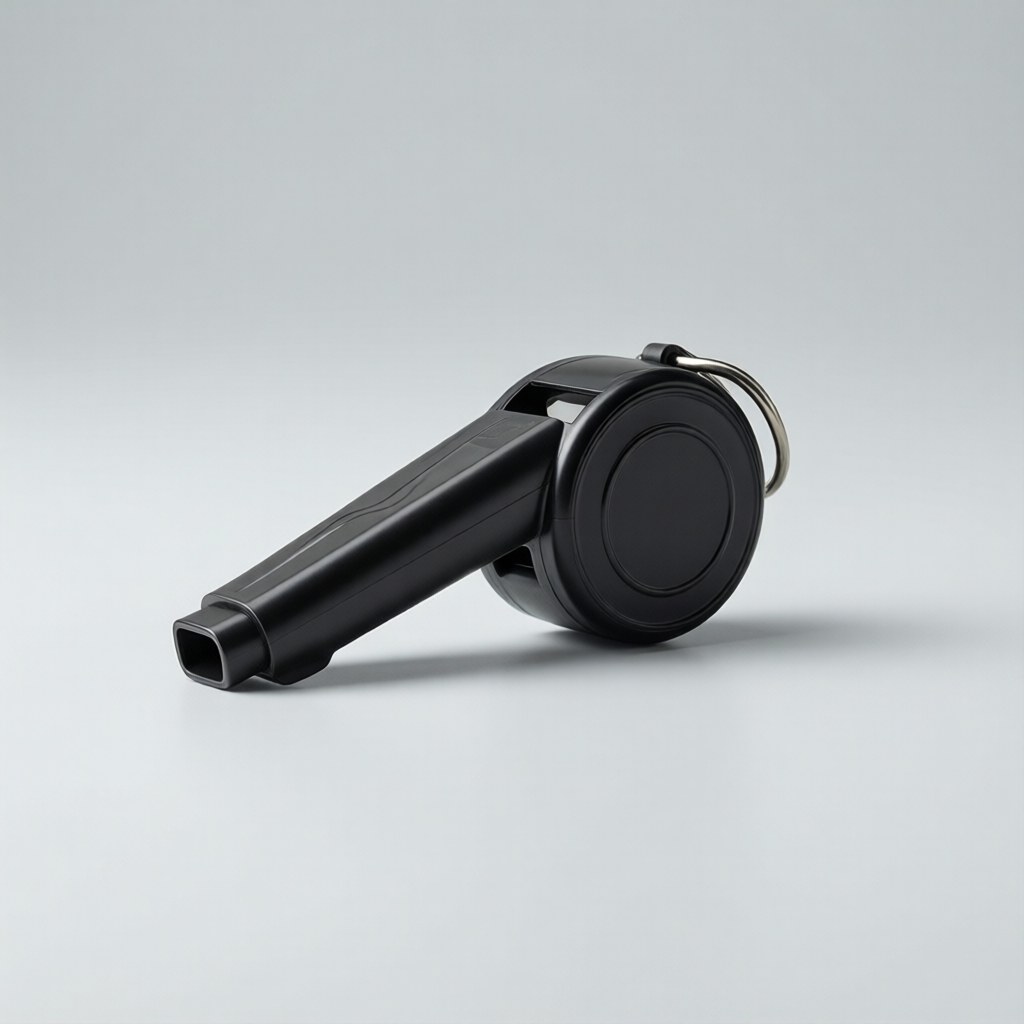
If you buy one dog whistle in your life, make it this one. The ACME Alpha 211.5 is the whistle professional trainers reach for — and the one they recommend to beginners. It produces a single, standardized frequency every single time you blow it, regardless of how hard or soft you blow. That consistency is the whole point. Your dog learns one sound means “come here now,” and that sound never changes.
The new Alpha version adds an ergonomic grip that the classic 211.5 lacked. The grip is textured and shaped to stay in your hand during cold-weather training sessions, and the BPA-free plastic is weatherproof — I have dropped ours in puddles, snow, and mud without issue. At 110 dBA, it carries over long distances, making it reliable across a park or open field.
Best for: All-around recall training for medium and large dogs. If you are starting whistle training for the first time, this is your pick. Pair it with a solid training leash or long line for structured recall sessions.
Pros:
- Single standardized frequency — your dog always hears the same note
- Ergonomic grip stays in your hand even when wet or cold
- 110 dBA volume cuts through wind, traffic, and distance
- Weatherproof BPA-free plastic
- Used by professional gundog and obedience trainers worldwide
Cons:
- Audible to humans — not a silent whistle
- Fixed frequency means you cannot adjust pitch
- Bright orange color is functional but not exactly discreet
Fallback link: Search ACME Alpha 211.5 on Amazon
—
Best for Small Dogs: ACME 210.5 Dog Training Whistle
ACME 210.5 Dog Training Whistle
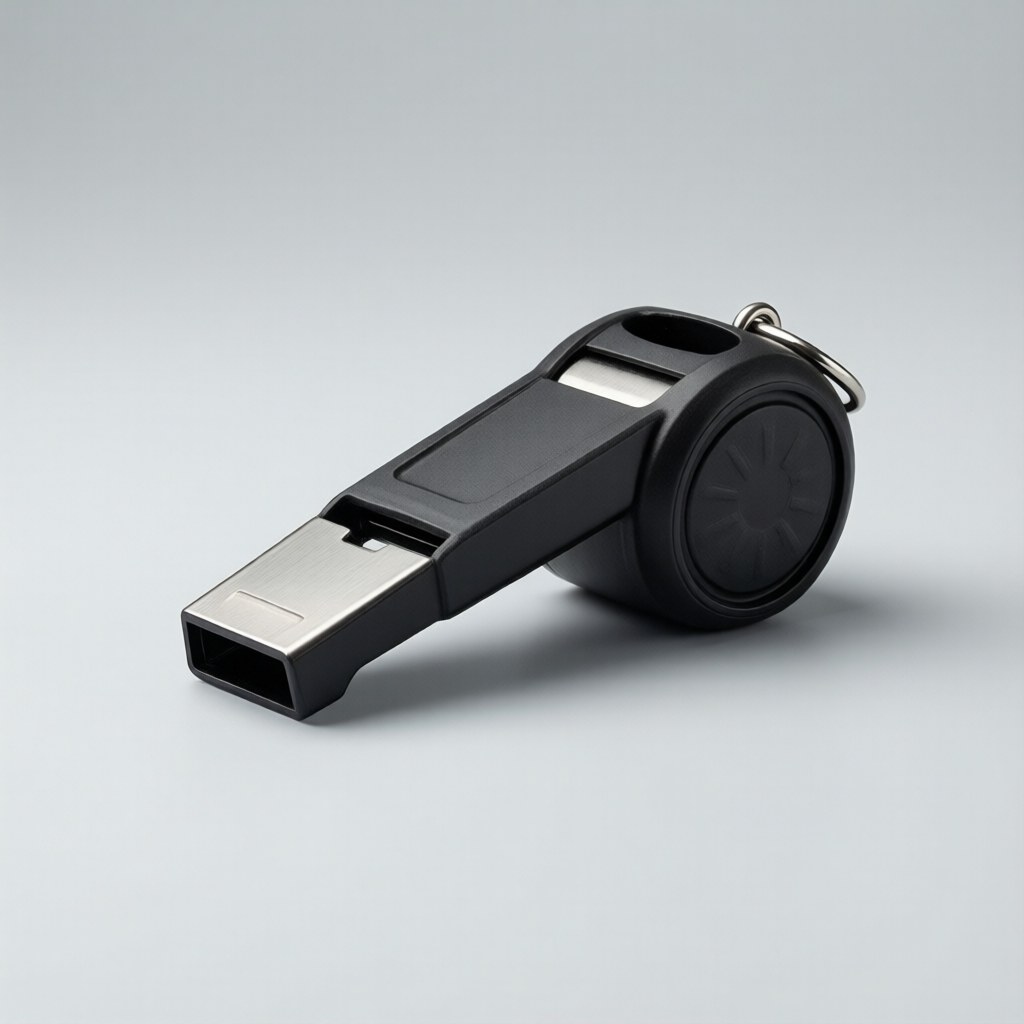
The ACME 210.5 is the smaller sibling of the 211.5, and that is not a coincidence — it was designed specifically for smaller dogs. It produces a higher-pitched tone at a lower volume (around 90 dBA versus the 211.5’s 110 dBA), which is easier on sensitive ears while still being distinct enough to grab attention. If you have a toy breed or a dog that startles at loud sounds, the 210.5 is the better choice.
Like all ACME whistles, the 210.5 holds a single standardized frequency. Your dog learns one consistent sound, and you never have to worry about adjusting pitch or blowing harder to compensate. It uses the same food-grade ABS plastic as the 211.5, so it holds up to rain, slobber, and being dropped on concrete.
Best for: Small breeds, dogs with sound sensitivity, and close-range recall work where you do not need 100-yard volume. For hikers who keep their small dog on trail, combine this with our trail running dog gear recommendations.
Pros:
- Higher pitch is easier on small, sensitive ears
- Lower volume will not startle timid dogs
- Same ACME build quality and frequency consistency
- Lightweight and compact — easy to carry on any walk
Cons:
- Lower volume means shorter range than the 211.5
- Not ideal for large open fields or hunting scenarios
- Small size makes it easier to lose — attach it to a lanyard
Fallback link: Search ACME 210.5 on Amazon
—
Best for Hunting and Field Training: SportDOG Roy Gonia Special Whistle
SportDOG Roy Gonia Special Whistle
The Roy Gonia Special is a pea whistle, which means it has a small ball inside that creates a trilling sound when you blow. That trill is exactly what gundog trainers want — it is loud, it carries over enormous distances, and you can vary the tone by changing how you blow. One sharp blast means stop. A rolling trill means come back. It is a full communication system packed into a two-inch piece of plastic.
SportDOG built this whistle for cold, wet hunting conditions. The orange body is easy to spot when you set it down in tall grass, and the pea is designed to resist freezing — a real problem with cheaper pea whistles in sub-zero temperatures. The sound is loud enough to reach a dog quartering a field at 200-plus yards.
Best for: Hunting dogs, field trials, and anyone training a gundog. Also useful for large open spaces where you need maximum reach. Pair with a durable training leash for controlled field sessions.
Pros:
- Pea design allows variable tones for multiple commands
- Extremely loud — carries over long distances and wind
- Freeze-resistant pea works in cold weather
- Bright orange body is easy to find in the field
- Trusted by professional gundog trainers
Cons:
- Pea whistles require breath control — beginners may produce inconsistent sounds
- Moisture buildup inside can affect the pea over long sessions
- Too loud for indoor use or small enclosed yards
- Sound varies with how you blow, which can confuse a dog early in training
Fallback link: Search SportDOG Roy Gonia on Amazon
—
Best Whistle and Clicker Combo: Coachi Whizzclick 2-in-1 Training Tool
Coachi Whizzclick 2-in-1 Combined Clicker and Whistle
If you are training recall and basic obedience at the same time — which, honestly, most people are — the Coachi Whizzclick combines both tools into one. The whistle sits above a clicker on a single handle, so you can blow the whistle to call your dog and then click the moment they start heading toward you. That sequence — whistle, recall, click, reward — is the textbook recall training loop, and the Whizzclick puts both buttons literally in your hand.
The whistle pitch is adjustable, so you can find the frequency your dog responds to best. The clicker has a quieter sound than standalone box clickers, which is good for sound-sensitive dogs. A reflective lanyard is included, and the whole unit is small enough to clip to a treat pouch or pocket.
Best for: Beginners who are starting recall training from scratch and want one tool that does both jobs. Also great for puppy classes and group training sessions where you need quick transitions between whistle and clicker.
Pros:
- Whistle and clicker in one tool — no fumbling between devices
- Adjustable whistle pitch lets you find your dog’s best frequency
- Quieter clicker is good for sensitive dogs
- Includes reflective lanyard
- Affordable — costs less than buying a whistle and clicker separately
Cons:
- Whistle volume is lower than dedicated training whistles like the ACME 211.5
- Clicker sound is not as crisp as a dedicated box clicker
- Adjustable pitch means you can accidentally change the frequency between sessions
- Plastic construction is less durable than ACME whistles
Fallback link: Search Coachi Whizzclick on Amazon
—
Best for Hands-Free Training: ACME 575 Shepherd’s Mouth Whistle
ACME 575 Shepherd’s Mouth Whistle
The ACME 575 is not a whistle you hold in your hand. It sits in your mouth, held between your lips, leaving both hands free to handle a leash, throw treats, or manage a dog. That is why shepherds and herding trainers have used this design for generations — when you are working a dog at distance, you cannot afford to fumble for a whistle.
The sound is a crescendo rather than a single note. By changing your breath pressure and tongue position, you can produce a range of tones and trills. This gives you multiple distinct commands — one tone for “come,” another for “go left,” another for “lie down.” It takes practice, but once you learn the technique, it is the most versatile whistle on this list.
The nickel silver version is built to last decades. It will not crack in cold weather, it will not rust, and it develops a patina that actually improves the grip over time. ACME has been making these in England since the 1800s.
Best for: Experienced handlers, herding and working dog trainers, and anyone who wants a full vocabulary of whistle commands without carrying multiple whistles. If you spend serious time training off-leash dogs, this is your long-term tool.
Pros:
- Hands-free operation — both hands stay on the leash or treats
- Variable tones let you create multiple distinct commands
- Nickel silver construction lasts a lifetime
- 100 dBA volume carries well across fields and hills
- The tool professional shepherds and herding trainers use
Cons:
- Requires practice to produce consistent sounds — not beginner-friendly
- Sits in your mouth, which some people find uncomfortable
- No lanyard attachment — you carry it in your mouth or pocket
- Sound quality depends on your technique, which takes weeks to develop
Fallback link: Search ACME 575 on Amazon
—
How to Train Recall With a Whistle: Step by Step
A whistle is only as good as the training behind it. Buying the best whistle in the world and blowing it at your dog with no preparation will teach your dog nothing except that you make annoying sounds. Here is how to build a recall that works reliably.
Step 1: Choose Your Whistle Command
Decide on your recall signal before you start. Most trainers use three short blasts or one long blast. Pick one and stick with it forever. Consistency is non-negotiable. Write it down if you need to. Everyone in your household must use the same signal.
If you are using a pea whistle like the SportDOG Roy Gonia, you can assign different commands to different sounds — for example, two short blasts for “come” and a long trill for “turn around.” Just make sure each command has exactly one sound.
Step 2: Charge the Whistle
Before your whistle means anything, you need to make it mean everything. Here is how:
- Stand close to your dog indoors, in a low-distraction room
- Blow your whistle once — just a short, clear blast
- Immediately give your dog a high-value treat
- Repeat 20 to 30 times in one session
- Do two to three sessions per day for three days
After three days, your dog should look at you the moment they hear the whistle because they have learned that sound equals reward. If they do not look at you, go back to step one and charge for more repetitions.
Step 3: Add Distance Gradually
Once your dog responds reliably at close range, start adding distance:
- Day 4-5: Blow the whistle from across the room. Treat when they come to you
- Day 6-7: Blow the whistle from one room while your dog is in another. Reward generously when they find you
- Week 2: Move to a quiet outdoor space like a backyard. Start at 10 feet, then 20, then 30
- Week 3: Practice in a park during a quiet time — early morning, few distractions
Use a long line during outdoor training. Attach it to a harness — not a collar — and let your dog drag it. If they ignore the whistle, you can step on the line and guide them back. Never blow the whistle again if they do not respond. One blast, one chance. Then use the line.
Step 4: Proof Against Distractions
This is where most people fail. Recall in your living room is easy. Recall when a squirrel is involved is the real test. Increase distractions gradually:
- Low distraction: Empty park, no other dogs
- Medium distraction: Park with a few dogs at distance
- High distraction: Dog park, trails with wildlife, around food on the ground
At each stage, use higher-value treats than you used indoors. Save the really good stuff — real chicken, liver, whatever your dog goes crazy for — for the hardest distractions. When your dog comes back to you at the dog park, they should feel like they won the lottery.
Step 5: Maintain and Reinforce
Recall is not a skill you train once and forget. It requires maintenance:
- Blow the whistle and reward at least once per walk, even when your dog is already near you
- Never blow the whistle for things your dog dislikes — nail trims, baths, leaving the park
- If your dog ignores the whistle, do not repeat it. Walk toward them silently, guide them back, and lower the distraction level next time
- Vary your rewards — sometimes treats, sometimes play, sometimes just praise
- Keep your long line handy for periodic proofing sessions
The golden rule of whistle recall: the whistle always means good things are about to happen. The moment you use it to call your dog for something unpleasant, you undo weeks of training. If you need to leave the park, walk to your dog instead of whistling. If bath time is coming, go get them. Save the whistle for positive experiences.
—
Pea Whistle vs. Pealess vs. Silent: Which Type Is Right for You?
- Pealess (ACME 210.5, 211.5, 212): One consistent note every time. Best for recall training because your dog always hears the same sound. No moving parts means nothing to freeze, stick, or rattle. The top pick for most dog owners.
- Pea whistle (SportDOG Roy Gonia): A small ball inside creates a trilling sound. Allows multiple distinct tones for different commands. Better for experienced handlers who want a full vocabulary of whistle signals. The pea can stick in extreme cold or with moisture buildup.
- Silent/ultrasonic whistle: Produces sound above human hearing range. Sounds appealing for not annoying neighbors, but dogs respond less reliably to ultrasonic tones than audible ones. Harder to verify your whistle is actually working. We do not recommend silent whistles for recall training.
- Shepherd’s mouth whistle (ACME 575): Held between your lips for hands-free use. Produces a range of tones by varying breath and tongue position. Most versatile but requires significant practice. The choice of professional herders.
For most people training recall, a pealess whistle is the right call. The ACME 211.5 or 210.5 gives you one consistent sound, zero moving parts, and a design that has been refined for over a century.
—
Common Whistle Training Mistakes
- Blowing the whistle without training first. The whistle means nothing until you charge it with treats. A dog does not instinctively come when they hear a whistle — you have to teach them.
- Repeating the whistle when your dog does not respond. If you blow three times, your dog learns the first two are optional. Blow once. If they do not come, use your long line.
- Using the whistle for unpleasant things. Never whistle your dog to come for a bath, nail trim, or end of play. The whistle must always predict something good.
- Phasing out rewards too soon. Keep rewarding whistle recalls for months. Variable rewards eventually, but never no rewards. Your dog should always be glad they came back.
- Practicing only in easy environments. If you only train recall in your backyard, your dog will only recall in your backyard. You have to proof in real-world environments.
- Using different whistle sounds for the same command. Your recall signal must be identical every single time. This is why pealess whistles are recommended for beginners — they produce the same note regardless of how you blow.
—
Wrapping Up
The best dog whistle for recall training is the one you carry consistently and use correctly. The ACME Alpha 211.5 is my top pick because it produces the same frequency every time, it is loud enough to reach across a field, and it has no moving parts to fail. For small dogs, step down to the ACME 210.5. For field work, grab the SportDOG Roy Gonia Special.
But the whistle is only half the equation. The other half is training: charge the whistle with treats, add distance on a long line, proof against real-world distractions, and never blow it for things your dog does not like. Follow the steps in this guide and you will have a recall that works — not just sometimes, but every time.
—
Shop This Post
- ACME Alpha 211.5 Professional Dog Training Whistle (best overall recall whistle)
Buy on Amazon | Search on Amazon - ACME 210.5 Dog Training Whistle (best for small dogs)
Buy on Amazon | Search on Amazon - SportDOG Roy Gonia Special Whistle (best for hunting and field)
Buy on Amazon | Search on Amazon - Coachi Whizzclick 2-in-1 Whistle and Clicker (best whistle/clicker combo)
Buy on Amazon | Search on Amazon - ACME 575 Shepherd’s Mouth Whistle (best hands-free for experienced handlers)
Buy on Amazon | Search on Amazon
—
*Related Reading:*
– Best Dog Leashes 2026
– Trail Running Dog Gear
n
GearHound is reader-supported. When you buy through links on this site, we may earn an affiliate commission at no extra cost to you.
⛺ Get Your Free Camping with Your Dog Checklist
Join our newsletter and get this free printable plus weekly tips.
Price Check
Prices verified via our product tracker. Updated Sep 27.
| Amazon.com: ACME Alpha 211.5 Professional Dog Training Whi | $18.00 | 4.2★ (790) |
| Amazon.com : ACME Alpha 211.5 Professional Dog Training Wh | $18.00 | 4.2★ (790) |
| Amazon.com : Acme Dog Whistle no. 210.5 | Original from En | $18.98 | 3.9★ (3,064) |
| Amazon.com : KIVORA 4 Pack Dog Whistle to Stop Barking Nei | $15.99 | 3.3★ (357) |
| Amazon.com : SportDOG Roy Gonia Special Whistle - Orange w | $4.99 | 4.3★ (1,145) |
| Amazon.com: TISUR Loud Emergency Whistles,Whistle Keychain | $8.49 | 4.6★ (194) |
| Amazon.com: Company of Animals Coachi Whizzclick | Navy/Li | $6.99 | 4.0★ (785) |
| Amazon.com : Electronic Whistle, Battery Operated Whistle | $9.99 | 4.5★ (2,991) |
| Amazon.com : ACME 575 professional dog training shepherd l | $15.50 | 3.9★ (3,592) |
| Amazon.com: ACME No. 576 Professional Dog Training Shepher | $17.48 | 3.9★ (3,592) |
As an Amazon Associate we earn from qualifying purchases.