
This article contains affiliate links. We may earn a commission from qualifying purchases.
Some content on this site is AI-assisted and reviewed by our editorial team.
Best Paracord 2026: Strong Cord Worth Carrying on Every Trip
By GearHound
Paracord is the duct tape of the outdoor world — it fixes everything. I have used it to guy out a tent in wind, hang a bear bag, make a clothesline at camp, replace a broken boot lace, secure gear to my pack, and rig an impromptu shelter. A 50-foot hank weighs 3 ounces and takes up less space than a pair of socks. There is no reason not to carry it.
But not all paracord is the same. Here is what matters.
What Is Paracord?
Paracord (short for parachute cord) is a lightweight nylon kernmantle rope — a smooth outer sheath around inner core strands. It was originally used in parachute suspension lines, which is why the military grades it by type: Type I (95 lb test), Type II (400 lb), Type III (550 lb), and Type IV (750 lb).
“550 paracord” is Type III — the most common type. It has a 550-pound tensile strength, 7 inner strands, and a 4mm diameter. It is the standard for outdoor use because it is strong enough for most tasks but still packs small and is easy to work with.
“750 paracord” is Type IV — stronger, with 11 inner strands and a 5mm diameter. Heavier and bulkier, but rated for 750 pounds. For most hiking and camping, 550 is enough. For load-bearing applications like rappelling or hauling gear, 750 is safer (though neither is rated for climbing).
What to Look For
- Mil-Spec vs commercial: Mil-Spec (MIL-C-5040H) paracord meets military specifications — 100% nylon, 7 inner strands, 3-ply per strand, UV-resistant. Commercial paracord looks similar but may use polyester instead of nylon, have fewer inner strands, or use 2-ply construction. It is cheaper but weaker. For actual outdoor use, get Mil-Spec or a reputable commercial equivalent.
- Tensile strength: 550 lb for Type III, 750 lb for Type IV. Match the strength to the task.
- Length: 50 feet is enough for most day hikes (guylines, emergency repairs). 100 feet is better for backpacking (bear bag, clothesline, shelter). 250+ feet for basecamp or group trips.
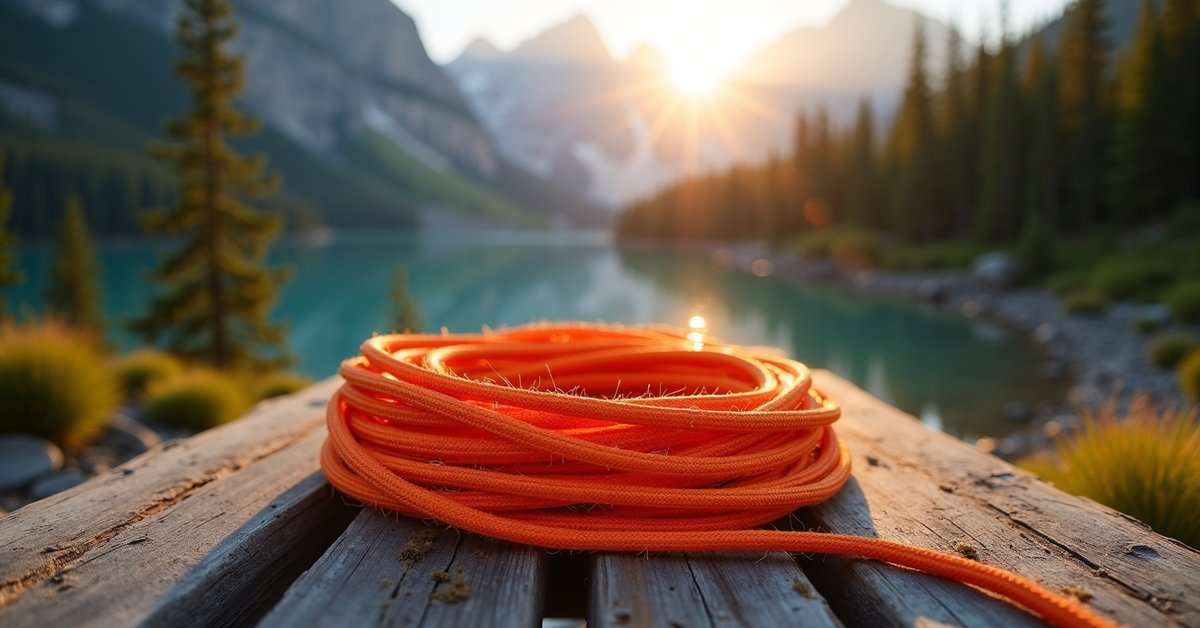
- Color: Does not affect performance. Bright colors are easier to see at night. Camo colors blend in. I carry orange because it is visible in any terrain.
- UV resistance: Nylon resists UV better than polyester. If the paracord will be exposed to sun for long periods (permanently rigged guyline), nylon lasts longer.
The Best 550 Paracord
TOUGH-GRID 550 Paracord (Mil-Spec)
TOUGH-GRID makes genuine Mil-Spec Type III paracord — 100% nylon, 7 inner strands, 3-ply construction, certified to MIL-C-5040H. It tests at a true 550-pound tensile strength, not a marketing claim. The sheath is tight and smooth, so it does not fray when cut, and the inner strands are consistent quality.
It comes in 50, 100, and 500-foot lengths and a wide range of colors. The nylon is UV-resistant and holds up well in sun exposure. It packs tight — 50 feet coils to about the size of a tennis ball.
If you want paracord that you can trust for real load-bearing tasks — hanging a bear bag, rigging an emergency tarp shelter, securing gear — this is the one.
Compare current prices on Amazon
The Best 750 Paracord
TOUGH-GRID 750 Paracord (Type IV)
If you want more strength, the TOUGH-GRID 750 is Type IV Mil-Spec paracord with 11 inner strands and a 750-pound tensile strength. It is thicker (5mm vs 4mm) and heavier, but significantly stronger. For applications where failure is not an option — hauling gear, rigging a heavy shelter, rescue situations — the extra strength is worth the weight.
The 750 is harder to tie tight knots with because of the thicker diameter, and it takes up more pack space. For most hikers, 550 is the better choice. But if you are setting up a basecamp or doing serious rigging, step up to 750.
See price and reviews on Amazon

The Best Budget Paracord
Paracord Planet 550 Type III
Paracord Planet makes commercial-grade 550 paracord that is not Mil-Spec certified but is good enough for most casual use. It is 7-strand, 4mm diameter, and rated to 550 pounds. The outer sheath is nylon, though the inner strands may be 2-ply instead of 3-ply.
For guylines, clotheslines, and light-duty use, it works fine. For load-bearing applications where failure could be dangerous, I would spend the extra money on TOUGH-GRID Mil-Spec. But for general camp use, Paracord Planet is a solid budget choice.
It comes in 25, 50, 100, and 1000-foot lengths and a huge range of colors. The 100-foot hank is the best value for most campers.
Check the latest price on Amazon
The Best Paracord with Buckles
Paracord Planet 550 with Buckles
If you want to make your own paracord bracelets, lanyards, or gear ties, this kit includes 550 paracord plus 3/8-inch side-release buckles. The buckles are plastic and reasonably tough — not load-bearing, but fine for bracelets and removable ties.
The paracord is the same commercial-grade Type III as the standard Paracord Planet product. The buckles come in black and pair with any color cord. For people who want to carry paracord in a compact wearable form rather than a loose hank, this is a convenient option.
The Best Mil-Spec 550
TOUGH-GRID Premium 550 Mil-Spec (MIL-C-5040H)
This is the certified version of the TOUGH-GRID 550. It carries the actual MIL-C-5040H certification, which means every spool has been tested to meet military specifications: 100% nylon, 7 inner strands, 3-ply per strand, minimum 550-pound break strength. It comes with a certificate of compliance.
If you are buying paracord for emergency preparedness or you want to be absolutely certain of the strength rating, this is the one. It costs more than commercial paracord, but the certification means you are getting what the label says.
See price and reviews on Amazon
10 Uses for Paracord on the Trail
If you are wondering whether paracord is worth carrying, here are 10 things I have actually used it for on trips:
- Tent guylines: Extra cord for windy conditions or when the stock guylines are too short.
- Bear bag hang: 50 feet gets a bag 12 feet up and 6 feet out from a branch.
- Clothesline: String between two trees for drying wet gear.
- Emergency boot laces: Remove inner strands for lace-thickness cord.
- Pack repair: Tie a broken strap or buckle back together.
- Shelter ridgeline: String between two trees and drape a emergency blanket or tarp over it.
- Gear tie-down: Secure items to the outside of your pack.
- Fishing line: Single inner strands work as emergency fishing line.
- First aid: Make a splint tie or improvised tourniquet (inner strands are strong enough for a tourniquet on limbs).
- Food hoist: Keep food off the ground away from dogs and other animals at camp.
What I Recommend
For most hikers: 50 feet of TOUGH-GRID 550. It is Mil-Spec, reliable, and 50 feet is enough for most trail tasks. For basecamp or heavy rigging: TOUGH-GRID 750 for the extra strength. On a budget: Paracord Planet 550 — good enough for general camp use.
Paracord is one of the cheapest, lightest, most useful things you can carry. Fifty feet of it weighs 3 ounces and solves problems you cannot predict. Carry it.
For more survival gear, see our guides to pocket knives, emergency blankets, and hiking compasses.
GearHound is reader-supported. When you buy through links on this site, we may earn an affiliate commission at no extra cost to you.
⛺ Get Your Free Camping with Your Dog Checklist
Join our newsletter and get this free printable plus weekly tips.
Frequently Asked Questions
What strength paracord should I actually carry?
550 Type III paracord is the standard: 7 inner strands, 550 lb rated break strength, and it holds knots. Thinner micro-cord is fine for guy lines but fails as a ridgeline or bootlace.
How much paracord should I bring camping?
50 feet covers most camp needs: bear hang, tarp ridgeline, gear repairs. That is one standard hank. For a two-person trip or any tarp shelter, carry 100 feet.
Does cheap paracord matter?
Yes, this is the one budget trap. 'Paracord style' cord at gas stations is often a plastic sheath stuffed with cotton. Real 550 cord has 7 twisted inner strands that each hold 50+ lbs.
Price Check
Prices verified via our product tracker. Updated Sep 27.
| Amazon.com : TOUGH-GRID 550 Paracord, 100% Nylon, Made in | $11.52 | 4.8★ (9,143) |
| Amazon.com : TOUGH-GRID 750 Paracord, 100% Nylon, Made in | $92.37 | 4.8★ (19,039) |
| Amazon.com: Paracord Planet 100' Hanks Parachute 550 Cord | $15.99 | 4.8★ (4,322) |
| Amazon.com: Paracord Planet 550lb Type III 7 Strand 4mm Ta | $9.99 | 4.9★ (2,015) |
As an Amazon Associate we earn from qualifying purchases.