This article contains affiliate links. We may earn a commission from qualifying purchases.
Some content on this site is AI-assisted and reviewed by our editorial team.
The first hard snow of the year always lands the same week the tire shops are booked three deep. You call around, the earliest snow-tire appointment is mid-December, and the forecast says a foot by Friday. That’s the gap nobody prices for you: the weeks between “I should really get on that” and actually sitting in the installer’s chair. Chain law doesn’t care about your appointment calendar either. When the sign goes up over the pass, you either have traction devices in the trunk or you turn around and burn the day. The good news is that a legitimate backup plan costs under $100 and fits behind the seat. Here’s what actually works.
Four picks below, three designs between them — and one sizing rule that decides which one is yours. Measure your tire size before you click anything.
Security Chain Z-547 Z-Chain — The Fleet-Grade Default
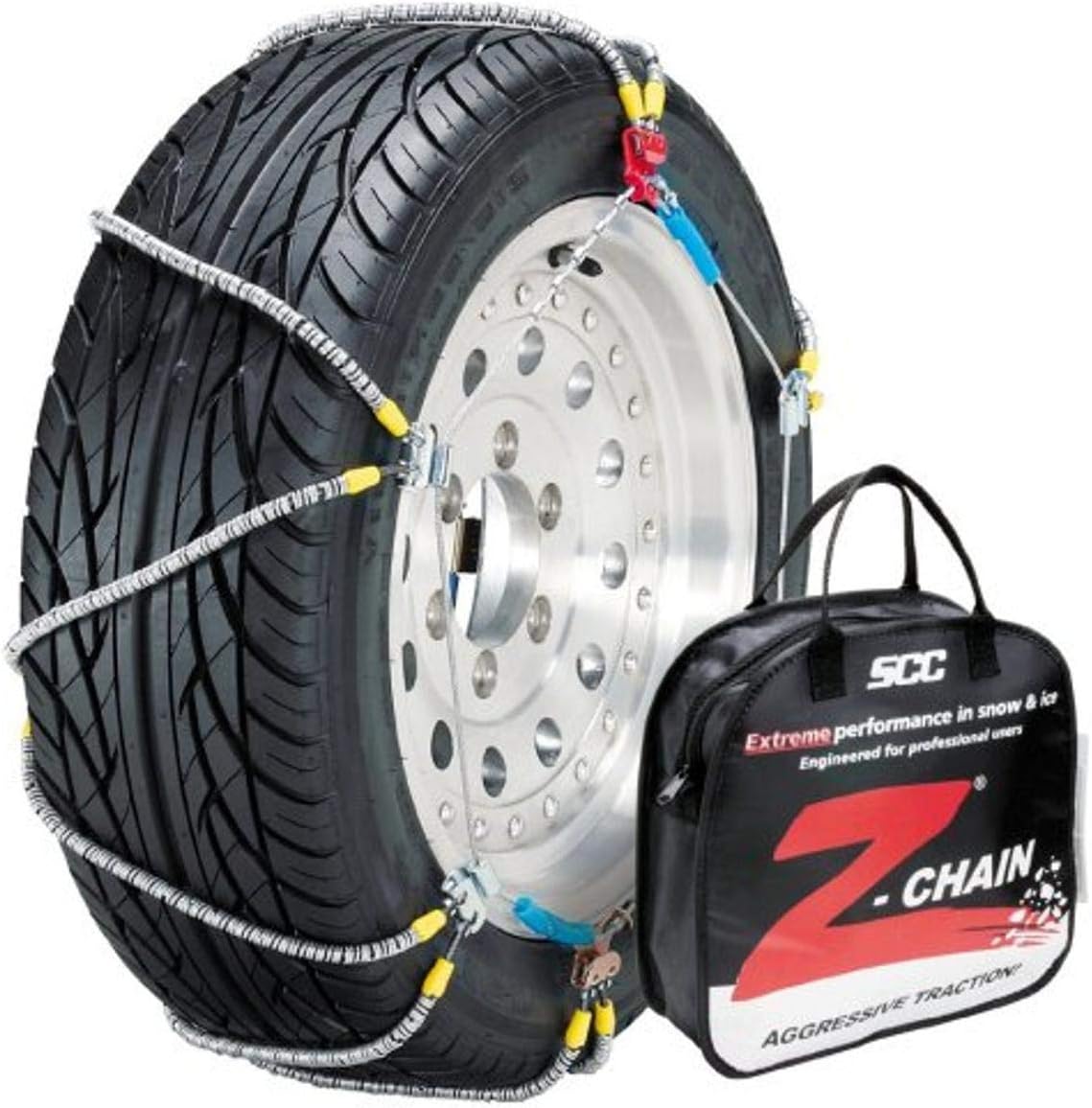
The Security Chain Z-547 Z-Chain Cable Traction Chain is the set you see in ski-area lots and state DOT yards, and that’s not an accident. It’s all-steel cable traction — manganese alloy cross-cables in a ladder pattern, sized to clear modern brake and ABS components. At $89.99 for the set of two (you chain the drive wheels, so one set covers a car), it’s the most proven $90 you can put in a trunk. Installation is tool-free: drape it over the tire, connect the cable ends, roll forward a car length, lock the fastener. Fifteen minutes the first time in a cold lot; five after one driveway practice.
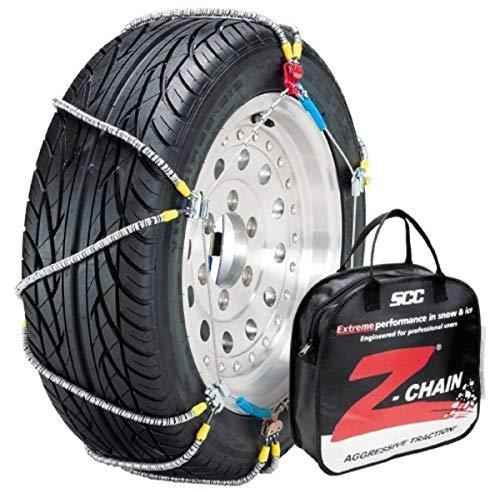
The catch: it’s steel, so a set is heavy for a trunk kit, and like every metal device here it eats itself fast on bare pavement. The moment the chain-up zone ends, you pull over and take them off — no exceptions, no matter how cold your fingers are. The practical speed ceiling is 30 mph, same as everything else on this page.
My take: This is the set I keep behind my own seat. $89.99 buys the version that still works in year six instead of the $40 bargain-bin set that snaps a cross-cable its second season.
Security Chain Z-555 Z-Chain — Larger Tire Sizes, Same Design
No new photo here because it’s the same chain you just looked at: the Security Chain Z-555 Z-Chain is the identical manganese-alloy ladder design, sized up for SUV and light-truck tires. If your sidewall reads bigger than the Z-547’s fitment range, this is your link — about $115 for the pair. Same cable build, same tool-free install, same ABS clearance, same 30 mph limit.
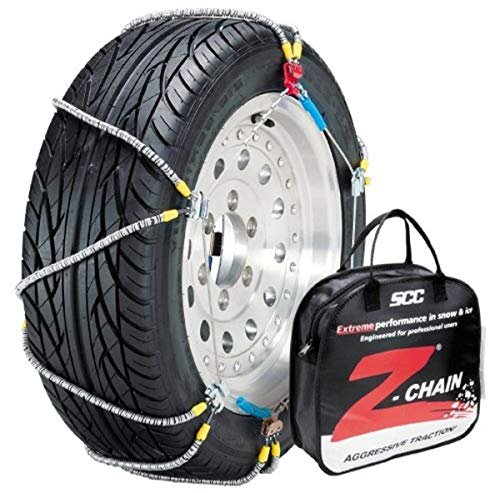
The catch: bigger tires mean more steel in the box and a steeper price for gear you’ll run a handful of days a year, and a chain that’s slightly loose on a 265-section tire slaps around noticeably harder than the same slack on a commuter car. Fit is the whole game at this size — order by the exact sidewall numbers.
My take: Don’t shop the model number, shop the size chart. The Z-547 and Z-555 are the same buy; the wrong one puts you back on the shoulder for nothing.
AutoSock Textile Traction Cover — The No-Clearance Answer
Some modern cars can’t take metal at all — there simply isn’t room between the tire and the strut for a cable to live. The AutoSock Textile Traction Cover is the answer for those wheel wells: a woven textile sleeve you stretch over the drive wheel. It’s the lightest option by a mile, packs down to the size of a folded jacket, and skips the cold-metal wrestling match entirely — you’ll still be kneeling in slush, just with fabric instead of steel. Most western chain-law states list AutoSock as an approved alternative traction device, so it satisfies the signs too.
The catch: textile wears through faster than metal on any stretch of exposed asphalt, it’s capped at 30 mph like everything else, and if you stuff it back in the bag soaked, it can freeze into a stiff brick by morning. Dry it at home, and buy the size matched to your exact tire spec — not “close enough.”
My take: If your wheel well physically won’t accept metal, this isn’t the compromise — it’s the only correct answer, and the one that fits in a glovebox.
SCC Super Z6 Low-Clearance Cable Chain — For Tight Wheel Wells
The SCC Super Z6 Low-Clearance Cable Chain splits the difference: metal cable traction built specifically for wheel wells with under 10mm of clearance — the performance sedans and crossovers where a standard chain would chew the strut. It’s the design that built SCC’s reputation in cable chains, and it’s the one to look at when the size chart says your tire fits but your wheel well says otherwise.
The catch: everything about the install is fiddly. The cables and connectors are deliberately thin to make the clearance, which means cold fingers fight small parts, and you’ll want to re-check tension after the first half mile. On bare road it wears exactly as fast as you’d expect thin cable to.
My take: Buy this only when clearance forces the issue. If your wheel well accepts the Z-Chain, save the frustration and buy that instead.
Snow moves faster than free standard shipping. If you’re not already a member, the Amazon Prime free trial gets you free two-day delivery on chains ordered before the storm instead of during it — the only shipping window that matters for this kind of gear. A 30-day trial covers your first trip over the pass, and that link supports this site the same way the product links above do.
Features That Actually Matter (And Ones That Don’t)
Speed cap. Thirty miles per hour is the ceiling on every device on this page — cable, chain, or textile. Push past it and you risk snapping a cable or shredding a cover at exactly the moment you needed it. Chains get you through the pass, not across the state.
Clearance. Before you buy, measure the gap between the top of your tire and the strut or spring. Under 10mm means the Super Z6 or the AutoSock; more than that, the Z-Chain series fits fine.
Exact tire size. Order by the size printed on your sidewall — something like 225/65R17 — not by your car’s model name. One size off and you’re installing a lesson on the shoulder of a highway.
The bare-pavement rule. Every option here dies quickly on exposed asphalt. The bottom of the chain-up zone is where you pull over and remove them, every single time, regardless of how your fingers feel about it.
What doesn’t matter: the case and the brand chrome. A zippered bag and a logo on the side plate do nothing on ice. Alloy construction, correct fit, and having practiced the install once at home — that’s the whole game.
What to Spend Where
- Most passenger cars: $89.99 for the Z-547. That’s the entire backup plan, and it outlasts three sets of the cheap chains that snap cross-cables in a single season.
- SUVs and light trucks: about $115 for the Z-555 — same design in your size.
- Zero-clearance cars: the AutoSock — the cheapest way into legal traction, with the shortest service life of the three designs.
- Tight wheel wells: the Super Z6 — a specialty tool you buy only when the fitment chart says you must.
The math is boring, which is the point: a $90 chain set against a $400 tow bill, a missed shift at work, or a chain-law fine that costs more than the chains. Traction is a buy-it-once category — the same reason tires top our list of things where cheap is a trap. And if you’re stocking the rest of the winter kit this week, our under-$25 gear that punches above its price list has the scraper, the jumper pack, and the emergency blanket covered.
GearHound is reader-supported. As an Amazon Associate, I earn from qualifying purchases. That means if you buy through one of the links above, I get a small commission at no extra cost to you. I only recommend gear I’d actually carry into the field.
⛺ Get Your Free Camping with Your Dog Checklist
Join our newsletter and get this free printable plus weekly tips.
Frequently Asked Questions
Do tire chains damage AWD or ABS systems?
Modern cable chains like the SCC Z-Chain series are designed to be ABS-compatible — they're sized to clear brake components and won't trigger wheel-sensor faults the way old-style ladder chains could. The key is using the correct size for your tire and removing them on bare pavement, where any chain will wear fast and can heat-damage sensitive wheel-speed sensors.
Are AutoSock textile covers legal where chains are required?
In most western states with chain laws (California, Colorado, Nevada, Oregon), AutoSock is explicitly listed as an approved alternative traction device. Check your state's DOT page before a trip — a few jurisdictions still require metal chains on certain passes for commercial vehicles, but passenger cars running AutoSock generally satisfy chain controls.
How fast can you drive on cable chains?
Thirty mph is the practical ceiling for any traction device — cable chains, Z-Chains, and AutoSock all share it. Faster than that and you risk snapping a cable, shredding the textile, or damaging your wheel well. The rule is simple: chains get you through the pass, not across the state.
Liked this guide? Get the next one in your inbox — the camp packing checklist is free too.
✓ You're in — check your inbox.
No spam. Unsubscribe anytime. We never share your email.