This article contains affiliate links. We may earn a commission from qualifying purchases.
Some content on this site is AI-assisted and reviewed by our editorial team.
Black Friday Power Station Deals 2026: Real Floors, Fake Discounts, and When to Buy
No category in outdoor gear swings harder on Black Friday than portable power stations. A tent drops $60 in November; a 1kWh power station swings $250 by Cyber Monday. BLUETTI has gone as deep as 65% off, and Anker cut SOLIX models up to 70% in 2025. That’s real money on gear that lasts a decade — and it’s where fake discounts hide, because 40% off a last-year model can still be a bad buy. The deals don’t move in sync, either: Jackery locks one price for the whole season, while EcoFlow flash-sales every 24 to 48 hours.
Here are the documented floors in the 1kWh class, and when to stop waiting.
Jackery Explorer 1000 v2 — The Lightest 1kWh Pick at 23.8 lb
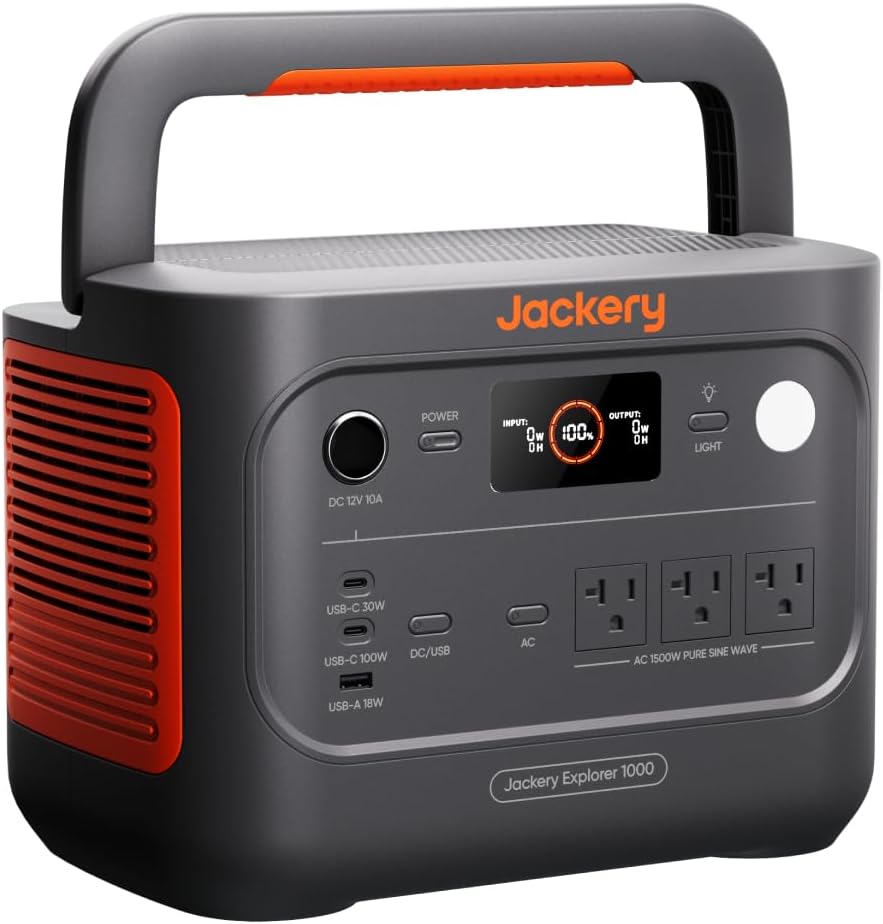
The Jackery Explorer 1000 v2 is the pack-out winner: 1070Wh in a 23.8-pound box, about 45 watt-hours per pound — best energy density in the 1kWh class. It runs three AC outlets off a 1500W inverter on LiFePO4 cells, with a 5-year warranty. Its documented floor is about $499, and Jackery holds one Black Friday price from November 5 through Cyber Monday — if it’s at that number today, waiting saves you nothing.
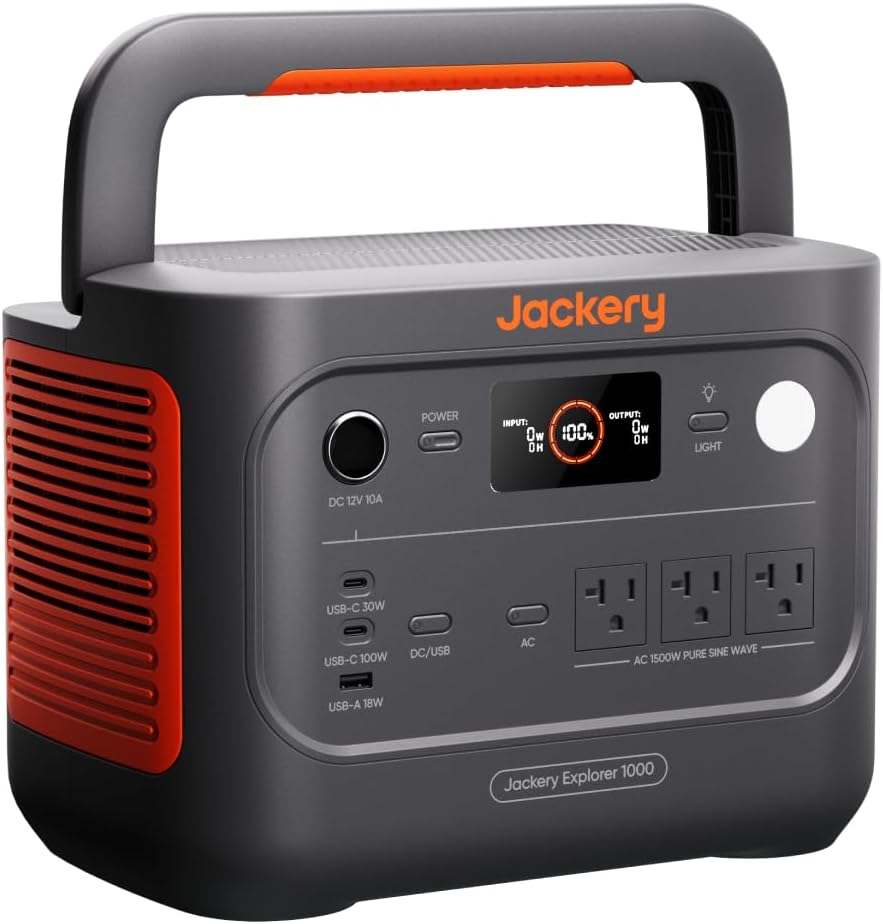
The honest limits: that 1500W inverter is the lowest output here, and solar input caps at 400W — two 200W panels fill it, and anything bigger is wasted money.
My take: If you carry your power 100 yards from the truck, this is the 1kWh station I’d buy, and I’d buy it now — a deeper dip isn’t coming.
BLUETTI AC180 — Biggest Battery in the 1kWh Class
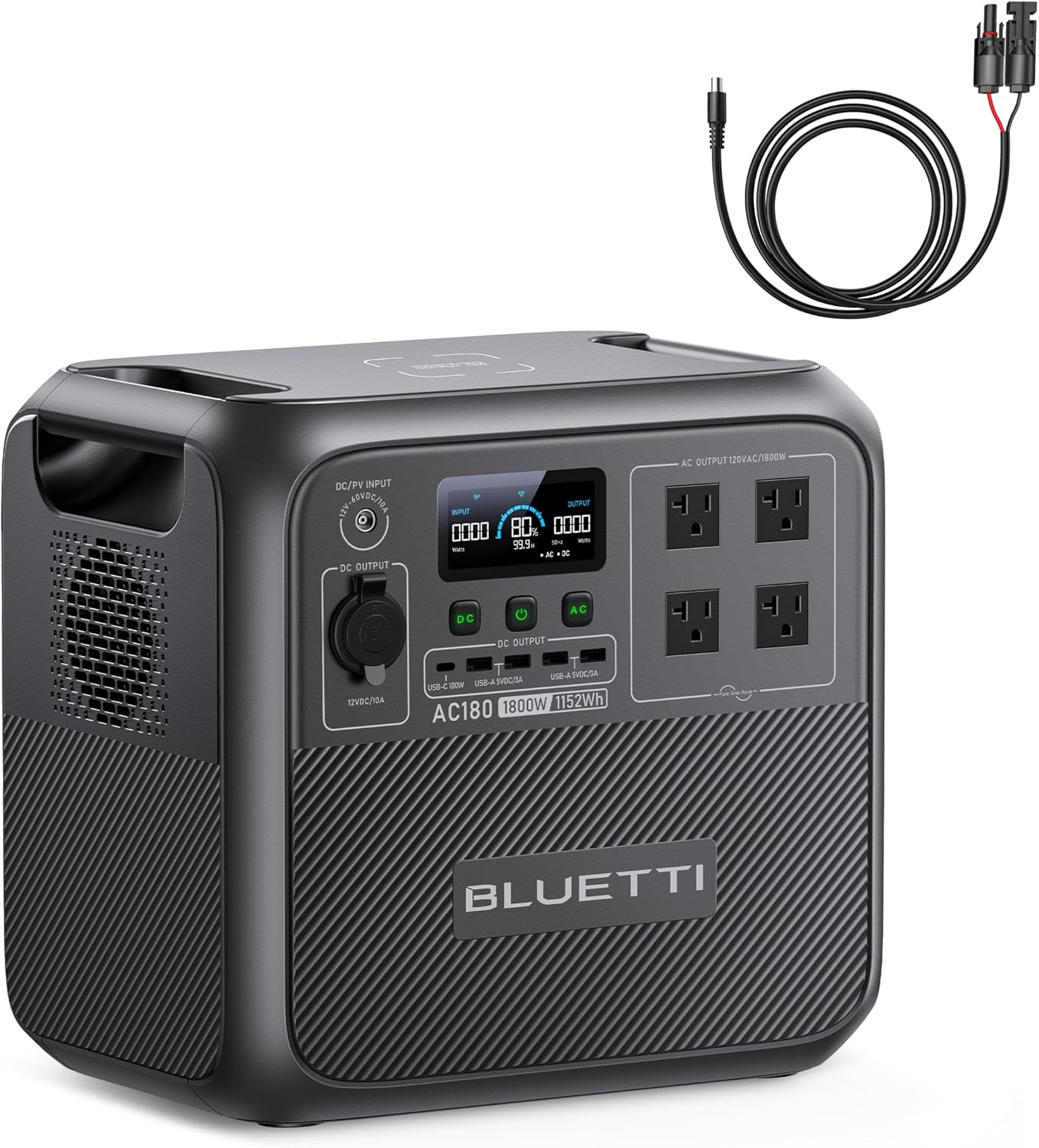
The BLUETTI AC180 carries the biggest battery here: 1152Wh, about 8% more than the Jackery, four AC outlets, an 1800W inverter, and a 5-year warranty on LiFePO4 cells rated for 3,500-plus cycles. It has dipped to about $449 on Prime-day sales — roughly 2.6 watt-hours per dollar, the best capacity math on this page.
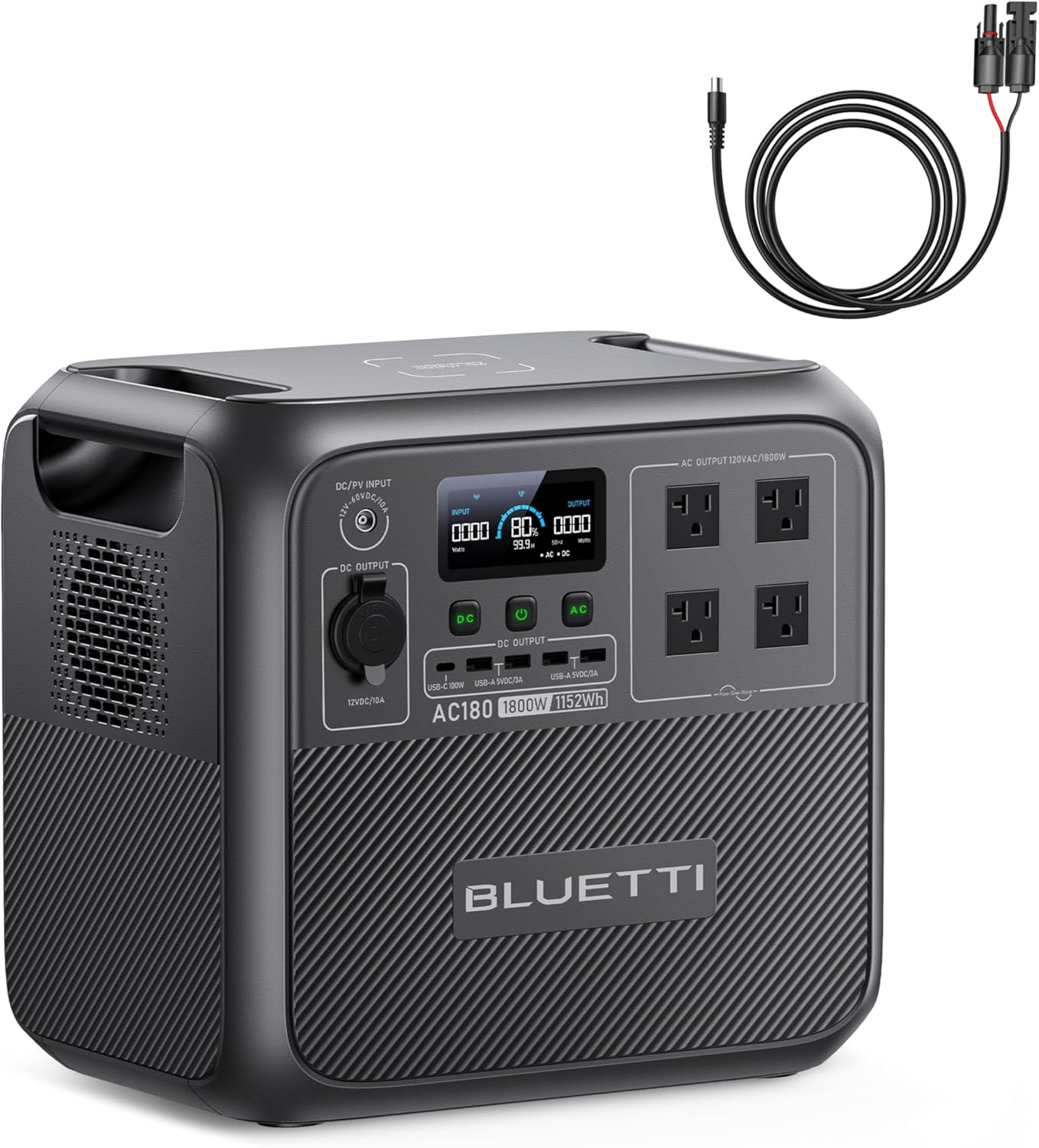
All that costs you 35.3 pounds — roughly 11 more than the Jackery — a truck-and-basecamp weight, not a backpacking weight.
My take: For truck-bed camping and home-backup duty, the AC180 at or under about $449 is the most stored energy per dollar of anything here.
Anker SOLIX C1000 Gen 2 — Fastest Recharge, 2000W Inverter
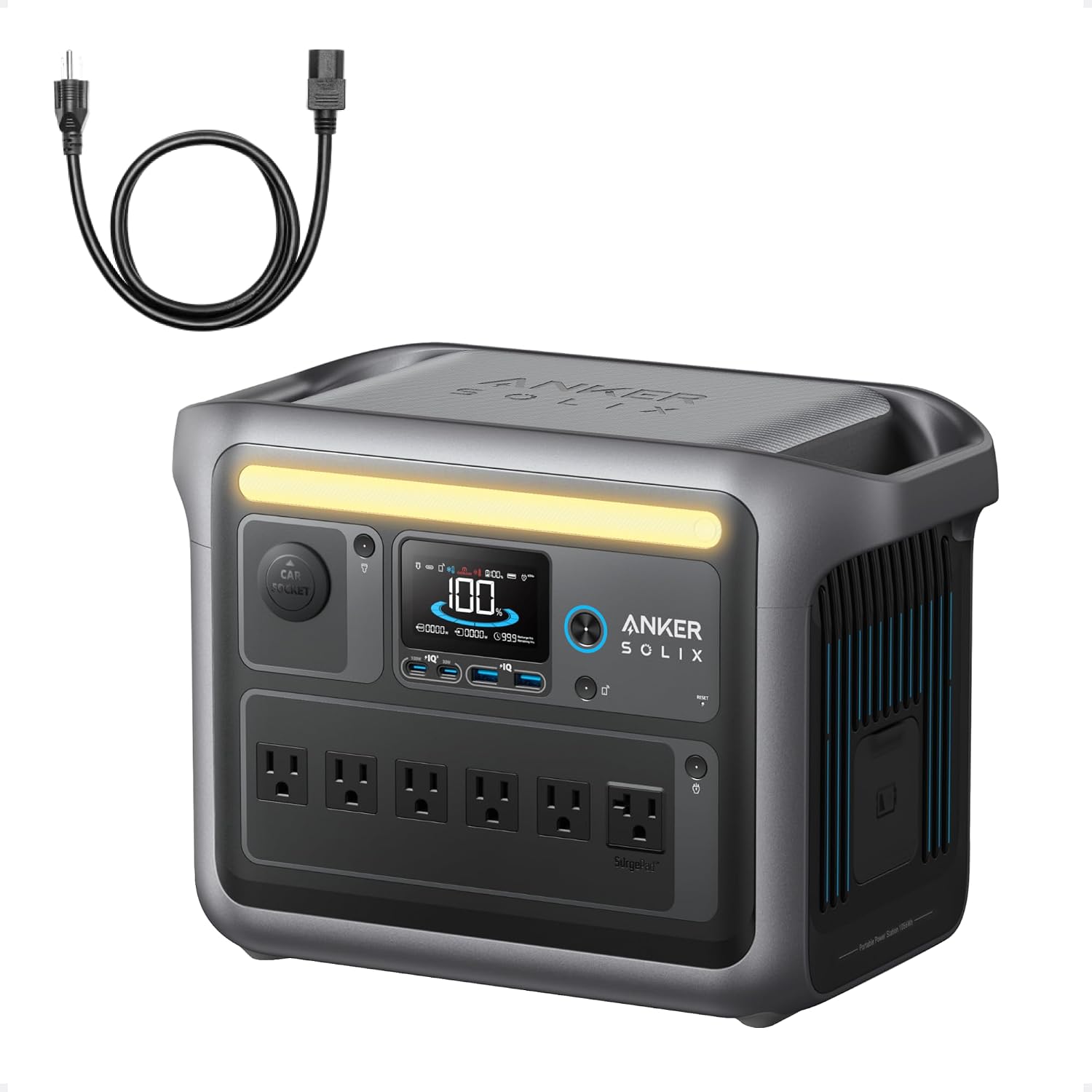
The Anker SOLIX C1000 Gen 2 plays a different game: 1024Wh, a 2000W inverter, five AC outlets, and a full refill in about 49 minutes — the fastest documented recharge in the class. The SOLIX line moves week to week — it’s about $500 direct as I write — so check the live Amazon price before trusting the sticker.
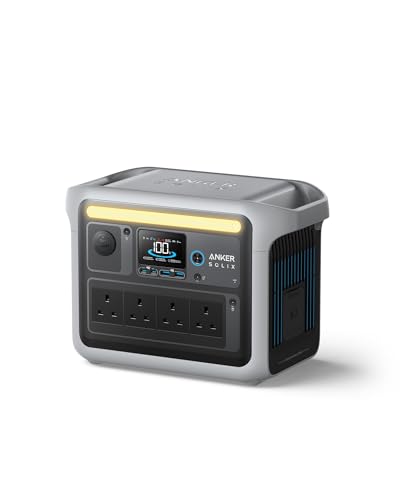
The limits: no expansion battery, and the 49-minute claim needs UltraFast mode enabled in the app — otherwise it charges slower.
My take: For home backup where refill speed decides whether you ride out the outage, it’s the smartest 1kWh buy. For slow off-grid solar living, its speed edge mostly evaporates.
EcoFlow DELTA 3 Classic — The Brand That Flash-Sales Hardest
The EcoFlow DELTA 3 Classic (1024Wh) is the patience play. EcoFlow rotates flash deals every 24 to 48 hours, so the same station can be a good buy Tuesday and a bad one Friday. The hardware is honest — 1800W inverter, three AC outlets, 26.6-pound carry, 5-year warranty — with two real limits: no 12V car port, no expansion battery.
My take: A solid 1kWh station that only makes sense at a flash price — if it doesn’t beat about $449 for a kilowatt-hour, let the timer reset.
Jackery SolarSaga 100W Panel — The Panel That Makes Any Station a Solar Generator
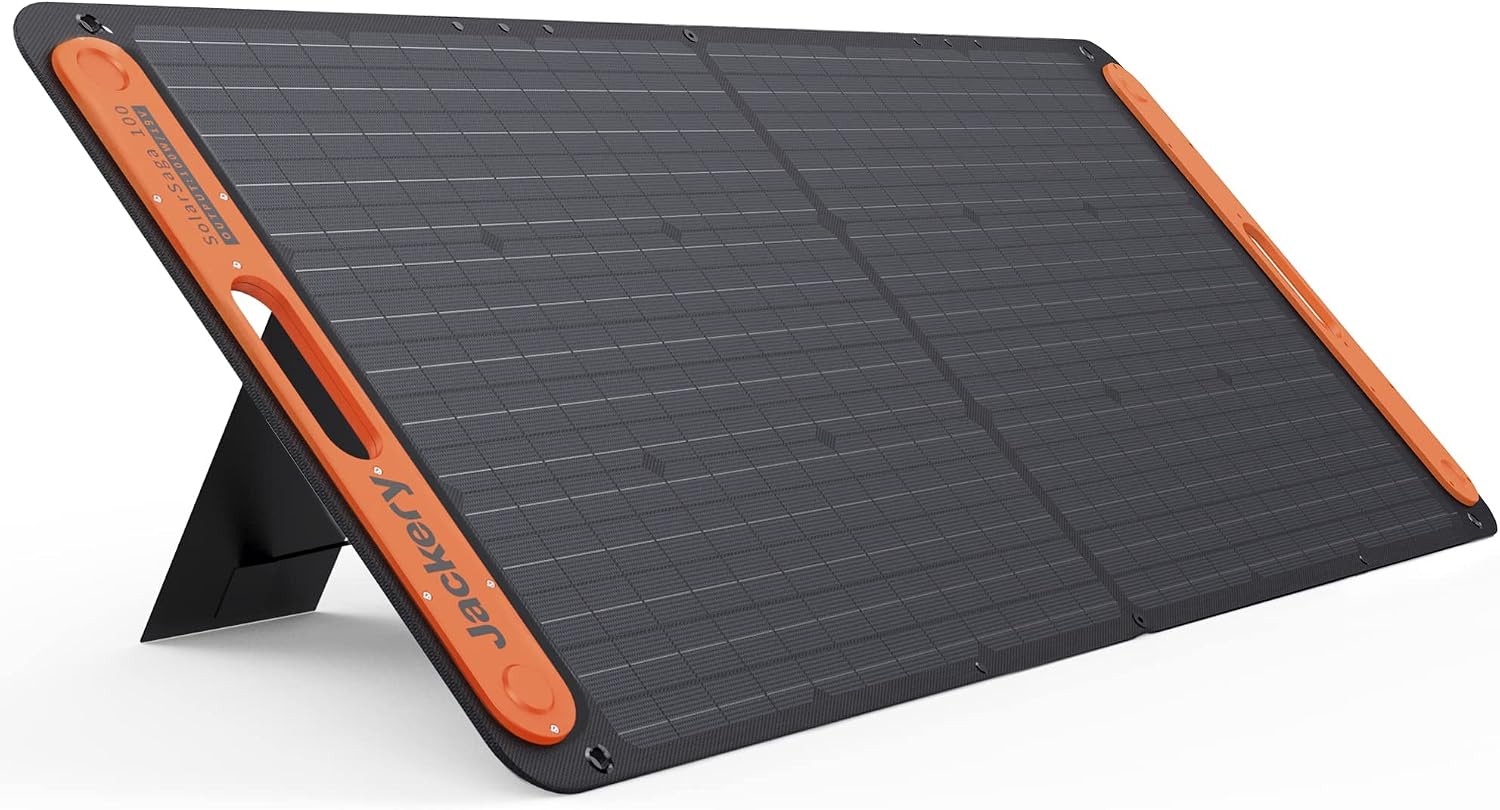
The Jackery SolarSaga 100W is the add-on that turns any station into an actual solar generator. It feeds any station with a DC input, and the folding case is trail-ready at about 10 pounds — but your station’s input cap sets the ceiling. The Jackery tops out at 400W of solar, so four panels fill it — and in real camp sun, figure 70 to 80 watts per panel, not the label.
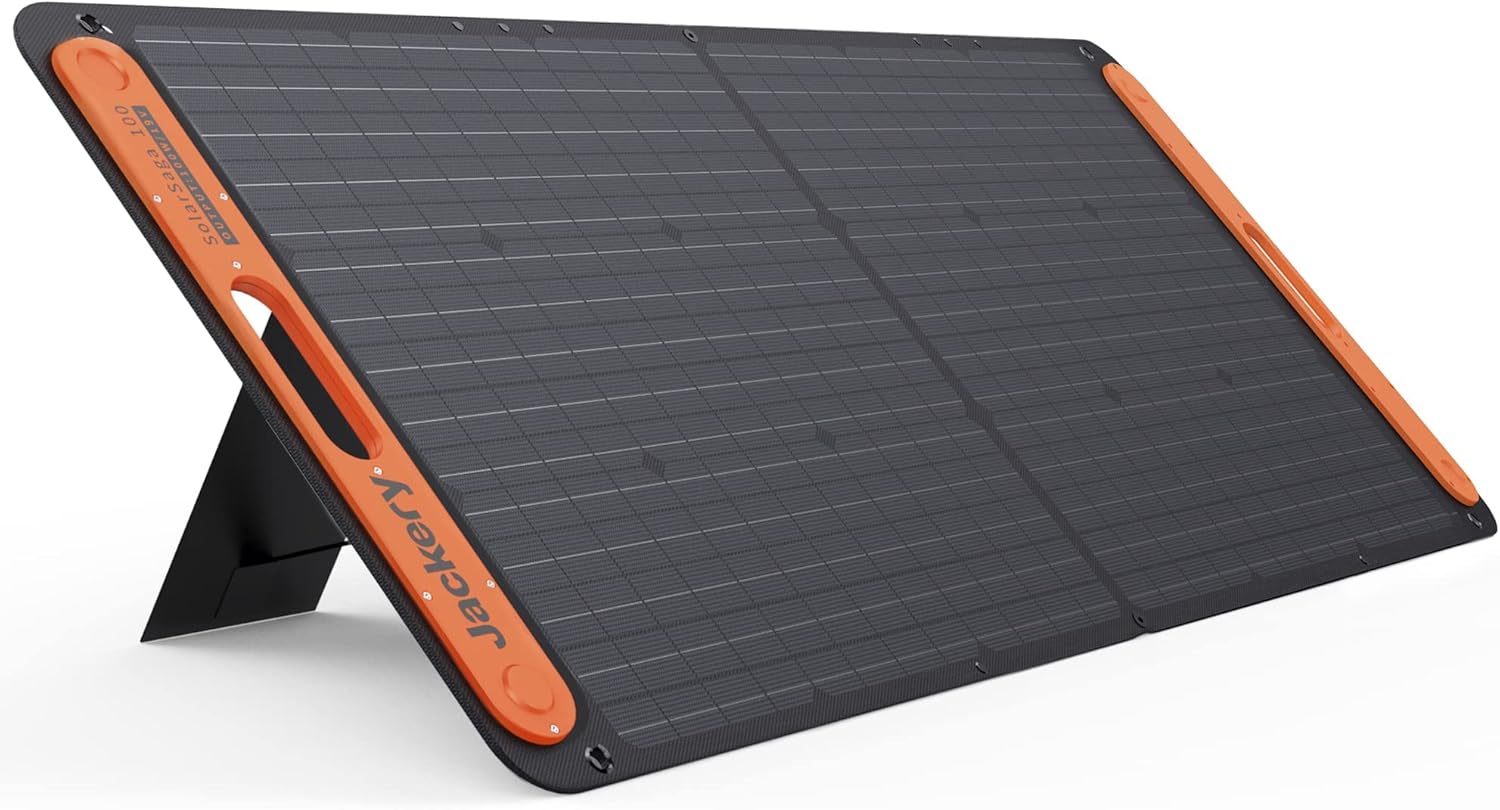
My take: Buy one panel and learn your campsite’s light before building an array. It keeps a fridge and camp lights alive over a long weekend; it won’t resurrect a dead bank overnight.
| Model | Capacity (Wh) | Weight | AC Outlets | Inverter (W) | Approx Price |
|---|---|---|---|---|---|
| Jackery Explorer 1000 v2 | 1070 | 23.8 lb | 3 | 1500 | about $499 (held) |
| BLUETTI AC180 | 1152 | 35.3 lb | 4 | 1800 | about $449 (flash floor) |
| Anker SOLIX C1000 Gen 2 | 1024 | 24.9 lb | 5 | 2000 | about $500 direct |
| EcoFlow DELTA 3 Classic | 1024 | 26.6 lb | 3 | 1800 | flash deals rotate |
| Jackery SolarSaga 100W | — | about 10 lb | — | — | — |
Price-check note: These numbers move daily; flash-sale brands can reset overnight. The floors above are documented lows, not promises. Click through to the live listing and run the watt-hours-per-dollar math — if it can’t beat about $449 for a kilowatt-hour, the discount is theater. Hold-price brands like Jackery reward buying now; flash-sale brands reward waiting for early access on November 23.
What’s the Best Power Station Deal This Black Friday?
If you carry your power, buy the Jackery Explorer 1000 v2 at its held price — the lightest 1kWh station worth owning, and waiting won’t move its number. If you don’t, the BLUETTI AC180 at or under about $449 delivers the most stored energy per dollar in the class — the bar every deal here has to clear.
Don’t let shipping eat the deal. These stations weigh 24 to 40 pounds, and freight on gear that heavy quietly erases a discount. A free Prime trial gets you free shipping and the early-access window in one move. And if you’re buying on Amazon anyway, start your Amazon shopping from our Shop page — it supports the site at no extra cost.
Features That Actually Matter (And Ones That Don’t)
- Battery chemistry — matters. All four stations here run LiFePO4, good for a decade of weekend duty. A deep-discount NMC unit is clearance stock: fading capacity, shorter life, whatever the sticker says.
- Watt-hours per dollar — matters. Capacity divided by price is the only honest cross-brand number: at their floors, the Jackery is about 2.1 Wh per dollar, the AC180 about 2.6. Below 2, you’re paying for the sticker.
- AC outlet count — matters. Two or three outlets fill up before dinner at a camp kitchen; four or five change how you actually use the station.
- Recharge speed — matters at home. A 49-minute refill counts when the generator is running between outages; off-grid, where solar trickles all day, it barely matters.
- Surge watts and apps — don’t. “3000W surge” is marketing; size loads by continuous watts only. App dashboards are for watching the battery from the couch, not from a tent.
Where the Money Should Go
- About $450 is the honest 1kWh floor. The AC180 at its flash floor of about $449 is 2.6 Wh per dollar — enough for a 12V fridge, lights, and phones over a long weekend, every weekend, for a decade.
- The premium tier has to earn its price. Run the same division on any 2kWh deal: 2048Wh at about $1,000 is 2.0 Wh per dollar — worse than two flash-floor AC180s at about $898 for 2304Wh. Make sure you need one box.
- Don’t buy small on a big discount. A 300Wh station at “70% off” still has to beat 2.6 Wh per dollar to make sense. Most don’t come close.
- Buy the station at its floor first, panels second. One 100W panel is the cheapest off-grid runtime you can add; an array with no station behind it is just expensive aluminum.
Keep reading: I mapped which camping gear is worth waiting for in the full Black Friday camping deals rundown, and if your station feeds a cold camp, the heated 12-volt blanket pairs warm without killing the battery.
GearHound is reader-supported. As an Amazon Associate, I earn from qualifying purchases. That means if you buy through one of the links above, I get a small commission at no extra cost to you. I only recommend gear I’d actually carry into the field.
⛺ Get Your Free Camping with Your Dog Checklist
Join our newsletter and get this free printable plus weekly tips.
Frequently Asked Questions
When do Black Friday power station deals start in 2026?
Amazon’s early access deals typically open the week of November 23, with the deepest discounts landing on Black Friday itself (November 27) and holding through Cyber Monday. Prime members often get a 30-minute head start on lightning deals.
How many watt-hours do I need for a weekend camping trip?
For a weekend trip charging phones, a tablet, a headlamp, and running a small fan or CPAP, 500–1000 Wh is the sweet spot. A 1 kWh station like the Jackery Explorer 1000 v2 covers two days of phone charges, a night of CPAP, and LED lighting with capacity to spare.
Do power stations go cheaper on Black Friday or Prime Day?
Black Friday wins on dollar amount — the 50–70% discounts on 1 kWh stations are deeper than Prime Day’s typical 30–40%. But Prime Day is better for smaller stations (under 500 Wh), which sometimes drop lower in July than in November.
Liked this guide? Get the next one in your inbox — the camp packing checklist is free too.
✓ You're in — check your inbox.
No spam. Unsubscribe anytime. We never share your email.
Prices move fast. Start your Amazon trip from our Shop & Support page and your purchases support GearHound at no extra cost to you.