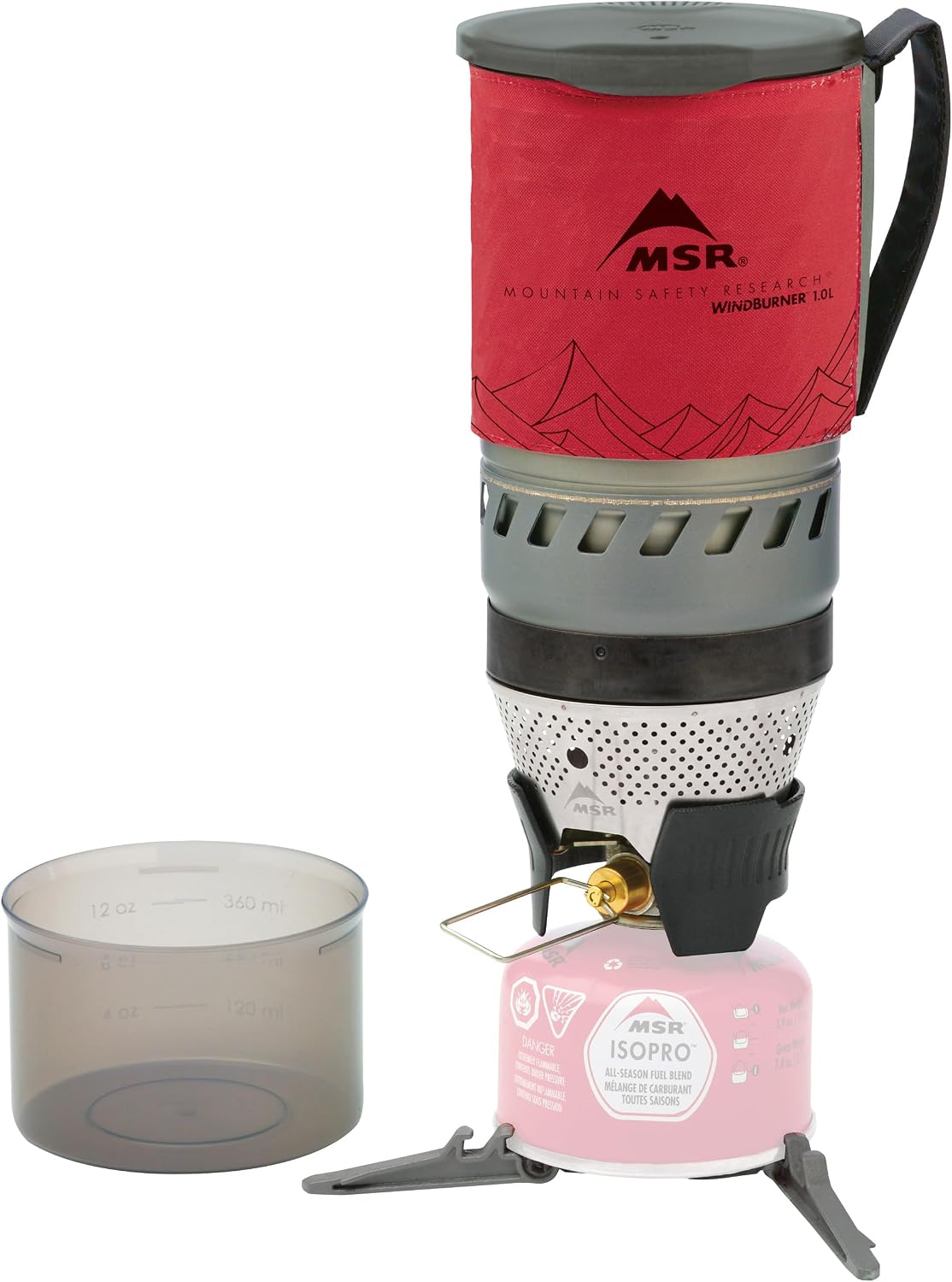
This article contains affiliate links. We may earn a commission from qualifying purchases.
Some content on this site is AI-assisted and reviewed by our editorial team.
Every July, your fuel choice does not matter. A $15 clip-on canister stove lights on the first try, boils water before the coffee grinds are measured, and tucks into the pot lid. Then December rolls in, the same canister coughs itself down to a blue whisper at 15 degrees, and breakfast becomes an argument. That is the moment winter campers and hot-tent regulars make the real decision — canister convenience, inverted canister feed, or old-school white gas — and getting it right once beats buying twice.
Here is the shape of this decision before the four rigs: the spread across everything below runs from about $140 to $200, and the price mostly buys cold-weather behavior, not brand. Pick by your coldest honest morning, not by the label.
MSR WhisperLite Universal — the do-everything liquid-fuel legend
MSR WhisperLite Universal is the rig I hand to anyone who goes out from October through mud season. It burns white gas, kerosene, and — uniquely in this family — canister fuel mounted upside-down, so the stove can feed liquid butane even when the canister is freezing. That hybrid trick matters: a stove that can sip liquid from an inverted canister sidesteps the number one cold-weather failure, which is vapor starvation.
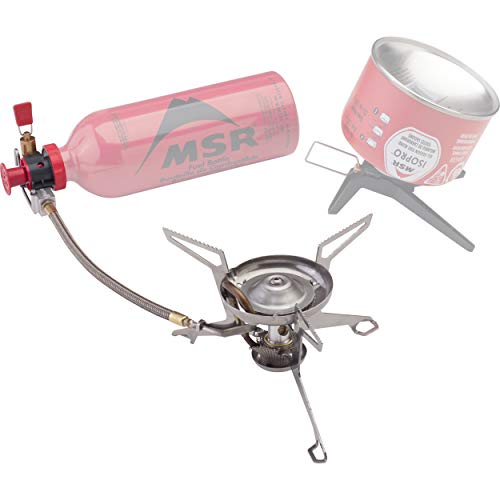
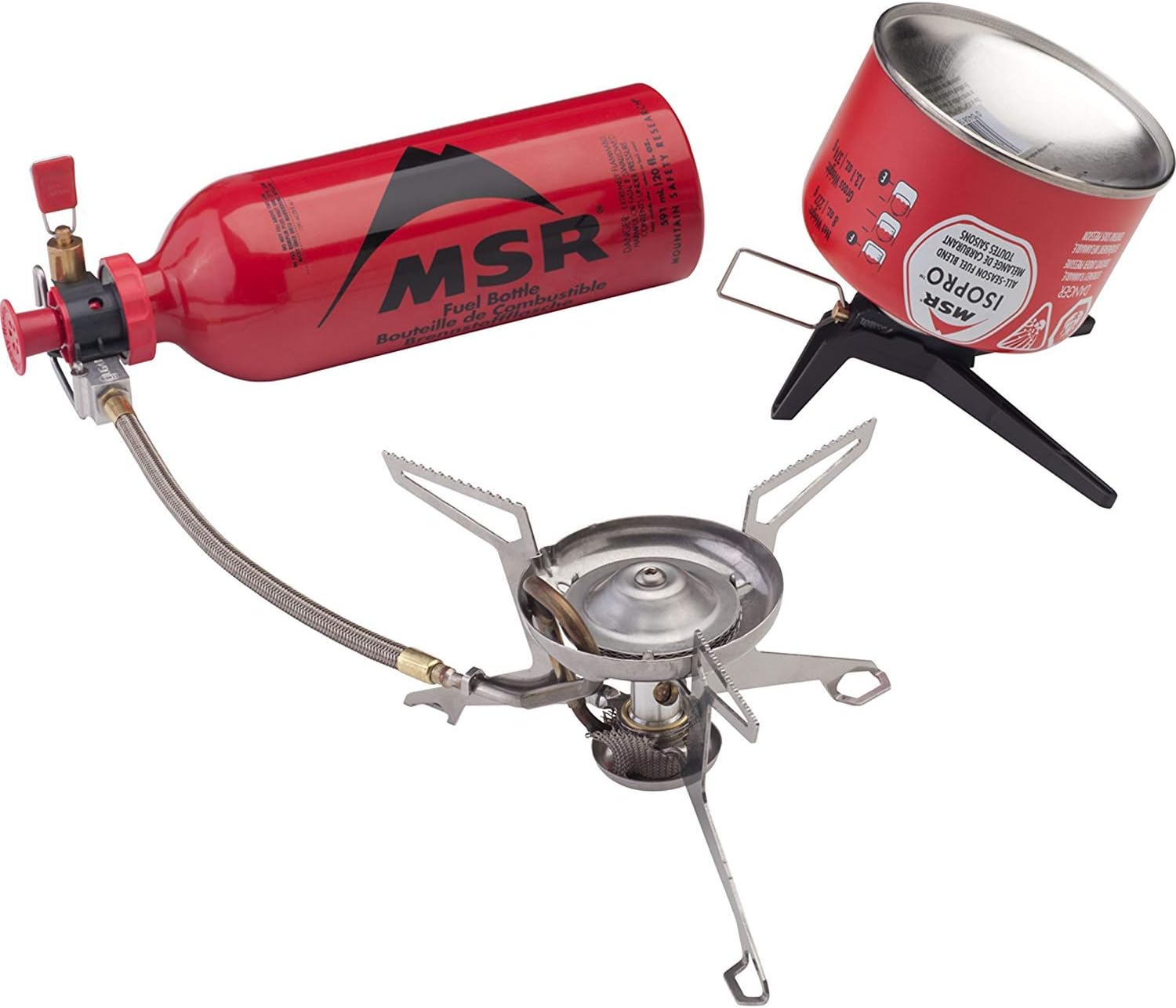
The honest tradeoffs: it is about $200, it needs priming before the first full flame, and the maintenance is real — the generator tube and jet get cleaned, not admired. Field repairs are simple and well-documented, but the pump is a mechanical thing with O-rings, and you should carry the small-parts kit it ships with.
My take: if you want one stove that covers canister convenience and real cold without a second purchase, this is the one to save up for.
MSR WindBurner Personal — the wind-proof all-in-one
MSR WindBurner Personal Stove System wraps a pressure-regulated burner inside a wind-capturing pot, which is why it keeps boiling in gusts and cold that leave pocket rockets stammering. At $199.95 it is priced against the Universal rather than under it, so you are paying for simplicity: no priming, no pump, no cleaning ceremony, just twist, burn, boil.
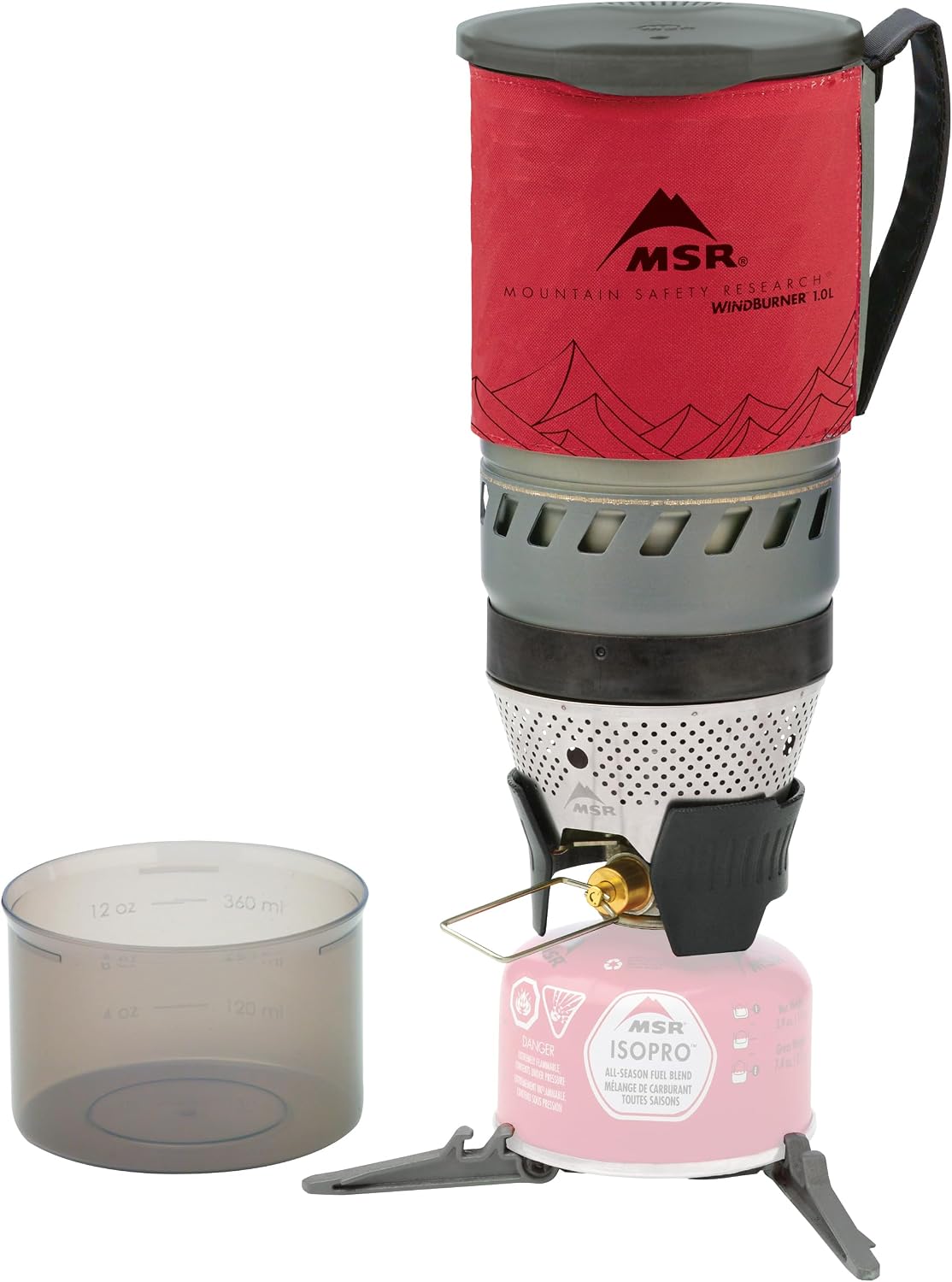
Where it loses: the radiating pot locks into the burner, so it is a one-pot system — you cannot drop a skillet on the flame or cook for four. Deep-cold canister behavior is better regulated and wind-shielded, but physics still beats marketing: an open white gas flame in the same conditions has more margin. At 4.5 stars across a long review life, owners like it and accept the lock-in.
My take: the winter pick for boil-water cooking and hot drinks at the tent door — bring a second pan if your camping involves actual cooking.
Jetboil Flash with WindGuard (2026) — the fast-boil value
Jetboil Flash with WindGuard is the new 2026 take on Jetboil’s mass-market system: two cups of water go from cold to boiling in about two minutes under the new wind guard, 1-step auto-igniter doing its thing, all at $159.99 for the whole kit. Of everything here, it is the one a beginner can run correctly on the first try.
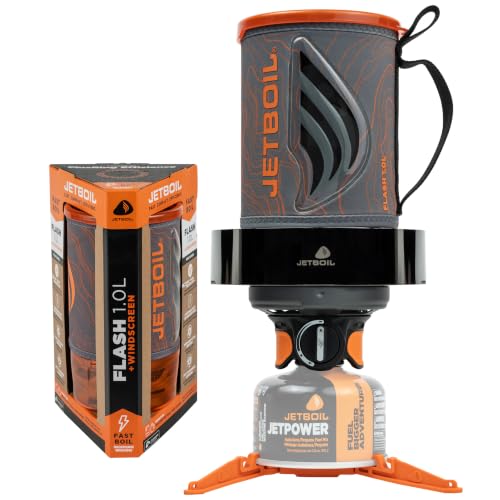
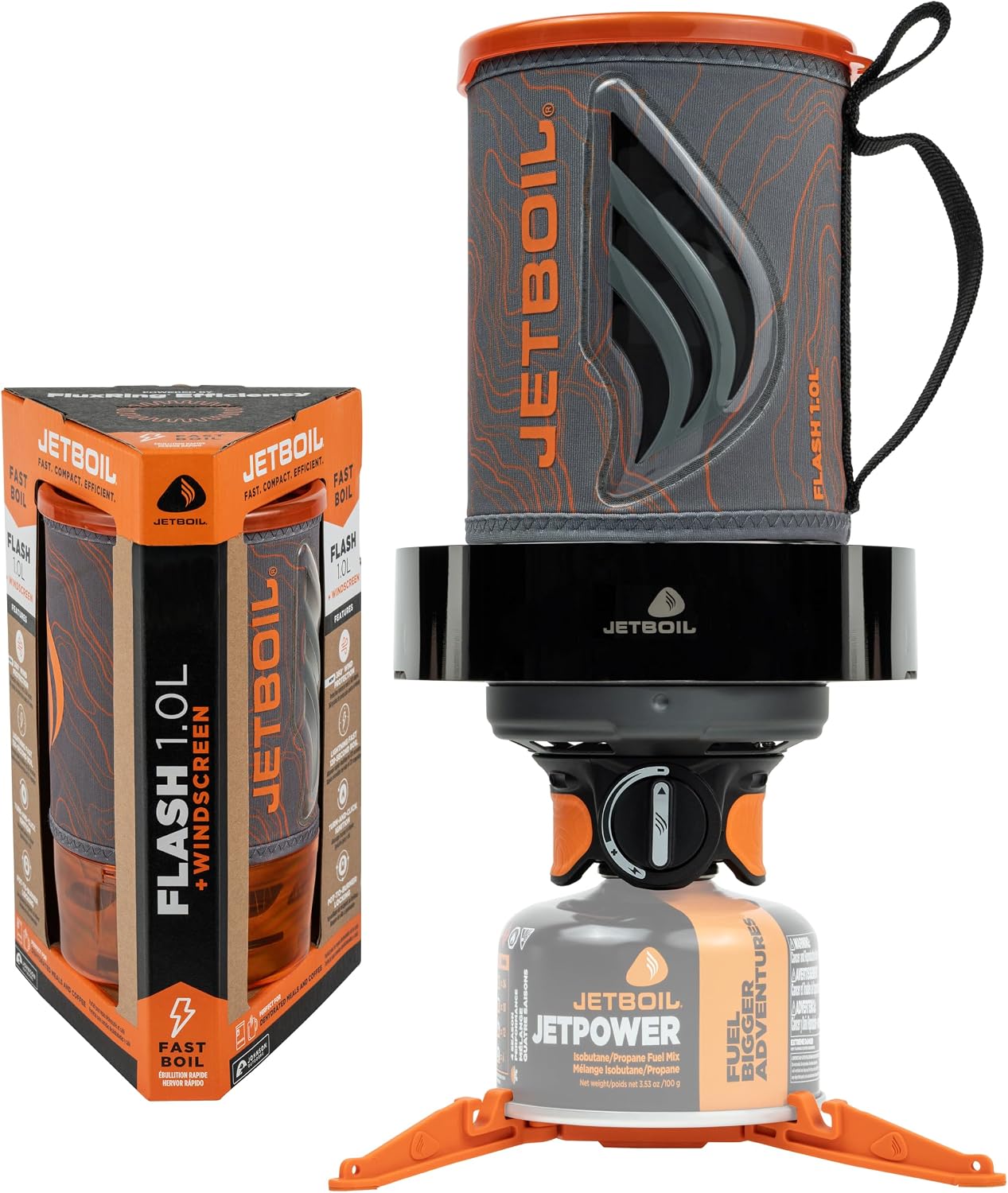
Its ceiling is physics, again — it is still a top-mounted canister stove, so below roughly 20 degrees the regulated burner slows and the classic fix (canister inside the jacket, or sleep with the fuel) becomes your routine. The 4.8-star rating is real-world fast-boil, not deep-winter survival. And like every Jetboil, the pot ecosystem is its own island.
My take: the best three-season-plus value of the four — buy it if your winter use is frosty mornings instead of snow camping.
MSR WhisperLite White Gas Stove (36406) — the base-model classic
MSR WhisperLite White Gas Stove is the stove about 25 years of trip reports keep recommending, at about $140 — around sixty dollars less than the Universal. Same white gas cold-weather pedigree, same field-serviceable pump, just without the hybrid canister trick or a few refinements. It is the “only does one thing, does it everywhere” option.
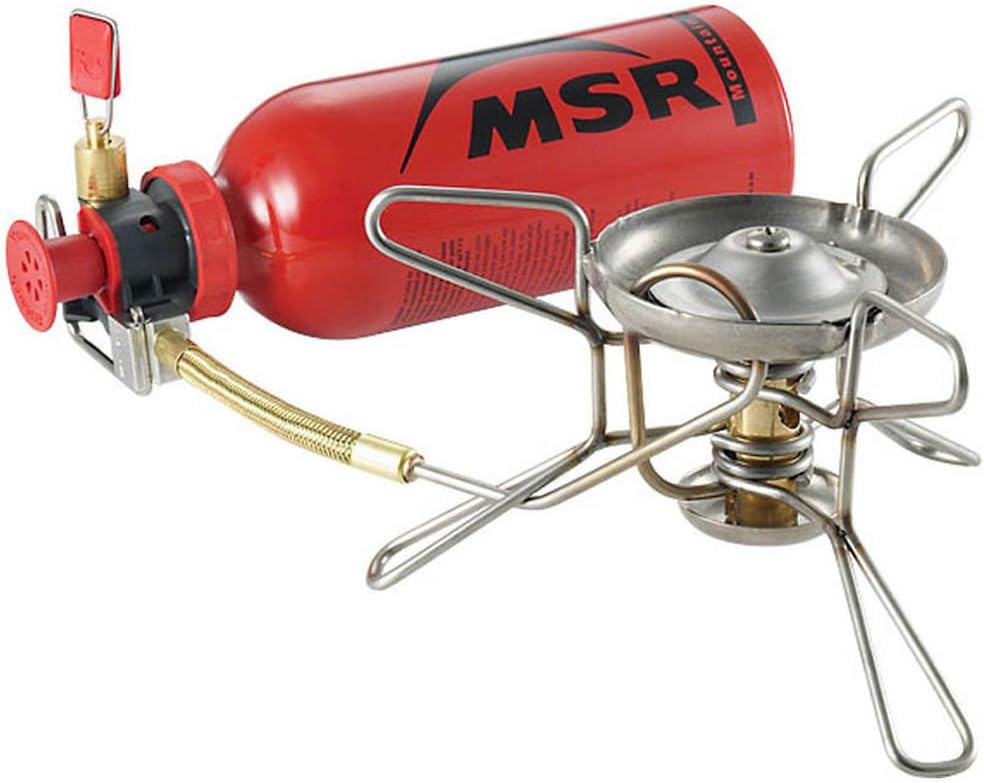
The con list is short and honest: white gas only, so no canister convenience on quick overnights; priming is part of the deal; and you supply your own fuel bottle. If your trips are one-pot dinners and you are comfortable with a two-minute learning curve, that learning curve costs you nothing and the winter performance is proven.
My take: the pure winter pick — this is the one I would carry into a snowstorm, and the cheapest way into real liquid-fuel capability on this list.
Shipping math for stove season: stove systems, fuel accessories, and the pots and filters around them are heavy items to buy piecemeal. If you order this kind of load more than once a season, an Amazon Prime free trial covers the shipping on all of it, and the trial costs you nothing for 30 days.
Features That Actually Matter (And Ones That Don’t)
Mattered most: liquid feed, any source. Both the inverted-canister route and white gas feed liquid fuel to a hot burner, which is the entire reason these stoves boil in January when top-mounted canisters fail. If a stove cannot run inverted or on a bottle, it is a three-season tool.
Mattered second: wind. A regulated burner under a capturing pot (WindBurner) or a solid wind guard (Flash WindGuard) out-boils a naked flame in half the conditions. Wind kills more boils than temperature does.
Mattered, quietly: field serviceability. Liquid-fuel stoves win long trips because you can strip and clean them in a tent vestibule at night. Check that the pump kit and jet tool are part of what you buy.
Did not matter: boil-time headline numbers. Two minutes versus two-forty only matters when the stove is brand new, the fuel is full, and the air is calm — none of which describe your 15-degree morning. Cold-end behavior is the spec to shop.
Did not matter: auto-igniters in winter. They are nice until they are wet and frozen. Carry a lighter anyway; every experienced winter cook does.
What to Spend Where
- About $140 gets you the proven white gas core (MSR WhisperLite) — maximum cold margin, zero canister convenience.
- About $160 gets you the fast, beginner-proof Jetboil system for frosty-season boiling.
- About $200 gets you flexibility: the WhisperLite Universal’s liquid-from-canister trick, or the WindBurner’s windproof all-in-one.
- Skip the spend: a second $15 pocket stove as your “cold backup.” It fails in the same window, at the same breakfast, in front of the same hungry dog.
Stove shopping this month overlaps with the annual discount cycle — last week’s roundup on camp stove Black Friday deals covers which MSR and Jetboil discounts come back every year, and if you want the full camp-kitchen angle for cold weather, the hand-pump espresso makers that pull a real shot at 20 below are the same winter logic applied to coffee.
Need to top up the rest of your camp list? Start your Amazon trip from our Shop & Support page — it supports the site at no extra cost to you.
GearHound is reader-supported. As an Amazon Associate, I earn from qualifying purchases. That means if you buy through one of the links above, I get a small commission at no extra cost to you. I only recommend gear I’d actually carry into the field.
⛺ Get Your Free Camping with Your Dog Checklist
Join our newsletter and get this free printable plus weekly tips.
Frequently Asked Questions
Do canister stoves work in freezing weather?
They get sluggish. Isobutane canisters lose vapor pressure as the temperature drops toward freezing, and below roughly 20 degrees F a standard top-mounted stove sputters before a full boil. Warm the canister inside your jacket, flip an inverted-capable stove to liquid feed, or carry a liquid-fuel rig for real winter trips.
What is the best stove for winter backpacking?
A liquid-fuel white gas stove like the MSR WhisperLite family is the winter standard, because it pressurizes from a fuel bottle and keeps burning in cold that freezes a canister. Car-campers who want simplicity can compromise on an inverted-canister or regulated system with a wind barrier.
Is inverted canister better than liquid fuel in cold weather?
Both feed liquid fuel to the burner, so both beat a pocket rocket in the cold. Inverted canister setups are cheaper and simpler to run; white gas stoves keep more output in deep cold, are field-serviceable, and burn cheap fuel anywhere in the world.
How long does it take to prime a white gas stove?
Seconds to about a minute. You release the pump briefly, let a little fuel pool in the cup, and light it so the flame preheats the generator tube. Learn the sequence in the yard, not at the snow line.
Liked this guide? Get the next one in your inbox — the camp packing checklist is free too.
✓ You're in — check your inbox.
No spam. Unsubscribe anytime. We never share your email.