This article contains affiliate links. We may earn a commission from qualifying purchases.
Some content on this site is AI-assisted and reviewed by our editorial team.
Best Camp Coffee Methods 2026: How to Make Great Coffee in the Backcountry
Last updated: June 2026 | By GearHound
Why Your Camp Coffee Matters More Than You Think
If you have ever sat on a cold rock at 6 a.m. in the backcountry, watching steam rise off a metal cup while your dog dozes in the tent vestibule, you already know the answer. Camp coffee is not just caffeine delivery. It is the ritual that turns a rough night in a sleeping bag into a good morning in the wilderness. It is the ten minutes where nobody talks and everyone just watches the light change over the trees.
But here is the thing most gear guides will not tell you: the wrong coffee setup can ruin that moment. A percolator that spits grounds into your cup. A French press that is impossible to clean when you are out of water. Instant coffee that tastes like burnt cardboard. After years of testing camp coffee systems on trails from the Appalachians to the Sierra Nevada, I have strong opinions about what works and what does not. This guide breaks down every method, rates the best products for 2026, and helps you pick the setup that matches your trip and your taste.
And yes, I will cover the dog safety angle too, because caffeine is toxic to dogs and camp coffee introduces risks you do not have at home.
The Five Ways to Make Camp Coffee
Every camp coffee method falls into one of five categories. Each has tradeoffs between weight, brew quality, cleanup, and time. Here is the honest breakdown.
1. Pour-Over
Pour-over is the method that gets closest to your favorite coffee shop cup. You bring a filter cone, paper filters, and ground coffee. Boil water, let it cool for about 30 seconds, and pour slowly in circles. The result is clean, bright, and nuanced. The tradeoff is that it requires practice, a steady hand, and paper filters (which you have to pack out). For backpackers who care about taste above all else, pour-over is the way to go.
Best for: Taste-first backpackers, weekend campers, anyone who already brews pour-over at home
Weight: 2 to 5 oz for the cone, plus filters
Brew time: 3 to 4 minutes
Cleanup: Easy. Toss the filter, rinse the cone.
2. French Press
French press makes rich, full-bodied coffee with zero paper filters. You add coarse grounds to the press, pour in hot water, wait four minutes, and press the plunger down. It is simple and satisfying. The catch is cleanup. You have grounds packed into the bottom of the press, and in the backcountry that means either packing out wet grounds or burying them properly. Some presses are also heavy. But if you want coffee with body and no fuss, this is your method.
Best for: Car camping, base camp, groups who want multiple cups
Weight: 5 to 12 oz depending on model
Brew time: 4 minutes
Cleanup: Moderate. Grounds must be scraped out and packed out.
3. Instant Coffee
I used to be an instant coffee snob. Then I tried the new generation of single-serve instant packets and changed my tune. The best instant coffee in 2026 is not great coffee, but it is decent coffee, and the weight-to-cup ratio is unbeatable. A packet weighs about 0.1 oz and dissolves in hot water in 10 seconds. No cleanup. No gear. No grounds to pack out. For fast-and-light backpackers, through-hikers, or anyone who wants coffee ready before their boots are laced, instant is the pragmatic choice.
Best for: Ultralight backpackers, through-hikers, emergency coffee, fast mornings
Weight: 0.1 oz per packet
Brew time: 10 seconds
Cleanup: None. Drink from your mug and move on.
4. Portable Espresso Makers
Portable espresso is the newest category and honestly the most fun. Hand-pump devices like the Wacaco Minipresso generate real pressure, producing a shot that genuinely resembles espresso. It will not fool a barista, but it is a world away from instant. The tradeoff is weight, complexity, and the fact that you need either ground coffee or compatible capsules. If espresso is your non-negotiable, these devices are worth the extra ounces.
Best for: Espresso lovers, campers who want a treat, glamping setups
Weight: 11 to 14 oz
Brew time: 2 to 3 minutes
Cleanup: Moderate. Rinse the brew chamber and dump puck.
5. Percolators
Percolators are the old-school camp coffee method. You fill the basket with grounds, add water to the pot, and set it on a stove or campfire. The water cycles through the grounds repeatedly, producing strong, hot coffee. The flavor tends toward the bitter side because the coffee is essentially re-brewed with each cycle. Percolators are best for groups and car camping where weight does not matter and you want a pot that stays hot. They are also nearly indestructible, which is why they have been camp staples for a century.
Best for: Car camping, groups, campfire brewing, durability-focused campers
Weight: 12 to 20 oz
Brew time: 8 to 10 minutes
Cleanup: Moderate. Dump grounds, rinse the pot.
What to Look For in Camp Coffee Gear
Before you buy anything, think through these four criteria. They will narrow your choices faster than reading spec sheets.
- Weight: If you are backpacking, every ounce counts. A 14-oz espresso maker is a luxury you will regret on day three of a five-day trek. If you are car camping, ignore this and go for taste.
- Brew time: How patient are you in the morning? If the answer is “not at all,” instant coffee wins. If you enjoy the process, pour-over or French press turns brewing into a meditative ritual.
- Cleanup: This is the most overlooked factor. In the backcountry, water is scarce and grounds are an environmental issue. You must pack out all coffee grounds. Methods that trap grounds in a filter or pod are easier to clean up than a French press full of wet sludge.
- Taste quality: Be honest with yourself. If you drink coffee for caffeine and not flavor, instant is fine. If you hand-grind beans at home, do not expect instant to satisfy you in the woods either.
- Durability: Glass breaks. Plastic cracks when cold. Stainless steel survives being dropped on rocks. If your gear gets abused, choose accordingly.
The Best Camp Coffee Products for 2026
I have tested all of these in the field. Not in a kitchen. On trails, in rain, at altitude, with a dog begging for attention at 5:30 a.m. Here are the products I actually recommend, organized by method and use case.
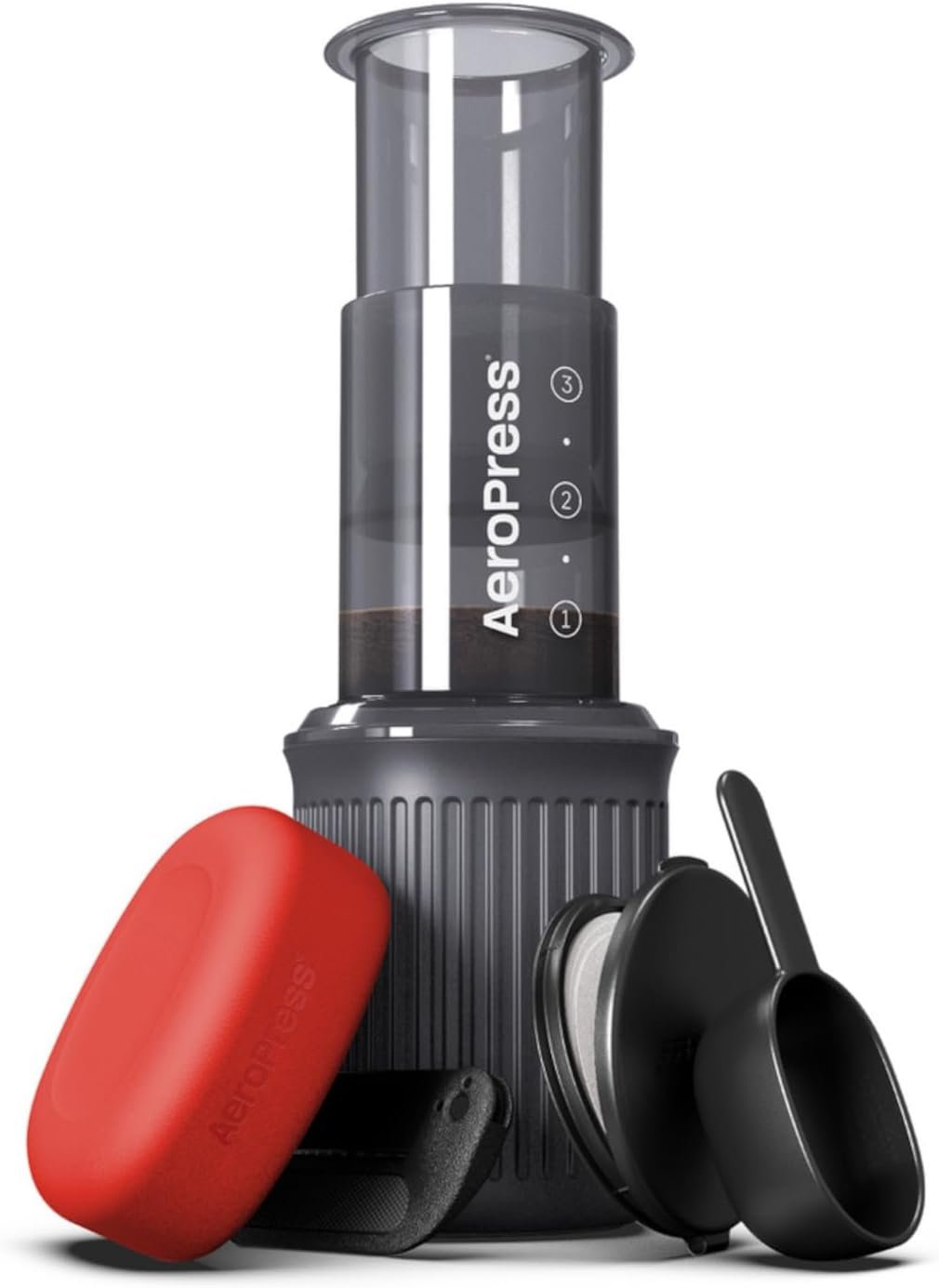
Best Overall: AeroPress Go
The AeroPress Go is the most versatile camp coffee maker I have used. It brews something between a pour-over and an espresso shot, using pressure and immersion. The Go version includes a mug and lid that pack the entire system into a self-contained unit. It weighs about 11 oz total, makes a clean cup with no grit, and cleanup is as simple as popping the compressed puck of grounds into your trash bag.
I have taken the AeroPress Go on everything from overnighters to week-long trips. It handles being thrown in a pack, works fine in cold weather, and the paper filters weigh almost nothing. If I could only own one camp coffee device, this would be it. At around $30, it is also one of the best value picks in outdoor gear.
Price: Around $30 | Weight: 11 oz | Brew time: 2 minutes
Best Pour-Over: Sea to Summit Frontier Ultralight Collapsible Pour Over
If pour-over is your jam, the Sea to Summit Frontier Ultralight Collapsible Pour Over is the one to beat. It collapses flat, weighs less than 2 oz, and works with standard size 2 paper filters. The silicone construction is durable and heat-resistant, and it snaps open in seconds. Pair it with a good camping stove for water heating and you have a pour-over setup that weighs less than your spork.
The brew quality is excellent, on par with a home pour-over rig, as long as you control your water temperature and pour speed. At around $31, it is a small investment for a big upgrade in your camp coffee game.
Price: Around $31 | Weight: 1.8 oz (without filters) | Brew time: 3 to 4 minutes
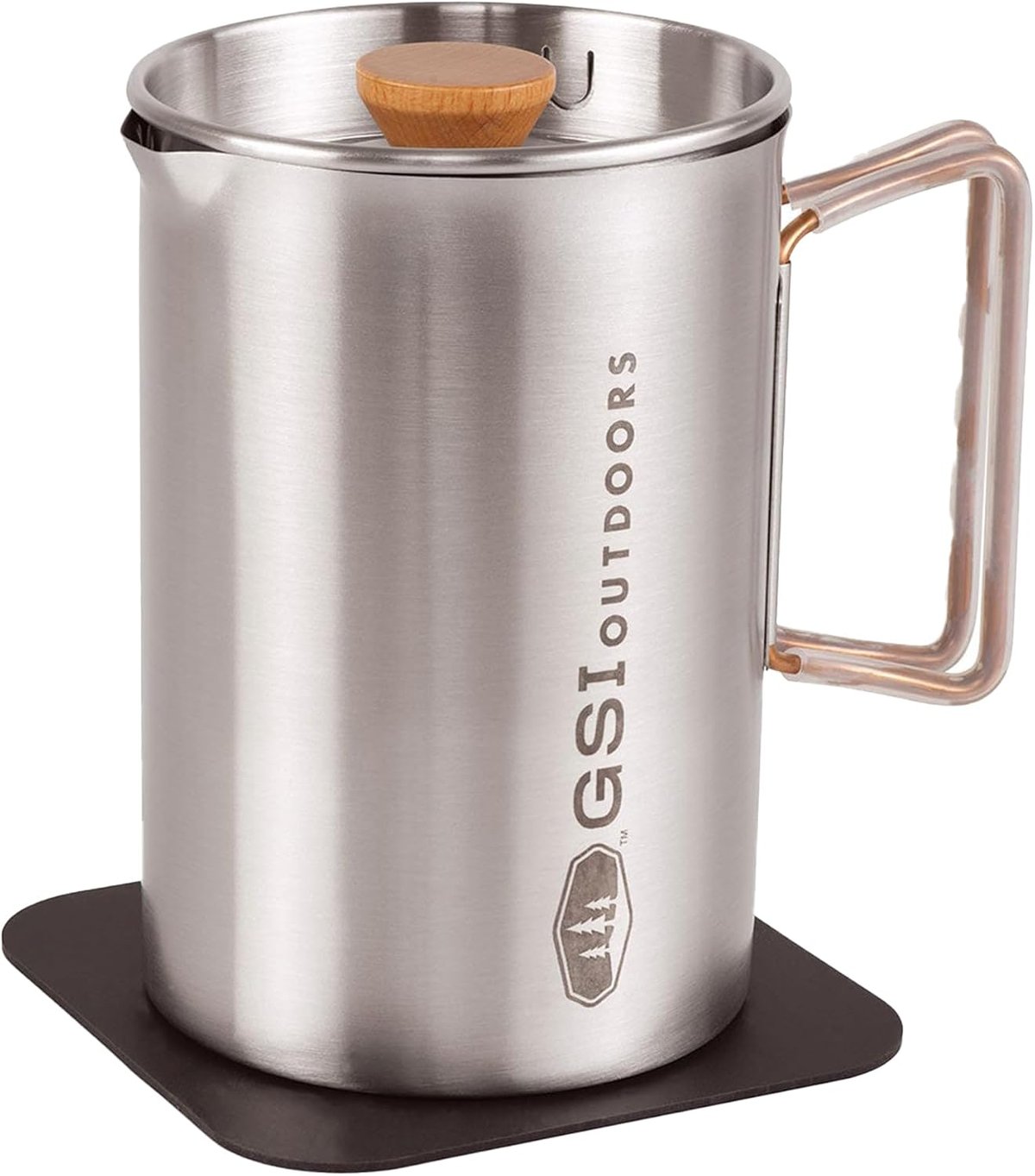
Best French Press: GSI Outdoors Commuter JavaPress
The GSI Outdoors Commuter JavaPress is a clever design that combines a French press with a travel mug. You brew right in the cup, press the plunger, and drink from the same vessel. It holds 15 oz, which is a solid morning dose. The foam sleeve keeps your hands warm and the coffee hot.
At about $40, it is not the cheapest option, but the all-in-one design means fewer pieces to lose or clean. The Commuter JavaPress is ideal for day hikes, car camping, or even your commute (hence the name). For a full camp kitchen setup, pair it with a larger GSI JavaPress for the group pot.
Price: Around $40 | Weight: 8 oz | Brew time: 4 minutes
Best Instant: Starbucks VIA Instant Coffee
For the weight-conscious backpacker, Starbucks VIA Instant Coffee packets are the standard. The 50-pack of Pike Place Roast gives you a lot of mornings for a reasonable price. Each packet is pre-measured, dissolves completely in hot water, and produces a cup that is, honestly, better than it has any right to be.
No, it is not great coffee. But it is consistently decent coffee, and the convenience is unmatched. Zero cleanup, zero gear, zero weight. I keep a few packets in my first aid kit as a backup even when I am bringing a full brew setup, because if your primary method fails, instant coffee is better than no coffee.
Price: Around $25 for 50 packets | Weight: 0.1 oz per packet | Brew time: 10 seconds
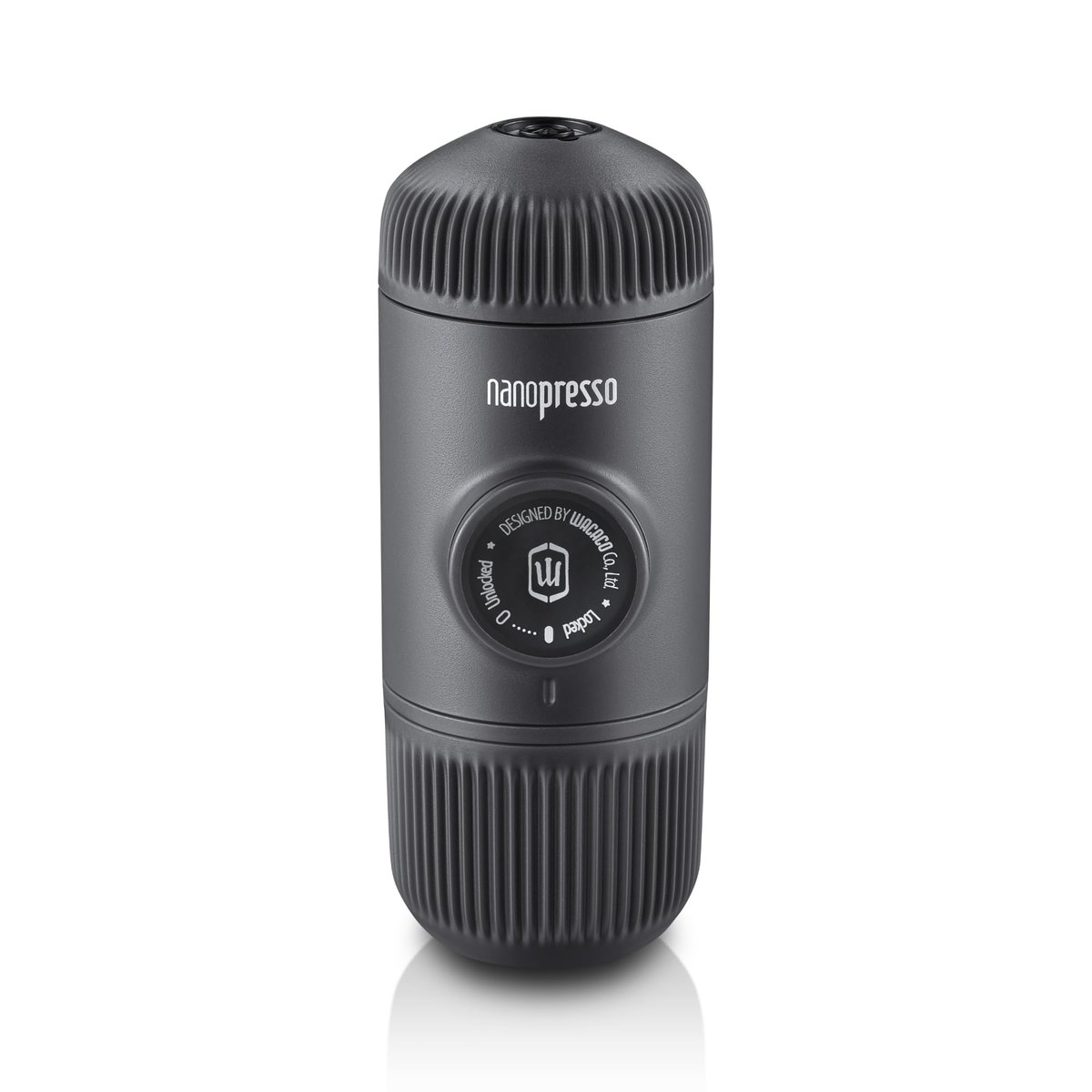
Best Espresso: Wacaco Minipresso NS
The Wacaco Minipresso NS is a hand-pump espresso maker that works with Nespresso-compatible capsules. You add hot water to the reservoir, insert a capsule, and pump the piston. The pressure builds and forces water through the capsule, producing a genuine espresso shot with crema. It is kind of ridiculous in the best way.
At around $55, it is a splurge for camp coffee. But if espresso is your thing and the idea of starting a mountain morning with a real shot of espresso appeals to you, the Minipresso delivers. The capsule system means minimal cleanup and no grounds to pack out. The tradeoff is that you are locked into capsule coffee, so the bean quality is limited to what Nespresso and compatible brands offer.
Price: Around $55 | Weight: 12 oz | Brew time: 2 to 3 minutes
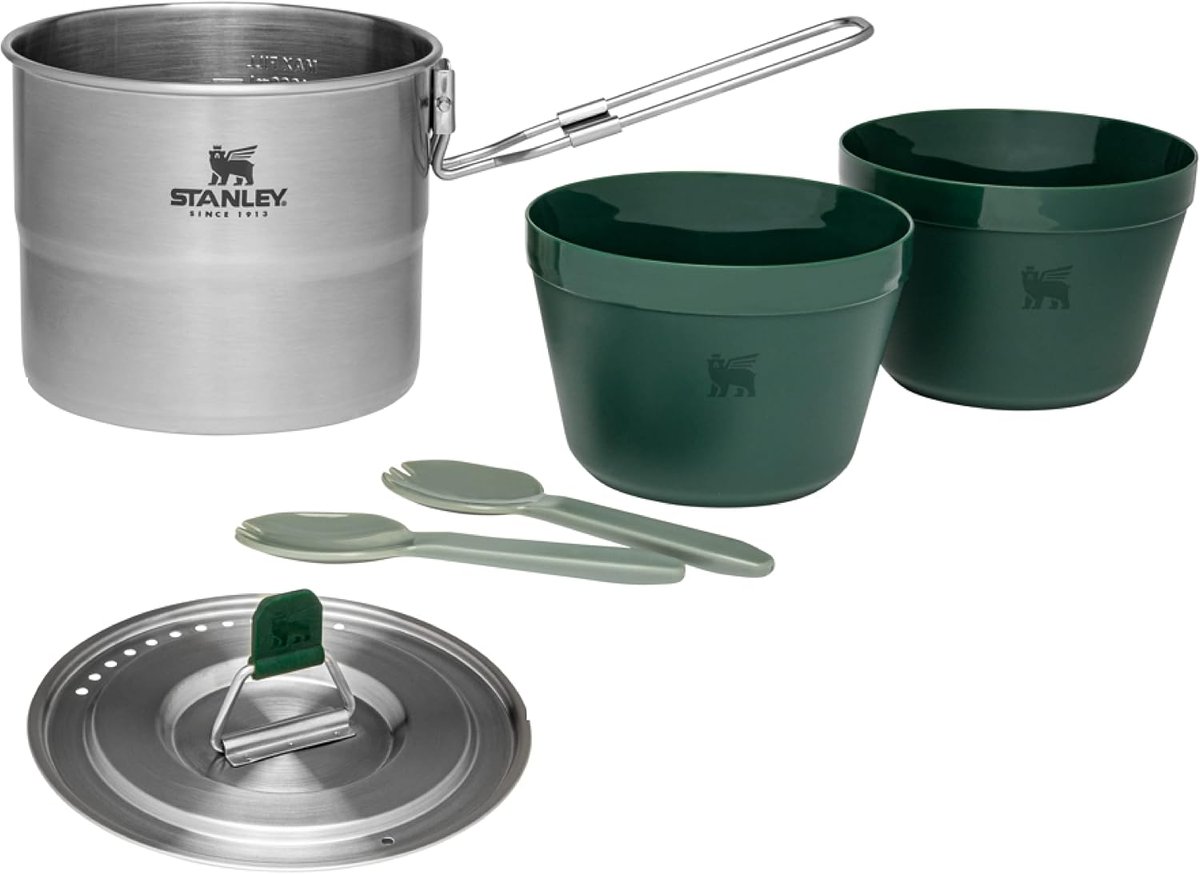
Best Percolator: Stanley Hold Tight Percolator 1.1 Qt
The Stanley Hold Tight Percolator is built like a tank, because Stanley makes everything like a tank. The 1.1 quart size brews about 6 cups, making it the right size for a group. It works on stoves and campfires, and the stainless steel construction means you can abuse it for decades.
The “Hold Tight” lid design is an improvement over older Stanley percolators, which had a tendency to pop open under high heat. Use a medium-coarse grind to keep grounds out of your cup, and pull it off the heat as soon as the perking sound changes rhythm. Pair this with a good camping lantern and you have the classic camp morning setup.
Price: Around $40 | Weight: 20 oz | Brew time: 8 to 10 minutes
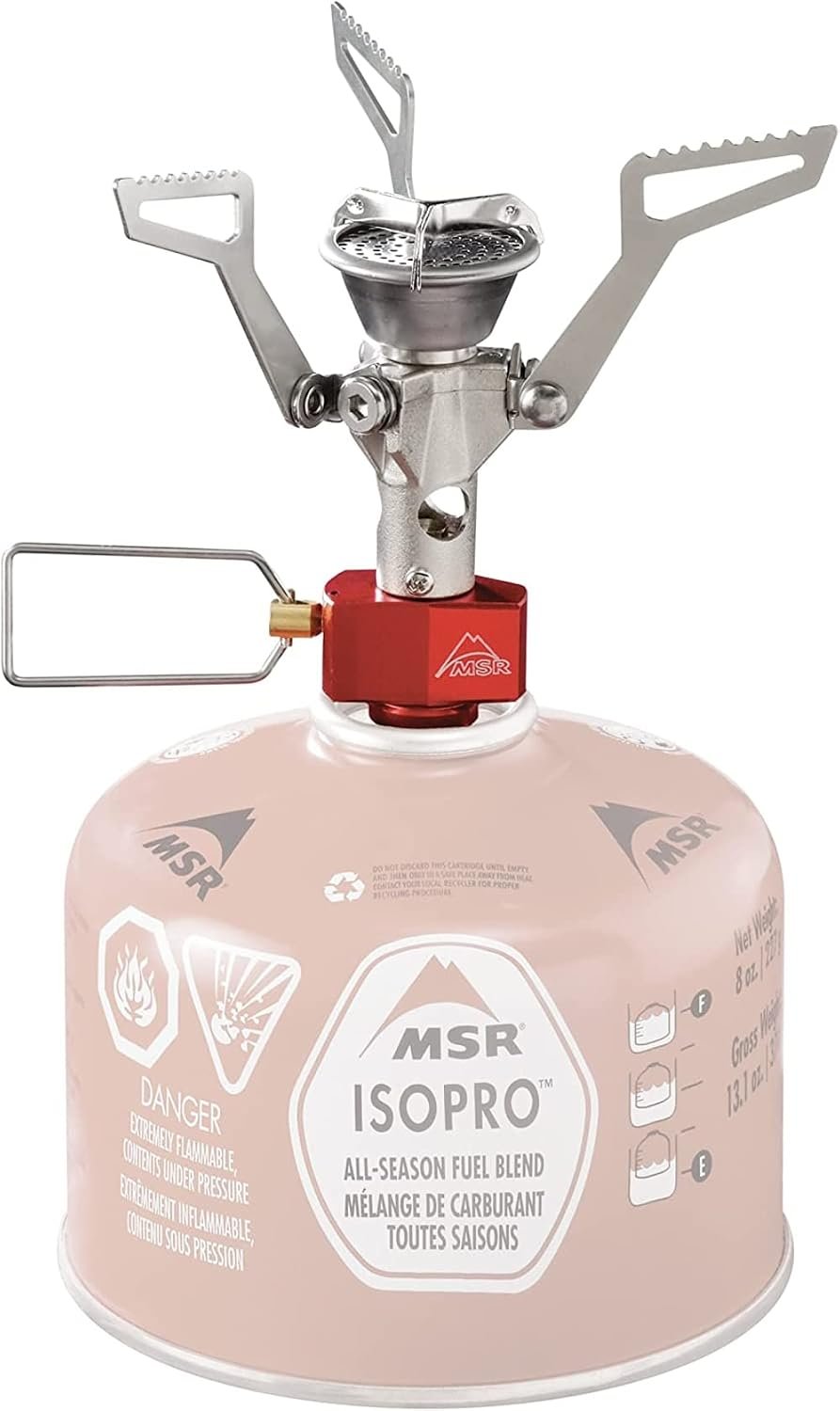
Best Stove for Coffee: MSR PocketRocket 2
You cannot make camp coffee without a way to heat water. The MSR PocketRocket 2 is the stove I have used for years. At 2.6 oz, it boils a liter of water in under 4 minutes. It is reliable in wind, simple to operate, and compact enough to disappear in your pack.
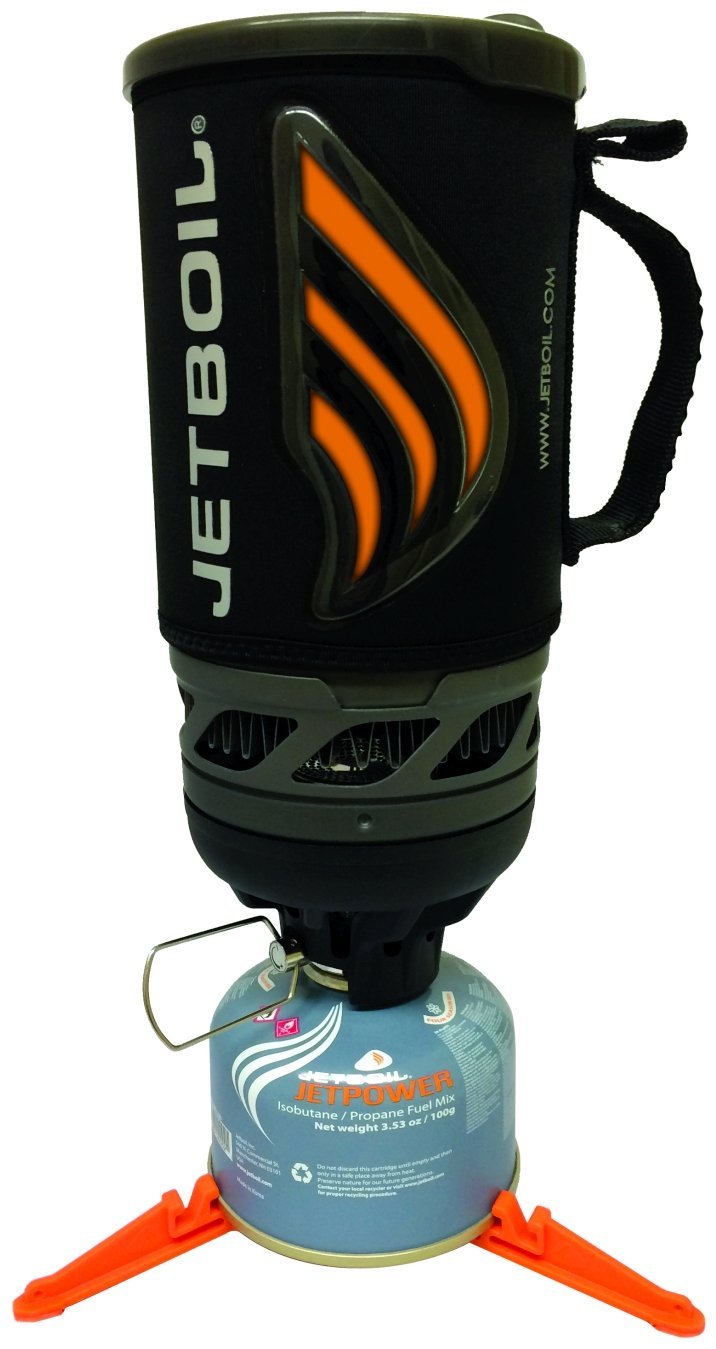
If you want an all-in-one system that boils water even faster, the Jetboil Flash is the upgrade. It boils water in about 100 seconds and the integrated cup means one less thing to pack. The Jetboil is heavier and pricier, but for group trips or cold-weather camping where speed matters, it is hard to beat.
PocketRocket 2: Around $50 | 2.6 oz | Jetboil Flash: Around $125 | 13 oz
Tips for Better Camp Coffee
Good gear is only half the equation. These tips will make the difference between decent camp coffee and genuinely great camp coffee.
Water Temperature Matters
Boiling water is too hot for coffee. You want 195 to 205 degrees Fahrenheit, which means about 30 seconds off a full boil. If you pour boiling water over grounds, you scorch the coffee and get bitter, harsh flavors. Let the water sit for half a minute after boiling, or pour it back and forth between two mugs to cool it slightly.
Grind Size by Method
- Pour-over: Medium-fine, like table salt
- French press: Coarse, like sea salt or crushed peppercorns
- AeroPress: Medium, somewhere between pour-over and French press
- Percolator: Coarse. Fine grounds will slip through the basket and into your cup
- Instant: N/A, but pre-grind at home if you are bringing beans
If you grind at home before your trip, store grounds in an airtight container. Ground coffee loses flavor fast, and the backcountry is not the place to discover your coffee tastes like your pack soap.
Cleanup in the Backcountry
Coffee grounds are not natural to the backcountry, even if they are biodegradable. Pack them out. Here is the system I use:
- For pour-over: Fold the used filter over the grounds and put it in a zip-top bag. Done.
- For AeroPress: Press the puck out onto a rock or into your trash bag. Rinse with a splash of water.
- For French press: Scrape grounds into your trash bag with a spoon. Add a little water, swirl, and dump the rinse water well away from water sources.
- For instant: There is nothing to clean. This is why ultralight hikers love it.
Never dump grounds near streams, lakes, or campsites. They attract animals and take a long time to decompose in mountain environments.
Keep Coffee Away From Your Dog
This is serious. Caffeine is toxic to dogs. A single coffee grounds puck or a spilled packet of instant coffee can be dangerous if your dog decides to investigate. Symptoms of caffeine poisoning in dogs include restlessness, rapid breathing, heart palpitations, muscle tremors, and in severe cases, seizures. Keep your coffee gear, grounds, and brewed coffee out of reach of your dog at camp. Pack out used grounds in a sealed container, not a loosely folded bag that a curious nose can open.
If your dog does get into coffee or grounds, contact a veterinarian immediately. The Pet Poison Helpline (800-213-6680) is a good resource to keep saved in your phone for backcountry trips. For more on trail safety with your dog, check our hiking with dogs safety guide.
Budget vs Premium: What to Buy on Each Budget
Under 50 Dollars
You can build a great camp coffee setup for under $50. The AeroPress Go at around $30 is your brewer. Add a bag of pre-ground coffee from your local roaster ($12 to $15) and a pack of Starbucks VIA packets ($5 to $8 for a small box) as backup. Total: under $50, and you have a setup that produces coffee good enough to make your home machine jealous.
Under 100 Dollars
Step up to the Sea to Summit pour-over ($31) plus an MSR PocketRocket 2 stove ($50). You still have room in the budget for good beans. This setup gives you pour-over quality coffee with a reliable stove that you will use for years. Total: about $95.
Premium Setup
If budget is not a concern, the Jetboil Flash ($125) for instant boiling, the Wacaco Minipresso NS ($55) for espresso, and the Sea to Summit pour-over ($31) for mornings when you want a long cup. Total: about $210, and you have every base covered from instant to espresso.
Disclosure: As an Amazon Associate, GearHound earns from qualifying purchases. This means we may earn a commission when you buy through links on this site, at no extra cost to you. I only recommend gear I have used in the field.
The Bottom Line
The best camp coffee method is the one you will actually use. If you are a through-hiker counting grams, Starbucks VIA packets are the answer, period. If you are car camping with friends, a Stanley percolator on the campfire is the experience. For everyone in between, the AeroPress Go is the sweet spot: versatile, packable, affordable, and capable of making a genuinely good cup of coffee anywhere you can boil water.
Start with your trip type. Match the method to your weight tolerance and your taste standards. Buy once, buy right, and your mornings in the backcountry will never be the same. And keep that coffee away from your dog.
⛺ Get Your Free Camping with Your Dog Checklist
Join our newsletter and get this free printable plus weekly tips.
Price Check
Prices verified via our product tracker. Updated Sep 27.
| Amazon.com: AeroPress Go Extra Small Portable Coffee Maker | $49.95 | 4.7★ (13,068) |
| Amazon.com: Sea to Summit Frontier UL Collapsible Pour Ove | $30.95 | 4.5★ (113) |
| Amazon.com: GSI Outdoors 79475 Commuter JavaPress Portable | $39.95 | 4.7★ |
| Amazon.com : Starbucks VIA Instant Coffee, Medium Roast Co | $52.42 | 4.5★ (8,322) |
| Amazon.com: WACACO Minipresso NS Portable Espresso Machine | $46.90 | 4.3★ (7,509) |
| Amazon.com: MSR PocketRocket 2 Ultralight Camping and Back | $59.95 | 4.8★ (4,296) |
| Amazon.com: Jetboil Flash Camping Stove Cooking System, Ca | $108.74 | 4.8★ (4,100) |
As an Amazon Associate we earn from qualifying purchases.