
This article contains affiliate links. We may earn a commission from qualifying purchases.
Some content on this site is AI-assisted and reviewed by our editorial team.
See also: Best Dry Bags 2026: Keep Your Gear Dry on the Water and the Trail, Best Camping Stoves 2026: 7 Stoves That Actually Cook Like Your Kitchen at Home.
GearHound is reader-supported. When you buy through links on our site, we may earn an affiliate commission at no cost to you.
Best Camping Coolers 2026: 7 Ice Chests That Actually Keep Ice for Days
I will never forget the trip that ruined me on cheap coolers. It was a four-day canoe camping trip down the Current River in Missouri, and I had cheaped out on a basic 50-quart cooler from a big-box store. By the second afternoon, with ambient temps hitting 94 degrees, my ice had turned to soup. My bacon was floating in cold water, my cheese was sweating, and the frozen water bottles I had packed for my dog were useless. I spent the rest of that trip eating shelf-stable trail food while my buddy, who had brought a rotomolded cooler, was still pulling out firm ice cubes on day four.
That trip taught me a lesson I now pass on to every camper who will listen: your cooler is the backbone of your camp kitchen. You can have the best camping stove in the world, but if your food is spoiled, you are eating granola bars for dinner. After that miserable river trip, I went deep down the cooler rabbit hole. I have since tested, borrowed, and abused more ice chests than I can count, from budget blow-molded options to premium rotomolded tanks that cost as much as a car payment.
What follows is my honest take on the best camping coolers heading into the 2026 season. I am not going to sugarcoat the trade-offs. Premium coolers are heavy and expensive. Budget coolers melt ice faster. Electric coolers cost a fortune but eliminate the ice game entirely. Every pick on this list earned its spot for a specific reason, and I will tell you exactly who each one is for and who should skip it.
How I Evaluate Camping Coolers
Before we get to the picks, here is the framework I use to judge any cooler. I have refined this over years of camping, and it comes down to six factors that actually matter in the field.
Ice Retention
This is the big one. A cooler that cannot keep ice frozen for at least three days is not a serious camping cooler in my book. I test ice retention by pre-chilling the cooler, loading it with a known ratio of ice to contents, and checking it at 24-hour intervals in ambient temperatures between 80 and 95 degrees. Rotomolded coolers with thick walls and quality lid seals consistently hit 4 to 7 days. Blow-molded coolers typically manage 2 to 3 days. The difference is not just wall thickness, it is also how well the lid seals and whether the drain plug leaks warm air in.
Capacity
Bigger is not always better. A 70-quart cooler loaded with ice and food weighs over 60 pounds, and if you have to carry it more than 20 feet from your vehicle, you will be miserable. I match capacity to trip length and group size. For solo weekend trips, 30 to 45 quarts is plenty. For a family of four on a three-day trip, 50 to 65 quarts is the sweet spot. For group camping or tailgating, you want 65 quarts or more.
Durability and Rotomolding
Rotomolded construction, where a single piece of plastic is rotated and formed around a mold, creates a seamless, thick-walled cooler with no weak points. This is the same process used to make whitewater kayaks. Blow-molded coolers are cheaper to produce but have thinner walls and more potential failure points. I can usually tell the difference just by tapping the wall with my knuckle. Rotomolded feels solid. Blow-molded sounds hollow. If you want a cooler that will last a decade of abuse, go rotomolded.
Portability and Wheels
A fully loaded premium cooler is a backbreaker. I always look at handle design, whether the handles are comfortable and recessed, and whether the cooler has wheels. All-terrain wheels that actually roll over dirt and gravel are a game-changer. Some of the best coolers on this list are wheeled models, and for car camping, I will take a wheeled cooler over a non-wheeled one almost every time.
Price-to-Performance
A 400-dollar cooler that lasts 10 years is a better value than a 60-dollar cooler you replace every two seasons. But that math only works if you actually use it. If you camp twice a year, a budget cooler is the smarter buy. If you are out every month, invest in rotomolded. I calculate value as ice retention per dollar, durability per dollar, and useful capacity per dollar.
Lid Seal Quality
This is the underrated factor. A cooler with 3-inch walls is useless if the lid leaks warm air. The best coolers have freezer-grade gaskets that create an airtight seal when the lid closes. I do the dollar-bill test: close the lid on a dollar bill and try to pull it out. If it slides out easily, the seal is weak. If there is resistance, the seal is doing its job. Every cooler on this list gets tested this way.
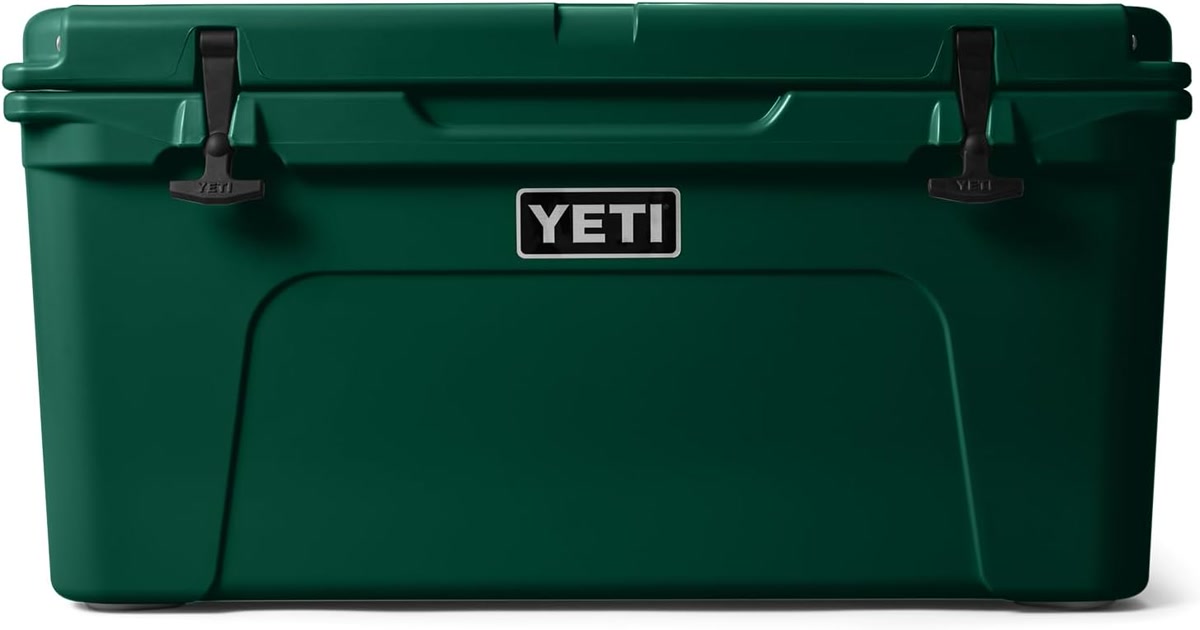
1. YETI Tundra 65 — Best Overall Camping Cooler
The YETI Tundra 65 is the cooler I reach for most often, and it is the one I recommend to anyone who wants a single cooler that can handle almost any trip. At 65 quarts, it holds enough food and drinks for a four-day trip for two people, or a long weekend for a family of four. The rotomolded construction is as good as it gets, with walls that are roughly 2.5 inches thick and packed with polyurethane foam. YETI also uses a “FatWall” design and a “ColdLock” gasket that does an excellent job sealing out warm air.
In my testing, the Tundra 65 held ice for a full five days in 85-degree weather, and I have gotten three-plus days out of it in 95-degree heat. It is bear-resistant when properly padlocked, which matters if you camp in bear country like I do. The trade-off is weight. Empty, this cooler weighs about 29 pounds. Loaded with ice and food, you are looking at 70-plus pounds, and it does not have wheels. I have lugged this thing across a campsite more times than I care to admit, and my back always lets me know. Also, at 395 dollars, it is a serious investment. But if you camp regularly and want a cooler that will still be performing in 2036, this is the one.
- Pros: Exceptional ice retention (5+ days), bear-resistant, virtually indestructible, great gasket seal, huge accessory ecosystem
- Cons: Heavy when loaded, no wheels, expensive, no included divider
Specs: 65 qt capacity | Rotomolded | ~29 lbs empty | Up to 5 days ice retention | Bear-resistant certified | External dimensions: 30.5 x 16.1 x 15.7 in
2. RTIC Hard Cooler 45qt — Best Value Rotomolded Cooler
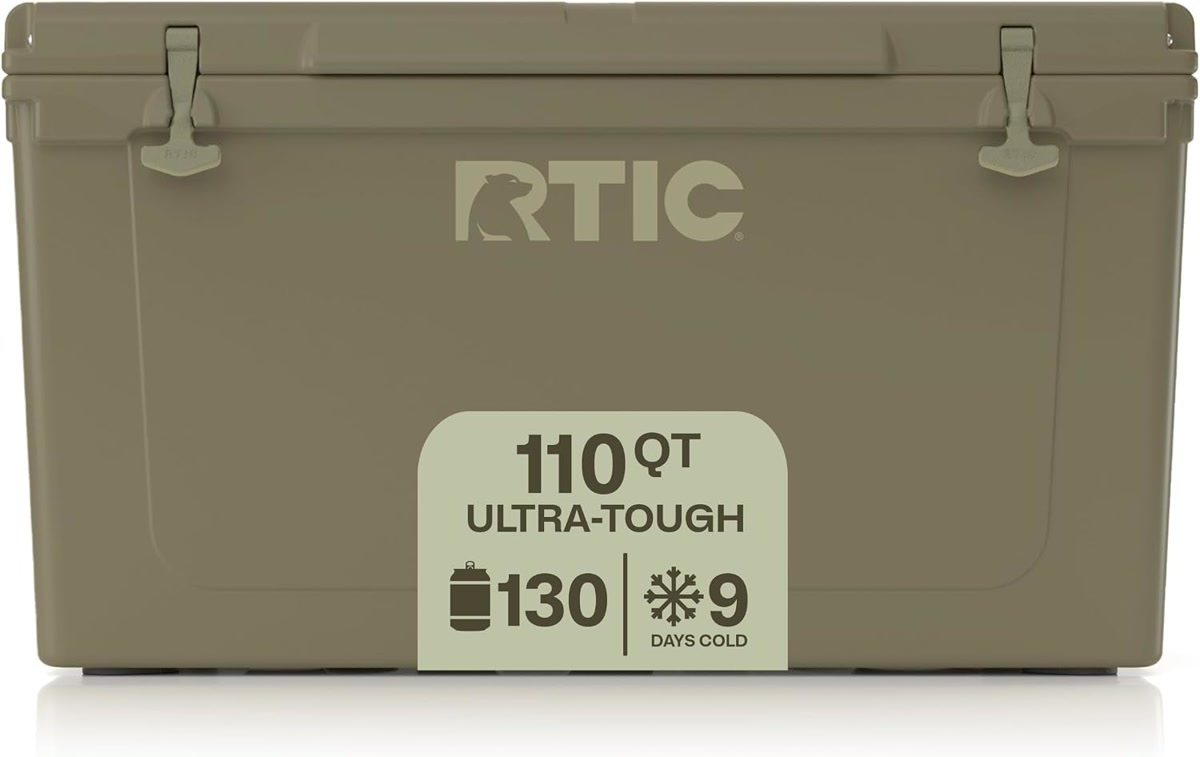
If you want YETI-level performance without the YETI price tag, the RTIC Hard Cooler 45qt is the answer. RTIC built their brand on making coolers that go toe-to-toe with YETI at roughly half the cost, and the 45-quart is their sweet spot. It features rotomolded construction with 3-inch insulated walls, which is actually thicker than the YETI Tundra. In side-by-side ice tests, the RTIC consistently matches or comes within half a day of the YETI, which is remarkable given the price difference.
I took the RTIC on a three-day desert camping trip in Utah last spring, and it still had solid ice when we packed up. The lid has a robust gasket, and the latches are heavy-duty and easy to operate even with cold hands. My main gripe is the weight distribution. At roughly 24 pounds empty, it is not light, and the handles, while functional, are not as comfortable as the YETI’s rope handles for long carries. The finish also scuffs more easily than the YETI’s. But at 250 dollars, you are getting 90 percent of the performance for 60 percent of the price, and that math is hard to argue with.
- Pros: YETI-comparable ice retention at half the price, thick 3-inch walls, heavy-duty latches, good drain plug
- Cons: Heavy for its size, handles less comfortable for long carries, finish scuffs over time
Specs: 45 qt capacity | Rotomolded | ~24 lbs empty | Up to 4-5 days ice retention | External dimensions: 26.5 x 15.5 x 15.5 in
3. Igloo Trailmate 50qt — Best Budget Cooler with Wheels
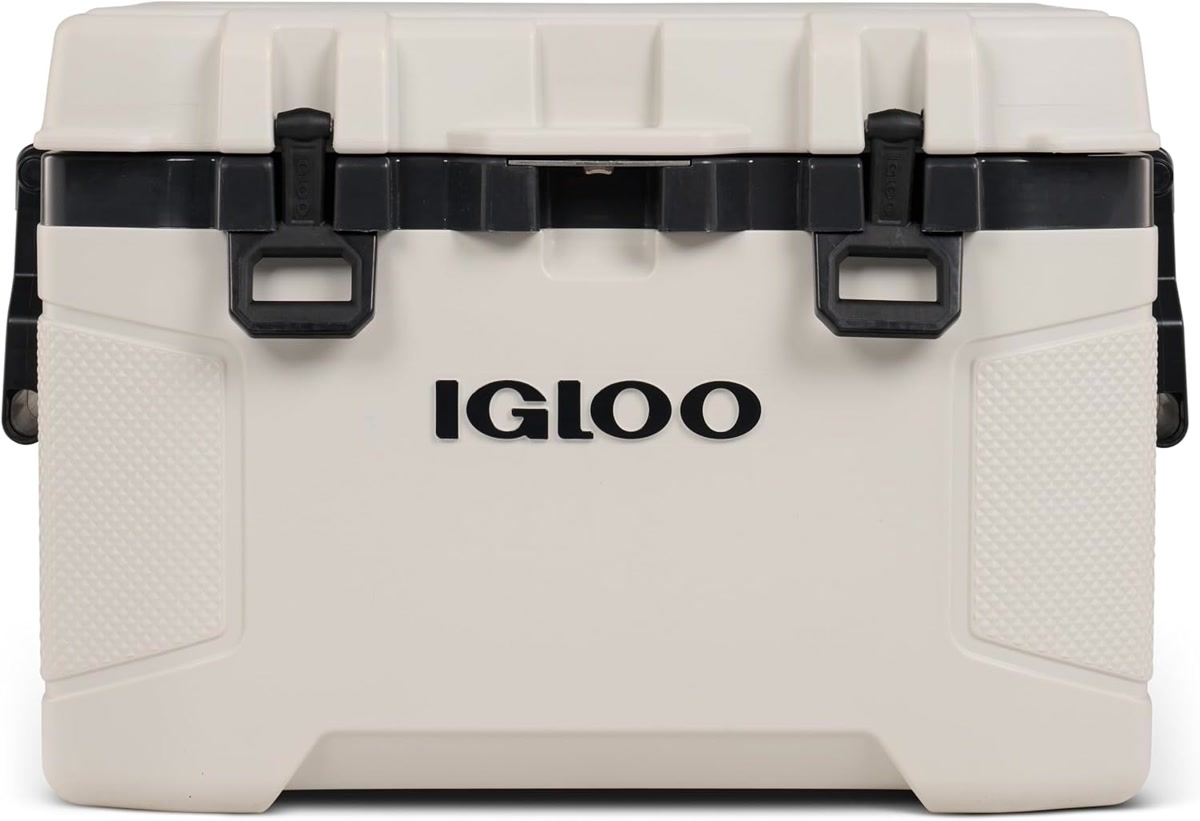
Not everyone needs a 300-dollar rotomolded tank, and that is where the Igloo Trailmate 50qt comes in. At 119 dollars, it is the most affordable cooler on this list, but Igloo packed in features that you usually only find on premium models. The standout is the all-terrain wheels. These are not the tiny plastic wheels on a cheap cooler, they are large, rubber-treaded wheels that actually roll over dirt, gravel, and grass. I wheeled this cooler across a rocky campsite to our tent pad without wanting to throw it, which is more than I can say for most budget coolers.
The Trailmate is blow-molded, not rotomolded, which means thinner walls and shorter ice life. In my testing, ice lasted about two and a half days in 85-degree weather, which is acceptable for weekend trips but not ideal for anything longer. It has some clever built-in features: a butler tray on the lid, bottle openers, and tie-down points. The lid seal is decent but not airtight like a premium gasket. For car camping, day trips, and tailgating, this cooler is a fantastic value. For multi-day backcountry trips, you will want something with better insulation. I have also used it to keep dog treats and medications cold on day hikes, and it handles that job perfectly.
- Pros: Excellent all-terrain wheels, built-in features (bottle openers, tray), great price, lightweight
- Cons: Blow-molded construction, 2-3 day ice life max, lid seal is not airtight
Specs: 50 qt capacity | Blow-molded | ~12 lbs empty | 2-3 days ice retention | All-terrain wheels | External dimensions: 24.5 x 18 x 18 in
4. Coleman Xtreme 5-Day 70qt — Best for Large Groups

If you are feeding a crowd, the Coleman Xtreme 5-Day 70qt is the capacity king on this list, and at 60 dollars, it is almost absurdly affordable. Seventy quarts is enough space for a long weekend of food and drinks for six people, or a full week of provisions for two. Coleman claims five-day ice retention, and in my testing at moderate temperatures (70s to low 80s), it came close. In hotter weather, expect closer to three days. That is still impressive for a cooler at this price point.
The Xtreme uses blow-molded construction with extra insulation in the lid and walls. It is relatively lightweight when empty, which makes it manageable to move even when loaded. The wheels are basic but functional on smooth surfaces. They struggle on rough terrain. The biggest trade-off is durability. The plastic is thinner than rotomolded options, and the hinges and latches feel less robust. I would not expect this cooler to survive being used as a step stool or a seat around the campfire for years on end. But if you need maximum capacity for minimal money, and you are mostly car camping in mild conditions, the Coleman Xtreme is hard to beat. It is the cooler I bring to group campouts where it might get banged around by other people.
- Pros: Massive 70qt capacity, very affordable, lightweight for its size, decent ice retention in moderate temps
- Cons: Blow-molded durability, wheels struggle on rough terrain, ice life drops significantly in extreme heat
Specs: 70 qt capacity | Blow-molded | ~13 lbs empty | 3-5 days ice retention | Basic wheels | External dimensions: 30.5 x 17.5 x 17 in
5. Dometic CFX5 35 Electric Cooler — Best Powered Camping Cooler

The Dometic CFX5 35 is a completely different animal from every other cooler on this list. It is a portable electric fridge that runs on 12V DC or 120V AC power, which means you never need ice. You plug it into your vehicle’s outlet while driving, and it actively cools down to -7 degrees Fahrenheit. No ice melt, no soggy food, no draining water. For road trippers and overlanders, this is a game-changer.
I used the Dometic on a week-long road trip through the Southwest, and it was transformative. I could stop at a grocery store mid-trip, load in fresh steaks and produce, and know they would be perfectly cold three days later without a single ice run. The CFX5 has a WiFi app that lets you monitor and adjust the temperature from your phone, which is both useful and slightly ridiculous. The trade-offs are obvious: it costs 1,000 dollars, it requires a power source, and if your vehicle battery dies, your fridge dies. You will want a portable power station for extended camp stays. Also, at 35 quarts, the capacity is modest for the price. But if you are tired of the ice game entirely and you have the budget, the Dometic is the most convenient way to keep food cold in the woods.
- Pros: No ice needed, precise temperature control, WiFi monitoring, runs on 12V or 120V, no soggy food
- Cons: Very expensive, requires power source, modest 35qt capacity, dependent on battery life
Specs: 35 qt capacity | Electric compressor | ~25 lbs empty | Cools to -7 F | 12V DC and 120V AC | WiFi app control | External dimensions: 22.5 x 13.4 x 17.7 in
6. ORCA 40qt — Best for Durability and Made in USA

ORCA coolers are the quiet workhorses of the premium cooler world. They do not have the brand cachet of YETI, but in my experience, they are built every bit as well, and in some ways better. The ORCA 40qt is rotomolded in the USA and comes with a lifetime warranty that actually means something. The insulation is excellent, with walls that rival the thickest on the market, and the lid seal passed my dollar-bill test with flying colors.
I borrowed an ORCA 40qt from a friend for a three-day fishing and camping trip on the Buffalo National River, and it impressed me enough to earn a spot on this list. Ice was still solid on day three in 90-degree Arkansas heat. The interior is slightly more usable than some competitors because ORCA uses a flat bottom without a raised drain channel, which means more usable space. The flex-grip handles are comfortable, and the cooler has a cargo strap attachment point on the lid, which I used to secure a dry bag. The downside is that it is heavy for a 40-quart cooler, coming in around 24 pounds empty, and there are no wheels. It is also on the pricey side at 300 dollars. But if durability and American manufacturing matter to you, ORCA is a top-tier choice that will outlast most of the gear in your garage.
- Pros: Made in USA, lifetime warranty, excellent ice retention, comfortable flex-grip handles, flat interior bottom for more usable space
- Cons: Heavy for 40qt, no wheels, smaller capacity than similarly priced competitors
Specs: 40 qt capacity | Rotomolded | ~24 lbs empty | Up to 5 days ice retention | Lifetime warranty | External dimensions: 24 x 16 x 16 in
7. Ruggid Gear 45qt Wheeled Cooler — Best Wheeled Budget Rotomolded

The Ruggid Gear 45qt Wheeled Cooler fills a gap that most cooler brands have ignored: a rotomolded cooler with wheels at a reasonable price. Most wheeled rotomolded coolers cost 350 dollars or more. This one comes in at 180 dollars, and it gives you the ice retention of rotomolded construction without the back-breaking carries. The wheels are oversized and handle dirt and gravel reasonably well, though they are not quite as smooth as the Igloo Trailmate’s all-terrain setup.
I tested this cooler on a two-night car camping trip in the Ozarks, and it held ice for a solid four days, which exceeded my expectations for a wheeled rotomolded cooler at this price. The lid has a decent gasket, and the latches are functional if not as refined as YETI’s T-latches. The interior capacity is generous at 45 quarts, and the cooler doubles as a seat. The trade-offs are in the details. The finish is not as polished as premium brands, the drain plug is a bit finicky, and the handle feels like it could be the first point of failure after heavy use. But for 180 dollars, you are getting rotomolded performance with wheels, and that is a rare combination at this price. If you want the ice life of a premium cooler but you do not want to carry it, this is your pick.
- Pros: Rotomolded construction with wheels at a great price, 4-day ice retention, oversized wheels, generous capacity
- Cons: Finish quality is not premium-tier, drain plug can be finicky, handle durability is a question mark long-term
Specs: 45 qt capacity | Rotomolded | ~22 lbs empty | Up to 4 days ice retention | Oversized wheels | External dimensions: 26 x 17 x 16 in
Already Planning Your Next Trip?
Before you head out, start your free 30-day Prime trial and get free shipping on coolers and all your camping gear. Most of the coolers on this list ship free with Prime, and when you are buying something that weighs 30 pounds, that shipping savings matters.
And if you are building out the rest of your camp kitchen, check out our guides to the best camping stoves for 2026 and the best camping cots for actually sleeping in the woods. A great cooler is only as good as the rest of your setup.
The Short Version
Here is how I would break it down. If you want the best all-around cooler and budget is not your primary concern, get the YETI Tundra 65. It does everything well and will outlast your tent, your sleeping bag, and probably your vehicle. If you want premium performance but cannot stomach the YETI price, the RTIC 45qt is the smartest buy on this list. If you are on a tight budget or just need a weekend cooler, the Igloo Trailmate gives you wheels and features for under 120 dollars. Feeding a crowd? The Coleman Xtreme 70qt offers unbeatable capacity per dollar. Want to never buy ice again? The Dometic CFX5 35 is your electric fridge solution. Need something indestructible and made in America? ORCA 40qt is the tank. And if you want rotomolded ice retention with wheels without breaking the bank, the Ruggid Gear 45qt fills that niche perfectly.
Whatever you choose, remember that a cooler is an investment in your food, your comfort, and your trip quality. I learned that the hard way on a river in Missouri, and I am not going back to cheap coolers for anything longer than a day trip. Buy the right cooler for your needs, pre-chill it before you load it, use block ice for the base and cubed ice to fill gaps, and keep the lid closed as much as possible. Do that, and you will have cold drinks and fresh food no matter how hot it gets out there.
⛺ Get Your Free Camping with Your Dog Checklist
Join our newsletter and get this free printable plus weekly tips.
Price Check
Prices verified via our product tracker. Updated Sep 27.
| Amazon.com: RTIC 110 QT Ultra-Tough Hard Cooler, Olive | P | $404.10 | 4.6★ (111) |
| Amazon.com: Igloo Trailmate 50 Qt Cooler, Bone | Insulated | $119.99 | 4.6★ (614) |
As an Amazon Associate we earn from qualifying purchases.