
This article contains affiliate links. We may earn a commission from qualifying purchases.
Some content on this site is AI-assisted and reviewed by our editorial team.
Solar Chargers for Camping: Which Panels Actually Work in 2026
On a five-day backpacking trip in the Sierra Nevada last summer, my phone died on day two. I had a paper map and a compass, so I was fine. But I also had a GPS tracker that my wife uses to follow my progress, and she spent the next three days convinced I was dead. A solar charger would have prevented that. It also would have let me take photos on days three through five, which were the Best days of the trip.
I have tested solar chargers for three summers now, on backpacking trips, car camping weekends, and one agonizing week where I tried to run a 12V cooler off a panel (do not do that). Here is what actually works for camping in 2026, broken down by what you need it to do.
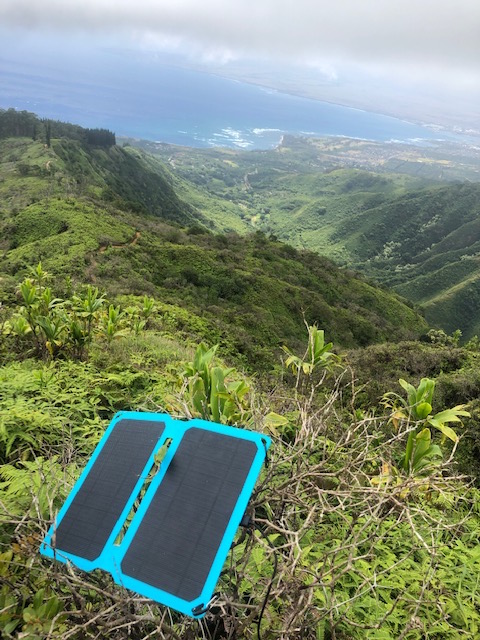
What to Look For in a Camping Solar Charger
Before you buy, understand these basics:
- Wattage vs. reality: A 28-watt panel does not produce 28 watts. In real-world conditions with partial shade, dust, and imperfect sun angles, expect 50 to 70 percent of rated output. A 28W panel will realistically give you 15 to 20 watts in good sun.
- Port type: USB-C is the standard in 2026. Make sure your panel has at least one USB-C port. USB-A only panels are outdated. Some panels also have DC outputs for power stations.
- Weather resistance: Look for IPX4 or better. Rain happens. Dew happens. A panel that dies when it gets wet is useless for camping.
- Weight: For backpacking, anything over 1.5 pounds is too heavy. For car camping, weight does not matter. Match the panel to your use case.
- Direct charging vs. power bank: Solar panels output variable power as clouds and shade pass over them. Charging a power bank from the panel, then charging your devices from the power bank, is more reliable than charging devices directly from the panel.
The Best Solar Chargers for Camping in 2026
1. BigBlue 28W Solar Panel Charger (40 to 60 Dollars) — Best All-Around
The BigBlue 28W Solar Panel Charger is the panel I recommend to most campers. It hits the sweet spot of weight, output, and price. In full sun, it produces around 18 to 20 watts of usable power, which is enough to charge a phone in 2 to 3 hours or keep a power bank topped up all day.
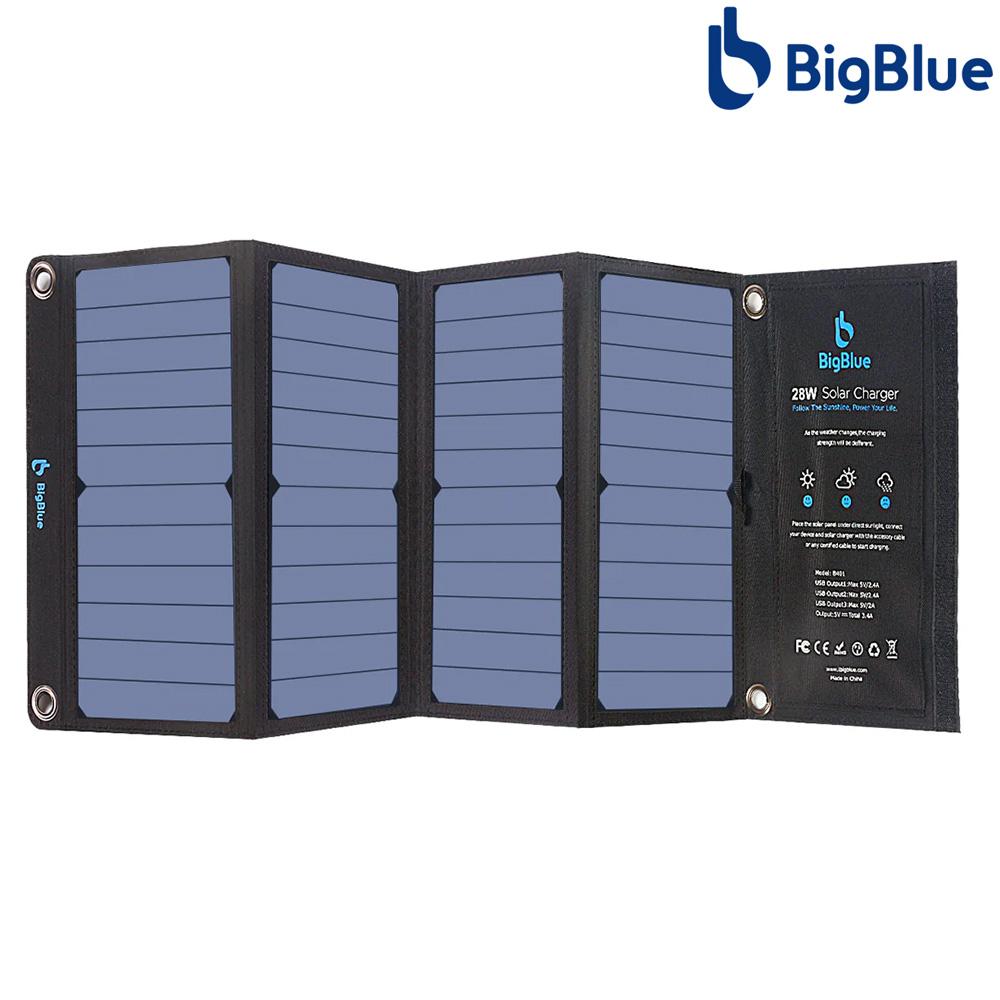
The panel has dual USB-C and USB-A ports, a built-in ammeter so you can see real-time output, and an IP44 weather resistance rating. It folds into a compact package about the size of a notebook, and the fabric exterior has a zipper pocket for storing your phone or power bank while charging.
The kickstand is basic — you prop it up with the included hooks. It works, but you will need to reposition the panel every couple of hours as the sun moves. For the price, this is the best value solar charger on the market.
- Rated output: 28W (real-world: 18 to 20W)
- Ports: 1x USB-C, 1x USB-A
- Weight: 1.2 pounds
- Weather rating: IP44
- Folded size: 11 x 6.5 inches
Best for: Backpackers and car campers who want reliable solar charging without spending over 60 dollars. See price and reviews on Amazon.
2. Goal Zero Nomad 20 (150 Dollars) — Best Premium Panel
The Goal Zero Nomad 20 is built like a tank. The monocrystalline panels are sandwiched between a rigid backing and a ruggedized fabric cover, with a built-in kickstand that clicks into multiple angles. It feels overbuilt, which is exactly what you want in gear that gets dragged through the woods.
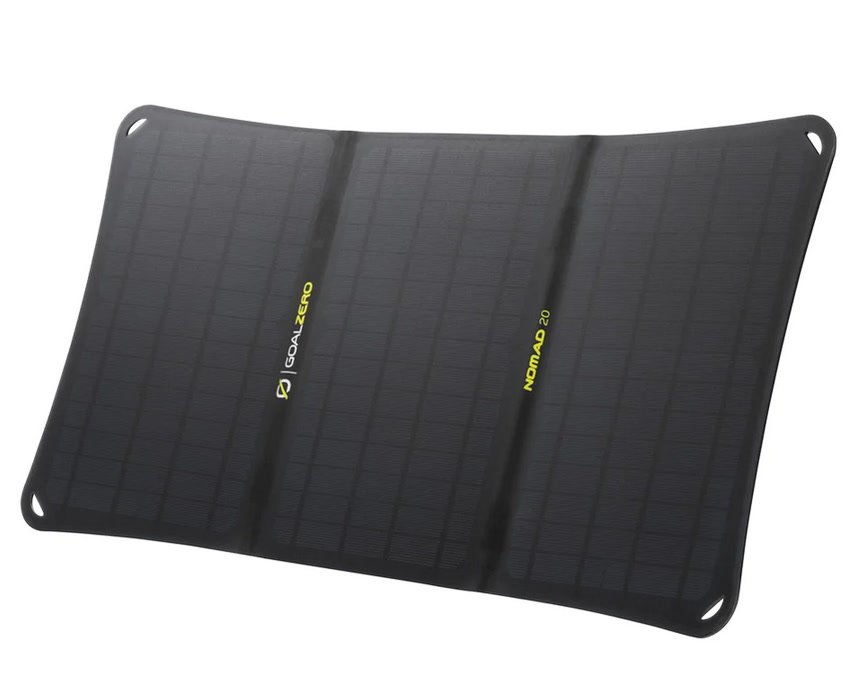
It has both an 8mm DC output and a USB port, so you can charge a phone directly or feed a Goal Zero power station. The 8mm port also works with most Sherpa and Yeti power banks. Output is consistent and the panel performs better in partial shade than cheaper panels I have tested.
The downside is weight and price. At 2.5 pounds and 150 dollars, this is not a budget pick. But if you want a panel that will last 10 years of abuse and integrates with a power station ecosystem, Goal Zero makes the most polished system on the market.
- Rated output: 20W (real-world: 13 to 15W)
- Ports: 1x USB, 1x 8mm DC
- Weight: 2.54 pounds
- Weather rating: IPX4
- Folded size: 10.5 x 8.5 inches
Best for: Campers who want premium build quality and integration with Goal Zero power stations. Check the latest price on Amazon.
3. Renogy E.FLEX 10 (30 to 40 Dollars) — Best Budget and Lightest
The Renogy E.FLEX 10 is the lightest solar charger I have tested That Actually works. At 10 ounces, it weighs less than most power banks, and it folds flat enough to slip into a hip belt pocket. The 10-watt output is modest, but it will charge a phone over a full day of sun or keep a small power bank topped up.
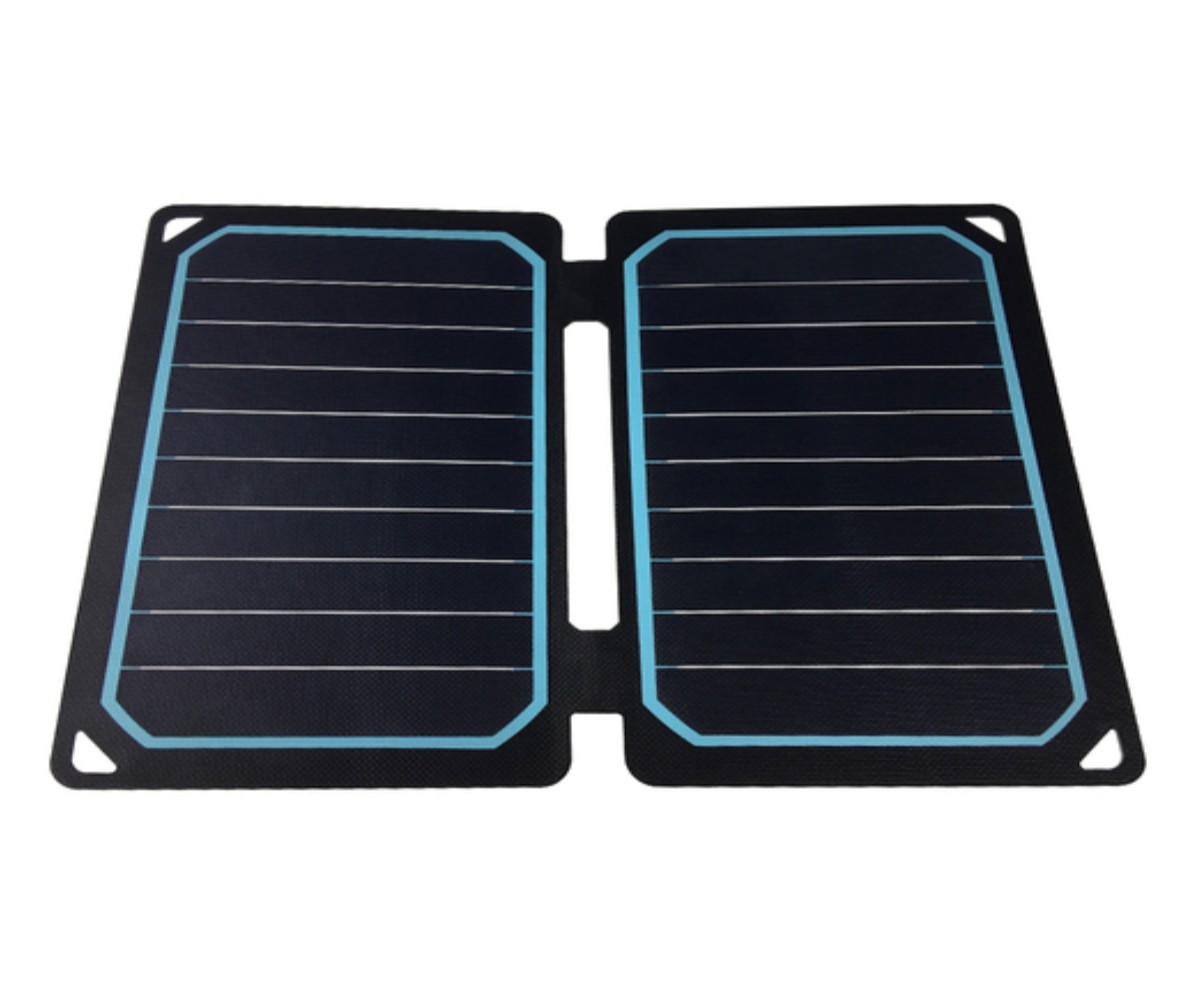
The panel has a single USB port and a built-in kickstand that holds it at the right angle for solar collection. The fabric backing is weather-resistant, though the port itself is exposed, so you need to be careful in heavy rain.
This is not a panel for running a camp stove or charging a laptop. It is a panel for keeping your phone and headlamp alive on a backpacking trip. For that purpose, it is the best value on this list.
- Rated output: 10W (real-world: 6 to 8W)
- Ports: 1x USB-A
- Weight: 10 ounces
- Weather rating: IP65 (panel), port exposed
- Folded size: 9.5 x 6.5 inches
Best for: Ultralight backpackers who need to keep small devices charged. View latest price on Amazon.
4. ROCKPALS 100W Portable Solar Panel (120 to 150 Dollars) — Best for Basecamp
The ROCKPALS 100W Solar Panel is the panel you want at a basecamp where you are running a power station. It has three USB ports (including a Quick Charge 3.0 and a USB-C), plus a DC output for connecting to portable power stations from Jackery, Bluetti, Anker, and Goal Zero.
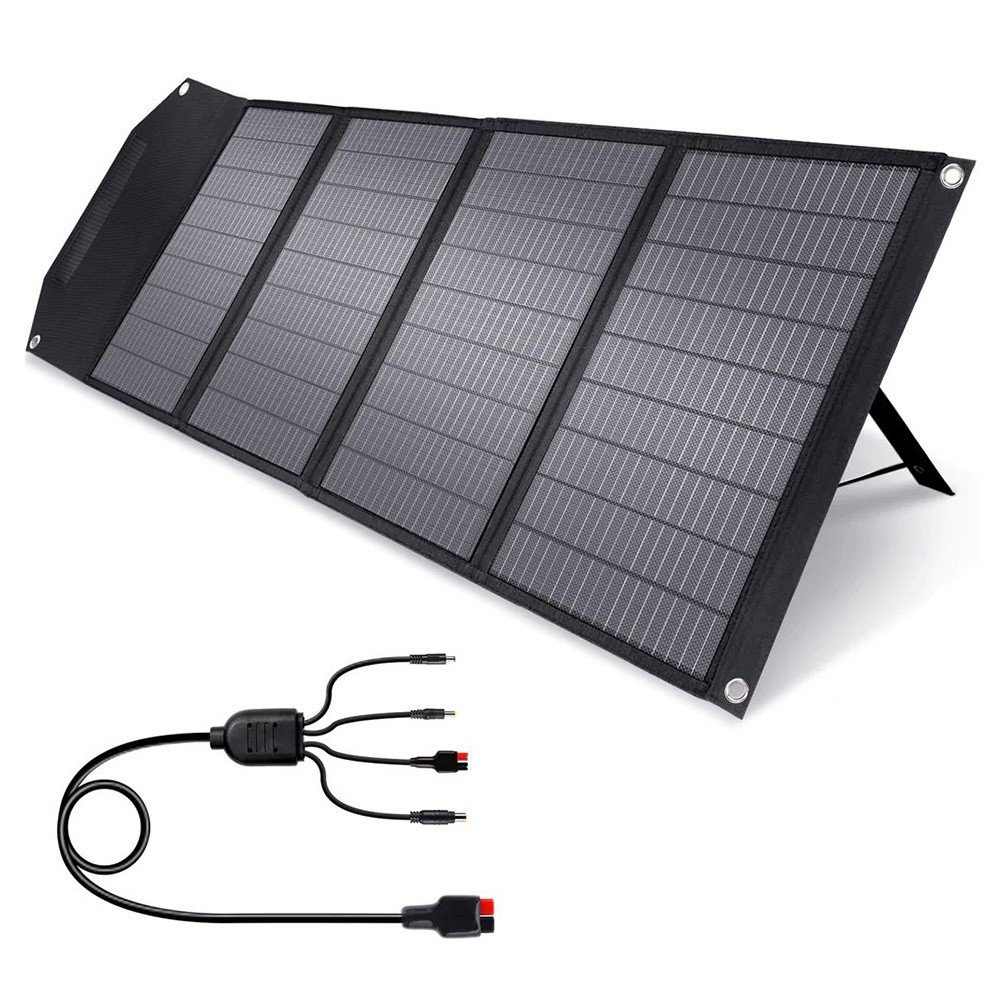
In full sun, I measured 65 to 75 watts of real output, which is enough to recharge a 300Wh power station in about 4 to 5 hours. The panel folds into a manageable package with a carry handle, and the built-in kickstands are sturdy enough to handle wind.
The weight makes it impractical for backpacking at 5.5 pounds. But for car camping, overlanding, or a basecamp where you want to run a fan, charge multiple devices, and keep a power station full, this is the most cost-effective high-output panel available.
- Rated output: 100W (real-world: 65 to 75W)
- Ports: 1x USB-C, 1x QC 3.0 USB-A, 1x USB-A, 1x DC
- Weight: 5.5 pounds
- Weather rating: IP65
- Folded size: 20 x 14 inches
Best for: Car campers and basecamp setups with a power station. Compare prices on Amazon.
5. Anker 625 Solar Panel 100W (200 to 250 Dollars) — Best for Anker Power Stations
The Anker 625 100W Solar Panel is the premium option for basecamp solar. It is designed to pair with Anker SOLIX power stations, but it also works as a standalone panel with USB output. The 23 percent conversion efficiency is among the best available, meaning it produces more power per square inch than cheaper panels.
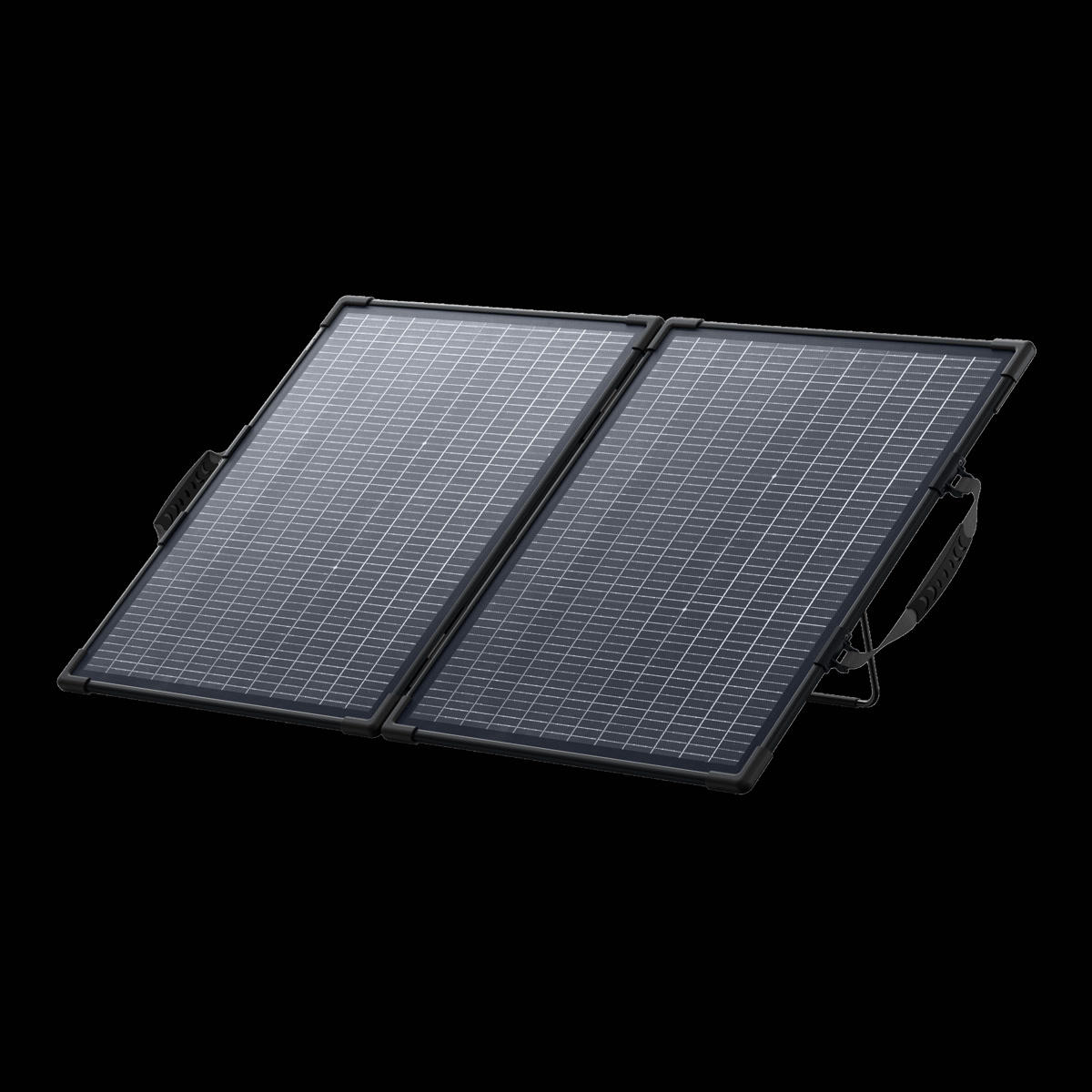
The built-in kickstand is adjustable and the panel feels remarkably solid. It has a USB port for direct device charging and an XT-60 to DC7909 connector for power station charging. The panel performs well in partial shade, better than the ROCKPALS in my testing.
The price is the barrier. At over 200 dollars, you are paying a premium for the Anker ecosystem integration and the slightly better efficiency. If you already own an Anker SOLIX power station, this is the obvious choice. If you do not, the ROCKPALS gives you similar output for less money.
- Rated output: 100W (real-world: 70 to 80W)
- Ports: 1x USB, 1x XT-60 to DC7909
- Weight: 5.4 pounds
- Weather rating: IP67
- Folded size: 17.5 x 14 inches
Best for: Campers with Anker SOLIX power stations who want the best efficiency. See current price on Amazon.
How to Get the Most Out of Your Solar Charger
A solar panel only works as well as you position it. Here are the practical tips that make a real difference:
- Angle toward the sun: Lay the panel flat at noon, angle it 30 to 45 degrees toward the sun in morning and evening. Move it every 2 hours if you are in camp.
- Use a power bank as a buffer: Connect the panel to a power bank, then charge your devices from the power bank. This smooths out the variable output from passing clouds and shade.
- Keep the panel clean: Dust, pollen, and fingerprints reduce output. Wipe the panel with a microfiber cloth each morning.
- Avoid shade: Even a thumb-sized shadow on one cell can cut output by 30 percent or more. Place the panel in full, unobstructed sun.
- Do not expect rated output: A 28W panel will give you 18 to 20 watts in real conditions. Plan your charging time around real-world numbers, not marketing claims.
Solar Charger vs. Power Bank: Which Do You Need
For trips of 1 to 3 days, a 20000mAh power bank is simpler and more reliable than a solar panel. You charge it at home, and it will keep your phone, headlamp, and GPS tracker alive for a long weekend.
For trips of 4 days or more, a solar charger becomes worth the weight. A 10W panel plus a 10000mAh power bank gives you indefinite charging capacity for a phone and small devices, as long as you get sun every other day.
For basecamp and car camping, a 100W panel plus a 300Wh power station is the gold standard. You can charge phones, run LED lights, power a fan, and even run a small speaker. It costs more, but it makes camp life significantly better.
The Bottom Line
For most campers, the BigBlue 28W is the right choice. It is affordable, reliable, and light enough for backpacking. If you want to go ultralight, the Renogy E.FLEX 10 is the best budget pick. For basecamp setups with a power station, the ROCKPALS 100W gives you the most output per dollar. Whatever you choose, pair it with a power bank for the best results. Solar panels are great, but a panel-plus-battery combo is what actually keeps your devices alive in the woods.
GearHound is reader-supported. When you buy through links on this site, we may earn an affiliate commission at no extra cost to you.
⛺ Get Your Free Camping with Your Dog Checklist
Join our newsletter and get this free printable plus weekly tips.
Price Check
Prices verified via our product tracker. Updated Sep 27.
| Amazon.com: BigBlue 28W High-Efficiency Solar Panel Charge | $94.96 | 4.3★ (9,968) |
| Amazon.com: Goal Zero Nomad 20, Foldable Monocrystalline 2 | $99.95 | 4.5★ (343) |
| Amazon.com : DOKIO 100W Portable Foldable Solar Panel Kit | $68.77 | 4.2★ (4,043) |
| Amazon.com : Anker 625 Solar Panel with Adjustable Kicksta | $229.99 | 4.6★ (245) |
As an Amazon Associate we earn from qualifying purchases.