
This article contains affiliate links. We may earn a commission from qualifying purchases.
Some content on this site is AI-assisted and reviewed by our editorial team.
Camping used to mean disconnecting from everything. But whether you’re running a 12V fridge, charging cameras and phones, or powering a CPAP machine at night, a portable power station has become essential gear for many campers. The good news: lithium LiFePO4 batteries have made these stations lighter, safer, and cheaper than ever.
I compared the top portable power stations for camping, focusing on what actually matters at a campsite: usable watt-hours, recharge speed, weight, and how many devices you can plug in at once. Here are the five worth packing.
What to Look for in a Camping Power Station
Before you spend money on a power station, you need to understand what the numbers mean. Watt-hours (Wh) tell you how much energy the battery holds. But what matters more is usable watt-hours — most stations deliver 70 to 85 percent of their stated capacity due to inverter overhead and voltage conversion losses. A 1000Wh station typically gives you 700 to 850Wh of real power.
For camping, weight matters as much as capacity. A 100-pound power station is fine for car camping in a fixed spot, but if you’re moving campsites or loading it in and out of a vehicle daily, look for something under 30 pounds. Recharge time is critical if you’re using solar panels — you only have so many daylight hours.
Battery chemistry is the other big factor. LiFePO4 (lithium iron phosphate) batteries last 3,000+ cycles and are more stable than older lithium-ion chemistries. Every station on this list uses LiFePO4.

EcoFlow Delta 2: Best Overall for Camping
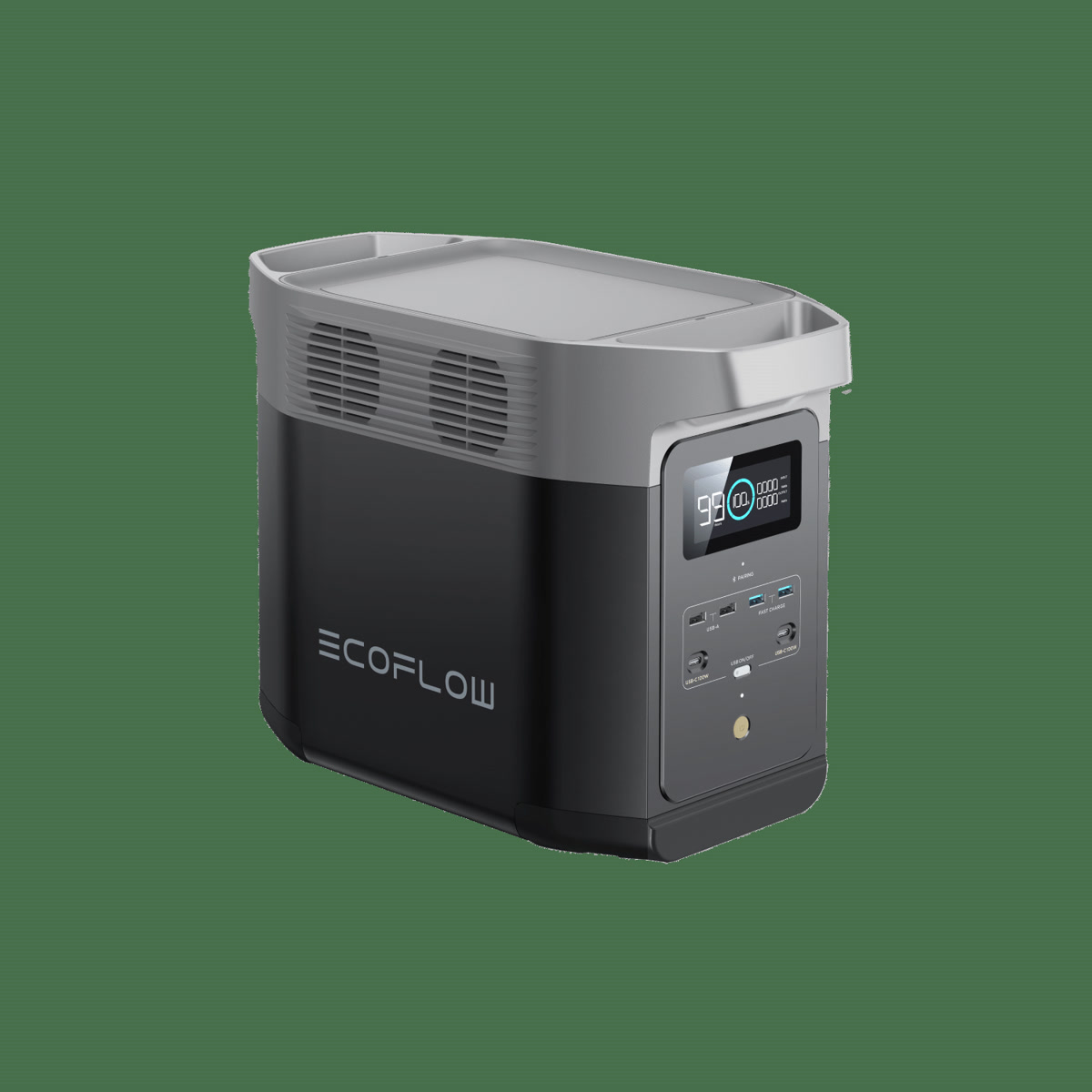
The EcoFlow Delta 2 hits the sweet spot of capacity, weight, and price. It packs 1024Wh of LiFePO4 battery capacity into a 27-pound package that’s easy to carry from car to campsite. In independent testing, it delivered 67 percent of its stated capacity at a low 34W draw and 88 percent at a 380W draw — meaning it’ll run a phone or laptop for days and handle a portable fridge without breaking a sweat.
The Delta 2 recharges from a wall outlet in about 80 minutes, which is among the fastest in this class. It has six AC outlets, two USB-C ports (both 100W), and a 12V car port. The AC outlets and input ports are on the back of the unit, which is a minor annoyance when you’re trying to plug things in by lantern light.
Where the Delta 2 really shines is value. Now that EcoFlow has released newer models, the Delta 2’s price per usable watt-hour is one of the best in the market. If you want one power station that handles car camping, tailgating, and home backup, this is the one.
See price and reviews on Amazon
Jackery Explorer 1000 v2: Easiest to Use
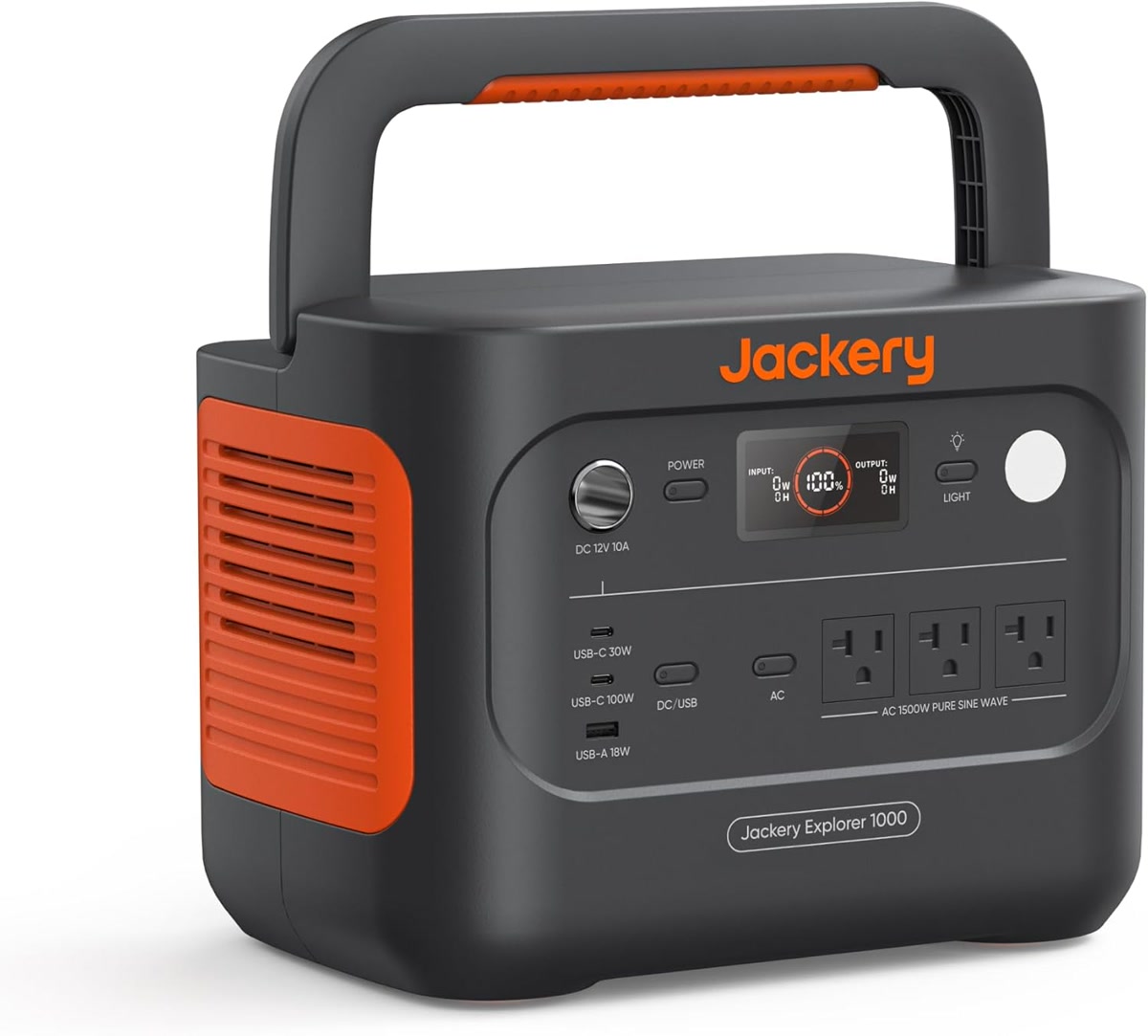
Jackery has been a household name in portable power for years, and the Explorer 1000 v2 refines the formula. It offers 1070Wh of capacity with a 1500W AC output, weighing in at about 25 pounds. The interface is dead simple — a clear LCD screen, well-labeled ports, and a single button to turn it on. If you’ve never used a power station before, the Jackery is the most approachable option.
The Explorer 1000 v2 recharges in about 1 hour from a wall outlet and supports solar input up to 200W. Jackery’s solar panels (sold separately) are among the easiest to set up — they fold out like a briefcase and plug in with a single connector. The build quality is solid, with a carrying handle that folds flat for storage.
The downside is price per watt-hour — Jackery commands a premium over competitors like EcoFlow and Oupes. But for ease of use and reliability, it’s hard to beat.
Check the latest price on Amazon
Anker SOLIX C1000: Best for Solar Charging
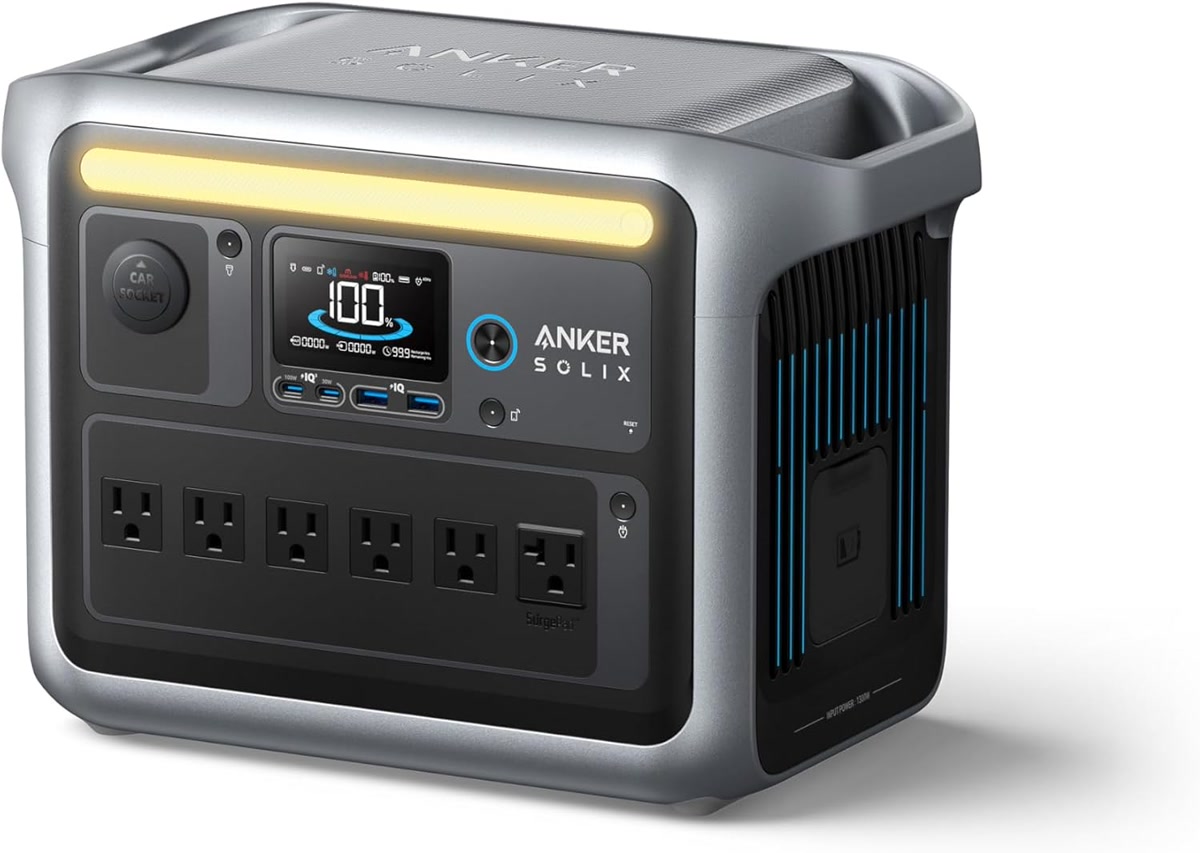
Anker’s SOLIX C1000 is the compact powerhouse of this list. At 24.9 pounds with 1056Wh of capacity and 2000W output, it punches well above its weight class. The standout feature is its solar charging capability — paired with Anker’s 300W solar panel, it can recharge from 0 to 80 percent in about 2.5 hours of good sunlight.
The C1000 has six AC outlets, two USB-C ports, and two USB-A ports. The USB-C ports can output 120W each, which is enough to fast-charge a laptop. The unit also supports Anker’s app, which lets you monitor power flow, set charging schedules, and toggle an ultra-fast charge mode that cuts recharge time to under 45 minutes.
The main drawback is the fan — it’s louder than the EcoFlow or Jackery under heavy load. If you’re using it overnight in a tent or small camper, the fan noise may be noticeable. For daytime use at a campsite, it’s a non-issue.
Goal Zero Yeti 700: Most Rugged
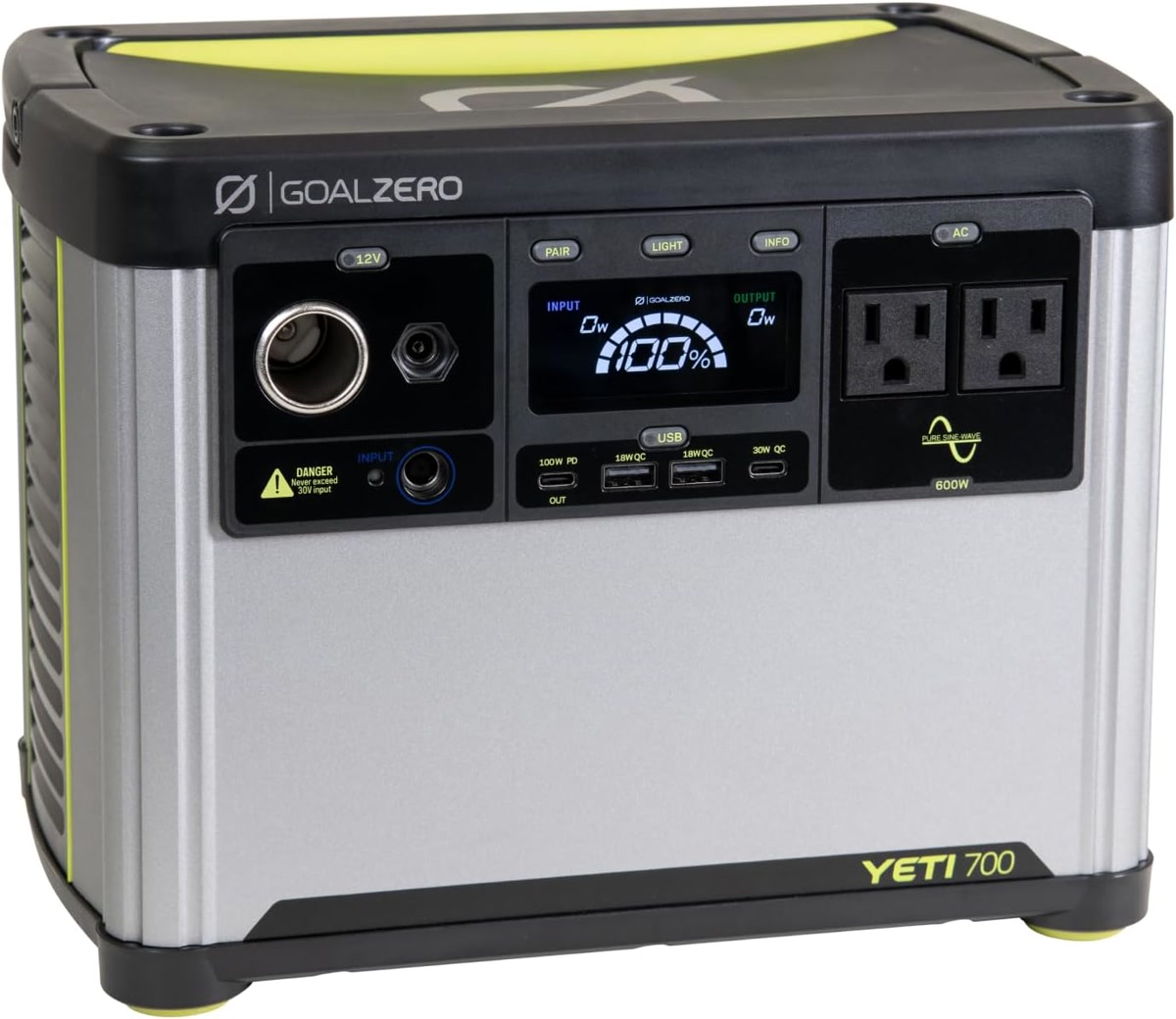
Goal Zero built their reputation on bombproof power stations for off-grid use, and the Yeti 700 lives up to that legacy. It’s the smallest and lightest option on this list at 615Wh and 19.6 pounds, but what sets it apart is durability. The Yeti 700 is dustproof and water-resistant with an IP54 rating — the only station here that can handle being left out in a light drizzle.
The Yeti 700 won’t run a fridge for long, but it’s perfect for charging phones, tablets, cameras, and running LED lights for a weekend trip. The built-in handle is comfortable, and the ports are all on the front face, making them easy to access in the dark. Goal Zero also sells a wide range of accessories, from car chargers to chainable solar panels.
The trade-off is cost — the Yeti 700 has the highest price per watt-hour on this list. You’re paying for ruggedness and the Goal Zero ecosystem. If you camp in rough conditions or want something that can live in your truck bed year-round, it’s worth the premium.
Oupes Mega 1: Best Value
If you want maximum watt-hours per dollar, the Oupes Mega 1 is the answer. It offers 600Wh of capacity with a 600W pure sine wave inverter at a price that significantly undercuts the competition. It’s not the lightest at 22 pounds, and it’s not the most feature-rich, but it does the basics well.
The Mega 1 includes two AC outlets, two USB-C ports, one USB-A port, and a 12V car port. It supports solar input up to 200W and recharges from a wall outlet in about 5 hours. The LiFePO4 battery is rated for 3,500 cycles to 80 percent capacity.
Where the Mega 1 falls short is build quality — the plastic shell feels less premium than the EcoFlow or Jackery, and the LCD screen is basic. But if you need a reliable power station for weekend car camping trips and don’t want to spend $500+, this is the best budget option on the market.
How I compared These Power Stations
We looked at five key factors for camping use:
- Usable capacity: Not the marketing number, but how many watt-hours you actually get after inverter losses. Most stations deliver 70 to 85 percent of their stated capacity.
- Weight: Anything over 30 pounds gets cumbersome for car camping. Under 20 pounds is ideal for moving between campsite and vehicle.
- Recharge time: Fast AC recharge means you can top up between campsites. Solar recharge time matters for off-grid trips.
- Port selection: More AC outlets and USB-C ports mean fewer adapters needed. USB-C with 100W+ output is a big plus for laptop charging.
- Durability: For camping, some weather resistance matters. Most stations have no IP rating, which means they need to stay dry.
The Short Version
For most campers, the EcoFlow Delta 2 is the best all-around power station — it balances capacity, weight, recharge speed, and price better than anything else on the market. If you want something simpler, the Jackery Explorer 1000 v2 is the easiest to use. And if budget is your main concern, the Oupes Mega 1 gives you the most watt-hours per dollar.
Whatever you choose, pair it with a 100W to 200W solar panel for true off-grid capability. A power station without solar is just a battery that dies — with solar, it’s a self-sustaining power source for your campsite.
Get Your Free Camping with Your Dog Checklist
Join 500+ campers getting weekly tips on camping, hiking, and outdoor adventures with your dog.
No spam. Unsubscribe anytime.
GearHound is reader-supported. When you buy through links on this site, we may earn an affiliate commission at no extra cost to you.
⛺ Get Your Free Camping with Your Dog Checklist
Join our newsletter and get this free printable plus weekly tips.
Price Check
Prices verified via our product tracker. Updated Sep 27.
| Amazon.com : EF ECOFLOW Delta 3 Portable Power Station, 10 | $5,000.00 | 4.7★ (1,356) |
| Amazon.com : Jackery Explorer 1000 v2 Portable Power Stati | $589.00 | 4.8★ |
| Amazon.com : Anker SOLIX C1000 Portable Power Station with | $599.99 | 4.7★ (2,128) |
| Amazon.com: Goal Zero Yeti Portable Power Station, Yeti 70 | $699.95 | 4.4★ |
| Amazon.com : OUPES Mega 1 Portable Power Station 1024Wh 20 | $549.00 | 4.5★ (1,489) |
As an Amazon Associate we earn from qualifying purchases.