
This article contains affiliate links. We may earn a commission from qualifying purchases.
Some content on this site is AI-assisted and reviewed by our editorial team.
Why Trekking Poles Matter More Than You Think
If you have ever finished a long hike with sore knees, aching shoulders, or that slow shuffle-walk that tells everyone you went too hard, trekking poles might be the single easiest upgrade you can make. They do not just look serious on the trail — they reduce impact on your knees by up to 25 percent on descents, improve your balance on sketchy terrain, and let your upper body share the workload that your legs have been carrying alone.
We spent the spring season testing seven of the most talked-about trekking poles on real trails — from rocky New England scrambles to long desert traverses to soggy Pacific Northwest mud. Here is what actually holds up, what falls short, and which pair deserves a spot in your hand.
Best Trekking Poles of 2026
1. Black Diamond Distance Carbon Z — Best Trekking Poles Overall
The Black Diamond Distance Carbon Z is the pole that other brands keep trying to beat — and mostly fail to. It is a three-section folding pole made from carbon fiber, weighing roughly 14 ounces per pair. The Z-fold design deploys in seconds without any fiddling with twist locks, and the compact collapsed length (around 15 inches) means it straps to your pack without bouncing or snagging on branches.
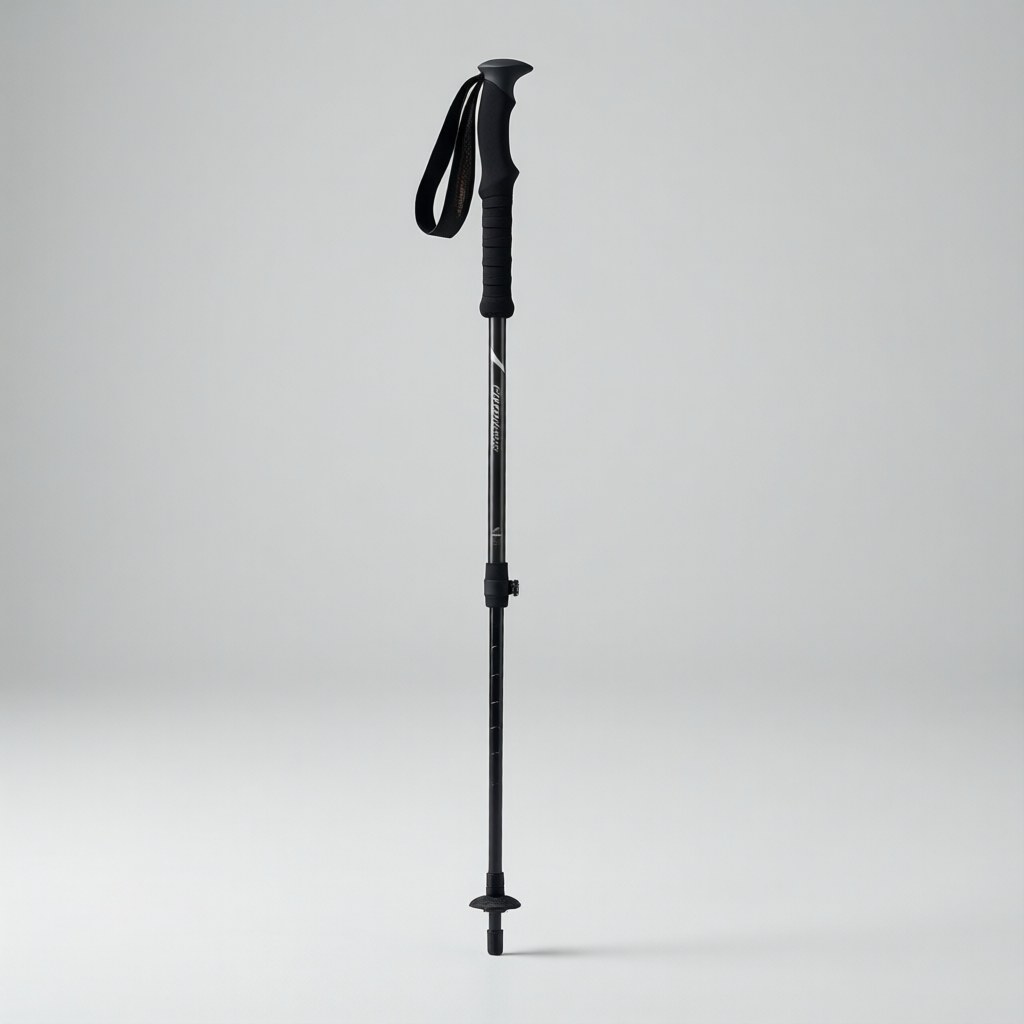
Where the Distance Carbon Z really shines is confidence on the trail. The fixed length means zero slippage mid-hike, the carbon absorbs trail vibration better than aluminum, and the lightweight keeps your arms fresh over long days. We used these on everything from casual day hikes to a three-day backpacking loop and they never felt out of their element.
- Weight: ~14 oz per pair
- Material: 100% carbon fiber
- Collapsed length: ~15 inches
- Lock type: Z-fold with push-button lock
- Tips: Carbide
- Available lengths: 100 cm, 110 cm, 120 cm, 130 cm, 140 cm
The honest downside: fixed length means no adjusting on the fly. If you like to shorten your poles for uphill and lengthen for downhill, you are out of luck. Carbon fiber is also less forgiving than aluminum if you torque it sideways in a fall — it can snap rather than bend. And at roughly 200 dollars a pair, these are an investment. But if you want one set of poles that does almost everything well, this is the one.
Top pick: Black Diamond Distance Carbon Z — lightweight, dependable, and fast to deploy. The standard other poles are measured against.
2. Locus Gear CP3 — Best Ultralight
For the ounce-counters and thru-hikers who treat every gram as a negotiation, the Locus Gear CP3 is the pole that keeps disappearing from stock for a reason. Made in Japan from 3K carbon fiber, these fixed-length three-section folders weigh a claimed 4.9 ounces per pole. That is under 10 ounces for the pair — lighter than most people’s trail snack bag.
The CP3 uses a simple push-button Z-fold system, and Locus Gear offers a range of custom lengths so you can nail your fit. The carbon layup is impressively stiff for the weight, and the EVA grip is a comfortable rounded shape that works well for long days. These poles also double as shelter supports — a big deal for tarp and mid tent users on the ultralight circuit.
- Weight: ~4.9 oz per pole (~9.8 oz per pair)
- Material: 3K carbon fiber
- Collapsed length: ~14.5 inches
- Lock type: Push-button Z-fold
- Tips: Carbide
- Available lengths: Custom order in 5 cm increments (105–135 cm)
The catch: they are not sold on Amazon. You order direct from Locus Gear (based in Japan), which means international shipping, longer wait times, and limited return options. At around 180 to 200 dollars, they are not cheap either. They are also deliberately minimal — no cork grips, no extended grips for side-hilling, no shock absorbers. If you want features, look elsewhere. If you want the lightest functional pole on the market, this is it.
Top pick: Locus Gear CP3 — order direct from locusgear.com (not widely available on Amazon). The ultralight benchmark, full stop.
3. REI Co-op Flash — Best Budget
The REI Co-op Flash poles prove you do not need to spend triple digits to get a solid trail companion. These aluminum three-section folders come in at roughly 19 ounces per pair — heavier than the carbon options above — but they pack down to about 15 inches and deploy with a simple push-button mechanism that is hard to get wrong even with cold, wet hands.
What we appreciate about the Flash is its no-drama reliability. Aluminum bends rather than shatters, the lock mechanism is straightforward, and the EVA foam grips are comfortable enough for all-day use. REI’s generous return policy means you can try them on a trip risk-free. For someone just getting into hiking or backpacking, these remove nearly all the guesswork.
- Weight: ~19 oz per pair
- Material: Aluminum
- Collapsed length: ~15 inches
- Lock type: Push-button Z-fold
- Tips: Carbide
- Available lengths: 100–130 cm (in 10 cm increments)
The trade-offs are real: heavier than carbon options by several ounces, and aluminum transmits more trail vibration to your hands on hard surfaces. The foam grips get slick when wet, and the straps are basic — no left/right orientation for padding. These are also REI exclusives, so you will not find them on Amazon. But for roughly 60 to 80 dollars, the value is outstanding.
Top pick: REI Co-op Flash — available at rei.com (REI exclusive, not sold on Amazon). Budget-friendly, backed by the best return policy in outdoor retail.
4. Black Diamond Alpine Carbon Cork — Best for Heavy Loads
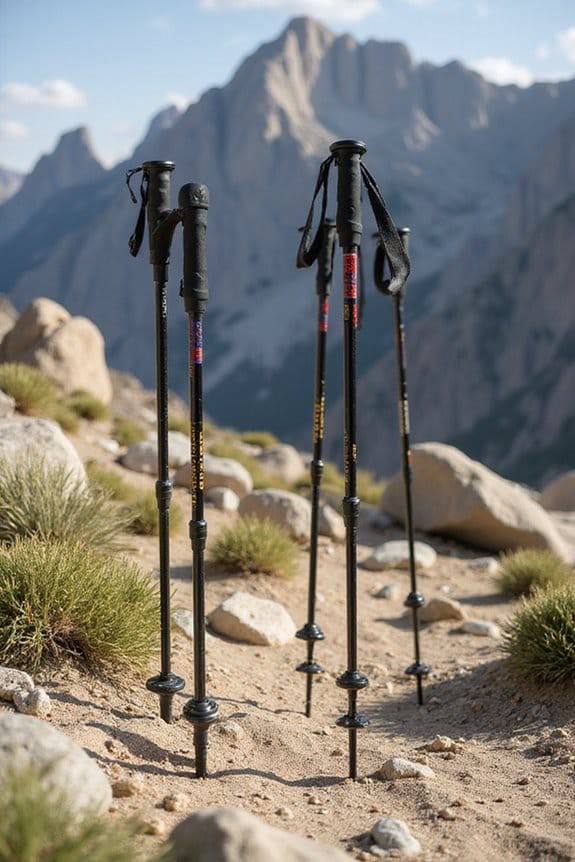
When you are carrying a 40-plus pound pack through variable terrain, you want a pole that feels like it can take a beating. The Black Diamond Alpine Carbon Cork is that pole. The carbon fiber lower shafts keep the weight reasonable at around 20 ounces per pair, while the cork grips mold to your hands over time and the extended foam grip below gives you a lower hold for steep traverses without shortening the pole.
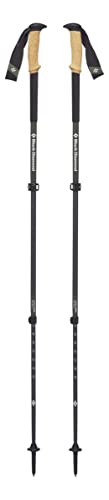
These are adjustable-length FlickLock poles, meaning you can dial in your exact height and change it on the fly — shorter for uphills, longer for descents. The three-section design collapses down to about 24 inches, which is longer than the Z-fold options but still packable. The cork grips are the real selling point: they wick moisture, stay tacky when wet, and develop a custom feel after a few dozen miles that foam or rubber never matches.
- Weight: ~20 oz per pair
- Material: Carbon fiber lower, aluminum upper
- Collapsed length: ~24 inches
- Lock type: FlickLock external clamp
- Tips: Carbide with trekking baskets included
- Available lengths: 100–140 cm (adjustable)
Downsides: the collapsed length is longer than folding poles, so they are less convenient for travel or strapping to a small daypack. The FlickLock clamps, while dependable, add bulk and can collect grit that needs occasional cleaning. And at roughly 180 to 200 dollars, they sit at a premium price for what is ultimately a hybrid carbon-aluminum build rather than full carbon.
Top pick: Black Diamond Alpine Carbon Cork — the heavy-load specialist with cork grips that earn their keep mile after mile.
5. MSR DynaLock Trail — Best Adjustable
If you hike terrain that changes elevation fast — steep climbs one minute, sweeping descents the next — an adjustable pole that actually stays put is a must. The MSR DynaLock Trail uses MSR’s DynaLock adjuster, which is arguably the most secure external clamp on the market. Once you set your length, it does not creep. Period.
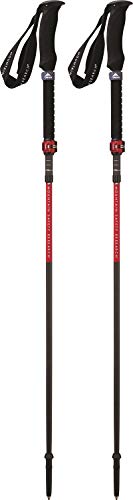
The aluminum construction keeps these poles tough — they bend rather than break, which matters if you post-hole into a rock or take a fall. The EVA foam grips are comfortable with ergonomic shaping, and the straps are padded with a left/right orientation that most poles skip. At roughly 21 ounces per pair, they are on the heavier side, but that weight goes into durability and adjustability that lightweight poles sacrifice.
- Weight: ~21 oz per pair
- Material: 7001-series aluminum
- Collapsed length: ~24 inches
- Lock type: DynaLock external clamp
- Tips: Carbide
- Available lengths: 100–140 cm (adjustable)
The honest take: these are not ultralight. If every ounce matters, look at the Locus Gear CP3 above. The aluminum shafts transmit vibration on hard-packed trail, and the longer collapsed length is a hassle on compact packs. The foam grips can feel warm on hot days compared to cork. But for hikers who prioritize adjustability and rock-solid lock confidence, these are the pick.
Top pick: MSR DynaLock Trail — adjustable length that actually stays where you set it, no matter how hard you push.
6. Helinox Trekking Pole — Best for Comfort
Some poles are tools. The Helinox Trekking Pole is more like a well-designed instrument. Helinox (a brand under DAC, the tent pole manufacturer) brings serious engineering to these poles, and the standout feature is the grip. The thermoplastic rubber grip has a slightly ergonomic angle that reduces wrist strain on long days, and the strap padding is a step above most competitors.
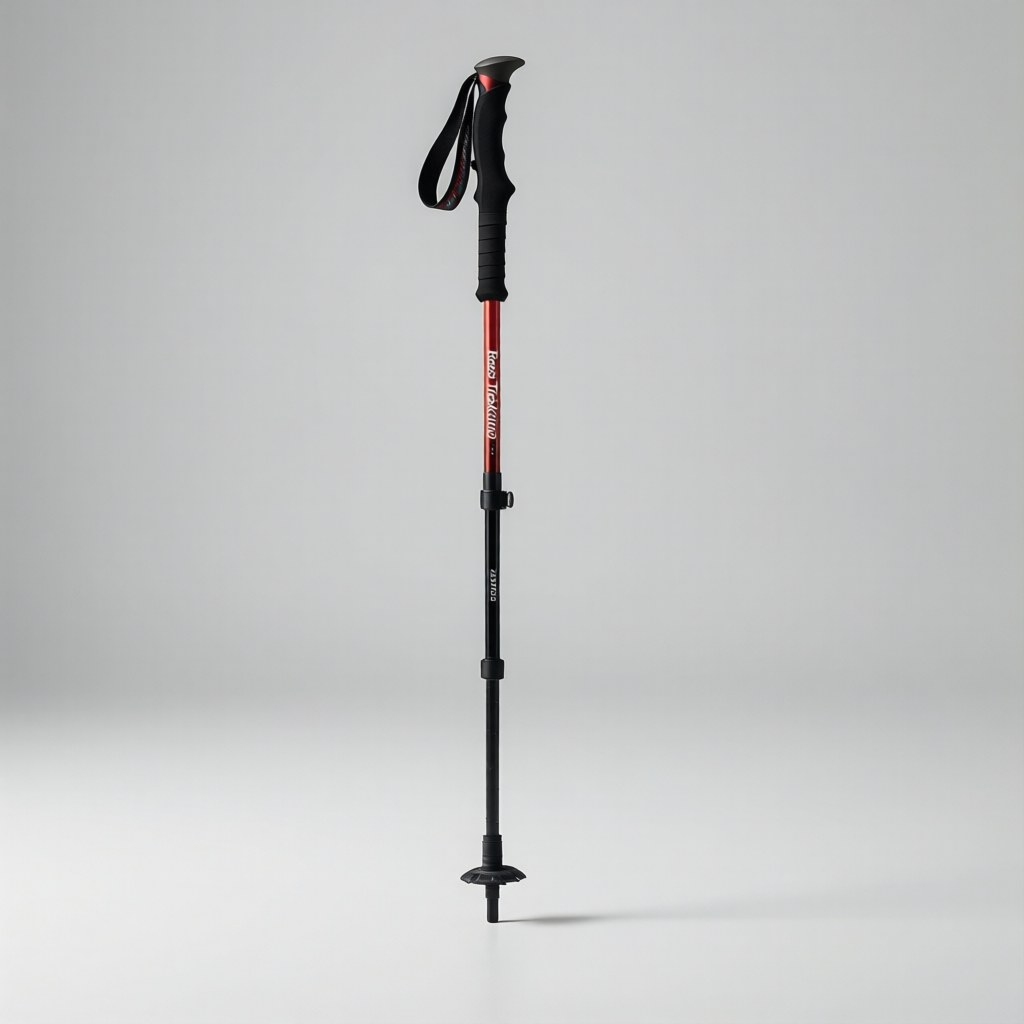
The folding three-section design collapses to roughly 15 inches — competitive with the best folders — and the aluminum construction keeps weight around 18 ounces per pair. But the real story is the feel in your hand. If you have dealt with hand fatigue, numbness, or wrist pain on long hikes, the Helinox grip design is worth the price of admission alone.
- Weight: ~18 oz per pair
- Material: Aluminum
- Collapsed length: ~15 inches
- Lock type: Push-button Z-fold with external clamp on top section
- Tips: Carbide
- Available lengths: 105–130 cm (in 5 cm increments)
The downsides: at roughly 160 to 190 dollars, these are expensive for aluminum poles. The fixed length (like the Distance Carbon Z) means no on-trail adjustment. The thermoplastic grip is comfortable but does not breathe as well as cork in hot weather. And Helinox accessories and replacement parts are harder to find locally than Black Diamond or MSR options.
Top pick: Helinox Trekking Pole — the pole for hikers who prioritize hand comfort and wrist ergonomics over shedding ounces.
7. Cascade Mountain Tech Carbon Fiber — Best Value
Not everyone needs to spend 150 dollars or more on trekking poles. The Cascade Mountain Tech Carbon Fiber poles deliver carbon fiber construction, quick-lock adjustment, and cork grips for roughly 50 to 70 dollars per pair. That is an absurd value when you consider what you are getting.
These are three-section adjustable poles with external lever locks, so you can tweak your length on the trail. The carbon fiber shafts keep the weight around 17 ounces per pair — lighter than most aluminum options at this price point. The cork grips are surprisingly comfortable for the cost, and the included carbide tips, mud baskets, and rubber tip protectors mean you do not have to buy accessories separately.
- Weight: ~17 oz per pair
- Material: Carbon fiber
- Collapsed length: ~26 inches
- Lock type: Quick-lock external lever
- Tips: Carbide with included mud baskets and rubber tip protectors
- Available lengths: 100–130 cm (adjustable)
So where is the catch? The quick-lock mechanism is not as precise or durable as FlickLock or DynaLock. Over time, the locks can develop a small amount of play or require tightening. The carbon layup is thicker and heavier than premium options to keep costs down. The collapsed length of 26 inches is the longest in this list — a real problem for small packs. And the cork grips, while decent, lack the extended lower grip section that pricier poles offer. But for the price? These punch well above their weight.
Top pick: Cascade Mountain Tech Carbon Fiber — the best bang-for-buck carbon pole on the market. Period.
How to Choose Trekking Poles
Picking the right trekking pole comes down to a handful of practical decisions. Here is what actually matters on the trail.
Fixed vs. Adjustable Length
Fixed-length folding poles (like the Distance Carbon Z and Locus Gear CP3) are lighter, more compact, and have no moving parts to fail. They are ideal for hikers who know their ideal length and do not feel the need to adjust. Adjustable poles (like the Alpine Carbon Cork and DynaLock Trail) let you shorten for climbs and lengthen for descents, which is a genuine advantage on variable terrain. If you frequently hike steep terrain or share poles between people of different heights, adjustable is the way to go. If you are a set-it-and-forget-it hiker, fixed length saves weight and hassle.
Carbon Fiber vs. Aluminum
Carbon fiber is lighter, absorbs trail vibration, and looks premium. It also shatters under extreme lateral stress — if you fall hard and torque the pole sideways, it can snap. Aluminum is heavier but bends instead of breaking, making it more durable in rough conditions. For most day hikers and backpackers, carbon is fine. For winter mountaineering, bushwhacking, or heavy-load carrying where poles take abuse, aluminum (or a carbon-aluminum hybrid) is safer.
Grip Material
Cork molds to your hand over time, wicks moisture, and stays comfortable on long days. It is the premium choice and worth paying for if you hike regularly. EVA foam is lighter and cheaper but gets slick when wet and compresses over time. Rubber is durable and good for cold weather but gets hot and sweaty in summer. If your hands matter to you — and after 15 miles, they will — prioritize cork.
Collapsed Length
If you need to stow poles on your pack (for scrambling, river crossings, or travel), collapsed length matters. Z-fold poles collapse to 14 to 16 inches. Telescoping adjustable poles usually fold down to 24 to 27 inches. That difference determines whether your poles strap cleanly to a daypack or stick out awkwardly. Check your pack’s external attachment system before you buy.
Lock Mechanism
External lever locks (FlickLock, DynaLock, Quick-Lock) are faster to adjust, easier to use with gloves, and more visible when something is wrong. Twist locks are lighter and more streamlined but can slip, freeze, or seize with grit and moisture. In 2026, external lever locks are the standard for good reason — spend the extra ounces for the reliability.
Tips and Baskets
Carbide tips are the standard — they grip rock, hardpack, and most trail surfaces well. Rubber tip protectors are for pavement and indoor use only. Mud baskets (wider rings near the tip) keep your poles from sinking in soft ground and are essential for snow and mud conditions. Most poles come with small trekking baskets; wider snow baskets are usually sold separately.
The Bottom Line
The Black Diamond Distance Carbon Z remains the best overall trekking pole for most hikers in 2026. It is light, fast to deploy, and dependable enough for day hikes and multi-day trips alike. If ounces are your obsession, the Locus Gear CP3 drops weight to a level nothing else matches. On a budget, the REI Co-op Flash and Cascade Mountain Tech Carbon Fiber both deliver far more capability than their prices suggest. And for hikers carrying heavy loads, adjusting constantly for terrain, or dealing with hand fatigue, the Alpine Carbon Cork, DynaLock Trail, and Helinox each solve a specific problem better than any generalist.
Buy the pole that matches how you actually hike — not how you wish you hiked. The right pair will save your knees, steady your steps, and make every mile a little easier. That is not marketing. That is physics.
Shop This Post
- Black Diamond Distance Carbon Z — Best Overall
- Locus Gear CP3 — Best Ultralight (order direct from locusgear.com, not on Amazon)
- REI Co-op Flash — Best Budget (REI exclusive, shop at rei.com)
- Black Diamond Alpine Carbon Cork — Best for Heavy Loads
- MSR DynaLock Trail — Best Adjustable
- Helinox Trekking Pole — Best for Comfort
- Cascade Mountain Tech Carbon Fiber — Best Value
n
GearHound is reader-supported. When you buy through links on this site, we may earn an affiliate commission at no extra cost to you.
⛺ Get Your Free Camping with Your Dog Checklist
Join our newsletter and get this free printable plus weekly tips.
Price Check
Prices verified via our product tracker. Updated Sep 27.
| Amazon.com: BLACK DIAMOND Distance Carbon Z Poles, Z-Foldi | $219.95 | 4.8★ |
| Amazon.com: BLACK DIAMOND Alpine Carbon Cork Hiking Trekki | $229.95 | 4.5★ (421) |
| Amazon.com: MSR DynaLock Ascent Foldable Carbon Backcountr | $189.19 | 4.4★ (206) |
| Amazon.com: Cascade Mountain Tech Trekking Poles - Carbon | $64.99 | 4.6★ (3,581) |
As an Amazon Associate we earn from qualifying purchases.