This article contains affiliate links. We may earn a commission from qualifying purchases.
Some content on this site is AI-assisted and reviewed by our editorial team.
November is when hot-tent season starts. The leaves are down, overnight lows sit in the twenties, and the people still camping split into two groups: the ones zipped into a bag by sundown, and the ones sitting around a wood stove in shirtsleeves, drying socks and watching the fire. A canvas tent with a stove jack turns winter camping from an endurance test into something closer to a cabin — and here is the part nobody budgets for: the stove is the cheap line item. The stove-jack tent, the floor mat, and the fireproof ground barrier are what move the total. Here is how the three Winnerwell sizes stack up, with real prices and packed weights.
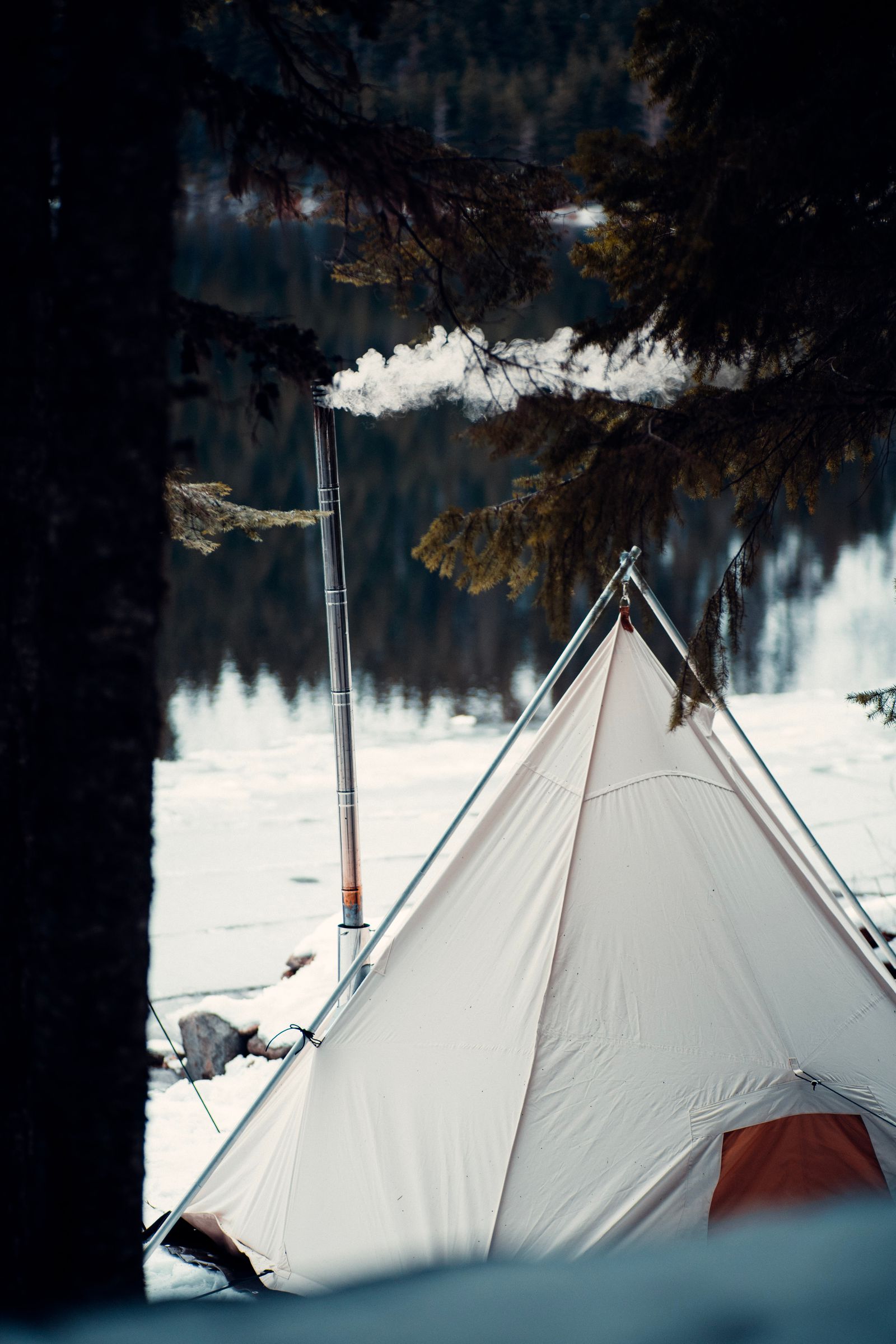
Winnerwell owns this corner of the market for a reason — between the Nomad, the View, and the Woodlander, they cover every hot-tent size from a small canvas to a stand-up wall tent.
Winnerwell Nomad View Medium Tent Stove — The Glass-Door Pick
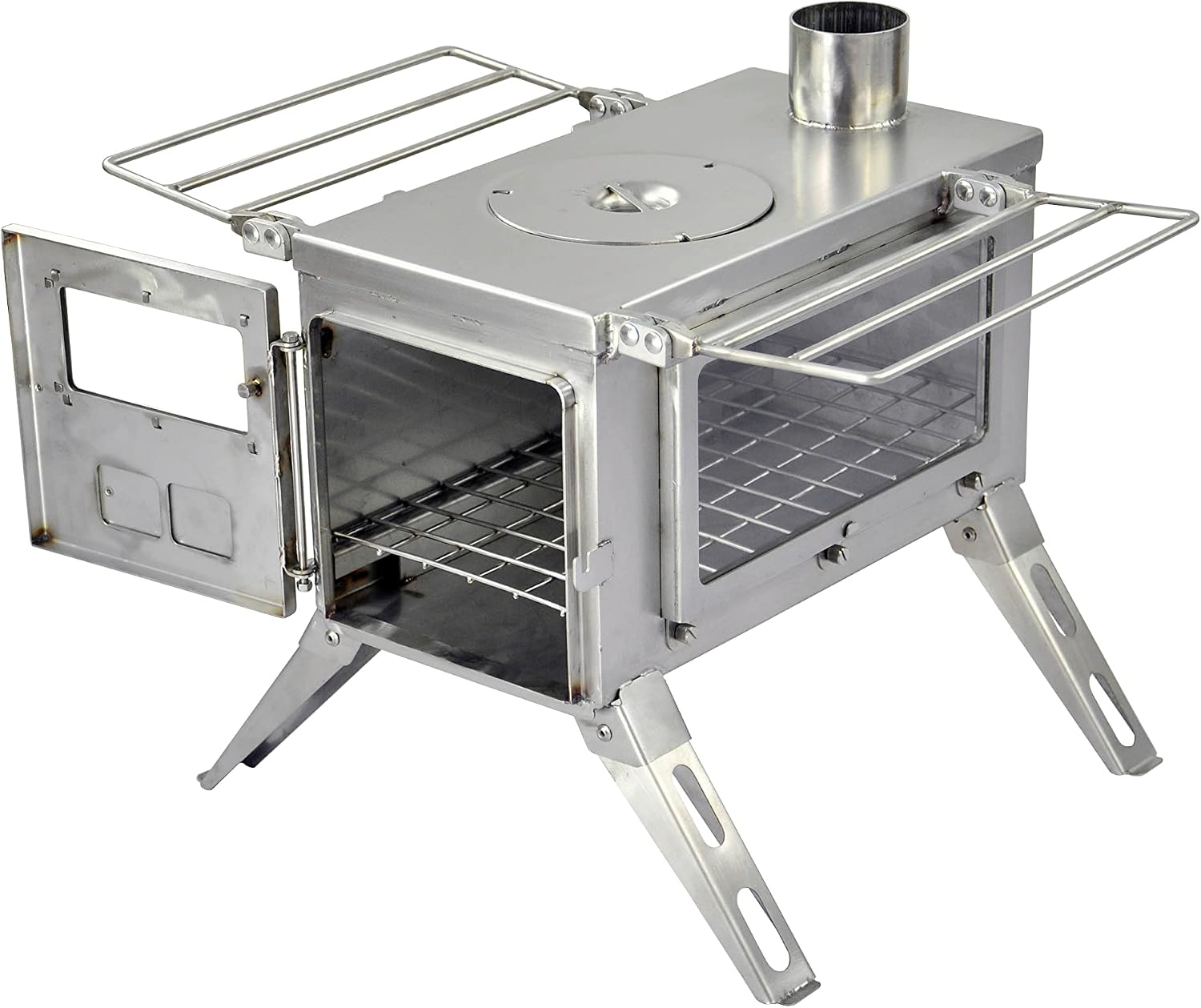
The Winnerwell Nomad View Medium is the plain Nomad with the one upgrade hot-tent campers actually want: dual glass viewing windows in the door, so the fire is a show instead of a sealed steel box. The firebox is the same 800 cubic inches as the standard Nomad, in the same stainless body, with pipe, spark arrestor, and damper all in the box. It runs about $530 — a hundred dollars over the plain Nomad, and every dollar of that buys glass, not heat.
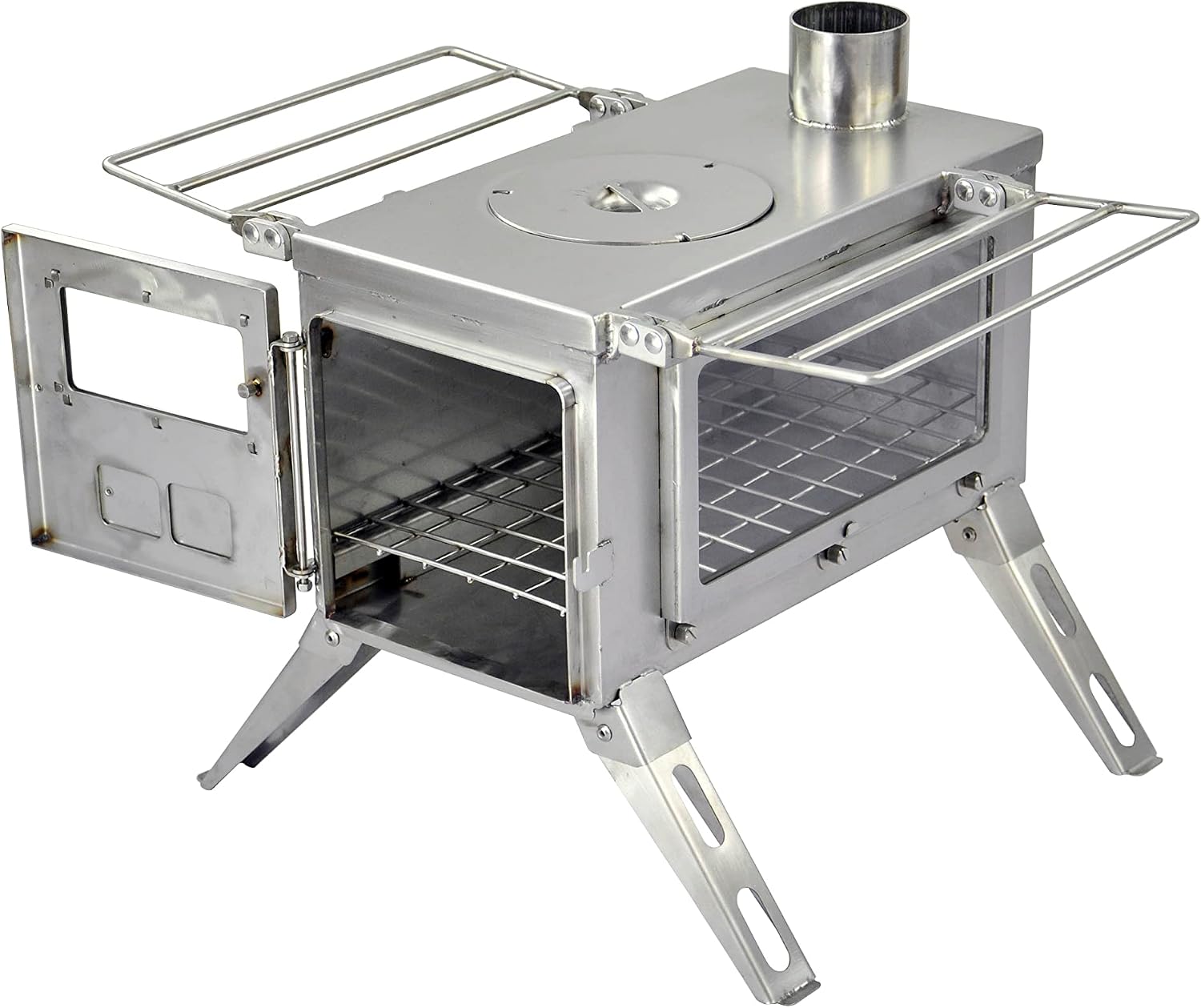
In the field the glass earns its keep on long nights. Watching coals from the cot is half the point of a hot tent, and you can check the fire without cracking the door and dumping sparks on the floor. The honest tradeoffs: the glass soots up after a couple of cold starts and wants a wipe each morning, and it is one more fragile thing to wrap when the stove rides in the sled.
My take: For campers who spend real winter nights in canvas, the View’s glass is worth the hundred bucks — fire-watching is the reason to own a hot tent.
Winnerwell Nomad Medium Tent Stove — The Price Benchmark
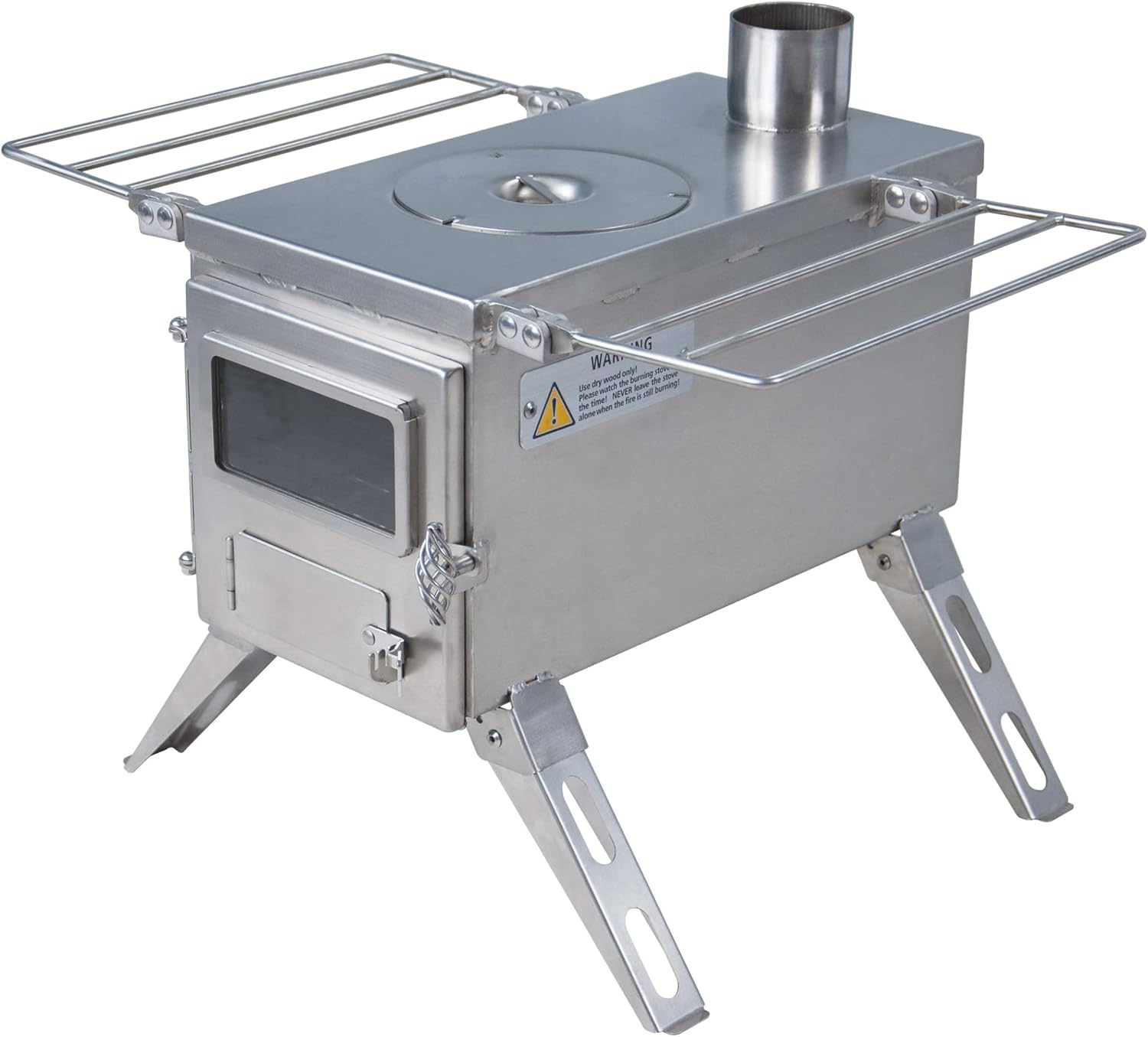
The Winnerwell Nomad Medium is the stove every hot-tent price gets measured against: about $430 for a stainless 800-cubic-inch firebox sized right for most 4-person hot tents in the 8-by-10 to 10-by-12 range. Pipe sections, spark arrestor, and damper come in the box, the whole stove nests for transport, and there is nothing to assemble but legs and pipe. That is the whole pitch — no glass, no round belly, just the box that works.
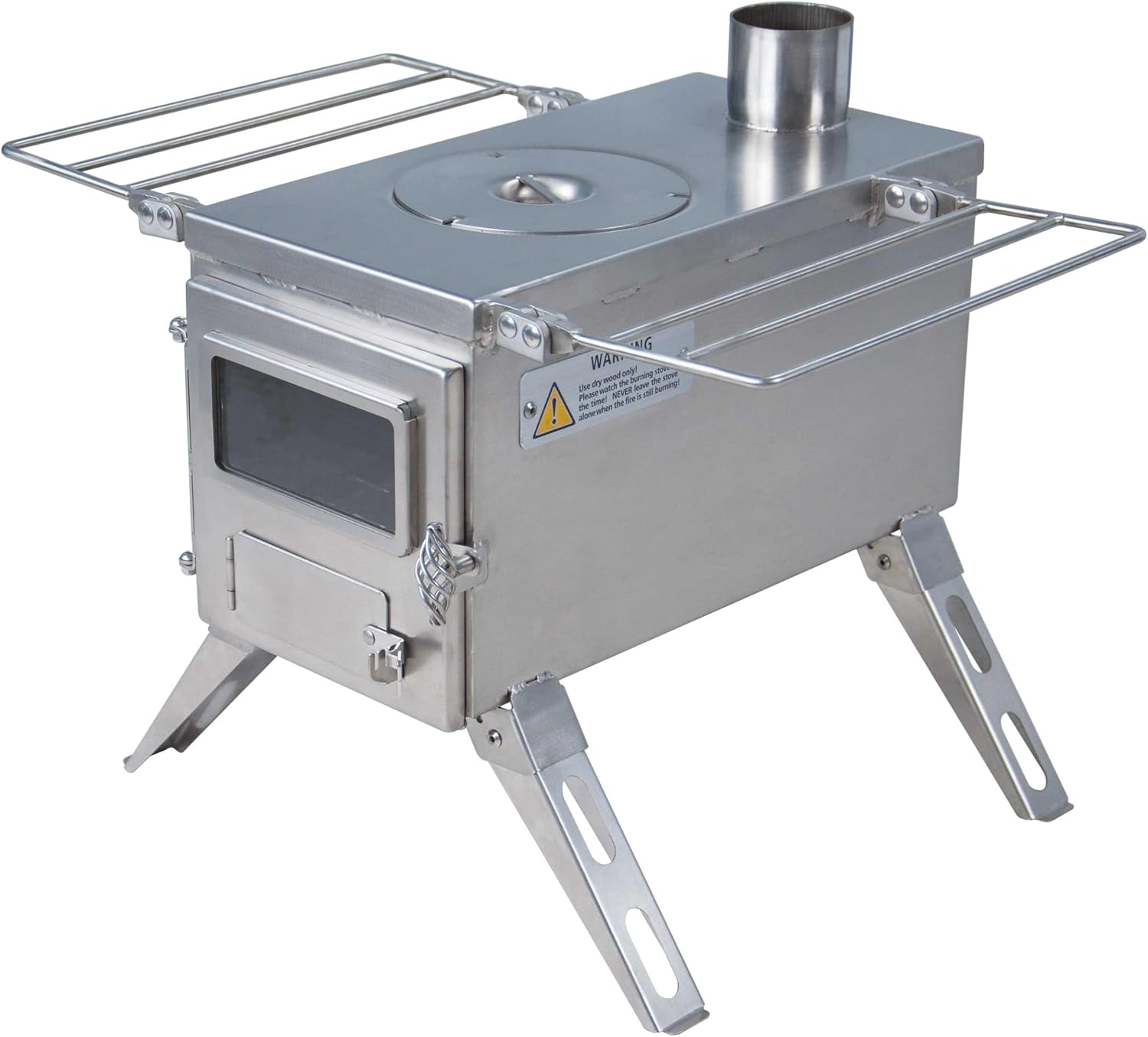
Two honest caveats. First, the Nomad is 25 pounds before you add pipe and legs, which makes this sled gear or truck gear, not backpack gear — plan the haul accordingly. Second, the firebox wants feeding: 800 cubic inches of wood burns down in about an hour at a steady damper setting, so an evening in camp means a woodpile stacked within arm’s reach of the door. The thin stainless body also won’t shrug off a decade of nightly burns the way a heavy steel box will — it is a trip stove, not a cabin furnace.
My take: For most 4-person hot tents the plain Nomad is the whole answer; everything else in this post is a preference layered on top of it.
Winnerwell Woodlander Large Tent Stove — The Firewood-Sized Firebox
The Woodlander Large is the step up for campers whose Nomad firebox has started to feel like a toy: a round-belly box deep enough to take real split firewood instead of wrist-thick sticks, with a glass door for watching the burn. At 30 pounds packed it is five pounds over the Nomad, and that number understates the difference — the Woodlander’s belly holds a fire you load twice an evening instead of four times. Expect about $530.
The catch is size matching. The Woodlander is oversized for any tent under 8 by 10 feet: it pushes more heat than small canvas can shed, which means roasting the near wall and working through the woodpile faster than the night needs. It also has no Amazon listing right now — it moves through Winnerwell’s dealer network — so price it with the retailer directly and treat shipping on a 30-pound steel box as part of the decision.
My take: Buy the Woodlander only if your tent is 8-by-10 or bigger; under that size you are paying for firebox you cannot fill.
Free shipping tip: a 25-pound steel stove is exactly the order where shipping charges sting. The Nomad Medium ships free with Prime, and the 30-day free Prime trial covers the stove, the floor mat, and the rest of the winter kit in one order if you are not a member yet.
Features That Actually Matter (And Ones That Don’t)
Firebox volume is the number that decides everything. 800 cubic inches heats a 4-person tent into shirtsleeve range; anything much smaller turns the evening into a 20-minute feeding schedule. Size the box to the tent, not to the price.
Packed weight decides how the stove travels. At 25 to 30 pounds plus pipe, every Winnerwell here is sled or truck gear. If the trip involves carrying gear on foot for more than a quarter mile, weight — not price — is the first thing to cut.
The spark arrestor is not optional. All three stoves ship with one, and it is the difference between a cozy night and a hole in the canvas. Confirm it is seated before the first burn and after every pipe cleaning.
The damper is the real thermostat. The sliding damper in the first pipe section governs heat better than the door air intake — learn one setting for warming up and one for holding, and the stove runs itself for an hour at a time.
What does not matter: the glass. It is a comfort upgrade, not a performance one — the plain Nomad and the View throw identical heat. Buy the window for the evenings, not for the BTUs.
What to Spend Where
The stove is the cheapest part of a hot-tent rig, so spend in this order:
- The baseline: the plain Nomad at about $430 does the whole job for a 4-person tent. Buy it first and you will never have under-bought.
- The comfort tier: the Nomad View at about $530 spends $100 on glass — worth it for long base-camp nights, skippable for two-day trips where you are asleep, not lounging.
- The big-tent tier: the Woodlander at about $530 only makes sense over 8-by-10 canvas; under that it is wasted firebox.
- The forgotten line items: a stove-jack tent costs multiples of the stove, and the fireproof mat plus a non-combustible ground barrier under the box are the cheap insurance nobody prices in until the night before departure.
Keep reading: once the stove is in, the flat cooktop wants work — pie irons and campfire cookers that turn bread into dinner run hot on a stove top, and the $20 camp wash basin that packs flat handles the dishes after.
GearHound is reader-supported. As an Amazon Associate, I earn from qualifying purchases. That means if you buy through one of the links above, I get a small commission at no extra cost to you. I only recommend gear I’d actually carry into the field.
⛺ Get Your Free Camping with Your Dog Checklist
Join our newsletter and get this free printable plus weekly tips.
Frequently Asked Questions
Do you need a stove jack to use a tent stove?
Yes. A stove jack is the heat-resistant flashing built into the tent wall that the stove pipe passes through. Without one, you will melt a hole through the canvas or start a fire. Every hot tent designed for stove use comes with one installed or has a pre-cut jack kit. A regular camping tent cannot safely take a stove.
How big of a tent stove do I need for a 4-person tent?
An 800-cubic-inch firebox is the sweet spot for a 4-person hot tent in the 8-by-10 to 10-by-12 range. The Winnerwell Nomad Medium fits this bracket. A stove too small means you are feeding sticks every 20 minutes all night; too large and you risk overheating the tent and wasting fuel.
Can you leave a tent stove burning overnight?
Not safely. A wood stove in a canvas tent needs active tending every 1 to 2 hours. Most hot-tent campers load the firebox heavy before bed, let it burn down to coals, and rely on their sleeping bag for the cold hours. A carbon monoxide detector rated for tents is cheap insurance and not optional gear for overnight stove use.
Liked this guide? Get the next one in your inbox — the camp packing checklist is free too.
✓ You're in — check your inbox.
No spam. Unsubscribe anytime. We never share your email.
Prices move fast. Start your Amazon trip from our Shop & Support page and your purchases support GearHound at no extra cost to you.