This article contains affiliate links. We may earn a commission from qualifying purchases.
Some content on this site is AI-assisted and reviewed by our editorial team.
Trail Running with Your Dog: 6-Week Training Plan and Gear Checklist
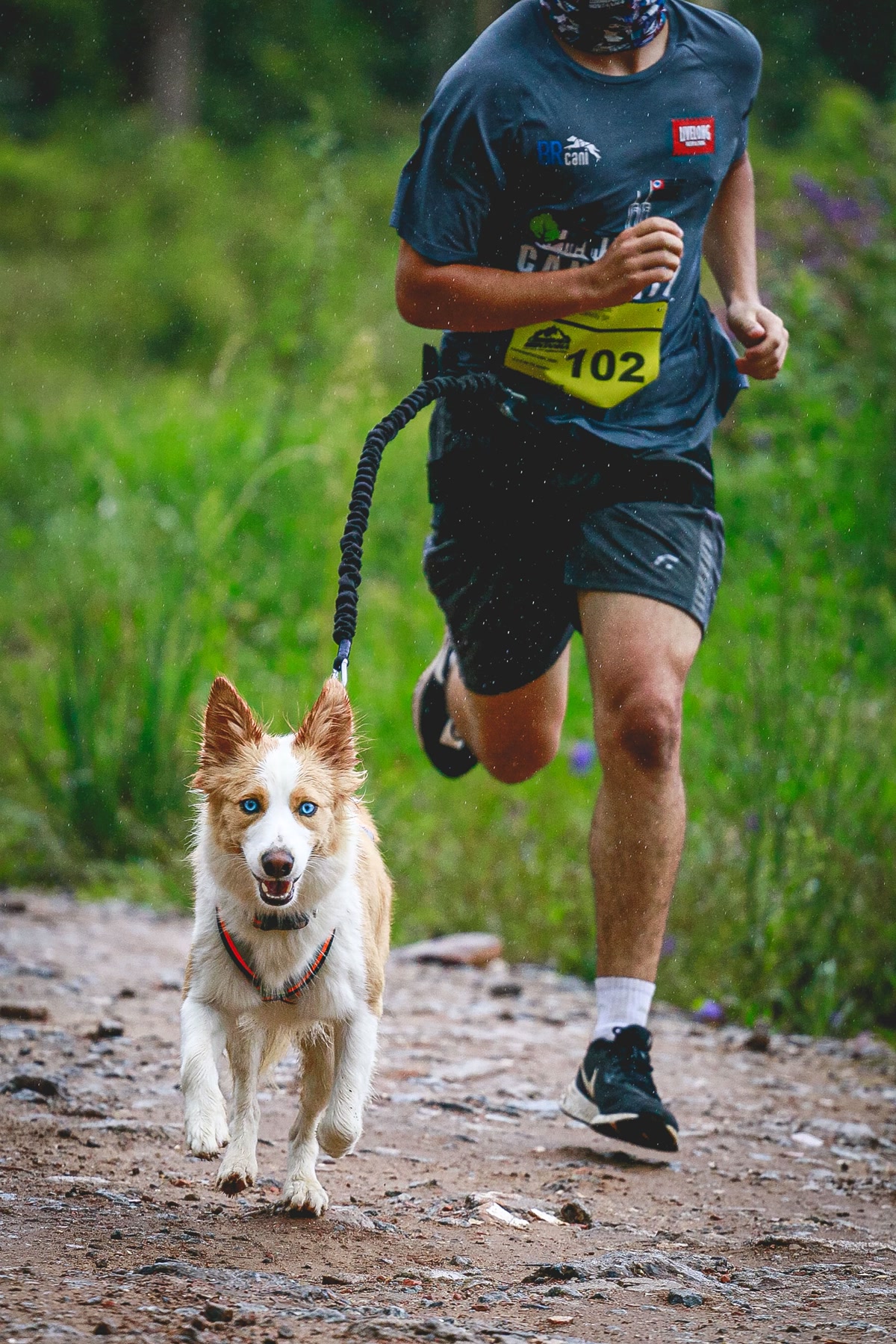
You want to hit the trails with your dog — not just walk them, actually run. Good instinct. Dogs were built to move. But here’s what most people get wrong: they lace up, clip on the leash, and take off like it’s a neighborhood jog. Trail running with a dog is different. Uneven footing, elevation changes, wildlife distractions, and heat all demand a plan — for both of you.
This guide is that plan. A 6-week progression that takes you from “we barely walk” to “I can comfortably run 3–4 miles on trail together,” plus the gear checklist and safety knowledge to keep your dog healthy while you do it.
Before You Start: Is Your Dog Ready?
Not every dog should be a trail runner. And even dogs that can run shouldn’t start tomorrow.
Age matters. Puppies’ growth plates don’t close until 12–18 months depending on breed. Running before that can permanently damage joints. Large and giant breeds are especially vulnerable — wait until 18 months for Labs, Shepherds, and similar breeds. Your vet can confirm with an X-ray.
Breed matters. Some dogs are natural distance runners and others will hurt themselves trying to keep up:
- Built to run: Vizslas, Weimaraners, German Shorthaired Pointers, Dalmatians, Jack Russell Terriers, Airedales, Rhodesian Ridgebacks, Siberian Huskies, Belgian Malinois, Border Collies, Australian Shepherds
- Short runs only (2–3 miles): Labs, Goldens, Standard Poodles, Boxers, Australian Cattle Dogs
- Not built for distance running: Bulldogs, Pugs, Frenchies, Basset Hounds, Dachshunds, Corgis, any brachycephalic (flat-faced) breed, giant breeds (Mastiffs, Great Danes)
Health check. Even the right breed needs a clean bill of health. Have your vet check hips, elbows, and heart before starting any running program, especially for dogs over 5.
Current fitness. If your dog’s daily exercise is a 15-minute walk around the block, you’re starting from zero. That’s fine — this plan accounts for it. But don’t skip weeks.
The 6-Week Training Plan
Think of this like Couch to 5K, but for two species. The goal is to build your dog’s cardiovascular fitness, pad toughness, and trail confidence gradually. Rush this and you’ll end up with a limping dog and a vet bill.
The golden rule: add no more than 10% distance per week. Start at 1 mile total (run + walk combined) and build from there. If your dog shows any sign of fatigue, stay at the current week’s distance until they’re comfortable.
Week 1–2: Foundation (1–1.2 miles)
This is about building the habit of running together, not crushing miles.
- 3 sessions per week, rest days in between
- Walk 5 minutes to warm up
- Run 1 minute, walk 2 minutes — repeat for 15–20 minutes total
- Walk 5 minutes to cool down
- Total distance: ~1 mile per session
- Surface: Soft dirt trails or grass only — no pavement
Your dog is learning that the leash means “we’re working,” not “we’re sniffing every mailbox.” Keep a consistent pace and practice loose-leash running from day one. If your dog pulls, stop. Wait for them to look at you. Then resume. This is the most important behavior to nail early.
Week 3: Building Base (1.3–1.5 miles)
- 3 sessions per week
- Walk 5 minutes warm up
- Run 3 minutes, walk 1 minute — repeat for 20–25 minutes
- Walk 5 minutes cool down
- Total distance: ~1.3–1.5 miles per session
- Surface: Soft trails, introduce gentle elevation
Now is when you start varying the terrain a bit. Find trails with mild rolling hills. Your dog’s pads are beginning to toughen, but they’re still conditioning — stick to natural surfaces. Dog boots become necessary if you’re dealing with rocky sections or hot ground.
Week 4: Endurance (1.6–1.8 miles)
- 3–4 sessions per week
- Walk 5 minutes warm up
- Run 5 minutes, walk 1 minute — repeat for 25–30 minutes
- Walk 5 minutes cool down
- Total distance: ~1.6–1.8 miles per session
- Start carrying water for both of you
You’re hitting the sweet spot where running starts to feel sustainable. Your dog should be recovering within a few minutes of stopping. If they’re still panting heavily after 10 minutes of rest, you’ve pushed too hard — dial it back.
Week 5: Distance Push (2.0–2.5 miles)
- 3–4 sessions per week
- Walk 5 minutes warm up
- Run 8–10 minutes, walk 1 minute — repeat for 30–35 minutes
- Walk 5 minutes cool down
- Total distance: ~2.0–2.5 miles per session
- Introduce singletrack and moderate elevation gain
This is where you can start using a dog backpack — at reduced weight. If your dog has been running comfortably and you’ve measured them for a pack, let them carry just water and a collapsible bowl. No more than 10% of body weight for conditioned dogs. See our full dog backpack guide for weight limits and sizing.
Week 6: Trail Ready (2.5–3.5 miles)
- 3–4 sessions per week
- Walk 5 minutes warm up
- Run 12–15 minutes steady, walk 1 minute between intervals
- Total distance: ~2.5–3.5 miles per session
- Full trail variety: hills, rocks, switchbacks
You and your dog are now comfortable trail runners. From here, continue adding distance at 10% per week max, and start varying your routes to keep things interesting. You’ve earned the right to explore.
Pad Conditioning: The Part Nobody Talks About
Your dog’s paw pads are like your feet — they need to toughen up gradually. A dog that’s only walked on sidewalks will have pads that shred on rocky trail terrain.
How to condition pads:
- Weeks 1–2: Soft surfaces only — grass, dirt, pine needles
- Weeks 3–4: Introduce gravel paths and packed dirt with small rocks
- Weeks 5–6: Rocky singletrack is fair game
Check your dog’s pads every run. Look for cracks, abrasions, or tenderness. If you see any pink or raw spots, take at least 3 days off and return to softer surfaces. Boot your dog for rocky sections if you’re not sure — check our best dog boots guide for trail-worthy picks.
Signs of Overexertion and Heat Stroke
This section could save your dog’s life. Dogs can’t tell you they’re struggling until they’re in real trouble. Learn these signs and check on your dog every 10 minutes during a run.
Warning Signs — Slow Down or Stop
- Heavy panting that doesn’t slow after 2–3 minutes of rest
- Tongue hanging far out, wide and flat
- Drooling excessively
- Lagging behind, losing interest in the run
- Stumbling or unsteady gait
- Looking back at you repeatedly (they’re asking to stop)
- Pad tenderness, limping, or licking paws
Emergency Signs — Stop Immediately and Cool Your Dog
- Dark red or purple gums and tongue
- Glazed or unfocused eyes
- Staggering, collapse, or refusing to stand
- Vomiting or diarrhea during exercise
- Body temperature above 104°F (normal is 101–102.5°F)
If you see emergency signs: get your dog into shade immediately, soak them with cool (not ice-cold) water, especially the belly, armpits, and paws, and get to a vet. Heat stroke kills dogs fast — within minutes of advanced symptoms. Do not wait it out.
Temperature rules: Below 60°F — ideal running weather. 60–70°F — shorten your run and carry extra water. 70–80°F — early morning or evening only, keep it short. Above 80°F — no running. Walk instead. Brachycephalic breeds should stay home above 70°F.
Trail Etiquette with Your Dog
Trail running with a dog means you’re representing every dog owner who comes after you. Don’t be the reason trails get closed to dogs.
Leash laws are not optional. Most trail systems require dogs on leash at all times. Even on “leash-optional” trails, keep your dog leashed unless you have bulletproof verbal recall. Wildlife, other dogs, horses, and trail runners who are afraid of dogs all share the trail.
Yielding order: Hikers yield to horses. Mountain bikers yield to everyone. Dog runners yield to hikers and horses. When you see someone approaching, step to the side, shorten your leash, and hold your dog calmly. Say “on your left” or “dog on leash” as a courtesy.
Pick up waste. Every time. Carry bags, pack out the full bags. Don’t leave bags on the side of the trail “to grab on the way back” — you’ll forget, and that bag will be there for years. This is the single biggest reason trails get closed to dogs.
Don’t let your dog drink from standing water. Trail puddles and streams can carry Giardia, leptospirosis, and blue-green algae. Carry enough water for both of you.
What to Carry on a Trail Run with Your Dog
For runs under 5 miles, you don’t need much. For longer runs or hot weather, this checklist keeps you both safe:
- Water and a way to drink it — Collapsible bowl or a dog water bottle. See below for picks.
- Waste bags — Always. No exceptions.
- Leash — A hands-free running leash is a game-changer on trail. The Ruffwear Roamer (search on Amazon) is our go-to — bungee shock absorption, converts between waist-worn and hand-held. Full review in our best dog leashes guide.
- Small first-aid kit — Bandages, tweezers (for ticks and thorns), antiseptic wipes
- Treats — For recall reinforcement and energy on longer runs
- Phone — For emergencies and GPS navigation
For runs over 5 miles or when your dog needs to carry their own water, the Ruffwear Approach Pack (search on Amazon) is the best dog backpack for trail running. Lightweight, stays put at speed, and the 6L capacity holds enough water and gear for both of you. Our full breakdown is in the dog backpack guide.
Collapsible Bowls and Water Bottles
For shorter runs where your dog isn’t wearing a pack, you need a way to offer water at trail stops. Two good options:
- Collapsible dog bowl: Search collapsible dog bowls on Amazon — lightweight, stuffs into a pocket, and works with any water bottle. Grab one that clips to your running belt.
- Dog water bottle with attached bowl: Search dog water bottles on Amazon — one-handed operation and no wasted water. Works well for runs where you want to keep moving.
Full Gear Checklist
Everything mentioned in this guide, in one place:
- Ruffwear Roamer Bungee Leash | Search on Amazon — Hands-free running leash (see our full review)
- Ruffwear Approach Dog Pack | Search on Amazon — Dog backpack for carrying water and gear (see our full review)
- Collapsible dog bowls on Amazon — Lightweight trail water solution
- Dog water bottles on Amazon — One-handed hydration on the move
For the complete trail running gear setup — harnesses, boots, cooling vests, and everything else — see our full trail running gear guide.
Shop This Post
Start slow, watch your dog, and enjoy the trails together. The best trail-running dog is a conditioned one — take the 6 weeks, and you’ll have a running partner for years.
n
GearHound is reader-supported. When you buy through links on this site, we may earn an affiliate commission at no extra cost to you.
⛺ Get Your Free Camping with Your Dog Checklist
Join our newsletter and get this free printable plus weekly tips.
Price Check
Prices verified via our product tracker. Updated Sep 27.
| Amazon.com : Ruffwear, Roamer Bungee Dog Leash, River Rock | $49.99 | 4.5★ (1,264) |
| Amazon.com : Ruffwear, Roamer Bungee Dog Leash, Orion Blue | $49.99 | 4.5★ (1,264) |
| Amazon.com: Ruffwear, Approach Pack Dog Backpack, Blue Dus | $59.99 | 4.6★ |
| Pet Supplies : Rest-Eazzzy Collapsible Dog Bowls, 2 Pack S | $7.99 | 4.7★ (16,678) |
| Pet Supplies : Cibaabo Dog Water Bottle with Food Containe | $17.98 | 4.7★ (2,303) |
As an Amazon Associate we earn from qualifying purchases.