This article contains affiliate links. We may earn a commission from qualifying purchases.
Some content on this site is AI-assisted and reviewed by our editorial team.
Why Your Dog Should Carry Their Own Gear
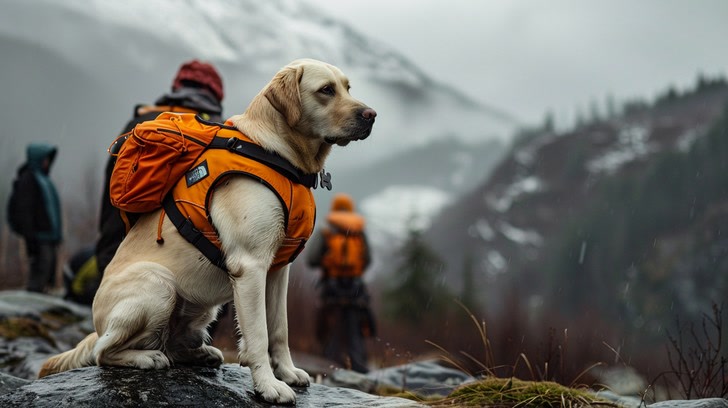
Dogs love having a job, and a backpack gives them one. But before you strap a pack on your pup and head for the hills, you need to understand the limits — because getting this wrong can mean joint strain, spinal injury, or worse.
This guide covers weight limits, which dogs should skip packs, how to train your dog into a pack, what to carry versus what your dog carries, and which packs hold up on the trail.
The Weight Rule: 10 to 25 Percent of Body Weight
The most widely cited guideline from veterinarians and canine conditioning experts is simple: a dog should carry no more than 10–25% of their body weight in a pack. But that range is not a pick-whatever number. Here’s how it breaks down:
- 10% or less — For beginners, senior dogs easing back into activity, or any dog new to carrying weight. A 50 lb dog starts at 5 lbs total (2.5 lbs per side).
- 12–15% — For dogs with a few weeks of conditioning under their belt. Still conservative, still safe.
- 20–25% — Only for well-conditioned, working-line dogs who have built up to this over months. Think Malinois, Huskies, and other breeds literally bred to pull and carry. Even then, 25% is the absolute ceiling, not a target.
A critical detail most guides skip: weigh the pack on a scale, not by feel. Five pounds feels light when you’re handing it to a dog, but that’s 10% of a 50 lb animal’s entire body weight distributed across their spine and shoulders. Measure it.
Weight Reference Chart
Which Dogs Should NOT Wear a Pack
Not every dog is built for backpack duty. Some should sit this one out entirely:
Puppies Under 2 Years
Puppies are still developing growth plates, joints, and spinal stability. Adding weight before those structures are mature can cause permanent damage. Wait until at least 18–24 months, and start with an empty pack for acclimation only. If you’re planning trail running with your dog, hold off on any load until they’re fully grown.
Senior Dogs
Older dogs often deal with arthritis, decreased muscle mass, and slower recovery. If your senior dog still has energy, keep the load at or below 10% and watch for any change in gait.
Dogs With Joint or Spinal Conditions
If your dog has hip dysplasia, IVDD, arthritis, or any spinal issue, skip the pack. The compressive force on compromised joints isn’t worth the risk. Talk to your vet first.
Brachycephalic Breeds
French Bulldogs, Pugs, Boston Terriers — flat-faced breeds already struggle with breathing and thermoregulation. A pack increases respiratory effort and heat stress. If you bring a brachycephalic dog hiking, focus on keeping their paws protected and let them carry nothing.
Long-Backed Breeds
Dachshunds, Corgis, Basset Hounds — long-backed breeds are predisposed to IVDD and disc herniation. Vets strongly advise against backpacks for these breeds. The compression from even a light pack stresses discs not designed for it. Keep the gear on your back, not theirs.
Training Progression: Empty to Full
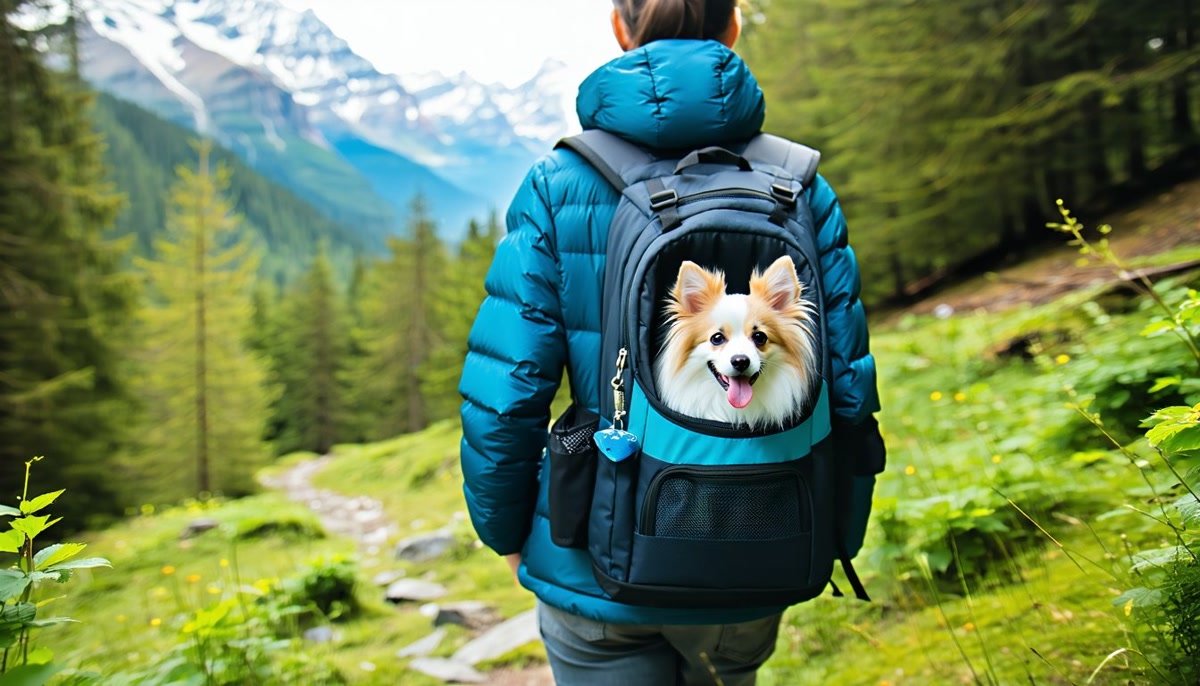
You don’t strap a loaded pack on a dog and go. It’s a progression:
Week 1–2: Empty Pack Acclimation
Put the pack on your dog around the house and on short walks. No weight. Reward calm behavior. If they freeze or try to shake it off, keep sessions short and positive.
Week 3–4: Light Load (5–10%)
Add a small, stable weight on each side. Water bottles work well because they don’t shift. Keep hikes short (1–2 miles) and watch your dog’s gait.
Week 5–8: Build to Target Weight
Gradually increase the load. Never add more than 2–3% of body weight in a single step. Always distribute weight evenly — both saddlebags should weigh the same. A lopsided pack pulls the spine into lateral flexion, which is worse than carrying too much weight symmetrically.
Warm Up and Cool Down
Walk 5–10 minutes unloaded before adding the pack. After the hike, take the pack off for the last few minutes back. A well-fitted harness under the pack makes a huge difference in comfort and load distribution.
What Goes in Your Dog’s Pack vs. Yours
Your dog’s pack carries light, stable, low-value items. Here’s the breakdown:
Great for Your Dog’s Pack
- Dog water (distribute bottles evenly, one per side)
- Collapsible bowls
- Dog treats and kibble
- Light jacket or bandana
- Poop bags
- Small first-aid items (gauze, tape)
Keep in YOUR Pack
- Heavy items (real food, stove, fuel)
- Fragile gear (phone, camera, sunglasses)
- Leash and extra collar
- Full first-aid kit
- Anything you can’t afford to lose or damage
The general rule: if it’s heavy, fragile, or mission-critical, it goes on your back. Your dog carries the accessories.
Safety Signs: When to Take the Pack Off
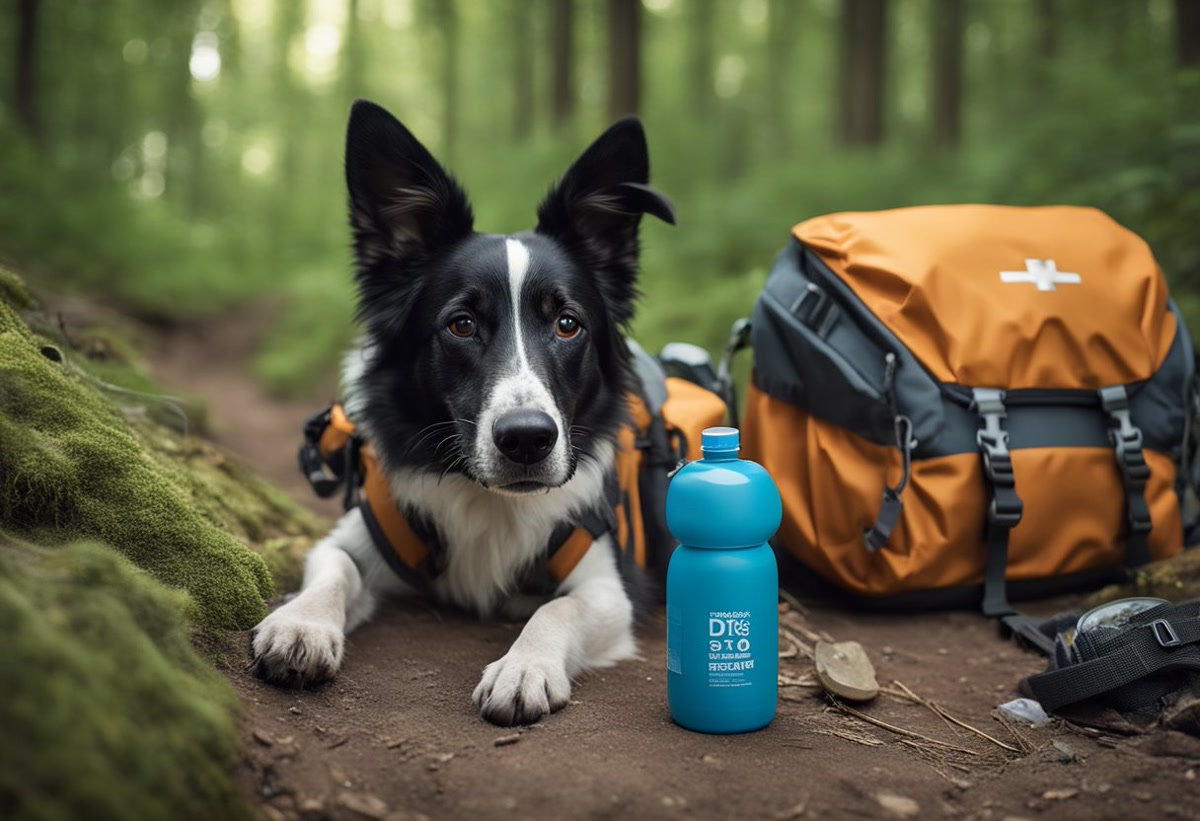
Take the pack off immediately if you notice:
- Gait changes — Shorter strides, limping, or a noticeable hitch in their step
- Panting out of proportion — Heavy panting on flat ground in cool weather means the load is too much
- Frequent stopping or sitting — Your dog is telling you they need a break, or the pack is too heavy
- Chafing or raw spots — Check under the straps, around the chest, and behind the elbows after every hike
- Pack shifting — If the saddlebags swing or sit unevenly, the fit is wrong or the load is unbalanced
- Reluctance to move — If your dog sits down and won’t get up, the pack comes off. Full stop.
Take the pack off during every rest break. It lets your dog’s muscles recover and lets you check for hot spots.
The Best Dog Backpacks Worth Your Money
Ruffwear Approach Dog Pack — Best Overall
The Ruffwear Approach Pack is the pack most hikers reach for. It balances capacity, durability, and fit better than anything else on the market. Three-clip harness, 6L total capacity, foam-padded chest plate — it’s dialed. Ruffwear’s sizing is precise, so measure your dog’s girth and use their chart. If you’re investing in gear that’ll last years, this is the one. Search for Ruffwear Approach Dog Pack on Amazon
Ruffwear Palisades Dog Pack — Best for Multi-Day Hikes
For multi-day trips, the Ruffwear Palisades Pack is the upgrade. Two removable 1L hydration reservoirs, 11L capacity, and Cross-Load Compression that keeps the load stable. The harness detaches from the saddlebags so your dog can wear just the harness at camp. Pair it with camping gear worth the money for a complete setup. Search for Ruffwear Palisades Dog Pack on Amazon
Outward Hound DayPak — Best for Casual Hikes
The Outward Hound DayPak is the right call for casual hikes, park walks, and trips where your dog carries treats and poop bags. Lighter, cheaper, simpler — single buckle closure, mesh pockets, lower profile for dogs who aren’t wild about wearing gear. The trade-off is durability, but for most casual hikers, that’s fine. Search for Outward Hound DayPak on Amazon
OneTigris Dog Pack — Best Budget Option
The OneTigris Dog Pack delivers surprising value at roughly half the price of the Ruffwear Approach. 1000D nylon with MOLLE-style webbing, decent day-hike capacity, and an adjustable harness for medium-to-large dogs. Build quality has improved over the years. Trade-offs: less padding, no reflective trim, and inconsistent sizing. But if you’re on a budget or just want to try dog packing, this is a legitimate starting point. Search for OneTigris Dog Pack on Amazon
Quick Sizing Tips
Before you order, measure your dog: girth (widest part of the ribcage behind the front legs — most important), back length (neck to tail base), and neck circumference. Always check the manufacturer’s size chart. For more on getting the right fit, see this guide to the best dog harnesses.
The Bottom Line
Dog backpacks are one of the best trail upgrades — but only if you do it right. Start light, build slowly, watch your dog, and never push past the signs that say “enough.” The right pack gives your dog a job and takes a few pounds off your shoulders. Your dog is counting on you to make the call.
Shop This Post
- Ruffwear Approach Dog Pack — Best overall for day hikes | Search on Amazon
- Ruffwear Palisades Dog Pack — Best for multi-day backpacking | Search on Amazon
- Outward Hound DayPak — Best for casual hikes | Search on Amazon
- OneTigris Dog Pack — Best budget option | Search on Amazon
Related: Camping Gear Worth the Money · Trail Running Dog Gear · Best Dog Harnesses 2026 · Best Dog Boots 2026
n
GearHound is reader-supported. When you buy through links on this site, we may earn an affiliate commission at no extra cost to you.
⛺ Get Your Free Camping with Your Dog Checklist
Join our newsletter and get this free printable plus weekly tips.
Price Check
Prices verified via our product tracker. Updated Sep 27.
| Amazon.com: Ruffwear, Approach Pack Dog Backpack, Blue Dus | $59.99 | 4.6★ |
| Amazon.com: Ruffwear, Palisades Dog Backpack, Red Sumac, S | $127.49 | 4.6★ (102) |
| Amazon.com : Kyjen Outward Hound The Quick Release Dog Bac | $28.99 | 4.0★ (3,169) |
| Amazon.com : Little Chonk Maxine One Dog Backpack Carrier | $125.00 | 4.3★ (408) |
| Amazon.com: ONETIGRIS Dog Backpack for Medium & Large Dogs | $37.99 | 4.6★ (2,897) |
| Amazon.com : Lekebobor Cat Carrier Backpack, Expandable Pe | $39.99 | 4.6★ (2,025) |
As an Amazon Associate we earn from qualifying purchases.