
This article contains affiliate links. We may earn a commission from qualifying purchases.
Some content on this site is AI-assisted and reviewed by our editorial team.
Dog Trail Etiquette: Hiking Manners That Keep Trails Open for Everyone
Last updated: June 2026 | By GearHound
Every Closed Trail Started With a Bad Dog Owner
Let’s get one thing straight right away: trails don’t ban dogs because of dogs. They ban dogs because of us — the owners. Every time someone lets their untrained golden sprint up to a stranger who’s terrified of dogs, every filled poop bag left dangling on a branch like some kind of trail Christmas ornament, every off-leash dog that chase-stresses a herd of elk — that’s a vote against dogs on trails. And enough votes get the whole trail system shut down for everyone.
I hike with my dog constantly. I’ve logged hundreds of trail miles and seen every flavor of bad trail behavior imaginable. Most of it comes from people who aren’t malicious — they’re just clueless. So this is your field guide to not being the reason the next “No Dogs Allowed” sign goes up at your favorite trailhead.
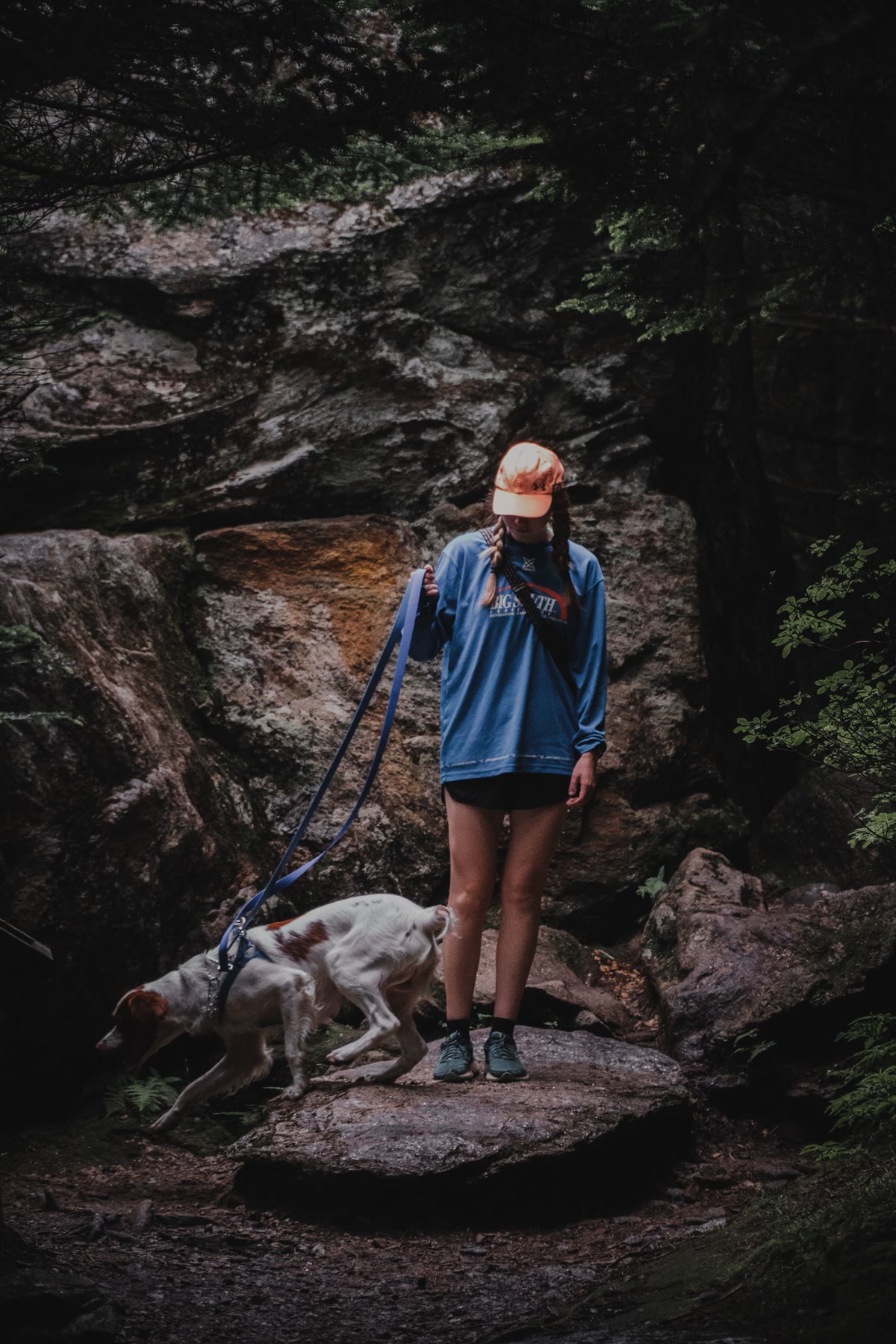
The Leash Rule: It’s Not a Suggestion
Here’s the deal: if a trail requires leashes, your dog is on a leash. Not a “mostly on a leash except when no one’s around” leash. Not a “he’s really good off-leash so it’s fine” leash. A leash. On your dog. The entire time.
I get it — watching your dog run free on a beautiful trail is one of the great joys of owning a dog. But posted leash rules exist for reasons that have nothing to do with how well-trained your dog is. Wildlife disturbance, fragile ecosystems, other hikers who may be afraid of dogs, and liability concerns all factor in. When you blow past a leash requirement, you’re telling every other dog owner who follows the rules that their compliance doesn’t matter.
“But My Dog Is Friendly”
This phrase — shouted across a trail as an off-leash lab comes bounding toward someone — is the single most hated sentence in the hiking community. It doesn’t matter if your dog is friendly. The person approaching might have been bitten before. They might have a reactive dog on a leash who’s about to lose it. They might just not want a muddy stranger jumping on their nice hiking jacket.
“Friendly” is not a substitute for control. A friendly dog running up to a leashed reactive dog can trigger a fight that gets someone hurt. And if your friendly dog runs up to the wrong wildlife — a moose, a fawn, a snake — friendly becomes a casualty really fast.
When Off-Leash Is Actually Okay
Off-leash is fine when all three of these conditions are met: the trail explicitly allows it, your dog has rock-solid recall under heavy distraction, and you can see your dog at all times. Not “I usually know where they are.” Visual contact, always. If your dog disappears around a bend and you’re calling their name into the wind, you don’t have off-leash control — you have hope.
For training recall on the trail, a long line is the best tool you can own. A 30-foot biothane long line gives your dog room to move and explore while keeping you connected. The Viper Biothane Working Tracking Lead is waterproof, doesn’t absorb stink, and has serious breaking strength. It’s the same tool professional trainers use for recall work.
If you’re working on leash skills and want a dedicated leash that’s built for the trail, check out this guide to the best dog leashes for hiking.
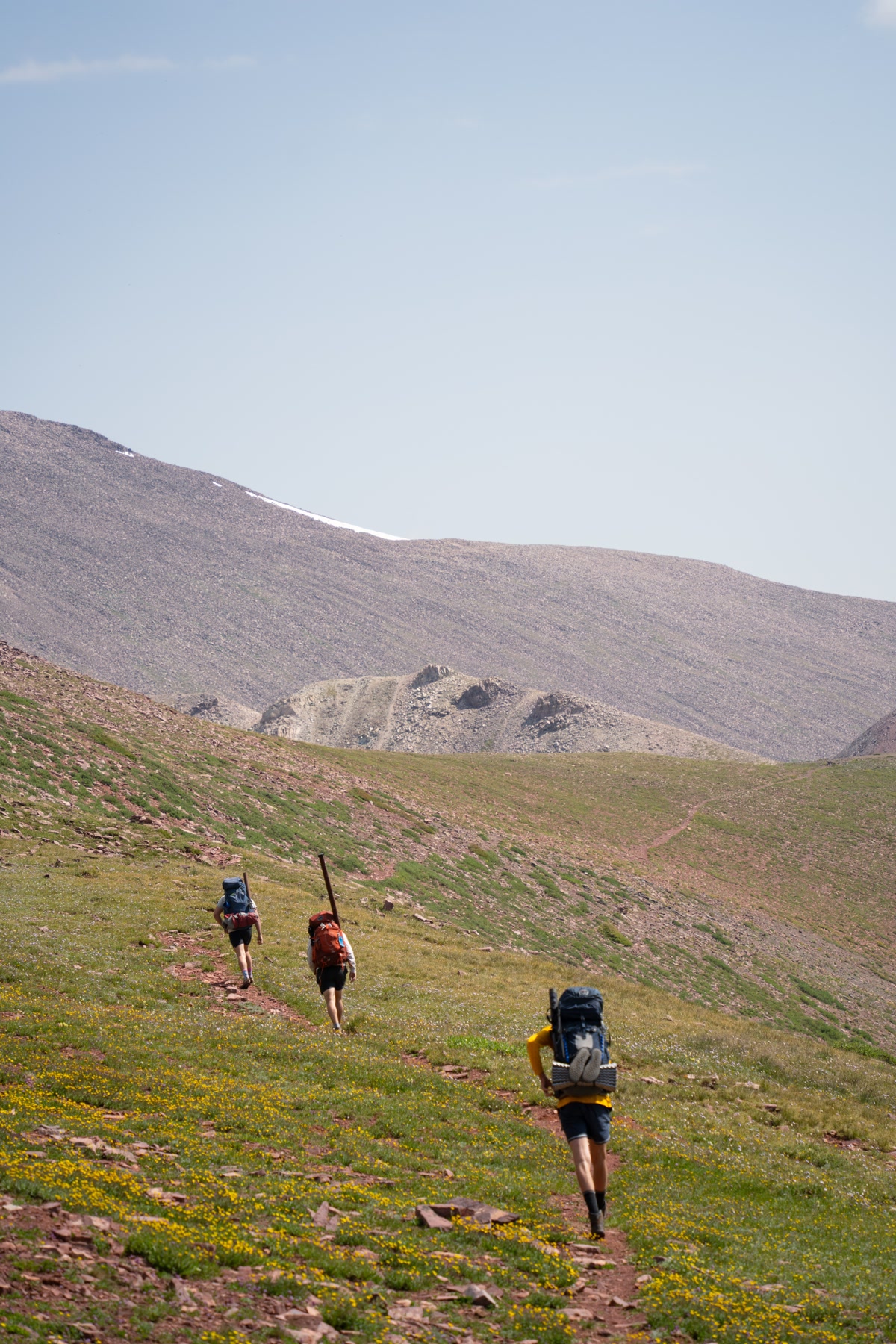
Right of Way: Who Yields to Whom
Trail right-of-way isn’t complicated, but you’d be amazed how many people get it wrong — especially when a dog is involved. Here’s the hierarchy:
- Hikers yield to horses. Always. Step off the trail on the downhill side, keep your dog calm and close, and let the equestrian pass. A spooked horse can throw its rider and seriously injure both the rider and your dog. Move to the downhill side because uphill is where the horse feels cornered.
- Bikers yield to hikers. But in practice, bikes are fast and often can’t stop quickly on steep terrain. Be the bigger person — control your dog and step aside when you hear a bike coming. Don’t let your dog lunge into the trail as a bike passes.
- Uphill hikers have the right of way over downhill hikers. The person grinding uphill is working harder and has momentum to maintain. If you’re descending with your dog, step aside and let them pass. Keep your dog on the inside of the trail, not on the edge where they could knock someone off balance.
- Dog owners yield to everyone. This is the unwritten rule that keeps trails open. When in doubt, you pull your dog off the trail and wait. You are the one with an animal. Act like it.
Passing Other Hikers
When someone approaches on the trail, pull your dog to the side and shorten the leash. Not a retractable leash that’s still 16 feet out — a shortened, controlled leash with your dog at your side. Say hello, let them pass, and move on. If your dog is nervous or reactive, body-block with your own body so your dog is on the far side from the passing hiker. This is basic trail choreography, and it takes about three seconds to do right.
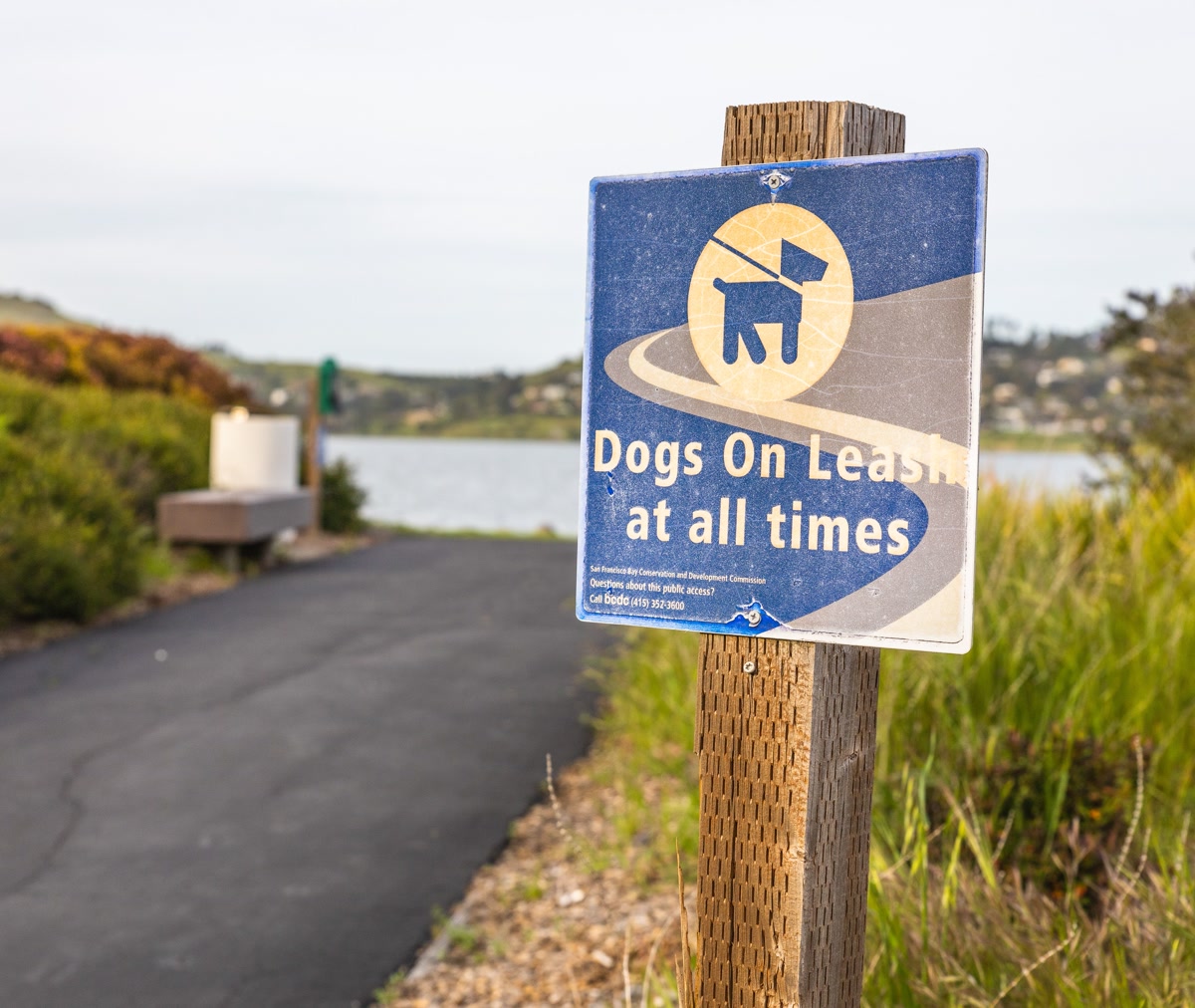
The Trailhead: Where Etiquette Starts Before the Trail Does
The trailhead parking lot is where trail etiquette begins, and it’s where most people fail before they even hit the trail. Here’s what good trailhead behavior looks like:
- Don’t let your dog roam the parking lot. Cars are backing up, trailers are turning around, and not every dog in the lot is friendly. Keep your dog leashed from the moment they’re out of the car.
- Don’t let your dog approach other dogs without asking. That dog in the next parking spot might be dog-reactive. That owner might be mid-transition from crate to harness. Ask first, every time.
- Pick up poop at the trailhead. Yes, even in the parking lot. Yes, even in the bushes by the bathrooms. Trailheads are the highest-traffic part of any trail system, and rangers notice when there’s poop everywhere.
- Keep the noise down. If your dog is a barker — and some dogs just get excited at the trailhead — work on it. Don’t be the person whose dog is screaming in the parking lot at 6 AM while other hikers are trying to gear up in peace.
Poop: The Number One Reason Trails Ban Dogs
I’m going to spend real time here because dog poop is the single most cited reason land managers give when closing trails to dogs. It’s a waste issue, a water issue, and a social issue all at once.
Pack It Out or Bury It Properly
If you’re close to the trailhead or in a high-traffic area, bag it and pack it out. Period. No exceptions. A poop-filled bag left on the trail “for the way back” has a funny way of staying there forever. I’ve seen dozens of them on popular trails — bright blue bags sitting next to rocks like someone’s going to come back for them. They won’t. You won’t. Pack it out.
If you’re deep in the backcountry and at least 200 feet from water and the trail, you can bury dog waste in a cathole 6-8 inches deep, same as human waste. But if the trail has a “pack out all pet waste” rule — and more and more of them do — you follow that rule regardless of how far you are from the trailhead.
The Filled Bag on the Trail Is Worse Than Unbagged Poop
This needs to be said loudly: leaving a bagged poop on the trail is worse than leaving unbagged poop. At least unbagged waste decomposes (slowly, and with risks, but it does). A plastic bag full of poop sitting in the sun for three weeks is litter plus biological waste plus a middle finger to everyone else on the trail. I’ve seen bags hanging from tree branches like twisted ornaments. Don’t be that person.
The gear fix here is simple: use a poop bag holder that attaches to your leash so you don’t have an excuse to set the bag down “just for a second.” The Wilderdog Crap Carrier clips onto your leash and holds up to four knotted bags. You clip it, you carry it, you don’t set it down. Problem solved.
For the bags themselves, Earth Rated Poop Bags are the standard — leak-proof, extra-long, and they actually seal without tearing. Buy them in bulk and never run out.
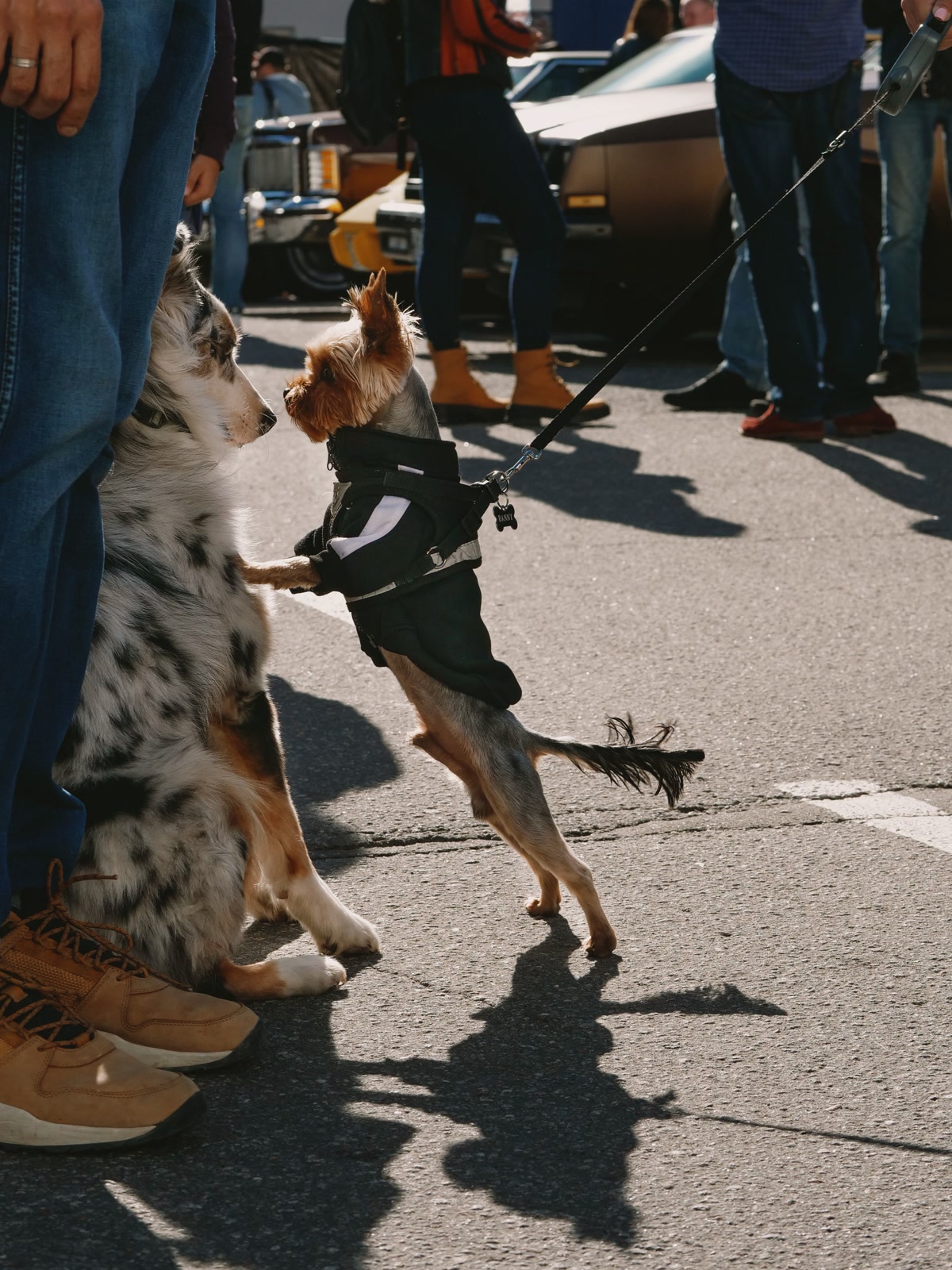
Meeting Other Dogs on the Trail
Trail greetings between dogs are not the same as park greetings. On a narrow trail, two dogs meeting face-to-face is a high-pressure situation even for friendly dogs. Here’s how to handle it:
- Always ask before allowing contact. “Is your dog friendly?” goes both ways. If either owner says no or hesitates, keep the dogs apart.
- Create space. Step off the trail with your dog and let the other dog pass. Don’t force a greeting on a narrow trail with a drop-off on one side.
- Watch body language. Stiff body, raised hackles, hard stare, lip lick, whale eye — these are stress signals. If you see them in either dog, abort the greeting and move on.
- Keep it brief. A three-second sniff-and-move-on is fine. A five-minute play session blocking the trail is not.
- Never let your dog rush up to a dog wearing a yellow vest or bandana. Yellow means “give me space.” This is a widely recognized signal. Respect it.
If your dog is reactive on leash — and there’s no shame in that, plenty of great trail dogs are — check out this guide to the best dog harnesses for options that give you better control without putting pressure on your dog’s neck.
Wildlife: Your Dog Is a Predator Whether You Admit It or Not
Your golden retriever might sleep with a stuffed duck at home, but on the trail, every deer, elk, grouse, rabbit, and squirrel registers as prey. Even if your dog “would never hurt anything,” chasing wildlife is illegal in most parks, stresses the animals, and can lead to dangerous encounters — a cow elk with a calf will absolutely gut a dog that gets too close.
Here’s what you do:
- Keep your dog on leash in wildlife-heavy areas. This is non-negotiable in places with active big game populations.
- Train an emergency stop recall. Your dog should freeze when you blow a whistle, even mid-chase. This takes dedicated training, but it’s the difference between a close call and a disaster. The Original Storm Whistle is the loudest whistle you can buy — audible over wind, distance, and a dog’s adrenaline. It’s what I carry on every hike. For more on recall training tools, see this guide to dog whistles.
- Don’t let your dog investigate off-trail. Off-trail exploration means dens, nests, and hibernation sites. Keep your dog on the trail.
- Learn the local wildlife patterns. Spring means fawns and calves. Late summer means rattlesnakes in dry areas. Know what’s active when you’re hiking.
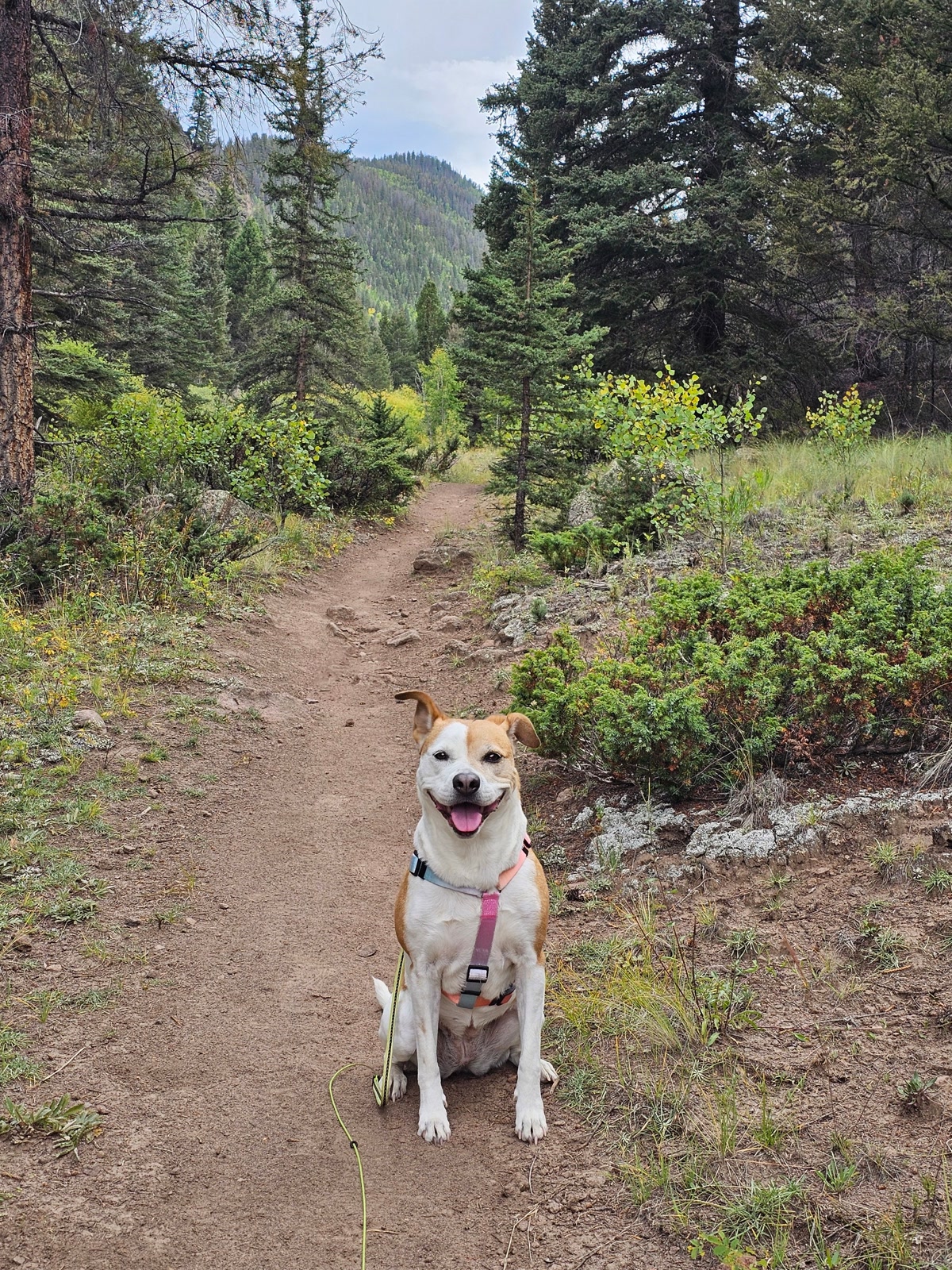
Camping Etiquette: Your Dog at Shared Sites
Trail etiquette doesn’t end when you reach camp. Shared campsites are where trail relationships go to die — usually at 2 AM when someone’s dog won’t stop barking. Here’s how to be a good camp neighbor:
- Never leave your dog unattended at camp. Not in the tent, not tied to a tree, not “he’ll be fine for five minutes.” Dogs left alone at camp bark, dig, escape, and stress. Bring them with you or don’t bring them.
- Manage barking. If your dog is a barker at night, camp away from others or don’t bring your dog to shared sites. A barking dog in a crowded campground will get you reported, fined, and potentially asked to leave. If your dog barks at every sound in the woods, a tent in a busy campground is not the right environment.
- Respect leash rules at camp. Almost all established campgrounds require dogs to be leashed at all times. The 6-foot rule applies here too — no retractable leashes that let your dog wander into the next site.
- Don’t let your dog visit neighboring campsites. Even a friendly dog wandering into someone’s campsite is an intrusion. Their food is there, their kids are there, their space is theirs. Keep your dog in your site.
- Pick up poop at camp immediately. Campsite poop is worse than trail poop because it’s concentrated in a living area. Bag it, store it in your bear box or vehicle, and pack it out.
If you’re planning a camping trip with your dog, this guide to dog sleeping bags for camping covers gear that keeps your dog warm and quiet at night — which is the best barking prevention there is. A tired, warm dog sleeps through the night.
Gear That Makes Trail Etiquette Easier
Good manners are easier with the right gear. Here’s what I carry on every hike to make sure I’m not the problem out there:
Hands-Free Leash System
When you need to manage your dog, navigate a tricky section, and step aside for other hikers all at once, a hands-free leash is a game-changer. The Ruffwear Trail Runner Leash has stretch webbing that absorbs pulling and a locking clip that won’t accidentally release. Pair it with the Ruffwear Trail Runner Belt and you’ve got both hands free for scrambling, signaling, and picking up after your dog.
A Harness With Control
A good harness gives you something to grab when you need to pull your dog aside quickly. The Ruffwear Front Range Harness has two leash attachment points — one on the back for normal walking and one on the chest for control. The chest clip gives you steering power: if your dog pulls forward, the chest attachment rotates them back toward you. It also has reflective trim, which matters on low-light trails. See our full breakdown of dog hiking harnesses for more options.
Recall Whistle
I already mentioned the Storm Whistle, but it deserves another callout. A whistle cuts through wind and distance in a way your voice cannot. Train a recall to a whistle and you’ve got a tool that works at ranges your shout never will.
Poop Bag System
You need bags and you need a way to carry the full ones. Earth Rated bags for the pickup, the Wilderdog Crap Carrier for the transport. Clip it to your leash, stuff the knotted bags in, and hike on without leaving anything behind.
Tie-Out Line for Camp
A short tie-out gives your dog a safe, defined space at camp without you having to hold the leash constantly. Keep it short — 4 to 6 feet — so your dog stays in your site and can’t wander into the neighbor’s space. Never use a tie-out as a substitute for supervision.
The Bottom Line
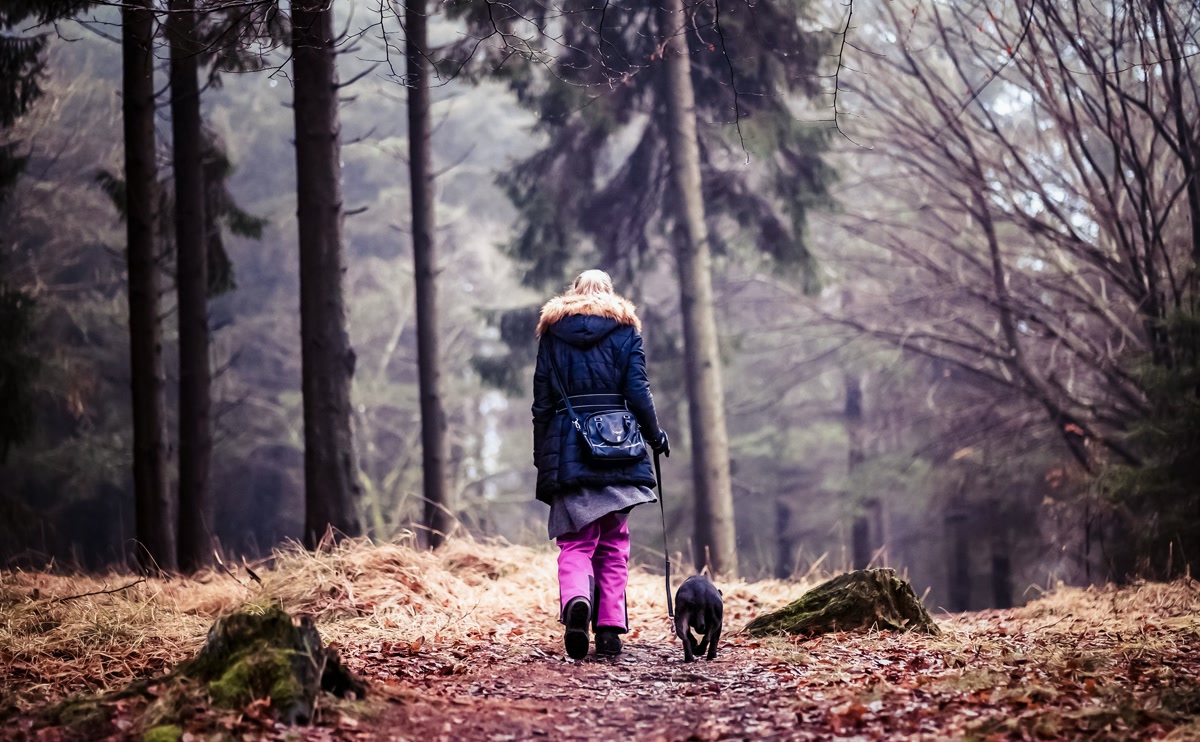
Trail etiquette isn’t about rules for the sake of rules. It’s about keeping trails open for dogs and their owners. Every hiker who has a bad experience with an off-leash dog becomes a vote against dogs on trails. Every ranger who finds a trail littered with poop bags becomes another voice arguing for a dog ban. Every equestrian whose horse gets spooked by an uncontrolled dog files a complaint.
None of this is hard. Leash your dog where required. Yield to other trail users. Pick up after your dog and pack it out. Keep your dog under voice control or on a line. Don’t let your dog rush other dogs or chase wildlife. Be the dog owner that other trail users are happy to see coming, not the one they dread.
The gear helps, but the mindset matters more. You are your dog’s trail ambassador. Every time you hike with your dog and do it right, you’re keeping that trail open for the next person and their dog. Every time you do it wrong, you’re one step closer to a “No Dogs Allowed” sign at your favorite trailhead.
So leash up, pack your poop bags, clip on your whistle, and go earn those trail miles the right way. Your dog — and every other dog owner on that trail — will thank you.
GearHound is reader-supported. When you buy through links on this site, we may earn an affiliate commission at no extra cost to you.
⛺ Get Your Free Camping with Your Dog Checklist
Join our newsletter and get this free printable plus weekly tips.
Price Check
Prices verified via our product tracker. Updated Sep 27.
| Amazon.com : Viper Biothane Working Tracking Lead Leash Lo | $42.99 | 4.6★ (4,063) |
| Amazon.com : Wilderdog Crap Carrier Poop Bag Holder fits 4 | $6.00 | 4.4★ |
| Amazon.com : Earth Rated Dog Poop Bags on Refill Rolls, 27 | $7.94 | 4.8★ (250,144) |
| Amazon.com: Storm Safety Whistle : Sports & Outdoors | $8.95 | 4.7★ (1,417) |
| Amazon.com: Ruffwear, Trail Runner Leash, Blue Pool, Large | $34.99 | 4.1★ |
| Amazon.com : Ruffwear, Trail Runner Belt, 35-50 in Waist, | $49.99 | 4.4★ (118) |
| Amazon.com : Ruffwear, Front Range Dog Chest Harness, Basa | $59.99 | 4.6★ (19,045) |
As an Amazon Associate we earn from qualifying purchases.