This article contains affiliate links. We may earn a commission from qualifying purchases.
Some content on this site is AI-assisted and reviewed by our editorial team.
Affiliate Disclosure: This article contains affiliate links. We may earn a commission from qualifying purchases at no additional cost to you. Some content is reader-supported and reviewed by the editorial team.
Best Dog Backpacks for Hiking 2026: 5 Packs That Let Your Dog Carry Their Share
July 2026, By GearHound
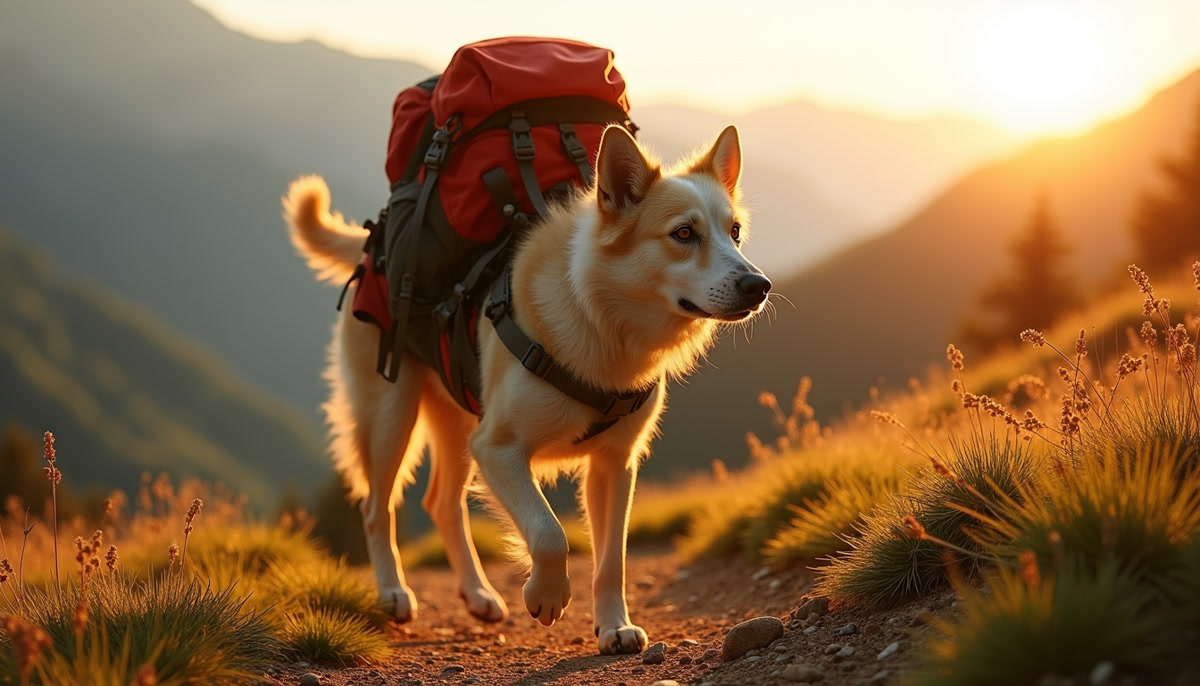
If your dog is hiking with you, they should be working too. A dog backpack lets your trail companion carry their own food, water, bowls, and waste bags, which means less weight in your pack and a dog that feels like part of the team. The right pack fits securely without chafing, distributes weight evenly across the shoulders, and stays put when your dog scrambles over rocks or ducked under downed trees. The wrong pack shifts, rubs, and turns a fun hike into a miserable one.
This guide covers the five best dog backpacks for hiking in 2026, what to look for when choosing one, how to fit it properly, and how much weight your dog should actually carry. Whether you are doing day hikes or multi-day backpacking trips, there is a pack here that fits your dog and your adventure style.
What Makes a Good Dog Backpack
Not all dog backpacks are built the same. The cheapest ones use thin materials, have poor strap systems, and shift side to side when your dog moves. A good hiking pack needs to do four things: fit securely, distribute weight evenly, resist shifting, and not chafe. Here is what to look for.
Fit and Adjustment
A dog backpack is only as good as its harness system. Look for packs with at least three points of adjustment: chest, neck or shoulders, and belly. The pack should sit snug against the body without restricting breathing or shoulder movement. If you can fit two fingers under the chest strap, the fit is about right. Packs with only one or two adjustment points will shift on the trail, no matter how tight you make them.
The best packs use a separate harness that the saddlebag portion attaches to. This means you can fit the harness once, then clip the bags on and off without readjusting. It also means the bags do not pull on the harness when they are loaded, which keeps the fit consistent.
Capacity and Weight Distribution
Capacity matters more than you think. Too small and the pack is useless. Too large and you will be tempted to overload your dog. For day hikes, 2 to 6 liters total capacity is ideal. For multi-day trips, look for 8 to 12 liters. The weight should sit over the dog’s shoulders, not behind them. A dog’s power comes from their front end, and a pack that loads weight on their lower back will cause fatigue and potential injury.
Durability and Materials
Dog packs take abuse. They get dragged through brush, scraped on rocks, and chewed on at camp. Look for packs made from ripstop nylon, 600D polyester, or similar durable fabrics. Water-resistant materials are a plus because a wet pack is heavier and less comfortable. Zippers should be heavy duty, not the lightweight kind found on cheap luggage. Reflective trim is worth having for low-light visibility on trails that cross roads.
The 5 Best Dog Backpacks for 2026
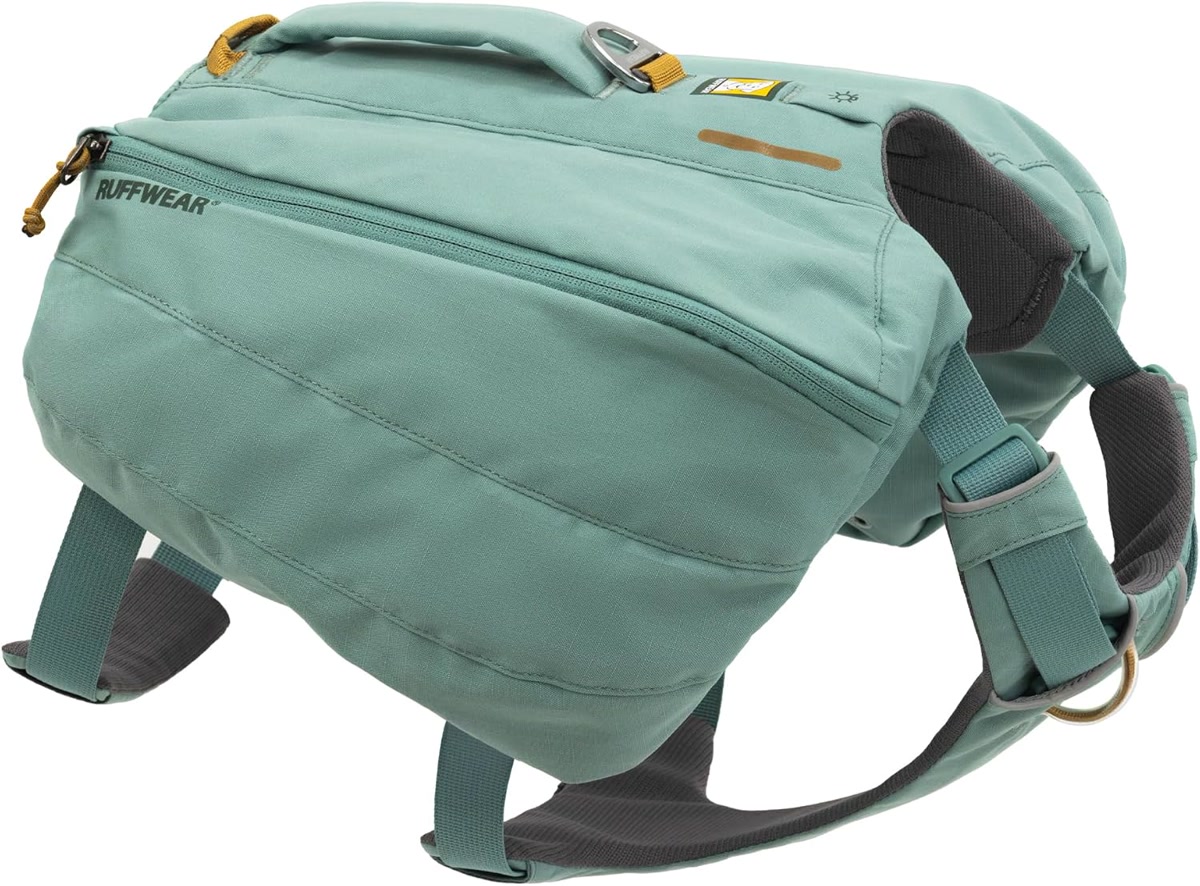
1. Ruffwear Front Range Day Pack (80 Dollars)
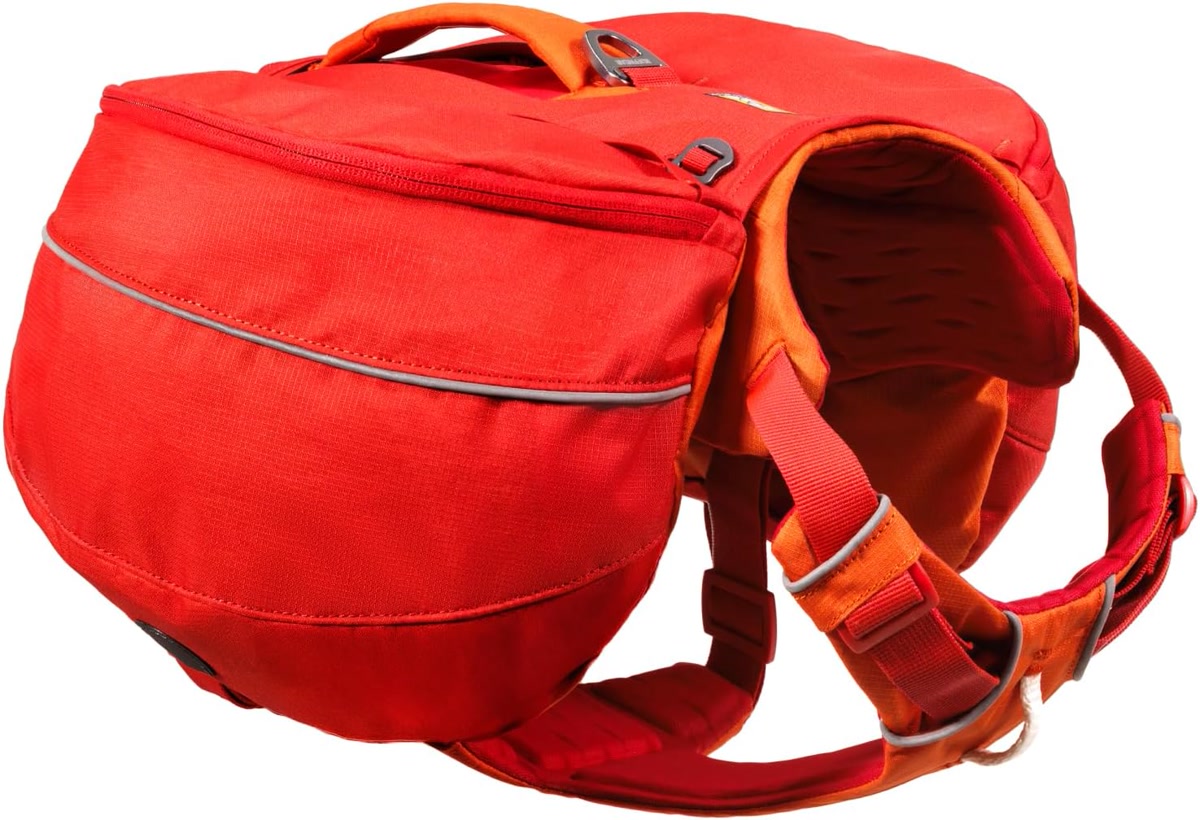
The Ruffwear Front Range Day Pack is the best overall dog backpack for most hikers. It is built on Ruffwear’s Front Range harness platform, which means the fit system is proven and comfortable. The pack has five points of adjustment, three leash attachment points, a padded handle, internal mesh pockets for organizing gear, reflective trim, and a light loop for visibility. The saddlebags are streamlined and sit close to the body, which minimizes shifting on technical terrain.
This pack is ideal for day hikes and overnight trips where your dog is carrying food, water, and a few extras. It is not the highest capacity pack on this list, but it is the one that fits the best and stays put when the trail gets rough.
- Capacity: Approximately 6 liters total
- Five-point adjustment system
- Three leash attachment points
- Best for day hikes and lightweight overnight trips
Best overall: Ruffwear Front Range Day Pack — 80 dollars, the best fit and stability for day hiking.
2. Ruffwear Palisades Pack (130 Dollars)
The Palisades is Ruffwear’s multi-day backpacking pack, and it is the most capable dog pack on the market. The saddlebags are removable, meaning you can fit the harness at camp, then clip the bags on when you are ready to hit the trail. The capacity is generous at approximately 11 liters total, which is enough for a dog to carry their own food, a water bottle, bowls, and a light layer of dog gear for a weekend trip.
The harness is breathable and well-padded, with four points of adjustment. The saddlebags sit over the shoulders, not the back, which is the correct load placement. At 130 dollars, it is expensive, but if you are doing multi-day trips with your dog, there is no better option.
- Capacity: Approximately 11 liters total
- Removable saddlebags
- Breathable, padded harness
- Best for multi-day backpacking trips
Best for backpacking: Ruffwear Palisades Pack — 130 dollars, the gold standard for multi-day dog backpacking.
3. Outward Hound DayPak (25 Dollars)
The Outward Hound DayPak is the budget pick, and it is the pack most dog owners start with. At 25 dollars, it is a fraction of the cost of the Ruffwear options, and it handles the basics well. The pack has expandable saddlebags that let you carry more or less depending on the trip, a breathable mesh harness, and reflective accents for visibility.
The fit system is not as refined as Ruffwear’s. There are three adjustment points, and the pack can shift on narrow-chested or fine-boned dogs. For casual day hikes on well-maintained trails, it works. For technical terrain or longer trips, the fit issues become a problem. But for the price, it is hard to beat as an entry-level option.
- Capacity: Expandable saddlebags, approximately 4 liters
- Three-point adjustment
- Breathable mesh harness
- Best for casual day hikes and first-time users
Best budget: Outward Hound DayPak — 25 dollars, the starter pack that gets the job done.
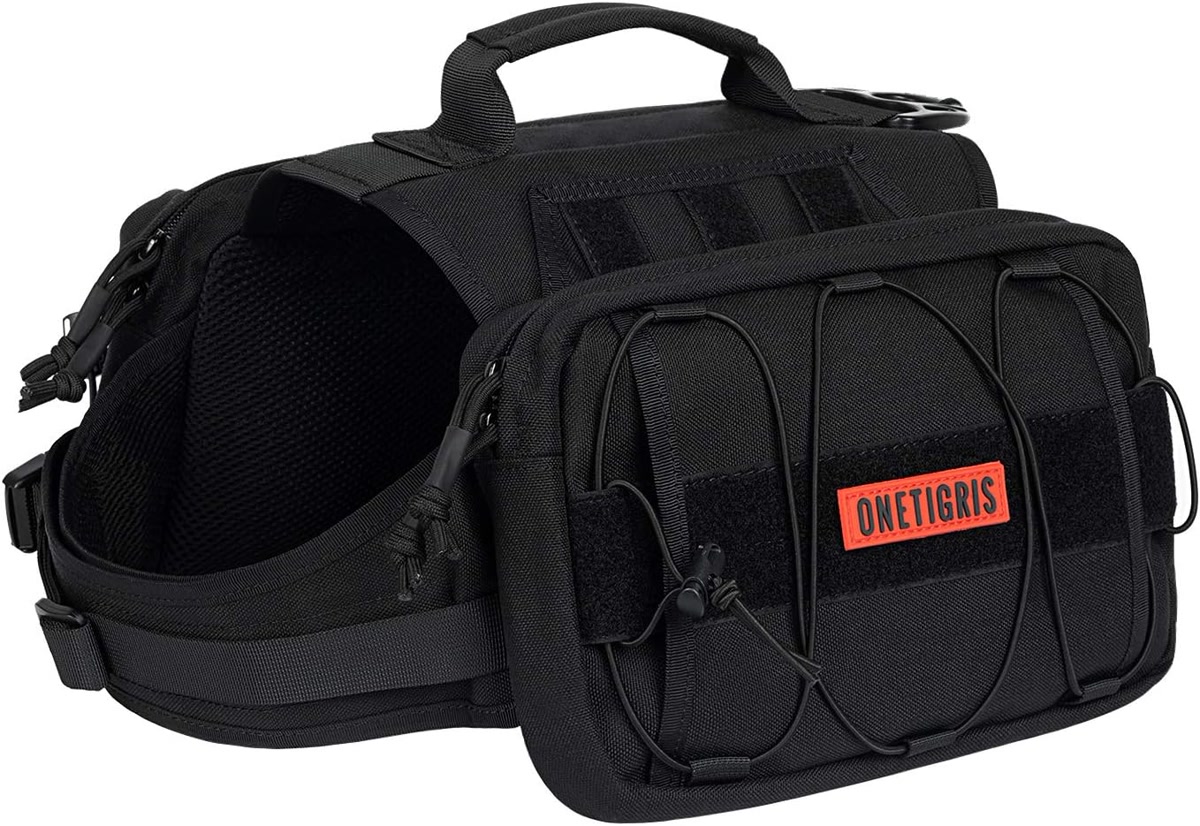
4. OneTigris Tactical Dog Backpack (45 Dollars)
The OneTigris is the pack for dogs that need a rugged, no-nonsense setup. It is made from 1000D nylon, which is the same material used in military tactical gear. It has MOLLE-compatible webbing on the sides, so you can attach pouches, a water bottle, or a first aid kit. The pack comes in medium and large sizes and is designed for dogs 30 to 80 pounds.
The fit is not as adjustable as the Ruffwear packs. There are two main straps, and the pack relies on the dog’s body shape to keep it centered. On barrel-chested breeds like Labs and pit bulls, it fits well. On slender dogs like greyhounds or vizslas, it will shift. The tactical look is not for everyone, but if you want durability above all else, this is the pack.
- 1000D nylon construction
- MOLLE-compatible side panels
- Two size options (medium, large)
- Best for rugged use and barrel-chested breeds
Most durable: OneTigris Tactical Dog Backpack — 45 dollars, military-grade materials for rugged trails.
5. Build Your Own: Harness Plus Removable Bags (40 to 60 Dollars)
If your dog already has a harness they are comfortable in, you can add removable saddlebags instead of buying a full pack system. Several companies sell standalone saddlebags that clip onto existing harness webbing. This is not as integrated as a purpose-built pack, but it lets you use a harness you already know fits well.
The downside is weight distribution. A harness designed for walking was not built to handle the torque of loaded saddlebags. The bags will pull on the harness in ways it was not designed for, which can cause chafing over long miles. This approach works for short day hikes but is not recommended for backpacking.
If you go this route, look for saddlebags that clip on with quick-release buckles so you can remove them at rest stops and let your dog cool down. Make sure the bags sit over the shoulders, not behind them.
How to Fit a Dog Backpack
Fitting a dog backpack is similar to fitting your own pack. The goal is stability without restriction. Here is the process:
- Put the harness on without the bags attached. Adjust the chest strap first, then the belly strap, then the neck or shoulder straps. You should be able to fit two fingers under each strap.
- Attach the saddlebags and load them equally. Uneven loading will cause the pack to rotate, which chafes and throws off your dog’s balance.
- Walk your dog on leash for five minutes. Watch for shifting, chafing, or any change in gait. If the pack rotates or slides, tighten the adjustment points.
- Check for hot spots after the first hour on the trail. Look under the chest strap, behind the elbows, and wherever straps cross bony prominences. Redness means the strap needs to be adjusted or padded.
Every dog is shaped differently. A pack that fits a German Shepherd perfectly may not fit a Border Collie or a stocky pit bull. If possible, try the pack on your dog before buying, or buy from a retailer with a good return policy.
How Much Weight Can Your Dog Carry?
The general rule is that a healthy adult dog can carry 10 to 12 percent of their body weight in a well-fitted pack. A 50-pound dog can carry 5 to 6 pounds. A 70-pound dog can carry 7 to 8.5 pounds. This includes the weight of the pack itself, which is typically 1 to 2 pounds.
That is less than most people expect. A Nalgene water bottle alone is over a pound. Two of them, plus bowls and food, and you are at the limit for a medium dog. This is why capacity matters. A pack that is too large invites overloading, which causes fatigue, joint stress, and in extreme cases, injury.
Start light. On your dog’s first hike with a pack, load it with 5 percent of their body weight and see how they handle it. If they are moving well and not showing signs of fatigue after an hour, you can increase the load. Watch for lagging behind, frequent stops, a dropped head, or a change in gait. Any of these mean the pack is too heavy or does not fit right.
Trail Tips for Hiking With a Packed Dog
Once your dog is fitted and loaded, a few trail habits will keep them comfortable and safe:
- Take the pack off at every rest stop longer than five minutes. This lets your dog cool down and relieves pressure points.
- Check the pack for shifting after any scramble, jump, or water crossing. Adjust as needed.
- Distribute weight evenly between the two saddlebags. A half-pound difference is enough to cause rotation.
- Keep fragile items in the pack, not on the outside. Water bottles clipped to MOLLE webbing will swing and hit your dog in the ribs.
- If your dog is new to packing, start with short hikes and light loads. Build up over several weeks before attempting a full-day trip.
If you are also carrying a dog first aid kit, your dog’s pack is a good place for it. The kit is lightweight, and your dog can always carry their own emergency supplies.
My Take
The best dog backpack is the one that fits your dog and your hiking style. For most hikers, the Ruffwear Front Range Day Pack is the sweet spot of fit, capacity, and price. For multi-day trips, the Ruffwear Palisades is unmatched. For budget-conscious day hikers, the Outward Hound DayPak covers the basics. And for dogs that need rugged gear for rough trails, the OneTigris is built like military equipment. Whatever you choose, fit it carefully, load it lightly, and let your dog earn their trail miles.
See also: Best Camping Coolers 2026: 7 Ice Chests That Actually Keep Ice for Days, Best Camping Stoves 2026: 7 Stoves That Actually Cook Like Your Kitchen at Home.
⛺ Get Your Free Camping with Your Dog Checklist
Join our newsletter and get this free printable plus weekly tips.
Price Check
Prices verified via our product tracker. Updated Sep 27.
| Amazon.com: Ruffwear, Front Range Day Pack, River Rock Gre | $79.99 | 4.7★ (531) |
| Amazon.com: Ruffwear, Palisades Dog Backpack, Red Currant, | $149.99 | 4.6★ (102) |
| Amazon.com : Kyjen Outward Hound The Quick Release Dog Bac | $28.99 | 4.0★ (3,169) |
| Amazon.com: OneTigris Dog Backpack for Medium & Large Dogs | $37.98 | 4.6★ (2,897) |
As an Amazon Associate we earn from qualifying purchases.