
This article contains affiliate links. We may earn a commission from qualifying purchases.
Some content on this site is AI-assisted and reviewed by our editorial team.
The first hard freeze of the year changes the trail for your dog the same day it changes it for you. Snow packs between the toes, ice cuts pads that spent all summer on soft dirt, and road salt burns through everything by the end of the driveway. I have watched a confident dog turn into a three-legged hop inside a hundred yards, and it is not drama — cold pads lose feeling fast, and cracked pads take weeks to heal. A good set of winter boots fixes that, but only if they actually stay on. These four cover the realistic range: extreme cold, long snowy walks, tight budgets, and quick salt-season outings.
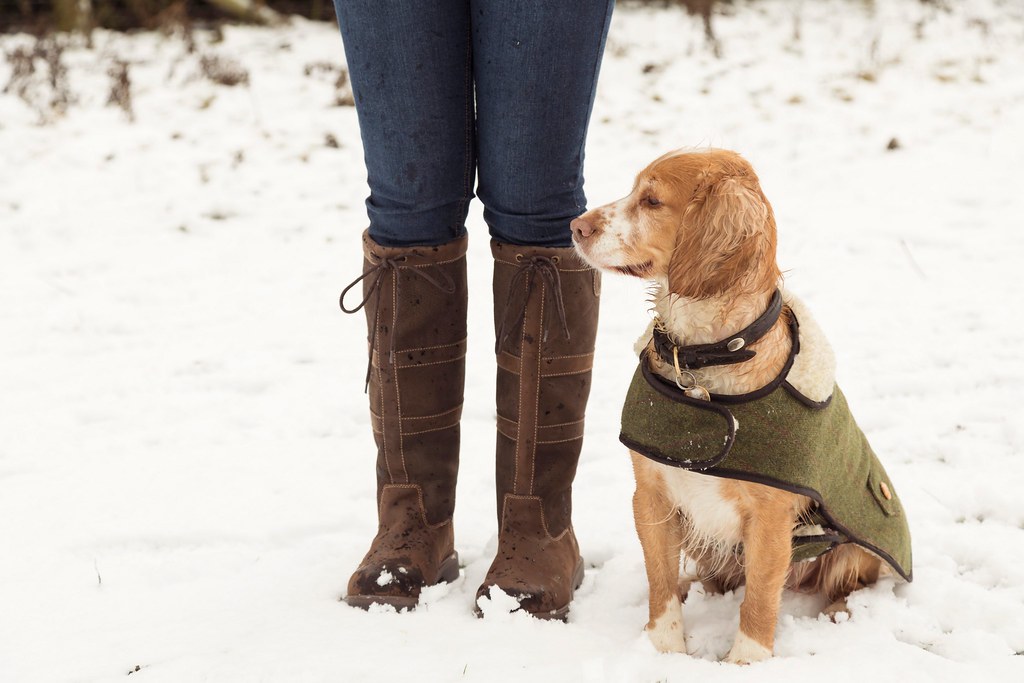
After three winters of putting boots on stubborn dogs, here is what is actually worth strapping on.
Ruffwear Polar Trex — The Extreme-Cold Pick
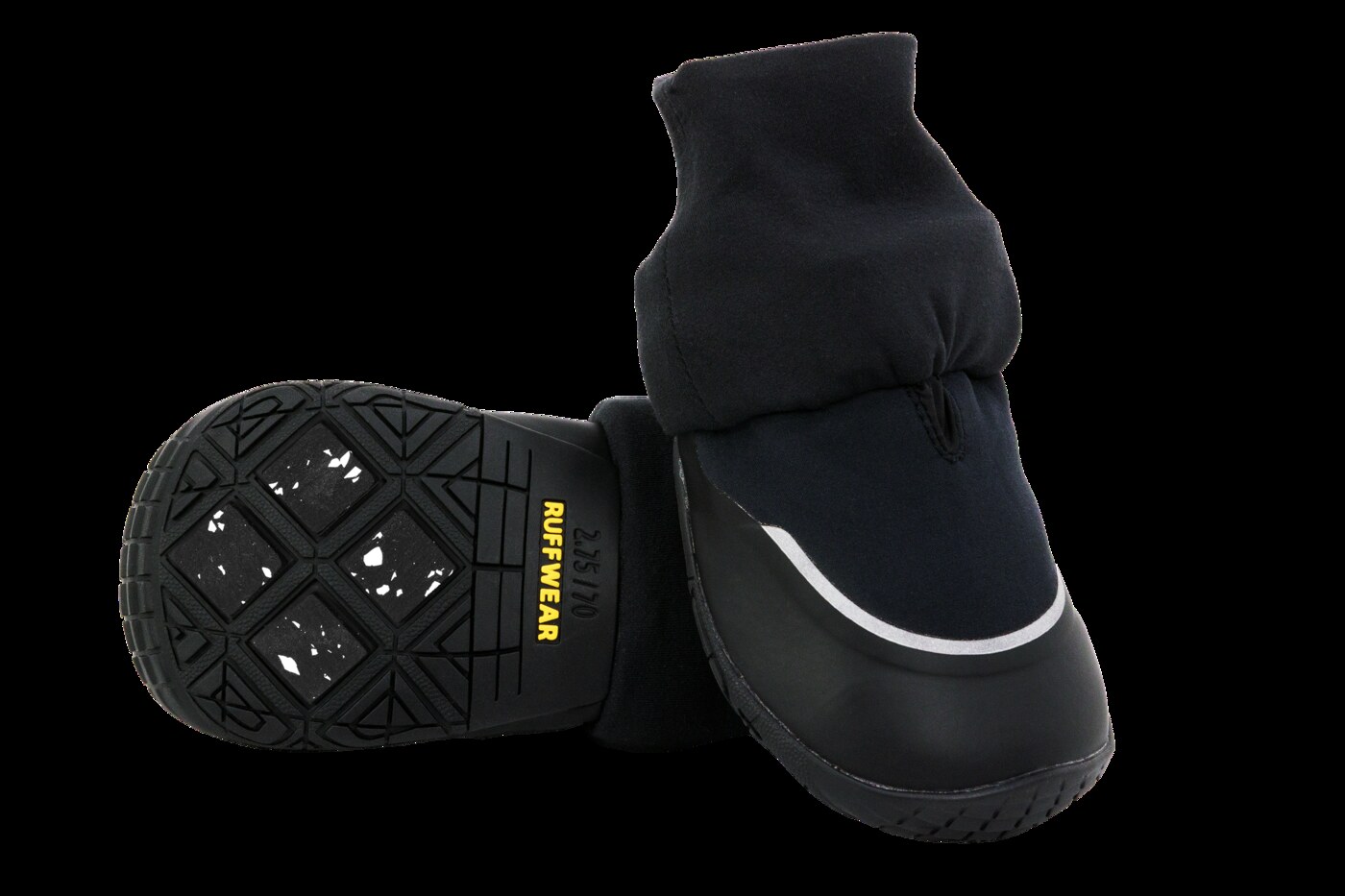
Ruffwear Polar Trex are the boots I reach for when the forecast stops being cute. They pair an insulated upper with a built-in gaiter that cinches over the boot, so dry powder stays out instead of packing into a snowball against the ankle. The rubber sole is aggressive enough to grip packed ice, and the whole design is built around dogs that stay out in it for hours. They run about $47 a pair, and here is the part nobody tells you: they are sold in pairs, so four paws means buying two — call it $94 all-in. The tradeoffs are real. Sizing has to be measured off a standing paw, there is a break-in week where your dog walks like a clown, and that price is the steepest here.
My take: if your winter means weeks of real snow instead of a salted sidewalk, these are the ones that survive it.
Muttluks Original All-Weather — The Cold-Weather Classic
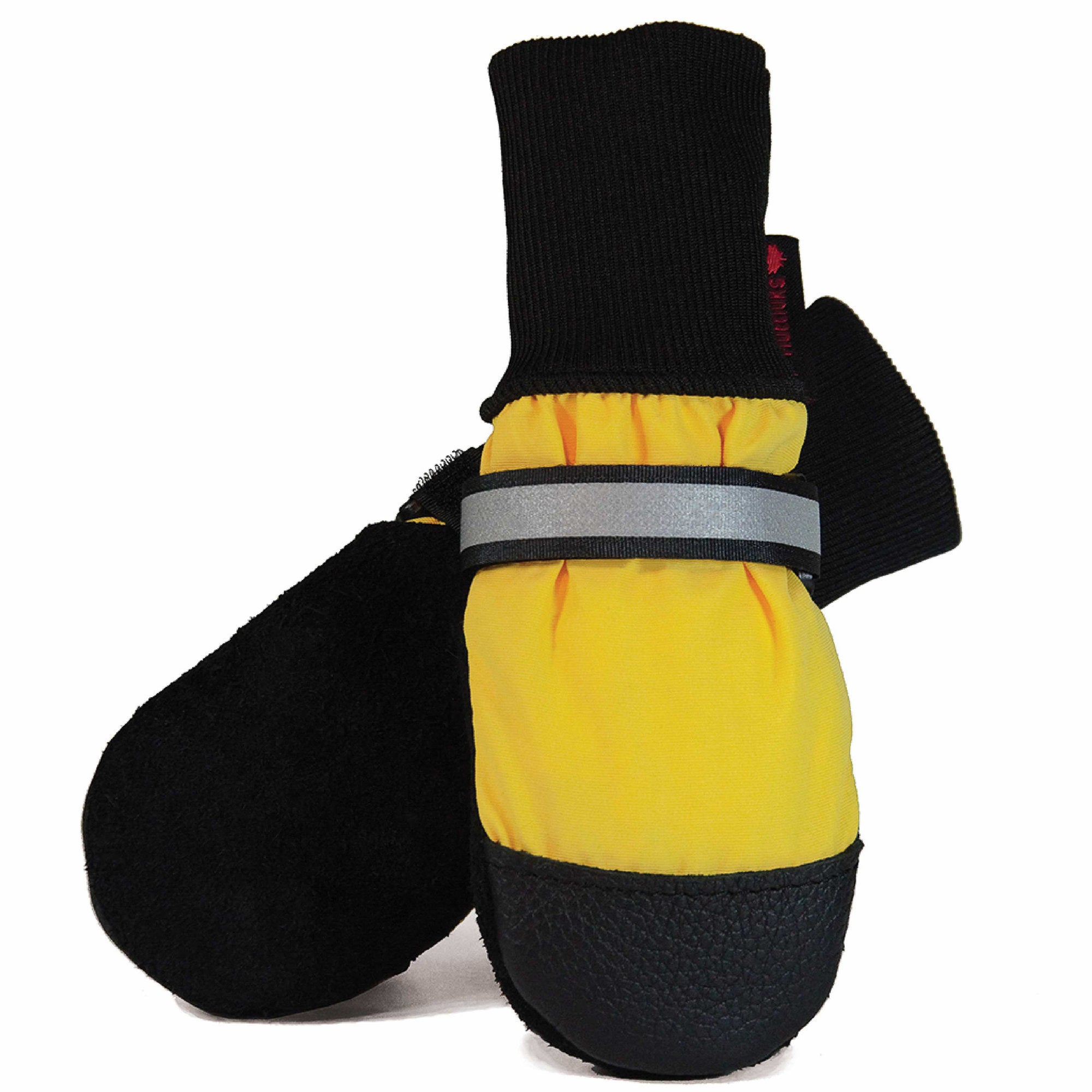
Muttluks Original All-Weather boots have been made in Canada since 1994, and the design has barely changed because it works: a water-resistant coated fabric upper, a soft leather sole that conforms to the paw, and a reflective cuff you can see from the end of the street. They are about $76 for a set of four. Where they beat everything else is long, steady winter walks — the kind where cold soaks in slowly and comfort matters more than armor. The honest cons: they are the second most expensive here, the fabric cuffs collect snow clumps on wet days, and fit is unforgiving — measure paw width with the dog standing or the sizing chart will lie to you.
My take: the pick for long daily walks in moderate snow where your dog needs comfort for an hour, not protection for a summit push.
QUMY — The Budget Workhorse
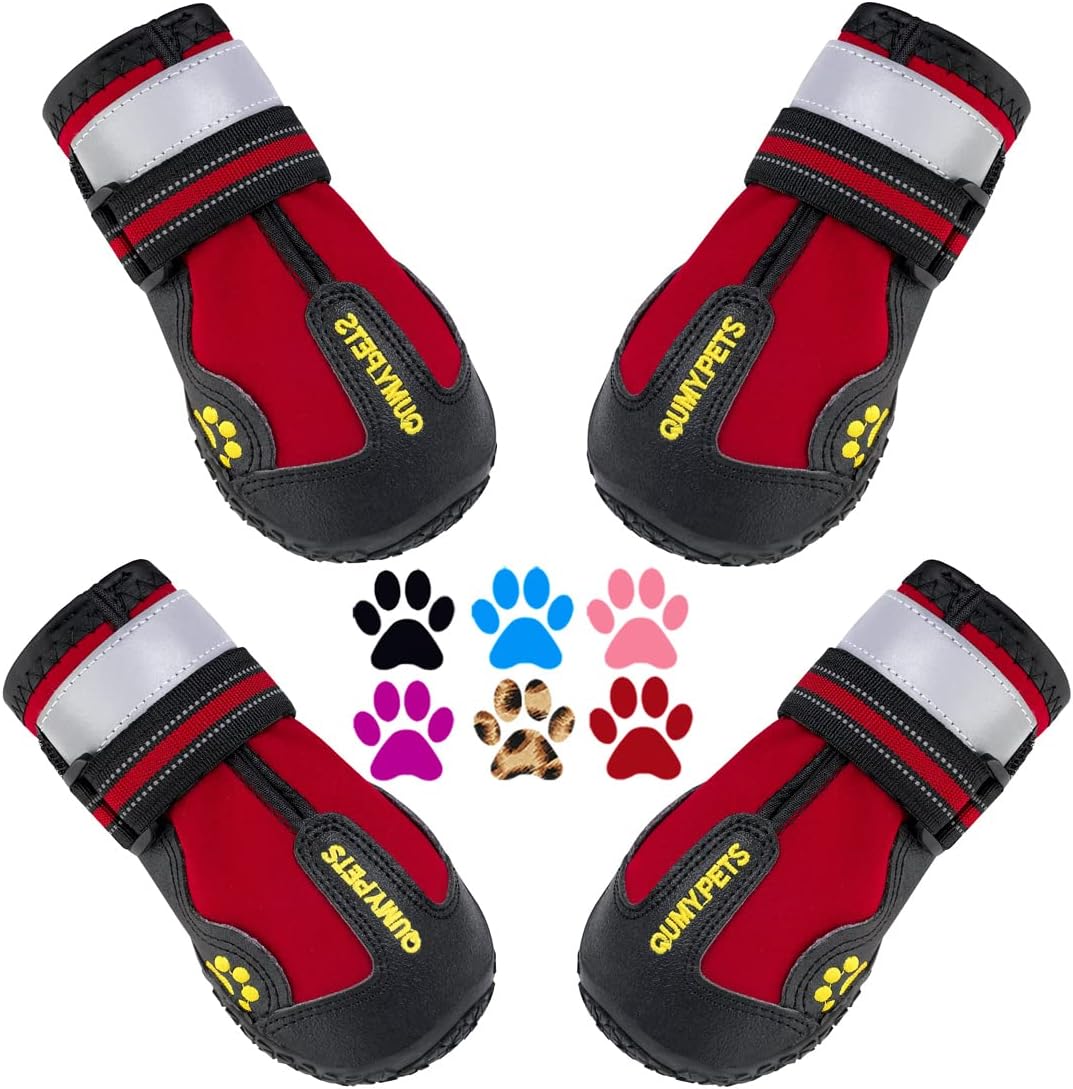
QUMY dog boots are the best answer to a simple question: what if my dog hates boots and I do not want to spend $94 finding out? For about $30 a set of four, you get a split-seam opening that lies wide flat for slipping the paw in, two adjustable reflective straps, and a rugged anti-slip sole that handles icy pavement and frozen trail grit. They are water-resistant rather than waterproof — seam stitching will weep in slush — and the sizing runs small, so measure the paw width, not the weight. The sole also wears faster on bare asphalt than the premium options. But as a first pair, that is exactly the point: if your dog tolerates a full season in these, boots work for your dog and upgrading is worth it.
My take: buy these first. If your dog keeps them on, you have learned the expensive lesson for $30 instead of $94.
Pawz Water-Proof Dog Boots — The Disposable Backup
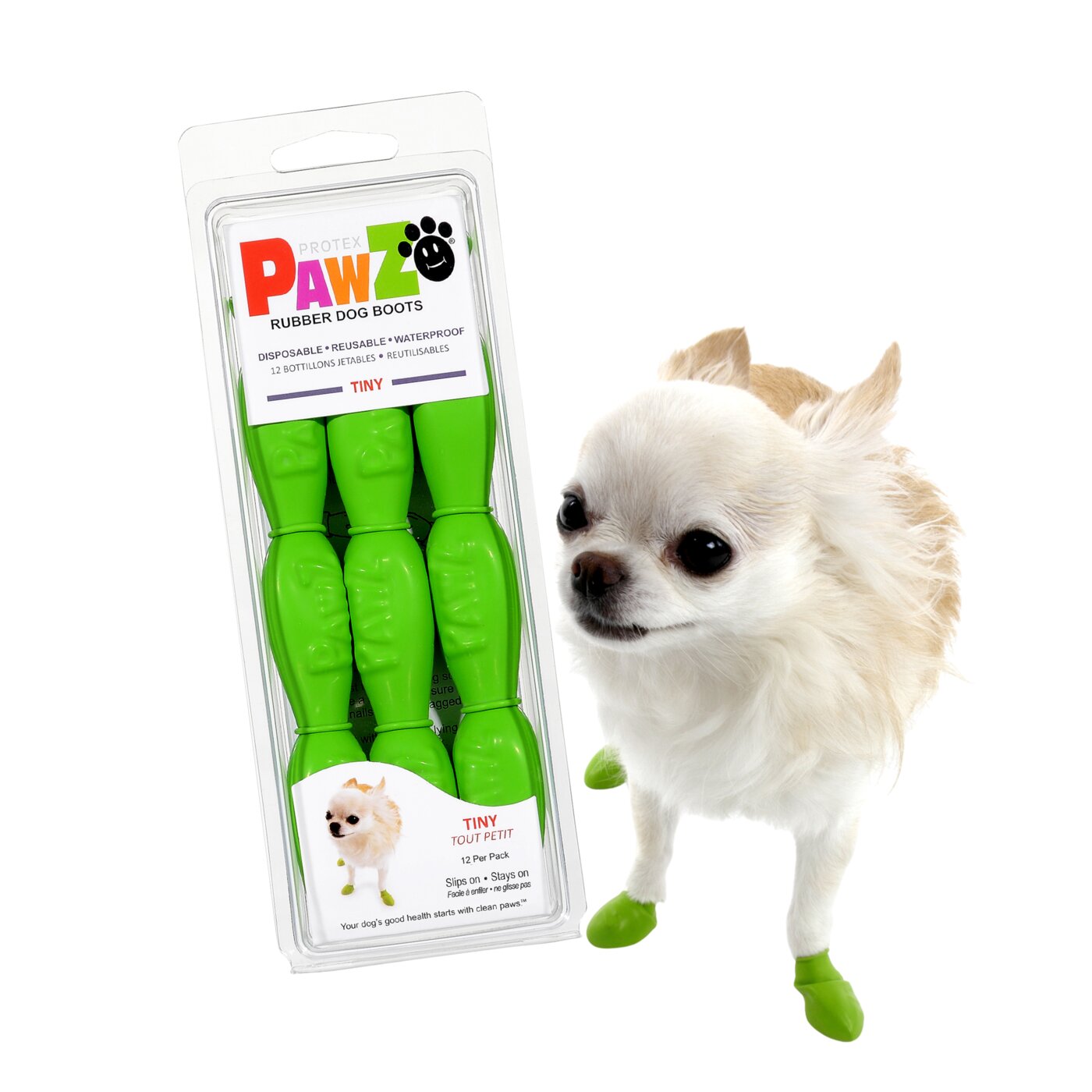
Pawz look like balloons because they basically are — natural rubber pull-ons with no straps, no insulation, and about $20 for a 12-pack. That sounds like a joke next to the others until you understand the job. For a twenty-minute walk on a salted sidewalk or an icy parking lot, they add grip and keep chemical ice melt off the pads entirely, then you toss them when they wear through. They are biodegradable, they pack flat in a jacket pocket, and senior dogs that drag their feet do not kick them off because there is no cuff to shove against. The cons are honest ones: thin rubber tears on rocky ground, there is zero warmth in them, and each bootie lasts a handful of outings at best.
My take: keep a pack in the truck for salt season and ice days — cheap traction and salt protection exactly when you need it.
Features That Actually Matter (And Ones That Don’t)
- Measure the paw, not the weight. Every boot above sizes by paw width with the dog standing. Weight charts are a rough filter at best, and a half-size wrong means a boot on the ground by the second block.
- Straps you can actually adjust. Two-point closures (QUMY, Polar Trex) stay on through deep snow. Single stretch cuffs slide off narrow pasterns — that is the number one reason boots end up in a snowbank.
- A sole that flexes. If the sole does not bend in your hand, your dog will walk like it is wearing flip-flops. Flexible rubber grips ice better than stiff tread anyway.
- Reflective material. December walks happen in the dark. Reflective straps or cuffs are standard on all four of these — keep it that way if you shop elsewhere.
- Skip: LED lights and fashion colors. Light-up soles burn through sealed batteries you cannot replace, and a neon boot will not make your dog any more visible than a reflective strap does.
What to Spend Where
- Under $25: a Pawz 12-pack covers salt season sidewalks and icy parking lots. Not warm, not durable — but it works and it is replaceable.
- About $30: the QUMY set of four is the full-winter budget pick for a dog that will tolerate boots.
- About $76: Muttluks buy comfort for long daily walks in moderate snow.
- About $94 (two pairs): Ruffwear Polar Trex for deep cold and deep snow, and they will outlast several seasons of it.
The practical move for most owners: QUMY for the dog, Pawz for the glovebox. If the winter turns out brutal where you actually hike, upgrade the QUMY to Polar Trex and hand the QUMY down to the around-town rotation. And while you are winterizing the dog, do not forget the rest of the kit — a good pair of hiking gaiters for your own boots matters just as much as boots on the dog, and once the sun drops, a dog sleeping pad keeps that same dog warm through a frozen night in camp.
GearHound is reader-supported. As an Amazon Associate, I earn from qualifying purchases. That means if you buy through one of the links above, I get a small commission at no extra cost to you. I only recommend gear I’d actually carry into the field.
Photo credits: “Woman in country boots walks spaniel wearing tweed dog coat in snow” by Rydale Country Clothing, CC BY 2.0; “Hex the Westie puppy” by laRuth, CC BY 2.0 (both via Openverse).
⛺ Get Your Free Camping with Your Dog Checklist
Join our newsletter and get this free printable plus weekly tips.
Frequently Asked Questions
Do dogs really need winter boots?
Below about 20u00b0F, on ice, or on salted sidewalks, yes. Paw pads crack on frozen ground and road salt burns. Boots also stop ice balls forming between toes on furry feet.
How do I keep dog boots from falling off?
Size by width, not length: measure the paw on paper while the dog stands, then check the boot's width rating. A strap above the wrist plus 2-3 inches of sock-like cuff keeps most boots on.
How long does it take a dog to get used to boots?
Expect 3-5 short sessions. Put one boot on indoors for a minute with a treat, then two, then all four. Most dogs walk normally by day three if you keep sessions under five minutes.
Price Check
Prices verified via our product tracker. Updated Sep 27.
| Amazon.com : Ruffwear, Polar Trex Dog Boots - 2 Count, Obs | $46.74 | 3.7★ (195) |
| Amazon.com : QUMY Dog Shoes for Hot Pavement, Dog Snow Boo | $28.99 | 4.0★ (36,168) |
| Amazon.com: Pawz Blue Water-Proof Dog Boot, Medium, Up to | $28.91 | 3.8★ (2,136) |
As an Amazon Associate we earn from qualifying purchases.