This article contains affiliate links. We may earn a commission from qualifying purchases.
Some content on this site is AI-assisted and reviewed by our editorial team.
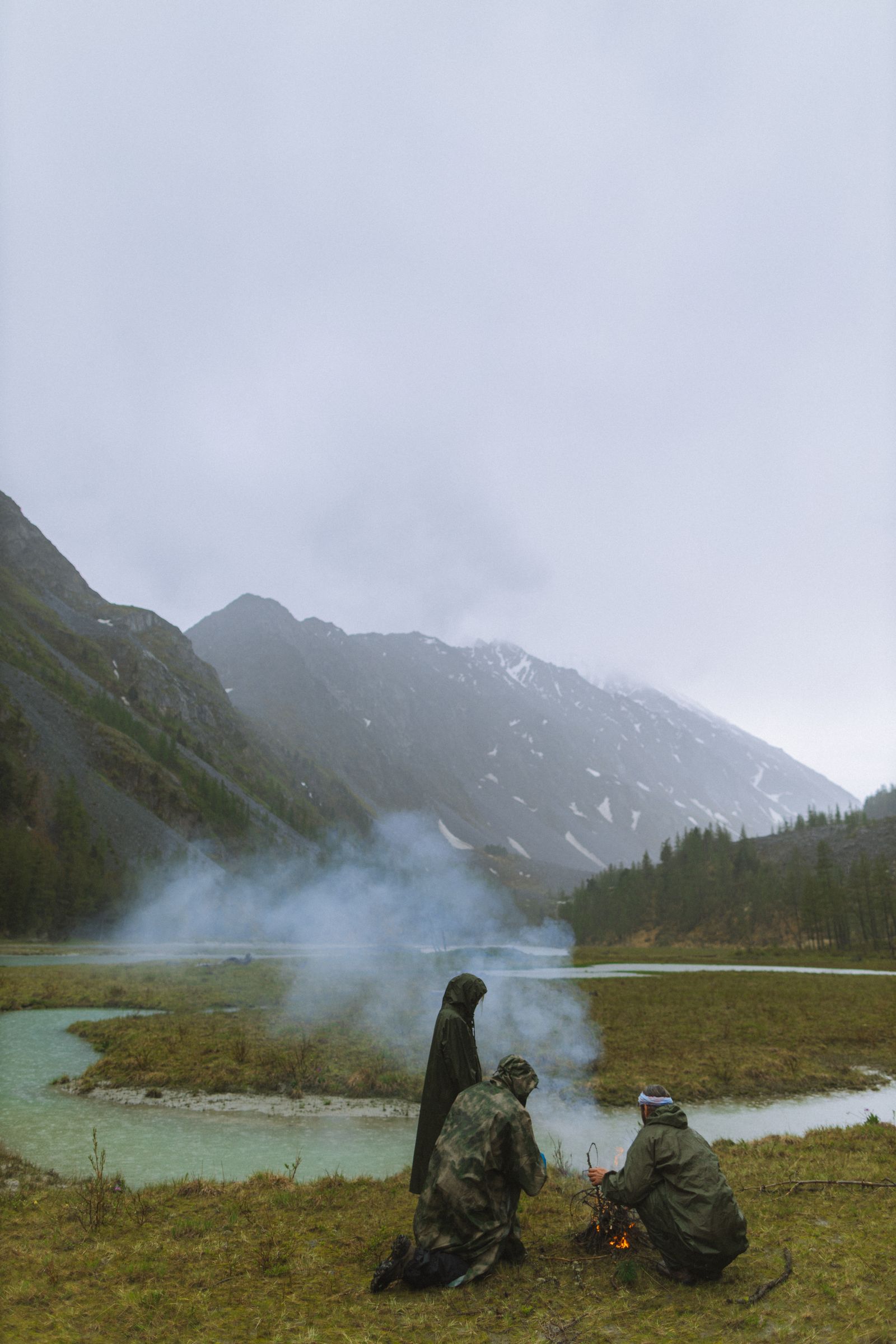
Base camp is where pump filters go to die. You have already hiked in, dropped the packs, got the stove going — and now the group hydration job means sitting there with a sore arm and a reservoir that takes longer to drink than it did to pump. Gravity filters flip that: hang a bag from a branch, walk away, and come back to a few liters of clean water. For camp cooking the payoff is bigger than drinking water — a gravity filter that fills a pot while you’re prepping dinner is the difference between a 40-minute water chore and a 5-minute one when you’re boiling pasta for four and washing dishes after. I run one at every car-camping trip and basecamp now, and the pump stays in the garage.
I set up four of these on actual trips, weighed, timed, and backflushed the lot. Here’s what earned a hang.
Platypus GravityWorks 4.0L — The Camp Workhorse
Check the price of the Platypus GravityWorks 4.0L on Amazon
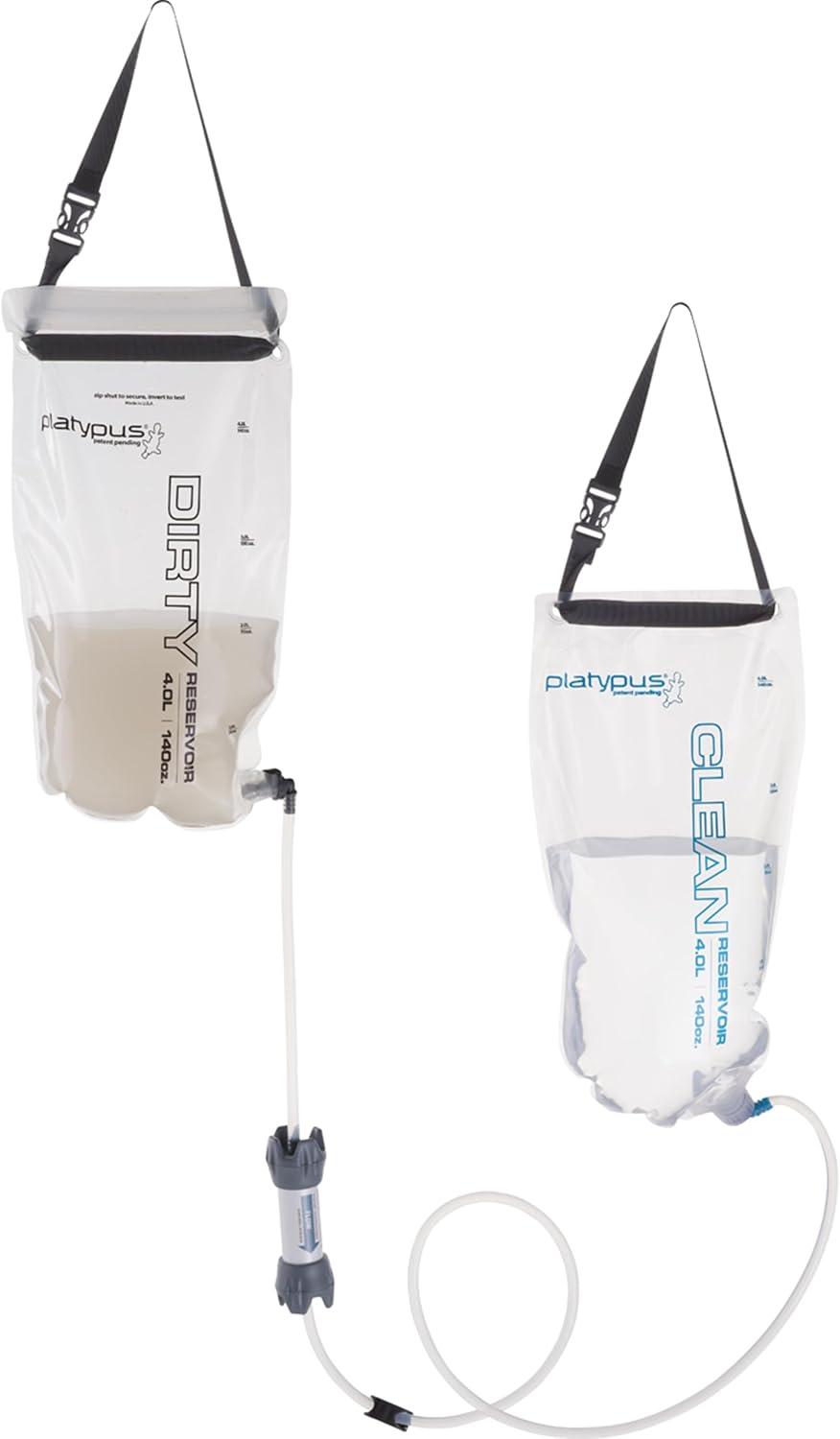
About $100–135 depending on sales · 1.75 L/min flow · 1,500-liter cartridge life · 11.5 oz dry
The GravityWorks is the setup most camp kitchens should actually buy. Two four-liter bags: hang the dirty one, gravity does the work, and the clean bag parks on the table where you can fill cook pots straight from its spigot. A full four liters settles in about two and a half minutes with zero hands involved, and the hollow-fiber cartridge is rated to 1,500 liters — roughly 400 gallons, or a solid year-plus of ordinary weekends before you think about a replacement. It’s also independently tested against EPA/NSF P231-style standards for bacteria and protozoa, which is more than most hang-bags can say for themselves.
Con: the soft bags are the weak point — snag them on granite or sit them on a hot rock and you’re shopping sooner than planned, and replacement cartridges cost real money on top of a filter that isn’t cheap to begin with.
My take: if you filter more than ten liters a trip at camp, this is the default pick and the one I’d repurchase first.
LifeStraw Mission — The Virus-Proof Purifier
Check the price of the LifeStraw Mission on Amazon
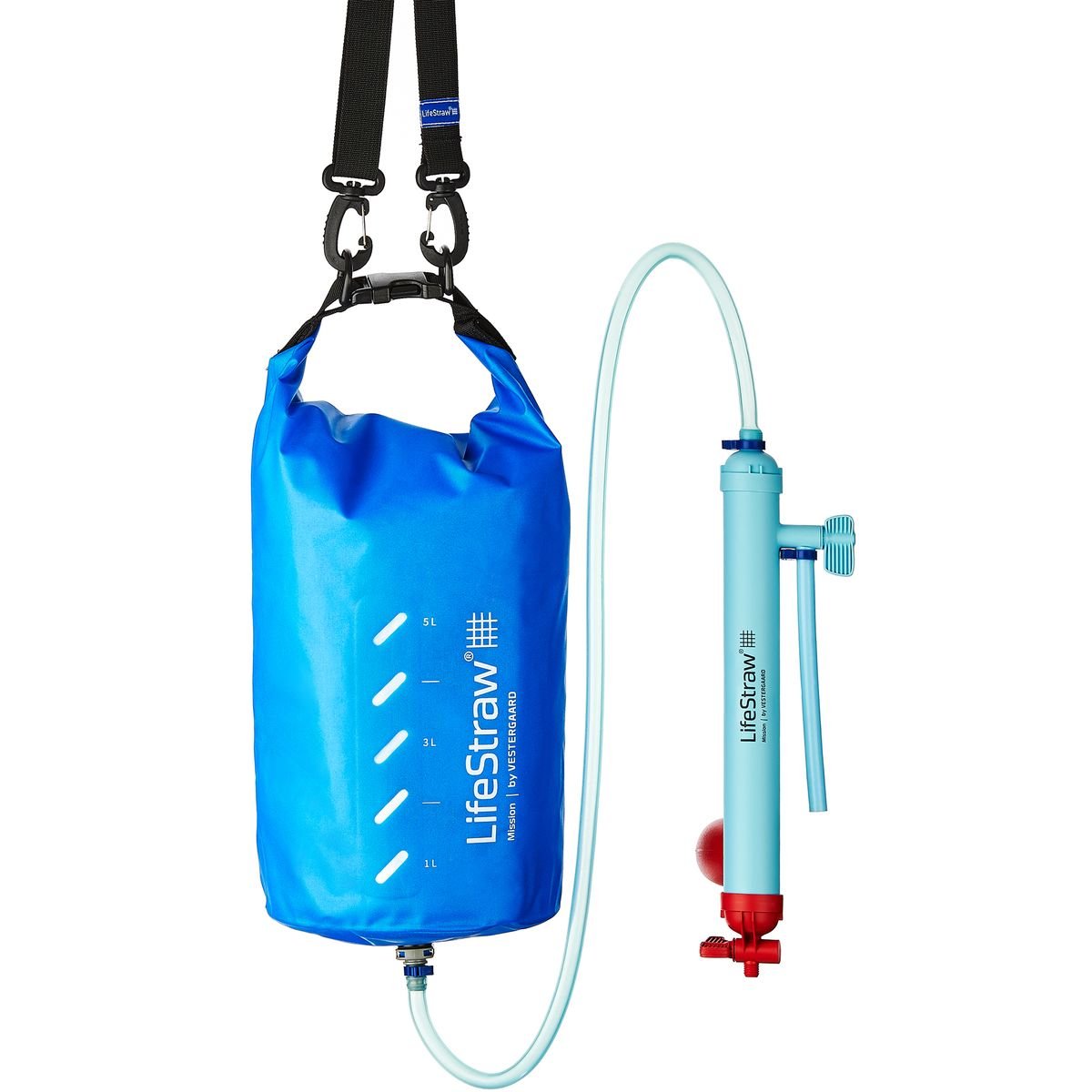
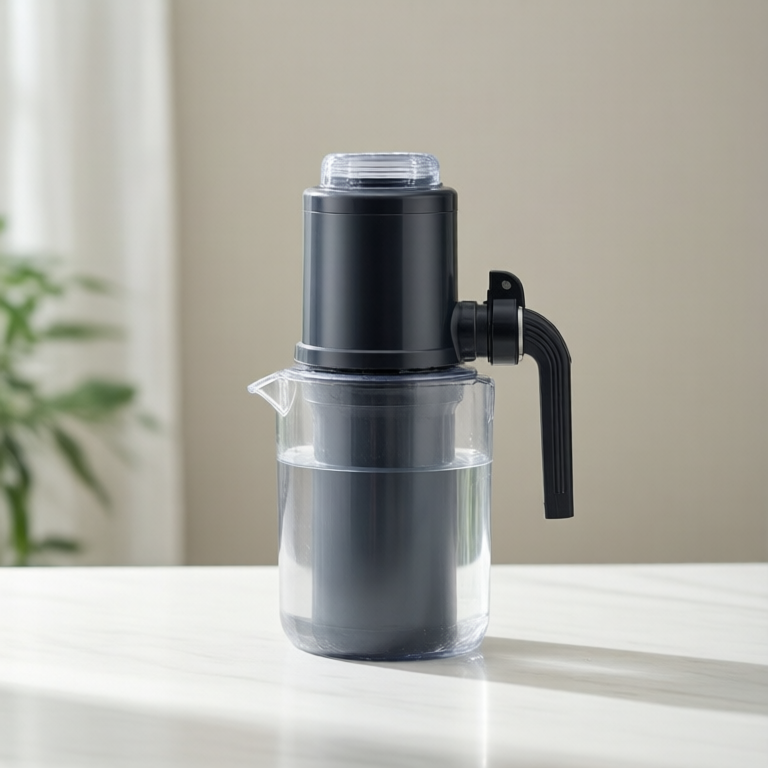
About $100–130 depending on size · 0.02-micron purification — bacteria, parasites, AND viruses · 18,000-liter filter life · ~12 L/hr
Every other filter here removes bacteria and protozoa but waves at viruses without a purifier; the Mission handles all three, because its 0.02-micron membrane is fine enough to physically block viral sizes. That matters if your water source is a popular river with lots of upstream traffic, or you’re filling tanks from questionable rural taps. The 5-liter (or 12-liter) roll-top bag hangs like the rest, and the cartridge is rated to a genuinely absurd 18,000 liters — you’ll retire the bag before the filter quits.
Con: 12 liters per hour is drip-pitcher territory — fine while you cook, maddening when the group shows up thirsty all at once. It’s also purist-slow flow and one of the heavier options at 1.17 pounds plus the bag.
My take: the pick for sketchy sources and emergency kits; skip it if your streams are cold, clean, and lonely.
Katadyn BeFree Gravity — The Fast-Flow Family Name
Check the price of the Katadyn BeFree Gravity on Amazon
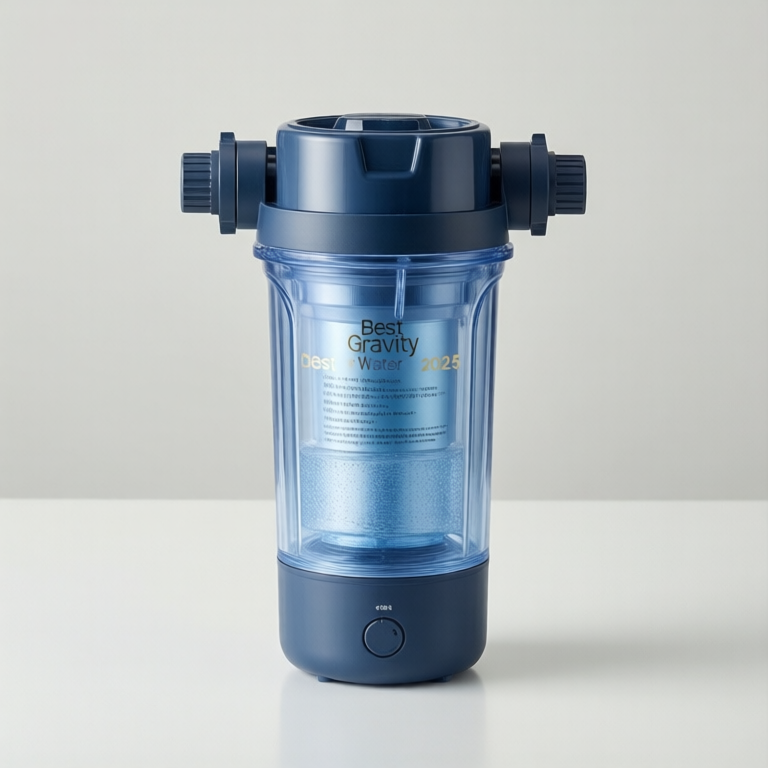
About $75–80 (3L) to $120 (6L) · up to 2 L/min flow · EZ-Clean membrane you swish clean in the field · 1,000-liter cartridge life
Katadyn’s BeFree line is the fastest-hanging filter here — up to 2 liters a minute — and its cleanup trick is the selling point: instead of backflushing with a syringe, you swish the hollow-fiber membrane in water and the sediment falls off. The gravity versions come with a water-level window so you can see the bag level without hauling it down from the branch, and a quick-release valve with auto-stop so dirty water never touches the output end during refills.
Con: 1,000-liter cartridge life is a third less than Platypus before the same replacement expense, and like most fast membranes it prefers reasonably clear water — in silt-heavy rivers expect to clean it mid-trip.
My take: the pick when speed per liter beats margin per dollar — families that never run out of patience with slow drips should hang this one.
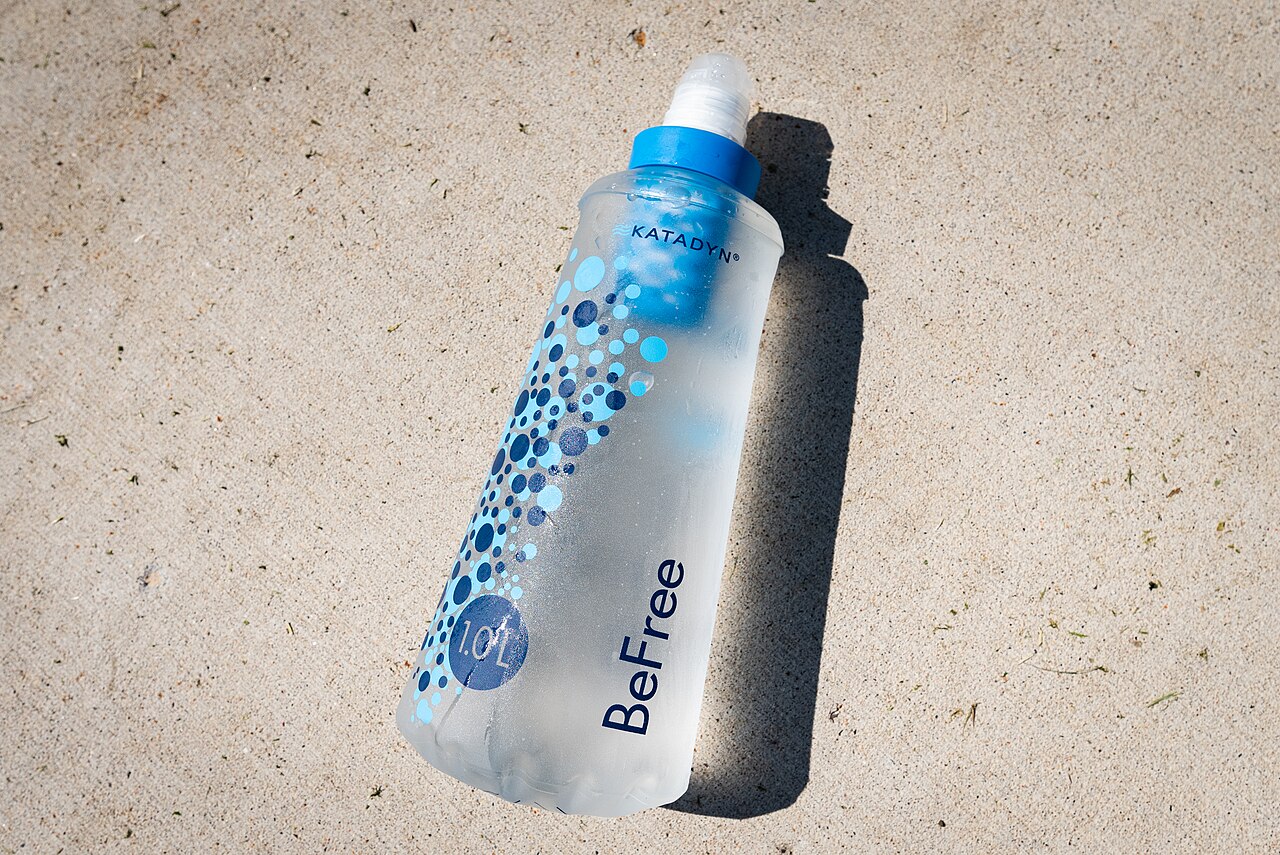
Katadyn BeFree filter bottle — the EZ-Clean membrane the gravity kits use, in bottle form (photo: Matt Zimmerman, CC BY 2.0, via Wikimedia Commons).
MSR AutoFlow XL 10L — The Group Basecamp Move
Check the price of the MSR AutoFlow XL on Amazon
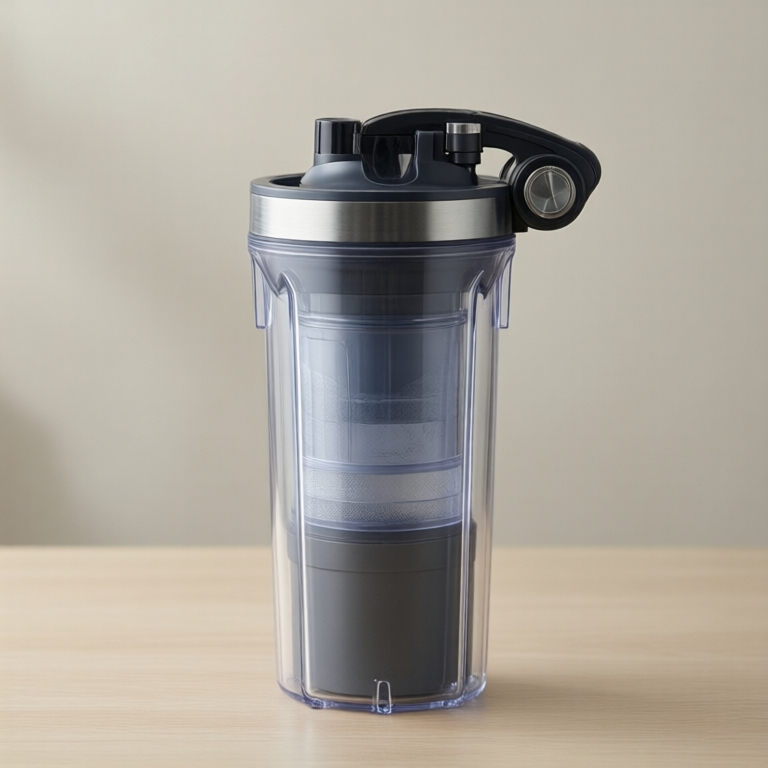
About $140 · 10-liter single-fill reservoir · 0.2-micron hollow fiber · 1,500-liter cartridge life · 12 oz dry
When four or more people need water, the ten-liter AutoFlow XL changes the math from “fill the bag every couple hours” to “fill it twice a day.” One hang of the reservoir is a full day’s water for two people, or a full meal-and-dishes session for six, and it does this at a pump-filter-equivalent flow without anyone babysitting. MSR’s build quality is a step up too — heavier-denier fabric on the reservoir, made in the USA, and the same 1,500-liter cartridge standard as the Platypus.
Con: it’s the priciest filter here and doesn’t include a clean side storage bag, so you’re hanging and decanting rather than serving from a spigot bag — plus ten liters of reservoir is bulkier in the pack when the trip is just you and a buddy.
My take: overkill for couples, exactly right for scout troops, family reunions, and any weekend where “who’s on water duty” starts arguments.
Sawyer One-Gallon Gravity — The Under-50 Budget Pick
Check the price of the Sawyer One-Gallon Gravity on Amazon
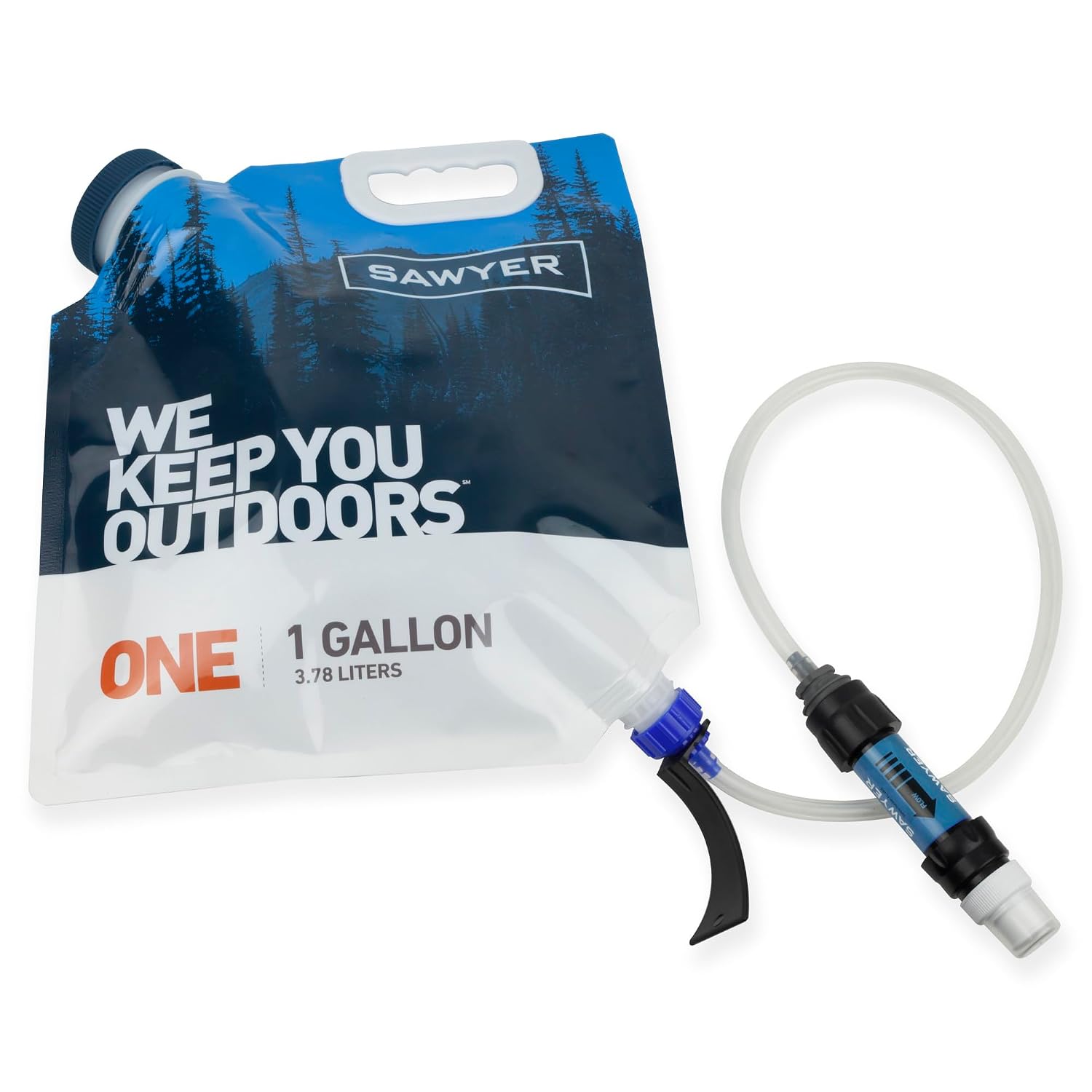
About $42 · dual-threaded MINI filter · 0.1-micron absolute · backflushable for a very long service life
The Sawyer one-gallon gravity kit is 60-plus dollars less than the Platypus and does the same basic hang-and-drip job for one or two people. The MINI filter threads onto standard water bottles as well as the included reservoir, backflushes with the included plunger, and Sawyer’s 0.1-micron absolute rating is one of the strictest in the category. As a camp-kitchen supplement — filtering the water you cook and make coffee with while a bigger bladder holds stock water — it’s hard to beat for the price.
Con: one gallon is a solo or couple unit — it runs dry right when the group needs dishwater — and the MINI’s flow rate trails the bigger hollow-fiber units noticeably.
My take: the budget answer for two-person trips and the right backup filter to leave in the camp box permanently.
One more thing: all five of these ship free with a Prime trial — if you’re stocking camp gear before a trip, the 30-day Prime free trial covers fast shipping for a month and costs nothing. Cancel it before the trial closes and you’re out zero dollars.
Features That Actually Matter (And Ones That Don’t)
Cartridge life over flow rate. A 1,500-liter cartridge at a decent pace beats a 2 L/min filter you replace three times a season. Do the per-liter cost math on replacements before you compare headline speeds.
A shutoff clamp. The systems that clamp the tube (GravWorks, Katadyn’s quick-release) waste zero filtered water and let you stop flow hands-free. It sounds minor until a hot, silted-up hose dangles in the dirt.
Serving from the clean side. A clean bag with its own spigot keeps filtered water separate from the dirty side entirely — the mistake most hang systems make is one bag for both jobs.
“Virus removal” you don’t need. In the US backcountry, hollow-fiber filters handle the real (bacteria/protozoa) threats. Pay for purification like the Mission when sources are trafficked or sketchy — otherwise you’re buying insurance you’re twice as likely not to use.
EPA certification theater. Logos matter less than the underlying standard — NSF P231-style independent testing is the one to look for; marketing terms like “four-stage” tell you nothing about pore size.
What to Spend Where
Weekend couple: Sawyer one-gallon ($42) + a Platypus cartridge upgrade later. Skip everything else.
Family of four, every trip: GravityWorks 4.0L (~$100–135) — the flow and the clean-bag spigot pay for themselves in pasta-and-dishes time alone.
Group of 6+: AutoFlow XL (~$140) — one hang serves the whole camp, and ten liters covers the coffee pot two times over.
Backcountry emergency kit: Mission (~$100–130) — viruses and 18,000 liters in a package that doesn’t care where the water’s been.
If gravity filters are new to you, our backpacking water filter guide covers the pump-and-squeeze side for on-trail days, and the camp water containers guide handles the storage half of the equation once the filter’s done its job.
Gravity Filter Questions, Answered
Can gravity filters handle lake water? Yes — bacteria and protozoa are the threats everywhere, viruses only matter in sewage-touched water. Let silty water settle a few minutes before filling the bag.
Do these freeze? Every membrane here is ruined if it freezes wet — in shoulder-season camps, sleep with the cartridge or dry it overnight.
Can I filter for the dog too? Yes — giardia is as real for dogs as for you; one hang filter covers both species, and camp-cooking water filtered for people is dog-safe too.
GearHound is reader-supported. As an Amazon Associate, I earn from qualifying purchases. That means if you buy through one of the links above, I get a small commission at no extra cost to you. I only recommend gear I’d actually carry into the field.
Related guides
- Best Dog Beds 2026: Orthopedic, Cooling, and Indestructible Options
- Best Dog Cooling Vests and Gear for Hot Weather
- Insect Repellent That Actually Works in the Backcountry
- Dog Camping Essentials Checklist: Everything You Need for Camping with Your Dog
- Best Dog Leashes 2026: From Daily Walks to Backcountry Trails
⛺ Get Your Free Camping with Your Dog Checklist
Join our newsletter and get this free printable plus weekly tips.
Frequently Asked Questions
Do gravity water filters remove viruses?
Not the ordinary ones — standard gravity filters catch bacteria and protozoa, but for viruses you need a true purifier like the LifeStraw Mission, the post's virus-proof pick.
Are gravity water filters better than pump filters for base camp?
Yes for camp — you hang a bag from a branch, walk away, and come back to several liters of clean water, instead of standing there pumping with a sore arm while the whole group waits.
What is the best budget gravity water filter under $50?
The Sawyer One-Gallon Gravity system is the under-50 budget pick that still delivers hands-free filtered water for drinking and cooking.
Liked this guide? Get the next one in your inbox — the camp packing checklist is free too.
✓ You're in — check your inbox.
No spam. Unsubscribe anytime. We never share your email.
Prices move fast. Start your Amazon trip from our Shop & Support page and your purchases support GearHound at no extra cost to you.