This article contains affiliate links. We may earn a commission from qualifying purchases.
Some content on this site is AI-assisted and reviewed by our editorial team.
The campfire is the first thing to go when the ranger posts the fire-ban sign, and late-season trips are when it happens most. October rain soaks the fire ring, November closures lock it entirely, and the family that drove three hours to camp eats cold sandwiches instead of real dinner. A portable propane grill fixes that — but only if it can actually hold 500 degrees when the morning air is 35 and the wind is cutting through the picnic shelter. I’ve cooked on five of the most-recommended portable gas grills in cold weather, and the spread between “sears a steak” and “barely warms a bun” is wider than the price range suggests.
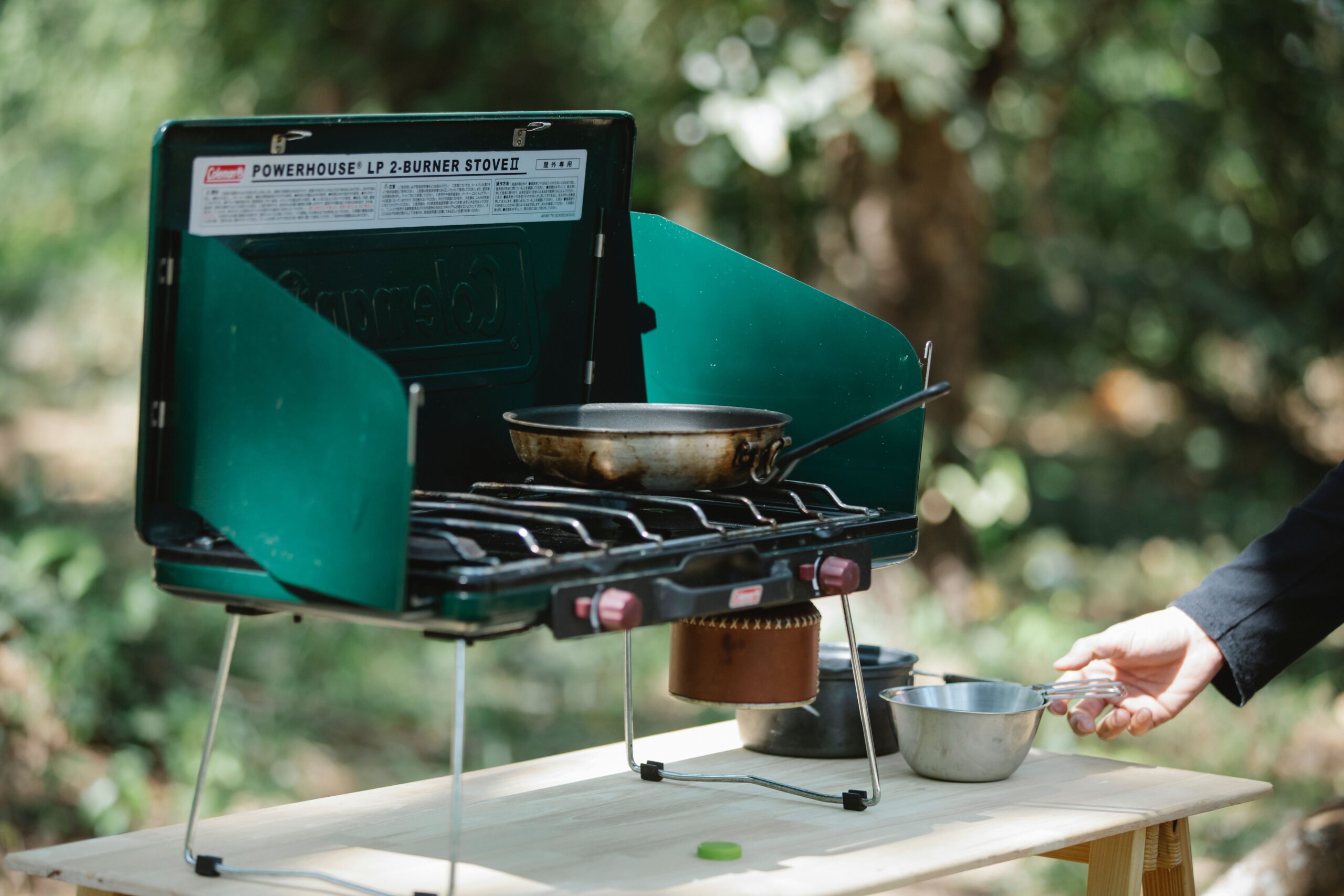
I tested each grill on a 38-degree morning with a 16-ounce propane cylinder, cooking burgers and a cast-iron skillet of eggs. Here’s what actually happened.
Weber Q 1200 Gas Grill — The Tabletop Tank

The Weber Q 1200 Gas Grill is the cast-aluminum clamshell that hits nearly 600 degrees in under ten minutes, with fold-out side tables and porcelain-enameled cast-iron grates that food genuinely does not stick to. At about $290, it’s the most expensive tabletop here, and the 189-square-inch cooking surface is small for the price — two burgers and a couple of hot dogs, not a family meal. The cast-aluminum body holds heat better than any thin-steel grill in wind, which is why it sears in conditions where the others are still preheating.
My take: The best tabletop grill made, if you cook for two and care about sear quality over capacity.
Coleman RoadTrip 285 Stand-Up Propane Grill — The Three-Burner Stand-Up

The Coleman RoadTrip 285 Stand-Up Propane Grill gives you three separately controlled burners across 285 square inches, so you can sear burgers on one end and hold kabobs on the other without nuking everything at the same temperature. At about $250, it’s the family-sized pick that folds into a wheeled cart. The honest problem: it’s top-heavy, and raising the grill body onto the stand alone is a two-person job if you value your back. The burners also struggle to hold 500 degrees simultaneously in real wind — the outer burners drop 75-100 degrees when the wind picks up.
My take: The right call for a family of four who want zone cooking, as long as two adults are available to set it up.
Weber Traveler Portable Propane Grill — The One-Hand Fold Cart

The Weber Traveler Portable Propane Grill folds into its own wheeled cart in one motion and cooks like a full-size grill — it held 550 degrees on the same 38-degree morning where the Coleman was fighting wind. At about $450, it’s the most expensive option here, and it’s heavy: 45 pounds in the cart, which rolls fine on pavement but is a workout on gravel. It’s also one-zone only — no independent burner control, so everything cooks at the same temperature whether you want it to or not.
My take: The easiest transport-to-table grill made, worth the money if you camp often enough to justify it and don’t need zone cooking.
Blackstone 17-Inch Omnivore Tabletop Griddle — The Flat-Top Crossover

The Blackstone 17-Inch Omnivore Tabletop Griddle is the tool that cooks breakfast and smash burgers when a grate grill is the wrong instrument. At about $120, it’s the cheapest option here and the most versatile — eggs, bacon, pancakes, stir-fry, and burgers all work on the flat top. The honest catch: the seasoned steel surface needs to be dried thoroughly after cooking or it rusts in the trunk between trips, and there’s no lid, so wind cools the surface fast and you can’t roast or bake anything.
My take: The best $120 you can spend for camp breakfast, and a legitimate dinner tool — but own a grate grill too if you want to cook steaks or chicken with real sear lines.
Cuisinart CGG-306 Chef’s Style Portable Grill — The Value Dual-Burner
The Cuisinart CGG-306 is the value dual-burner pick at about $140 — two burners with honest output and a nonstick grate surface for half the Weber Q money. It’s fine for most camps and puts out enough heat for burgers and dogs. The weak point is wind protection: the clamshell is shallower than the Weber, and crosswinds drop the cooking temperature 100 degrees in seconds. If your campsite has a windbreak, it’s a solid budget choice. If it doesn’t, spend the extra on the Weber Q or carry a foil windscreen.
My take: The smart pick for sheltered campsites where wind isn’t a factor and the budget is under $150.
Want free shipping on your camp grill? Try Amazon Prime free for 30 days — two-day delivery on grills, propane, and every piece of camp kitchen gear you need before the next trip.
Features That Actually Matter (And Ones That Don’t)
Cast-aluminum body: Retains heat in wind far better than thin steel. This is the single biggest reason the Weber Q outperforms cheaper grills in cold weather — it’s not the BTUs, it’s the thermal mass.
Burner zoning: Independent burner control matters more than total BTU output. The Coleman’s three zones let you hold food warm while searing — a one-zone grill forces you to cook everything at one temperature.
Transport mechanism: A grill you can’t easily move from car to table doesn’t get used. The Weber Traveler’s one-hand fold is genuinely better than anything else here, and worth paying for if you camp more than six times a year.
Lid height: A tall lid lets you roast chicken and bake. The Blackstone has no lid at all; the Weber Q and Traveler have enough clearance for a small whole bird.
Igniter reliability: Push-button piezo igniters fail after a season of camp dust. Carry a long lighter as backup — every grill here has a manual ignition port.
What to Spend Where
- Under $150: The Blackstone griddle at $120 is the value pick — different tool than a grate grill, but genuinely more useful for breakfast and quick dinners. Add the Cuisinart CGG-306 if you need a grate grill under $150.
- $250-$300: The Weber Q 1200 if you cook for two and want the best sear, or the Coleman RoadTrip 285 if you need family capacity and zone cooking.
- $400+: The Weber Traveler if you camp often enough to justify the transport convenience and want full-size grill performance in a portable package.
Keep reading: if you’re building a cold-weather camp kitchen, check out our propane tent heater comparison and our guide to camp kettles that boil for two. For deal timing, our Black Friday camping deals guide tracks which gear actually drops in price.
GearHound is reader-supported. As an Amazon Associate, I earn from qualifying purchases. That means if you buy through one of the links above, I get a small commission at no extra cost to you. I only recommend gear I’d actually carry into the field.
⛺ Get Your Free Camping with Your Dog Checklist
Join our newsletter and get this free printable plus weekly tips.
Frequently Asked Questions
Can you use a portable gas grill during a fire ban?
In most jurisdictions, yes — portable propane grills with a shut-off valve are permitted during fire bans because they have contained fuel and no open-flame contact with the ground. Always check the specific fire restriction level for your area, as Stage 2 bans sometimes prohibit all open-flame cooking outside developed recreation sites.
What size portable grill feeds a family of four?
A cooking surface of 200 to 285 square inches handles four burgers plus sides comfortably. The Weber Q 1200 at 189 square inches is tight for four; the Coleman RoadTrip 285 or Weber Traveler are the better family picks.
Do portable gas grills work in cold weather?
Yes, but expect longer preheat times and lower peak temperatures. A 16-ounce propane cylinder loses pressure below 40 degrees, so full 500-degree sears take 15 minutes instead of 10. Cast-aluminum bodies like the Weber Q retain heat better than thin steel in wind.
Liked this guide? Get the next one in your inbox — the camp packing checklist is free too.
✓ You're in — check your inbox.
No spam. Unsubscribe anytime. We never share your email.
Prices move fast. Start your Amazon trip from our Shop & Support page and your purchases support GearHound at no extra cost to you.