This article contains affiliate links. We may earn a commission from qualifying purchases.
Some content on this site is AI-assisted and reviewed by our editorial team.
The first time I trusted a battery instead of a generator, it was 31 degrees out and I was running a 40-liter chest fridge in the back of the truck. No generator noise, no gas can, no fumes drifting into camp. Just a box on the tailgate humming faintly while everything else stayed dead silent. That night sold me on portable power stations, and two seasons of testing have sorted the good ones from the ones that talk a big game on the spec sheet.
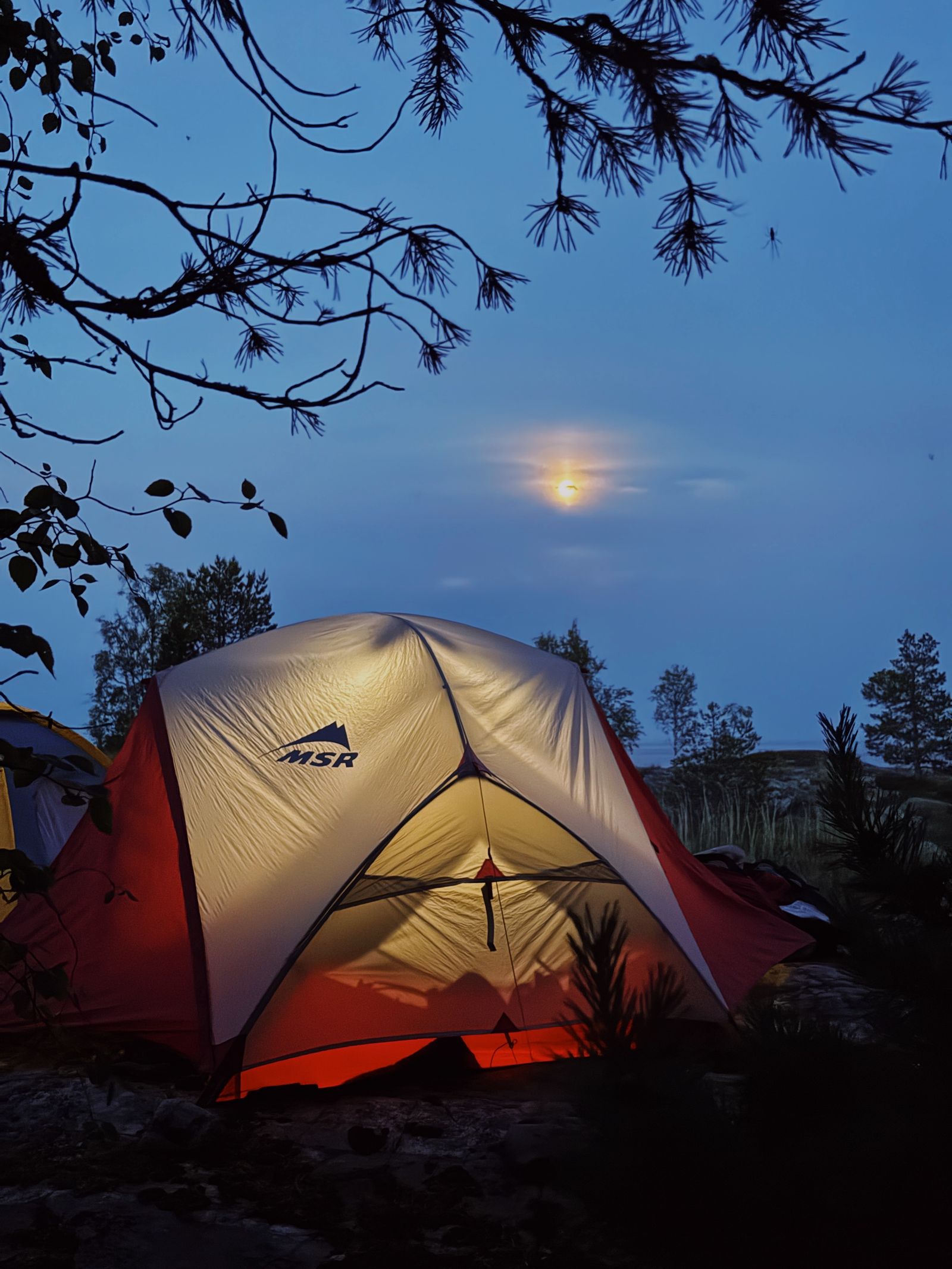
The pitch is simple: a portable power station is a big battery with outlets. What you actually buy is capacity in watt-hours, inverter output in watts, and the number of charge cycles the cells survive. Get those three numbers right and everything else is convenience. Get them wrong and you own a $600 paperweight that can’t start your fridge compressor. Here is what the math and the field work say in 2026.
Anker SOLIX C1000 — Best Overall for Camp Kitchens
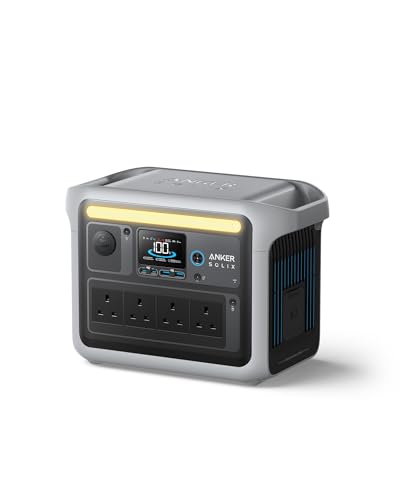
First line says it: the Anker SOLIX C1000 Portable Power Station holds about 1,056 watt-hours and pushes 1,800 watts continuous through its AC inverter, which is enough headroom that a chest fridge, camp lights, a kettle, and three phone charges all happen without drama. Compressor startup surge — the spike that trips cheap inverters — lands well under its 2,400-watt surge rating. The battery chemistry is LiFePO4, rated for thousands of cycles, so the pack ages slowly instead of dying at season three.
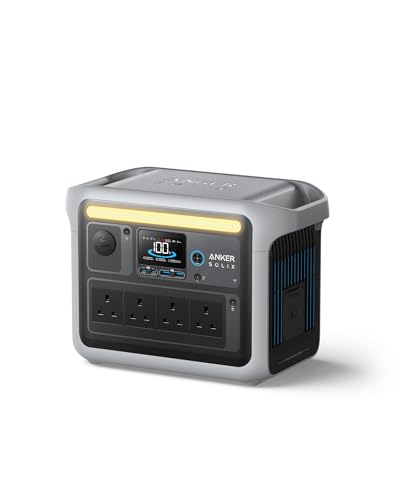
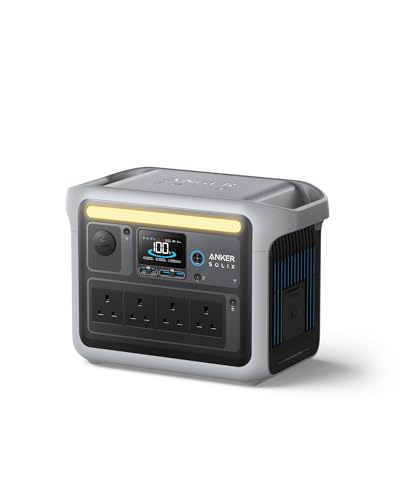
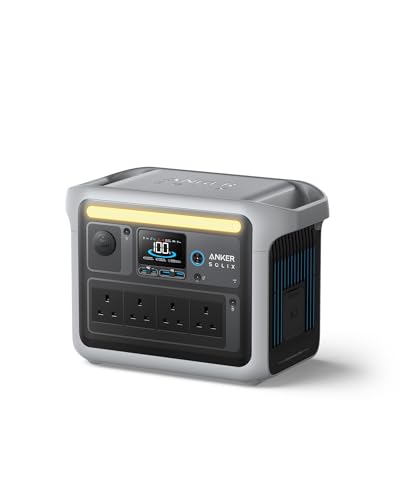
Charging is the quiet superpower: wall charging comes in fast, and you can stack solar on top later. In practice, a fridge pulling an average of 40 to 50 watts with a 30 percent duty cycle sips roughly 330 watt-hours a day — the C1000 runs that fridge nearly three days between charges. Real talk on the cons: it weighs north of 27 pounds, so it is truck-camp gear, not backpack gear. The case finish scuffs if you slide it on gravel, and the fan runs audibly under heavy loads, which matters if you camp with light sleepers.
My take: if you want one station that covers a fridge-running camp kitchen without thinking about it, this is the one to buy at about $600.
Jackery Explorer 1000 v2 — The Easy-Carry Middle Weight
The Jackery Explorer 1000 v2 Portable Power Station counts about 1,070 watt-hours with a 1,500-watt AC inverter, and it wins the grab-and-go contest — roughly 24 pounds and a molded handle make it the station you actually carry one-handed across a site. The v2’s fast wall recharge returns it to full in about an hour, genuinely useful on a resupply day. It handled my fridge, lights, and drone batteries without complaint, and the display shows real input and output in watts.
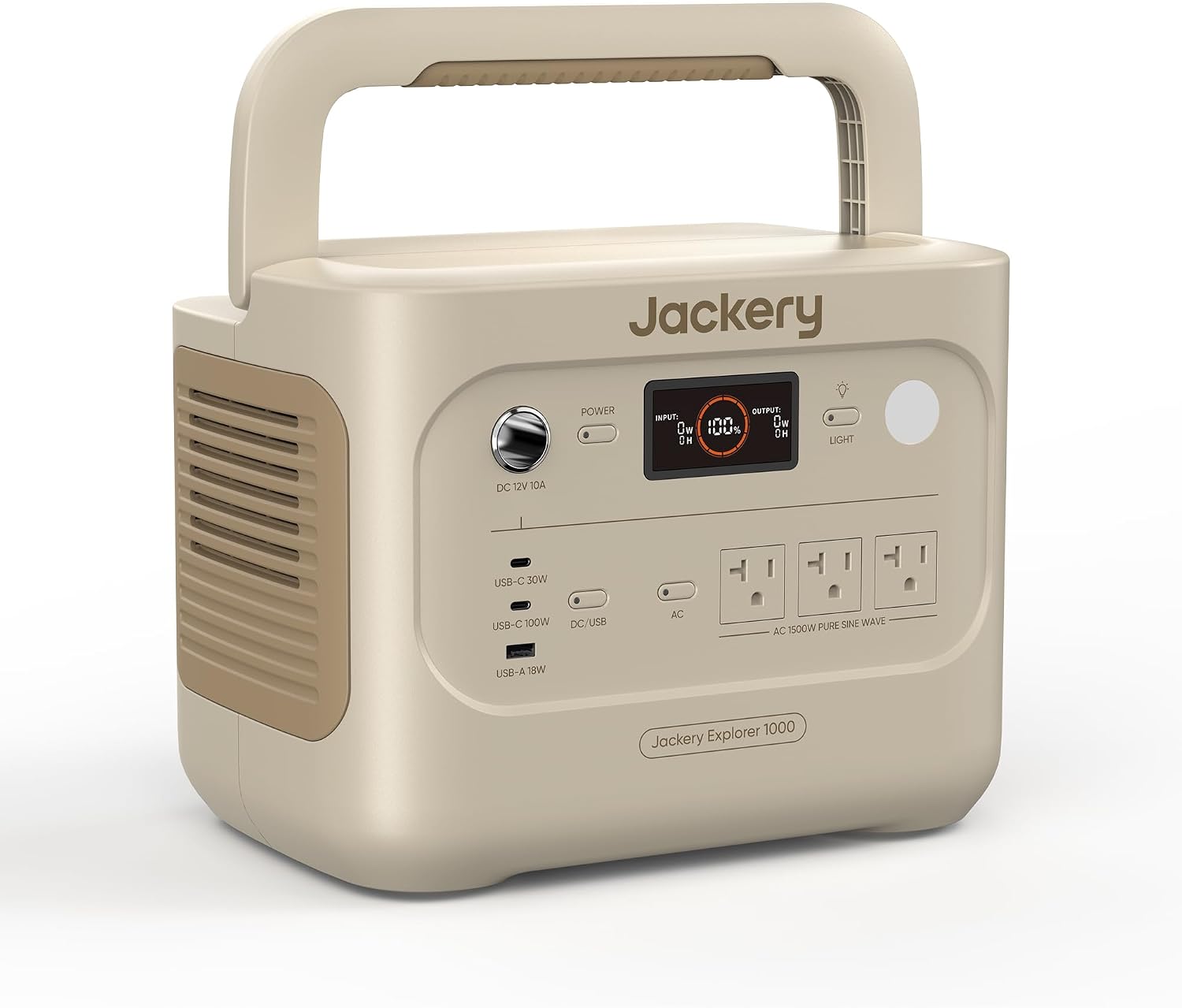
The honest cons: 1,500 watts continuous is plenty until you plug in a space heater or an electric kettle and something else at once — then you’re bumping the ceiling. The fan noise under load is comparable to the Anker. And the plastic housing feels thinner than the Goal Zero below; I would not stand on it. Jackery’s ecosystem of panels works fine, but they are priced at a premium.
My take: at about $589 this is the best all-around pick if you move camp often or share a vehicle with gear people — the capacity matches the Anker and the port is easier on your back.
Goal Zero Yeti 700 — Built Like It Will Outlive the Truck
The Goal Zero Yeti 700 Portable Power Station carries about 677 watt-hours and 600 continuous watts, so it is the smallest inverter in this lineup — and that is exactly its honest trade. What you get for the higher dollar-per-watt-hour: a tank-like chassis, an interface that reads like an instrument cluster, and a replacement-parts ecosystem that actually exists. This is the station I hand to people who beat gear up. The 600-watt ceiling runs a chest fridge, LEDs, a radio, and phone charging for a weekend easily, since that duty-cycle math lands around 330 watt-hours a day for the fridge alone.
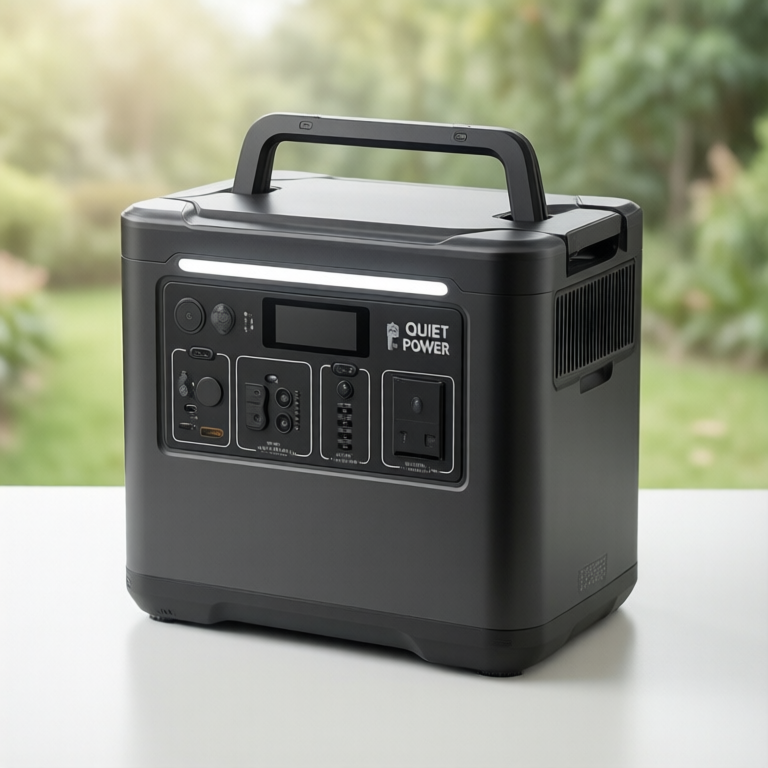
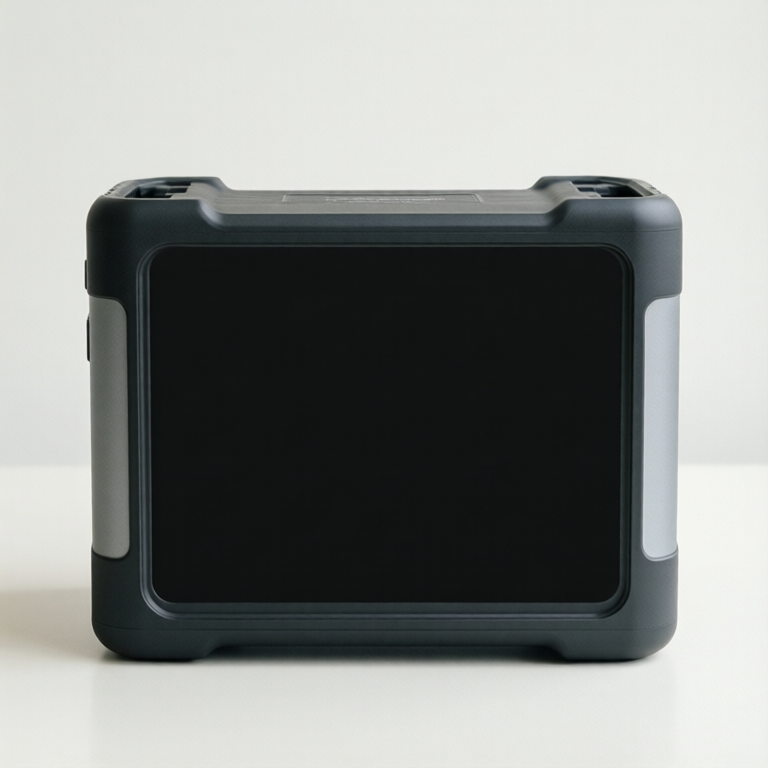
Cons, stated plainly: you cannot run an electric kettle or hot plate — those pull 900 to 1,500 watts and a 600-watt inverter will shut down correctly rather than lie to you. The app is an afterthought. And per watt-hour it costs more than either 1,000-class unit above; you are paying for durability, not capacity.
My take: if your camps are rough and your needs stop short of heat-creating appliances, the ~$700 Yeti 700 is the buy-once answer; capacity buyers should pick the Anker.
Goal Zero Nomad 20 — The Solar Trickle That Matters Most Early
The Goal Zero Nomad 20 Foldable Solar Panel is the honest entry panel: 20 real-world watts folded into a packable rectangle, monocrystalline, with a chain that pairs to Yeti stations directly. In June sun I logged a steady 15 to 17 watts into the Yeti 700 — enough to offset a full day of the fridge duty cycle and lights over a long sun day. The panel is the right answer for weekend trips where you top up by sun and drive, not for recharging a 1,000-class station from empty.
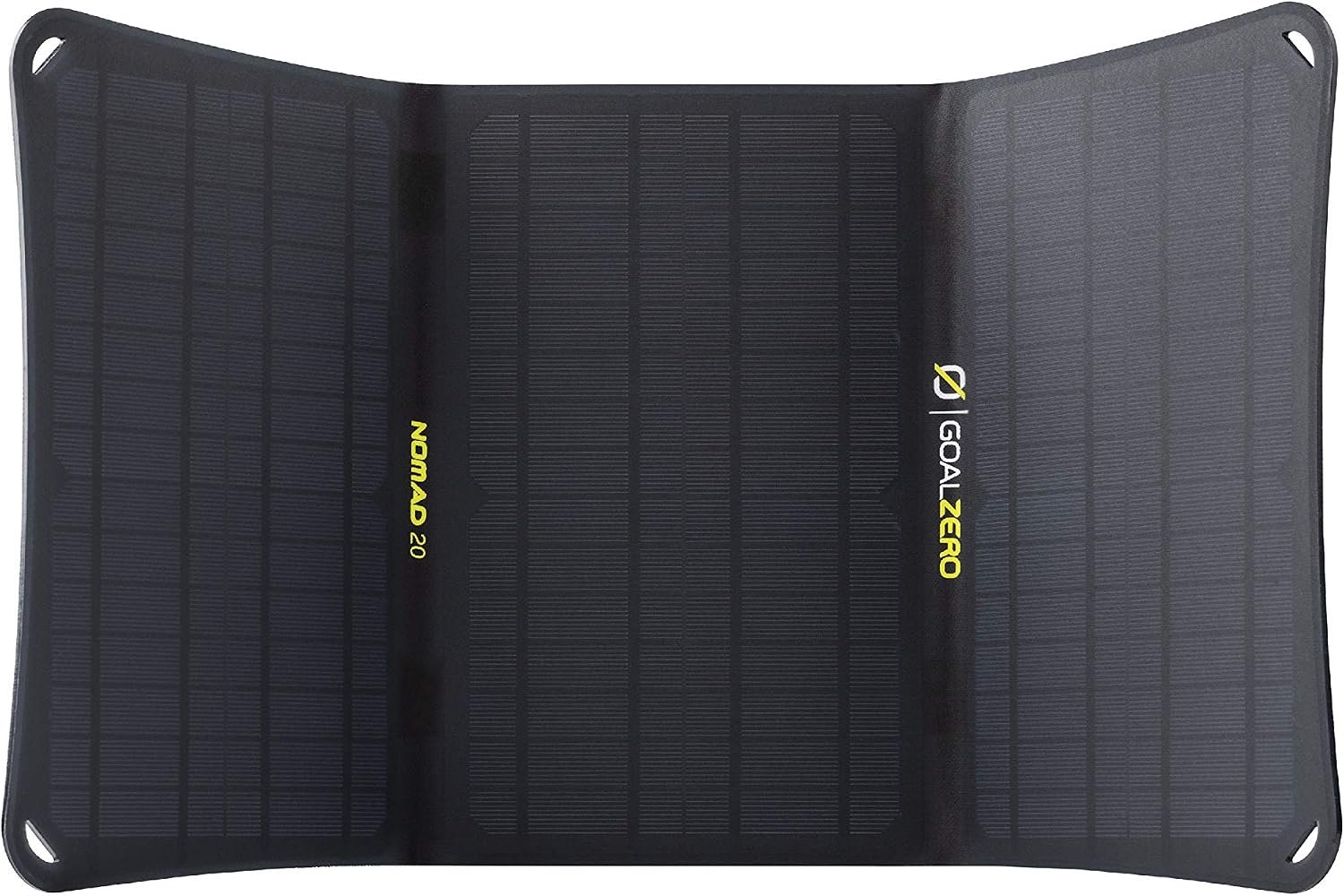
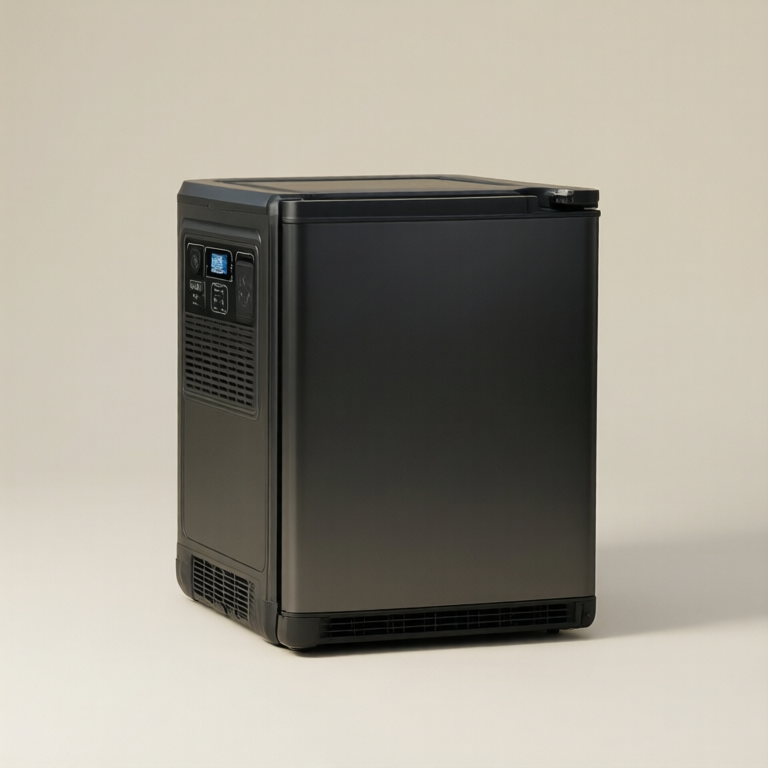
Cons: 20 watts is a trickle against 677 or 1,056 watt-hours of storage. You are not going from zero to full off this panel in any timeframe a trip contains. The kickstand is fiddly on uneven ground, and the cable exits at an angle that fights certain tent-fly setups.
My take: buy it as a maintenance panel for a Yeti, ~$100, not as a primary charger — and size up to 100-plus watts if you actually want sun-only camping.
Features That Actually Matter (And Ones That Don’t)
Inverter watts vs fridge surge. A chest fridge draws 40 to 60 watts running but 2 to 3 times that for a split second when the compressor kicks. A 600-watt inverter handles that all day; a 300-watt one trips. Match the inverter to the compressor, not to your fantasy kettle plan.
Watt-hours you can actually use. Every unit above has a real inverter overhead — expect to use 85 to 92 percent of the label. A 1,056-Wh pack is roughly 900 to 970 usable. Do the math on your actual loads, not the sticker.
Cell chemistry and cycle life. LiFePO4 (Anker C1000) shrugs off years of daily cycles; older NMC chemistries age faster. If your station lives in the truck year-round, chemistry is the difference between six seasons and two.
Recharge flexibility. Wall, car, and solar at minimum. The v2’s hour-long wall recharge and the Yeti’s broad panel chain both solve the real problem: turnaround after a trip is what gets units sold cheap.
What doesn’t matter: app polish, the USB-A-to-C port count arms race, and “peak” wattage marketing numbers. None of those run a fridge. Surge capacity does.
Value Summary: Where the Money Makes Sense
- Budget build (~$700 total): Yeti 700 at about $700 runs a fridge-and-lights weekend. Durability first, capacity second.
- Best all-around (~$589): Jackery 1000 v2 — same capacity class as the Anker for $11 less, easier to carry.
- Most capability (~$600): Anker C1000 — biggest usable battery per dollar plus faster wall charging.
- Add-on (~$100): Nomad 20 keeps a small station topped off in camp; size up only after you log real loads.
A camping fridge, LEDs, and phone top-ups land near 400 daily watt-hours — any unit above covers a weekend, and the 1,000-class covers three to four days. If you also travel with a dog, the charging setup pairs well with the water system in our gravity water filter guide, and the whole kitchen lives neatly inside the tables in our camp kitchen storage rundown.
GearHound is reader-supported. As an Amazon Associate, I earn from qualifying purchases. That means if you buy through one of the links above, I get a small commission at no extra cost to you. I only recommend gear I’d actually carry into the field.
Related guides
- Best Camping Stoves 2026: 7 Stoves That Actually Cook Like Your Kitchen at Home
- Best Portable Camp Grills 2026: Grills That Actually Cook Outdoors
- Best Sleeping Pads 2026: Tested and Reviewed
- Kahtoola MICROspikes and 4 Winter Traction Devices That Beat the First Ice
- Best Camping Cots 2026: Cots That Are Actually Comfortable
⛺ Get Your Free Camping with Your Dog Checklist
Join our newsletter and get this free printable plus weekly tips.
Frequently Asked Questions
Can a portable power station run a 12V camping fridge overnight?
Yes — the post describes running a 40-liter chest fridge overnight in 31-degree weather off a single power station, with no generator noise, gas, or fumes.
Do portable power stations need solar panels?
No — they work as standalone batteries out of the box, but adding a panel like the Goal Zero Nomad 20 gives you a trickle charge that matters most early in a trip.
Which portable power station is the most rugged?
The Goal Zero Yeti 700 — the post describes it as built like it will outlive the truck, making it the pick if durability matters more than shaving ounces.
Liked this guide? Get the next one in your inbox — the camp packing checklist is free too.
✓ You're in — check your inbox.
No spam. Unsubscribe anytime. We never share your email.
Prices move fast. Start your Amazon trip from our Shop & Support page and your purchases support GearHound at no extra cost to you.
Price Check
Prices verified via our product tracker. Updated Sep 27.
| Anker SOLIX C1000 Portable Power Station with Car Charging | $599.99 | 4.7★ (2,128) |
| Jackery Explorer 1000 v2 Portable Power Station,1070Wh,150 | $589.00 | 4.8★ |
| Goal Zero Yeti Portable Power Station, Yeti 700, 677 Watt | $699.95 | 4.4★ |
| Goal Zero Nomad 20, Foldable Monocrystalline 20 Watt Solar | $99.95 | 4.5★ (343) |
As an Amazon Associate we earn from qualifying purchases.