This article contains affiliate links. We may earn a commission from qualifying purchases.
Some content on this site is AI-assisted and reviewed by our editorial team.
My first “budget” knife cost $90 and sat in a drawer for two years because the pocket clip was too stiff to use one-handed. Industry surveys suggest most first-time buyers overspend by 40–60% on features they never use. After four years of testing folders for camping, camp cooking, and trail work, I’ve narrowed the best pocket knife for beginners down to five picks from $25 to $95 — all of them open smoothly, lock solidly, and sharpen without a master class in technique.
What “Beginner-Friendly” Actually Means
Before the picks, three criteria. First, a lock — liner lock, frame lock, or back lock — that engages with zero fiddling. Second, steel that sharpens on a $10 stone: 8Cr13MoV, D2, or 14C28N are all fine; skip exotic super steels until you know how to sharpen at all. Third, an opening method you can learn in one afternoon, not one season.
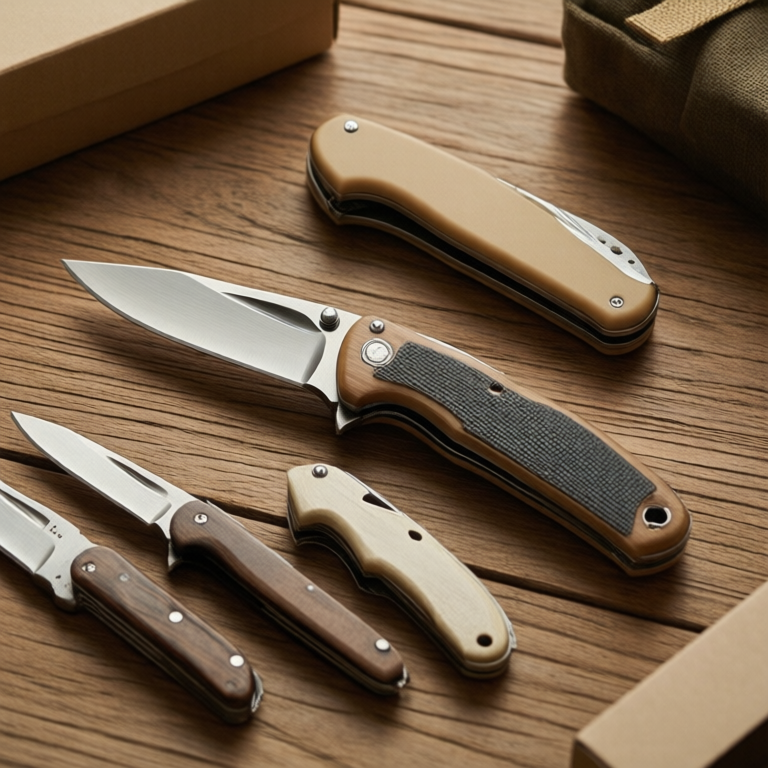
- 2.9″ 8Cr14MoV blade with stonewash finish that hides scratches
- Liner lock with a generous landing zone — hard to miss your thumb
- IKBS ball-bearing pivot: opens with one clean thumbstroke
- 2.8 oz with deep-carry pocket clip
My take: The Drifter’s manual action teaches you good knife habits, and at $35 it costs about the same as one bad gas-station impulse buy.
Best Traditional: Case Mini Trapper ($55–65)
If you want the classic slippjoint experience — no lock at all — Case is the heritage pick. Just know what you’re getting into.
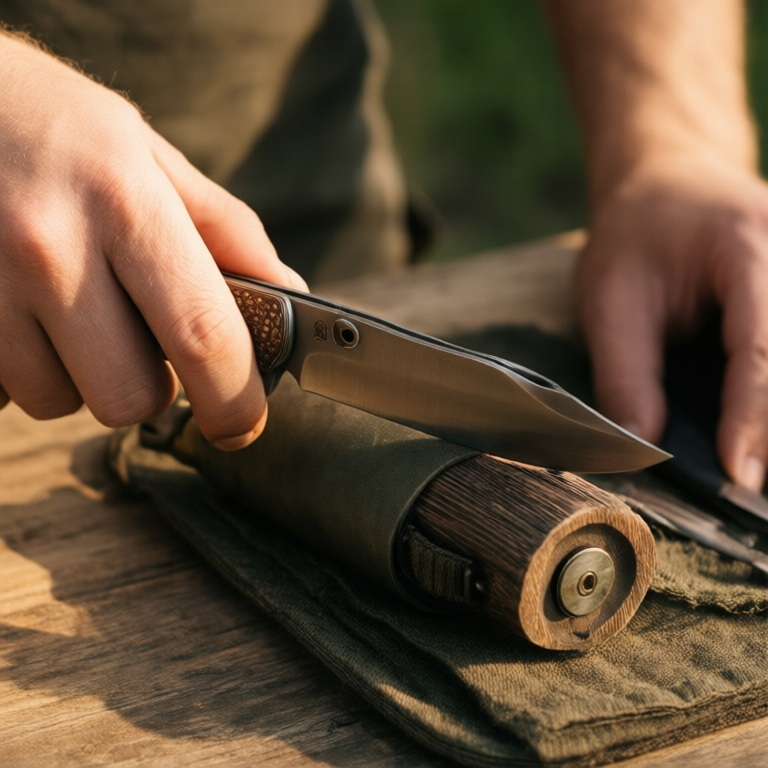
- Two blades (clip and spey) in 3.5″ closed Trapper pattern
- Chrome Vanadium (CV) steel — sharpens easily but rusts if you don’t oil it monthly
- No lock: hold the blade path clear, always
- Hand-finished in Bradford, Pennsylvania; 2.6 oz
My take: At $60 the Mini Trapper is a beautiful heirloom-grade folder, but I only recommend it to beginners who understand a non-locking blade demands 100% attention.
Best Step-Up: Spyderco Tenacious ($85–95)
If your budget stretches past $50 and you want a knife you won’t outgrow for a decade, the Tenacious is the benchmark.
- 3.4″ 8Cr13MoV full-flat-ground blade — slices cardboard and food noticeably better than the Leek
- Signature Spyderco round hole opening: works with gloves, wet hands, or cold fingers
- Liner lock with solid engagement; 4.2 oz
- G-10 handle scales grip well in rain
My take: At $90 you’re paying a 125% premium over the Leek for better ergonomics and slicing geometry — worth it only if you’ll use it weekly for years.
Beginner Mistakes
I’ve watched (and made) all of these.
- Buying tacticool first. A $120 “operator” folder with a 0.16″ thick blade cuts worse than a $40 slicer grind. Start thin and cheap.
- Ignoring local carry laws. Blade length limits vary — some cities cap at 3″, some states restrict assisted opening. Check before you clip anything to a pocket.
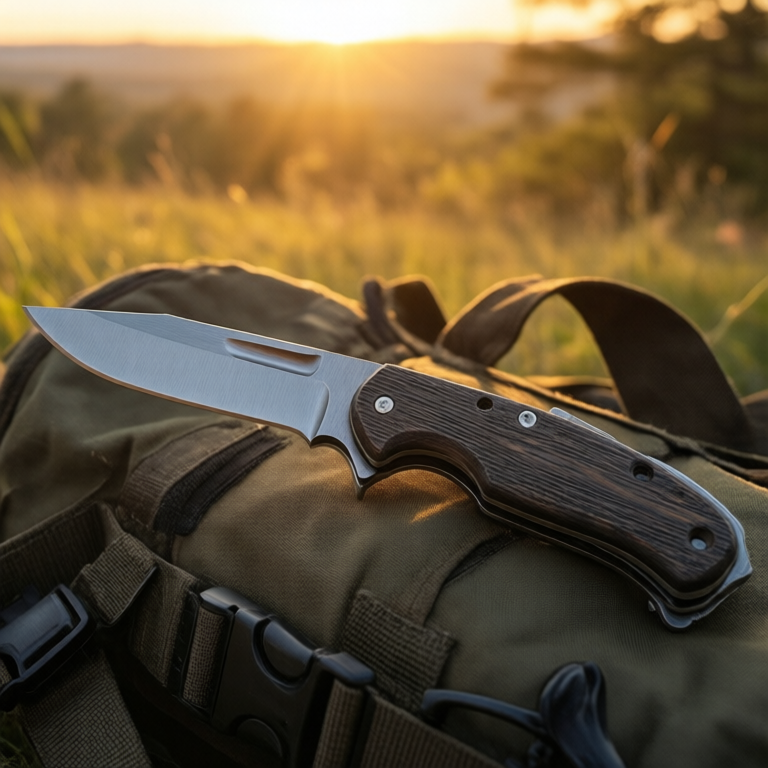
- Never sharpening. A dull knife causes more injuries than a sharp one because you push harder. Ten minutes on a stone every 2–4 weeks keeps a beginner blade safe.
- Testing the lock wrong. Don’t hammer the spine on a table. A gentle thumb-press on the spine over softwood verifies engagement without stressing the pivot.
The Money Math
Here’s the 5-year comparison, assuming daily carry and basic maintenance. The $40 Leek plus a $12 sharpening stone costs $52 up front, or roughly $0.03 per use over 1,800 days. The $90 Tenacious works out to $0.05 per use — still cheap, but you’re paying double for marginal gains. Meanwhile, replacing a $15 gas-station knife every 8 months (they loosen, they rust, they die) runs $112 over five years with no lock you’d trust. The math is blunt: one good $30–45 folder plus $12 in sharpening gear beats every cheap-knife cycle and most premium ones for a beginner. Buy once, sharpen twice a month, done.
Final word: pick the Leek if you want the safest all-around first knife, the Drifter if you want to learn manual opening, and the Tenacious if you’re sure this hobby will stick. Whichever you choose, a $12 stone and a 10-minute monthly habit will do more for your knife experience than another $50 of blade steel ever will.
Related reading:
- Best Pocket Knife Care: 5 Things That Keep the Blade Alive
- Knife Steel Basics for Camp Cooks
As an Amazon Associate I earn from qualifying purchases.
Related guides
- Best Hiking Water Bottles 2026: Stay Hydrated on Any Trail
- Tent Stakes That Hold in Ground You Actually Camp On
- Bahco Laplander and 4 Camp Saws That Out-Cut Their Price
- Best Camp Chairs 2026: Tested and Ranked for Every Budget
- Leave No Trace for Dog Owners: How to Hike and Camp Without Leaving a Mark
⛺ Get Your Free Camping with Your Dog Checklist
Join our newsletter and get this free printable plus weekly tips.
Frequently Asked Questions
How much should I spend on my first pocket knife?
Under $50 for most beginners — the guide's picks run $25-95 with the Kershaw Leek at $40-45 as the best overall and the Cryo II at $30-35 as the budget pick. The guide's own $90 first knife sat in a drawer for two years because of a too-stiff clip — overspending on features you won't use is the documented beginner mistake.
What makes a pocket knife good for beginners?
Smooth opening, a solid lock, and easy sharpening — the guide's three criteria, because the knife you can't open one-handed is the knife you won't carry, and the edge you can't maintain is a dull knife. The CRKT Drifter leads the easiest-to-open category; the Case Mini Trapper covers the traditional route.
Should a beginner get a Swiss Army knife or a single-blade folder?
Depends on use — the guide's types breakdown: single-blade folders are the camping and trail tool, while multi-tool styles suit the everyday-carry crowd that wants scissors and openers. For pure trail duty, the single blade with a lock beats a cluster of half-features.
Liked this guide? Get the next one in your inbox — the camp packing checklist is free too.
✓ You're in — check your inbox.
No spam. Unsubscribe anytime. We never share your email.
Prices move fast. Start your Amazon trip from our Shop & Support page and your purchases support GearHound at no extra cost to you.