
This article contains affiliate links. We may earn a commission from qualifying purchases.
Some content on this site is AI-assisted and reviewed by our editorial team.
There’s a moment every hiker hits around week three of sock season: you pull off your boots at the trailhead, and the heel of your sock has gone transparent. Not thin — transparent. You can see through it to the welt stitching underneath. That’s the pair you paid twelve dollars for at the outfitter two Octobers ago, and it’s done. The question isn’t whether to replace it. The question is whether the $30 pair of Darn Toughs on the rack next to the $25 four-pack of no-name merino actually pays for itself — or whether that lifetime warranty is a marketing line nobody cashes in.
I’ve been running the math on this for three seasons now, across day hikes, winter backpacking trips, and the kind of weekly trail runs that shred cheap socks in two months. The answer is more interesting than the warranty brochure suggests.
Here’s what the cost-per-mile math actually looks like when you run it honestly.
Darn Tough Hiker Boot Midweight Full Cushion (1405) — The Benchmark Boot Sock
About $30 for full-cushion merino with arch support and the unconditional lifetime replacement warranty. The 1405 is the sock every roundup crowns, and the reason is structural: the full cushion runs heel-to-toe under the footbed, the merino is dense enough to resist compression over a hard season, and the arch band actually holds the sock in place inside a lug-soled boot instead of sliding into a bunch under your toes by mile four. The lifetime warranty means you mail torn socks back to Vermont and they send you a new pair — no receipt, no questions. The honest catch is heat: full cushion runs warm on high-output summer climbs, and if you’re doing August fourteeners in these, your feet will know about it. Save the full-cushion 1405 for three-season boot work and grab the micro crew below for summer.
Darn Tough Hiker Boot Midweight Full Cushion (1405)
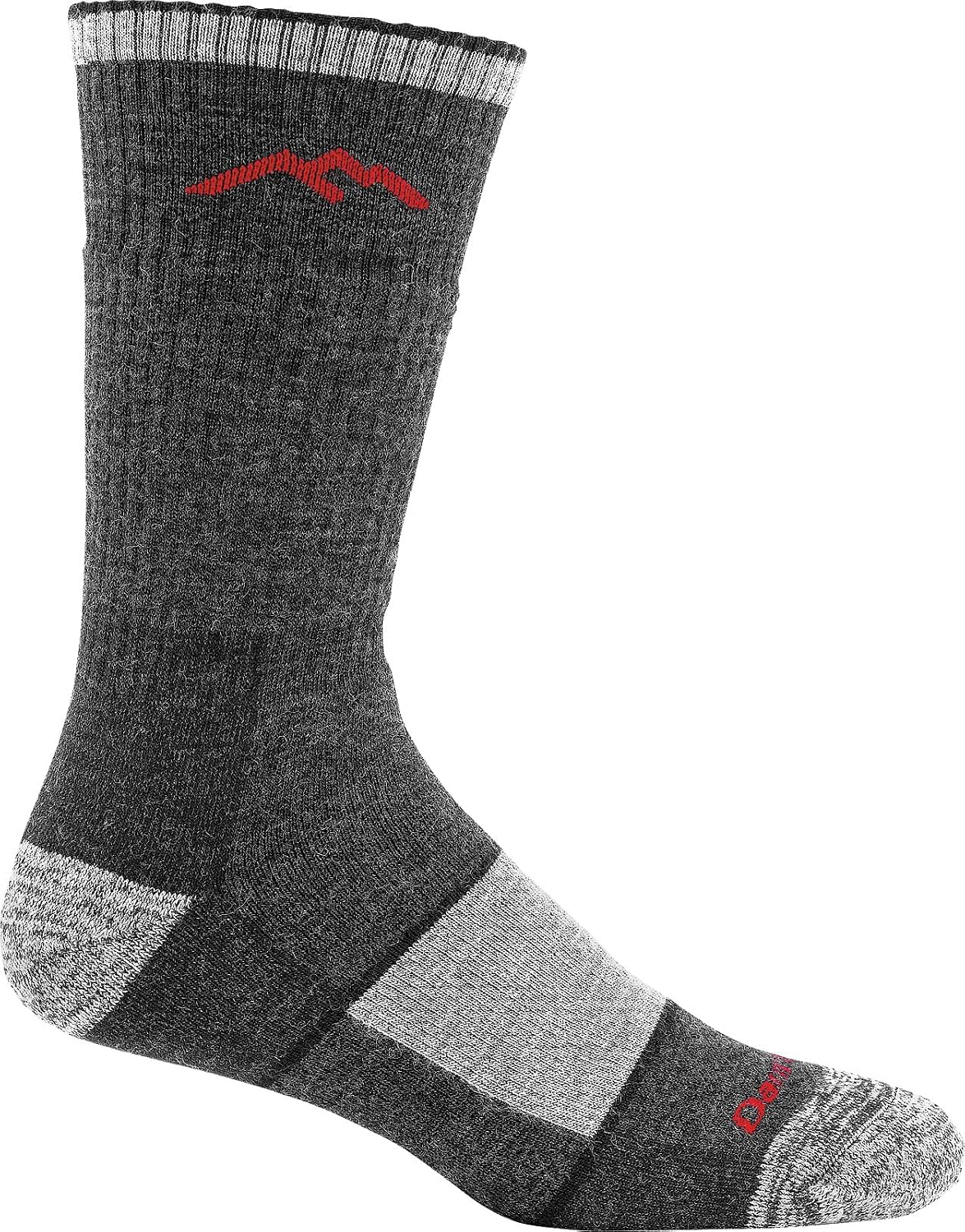
My take: The sock that makes the warranty worth it if you hike weekly — the cushion survives what shreds cheaper socks in a month.
Darn Tough Light Hiker Micro Crew — The Three-Season Daily Driver
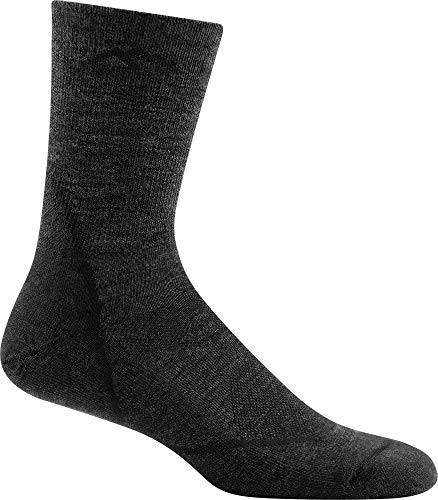
About $25 for targeted-cushion merino in a micro crew height that sits just above a mid boot. This is the sock that lives in my pack three seasons out of four. The targeted cushion sits only where you need it — ball and heel — so the sock breathes through shoulder-season miles where the full-cushion 1405 would cook your feet. The micro crew height is the Goldilocks cut: short enough for trail runners, tall enough to clear a mid-height boot collar without the sock migrating down into the shoe. Same lifetime warranty as the full cushion. The con: light cushion shows heel wear faster than the 1405. You’ll see the first thinning at the Achilles rub point around month eight of weekly use, which is exactly when you mail it back.
Darn Tough Light Hiker Micro Crew
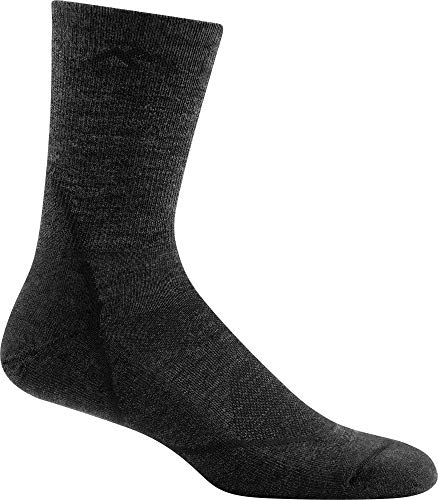
My take: The best three-season hiking sock on the market if you actually send worn pairs back — the warranty turns $25 into a lifetime supply.
Smartwool Hike Classic Full Cushion — The Fit-First Alternative
About $25 for the other big merino name in hiking socks, and the reason it’s here instead of a budget pick is fit. Smartwool’s arch construction sits differently than Darn Tough’s — slightly more compression across the instep, slightly less bulk under the metatarsals — and some feet genuinely prefer it. I’ve hiked both, and the Smartwool cushion is comparable in warmth and marginally softer on first wear. The gap is the warranty: there is no lifetime replacement program. Smartwool socks wear out and you buy new ones. At the same price point as Darn Tough, that’s the whole decision. If Darn Tough’s arch band doesn’t fit your foot, Smartwool is the alternative. If it does fit, there’s no reason to switch.
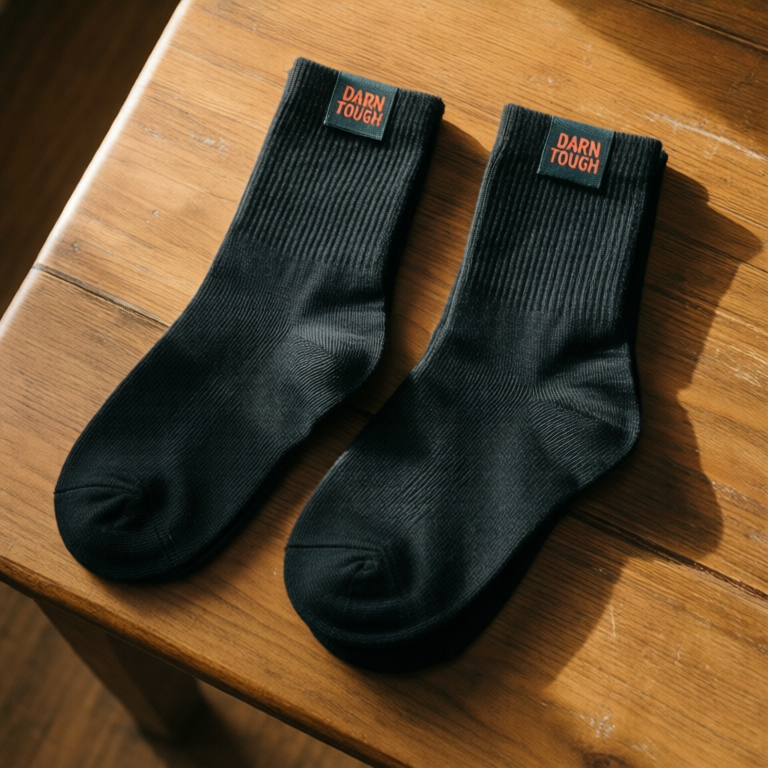
My take: Worth trying if Darn Tough’s arch doesn’t suit your foot — but without a warranty, it’s a $25 sock that wears out, not a $25 sock that lasts forever.
Merino Blend Hiking Socks 4-Pack — The 6-Dollar Drawer Filler
About $22 to $25 for four merino-blend pairs — roughly $6 a pair — and this is where the cost-per-mile math gets interesting. These blends run 20 to 40 percent synthetic (nylon or polyester) in the merino, which adds durability at the cost of the pure-wool feel. For day hikes on dry trails, camp shoes, and backup pairs in the pack, the budget tier wins outright. Four pairs means you always have a dry sock. The honest cons: the blends pill within a hard season of weekly use, the elastic gives out before the wool does, and the cushion is thinner than either Darn Tough model. They’re not replacing your primary hiking sock. They’re replacing the three pairs you blow through as spares.
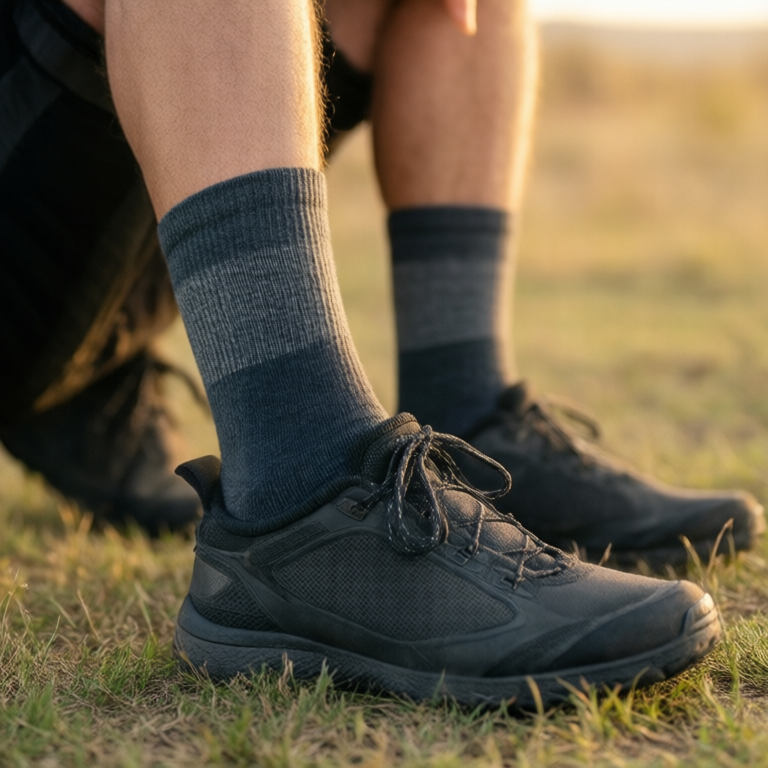
My take: Buy a 4-pack for the sock drawer and your day-hike spares — the cost-per-pair math is unbeatable for socks that don’t need to survive weekly abuse.
Free shipping on hiking gear: If you don’t have Prime yet, a 30-day free Prime trial gets you free two-day shipping on Darn Tough socks and most hiking gear — plus free returns within the trial window.
Features That Actually Matter (And Ones That Don’t)
Merino percentage: 65%+ merino is the threshold. Below that, the sock feels synthetic, retains odor, and loses the temperature regulation that makes merino worth wearing at all.

Cushion mapping: Full cushion underfoot is for boots and winter. Targeted cushion (heel + ball only) is for three-season and trail runners. Zero cushion is for summer day hikes only — and you’d better not blister.
Arch support band: This is what stops a sock from bunching under your toes inside a boot. Darn Tough’s is the tightest in the business. If you have a high instep, this is the feature that decides everything.
Height: Micro crew clears a mid boot. Crew clears a full-height boot. No-show does not belong inside a hiking boot — it’s a blister invitation.
Warranty (the one that matters): Darn Tough’s lifetime replacement is the only unconditional one in the category. Smartwool, Wigwam, and every budget brand offer none. The warranty math only works if you actually mail socks back — about 10% of buyers do.
The Cost-Per-Mile Math
Here’s what the numbers look like over a year of weekly hiking (52 hikes, average 6 miles each = 312 miles):
- Darn Tough Full Cushion ($30): Wears through at ~month 10. Mail back, get replacement. Cost year 1: $30. Cost year 2: $0. Cost year 3: $0. Cost per mile, year 1: $0.096. Year 3 average: $0.032.
- Darn Tough Light Hiker ($25): Wears through at ~month 8. Mail back, get replacement. Cost year 1: $25. Cost year 2: $0. Cost per mile, year 1: $0.08. Year 3 average: $0.027.
- Smartwool Hike Classic ($25): Wears through at ~month 10. No warranty. Cost year 1: $25. Year 2: $25. Year 3: $25. Cost per mile, year 1: $0.08. Year 3 average: $0.08.
- Budget 4-pack ($24/4 = $6/pair): Wears through at ~month 4. Two pairs needed per year. Cost year 1: $12. Year 2: $12. Year 3: $12. Cost per mile, year 1: $0.038. Year 3 average: $0.038.
The surprise: the budget 4-pack beats everything on cost-per-mile for the first year. The Darn Tough warranty only pulls ahead in year two and dominates by year three — but only if you actually send the socks back. If you buy Darn Tough and never mail a pair in, you’re paying $25-30 for socks that cost $0.08/mile and don’t renew. The warranty is the product. The sock is just the vessel.
Where to spend: One pair of Darn Tough Light Hikers for your primary hiking boot ($25, the one you wear every week) + one 4-pack of budget merino blends for spares, camp shoes, and day-hike backups ($24). Total: $49. That covers the daily driver with warranty, plus four spares that absorb the abuse of daily wear. Add a second Darn Tough pair (Full Cushion for winter, $30) only if you hike cold-weather trails.
Keep reading: Wool Base Layers That Don’t Stink on Day Three | Sleeping Bag Liners That Add 15 Degrees Without Buying a New Bag
GearHound is reader-supported. As an Amazon Associate, I earn from qualifying purchases. That means if you buy through one of the links above, I get a small commission at no extra cost to you. I only recommend gear I’d actually carry into the field.
Related guides
- Best Backpacking Backpacks 2026: Comfortable Packs for Multi-Day Trips
- Best Backpacking Tents 2026: Lightweight Shelters for Solo and Duo Adventures
- Best Dog Carriers 2026: For Travel, Vet Visits, and Everyday Errands
- Leave No Trace for Dog Owners: How to Hike and Camp Without Leaving a Mark
- Dog Tent Camping Shelter: Best Shelters for Camping with Your Dog
⛺ Get Your Free Camping with Your Dog Checklist
Join our newsletter and get this free printable plus weekly tips.
Frequently Asked Questions
Are Darn Tough socks worth the money?
Yes, if you hike weekly and actually mail worn socks back under the lifetime warranty. The cost-per-mile math beats every alternative by year two. If you never send socks back, a $6 budget pair has better first-year cost per mile.
What does the Darn Tough warranty actually cover?
Any damage — holes, thinning, worn-out cushion, elastic failure. You mail the sock to Vermont with no receipt required, and they send a replacement pair. Shipping is on you for the return.
Merino or synthetic socks for winter hiking?
Merino wool wins for winter because it retains warmth when damp and resists odor over multi-day trips. Synthetic blends dry faster but lose insulation when wet and hold odor. For winter boots, go 65%+ merino.
Liked this guide? Get the next one in your inbox — the camp packing checklist is free too.
✓ You're in — check your inbox.
No spam. Unsubscribe anytime. We never share your email.
Prices move fast. Start your Amazon trip from our Shop & Support page and your purchases support GearHound at no extra cost to you.
Price Check
Prices verified via our product tracker. Updated Oct 31.
| Darn Tough Vermont Men's Hiker Boot Midweight Full Cushion | $29.95 | 4.8★ (10,783) |
| Darn Tough Vermont Men's Light Hiker Micro Crew Lightweigh | $24.95 | 4.7★ (3,847) |
As an Amazon Associate we earn from qualifying purchases.