Warning: Undefined array key "reviews" in /var/www/gearhound/wp-content/mu-plugins/live-price-table.php on line 46
Warning: Undefined array key "reviews" in /var/www/gearhound/wp-content/mu-plugins/live-price-table.php on line 46
Warning: Undefined array key "reviews" in /var/www/gearhound/wp-content/mu-plugins/live-price-table.php on line 46
This article contains affiliate links. We may earn a commission from qualifying purchases.
Some content on this site is AI-assisted and reviewed by our editorial team.
Winter Trails Don’t Care About Your Summer Boots
By December, most of the trails you hike all summer stop existing. The packed-dirt tread you could walk in sneakers becomes a snowmobile-groomed ribbon, and everything off it is shin-deep posthole country. Rental shops know this: the first week of real snowfall clears their snowshoe racks and doubles their daily rates. Buying in October costs the same as renting four or five weekends, and the pair you buy is the pair that’s already hanging in the garage when the forecast flips.
The honest truth about snowshoes is that the marketing focuses on the wrong spec. Deck length matters in powder, but on groomed and packed trails the two things that decide whether you actually enjoy the outing are binding design — can you run them with gloved hands at 15°F without icing up — and steel traction underfoot. Everything else is weight you carry and money you spend.
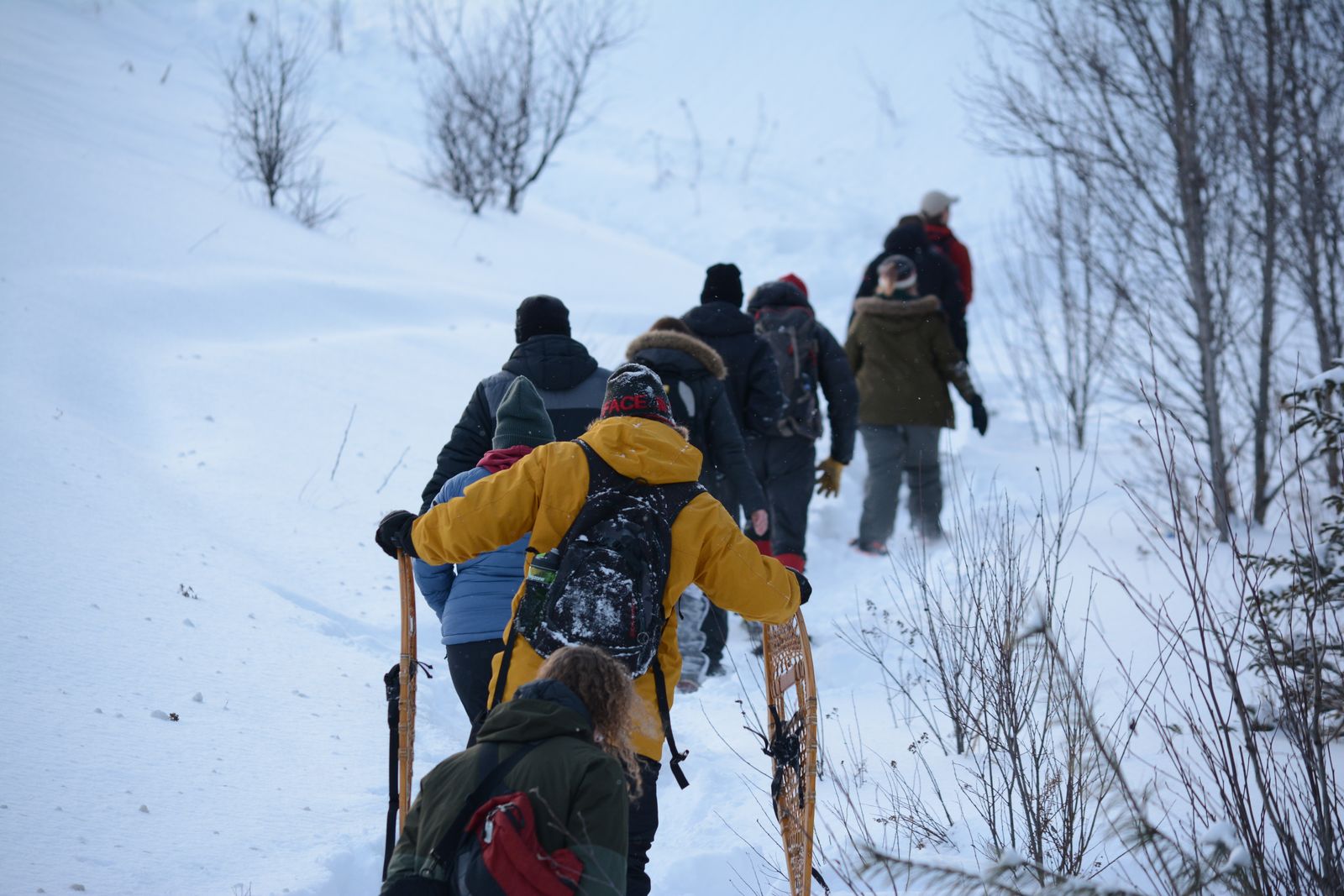
I looked at five pairs the way I’d pick for my own truck rack — from the $180 do-everything benchmark down to the $70 starter kit — and here’s what actually separates them.
MSR Evo Trail Snowshoes, 22-Inch — The Do-Everything Benchmark
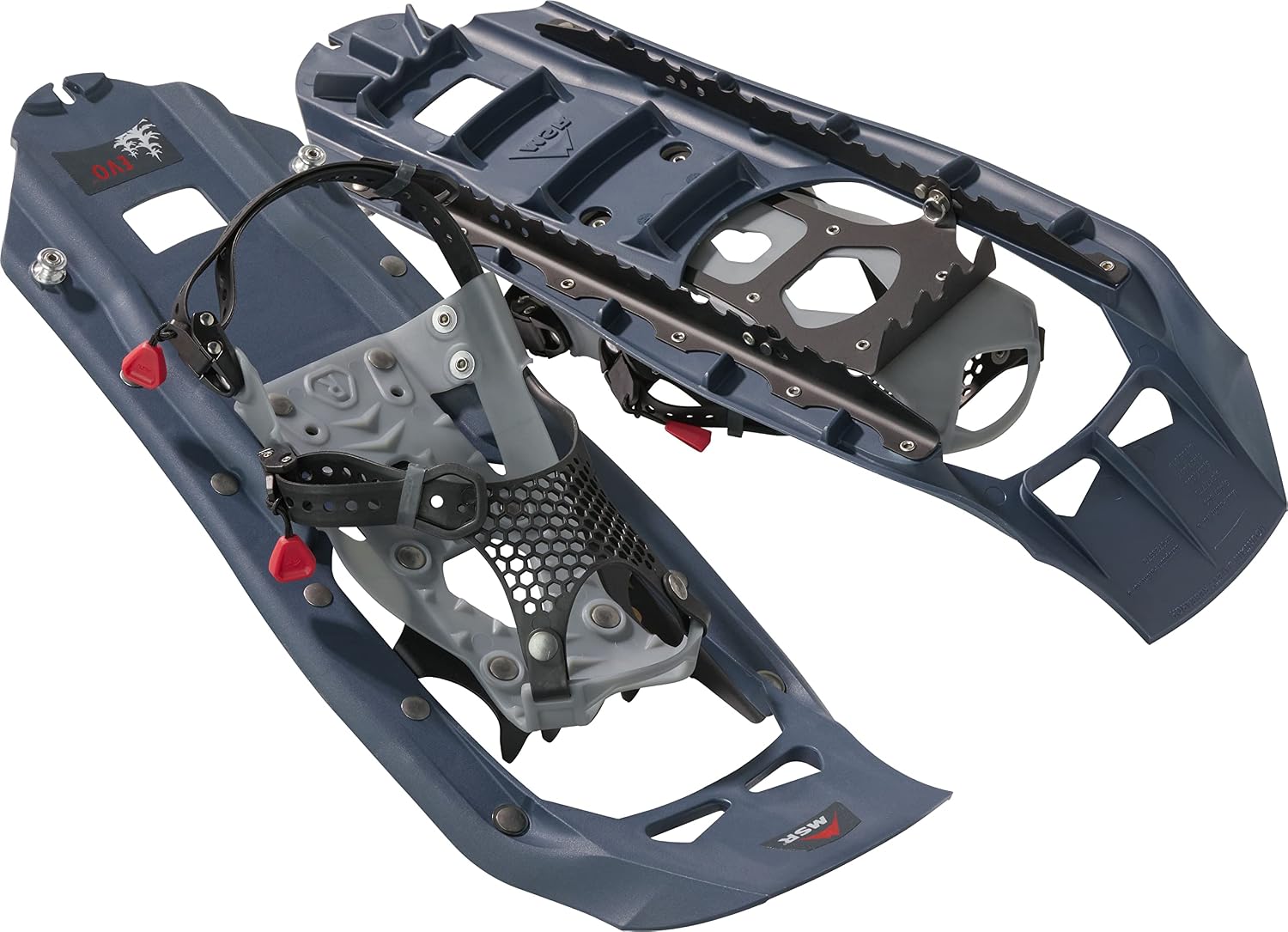
The MSR Evo Trail, 22-inch is the pair I’d put on the garage wall if I could only own one. The deck is one molded exo
frame with steel traction rails and brake bars built into the plastic itself, so there’s no welded crampon to bend and no separate heel brake to lose in a drift. The Paraglide binding is stretch mesh that wraps nearly any boot — trail runners to snowboard boots — and it’s the design I trust to still run smoothly after a season of freeze-thaw, because there are no ratchet teeth for ice to pack into. About $167 tonight, which is MSR money, and the 22-inch deck is right for packed trails and riders up to around 180 pounds. Add the 6-inch tails (below) and the same shoe handles powder days.
My take: the most expensive per ounce on this list, but the only pair here I’d trust on a January summit day — buy once, cry once, stop renting.
Retrospec Drifter Snowshoes — The Beginner Kit That Beats the Rental Counter
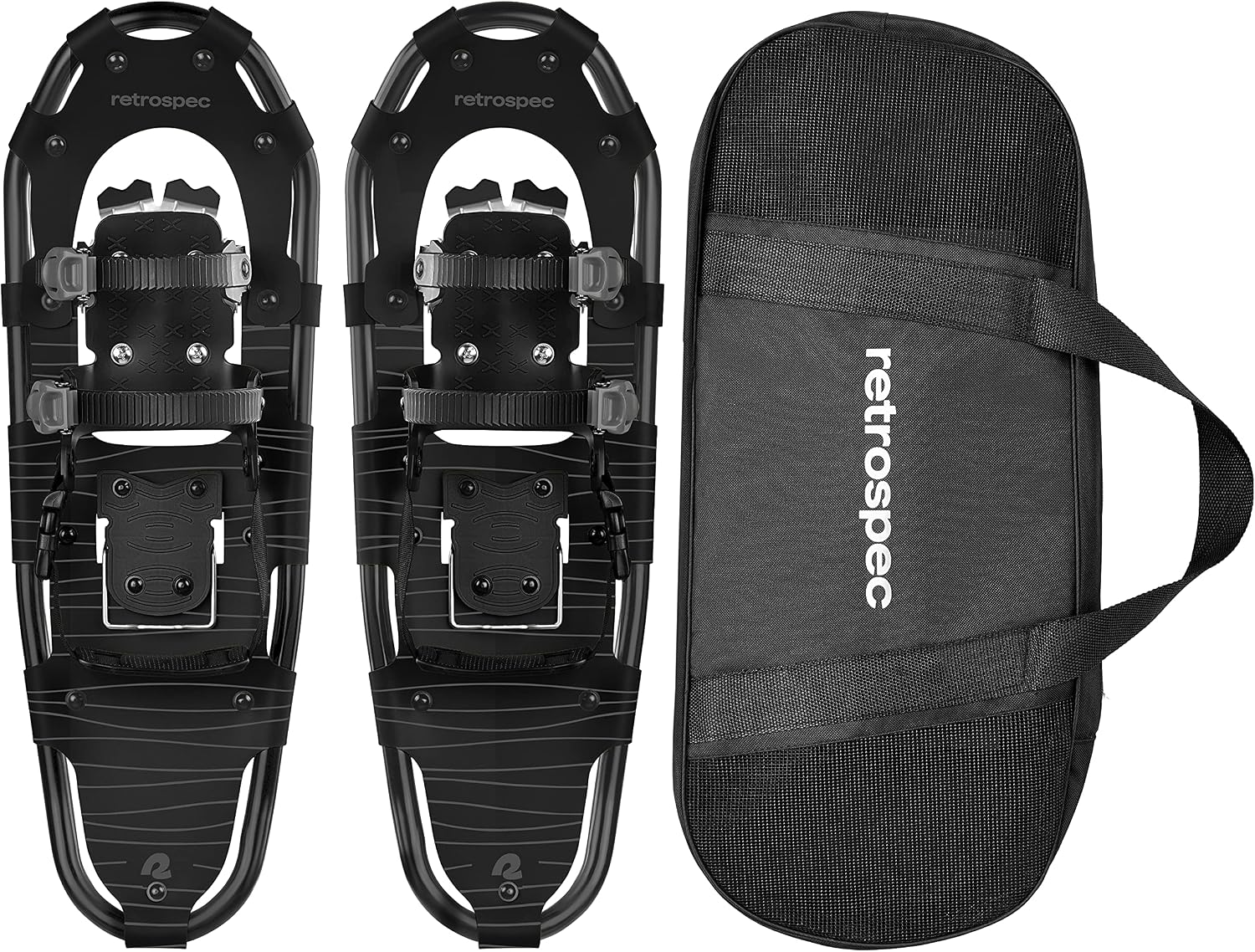
The Retrospec Drifter is the answer to “do I actually need $170 shoes to walk on snow?” For about $70 you get an aluminum-frame pair with heel lifts, dual ratchet bindings, and — the part that makes it a real kit — trekking poles and a carry bag included. On packed trails it does everything the beginner needs: the ratchets cinch over any boot, the heel lift saves your calves on climbs, and the tote means it stows in a trunk without filling it with snow melt. The honest tradeoffs: the ratchet teeth are exactly where packed ice loves to build up below freezing, the deck plastic stiffens in deep cold, and at 21 inches it’s tuned for packed conditions, not powder. None of those kill the deal at this price.
My take: if you’re not sure winter hiking is your thing, this is the $70 experiment that finds out — and the included poles and bag mean you’re not shopping twice.
MSR Lightning Ascent — The Mountain-Grade Upgrade
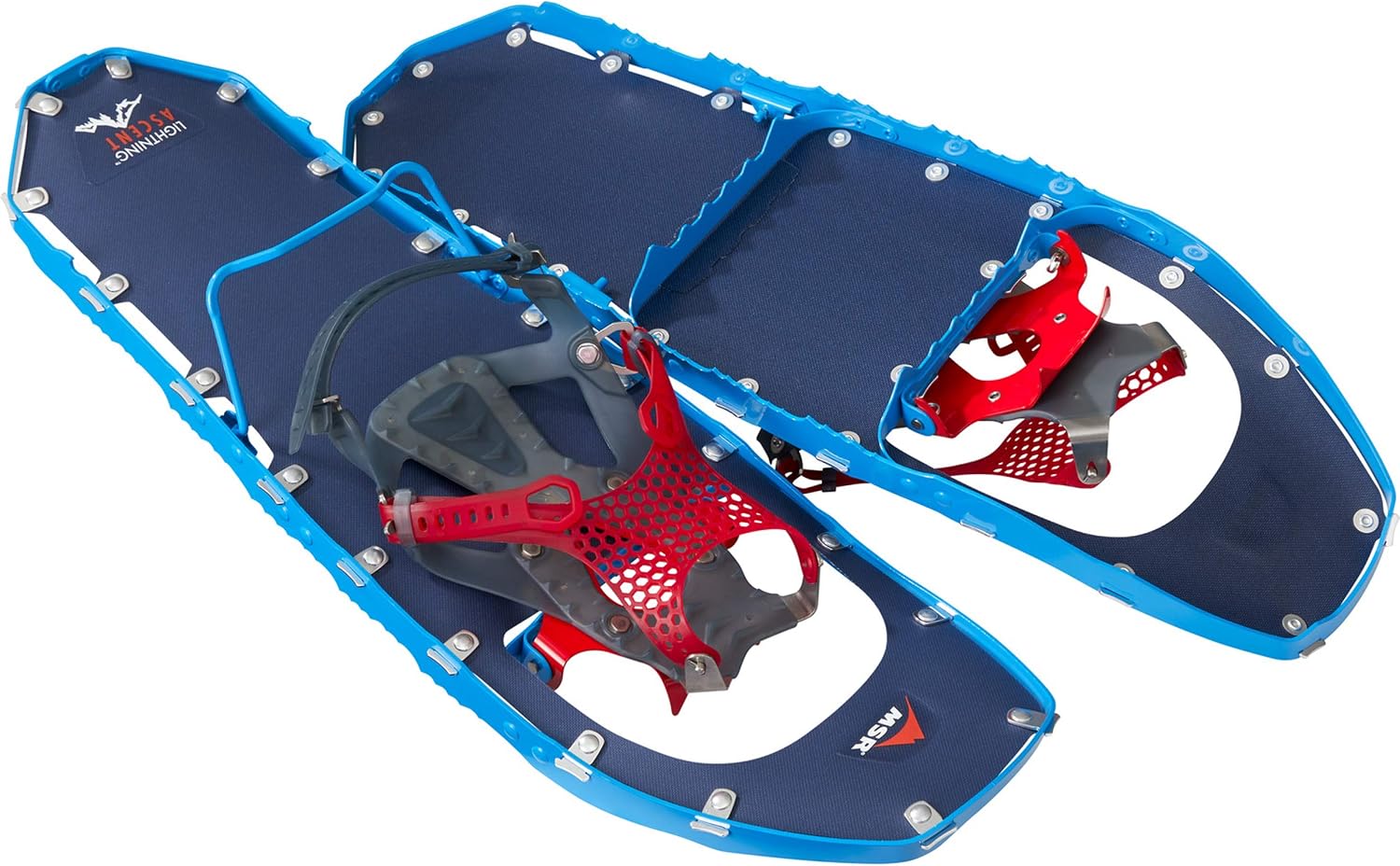
The MSR Lightning Ascent is the ceiling: a full-length steel perimeter instead of plastic rails, so every edge of the deck bites on a traverse, plus Televator heel lifts that flip up under your heel on steep pitches and turn a calf-burning climb into a stairmaster you didn’t pay extra for. The binding is MSR’s best, sized and free of anything that packs with ice. Tonight it’s about $397, which is real money for a trail walker who will never touch its ceiling. The buyers who need it know it: winter 14ers, steep drainages, days when the trail is a suggestion.
My take: if you have to ask whether you need heel lifts, you don’t — but if your winter routes have fall-line pitches, nothing cheaper climbs like it.
MSR Evo 6-Inch Flotation Tails — The Add-On That Doubles the Season
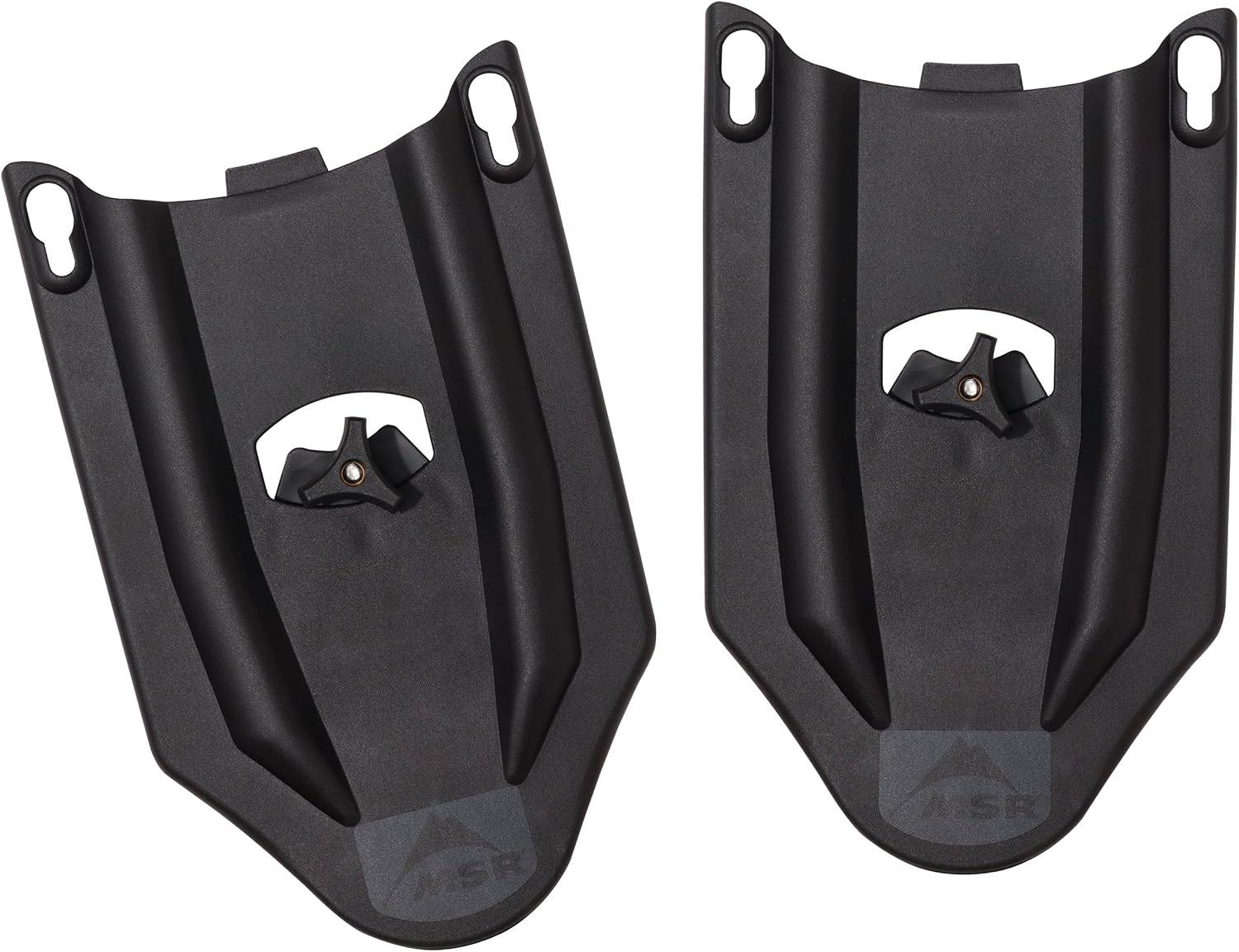
The MSR 6-inch flotation tails are the smartest $60 in winter gear: they snap onto the Evo (and Revo) decks in seconds and turn the 22-inch pair into a 28-inch pair for the powder days, then pop off for packed trails. One shoe, whole winter. They add a little rattle on hardpack when mounted, which is why they live in the pack until needed rather than bolted on all season.
My take: if you buy the Evo Trail, buy the tails in the same order — it’s the difference between a trail shoe and a full-winter system for $60 more.
Cascade Mountain Tech Aluminum Snowshoe Kit — The Backup Pair That Lives in the Truck
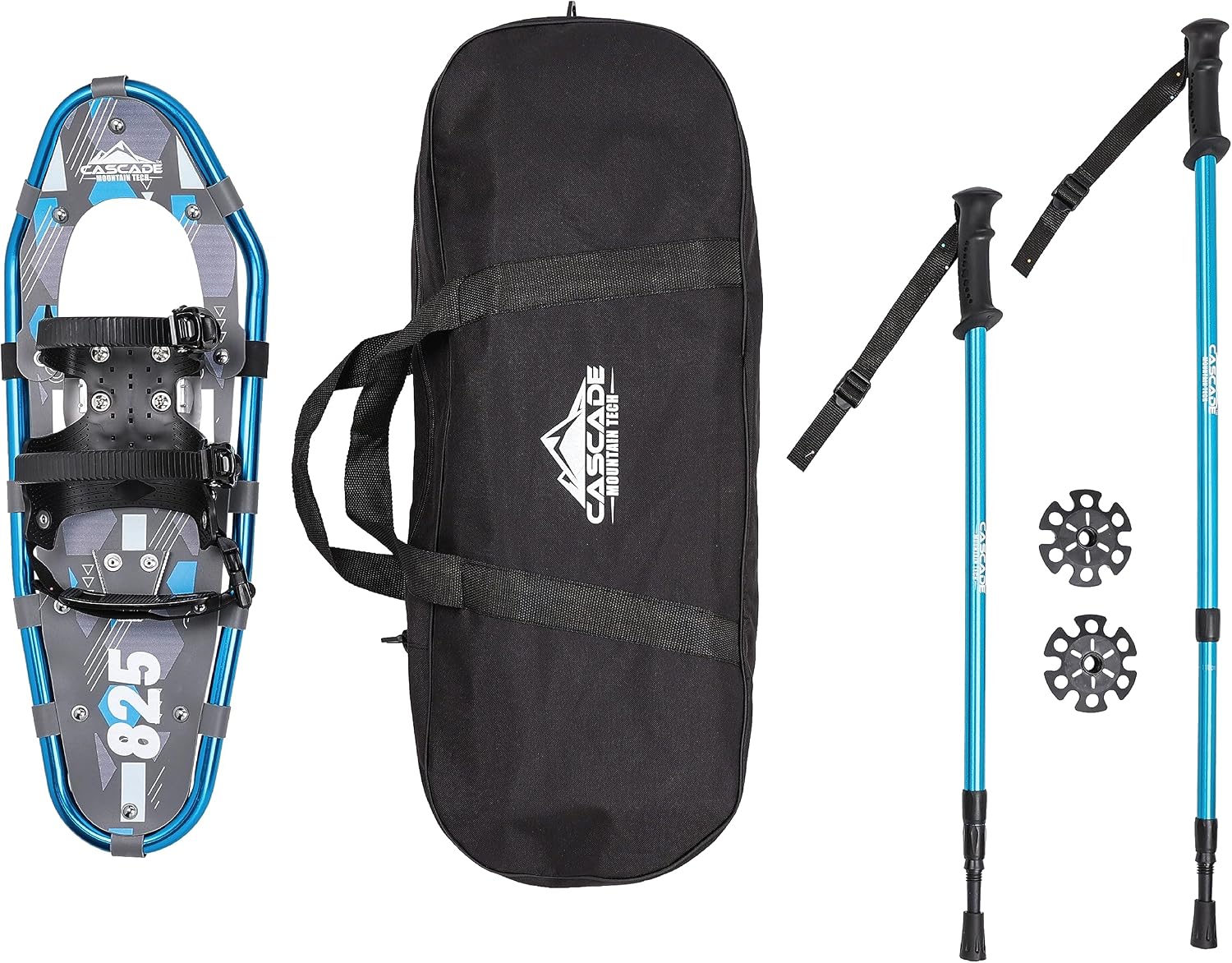
For a second pair, or the “keep one at the cabin” set, the Cascade Mountain Tech aluminum-frame kit does the same formula as the Drifter for about $80: dual-cleat crampons, ratchet bindings, poles and bag included. The harness padding is thinner than Retrospec’s and the bindings want gloveless fiddling on cold mornings, but as a spare kit nobody complains.
My take: the “buy two cheap kits for the family for the price of one MSR” math is real — just expect to teach every new user how the ratchets work.
Before you buy: winter gear sells out regionally with the first storm — start a free 30-day Prime trial here and the pair you pick ships free in two days, before the weekend forecast breaks.
Features That Actually Matter (And Ones That Don’t)
Binding freeze-proofness beats deck length. On a groomed trail, the deck floats either way. The binding is the part your gloved hands fight at 15°F, and stretch-mesh and ratchets behave very differently once ice is in the picture.
Steel on the edge, not just the claw. The middle crampon grips going straight up. What saves you on a sidehill traverse is a steel rail running the deck’s length — the difference between the Evo Trail and everything cheaper.
Heel lifts are a climbing feature. If your routes are flat rail-trails, they’re a $150 feature you’ll never flip up. Steep drainage climbs, they’re the whole game.
Weight is felt at mile three, not mile zero. The Evo is 3 lb 10 oz per pair — heavy for its price, and honest about it. Aluminum-frame kits are lighter on the scale but flex more under a loaded pack.
Ignore “user weight rating” precision. It’s a flotation guide for powder, not a strength limit. On packed trails, buy the deck that fits your boots and add tails if the snow gets deep.
What to Spend Where
- One pair, whole winter: MSR Evo Trail 22 + 6-inch tails ≈ $227 — covers packed trails and powder days.
- Not sure yet: Retrospec Drifter kit ≈ $70 — poles, bag, and heel lifts included; upgrade later if it sticks.
- Paracord Worth Carrying on Every Trip
- Best Sleeping Bags for Backpacking 2026: Down vs Synthetic for Summer and Shoulder Season
- Best Hydration Bladders 2026: Water Reservoirs That Actually Keep You Drinking
- Best Dog Beds 2026: Orthopedic, Cooling, and Indestructible Options
- Best Camp Chairs 2026: Tested and Ranked for Every Budget
Keep reading: the hand warmers that still feel hot on hour five and the winter car kit that gets you unstuck round out the cold-weather kit.
GearHound is reader-supported. As an Amazon Associate, I earn from qualifying purchases. That means if you buy through one of the links above, I get a small commission at no extra cost to you. I only recommend gear I’d actually carry into the field.
Related guides
⛺ Get Your Free Camping with Your Dog Checklist
Join our newsletter and get this free printable plus weekly tips.
Frequently Asked Questions
What size snowshoes do I need for packed trails?
On packed and groomed trails, deck length barely matters. A 22-inch deck like the MSR Evo Trail carries most adults up to about 180 pounds, and you only step up in length for deep snow or heavy packs. If you already own the 22-inch pair, the 6-inch flotation tails turn it into a powder pair for $60 instead of buying a second shoe.
Do cheap snowshoes work for beginners?
Yes, on packed trails. Aluminum-frame kits like the Retrospec Drifter do everything a beginner needs, and the ratchet bindings, heel lifts, poles, and carry bag are all included for about $70. The honest tradeoffs: ratchet teeth pack with ice below freezing, and the deck plastic stiffens in deep cold, so dress for a little more fuss on the coldest days.
Can you hike groomed winter trails in boots alone?
You can when the surface is hard-packed and thin, but coverage gets variable within a mile of any trailhead, and postholing through a soft patch in boots is how ankles get hurt. Snowshoes also carry steel traction for the icy sections that boots alone don't handle, which is the actual reason to bring them on a groomed trail.
Liked this guide? Get the next one in your inbox — the camp packing checklist is free too.
✓ You're in — check your inbox.
No spam. Unsubscribe anytime. We never share your email.
Prices move fast. Start your Amazon trip from our Shop & Support page and your purchases support GearHound at no extra cost to you.
Price Check
Prices verified via our product tracker. Updated Oct 31.
| MSR Evo Trail Snowshoes, 22 Inch Pair, Midnight | $167.00 | 4.5★ |
| Retrospec Drifter Snowshoes for Women and Men, Adult Snow | $69.99 | 4.4★ (730) |
| MSR Lightning Ascent | $397.19 | 4.5★ |
| MSR Evo Snowshoe 6 Inch Accessory Tail for Added Flotation | $59.95 | 4.5★ (201) |
| Cascade Mountain Tech Lightweight Aluminum Frame Snowshoe | $79.99 | 4.5★ |
As an Amazon Associate we earn from qualifying purchases.