This article contains affiliate links. We may earn a commission from qualifying purchases.
Some content on this site is AI-assisted and reviewed by our editorial team.
By mid-November, half the campgrounds I book have the fire ring chained shut, the sun quits before five, and nobody wants to stand over a stove in the dark waiting for chili to render. A thermal cooker deletes that window. Boil the pot for five minutes — at home, at the trailhead, off a single burner — then latch the lid and let the vacuum wall finish the job. Stew, beans, and rice keep cooking in the insulated core while you drive, hike, or pitch the tent. The fuel math is what sold me: one ounce of propane up front versus two hours of flame you never light.
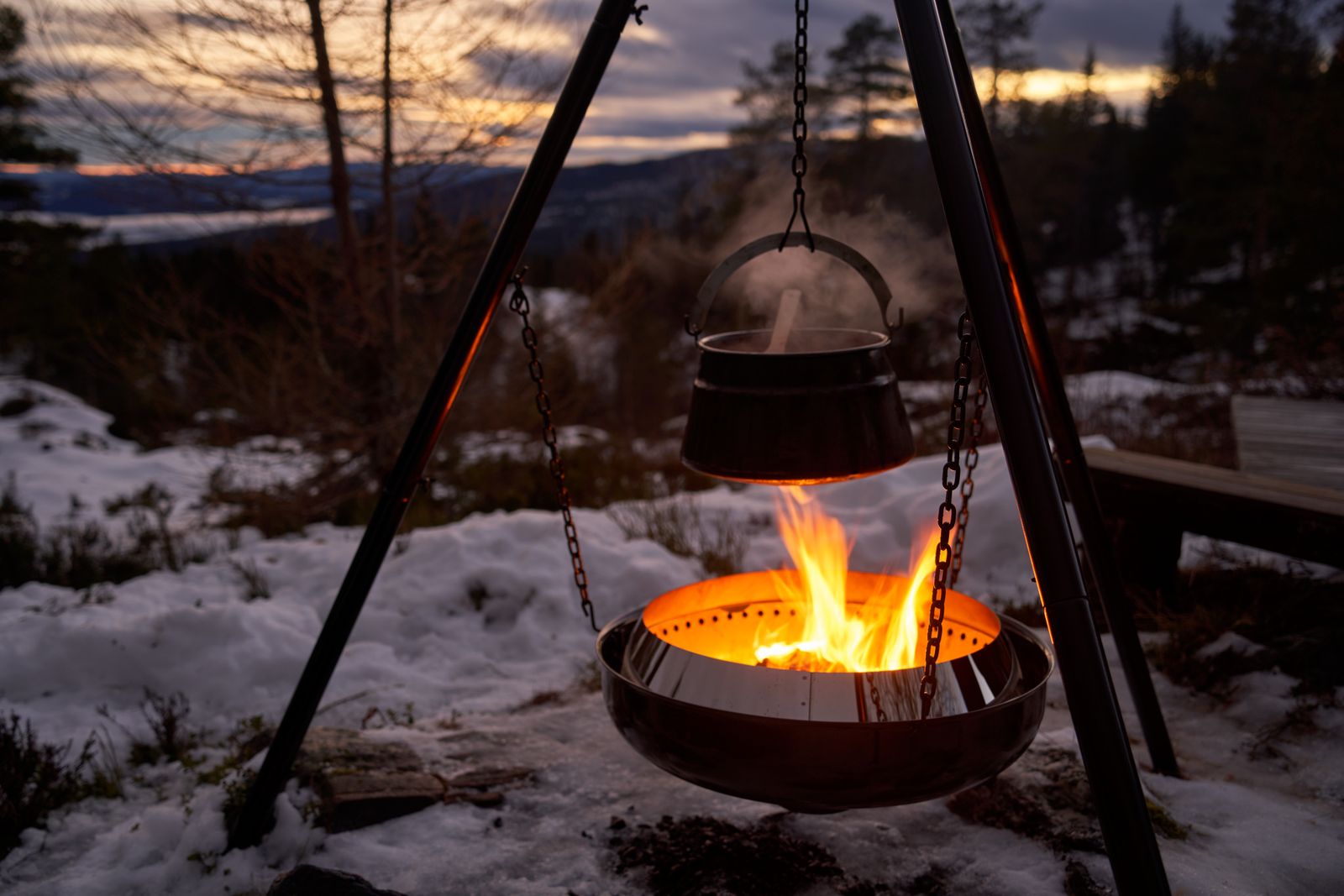
These are the four worth shelf space, from a three-quart vacuum crock down to a solo jar — plus the zero-fuel version built from gear you already own.
Stanley Adventure Fresh-To-Table Stay Hot Crock, 3 qt — The Vacuum Crock
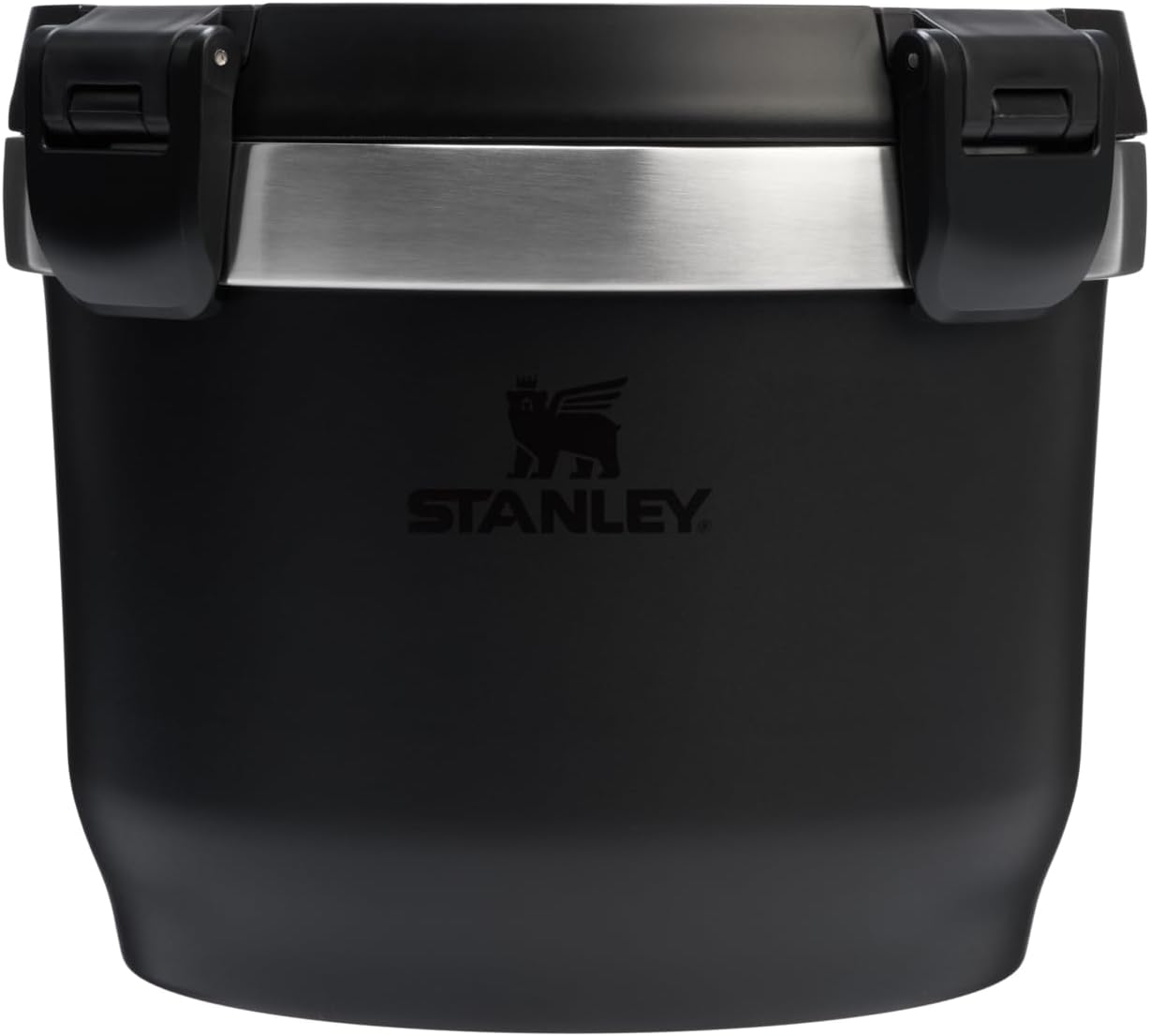
The Stanley Adventure Fresh-To-Table Stay Hot Crock runs about $70, and it is the only one here shaped like cookware instead of a bottle: three quarts of wide, vacuum-insulated steel with a gasket lid and a latch that holds through washboard roads. The workflow is the same for any thermal cooker — boil the food in a real pot for five to ten minutes, transfer it hot, seal. The crock is the finisher, never the pan.
In the field: a chili boiled in the driveway at 3 PM was still steaming when we unlatched it at camp at 6:30, and above eating-hot at hour eight. A full pot for three people, cooked on about ten minutes of propane.
Honest cons: three quarts feeds two adults and a kid, not a group of six. And the insulation that finishes your stew locks you out — no tasting, no stirring, no fixes after the latch closes. Underseason it at the house and that is dinner.
My take: The one that replaces the camp stove on a winter trip. About $70 is stove money, and it cooks while you drive. Buy it for family trips; add a food jar for a crew.
Thermos Stainless King 47 oz Food Jar with Handle — The Family-Size Food Jar
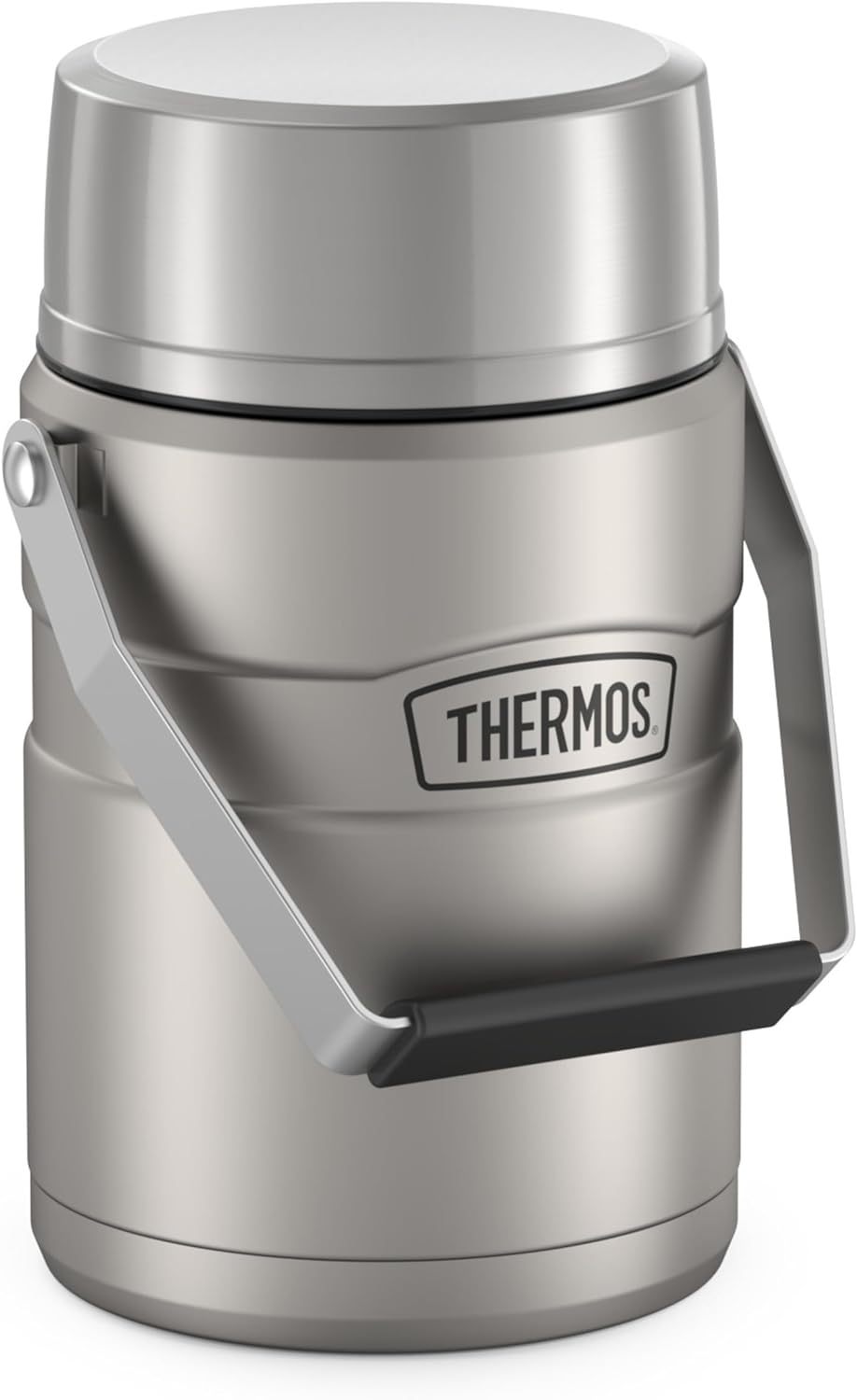
The Thermos Stainless King 47 oz Food Jar is about $45 — the biggest vacuum food jar most kitchens will ever need. Forty-seven ounces swallows a whole small pot of soup, the handle makes the carry to the picnic table one-handed, and it keeps food hot past midnight in practice, not just on the box.
The tradeoff is shape. Tall and narrow stores brilliantly, but stirring or reheating inside it is not happening: ladle in, ladle out. Dense food like beans needs a genuine rolling boil before it goes in, because there is no second chance.
My take: The soup-night workhorse and the best value here if you feed two or three — family-size retention at jar money.
Zojirushi Stainless Steel Food Jar, 17 oz — The Lunchbox-Size Pick
No image staged for this one — the Zojirushi Stainless Steel Food Jar, 17 oz runs about $35 and out-retains anything near the price. Same food, same start temperature, still hot an hour or two after cheaper jars go lukewarm. It fits a pack pocket, which makes it the pick when the crock stays home and the trip is yours alone.
Seventeen ounces is the ceiling: one hungry camper, not a crew. Soup for one, rice for one, oatmeal for one.
My take: The solo camper’s jar, and the last food jar you will buy. If your trips are one-person, stop shopping.
Stanley Classic Legendary Food Jar, 24 oz — The Rugged Single-Serve
About $30 gets the Stanley Classic Legendary Food Jar, 24 oz — the jar for people who do not baby gear. The toughest exterior in this class rides loose in a truck bed and keeps sealing, and the lid doubles as a cup, which is one less dish at the wash basin.
Retention runs a notch below the Zojirushi, and the doubled lid eats pack space. The play is pairing: stew in the crock, rice in the jar, and a no-propane night costs nothing.
My take: The truck-jar. Same money as a big-box thermos, with hardware built like the rest of the Legendary line.
Want free shipping on your camp kitchen? Try Amazon Prime free for 30 days — two-day delivery on thermal cookers, food jars, and every piece of cold-weather camp gear before the next trip.
Features That Actually Matter (And Ones That Don’t)
Halve the rated retention: Brands quote lab input temperatures. Knock the hours in half for a cold trunk or a lid-lift — rated hot-at-nine is eating-hot at four or five in the field.
Vacuum wall beats foam: Foam-insulated thermal pots die in a cold vehicle. A real vacuum double wall — all four picks here — is the only insulation that carries a full cook.
Mouth width is a cleaning decision: You will eat out of these and scrub them at camp. A mouth too narrow for a spoon turns every meal into a chore.
The lid is the failure point: A latched gasket holds through washboard; a screw lid a quarter-turn loose dumps chili in the trunk liner. Test the seal over the sink before trip one.
Ignore: cook-time charts, included sporks, and finish colors. Retention and the seal are the whole product.
The Zero-Fuel Trick: Build a Haybox
The budget version is the farm-kitchen haybox, and it costs nothing. Boil the pot a full ten minutes — weaker insulation needs a hotter start — then nest the lidded pot in a hard cooler wrapped in a sleeping bag, towels, or a parka, packed tight around and on top. Open nothing for four hours. Rice, beans, and stew finish as well as they do in the $70 crock. Cons: not leakproof, not portable mid-cook, and it only works if you were hauling a cooler anyway. Car camping, you were.
What to Spend Where
- Under $50: The Zojirushi 17 oz at about $35 if you cook for one, the Thermos King 47 oz at about $45 if you cook for three — both are per-dollar winners over anything big-box.
- Under $70: The Stanley Stay Hot Crock is the only one that replaces a stove for a family, and worth it if you camp weekly through the winter.
- About $30 or less: The Stanley Legendary 24 oz for single-serve abuse, or the DIY haybox for zero dollars if you already haul a cooler and a sleeping bag.
Keep reading: for more flame-free camp cooking, see our solar ovens that cook while you pitch the tent, and if the fire ring is only chained, not closed, our guide to smokeless fire bowls for burn-ban campsites. Pair either with a thermal cooker and the weekend runs without a single gathered stick.
GearHound is reader-supported. As an Amazon Associate, I earn from qualifying purchases. That means if you buy through one of the links above, I get a small commission at no extra cost to you. I only recommend gear I’d actually carry into the field.
⛺ Get Your Free Camping with Your Dog Checklist
Join our newsletter and get this free printable plus weekly tips.
Frequently Asked Questions
Does a thermal cooker actually cook food without heat?
Yes — partially. You bring the food to a full boil on the stove for 5-10 minutes, then seal the thermal cooker. The vacuum insulation retains enough heat to continue cooking rice, beans, and stews for 2-8 hours depending on the model. It won't sear meat or reduce sauces, but it finishes anything that just needs time at temperature.
How long does a Stanley camp crock stay hot?
The Stanley Stay Hot Crock holds temperatures above 140°F for roughly 4-6 hours in real-world conditions, though Stanley's marketing claims stretch longer. In a cold truck bed at 20°F, expect closer to 4 hours. Pre-heating the crock with boiling water before adding your food extends the window noticeably.
Can you cook rice in a vacuum food jar?
Yes, but only small portions. Bring rice and water to a boil, transfer to the food jar, and seal. A 17-ounce jar handles about a cup of cooked rice. The rice finishes soft in 45-60 minutes. Don't expect separate grains — the insulated cooking tends toward sticky, which is fine for camp meals but not for pilafs.
Liked this guide? Get the next one in your inbox — the camp packing checklist is free too.
✓ You're in — check your inbox.
No spam. Unsubscribe anytime. We never share your email.
Prices move fast. Start your Amazon trip from our Shop & Support page and your purchases support GearHound at no extra cost to you.