This article contains affiliate links. We may earn a commission from qualifying purchases.
Some content on this site is AI-assisted and reviewed by our editorial team.
The worst night we ever had in a tent was the one where the kids were cold and cramped in a “6-person” dome that fit three people and a duffel bag. That trip taught me the rule I still use: a tent’s person-rating is a suggestion, not a fact. A real 6-person family tent should hold four people, two queen air mattresses, and the bags nobody wants in the car, without anyone touching shoulders at 2 AM. After a decade of family trips and a lot of rain storms I would rather forget, here is what actually holds up.
I compared five tents across the price range, from an $80 basic dome to an $800 canvas basecamp. Here’s what matters and where the money goes.
Coleman Sundome 6-Person — The Budget Baseline That Still Works
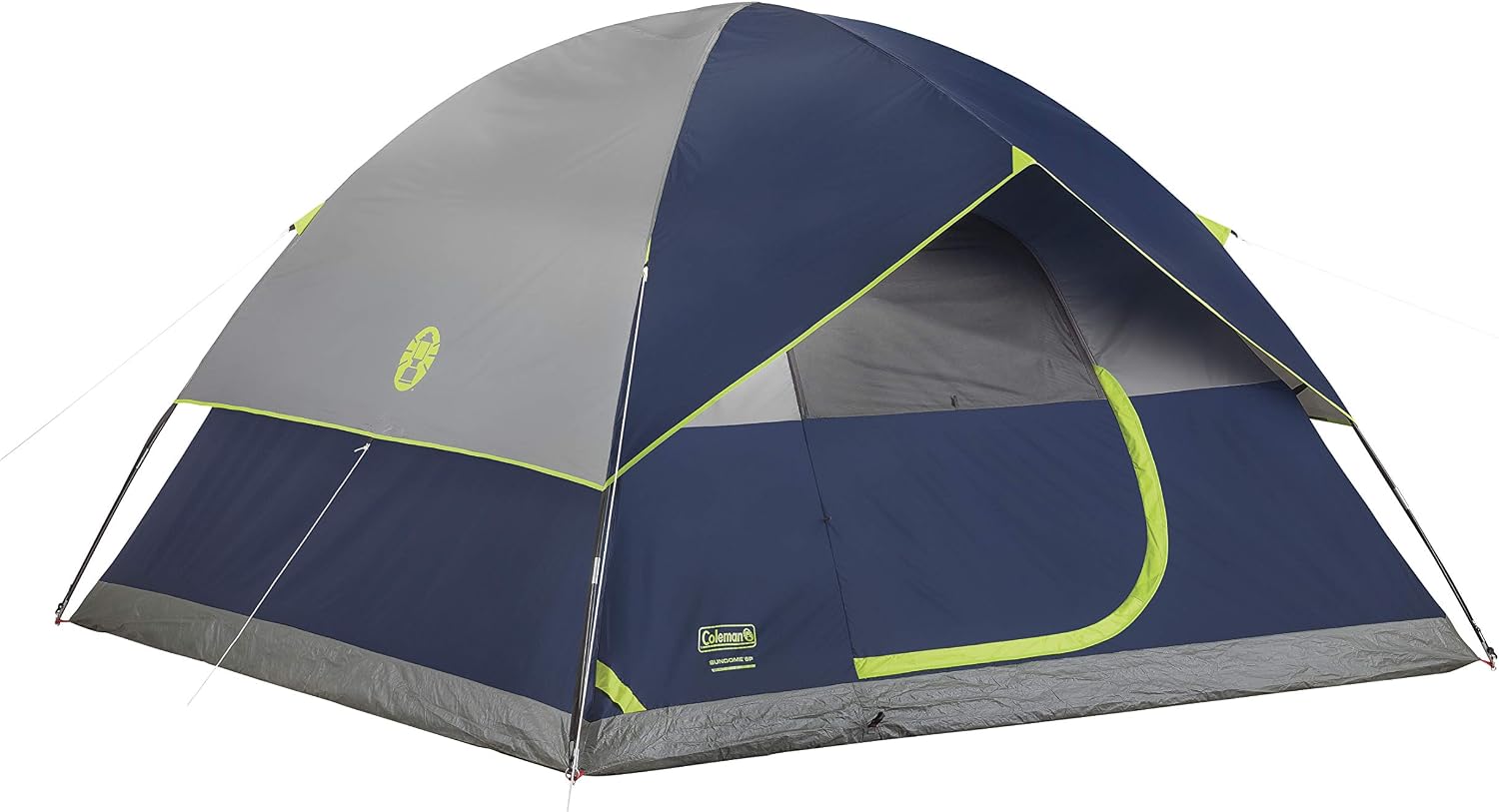
Verify the live price on the Coleman Sundome listing — this classic dome sells for roughly $160 and has been the default first family tent for two decades. The WeatherTec floor and included rainfly handle honest rain, the 10-minute pitch claim is about right on grass, and replacement parts are everywhere. It is not freestanding in the sense most people mean — stake it out or it collapses — and the 6-person rating is really four campers sleeping tight, or two queen beds with no floor space left.
My take: the cheapest tent here that will not ruin your trip, and the one to buy if this is your first season. Skip anything flimsier.
CORE 9-Person Instant Cabin — Setup You Can Do While Holding a Toddler
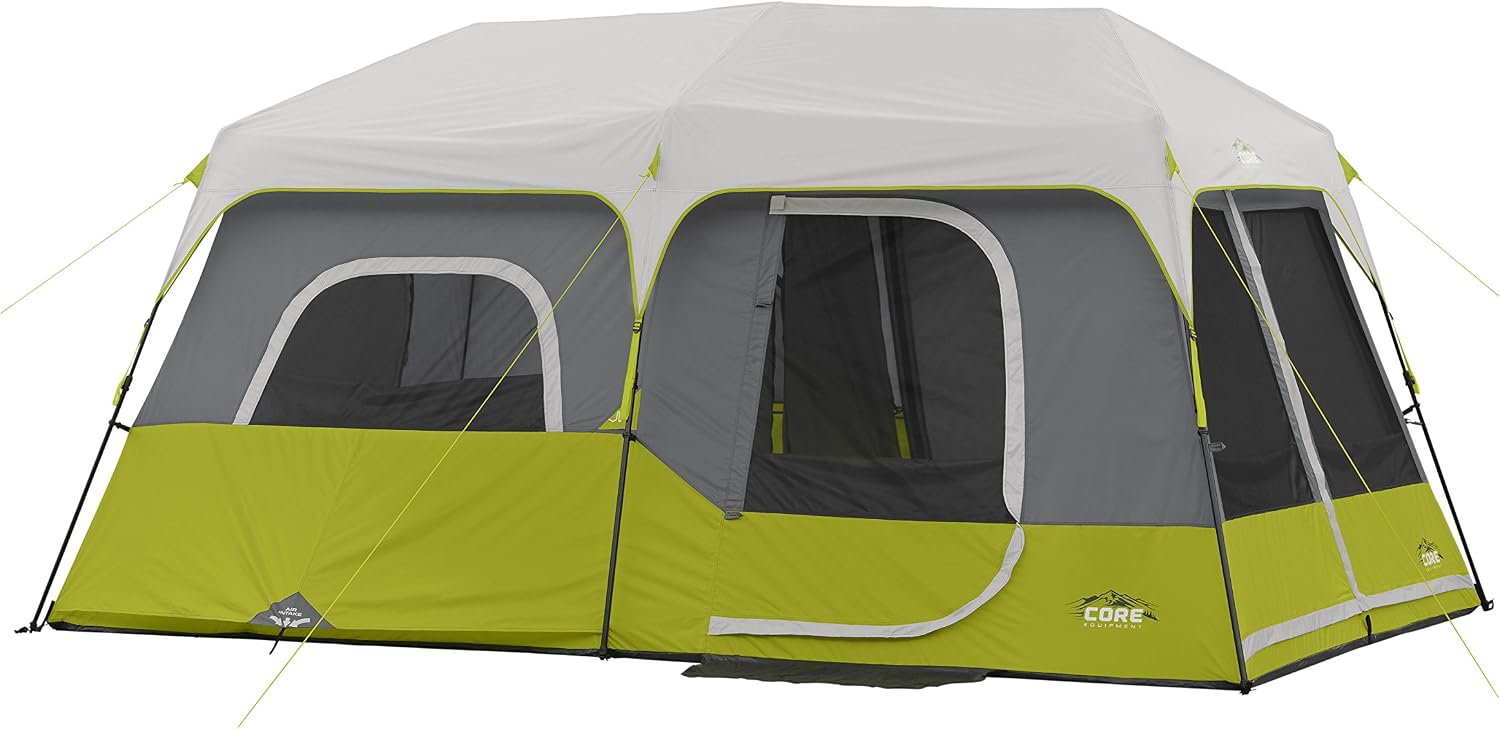
About $250 gets you a 14′ x 9′ cabin with pre-attached poles that genuinely pitches in two minutes: unpack, unfold, extend. The 78-inch center height means adults stand fully upright, the room divider gives kids their own half, and the electrical port means no cord under the door flap. The tradeoff is weight and packed size — expect around 30 pounds and a bag that eats most of a trunk, and the instant frame is bulkier and less storm-tight than a well-guyed dome when weather turns serious.
My take: the best money-per-convenience in the mid range. If you camp with kids more than twice a season, the two-minute pitch pays for itself immediately.
Kelty Wireless 6-Person — The Room Darkening Sleeper
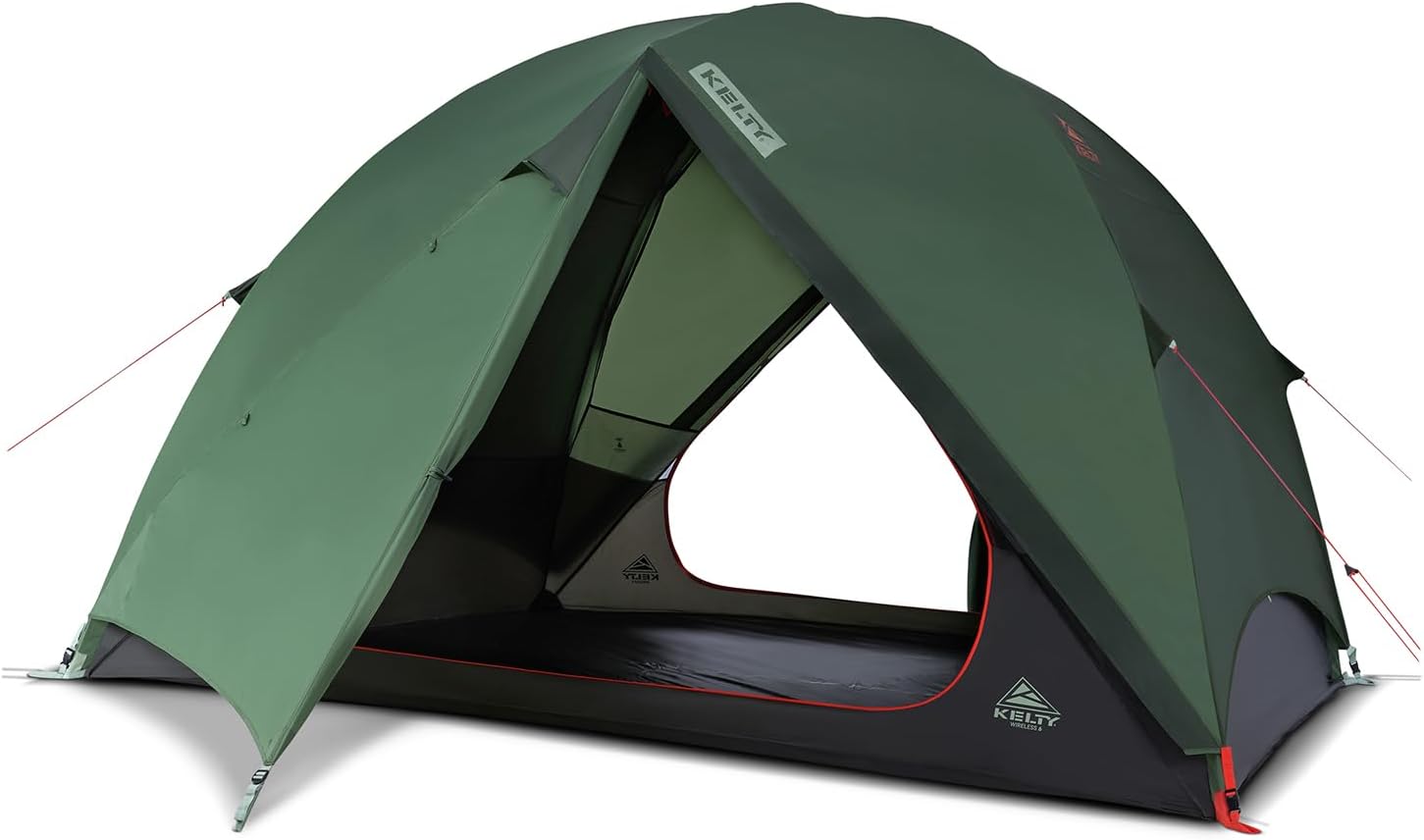
The Wireless 6 is the tent for families whose kids wake up at dawn. The dark interior fabric cuts morning light to a glow instead of a spotlight, the near-vertical walls make the floor plan feel bigger than its footprint, and the freestanding design lets you move it before staking. It packs smaller than the CORE and pitches in about 10 minutes with color-coded poles. Cons: fewer mesh pockets than the CORE, and in heavy sustained wind the flexible frame will demand full guying to stay quiet.
My take: the best pure sleeping tent of the five. If your trips live or die on everyone sleeping past sunrise, this is your tent.
Marmot Midpines 4-Person — The Quality Step-Up That Fits Real Campers
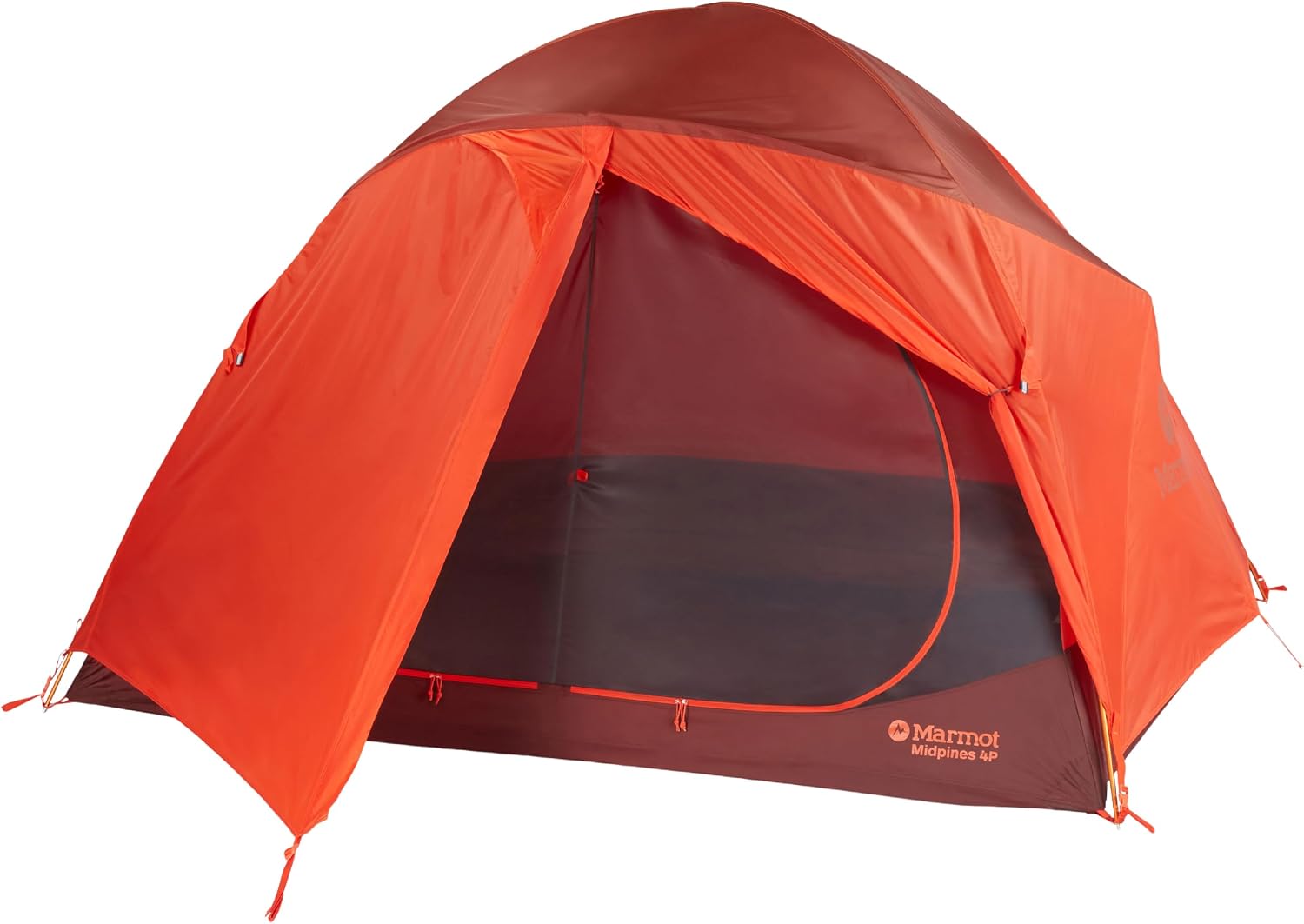
Marmot builds this one like the backpacking tents it is known for, and it shows in the details: a taut, quiet pitch; a proper bathtub floor; taped seams; and a zippered vestibule design that keeps mud and boots out of the sleeping area. The vertical walls and tall doors make it feel closer to a cabin than a dome. The honest con: it is a real 4-person tent, which means two adults and two kids comfortably — not four adults and gear — and the price sits about $90 above the Coleman for half the capacity.
My take: buy this when you are done experimenting and want a tent that will still be dry in year ten.
Kodiak Canvas Flex-Bow Deluxe 10×14 — The Buy-Once Basecamp
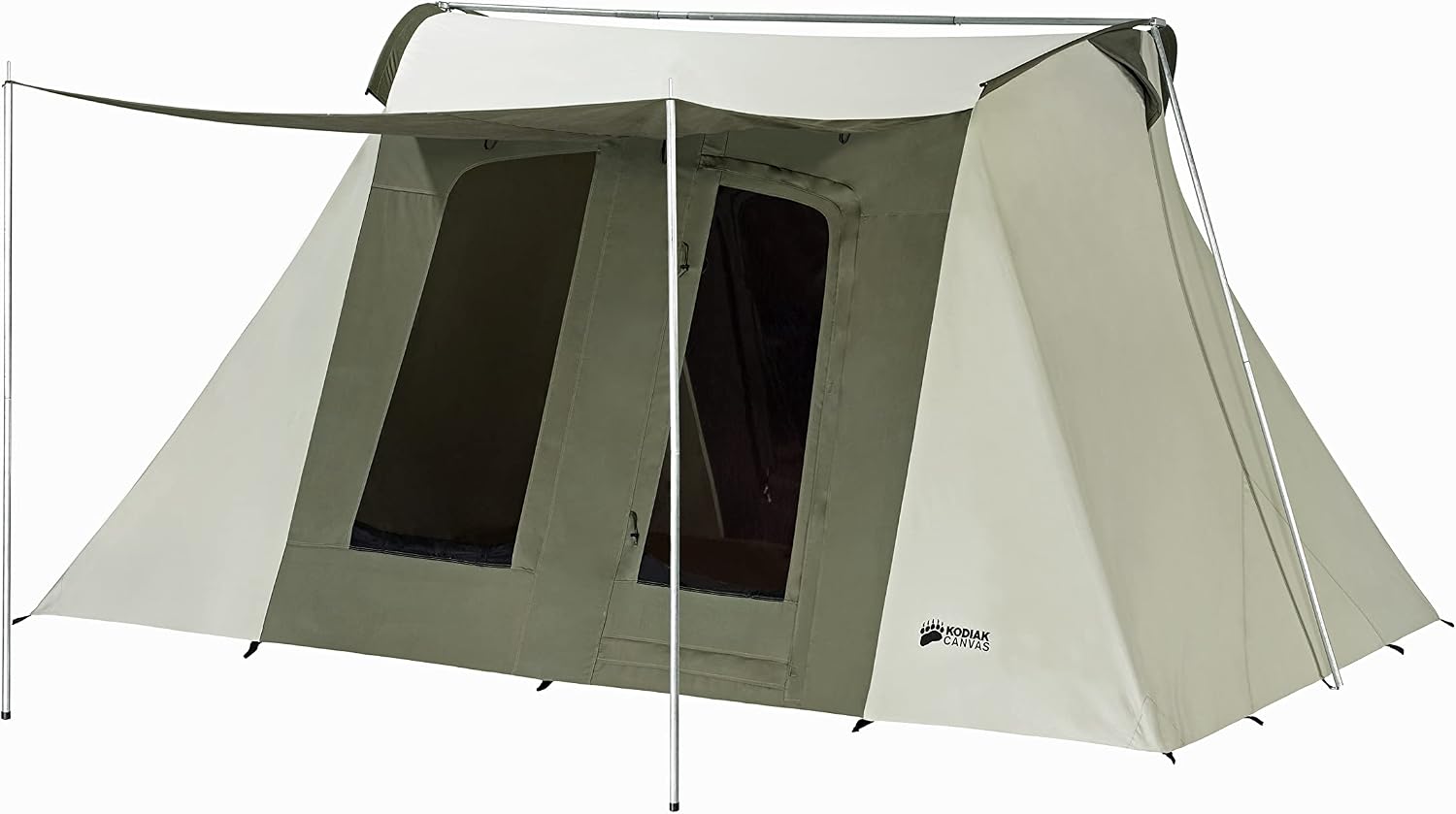
The Flex-Bow is a different category: a 10×14 cotton canvas wall tent with a spring-steel frame that shrugs off storms which flatten nylon family tents. It breathes, it is quiet in wind, it handles a wood stove for cold seasons, and with basic care it lasts 15-plus years — long enough to become the tent your kids take their kids out in. The cons are real: around $800, well over 100 pounds, a two-person 20-plus-minute setup, and it needs drying before storage. This is a basecamp tent, not a move-camp-every-night tent.
My take: buy it once for a standing family camp, or skip it entirely. There is no middle ground with canvas.
Camp tip: tents this size qualify for free shipping with Prime — if you are not a member, grab the free 30-day trial before the trip and cancel after. Family tents rarely fit the “small parcel” discount world.
Features That Actually Matter (And Ones That Don’t)
True capacity vs. rating: divide the person rating by 1.5 and believe that number. Four real sleepers need a “6-person,” a family of five plus gear needs a “9-person” or two smaller tents.
Instant vs. classic poles: instant frames trade packed size and storm-tautness for a 60-second pitch. Classic poles pack smaller and ride out wind better. Decide which failure annoys you less.
Center height: anything under 6 feet means hunching. Instant cabins run 78 inches or more, domes rarely clear 60. This is the spec most first-time buyers skip and regret.
Dark-room fabric: genuinely worth $20-30 extra if small children camp with you. It turns 6 AM bright into 7 AM dim.
Stuff that doesn’t matter: “waterproof ratings” in marketing copy, LED string-light hooks, and footprint counts. A $20 footprint and a guyline habit matter more than any of them.
Where the Money Goes
- Budget baseline: the Sundome 6 at roughly $160 — the floor for honest weather protection.
- Best value per trip: the CORE 9 Instant at about $250 — $90 more buys standing height and 2-minute setup.
- Mid-tier sleep focus: Kelty Wireless 6 or Marmot Midpines 4, $270-280 — you pay for fabric and quiet, not floorspace.
- Buy once: Kodiak Canvas at $800 — five Sundomes’ worth of money, decades of trips. Canvas pays off only for repeat camps at one site.
Keep reading: pair it with sleeping pads that decide if you sleep, and chairs that survive the fire ring. For the dog’s spot at camp, see our dog sleeping pad guide.
GearHound is reader-supported. As an Amazon Associate, I earn from qualifying purchases. That means if you buy through one of the links above, I get a small commission at no extra cost to you. I only recommend gear I’d actually carry into the field.
Related guides
- Best Camping Pillows 2026: 7 Picks for a Real Night's Sleep in the Woods
- Best Backpacking Stoves 2026: Lightweight Canister Stoves Worth Carrying
- Best Satellite Messengers 2026: SOS Gear That Works With Zero Bars
- Winter Car Emergency Kits: The Gear That Gets You Unstuck
- Best Sleeping Bags 2026: Tested and Reviewed
⛺ Get Your Free Camping with Your Dog Checklist
Join our newsletter and get this free printable plus weekly tips.
Frequently Asked Questions
Can a 6-person tent really fit a family of six?
Not with gear. Person ratings assume a tight mummy-bag fit with nothing else. Divide the rating by 1.5 for real comfort: a 6-person tent is a 4-camper tent, and a family of five should be looking at 9-person models or two smaller tents.
Are instant tents worth the extra money?
For families, usually yes. The CORE 9-person instant cabin costs about $90 more than the basic dome and pitches in roughly two minutes, with standing-height ceilings and a room divider. That convenience matters most when you arrive late with tired kids; backpackers should still buy classic poles.
What is the cheapest family tent that still handles rain?
The Coleman Sundome line, roughly $160 in the 6-person size. It has a proper bathtub floor and an included rainfly that handles steady rain. Below that price you are buying a fair-weather tent, and the first storm will teach you the difference.
Is a canvas tent worth $800?
Only for repeat camping at one site. The Kodiak Flex-Bow breathes, handles storms that flatten nylon tents, lasts 15-plus years, and can take a wood stove. But it weighs over 100 pounds and takes two people 20-plus minutes to pitch — it is a basecamp tent, not a move-every-night tent.
Do dark-room tents actually work?
Yes, and noticeably. The special fabric in tents like the Kelty Wireless cuts morning light to a dim glow instead of a spotlight, which keeps kids asleep an extra hour. Expect to pay about $20-30 more than an equivalent standard tent.
Liked this guide? Get the next one in your inbox — the camp packing checklist is free too.
✓ You're in — check your inbox.
No spam. Unsubscribe anytime. We never share your email.
Prices move fast. Start your Amazon trip from our Shop & Support page and your purchases support GearHound at no extra cost to you.