This article contains affiliate links. We may earn a commission from qualifying purchases.
Some content on this site is AI-assisted and reviewed by our editorial team.
The Number That Decides Your Resupply Box
Every freeze-dried meal roundup argues about taste. Taste matters, but the number that decides whether a resupply box is worth the money is calories per dollar — and almost nobody runs it before checkout. I ran it across the two brands that dominate the freeze-dried aisle this October, and the gap is wider than the marketing suggests.
The short version: Peak Refuel costs more per pouch and delivers real USDA-inspected meat and protein counts that rebuild legs; Mountain House costs less per pouch and wins availability — every gas-station town with a Walmart camping aisle stocks it. The honest answer is usually both: Peak Refuel for the planned boxes, Mountain House for last-minute town stops. Here’s the pouch-by-pouch math.
Why calories per dollar is the right lens: a 20-mile day burns 4,000-6,000 calories, and the difference between a $10 pouch that delivers 500 calories and a $14 pouch that delivers 1,100 is the difference between eating dinner twice and sleeping warm. Protein matters even more on multi-day trips — your legs rebuild overnight or they don’t, and a pouch with 40 grams of real-meat protein does what a 20-gram pouch can’t. That’s the whole case for Peak Refuel’s premium in one paragraph.
One thing before the picks: Mountain House quietly reshuffled its Amazon lineup this fall. The classic single-pouch listings are disappearing in favor of multi-packs and a new 4-serving “Entree” format. I verified every listing below today — the formats and prices are what’s actually in stock. And if you’re reading this in October, the smart play is buying one or two pouches of each candidate now to taste-test, then committing to the bulk buy when November deal season drops 6-pack pricing.
Peak Refuel Sweet Pork & Rice — The Protein-Per-Ounce Leader
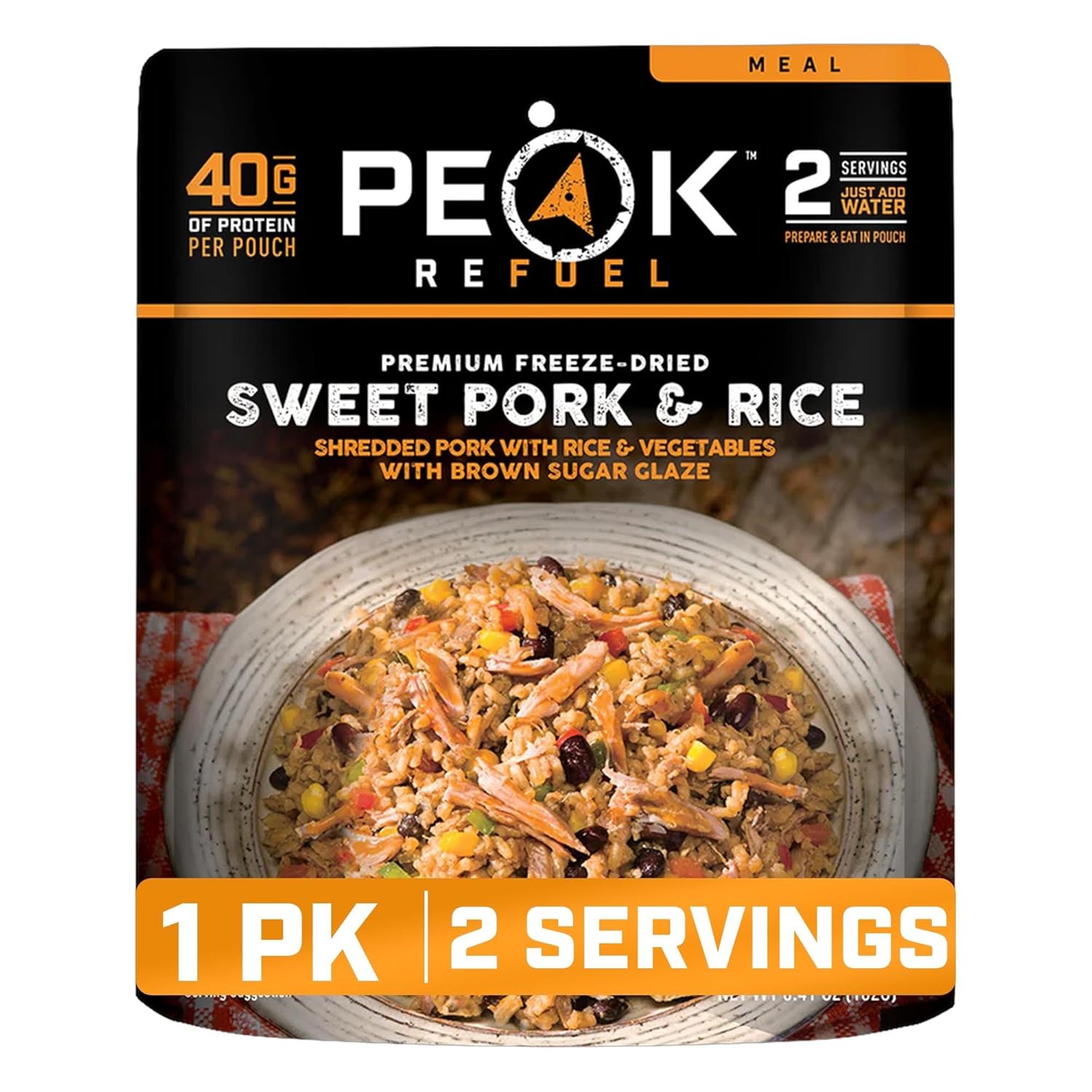
The Peak Refuel Sweet Pork and Rice runs about $13.95 for a two-serving pouch packing 800 calories and 40 grams of protein from real pulled pork — no textured vegetable protein filler. That works out to roughly 57 calories per dollar and 2.9 grams of protein per dollar, the best protein math in this whole category, and the sweet-pork flavor is the one thru-hikers keep re-ordering. The honest con: the brown-sugar sauce muddies in thin high-altitude boil water — stir well, wait the full ten minutes, and stir again before you eat.
My take: the default dinner for any trip where miles matter — highest protein-per-dollar in the lineup.
Peak Refuel Beef Stroganoff — The Editor’s-Choice Dinner
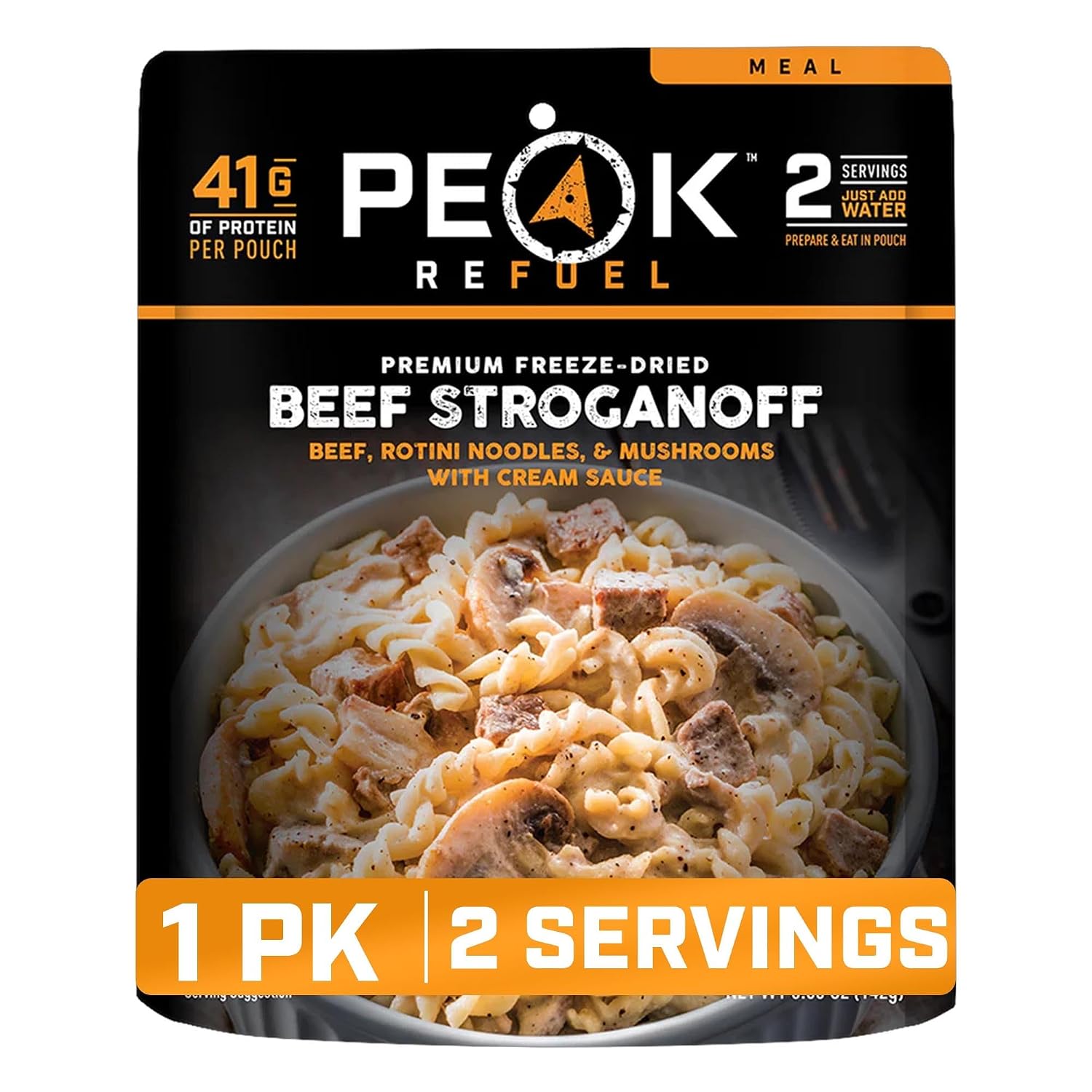
The Peak Refuel Beef Stroganoff is about $14.95 for a two-serving pouch with 810 calories and 41 grams of protein from real diced beef, rotini, and a genuine sour-cream-and-mushroom sauce. Of everything I compared, this is the pouch that tastes closest to actual home cooking — the cream base rehydrates rich and the beef keeps its texture. Two honest cons: it wants a little more water than the pouch says, and the premium price stings on a 300-dinner thru-hike budget.
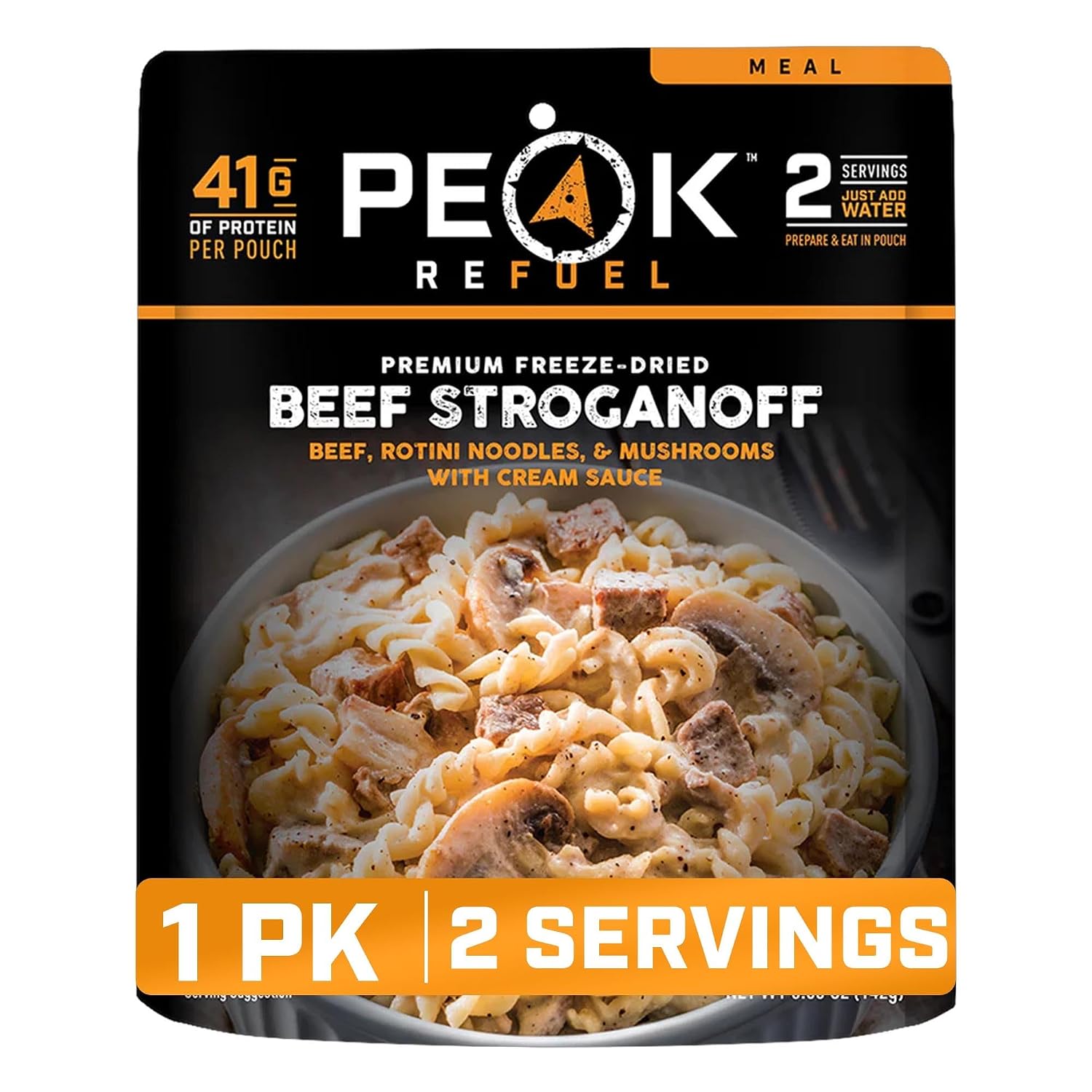
My take: the dinner I’d pick for the first cold night out — taste plus the best protein count here.
Peak Refuel Biscuits & Sausage Gravy — The 1,100-Calorie Breakfast
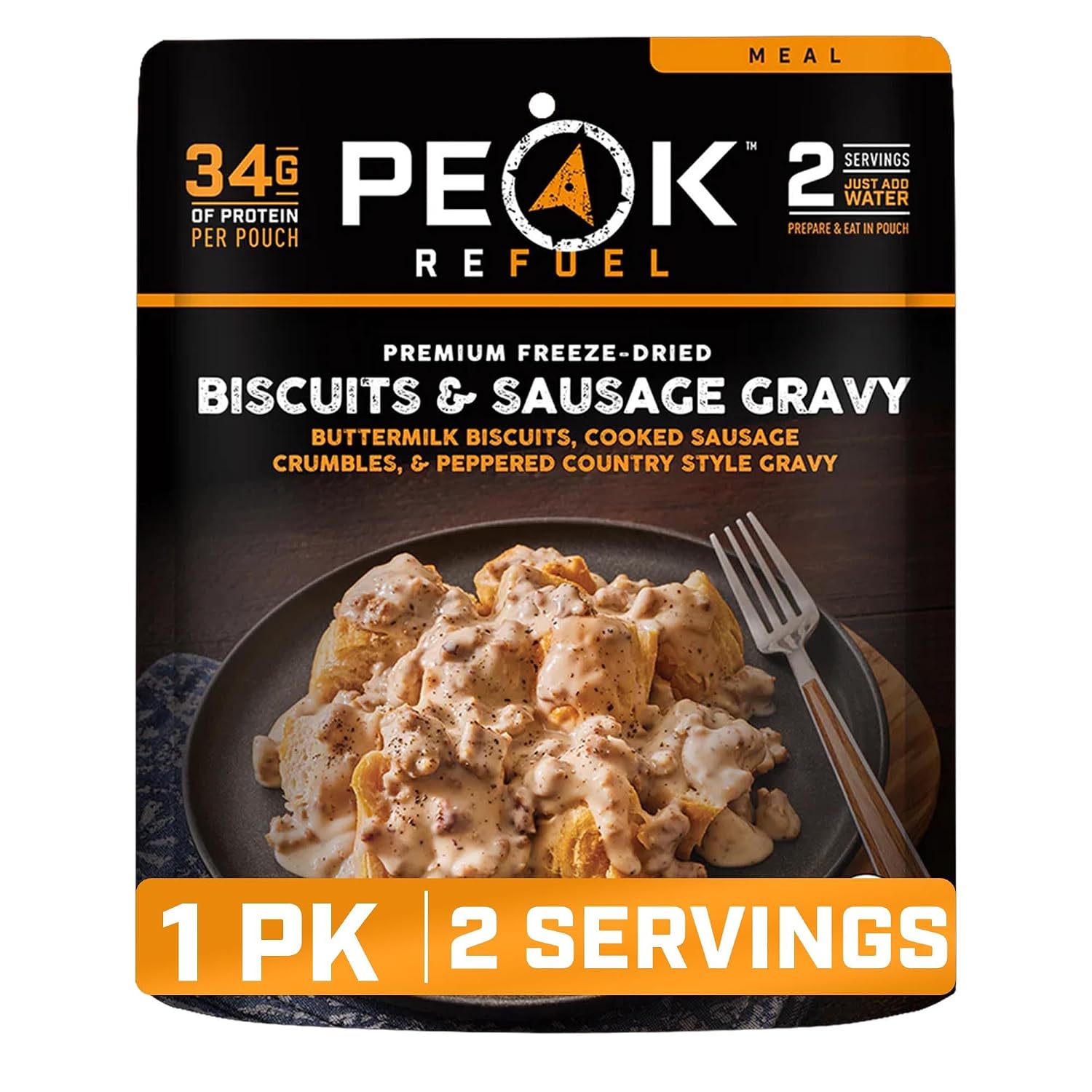
The Peak Refuel Biscuits and Sausage Gravy runs about $14.95 and it is the calorie bomb of the breakfast lineup: 1,100 calories and 34 grams of protein in one pouch, flaky biscuit pieces and real sausage crumbles in peppered country gravy. On a cold morning this is the meal that keeps you warm until dinner. The honest con: gravy-based meals rehydrate unevenly — break the biscuits up before adding water and stir twice, or the corners stay dry.
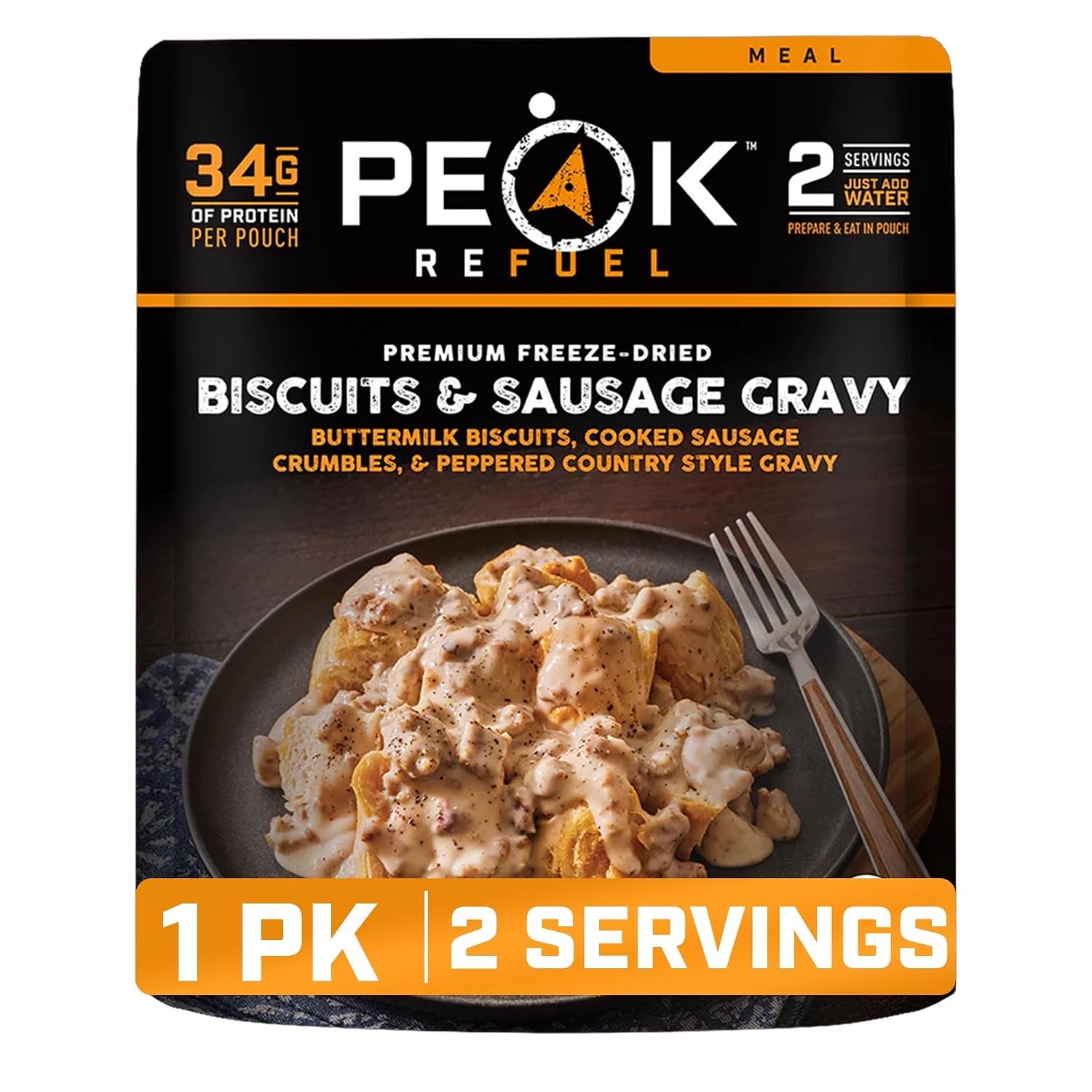
My take: the cold-morning pick — pair it with a lighter dinner, because nothing else in the bag needs 1,100 calories before 9 a.m.
Mountain House Breakfast Skillet (2-Pack) — The Everywhere Breakfast
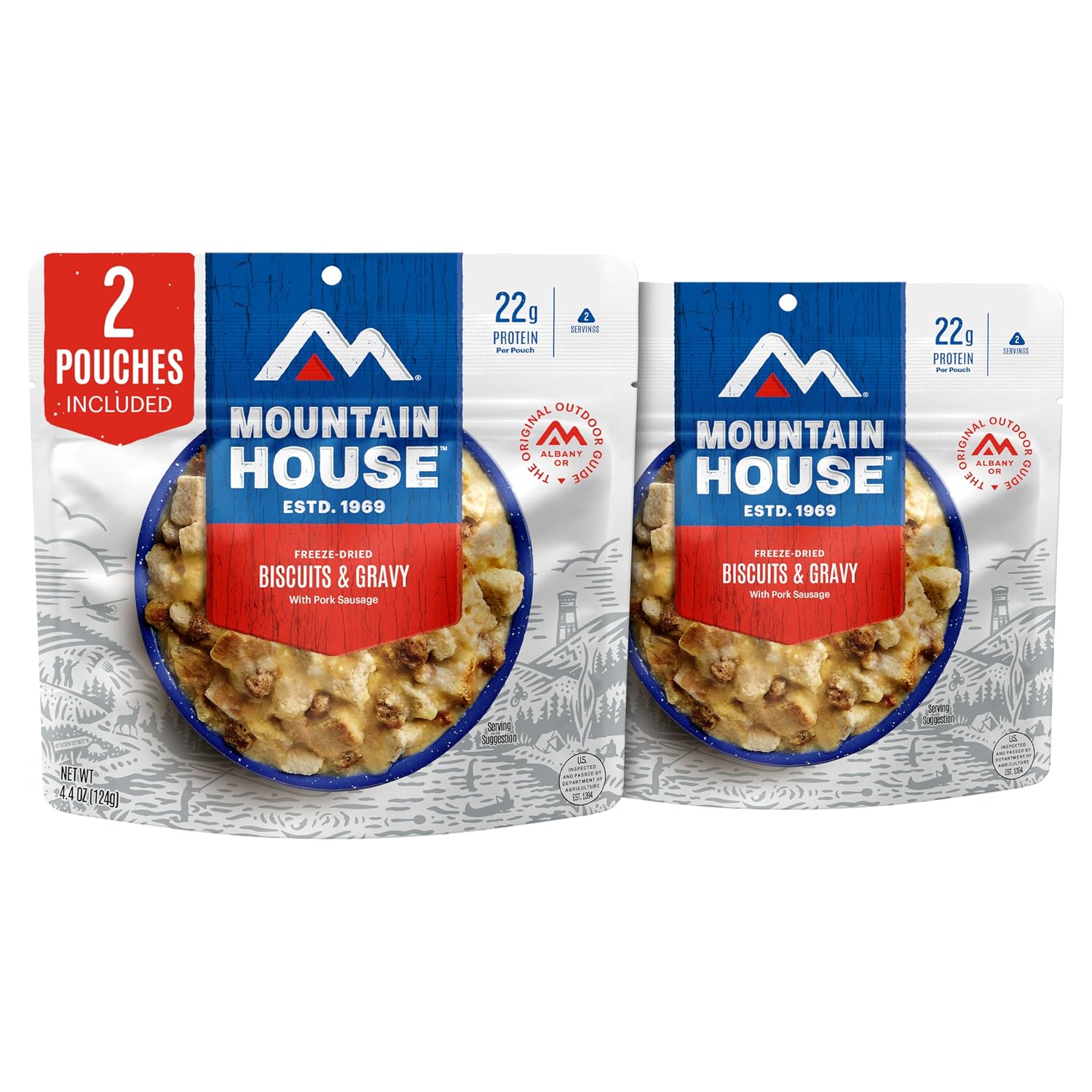
The Mountain House Breakfast Skillet 2-Pack runs about $21.99 for two 4-serving pouches of hash browns, scrambled eggs, sausage, and peppers — 520 calories and 28 grams of protein per pouch per the brand’s own panel. Per pouch that’s around $11, which undercuts every Peak Refuel pick above on price, and the skillet remains the diner-plate standard of freeze-dried breakfasts. Two honest cons: the eggs go rubbery if you over-soak past the stated time, and the 4-serving format means leftovers unless you’re feeding two or three people.
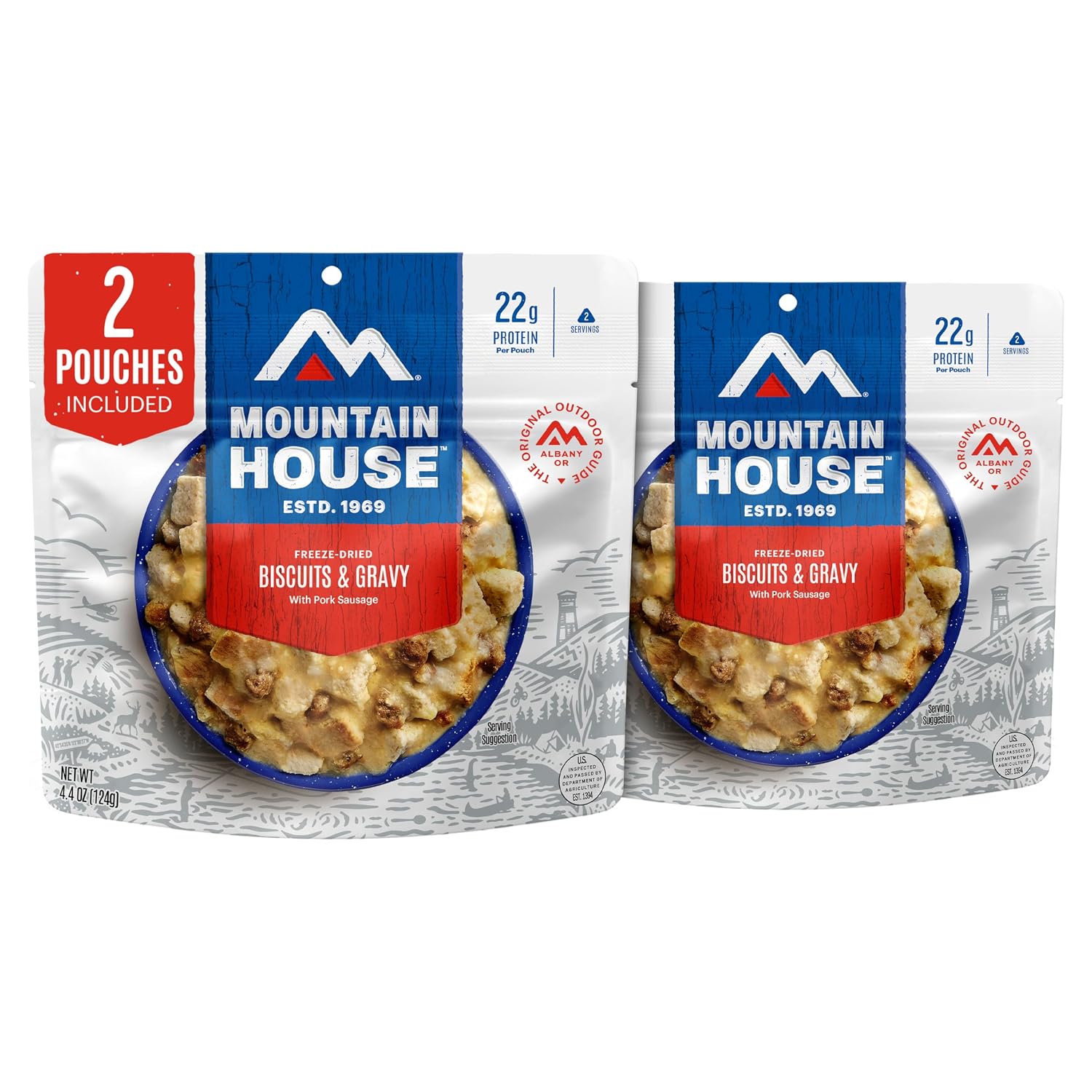
My take: the availability pick — every trail town stocks Mountain House, and this is the diner-plate breakfast for less.
Stocking a resupply box? Prime free shipping beats trail-town markups every time — start a free 30-day Prime trial here, cancel anytime.
The Calories-Per-Dollar Math
Sweet Pork & Rice: $13.95 / 800 calories = about 57 cal per dollar, 40g protein.

Beef Stroganoff: $14.95 / 810 calories = about 54 cal per dollar, 41g protein.
Biscuits & Gravy: $14.95 / 1,100 calories = about 74 cal per dollar, 34g protein.
Breakfast Skillet (per pouch): about $11 / 520 calories = about 47 cal per dollar, 28g protein.
What that means: the Peak Refuel breakfast is the calorie-value winner, the Peak Refuel dinners win protein-per-dollar, and Mountain House wins price-per-pouch and availability. Budget roughly $14 a dinner for Peak Refuel quality; roughly $11 a pouch for Mountain House availability.
Features That Actually Matter (And Ones That Don’t)
Real meat versus textured vegetable protein. Peak Refuel uses USDA-inspected meat; cheaper brands stretch servings with TVP. Your legs can taste the difference on day four.
“2 servings” is marketing. Every pouch here is labeled 2 servings, and every thru-hiker eats one pouch. Count calories per pouch, not servings.
Rehydration suffers at altitude. Boil points drop with elevation, and thin water is why “it tasted watery” reviews exist. Stir twice, wait the full ten minutes.
The 30-year shelf life is a storage spec, not a trail spec. Don’t pay a premium for it on food you’ll eat this season.
Package formats changed this year. Mountain House singles are moving to multi-packs on Amazon — check the pouch count before assuming a price is per pouch.
Where the Money Goes
Budget resupply (5 dinners + 2 breakfasts): Mountain House multi-packs, about $70-80 total, available everywhere.
Performance resupply (5 dinners + 2 breakfasts): Peak Refuel, about $95-110 total, real-meat protein that justifies the premium on high-mileage weeks.
The honest split: Peak Refuel dinners in the planned boxes, Mountain House as the town-stop backup — the premium only buys you protein when the miles are already hard.
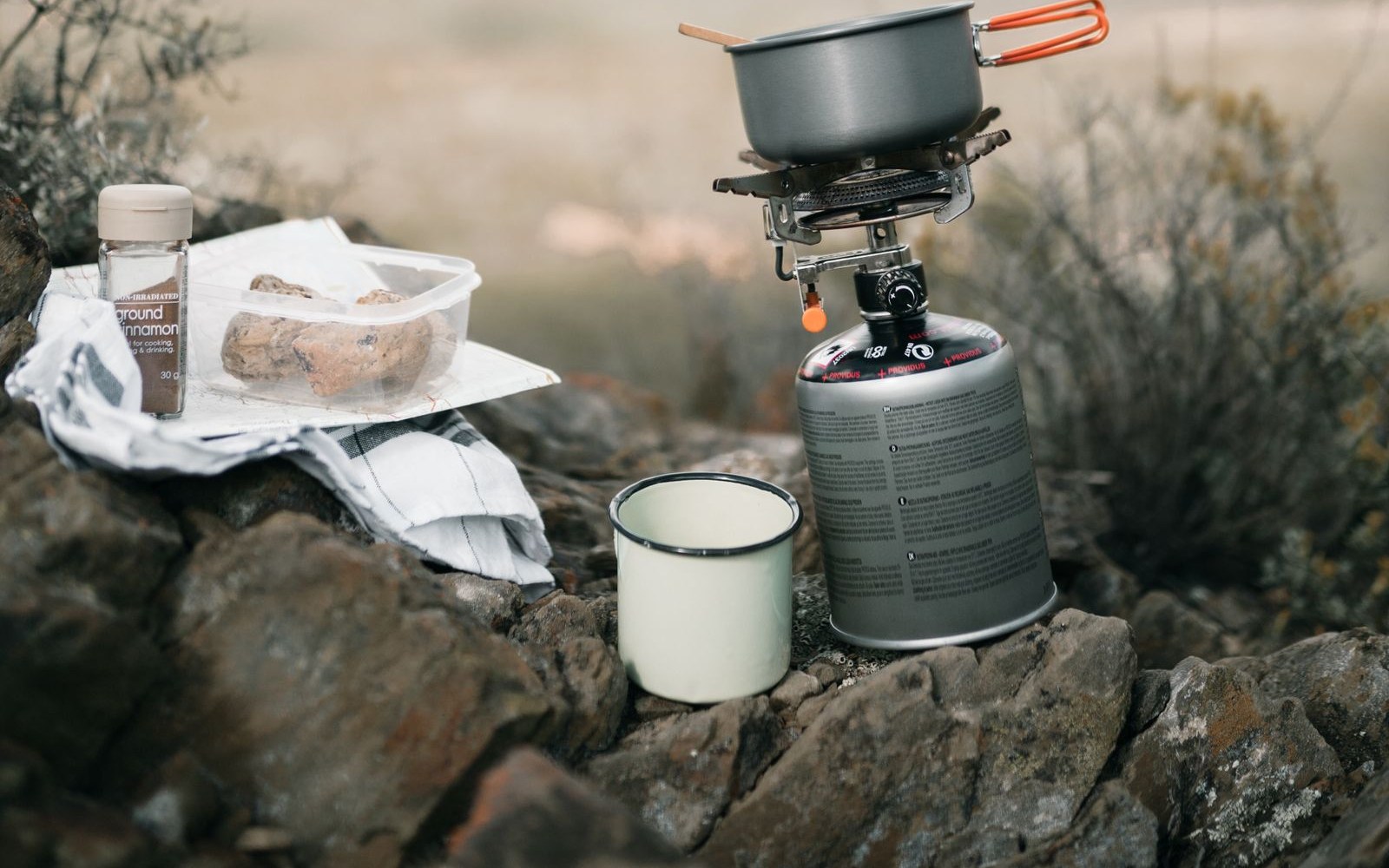
One last packing note: freeze-dried pouches need boiling water, not just hot. A 10-minute rehydrate at a real rolling boil is the difference between dinner and crunchy disappointment, and at altitude that means carrying the extra fuel to keep the boil going. Budget roughly a half-ounce of fuel per pouch when you plan the resupply.
Keep reading: sleeping bag liners that add 15 degrees and camp thermoses that still pour steam 20 hours in round out the cold-weather camp kitchen.
GearHound is reader-supported. As an Amazon Associate, I earn from qualifying purchases. That means if you buy through one of the links above, I get a small commission at no extra cost to you. I only recommend gear I’d actually carry into the field.
Related guides
- Best Dog Ramps and Stairs 2026: For Beds, Cars, and Couches
- Dog Tent Camping Shelter: Best Shelters for Camping with Your Dog
- Best Dog Sunscreen 2026: Sun Protection That Is Actually Safe for Dogs
- Best Rain Jackets for Hiking 2026: Waterproof Jackets That Actually Breathe
- Best Dog Camping Cots 2026: Elevated Beds That Keep Your Dog Off Cold Ground
⛺ Get Your Free Camping with Your Dog Checklist
Join our newsletter and get this free printable plus weekly tips.
Frequently Asked Questions
Is Peak Refuel or Mountain House better?
By goal — the guide's math: Peak Refuel costs more per pouch and delivers real USDA-inspected meat and higher protein counts (the sweet pork and stroganoff lead), while Mountain House costs less per pouch and wins the calories-per-dollar column. The number that decides the resupply box is calories per dollar, and the guide runs it honestly.
Which freeze-dried brand has more protein?
Peak Refuel — the guide's protein-per-ounce leader is the Sweet Pork & Rice, and the brand's meat-first formulation is the whole point of its premium. Mountain House wins the budget breakfast column with the Breakfast Skillet two-pack, but protein rebuilds legs and Peak Refuel owns that category.
Is Peak Refuel worth the extra cost?
For hard-mileage trips, yes — the guide's framing: the resupply math that matters depends on whether you're rebuilding legs on a thru-hike (protein wins) or feeding a family car-camp weekend (calories per dollar wins). Both brands are right for different boxes, which is why the single-brand question is the wrong question.
Liked this guide? Get the next one in your inbox — the camp packing checklist is free too.
✓ You're in — check your inbox.
No spam. Unsubscribe anytime. We never share your email.
Prices move fast. Start your Amazon trip from our Shop & Support page and your purchases support GearHound at no extra cost to you.
Price Check
Prices verified via our product tracker. Updated Oct 31.
| Peak Refuel Sweet Pork and Rice Freeze-Dried Meal, 40g Pro | $13.95 | 4.5★ (1,197) |
| Peak Refuel Beef Stroganoff Freeze-Dried Backpacking Meal | $14.95 | 4.5★ (1,953) |
| Peak Refuel Biscuits and Sausage Gravy Freeze-Dried Breakf | $14.95 | 4.5★ (1,548) |
| Mountain House Freeze-Dried Breakfast Entree | Backpacking | $21.99 | 4.5★ |
As an Amazon Associate we earn from qualifying purchases.