This article contains affiliate links. We may earn a commission from qualifying purchases.
Some content on this site is AI-assisted and reviewed by our editorial team.
Not everyone wants heavy boots on the trail. Hiking shoes — trail runners, approach shoes, and hybrid designs — offer a lighter, more nimble alternative that many hikers prefer for everything from day hikes to thru-hikes. They’re cooler, dry faster, and let you move faster. The trade-off is less ankle support and protection, but for most trails and most hikers, a good pair of hiking shoes beats boots.
I compared the top hiking shoes for 2026, looking at grip, comfort, durability, and how each performs on different terrain. Here are the five best options for hitting the trail.
Trail Runners vs Approach Shoes: Which Do You Need?
Trail runners are built for moving fast on dirt trails. They have aggressive lugs for grip, cushioning for long miles, and breathable uppers that dry quickly after stream crossings. Most thru-hikers on the Appalachian Trail and Pacific Crest Trail wear trail runners, not boots.
Approach shoes are a hybrid between climbing shoes and hiking shoes. They have sticky rubber soles for scrambling on rock, flat toe boxes for edging on small holds, and stiffer midsoles for stability on uneven terrain. If your hikes include rock scrambling or you’re heading to alpine areas where you’ll be on granite slabs, approach shoes are the better choice.
For most hikers on most trails, trail runners are the right pick. They’re lighter, more cushioned, and more versatile. Choose approach shoes only if you regularly scramble on technical terrain.
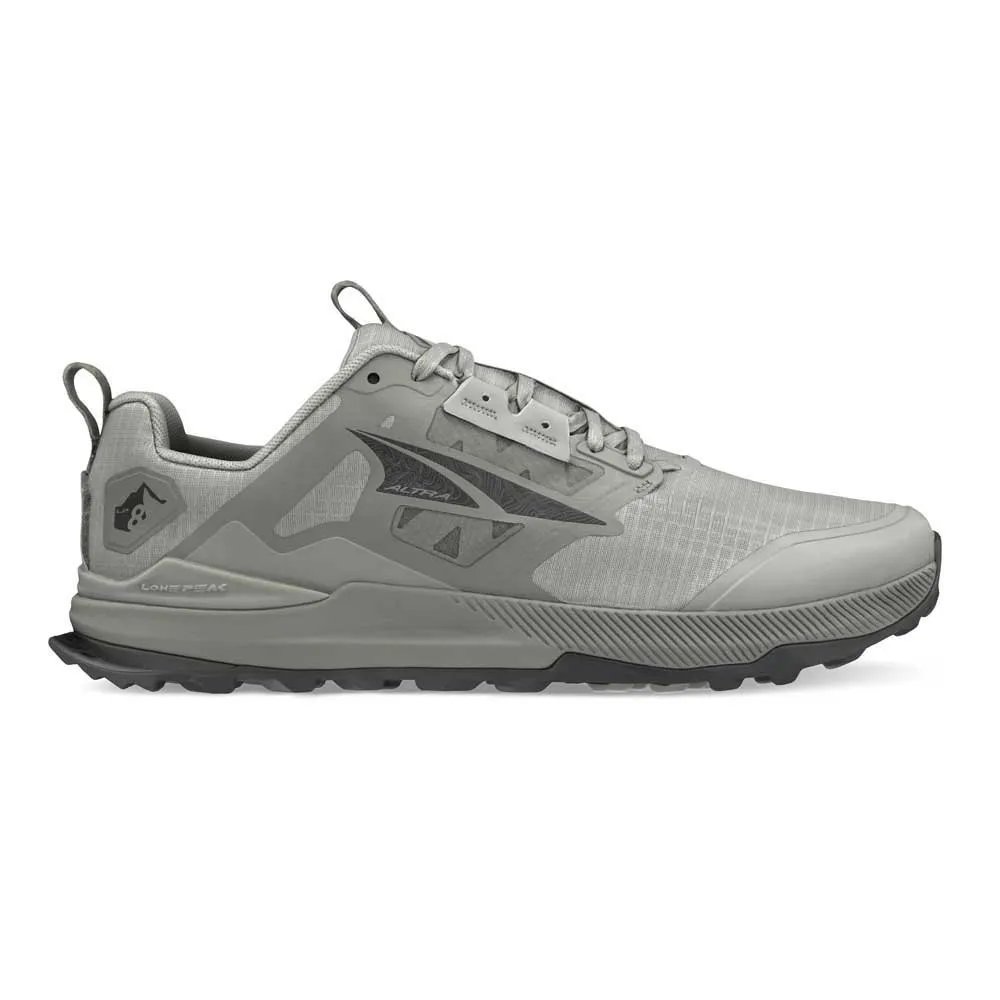
Altra Lone Peak 8: Best All-Around Trail Runner
The Altra Lone Peak has been the most popular trail runner on the Appalachian Trail for years, and the version 8 continues the legacy. It features Altra’s signature zero-drop platform (the heel and toe are at the same height) and a wide toe box that lets your toes splay naturally. For hikers with wide feet or those who get blisters in narrow shoes, the Lone Peak is a game-changer.
The outsole uses Altra’s MaxTrac rubber with multidirectional TrailClaw lugs that grip well on dirt, mud, and loose gravel. The midsole has Altra’s Ego foam, which balances cushioning and responsiveness — soft enough for long days but firm enough that you don’t sink in with each step. The upper is a quick-drying mesh that drains fast after wet crossings.
The Lone Peak 8 weighs about 10.4 ounces per shoe (men’s size 9) and has a 25mm stack height. It’s not the most cushioned shoe on this list, but the wide platform and stable ride make it comfortable for high-mileage days. The durability is average for a trail runner — expect 400 to 500 miles before the outsole lugs wear down.
See price and reviews on Amazon
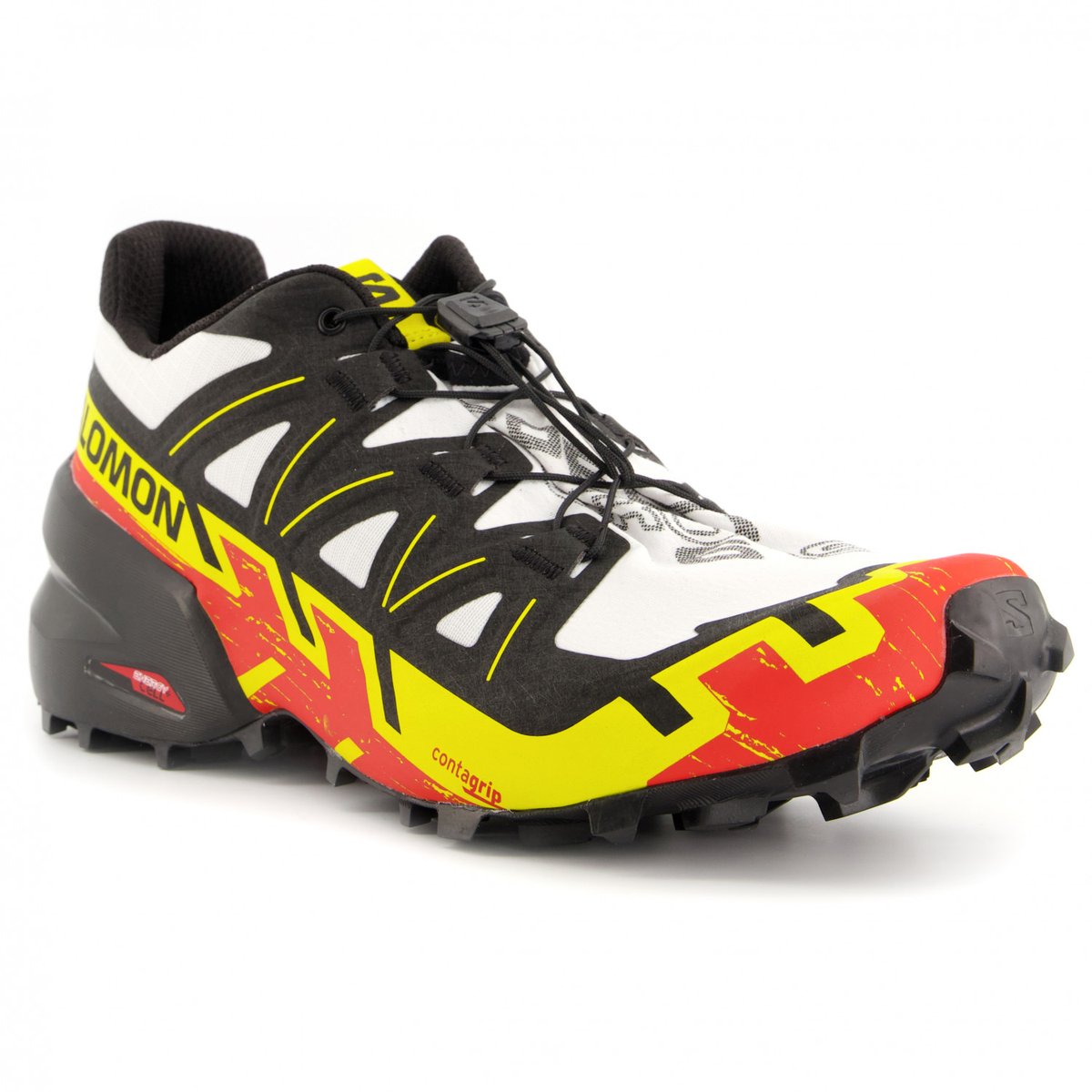
Salomon Speedcross 6: Best for Mud and Soft Terrain
If you hike in wet conditions or on soft, loose terrain, the Salomon Speedcross 6 is the grippiest shoe on this list. Its deep 6mm lug pattern bites into mud, wet grass, and loose dirt like a tractor tire. Where other shoes slip and slide, the Speedcross holds steady.
The Speedcross 6 uses Salomon’s Contagrip MA outsole compound, which stays grippy even on wet rock. The upper is a tight-woven mesh that keeps out debris — useful on muddy trails where small rocks and twigs would otherwise work their way inside. The Quicklace system lets you tighten and release the shoe with a single pull, which is faster than traditional laces and means no loose ends to trip over.
The ride is firmer than the Lone Peak, with less cushioning but more precision. You feel the trail under your feet, which is good for technical terrain but can be fatiguing on long days. The Speedcross 6 weighs about 10.7 ounces per shoe. If your trails are wet, muddy, or soft, there’s no better gripping shoe.
Check the latest price on Amazon
La Sportiva TX4 EVO: Best Approach Shoe for Scrambling
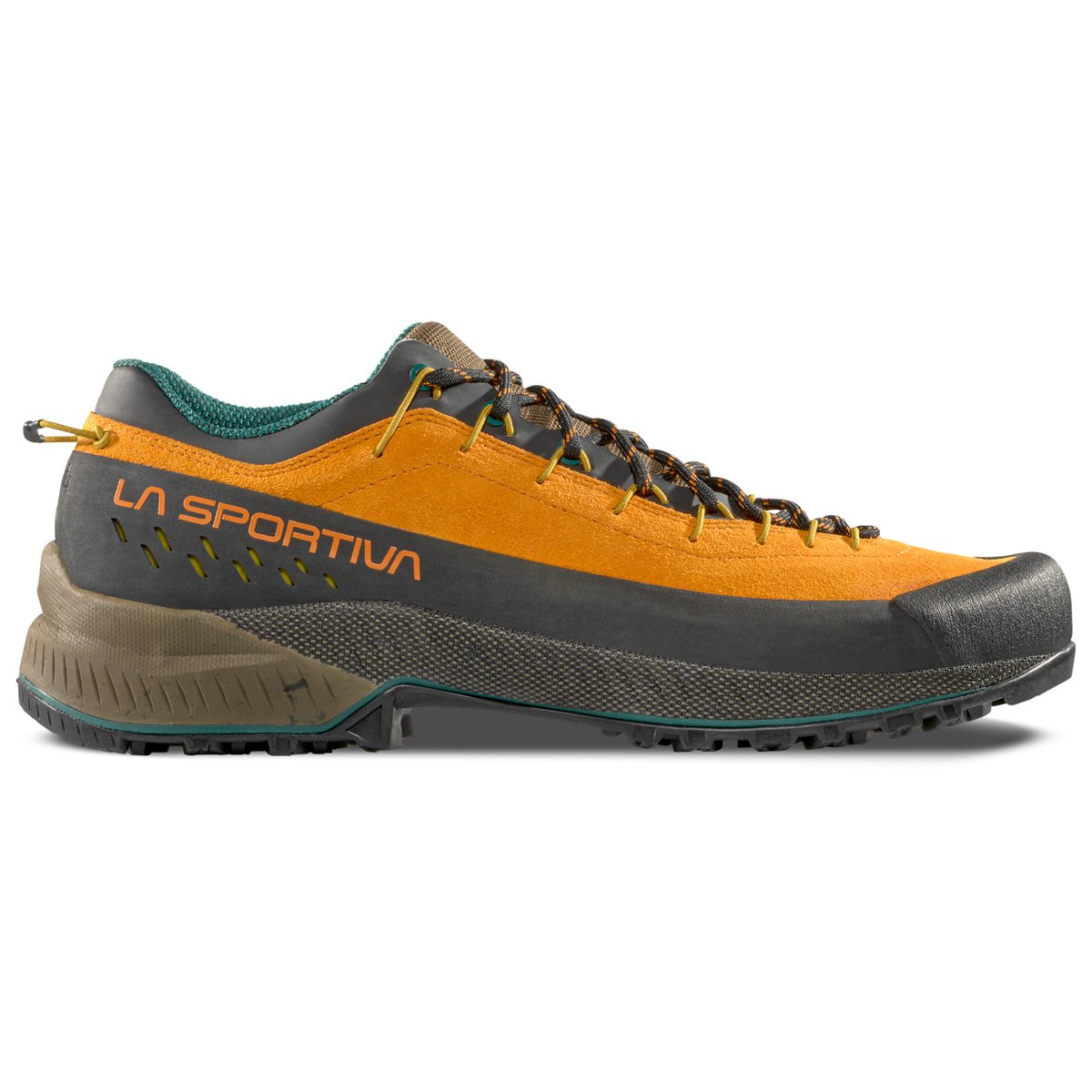
The La Sportiva TX4 EVO is the shoe you want when the trail turns to rock. It’s an approach shoe — designed for the hike to climbing areas, but equally capable on any trail that includes scrambling on granite, slab, or talus. The TX4 uses La Sportiva’s Vibram MegaGrip outsole with a climbing zone at the toe, giving you friction on smooth rock that no trail runner can match.
The midsole is stiffer than a trail runner, which means less comfort on long flat approaches but much better stability when you’re edging on small footholds or smearing on slabs. The upper is leather with a rubber toe cap that protects your feet from rock impacts. The lacing extends to the toe, letting you dial in a tight fit for technical moves.
The TX4 EVO weighs about 14.5 ounces per shoe — heavier than the trail runners on this list. But for hikers who regularly encounter rock scrambling, via ferrata, or alpine terrain, the grip and protection are worth the weight. If your hikes stay on dirt, stick with a trail runner.
Hoka Speedgoat 5: Best for Cushioning and Long Miles
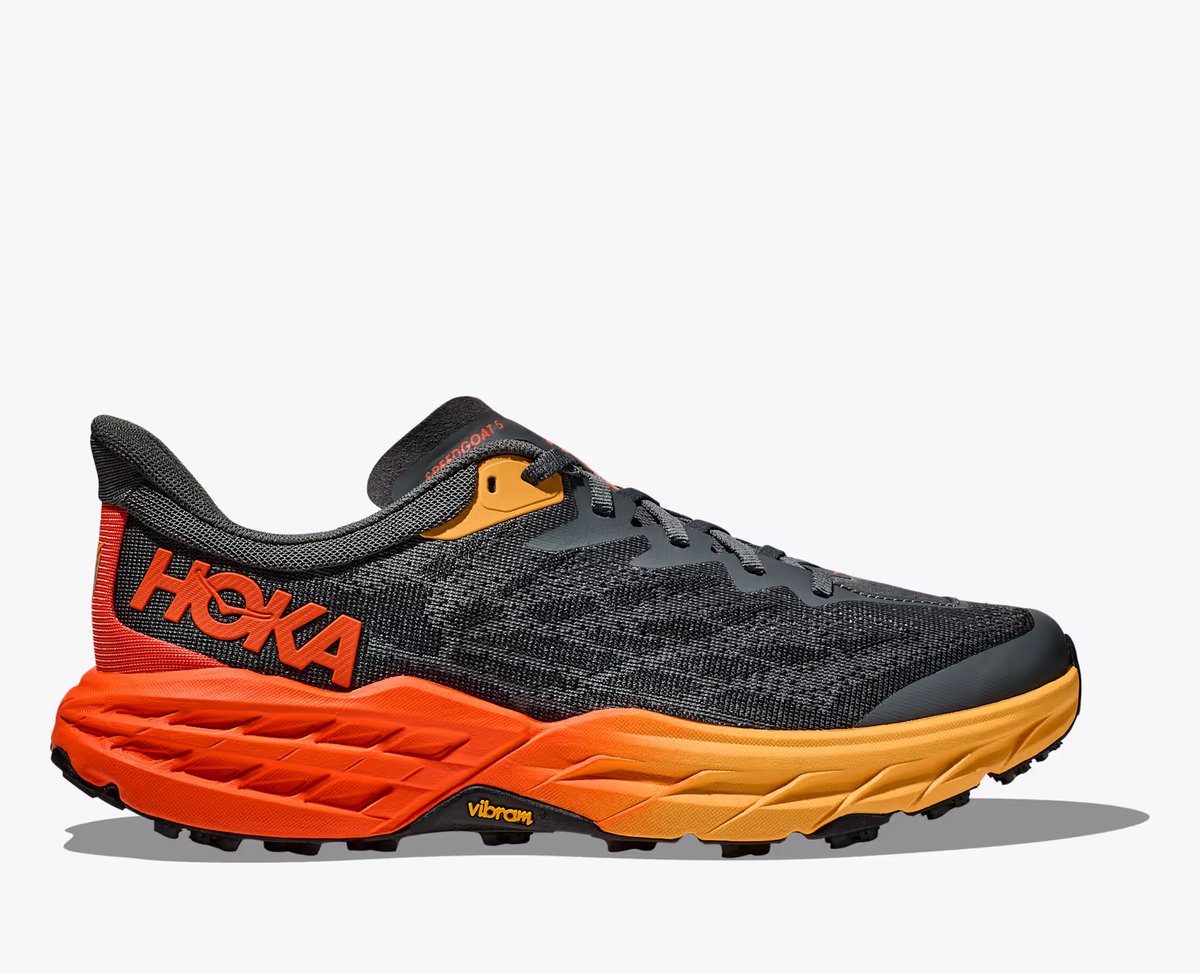
The Hoka Speedgoat 5 is the most cushioned shoe on this list, and for hikers who prioritize comfort over everything else, it’s the top pick. The thick compression-molded EVA midsole absorbs impact like a shock absorber, reducing fatigue on long days and hard surfaces. If you’re doing 20-mile days or carrying a heavy pack, the Speedgoat’s cushioning makes a real difference.
Despite the maximalist cushioning, the Speedgoat 5 is surprisingly stable. The outsole is wide and flat, with 5mm Vibram Megagrip lugs that handle most terrain competently. It’s not as grippy as the Speedcross on mud or as precise as the TX4 on rock, but it’s more than adequate for typical hiking trails. The upper uses a lightweight mesh with reinforced overlays for durability.
The Speedgoat 5 weighs about 11.2 ounces per shoe — not the lightest, but the cushioning makes the weight feel manageable. The main drawback is the stack height — at 33mm, it’s tall enough that you can roll an ankle on uneven terrain if you’re not careful. For hikers who need cushioning but want stability, pair these with a lightweight hiking pole.
Merrell Moab Flight: Best Budget Trail Runner
The Merrell Moab Flight is the budget pick that doesn’t skimp on trail-ready features. It has a Vibram outsole (the same brand used on shoes costing twice as much), a breathable mesh upper, and a nylon arch shank for support on uneven ground. At around $80, it’s the most affordable shoe on this list and an excellent entry point for hikers trying trail runners for the first time.
The Moab Flight uses Merrell’s FloatPro midsole, which is lighter and more resilient than the foam in previous Moab versions. The cushioning is moderate — not as plush as the Speedgoat but more comfortable than the Speedcross. The lug pattern is shallower than the Speedcross, which means less grip on mud but better comfort on hard-packed trails and pavement.
The upper is a standard mesh that breathes well but isn’t as tightly woven as the Speedcross, so small debris can work its way in on loose trails. The fit runs true to size with a medium-width toe box. For hikers who want a reliable trail runner without spending $140+, the Moab Flight is the best value on this list.
How I compared These Shoes
I evaluated each shoe based on:
- Grip: Outsole rubber compound, lug depth, and performance on wet rock, mud, and dry dirt.
- Cushioning: Midsole thickness, foam quality, and how much impact protection each shoe provides on long days.
- Fit: Toe box width, arch support, and whether the shoe runs true to size.
- Durability: Outsole wear rate, upper material strength, and expected mileage before replacement.
- Weight: Ounces per shoe — lighter is better for fast hiking, but not at the cost of protection.
Disclosure: As an Amazon Associate, GearHound earns from qualifying purchases. This means we may earn a commission when you buy through links on this site, at no extra cost to you. I only recommend gear I have used in the field.
The Short Version
For most hikers, the Altra Lone Peak 8 is the best hiking shoe — the wide toe box and zero-drop platform work for more foot shapes than any other shoe on this list. If you need maximum cushioning for long miles, the Hoka Speedgoat 5 is the most comfortable option. And if you want to try trail runners without spending much, the Merrell Moab Flight gives you Vibram grip at a budget price.
Replace your hiking shoes every 400 to 500 miles — the cushioning compresses and the outsole lugs wear down gradually, and worn shoes are the leading cause of foot and knee pain on the trail.
Get Your Free Camping with Your Dog Checklist
Join 500+ campers getting weekly tips on camping, hiking, and outdoor adventures with your dog.
No spam. Unsubscribe anytime.
⛺ Get Your Free Camping with Your Dog Checklist
Join our newsletter and get this free printable plus weekly tips.
Price Check
Prices verified via our product tracker. Updated Sep 27.
| Amazon.com | ALTRA Men's Lone Peak 8 Trail Running Shoe, B | $140.00 | 4.5★ (1,171) |
| Amazon.com | La Sportiva Mens TX4 EVO Leather Approach Sho | $190.91 | 4.5★ |
| Amazon.com | Merrell Men's Moab Flight Hiking Shoe, Black, | $119.99 | 4.5★ (892) |
As an Amazon Associate we earn from qualifying purchases.