
This article contains affiliate links. We may earn a commission from qualifying purchases.
Some content on this site is AI-assisted and reviewed by our editorial team.
Knee pain is the quiet tax every steep trail collects, and most hikers pay it for years before they finally buy poles. The math is simple: on a sustained downhill, each pole takes a meaningful share of the load off the downhill leg, and by the last mile of a big day that is the difference between walking out and stumbling out. Ankle injuries tell the same story — a pole planted on the sketchy rock crossing is a third point of contact that keeps a slip from becoming a sprain. I have watched first-time pole buyers make the same two mistakes over and over: they buy the cheapest pair, which twists and slips at the worst moment, or they buy ultralight carbon, snap one on a talus field, and learn why aluminum keeps its popularity. These five cover the realistic range: budget aluminum, cork comfort, and the premium stuff that lasts a decade.

After seasons of beating up poles on granite, mud, and winter crust, here is what is actually worth carrying.
TrailBuddy Trekking Poles — The Best Value
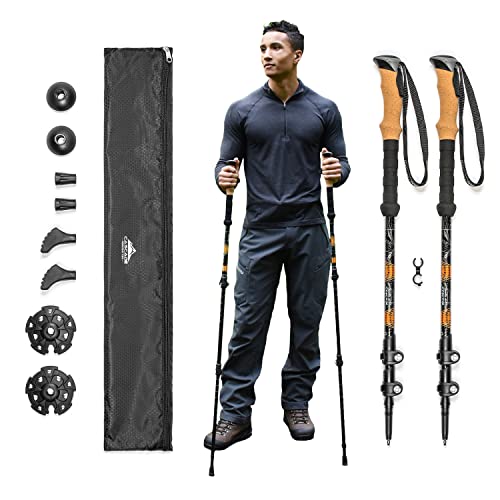
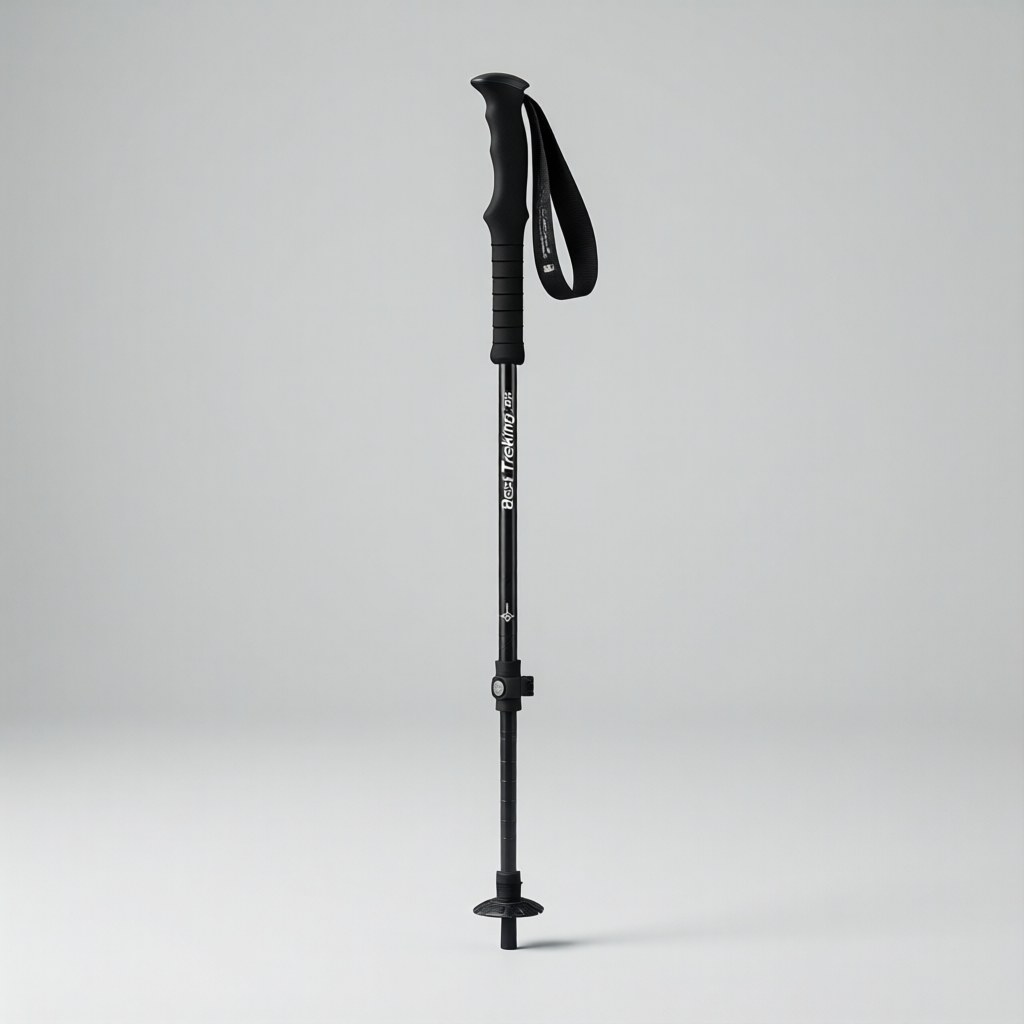
TrailBuddy Trekking Poles are the pair I hand to friends who are not sure poles are for them yet. The shafts are 7075 aircraft-grade aluminum, the same alloy class that shrugs off rock strikes that would crack cheaper tubing, and they adjust from about 24 to 54 inches with external lever locks you can flip with gloves on. At roughly $40 a pair they come with rubber tips, mud baskets, and carrying bags included, which matters more than it sounds once you price accessories separately. The honest cons: they are heavier than the premium options here, the cork-style grips are comfortable but not the equal of a true cork grip on sweaty July climbs, and the flip locks need a quarter-turn of tension screw after a season of hard use. That is a small service cost, not a design flaw.
My take: the pair to buy first — cheap enough to try the habit, good enough to keep using for years.
Cascade Mountain Tech Aluminum Poles — The Value Upgrade
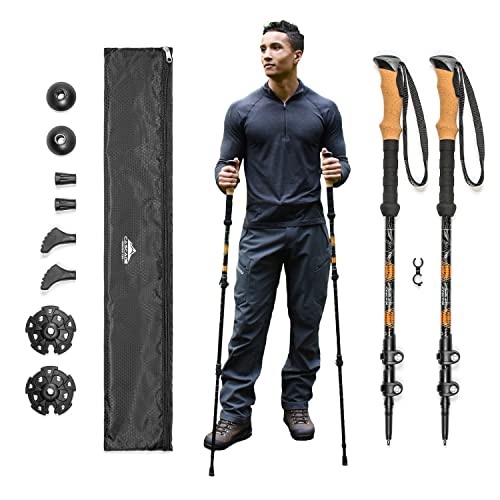
Cascade Mountain Tech aluminum poles sit one step up, and the step is mostly about the grip and the lock. The cork handle molds to your hand over a season and stays noticeably less stinky than foam, the extended EVA section below it gives you a lower choke-up point for steep traverses, and the quick locks hold without fiddling. Each pole runs about 10 ounces with aircraft-grade 6061 shafts, and a pair is usually about $30 on Amazon — sometimes less on sale. The cons: 6061 is a step softer than 7075, so a hard lateral hit on rock can ding a shaft, and the included rubber feet wear through on asphalt in a season. Everything else about them punches well above the price.
My take: if you will actually use poles most weekends, the extra few dollars for cork is the cheapest comfort upgrade in hiking.
Foxelli Carbon Fiber Poles — The Weight Saver
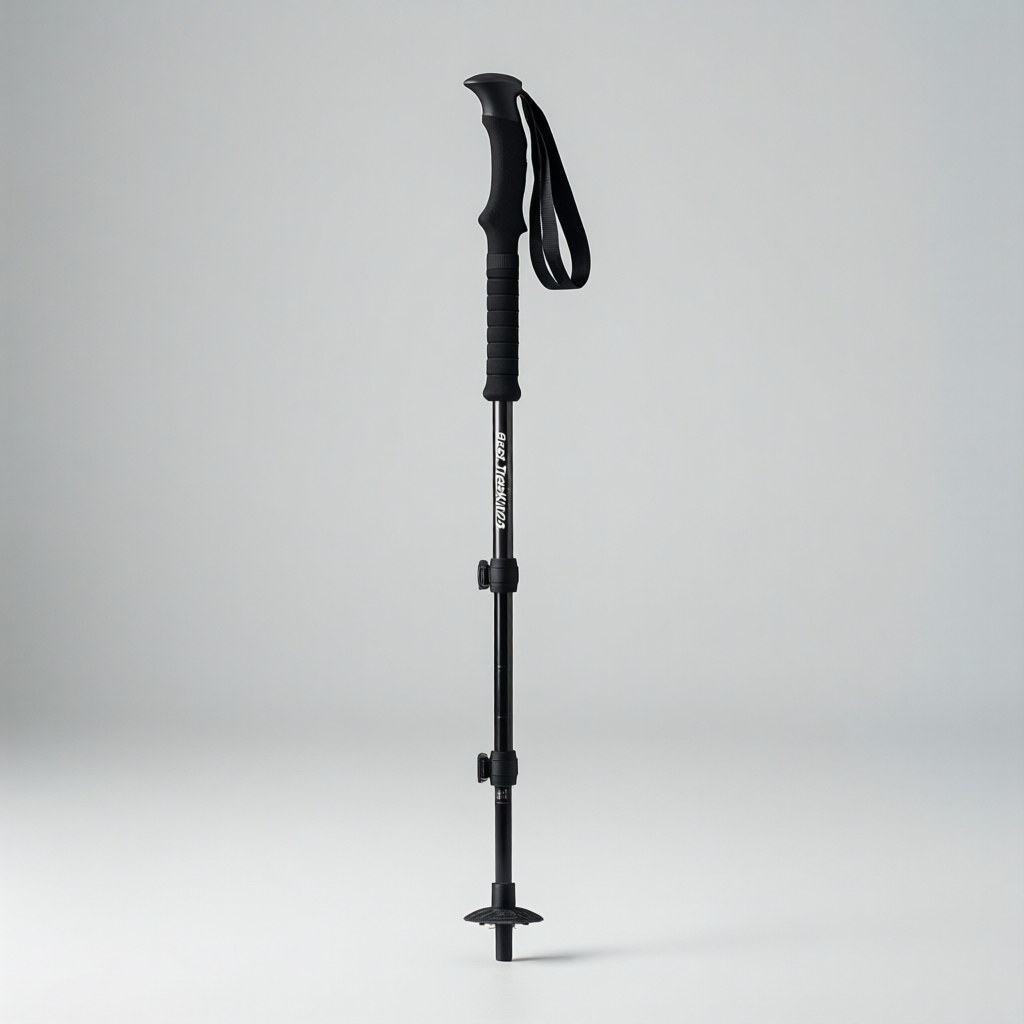
Foxelli carbon fiber poles are for the hiker who counts every ounce but still wants the damping carbon gives you. Full carbon shafts take the buzz out of long downhills, the natural cork grips are the real thing, flip locks are glove-friendly, and the whole kit packs into a short carry bag. They list around $70 a pair direct and commonly run less on Amazon. Carbon’s tradeoff is not negotiable though: it fails suddenly instead of bending, so a hard tip-strike into a rock crack can snap a pole that aluminum would have shrugged off. They also cost two to three times the aluminum picks here for a few ounces saved — that math only works if you are genuinely carrying them all day.
My take: the right call for big-mileage days on moderate terrain, wrong call as a first pair or a talus-field beater.
Black Diamond Trail Poles — The Buy-Once Pair
Black Diamond Trail poles are the ones guides carry, and after using them you understand why. The FlickLock mechanism is the most reliable external lock in the business — it clamps hard, does not slip under body weight, and survives seasons of grit without loosening. Aluminum shafts with a cork or foam grip, replacement parts available years later, and a build that survives abuse that ends budget poles. The catch is price: about $120 a pair, which is real money for two sticks. They are also heavier than any carbon option. You are paying for a tool that will still be in your hands in ten years, not a spec sheet.
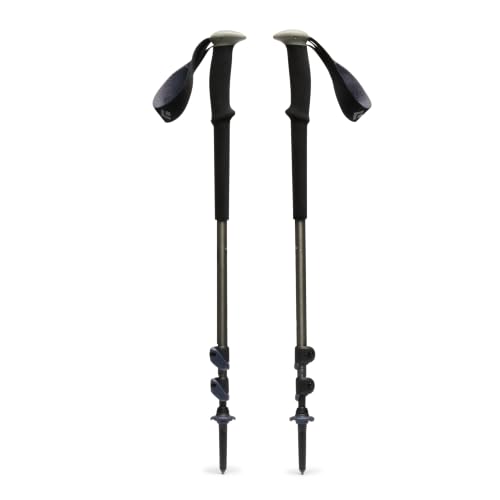
My take: buy these once and stop thinking about poles — the premium is spread over a decade of use.
Montem Ultra Strong Poles — The One-Piece-Style Budget Classic
Montem Ultra Strong poles built their reputation on being nearly indestructible — thick 7075 aluminum shafts that shrug off the rock strikes that end lighter poles, with quick locks and a foam grip. A pair runs about $65 at list and regularly drops under $30 on sale, which makes them a sleeper budget pick. The cons: they are the heaviest poles here by a visible margin, the foam grip absorbs sweat rather than staying dry like cork, and the range tops out around 53 inches, which tall hikers will notice. But as a loaner pair, a truck pair, or the poles you lend to the friend who treats gear badly, nothing else in this price class survives like they do.
My take: the pair you buy to abuse — snowshoeing, off-trail bushwhacking, gear-destroying friends, all of it.
Features That Actually Matter (And Ones That Don’t)
- External lever locks beat twist locks. Flip locks set and check in seconds with gloves on, and they are field-repairable with a screwdriver. Internal twist locks slip when grit gets in and cannot be fixed on the trail.
- Aluminum for rocky terrain, carbon for distance. 7075 aluminum bends and keeps working; carbon is lighter and damps vibration but fails suddenly. Rock-strewn trails chew up carbon.
- Cork grips earn their price. Cork conforms to your hand over a few weeks and stays comfortable when wet. Foam is fine and cheaper; rubber gets slick and cold.
- Weight matters most on long climbs. A few ounces per pole is nothing on a flat walk and everything at mile twelve. Buy light if you hike long, buy tough if you hike rough.
- Skip: anti-shock springs and GPS handles. The spring systems add weight and sap energy on climbs, and nobody has ever used a built-in compass on a pole handle twice.
What to Spend Where
- About $30: Cascade Mountain Tech aluminum — cork grip comfort at budget-pole pricing, the best pure value right now.
- About $40: TrailBuddy — the standard 7075 aluminum starter pair, baskets and tips included.
- About $65 list (often under $30 on sale): Montem Ultra Strong — the tough-love pair for abuse and loaners.
- About $70: Foxelli carbon — real weight savings for long days, with the carbon handling tradeoff.
- About $120: Black Diamond Trail — the decade-pair with the best lock in the business.
The practical move for most hikers: start with the TrailBuddy or Cascade pair and find out what you actually want — most people never need more. If you are putting together a full trail kit, a reliable folding pocket knife earns its spot next to the poles, and once the cold sets in, the same knee-saving logic applies to your dog’s paws — a good set of dog winter boots protects pads the way poles protect joints.
GearHound is reader-supported. As an Amazon Associate, I earn from qualifying purchases. That means if you buy through one of the links above, I get a small commission at no extra cost to you. I only recommend gear I’d actually carry into the field.
⛺ Get Your Free Camping with Your Dog Checklist
Join our newsletter and get this free printable plus weekly tips.
Frequently Asked Questions
Do trekking poles actually reduce knee strain?
Yes. Studies on downhill hiking show poles cut knee impact forces measurably, and most hikers report less next-day soreness on descents. The benefit is biggest with a heavy pack or on steep terrain.
What height should trekking poles be set to?
Set them so your elbow bends about 90 degrees on flat ground. Shorten by 5-10cm for climbing and lengthen the same for descents. Flip-lock adjustment survives cold and mud better than twist-locks.
Are expensive carbon trekking poles worth it?
Not for most hikers. Aluminum poles in the $30-60 range bend under real use; carbon saves 2-3 ounces per pair but snaps under lateral load. For the price of one carbon pole you can replace aluminum three times over.
Price Check
Prices verified via our product tracker. Updated Sep 27.
| Amazon.com: TrailBuddy Trekking Poles – Lightweight 7075 A | $5.49 | 4.7★ (63,938) |
| Amazon.com: Cascade Mountain Tech Trekking Poles, Shaft Ma | $29.99 | 4.6★ (14,404) |
| Amazon.com: Foxelli Carbon Fiber Trekking Poles – Lightwei | $59.97 | 4.7★ (8,446) |
| Amazon.com: BLACK DIAMOND Trail Trekking Poles Aluminum (P | $119.95 | 3.8★ |
| Amazon.com: Montem Ultra Strong Trekking, Walking, and Hik | $64.95 | 4.6★ (1,974) |
As an Amazon Associate we earn from qualifying purchases.