
This article contains affiliate links. We may earn a commission from qualifying purchases.
Some content on this site is AI-assisted and reviewed by our editorial team.
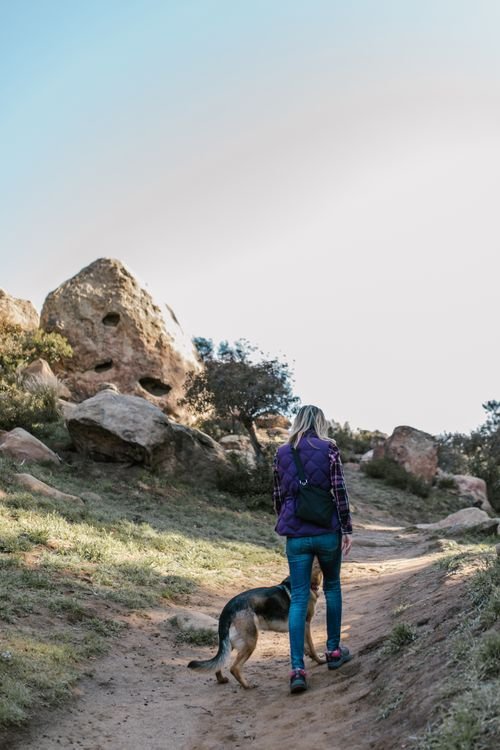
Your senior dog does not stop wanting to go camping just because they turned ten. They still light up when the sleeping bag comes out, still stick their nose out the car window on the drive to the trailhead, still circle the tent three times before lying down. What changes is not their desire — it is their body. Joints stiffen. Eyesight dims. Stamina drops. Heat affects them faster. Cold settles into their bones quicker than it used to. Camping with a senior dog is not about stopping. It is about adapting the plan so they can keep coming with you.
The right gear makes the difference between a great trip and a painful one. A ramp gets them into the car without jumping. An orthopedic pad lets them sleep without waking up stiff. A cooling vest prevents overheating when the temperature climbs. This guide covers the modifications and gear that keep older dogs comfortable on the trail and at camp.
What Counts as a Senior Dog?
Large breeds (Labradors, Goldens, Shepherds) are seniors at 7. Small breeds (terriers, toy breeds) reach senior status at 9 or 10. The shift is gradual — you will notice it in small things first. They hesitate before jumping into the car. They take longer to get up in the morning. They lag behind on hikes they used to lead. These are not signs that camping is over. They are signs that the plan needs adjusting.
The most common issues for senior dogs outdoors are joint stiffness (especially hips and elbows), reduced cardiovascular capacity, heat sensitivity, vision changes, and decreased immune response. Each one has a gear solution.
Car Ramps: Get Them In and Out Without Jumping
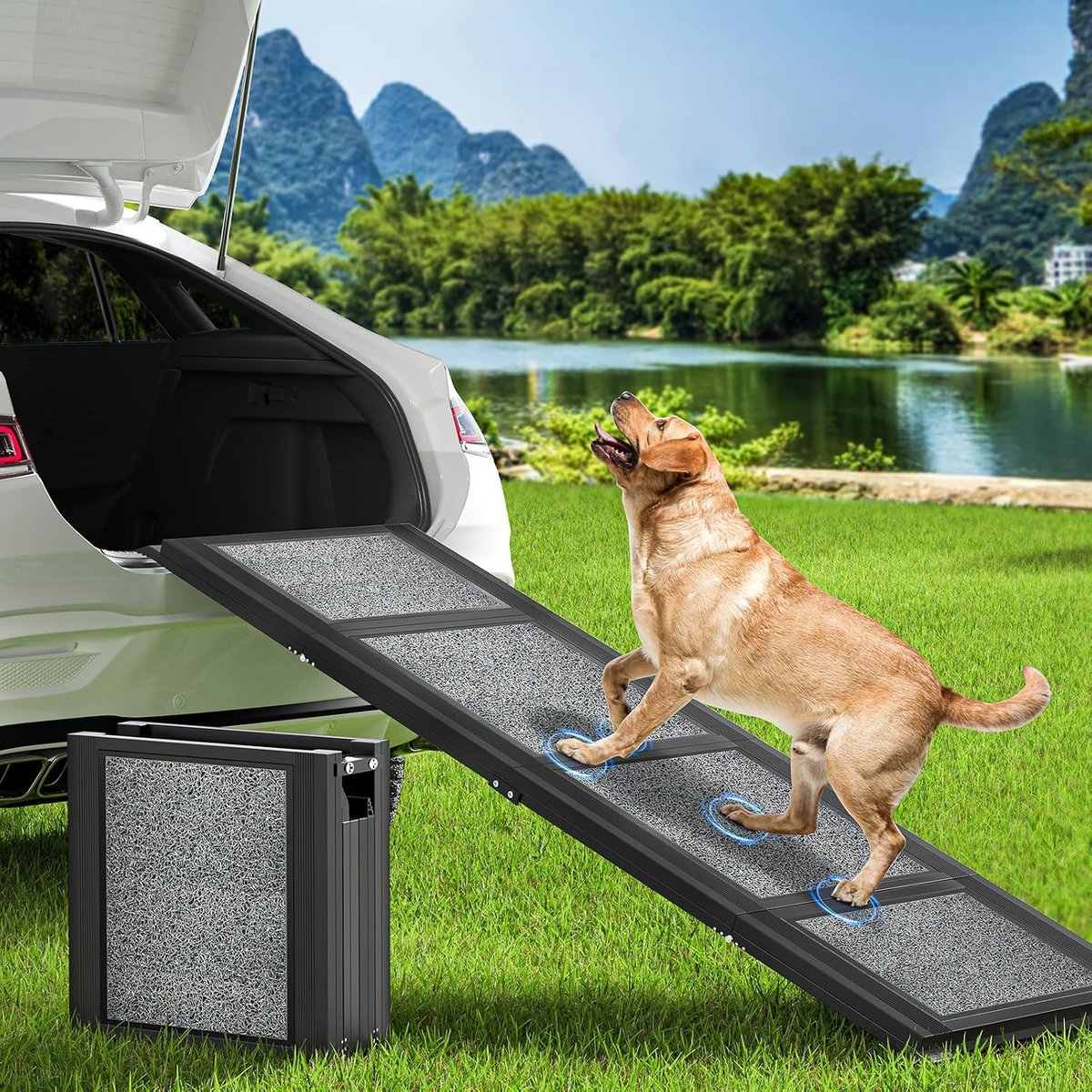
The single highest-impact piece of gear for camping with a senior dog is a loading ramp. Jumping down from an SUV is the most common cause of joint injury in older dogs — the impact on the front legs can tear ligaments and worsen arthritis. A ramp eliminates the jump entirely. Look for a ramp that is lightweight (under 5 pounds), folds for storage, has a non-slip surface, and supports at least 150 pounds. The ramp should be long enough to create a gentle angle — 18 to 24 degrees — when deployed from your vehicle.
Teach your dog to use the ramp at home before the trip. Lure them with treats, praise every step, and never force them. Most dogs learn in 3 to 5 sessions. Once they trust the ramp, they will use it without hesitation.
Check the latest price on Amazon
Orthopedic Camping Pads: Sleep Without Stiffness
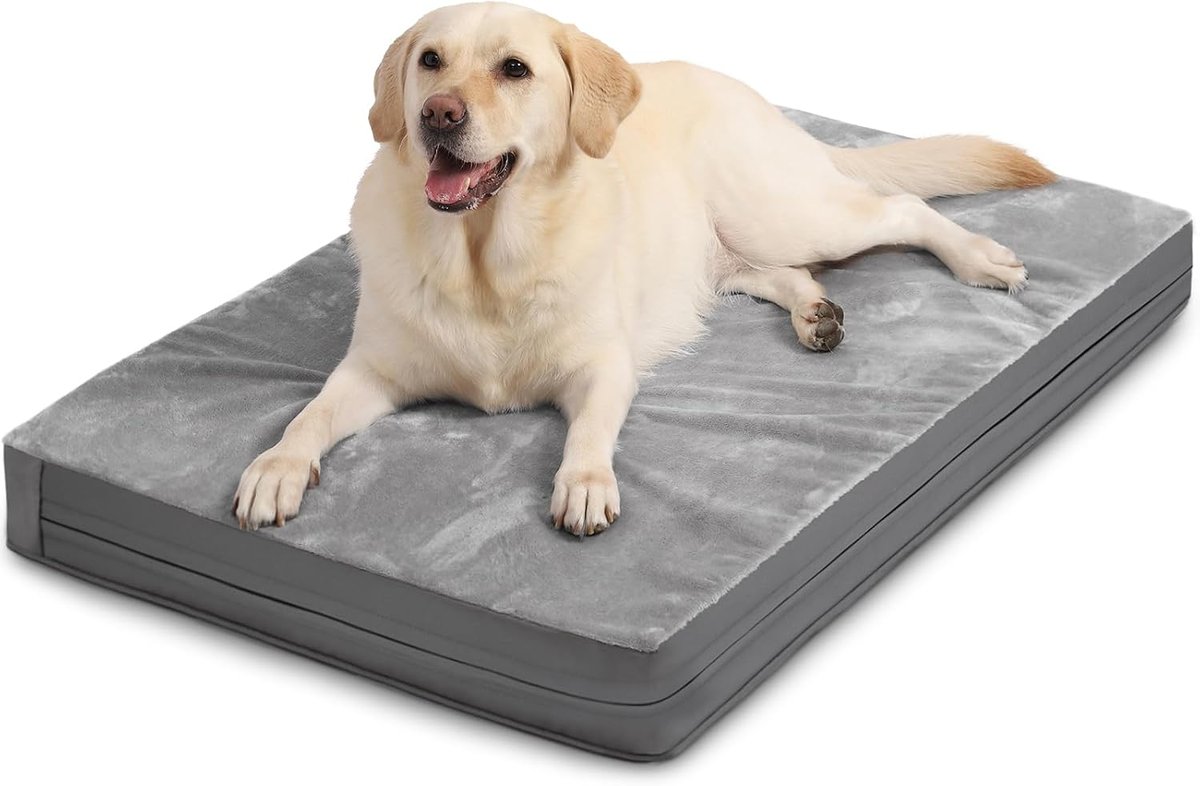
A standard sleeping pad does not provide enough cushioning for a senior dog’s joints. Older dogs need 2 to 3 inches of foam support to prevent pressure points on elbows, hips, and shoulders. An orthopedic dog pad designed for travel gives them this support without weighing down your pack. Look for pads with memory foam or dense orthopedic foam, a waterproof cover, and a packed size that fits in your gear bin.
For car camping, a full-size orthopedic dog bed works. For backpacking, a compact self-inflating foam pad trimmed to your dog’s size is the best option. Do not skip this — a dog that sleeps well wakes up ready to hike. A dog that sleeps on hard ground wakes up stiff and sore.
Cooling Vests: Prevent Heat Exhaustion
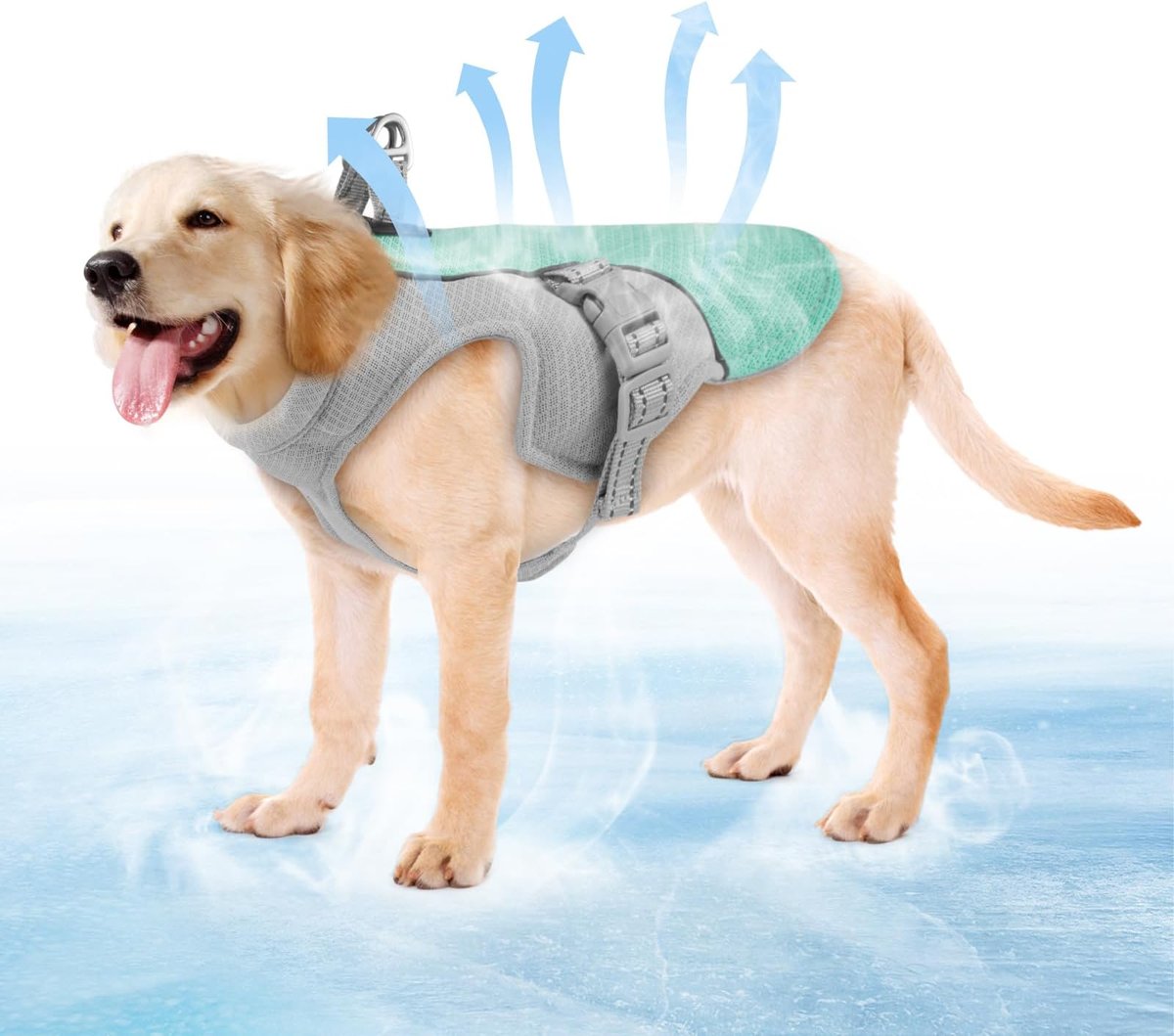
Senior dogs cannot regulate body temperature as efficiently as younger dogs. Their cardiovascular system is less efficient, and many have thinner coats or underlying conditions that make heat harder to handle. A cooling vest works by evaporative cooling — you soak it in water, wring it out, and put it on the dog. As the water evaporates, it pulls heat from the dog’s body. This can lower their surface temperature by 5 to 10 degrees, which is significant on a 90-degree day.
We already covered cooling vests in detail in our dog cooling vest guide. For senior dogs specifically, the key is to put the vest on before the hike, not halfway through when they are already overheating. Senior dogs do not recover from heat stress as quickly — prevention is easier than treatment.
Joint Supplements: Support From the Inside
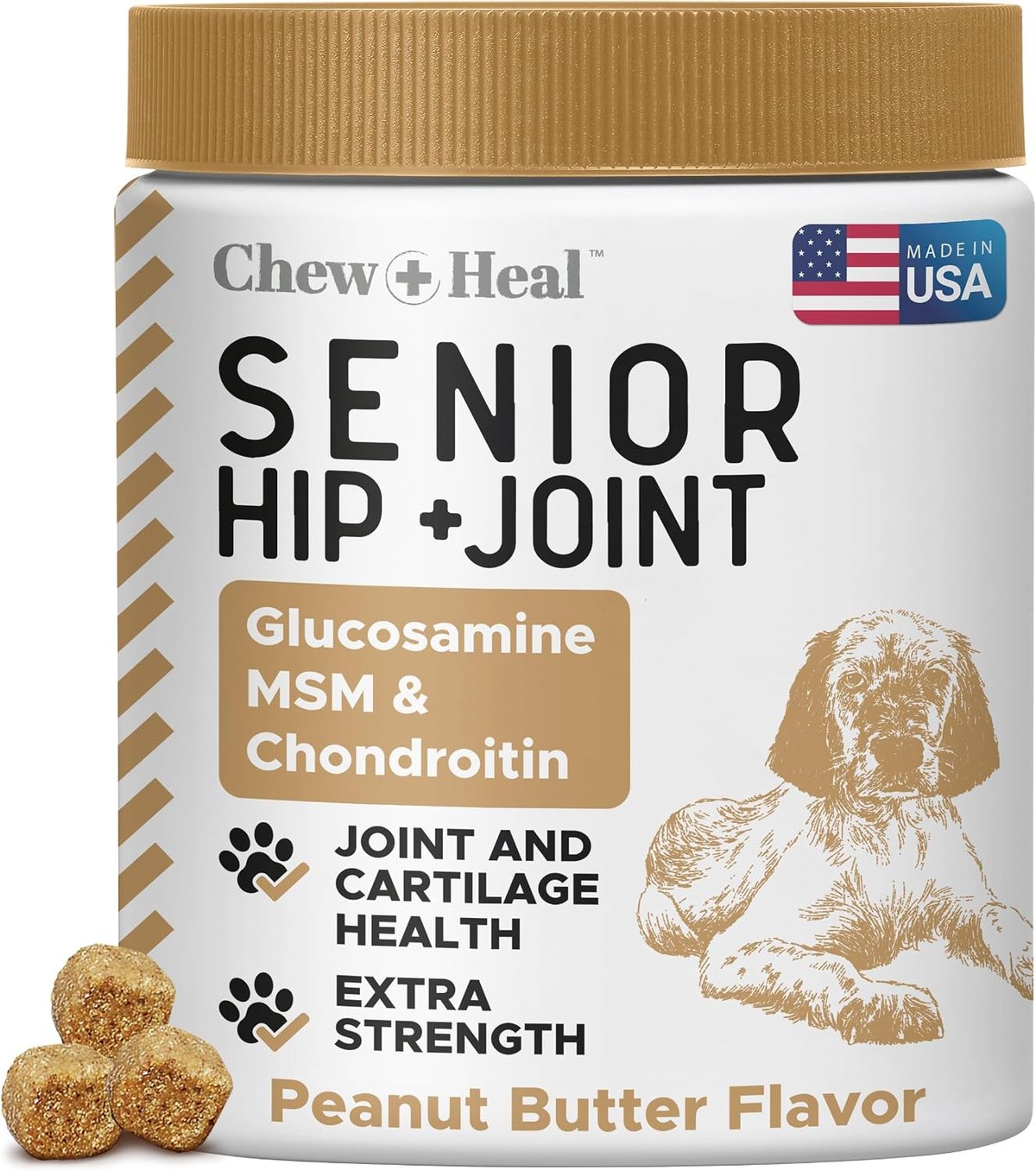
Camping is hard on joints. Uneven terrain, getting up and down from the ground, and longer distances than usual all stress aging joints. A quality joint supplement with glucosamine, chondroitin, and MSM can help maintain cartilage and reduce inflammation. Start supplementing 2 to 4 weeks before a trip so the compounds build up in the system — giving a supplement the morning of a hike will not do much.
Look for supplements that include green-lipped mussel or turmeric for additional anti-inflammatory support. Soft chews are easiest to administer on the trail — throw them in with the food and your dog will eat them without complaint. This is not a substitute for veterinary care, but it is a proven support layer for active senior dogs.
Trail Modifications for Older Dogs
Gear is half the equation. The other half is changing how you hike. These modifications cost nothing and make the biggest difference.
Shorter distances, more frequent stops. A senior dog that used to do 10 miles might now be comfortable with 4. Plan routes with rest points every 30 to 45 minutes. Let the dog set the pace — if they slow down, slow down with them.
Softer surfaces when possible. Dirt trails and grass are easier on joints than rock and pavement. If your route includes a rocky section, consider carrying your dog across the worst of it if they are small enough. For larger dogs, dog booties protect paw pads from sharp rock and provide traction on smooth surfaces.
Avoid the hottest part of the day. Hike early morning or late afternoon. Senior dogs are more susceptible to heat stroke, and hot ground can burn paw pads even when the air temperature feels manageable. Test the ground with the back of your hand for 5 seconds — if it is too hot for your hand, it is too hot for their feet.
Elevation changes. Downhill is harder on senior joints than uphill. The braking force on steep descents stresses the front legs and shoulders. Use a hands-free leash with a bungee section to absorb shock, and take descents slowly. If a trail has significant elevation loss, consider an out-and-back route that turns around at the high point.
At Camp: Comfort Routines That Matter
Camp is where senior dogs need the most adjustment. The ground is hard, the temperature drops at night, and the familiar routines of home are gone. Set up your dog’s sleeping area first, before anything else. Lay down the orthopedic pad inside the tent, positioned away from the door where drafts come in. Bring a familiar blanket from home — the scent helps anxious dogs settle.
Keep water accessible at all times. Senior dogs dehydrate faster, and they may not drink enough if the water is unfamiliar. Bring water from home or use a filter — the taste of treated camp water can cause dogs to drink less. Monitor their water intake and offer water every hour during the day.
Elevate their food bowl. Bending down to eat from the ground is uncomfortable for dogs with neck or back arthritis. A collapsible elevated bowl stand adds 4 to 6 inches of height and packs flat. This small change makes mealtime comfortable instead of painful.
When to Leave Your Senior Dog at Home
Not every trip is right for a senior dog. If the temperature will exceed 85 degrees and you cannot hike during cool hours, leave them home. If the trail requires scrambling or steep descents over loose rock, leave them home. If your dog has been favoring a leg, showing reluctance to get up, or has had a recent illness, leave them home.
This is not giving up. It is making a thoughtful decision based on what your dog can handle. A weekend at home with a familiar bed and a walk around the neighborhood is better than a painful trip that sets their joints back for a month.
Which One Is Right for You
Camping with a senior dog requires more gear and more planning, but the payoff is worth it. The PetStep ramp eliminates the hardest part of the trip — getting in and out of the car. An orthopedic pad ensures they sleep well and wake up ready to move. A cooling vest prevents heat issues before they start. Joint supplements provide long-term support for active dogs. Combine the gear with shorter hikes, more rest stops, and realistic expectations, and your senior dog can keep camping for years past their prime.
Get Your Free Camping with Your Dog Checklist
Join 500+ campers getting weekly tips on camping, hiking, and outdoor adventures with your dog.
No spam. Unsubscribe anytime.
GearHound is reader-supported. When you buy through links on this site, we may earn an affiliate commission at no extra cost to you.
⛺ Get Your Free Camping with Your Dog Checklist
Join our newsletter and get this free printable plus weekly tips.
Price Check
Prices verified via our product tracker. Updated Sep 27.
| Amazon.com : MABOZOO Foldable Travel Dog Bed, Outdoor Camp | $39.99 | 4.4★ |
| Amazon.com : Ruffwear, Swamp Cooler Dog Vest, Sage Green, | $69.99 | 4.0★ |
| Amazon.com: YUMA'S Glucosamine for Dogs - 240 Chews - Hip | $23.99 | 4.3★ (3,355) |
As an Amazon Associate we earn from qualifying purchases.