
This article contains affiliate links. We may earn a commission from qualifying purchases.
Some content on this site is AI-assisted and reviewed by our editorial team.
Last updated: June 2026 | By GearHound
The Trail Doesn’t Know Your Dog Is Special
Look, I love my dog more than most people. She’s been on more trails than half the “influencers” posting sunrise summit photos from parking lots. But here’s the thing nobody wants to hear: your dog is not exempt from Leave No Trace principles. Dog poop on the trail is not “natural” just because it came from an animal. A dog charging through a meadow is not “letting them be a dog” — it’s trampling fragile habitat. And letting your dog bark at every hiker who passes is not “protecting you” — it’s ruining everyone else’s experience.
Leave No Trace isn’t some backpacker religion invented to make you feel bad. It’s a practical framework for keeping public lands open to dogs. Because here’s the ugly truth: trail systems ban dogs because of the owners, not the dogs. Every bag of poop left on the side of the trail, every off-leash dog that chases a deer, every campsite where a dog dug up vegetation — that’s ammunition for the people who want to shut dogs out entirely. I don’t know about you, but I’m not willing to lose trail access because someone couldn’t be bothered to carry a bag of poop.
So let’s walk through the seven Leave No Trace principles, adapted for the reality of hiking and camping with a dog. No preaching, no guilt trips — just what works and what doesn’t.
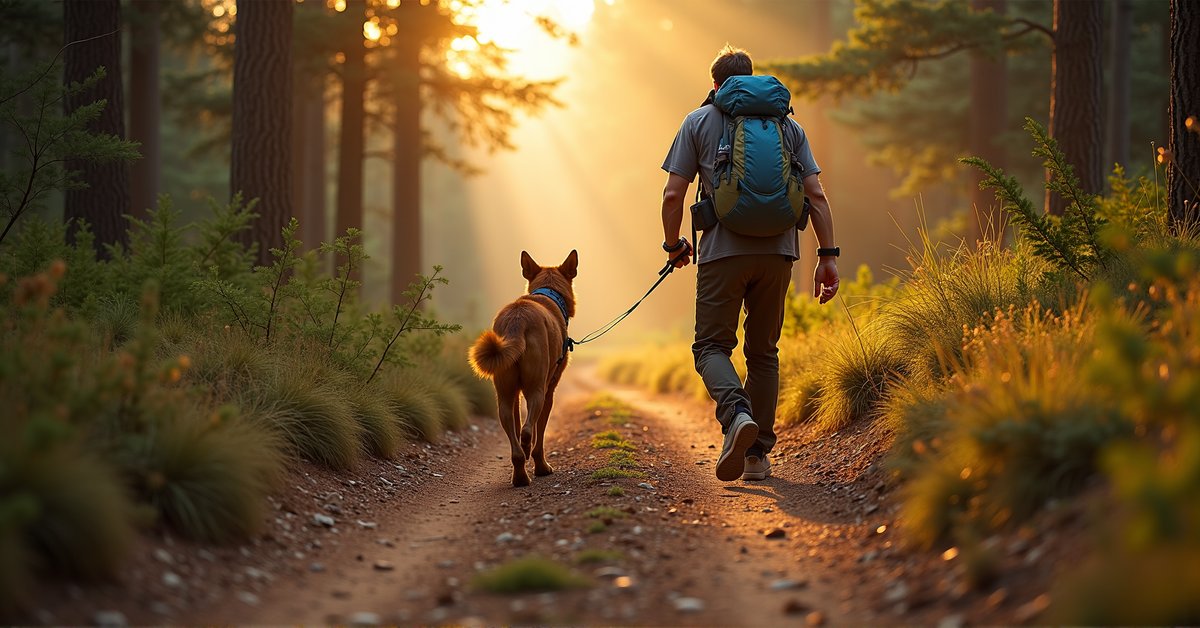
1. Plan Ahead and Prepare (Yes, That Means Your Dog Too)
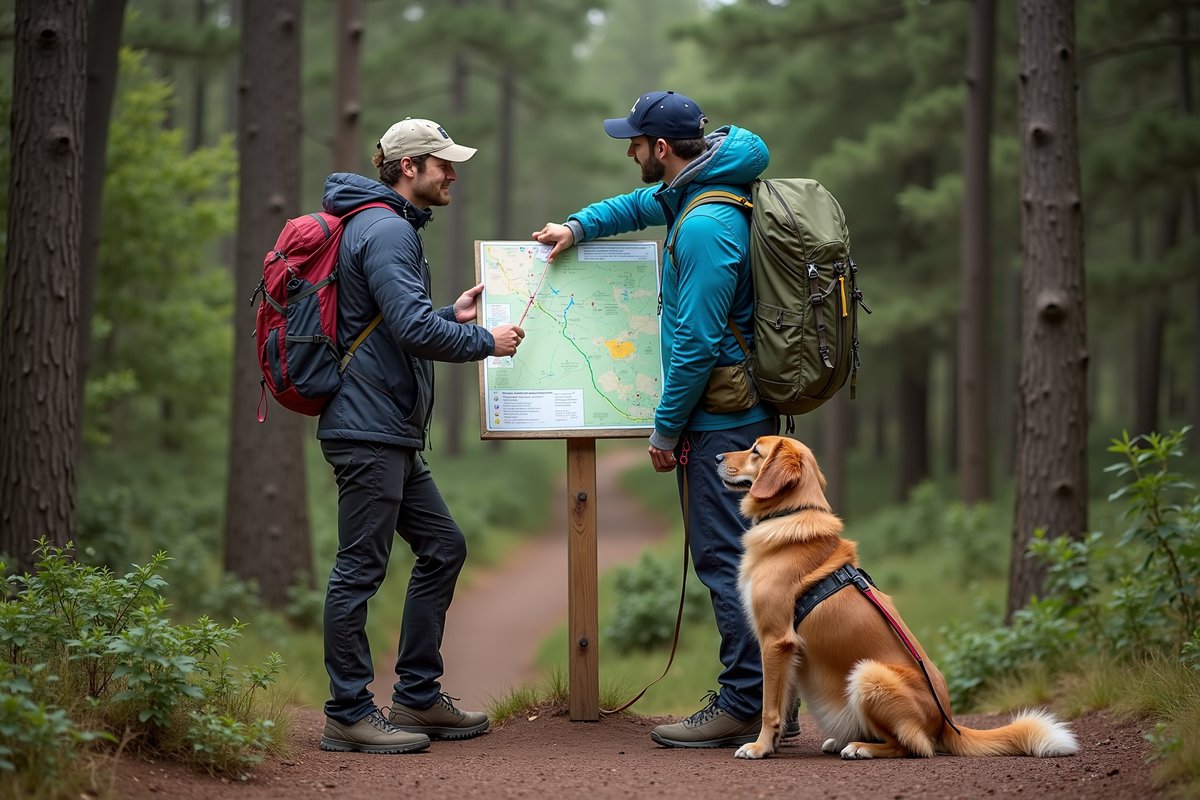
Planning ahead for a trip with your dog isn’t just about packing food and water. It starts before you even leave the house. Not every trail allows dogs, and the ones that do often have leash requirements, seasonal closures, or restrictions on certain areas. Show up to a trailhead that doesn’t allow dogs and you’re driving home — or worse, sneaking on and giving every dog owner a bad name.
Here’s what checking ahead looks like:
- Verify dog access: Check the park or forest service website. National parks are notoriously restrictive — many allow dogs only on paved trails or in campgrounds. National forests and BLM land are usually more dog-friendly, but individual trails may have restrictions.
- Know leash rules: “Voice control” is not a leash. Most trails require a 6-foot leash, not a retractable one. If your recall isn’t bulletproof in high-distraction environments, your dog should be leashed — period. A solid hiking leash is non-negotiable.
- Pack waste bags — more than you think: Bring double the bags you expect to need. One per poop plus spares for other people’s abandoned piles. Yes, really. Pick up someone else’s mess and you’ve just done more for trail access than any Instagram post ever will.
- Bring a dog first aid kit: Trails have thorns, sharp rocks, and ticks. Your dog can get hurt miles from the trailhead. Bandages, tweezers, antiseptic, and tick removal tools are minimum.
- Check the weather and terrain: Hot trails burn paws. Cold trails risk hypothermia. Know what you’re walking into and whether your dog is built for it.
The planning phase is also when you decide whether your dog is even up for this trip. A dog with poor recall on a crowded trail is a liability. A dog that reactive-barks at strangers is going to make a wilderness experience miserable for everyone within earshot. Be honest about your dog’s training level and pick destinations that match.
2. Travel and Camp on Durable Surfaces
Dogs don’t understand “stay on the trail.” They see a squirrel and they’re gone. They smell something interesting in the bushes and they’re trampling through fragile alpine vegetation you didn’t even know was there. This principle is really about two things: keeping your dog on the trail and choosing campsites that can handle a dog.
On the trail, this is simple: leash your dog or have a recall that works. If your dog veers off-trail to chase a scent, that’s crushed vegetation, disturbed soil, and potentially destroyed habitat for ground-nesting birds. In alpine and desert environments, a single off-trail dash can damage plants that take decades to recover. Keep your dog on the trail tread — the packed dirt, rock, or gravel surface — and you’ve solved 90% of this principle.
At camp, dogs create unique problems. They pace. They dig. They create bare dirt patches. When you’re picking a campsite with a dog:
- Use established sites when available. Bare ground that’s already been impacted can handle a dog. Pristine meadows cannot.
- Camp on durable surfaces: Rock, sand, gravel, pine needles, or established dirt pads. Not grass, not fragile ground cover.
- Stop the digging. Some dogs dig when bored or hot. Redirect that behavior or restrict access to areas where digging matters.
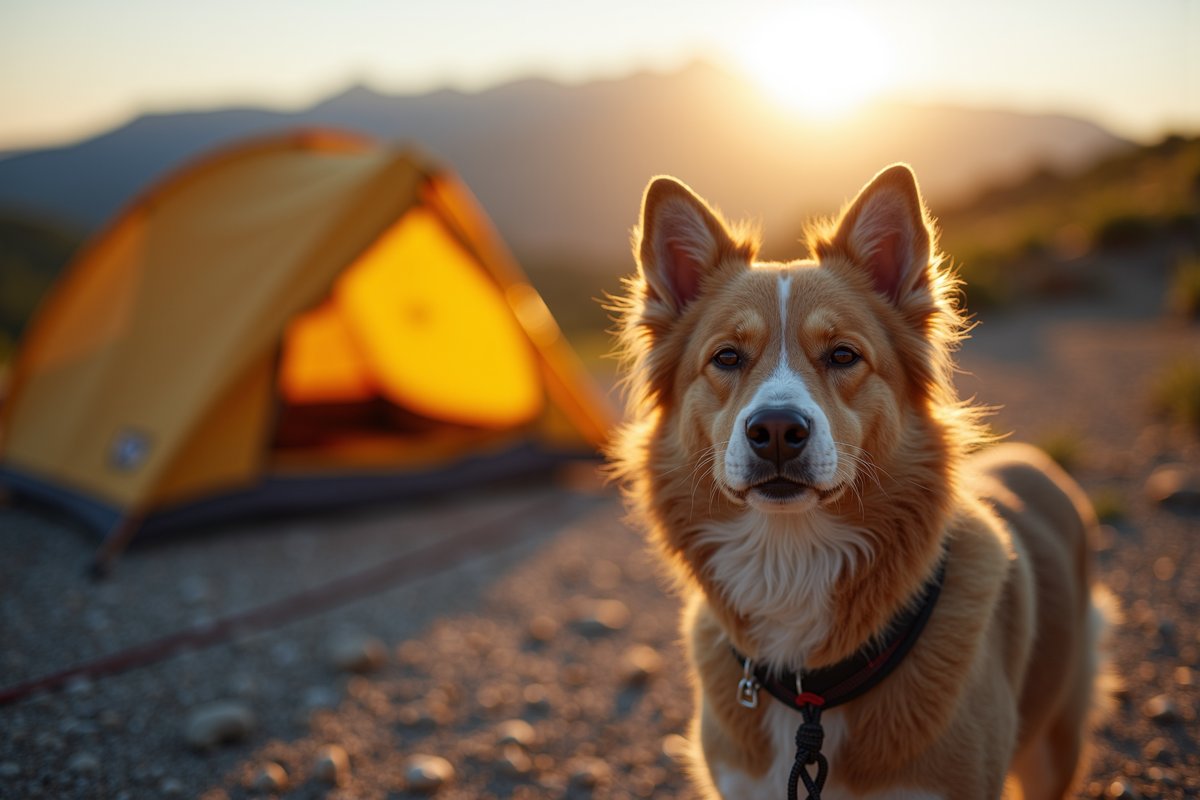
- Keep your dog’s impact contained. A heavy-duty tie-out stake lets your dog have range without exploring the entire meadow. Set it up on durable ground, not in the brush.
If you’re using a tie-out stake at camp — and you should, because dogs wander at night — place it on already-impacted ground. The area around your tent pad is usually fine. Don’t stake your dog out in a patch of wildflowers.
3. Dispose of Waste Properly (I need to Talk About Poop)
This is the one that makes people uncomfortable, so let’s be direct: dog poop on the trail is a problem. It’s not fertilizer. Dog food is not the same as what wild animals eat. Dog waste introduces foreign bacteria, nitrogen, and parasites into ecosystems that didn’t evolve to handle it. It contaminates water sources. And — let’s be honest — nobody wants to step in your dog’s pile on a switchback.
Here are your real options for handling dog waste on the trail:
Pack It Out (The Gold Standard)
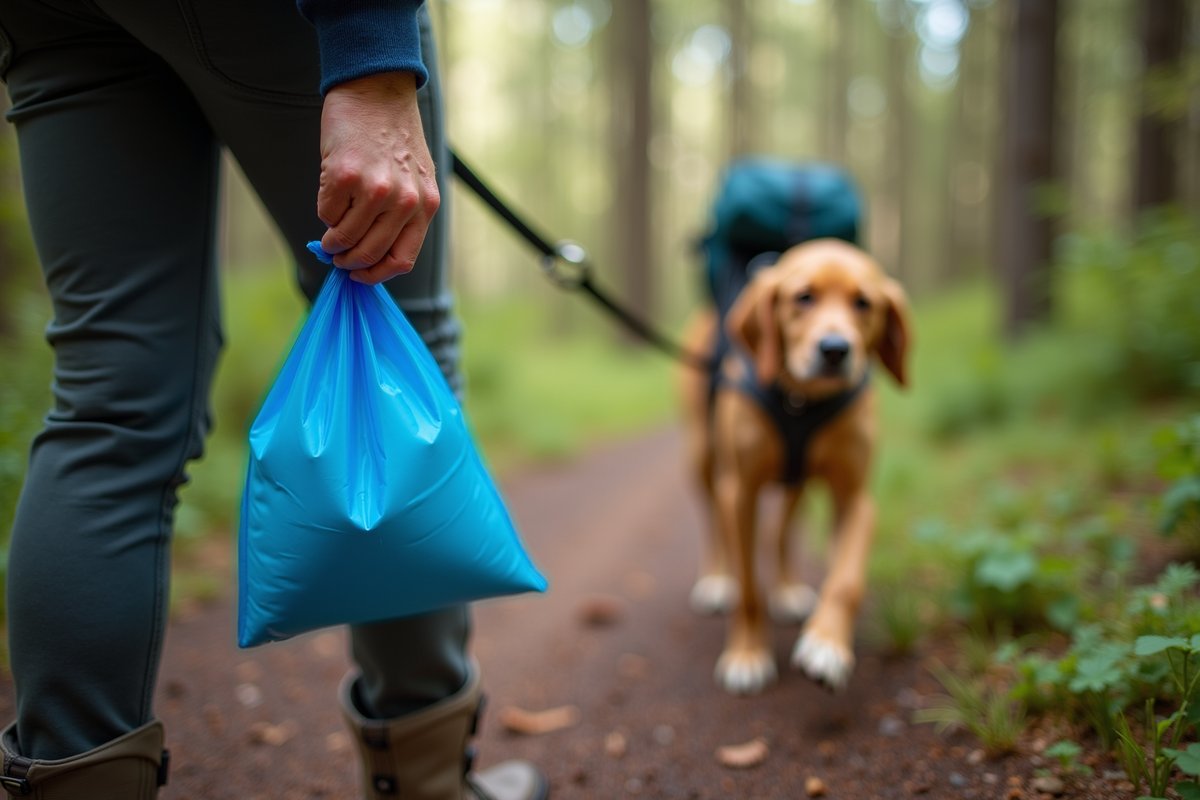
This is what you should be doing. Bag it, carry it out, throw it away at the trailhead or at home. Yes, it’s gross. Yes, it smells. Do it anyway. The Earth Rated poop bags are thick enough that you won’t feel warmth, and a dedicated poop-carrying container like the Ruffwear Pack Out Bag keeps it sealed and smell-contained on the hike out.
Pro tip: Double-bag if you’re on a long hike. Put the sealed bag in an outer pocket of your pack, not in with your food. If you’re doing a long through-hike and carrying multiple bags, a roll of Earth Rated bags weighs almost nothing and prevents the worst-case scenario of running out.
Bury It (When Packing Out Isn’t Possible)
If you’re deep in the backcountry and carrying poop for days isn’t realistic, burying is the fallback — but it has rules. Dig a hole 6 to 8 inches deep, at least 200 feet from any water source, trail, or campsite. Bury the poop (not the bag — never bury a plastic bag). Cover it thoroughly. This is the same cat-hole technique used for human waste, and it works for the same reasons: shallow enough for decomposition, deep enough to keep animals from digging it up.
But let’s be real: if you’re on a day hike or a car-camping trip, there is zero excuse for not packing it out. You’re not on a 14-day expedition. Carry the bag.
What About “Biodegradable” Bags?
A biodegradable bag left on the side of the trail is still a bag left on the side of the trail. It takes months to years to break down, and in that time it’s still litter, still visible, still sending the message that dog owners don’t care. If you packed biodegradable bags, great — they’re a slightly better landfill option. But they don’t excuse leaving waste on the trail. Pack it out regardless.
4. Leave What You Find (Don’t Let Your Dog Be a Bulldozer)
Some dogs are archaeologists. They dig. They find things. They bring you things. This is endearing at the dog park and a serious problem in the wilderness. The “leave what you find” principle means don’t take rocks, don’t pick flowers, don’t disturb artifacts, and don’t let your dog dig up the hillside.
Here’s what that looks like in practice:
- No digging: If your dog is a digger, redirect the behavior on the trail. Give them a job — carrying a pack, finding treats you’ve dropped — or keep them moving. Digging disturbs soil, destroys root systems, and can damage archaeological sites you didn’t know were there.
- No chasing wildlife: A dog that chases a deer, a rabbit, or a ground squirrel is harassing wildlife. It stresses the animal, burns calories the animal may not have to spare, and can lead to separated mothers and young. This is why trail etiquette matters: leashes aren’t just about other people, they’re about wildlife.
- Don’t let your dog “collect” things: Some dogs pick up rocks, sticks, bones, or antlers. Train a solid “drop it” and use it. Antler sheds belong in the ecosystem, not in your dog’s mouth.
- Keep dogs out of water sources where possible: A dog splashing through a fragile riparian zone destroys the stream bank. Cross at established fords, not wherever your dog decides to jump in.
The bottom line is that your dog doesn’t know the difference between a federally protected archaeological site and a dirt mound. You do. Manage the dog.
5. Minimize Campfire Impacts
Dogs and campfires are a combination that should make any dog owner nervous. Dogs don’t understand that the glowing ring of warmth can also burn their nose, singe their tail, or knock a log into dry duff. I’ve seen dogs panic at a popping ember and bolt into the woods — which is a great way to lose your dog at night in the backcountry.
From a Leave No Trace perspective, the campfire issue is about your dog’s impact on the fire and the fire’s impact on the land:
- Keep dogs away from the fire ring: A dog bumping the ring can scatter coals, send sparks into vegetation, or knock over a pot of boiling water. Use a tie-out or keep them leashed near the fire.
- Use existing fire rings: Don’t let your dog’s movements encourage you to build a new fire pit somewhere “more convenient.” Use established rings on durable ground.
- Don’t burn dog waste: People actually try this. Dog poop doesn’t burn cleanly, it smells terrible, and it leaves residue in the fire ring. Pack it out.
- Consider a stove instead: For most dog-inclusive trips, a backpacking stove is simpler, safer, and has zero fire impact. No sparks, no embers, no risk.
If you do have a fire, the standard rules apply: keep it small, use dead and downed wood, burn to ash, and scatter the cold ashes. Your dog doesn’t change the fire principles — but your dog does add a layer of supervision that you need to be ready for.
6. Respect Wildlife (Your Dog Is Not a Wolf)
This is the principle where dog owners fail most visibly. An off-leash dog chasing a deer is not “natural.” Your dog is not a wolf. It doesn’t need to hunt. It needs to leave wildlife alone, and it’s your job to make that happen.
Wildlife encounters with dogs go badly for everyone involved. The animal gets stressed. The dog can get kicked, gored, or bitten. And the area can get closed to dogs entirely after repeated incidents. Here’s how to handle it:
- Leash up in wildlife habitat: If you’re in bear country, elk country, or any area with ground-nesting birds, your dog should be leashed. No exceptions. A Biothane long line gives your dog room to explore without being a threat to wildlife. It’s waterproof, doesn’t pick up burrs, and handles abuse on the trail.
- Know the local wildlife risks: In bear country, an off-leash dog that encounters a bear will often run back to you — bringing the bear with it. Read up on bear safety for dog owners before you go.
- Tick prevention is non-negotiable: Wildlife areas mean ticks. Ticks mean Lyme, anaplasmosis, and other diseases. Use a vet-approved tick prevention treatment and check your dog thoroughly after every hike.
- Don’t let your dog “investigate” carcasses: A dead animal on the trail could be diseased, could attract predators, and could give your dog something you really don’t want them eating. Redirect and move on.
- Keep your distance from nesting sites: If you see a bird doing a broken-wing display (fake injury to lure you away from a nest), you’re too close. Leash your dog and back off immediately.
The principle here is simple: your dog’s desire to explore does not override a wild animal’s right to exist undisturbed. Leash up, keep distance, and move through wildlife areas quickly.
7. Be Considerate of Other Visitors
Not everyone on the trail is a dog person. Some people are afraid of dogs. Some have reactive dogs they’re trying to keep calm. Some just want a quiet wilderness experience and your dog barking at every rock is ruining it. Trail courtesy is not optional — it’s the price of admission.
Here’s the short list of things considerate dog owners do on the trail:
- Yield the trail: Step aside and shorten the leash when passing other hikers. Don’t let your dog lunge or jump on strangers. A short hiking leash gives you the control to do this cleanly.
- Control the barking: If your dog is a barker, you need a training plan, not excuses. Persistent barking on a trail ruins the experience for everyone within a quarter mile.
- Don’t let your dog approach other dogs without permission: Your dog may be friendly. The other dog may not be. A leash-to-leash greeting gone wrong is how dogs get hurt and owners get bitten. Ask first, every time.
- Pick up after your dog at the trailhead too: The parking lot is not a poop minefield. Bag it and trash it before you leave.
- Keep your dog off other people’s gear: Dogs that jump on tents, sniff into open packs, or slobber on someone’s sleeping bag are dogs that give all dogs a bad name. Manage your dog at camp.
Being considerate isn’t about being apologetic for having a dog on the trail. It’s about being the dog owner that trail managers want to see more of — the one who has their dog under control, cleans up, and doesn’t create problems. That’s the standard. Meet it.
What I Recommend
Leave No Trace with a dog isn’t complicated, but it does require more effort than showing up and hoping for the best. The seven principles come down to a few practical commitments: plan your trip, leash your dog, pack out the poop, keep them on the trail, keep them away from wildlife, manage them at camp, and don’t be the person everyone else on the trail is rolling their eyes at.
The gear you need is minimal: a good leash, waste bags, a tie-out stake for camp, and a first aid kit. The mindset is what matters. Every time you hike or camp with your dog, you’re representing every dog owner who comes after you. Trail closures happen because of incidents, not theories. So do it right, pack it out, and keep public lands open for dogs.
If you’re building your dog hiking kit, start with the essentials: Earth Rated poop bags for waste management, a Biothane long line for controlled freedom, and a heavy-duty tie-out stake for camp. Add a solid first aid kit and you’re set for responsible trail time with your dog.
Now get out there — and leave nothing but paw prints.
GearHound is reader-supported. When you buy through links on this site, we may earn an affiliate commission at no extra cost to you.
⛺ Get Your Free Camping with Your Dog Checklist
Join our newsletter and get this free printable plus weekly tips.