

This article contains affiliate links. We may earn a commission from qualifying purchases.
Some content on this site is AI-assisted and reviewed by our editorial team.
A daypack is the one piece of gear you use on every single hike. It carries your water, snacks, rain shell, first aid kit, and whatever else the day demands. The wrong pack leaves you with sweaty shoulders, chafing hip belts, and a sore back by mile three. The right one disappears on your back and lets you focus on the trail.
I compared the top hiking daypacks for 2026, looking at comfort, ventilation, weight, organization, and durability. after researching packs from 15 to 35 liters, these are the five worth your money.
What to Look for in a Hiking Daypack
Volume is the starting point. For most day hikes, 20 to 25 liters is the sweet spot — enough room for water, layers, food, and a first aid kit without feeling bulky. If you carry a lot of camera gear or tend to pack heavy, look at 28 to 35 liter packs. Anything under 18 liters is better suited to trail running than hiking.
The back panel determines how comfortable the pack feels after a few hours. Ventilated back panels with a tensioned mesh or foam ridges keep air flowing between you and the pack, which makes a big difference on hot days. Traditional foam back panels are more durable and distribute weight better, but they trap heat.
Hip belt pockets are a small feature that matters more than you’d think. Being able to reach your phone or snacks without taking off the pack is a quality-of-life upgrade you’ll appreciate on every hike.
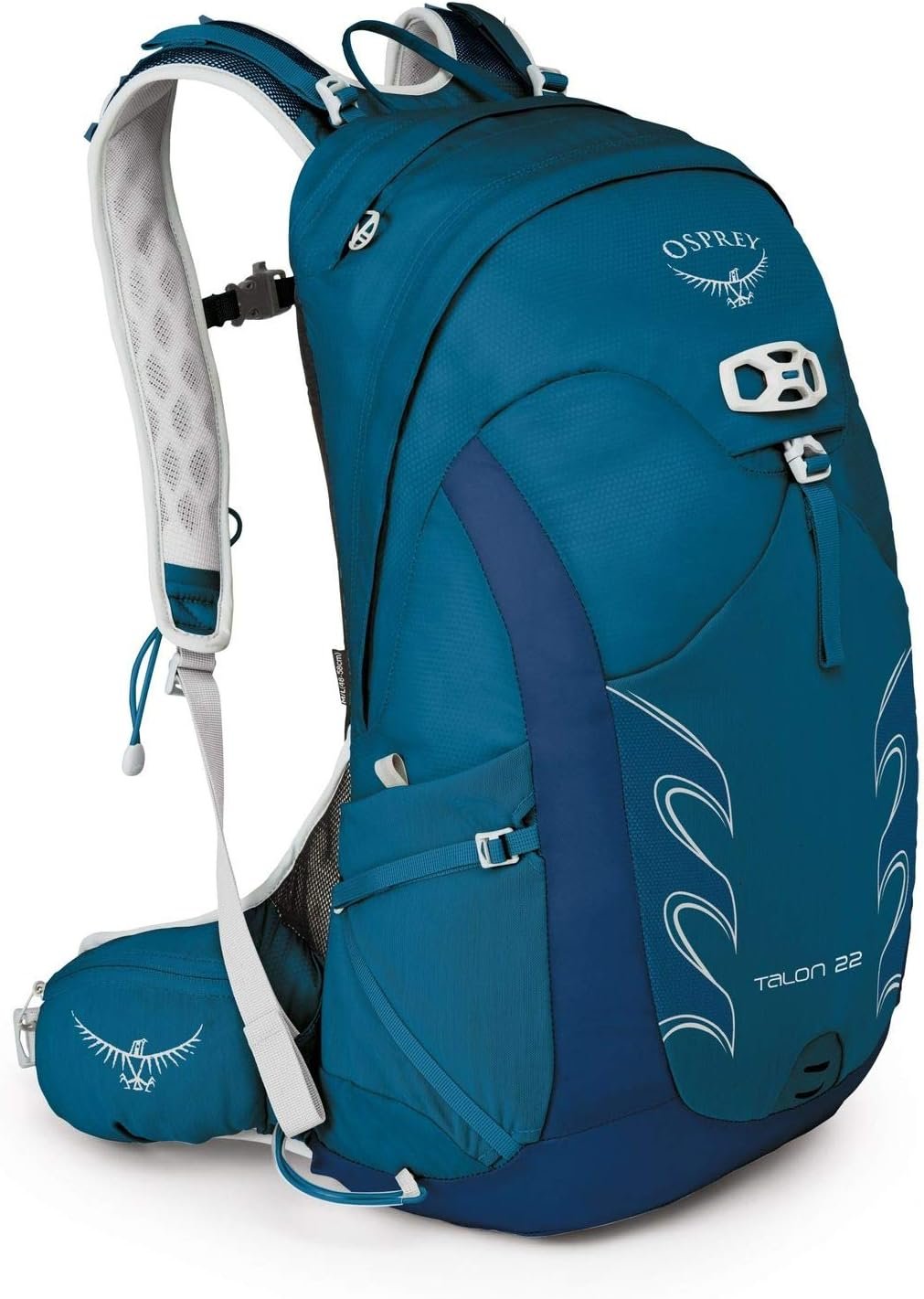
Osprey Talon 22: Best Overall Daypack
The Osprey Talon 22 is the most popular daypack on the trail for good reason. At 22 liters and roughly 1.7 pounds, it hits the balance of capacity, weight, and comfort that works for the majority of hikers. The AirScape back panel uses ridged foam with a tensioned mesh that keeps the pack off your back, providing decent ventilation without the complexity of a full trampoline suspension.
The Talon 22 features Osprey’s BioStretch hip belt, which wraps around your hips and stays put without riding up. The hip belt pockets are large enough for a phone or sunglasses. The main compartment has a hydration sleeve that fits a 3-liter bladder, and there are two stretch mesh side pockets for water bottles. A front mesh pocket is perfect for stashing a rain jacket or hat where you can grab it quickly.
Where the Talon falls short is load carrying — it’s fine up to about 15 pounds, but starts to feel saggy with heavier loads. The shoulder straps are relatively thin, which is great for ventilation but not for hauling a full camera kit and extra water. For most day hikers, this is the pack to get.
See price and reviews on Amazon
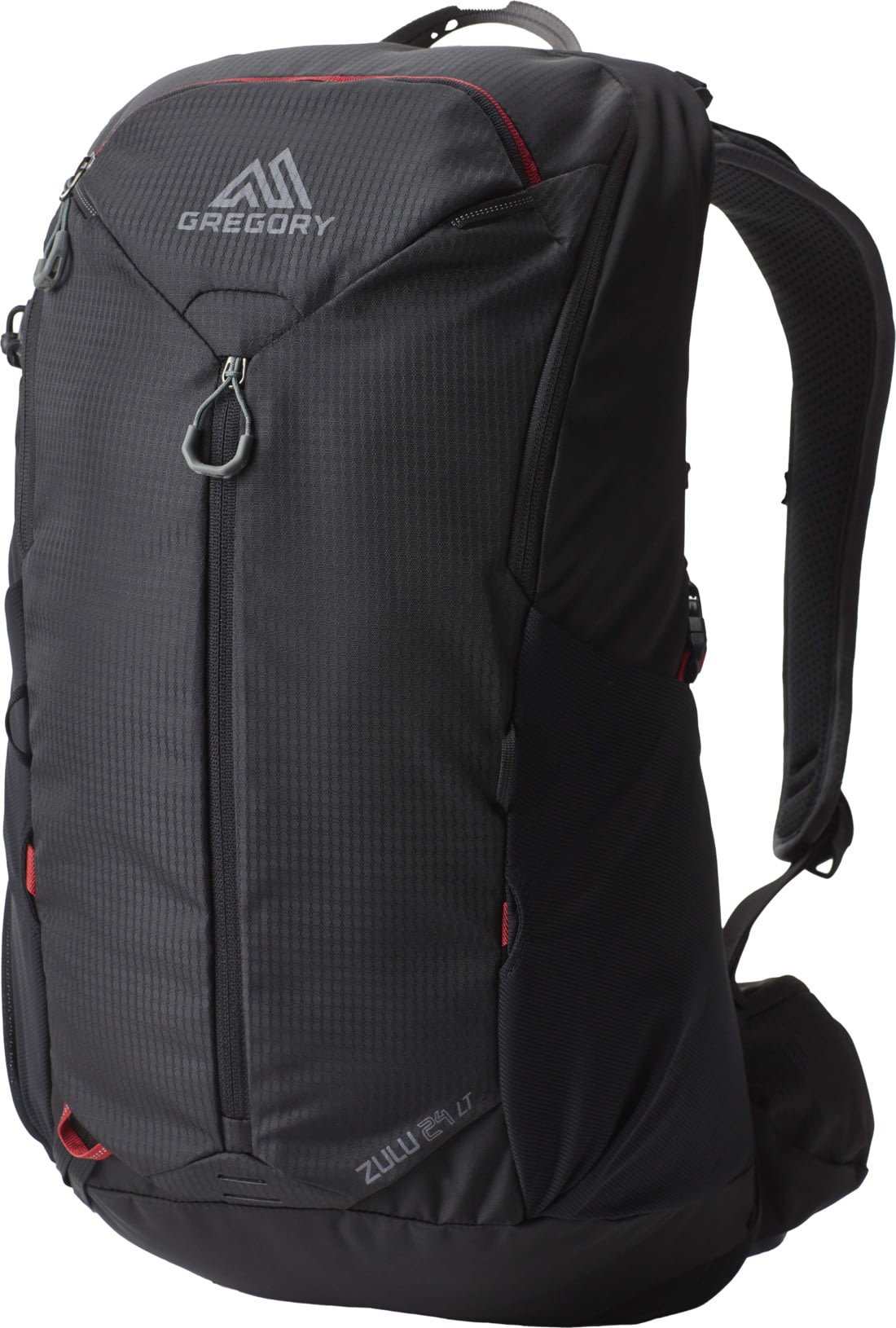
Gregory Zulu 24: Most Comfortable Daypack
If comfort is your top priority, the Gregory Zulu 24 is the pack to beat. It uses a VaporSpan ventilated back panel that keeps the pack entirely off your back, creating excellent airflow. The hip belt is wide and well-padded, and the shoulder straps are substantial without being stiff. The result is a pack that handles 15 to 20 pounds better than anything else in this size range.
The Zulu 24 has 24 liters of capacity with a U-shaped main compartment opening that makes it easy to find gear at the bottom. The front pocket includes organization sleeves for smaller items, and the hip belt pockets are large and wrap toward the front of your body for easy access. A hydration sleeve with Gregory’s SpeedClip holds a bladder securely.
The main drawback is weight — at 36.8 ounces, the Zulu is heavier than the Osprey Talon or REI Flash. That extra weight buys you comfort, but if you’re counting ounces for fast-and-light day hikes, look elsewhere. The Zulu is also more expensive than most competitors. For long hikes with heavier loads, though, it’s worth every penny.
Check the latest price on Amazon
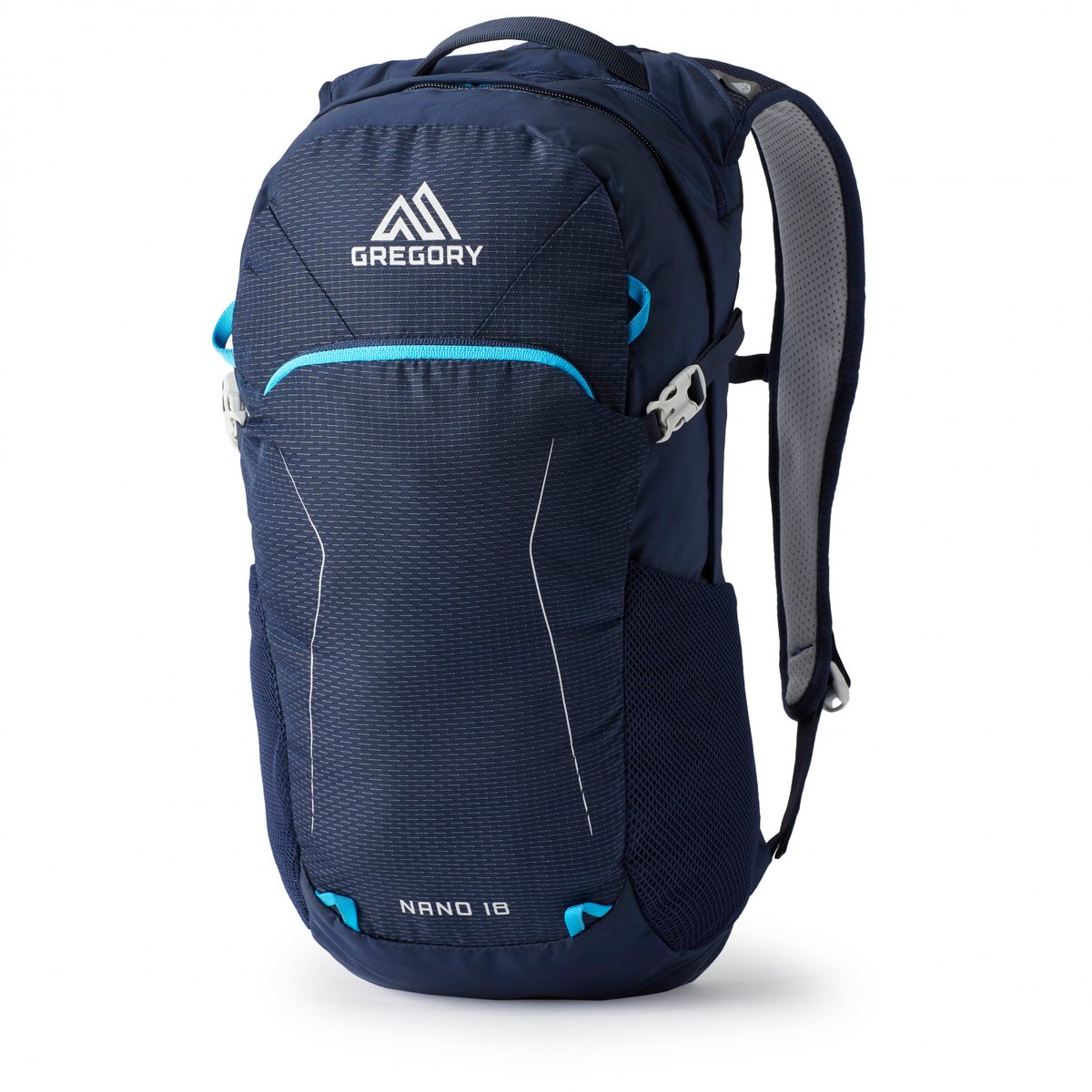
Gregory Nano 18: Best Value Budget Daypack
The Gregory Nano 18 is the budget pick that doesn’t feel cheap. At under $60, it offers a breathable backpanel, hydration port, and 210D nylon body with a 420D bottom — more durable than similarly priced packs. It’s 18 liters, which is on the smaller side, but for hikers who carry just the essentials it’s plenty of room. The main compartment has a sleeve for a hydration bladder, and there are two mesh side pockets for water bottles.
The Nano 18 uses Gregory’s basic harness system — not the VaporSpan of the Zulu 24, but a comfortable foam backpanel with ventilation channels. The shoulder straps are adequately padded for loads under 10 pounds. The hip belt is a simple webbing strap, which is fine for this capacity since you shouldn’t be carrying much weight anyway.
For new hikers or anyone who wants a reliable second pack for shorter trips, the Nano 18 is hard to beat at this price. It’s not as feature-rich as the Talon or as comfortable as the Zulu, but it costs half as much and gets the job done.
Deuter Speed Lite 20: Best Lightweight Daypack
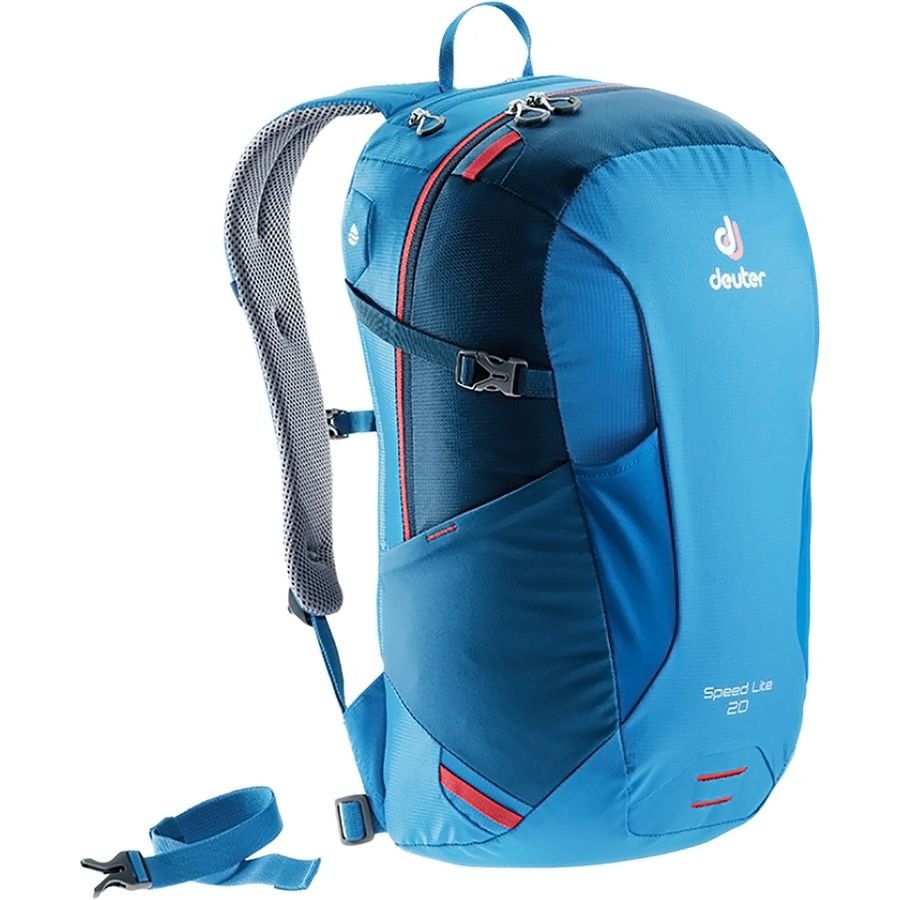
The Deuter Speed Lite 20 is for hikers who want to go fast and light. At just 17.6 ounces, it’s one of the lightest 20-liter packs on the market that still has a real suspension system. The Delrin U-frame provides structure without adding weight, and the 3D AirMesh back panel offers decent ventilation for its minimal weight.
The Speed Lite 20 has a no-frills design that prioritizes weight savings over organization. There’s a main compartment, a small front zip pocket, two side mesh pockets, and a hydration sleeve. The hip belt is removable — take it off for trail running, leave it on for hiking. The shoulder straps are ventilated but thin, which is fine with light loads but noticeable above 12 pounds.
If you’re the type of hiker who carries the essentials and nothing else, the Speed Lite is ideal. If you tend to pack for every contingency, the lack of organization and thin suspension will frustrate you.
CamelBak Fourteener 24: Best Hydration-Focused Daypack
If hydration is your priority, the CamelBak Fourteener 24 is built for big mountain days. It comes with a 3-liter Crux reservoir included, which alone saves you $30 to $40 compared to buying a bladder separately. The reservoir sits in its own insulated sleeve behind the back panel, keeping water cool longer and preventing the bladder from pressing against your back.
The pack has 24 liters of total capacity, with the reservoir taking up about 3 liters. The main compartment is roomy enough for layers, food, and a first aid kit. There’s a front organizer pocket, two side mesh pockets for bottles, and hip belt pockets for snacks. The back panel uses CamelBak’s Air Support foam with ridged channels for ventilation, and the pack includes compression straps to stabilize the load.
The Fourteener 24 is heavier than competitors at similar volume because of the bladder insulation and included reservoir. If you already own a hydration bladder you like, you’re better off with the Osprey Talon. But if you’re starting from scratch and want an all-in-one hydration solution for long peak hikes, the Fourteener is a smart buy.
How I compared These Daypacks
I evaluated each pack across five categories:
- Comfort: How the pack carries weight, shoulder strap and hip belt padding, back panel ventilation.
- Versatility: How well the pack handles different loads, activities, and conditions.
- Ease of use: Pocket layout, access to gear, hydration system compatibility.
- Weight-to-volume ratio: Ounces per liter — lower is better. Indicates how efficiently the pack uses materials.
- Construction quality: Fabric durability, stitching, zipper quality, and hardware.
The Bottom Line
For most hikers, the Osprey Talon 22 is the best daypack — it’s comfortable, well-organized, and reasonably priced. If you prioritize comfort on long hikes with heavier loads, the Gregory Zulu 24 is worth the extra cost. And if you want a budget-friendly all-rounder, the Osprey Sportlite 25 gives you 90 percent of the Talon’s performance at a lower price.
Choose a pack based on how you actually hike, not on spec sheets. If you carry 8 pounds on a 3-hour hike, you don’t need the Gregory’s heavy-duty suspension. If you carry 20 pounds on 8-hour scrambles, the Deuter’s thin straps won’t cut it. Match the pack to your trail.
Get Your Free Camping with Your Dog Checklist
Join 500+ campers getting weekly tips on camping, hiking, and outdoor adventures with your dog.
No spam. Unsubscribe anytime.
GearHound is reader-supported. When you buy through links on this site, we may earn an affiliate commission at no extra cost to you.
⛺ Get Your Free Camping with Your Dog Checklist
Join our newsletter and get this free printable plus weekly tips.
Price Check
Prices verified via our product tracker. Updated Sep 27.
| Amazon.com : Osprey Talon 22L Men's Lightweight Hiking Bac | $175.00 | 4.6★ (132) |
| Amazon.com: Gregory Zulu 20L Hiking/Backpacking Pack, One | $159.95 | 4.8★ |
| Amazon.com: Gregory Nano 14L Day Hiking/Commuter Backpack, | $59.95 | 4.4★ (156) |
| Amazon.com: CamelBak Fourteener 24 100 oz Hydration Pack, | $199.99 | 4.6★ (122) |
As an Amazon Associate we earn from qualifying purchases.