This article contains affiliate links. We may earn a commission from qualifying purchases.
Some content on this site is AI-assisted and reviewed by our editorial team.
One flat piece of steel, and breakfast stops being a relay race. That’s the whole pitch for a camping griddle: eggs, bacon, and pancakes hitting the same surface at the same time, instead of one sad pan doing three jobs in sequence while the coffee goes cold. But a camp griddle is also the piece of camp kitchen gear people buy badly more often than anything else. The cheap knockoffs look identical in the listing photo, then arrive with grease traps that splash the table, paint that flakes into the hash browns by trip three, and burner windings that gutter out in the first stiff breeze.
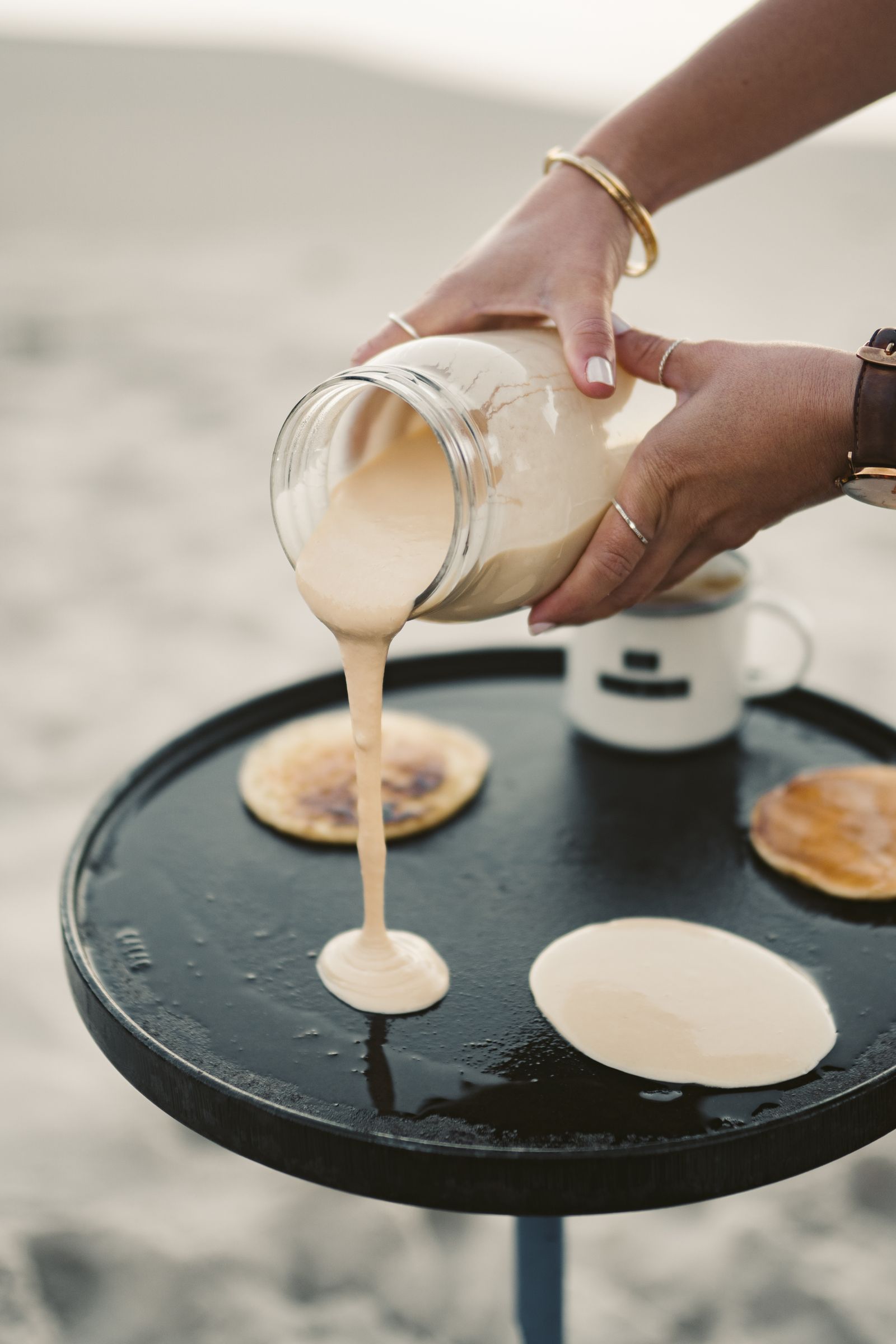
I dug through the portable flat-top category the way I test everything: by what fails first. Grease-trap design and wind behavior separate the winners from the paint-flaking clones — and the price ladder is wider than it looks, from a $70 electric surface to a $379 Weber. Here’s where the money should go.
Blackstone 1971 17-Inch Omnivore Tabletop Griddle — The Portable Benchmark
Blackstone 1971 17-Inch Omnivore Tabletop Griddle is the griddle I’d hand someone who’s never owned one. It’s about $130 (listed under a $159.99 list price at my last check), runs off a one-pound propane bottle, and the Omnivore plate preheats noticeably faster than the older 17-inch tops — hard cover doubles as a wind break when the breeze picks up.
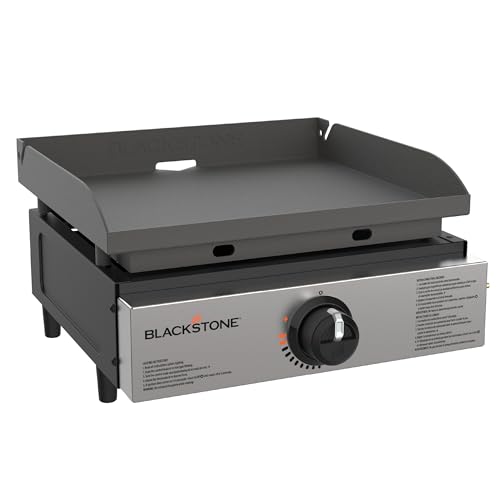
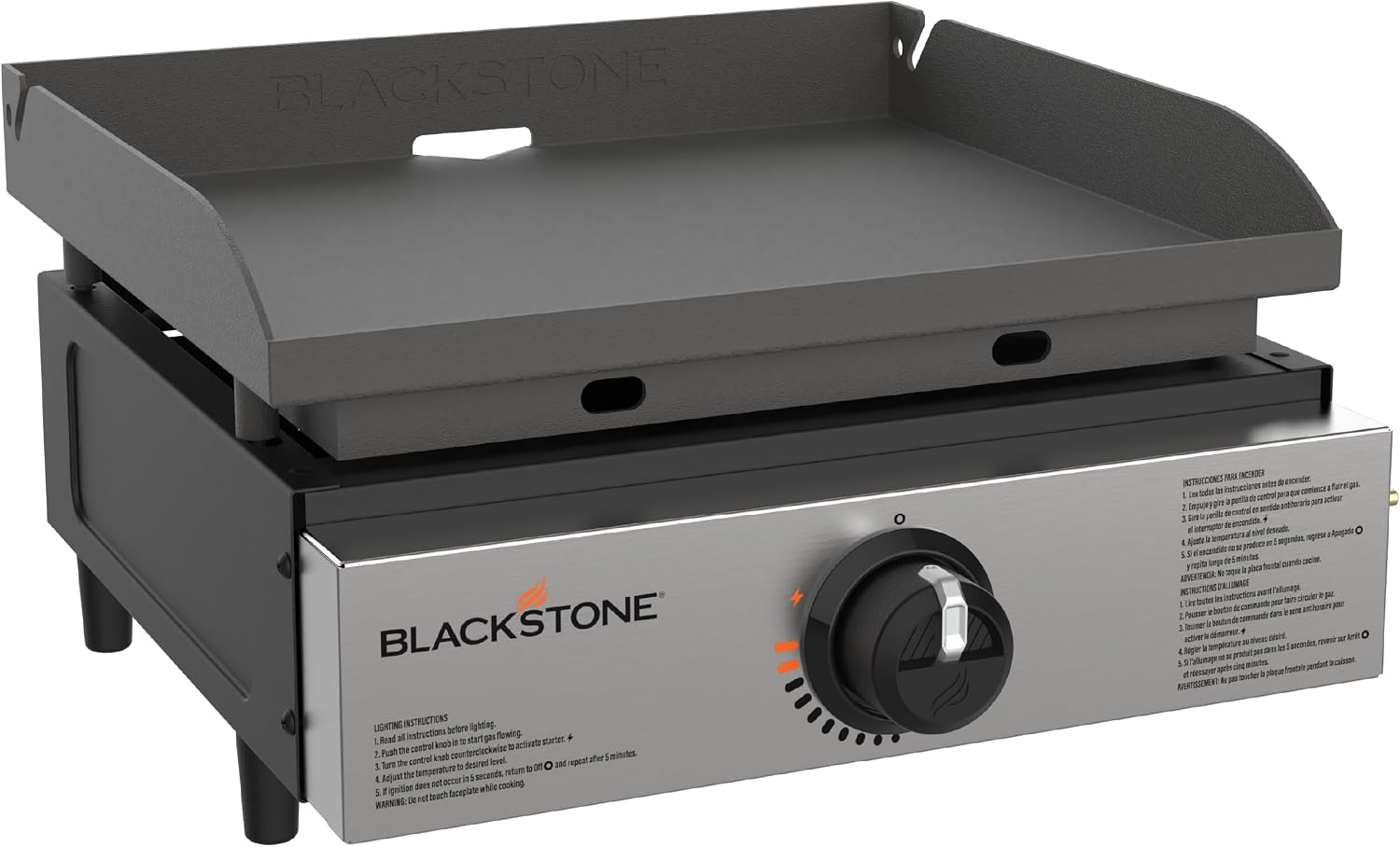
The honest limits: a single burner means roughly 300 square inches of one heat zone, so bacon and pancakes share a temperature whether they like it or not, and the rear grease cup is small enough that a six-slice bacon run means a mid-cook wipe-down.
My take: the default buy — proven plate, hard cover, and the price undercuts every two-burner rival by $70 or more.
Blackstone 2363 20-Inch Camping Griddle — Best Two-Burner Portable
Blackstone 2363 20-Inch Camping Griddle is what you buy when one heat zone isn’t enough. Two independently controlled burners put out a combined 13,000 BTU across 280 square inches, the lid latches shut into a briefcase, and the leveling feet matter more than you’d think — picnic tables are never flat. It runs about $200 at the moment.
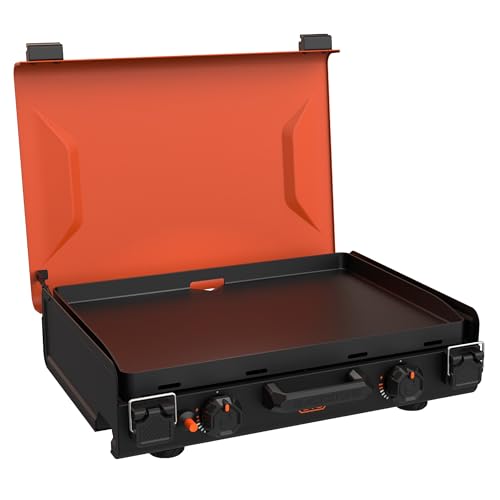
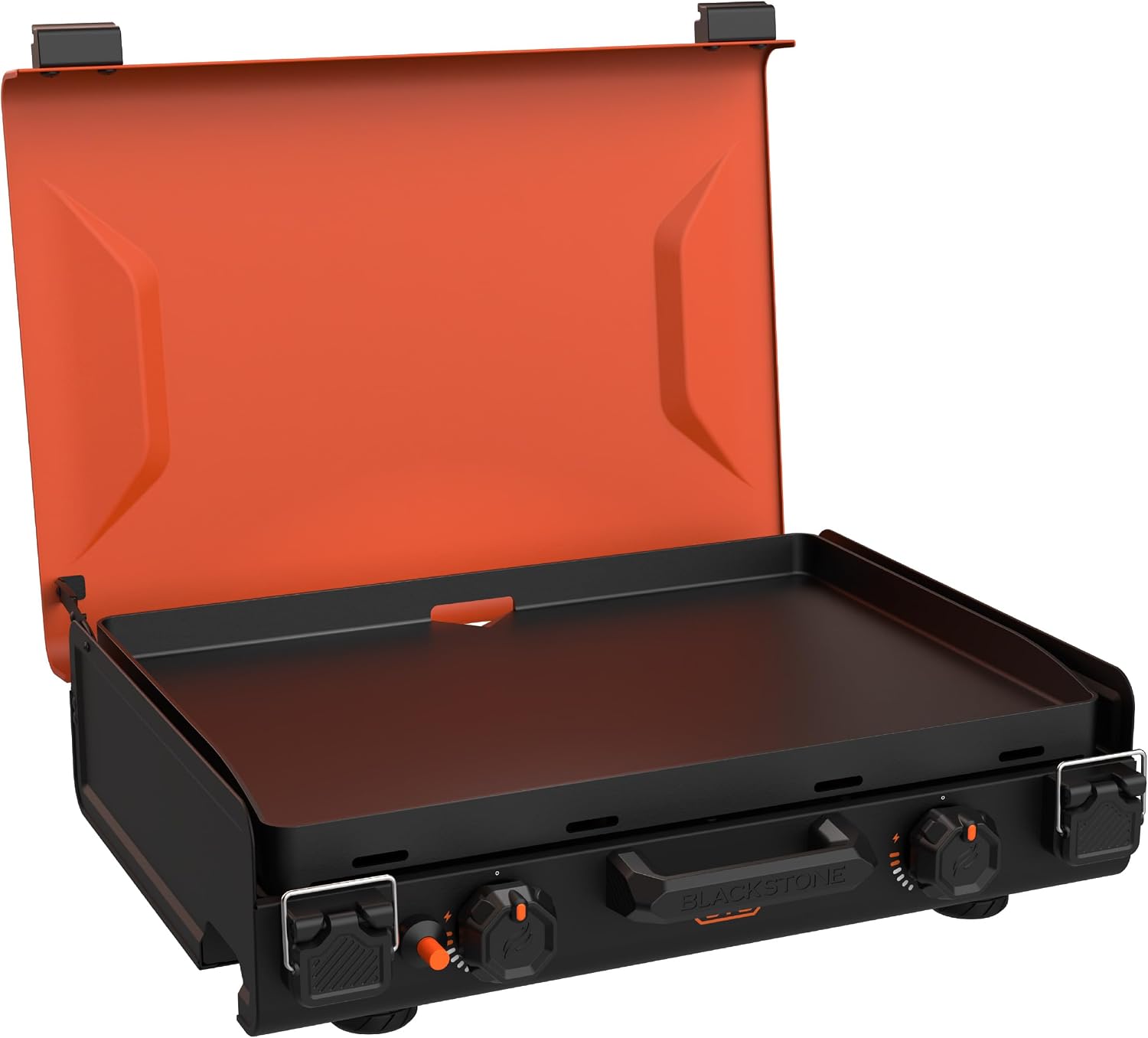
Two cons worth knowing: it’s 26 pounds, which makes it car-camping gear and nothing smaller, and the frame’s finish is thin enough that a life in the truck bed shows on it within a season. Keep a trash bag over it in transit.
My take: the family pick — two zones means eggs over here, burgers over there, and it folds into something that survives the drive home.
Presto 07061 22-Inch Electric Griddle — For Powered Campsites
Presto 07061 22-Inch Electric Ceramic Griddle is the flat-top for the cabin campsite, the RV, or the state-park site with a power pedestal. About $70 (list $79.99), 1,500 watts, a slide-out drip tray, and a Control Master plug that holds temperature better than most gas knobs do.
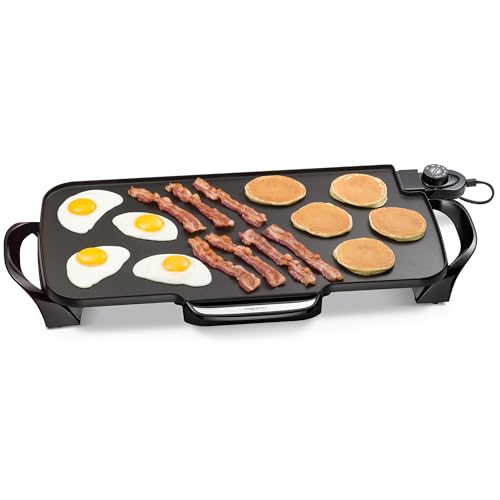
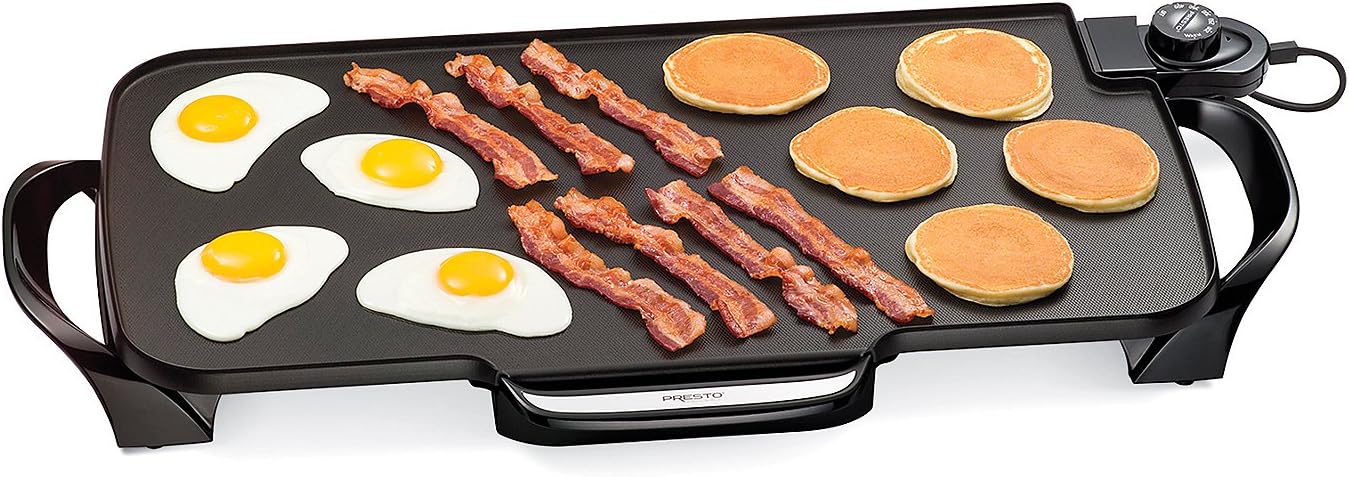
Con, and it’s a defining one: the cord makes it useless at fire rings, tailgates, and anywhere without an outlet. It’s a camp kitchen tool, not a campsite tool.
My take: if your campsite has a pole, this is the cheapest reliable flat top in the category — otherwise skip it entirely.
Weber Slate 22-Inch Tabletop Griddle — The Premium Pick
Weber Slate 22-Inch Rust-Resistant Tabletop Griddle fixes the thing that kills every other griddle in a wet climate: rust. The carbon steel is case-hardened under heat and pressure so moisture can’t get a foothold, it arrives pre-seasoned, and there’s no coating — metal spatulas are welcome. Two burners, 16,000 BTU, 352 square inches, about $379.
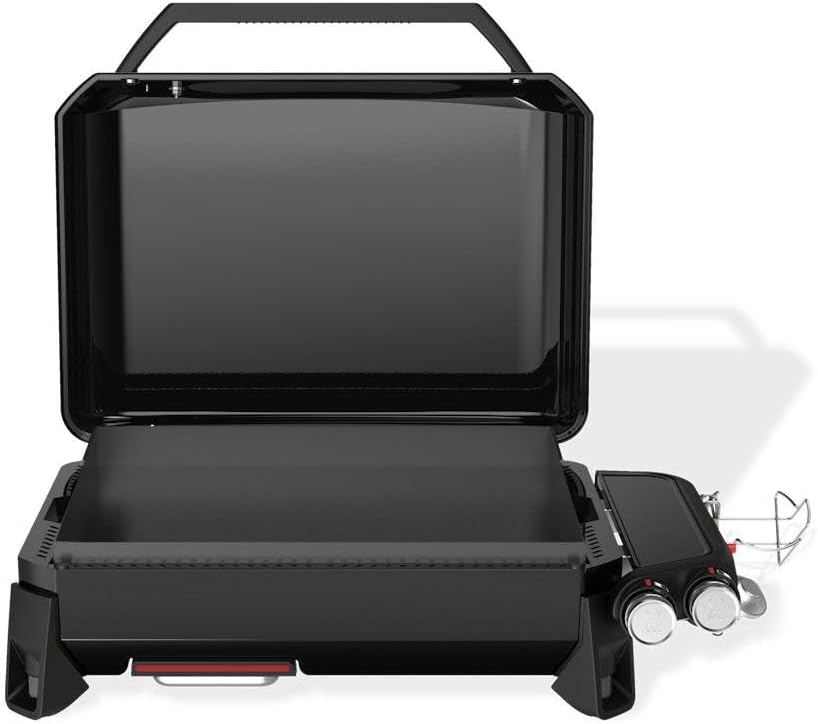
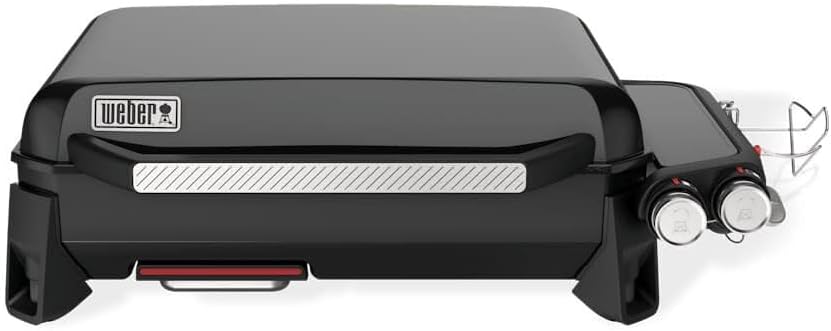
Cons: that’s full-size-griddle money for a tabletop, it weighs 54 pounds, and stock runs thin — Amazon showed a single unit left when I checked, so treat it as a hunt, not a click.
My take: buy it if your griddle lives in a damp garage or on a coastal trip rotation — the rust resistance is the whole point, and Weber’s the only one doing it this way.
Shipping note: griddles are heavy and shipping costs eat budget picks alive — a free 30-day Prime trial covers the freight and gets it to the door before the trip.
Features That Actually Matter (And Ones That Don’t)
Grease trap geometry: a rear cup with a chute works; a slide-out tray under the front edge works; a “grease hole” with no cup is a mess waiting for your table. Check the listing photos for the actual trap before buying any no-name flat top.
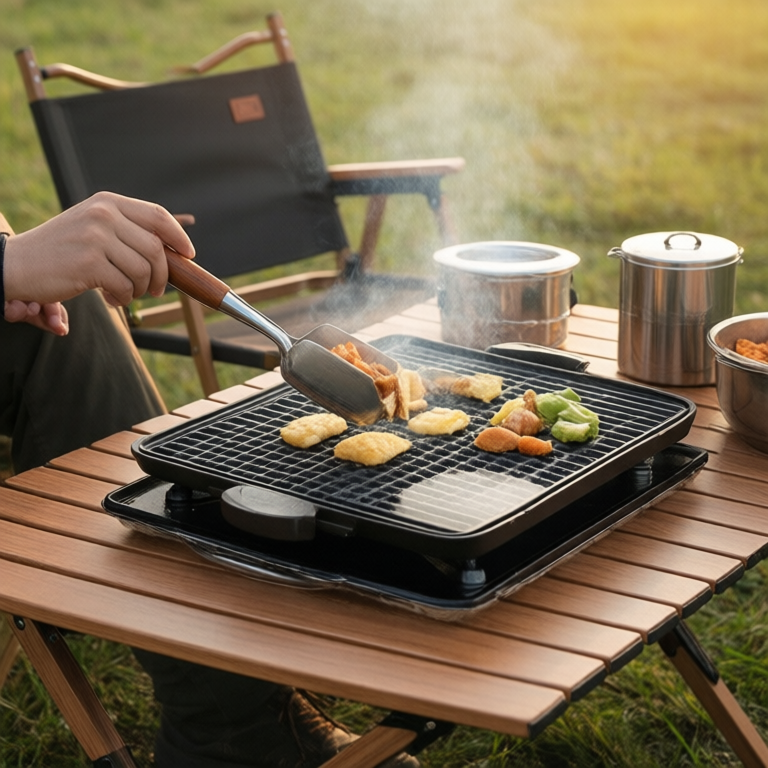
Wind behavior: burner windings exposed on the side will gutter out in a breeze. The 1971’s hard cover doubles as a windbreak, and the Slate has proper guards. This is the difference between cooking and waving a lighter at raw sausage.
Plate material: cold-rolled steel (season it, maintain it) vs. ceramic-coated (no seasoning, but no metal spatulas) vs. Weber’s hardened carbon steel. All three cook fine; the maintenance you’ll actually do is the one to pick.
BTU per zone: anything over ~12,000 BTU combined on a tabletop gets you real searing. Under that, you’re making warm sandwiches.
Ignored spec: “cooking surface” claims measured including the raised edges. Nobody cooks on the edges. The usable flat area is what you’re buying.
What to Spend Where
- Powered campsites: Presto at about $70 — cheapest reliable option, zero propane.
- Best value per square inch: Blackstone 1971 — roughly 43 cents per square inch against 71 for the 2363 and $1.08 for the Slate.
- Feeding 4–6: the 2363’s two zones earn their $70 premium the first morning you cook eggs and bacon at different temperatures.
- Wet climates: the Slate’s rust resistance is the only feature in this list you can’t retrofit later.
Keep reading: cast iron that bakes bread over coals pairs with the flat top in Best Camping Dutch Ovens 2026, and the grate-vs-flat-top decision is covered in Best Portable Camp Grills 2026.
GearHound is reader-supported. As an Amazon Associate, I earn from qualifying purchases. That means if you buy through one of the links above, I get a small commission at no extra cost to you. I only recommend gear I’d actually carry into the field.
Related guides
- Best Camp Soap 2026: Biodegradable Soaps That Actually Clean Outdoors
- Best Backpacking Water Filters 2026: How to Get Safe Water on the Trail
- Best Dog Towels 2026: Drying Off Without Destroying Your Bathroom
- Best Solar Chargers for Camping 2026: Panels That Actually Work
- Best Dog Toys That Actually Last More Than a Week
⛺ Get Your Free Camping with Your Dog Checklist
Join our newsletter and get this free printable plus weekly tips.
Frequently Asked Questions
Can you use a camping griddle on a campfire grate?
Most portable griddles are built for propane burners, not open flame. A griddle set directly on a campfire grate warps unevenly and the grease trap becomes a fire hazard. Gas-powered flat tops like the Blackstone models here are designed for their own burners; save the campfire grate for cast iron.
How do you season a portable griddle at the campsite?
Heat the plate until water dances, spread a thin layer of high-smoke-point oil, and let it smoke off for a few minutes. Repeat two or three times before the first cook. Ceramic-coated tops like the Presto never need seasoning, and Weber's hardened carbon steel arrives pre-seasoned.
What size griddle do I need for a family of five?
Figure about 60 square inches per person for one-dish breakfasts, so 300 to 360 square inches covers five. The 17-inch Blackstone gets tight at that count, the 20-inch two-burner 2363 is the right size, and the Weber Slate's 352 square inches feeds five with room to spare.
Liked this guide? Get the next one in your inbox — the camp packing checklist is free too.
✓ You're in — check your inbox.
No spam. Unsubscribe anytime. We never share your email.
Prices move fast. Start your Amazon trip from our Shop & Support page and your purchases support GearHound at no extra cost to you.