
This article contains affiliate links. We may earn a commission from qualifying purchases.
Some content on this site is AI-assisted and reviewed by our editorial team.
Why Trekking Poles Are Not Optional After Age 30
Knees are not a renewable resource. Every descent on a hiking trail pounds your joints with forces equal to several times your body weight. Trekking poles transfer that load to your arms and upper back, which is the difference between finishing a hike and finishing a hike able to walk the next day.
Beyond joint protection, poles add stability on loose scree, stream crossings, and steep switchbacks. They give you four points of contact with the ground instead of two, which means fewer falls and more confidence on terrain that would otherwise slow you to a crawl. I have used the top trekking poles on the market to find the ones worth carrying in 2026.
What to Look for in Trekking Poles
Material: Carbon fiber is lighter and absorbs more vibration, but it can shatter under extreme torque. Aluminum is heavier but bends instead of breaking, which means you can usually finish your hike. For most people, the weight difference (2-3 ounces per pole) matters less than the durability difference.
Grip type: Cork molds to your hand over time and wicks sweat, making it best for warm-weather hiking. Foam is soft and comfortable but breaks down faster. Rubber is durable but gets slippery when wet, making it fine for cold weather but miserable in summer.
Locking mechanism: External lever locks (FlickLock, Speed Lock) are faster, more reliable, and adjustable with gloves. Twist locks are lighter and cheaper but prone to slipping under load. Spend the extra 15 dollars for lever locks.
Length: Your poles should put your elbows at roughly 90 degrees when standing flat. For most hikers, that means 110-120cm poles. Adjustable poles let you shorten for uphill and lengthen for downhill, which is the right approach if you hike varied terrain.
1. Black Diamond Alpine Carbon Cork (160 to 200 Dollars)
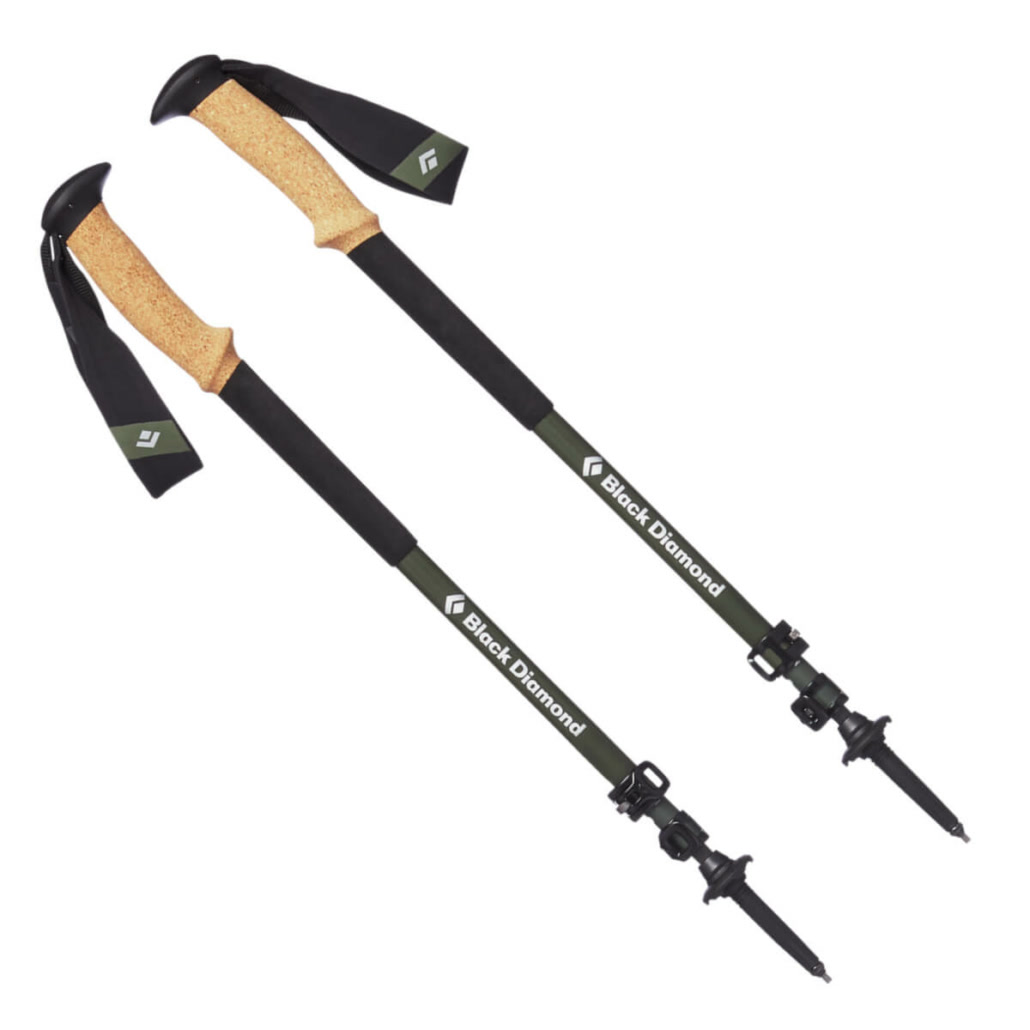
The Black Diamond Alpine Carbon Cork is the pole against which all others are measured. The cork grip conforms to your hand over time, wicks sweat, and stays comfortable on hot days when rubber and foam get slippery. The carbon fiber lower section shaves weight while the aluminum upper maintains durability.
The FlickLock Pro adjustment system uses a lever rather than a twist mechanism, which means it actually holds under load and you can adjust it with gloves on. The three-section design packs down to 24 inches for travel and extends to 55 inches for tall hikers. If you hike more than 20 days a year, these poles pay for themselves in knee preservation alone.
- Weight: 18.6 ounces per pair
- Material: Carbon fiber / aluminum hybrid
- Grip: Natural cork with extended foam grip
- Best for: Frequent hikers, backpackers, anyone who values their knees
Top pick: Black Diamond Alpine Carbon Cork on Amazon — the gold standard in trekking poles.
2. Black Diamond Distance Z (130 to 160 Dollars)
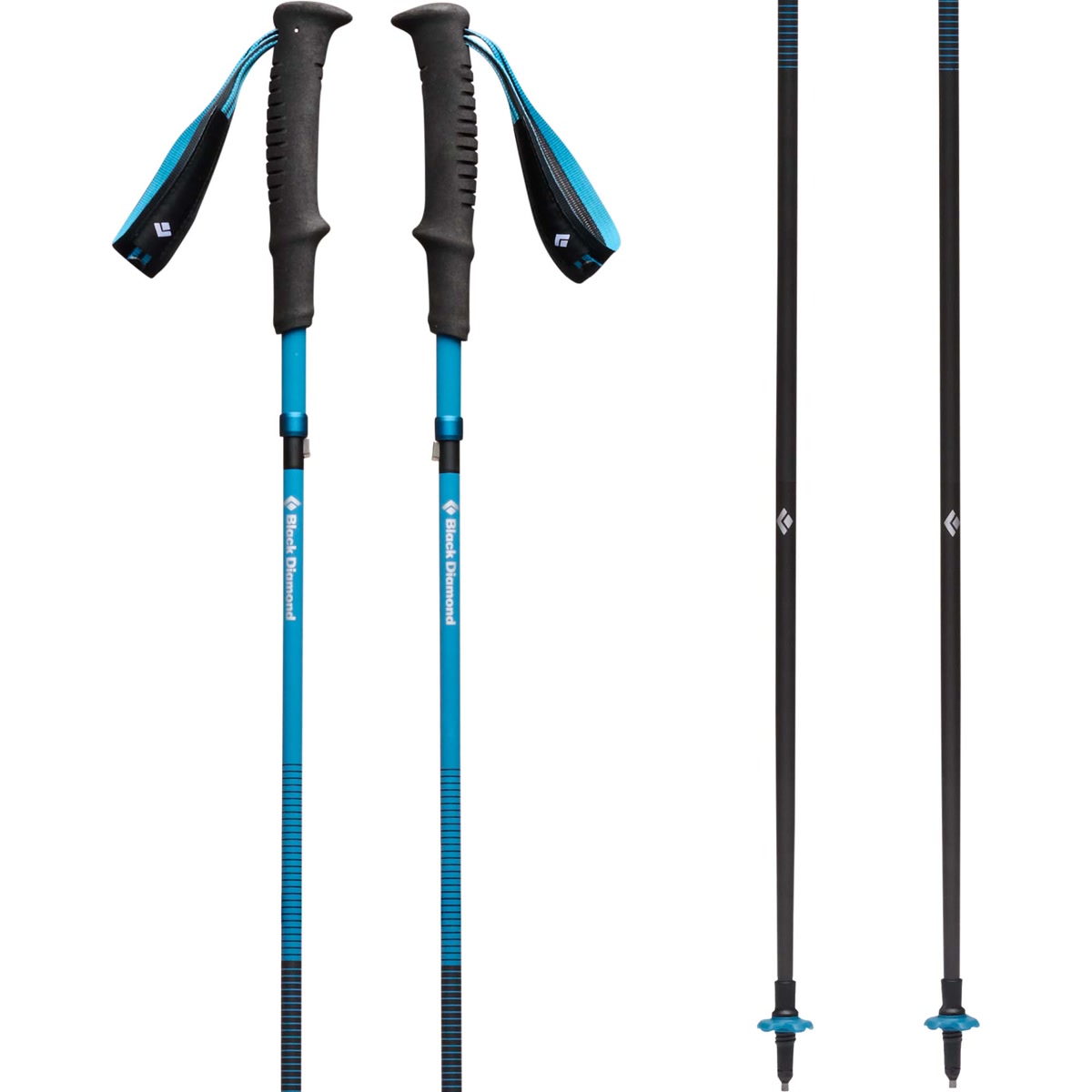
The Black Diamond Distance Z is built for fast-and-light hikers who count every ounce. The Z-fold design collapses to 15 inches, short enough to stash in a running vest, and deploys in seconds with a flick of the wrist. No adjusting, no fiddling, just pull and go.
Carbon fiber construction keeps the weight to 12.4 ounces per pair. That is lighter than most water bottles. The tradeoff is fixed length: you pick your size at purchase and it does not change. If you want adjustable, look at the Leki Makalu FX Carbon instead.
- Weight: 12.4 ounces per pair (100cm)
- Material: 100% carbon fiber
- Design: Z-fold, fixed length
- Best for: Trail runners, ultralight backpackers, fast-and-light missions
Top pick: Black Diamond Distance Z on Amazon — the lightest serious pole you can buy.
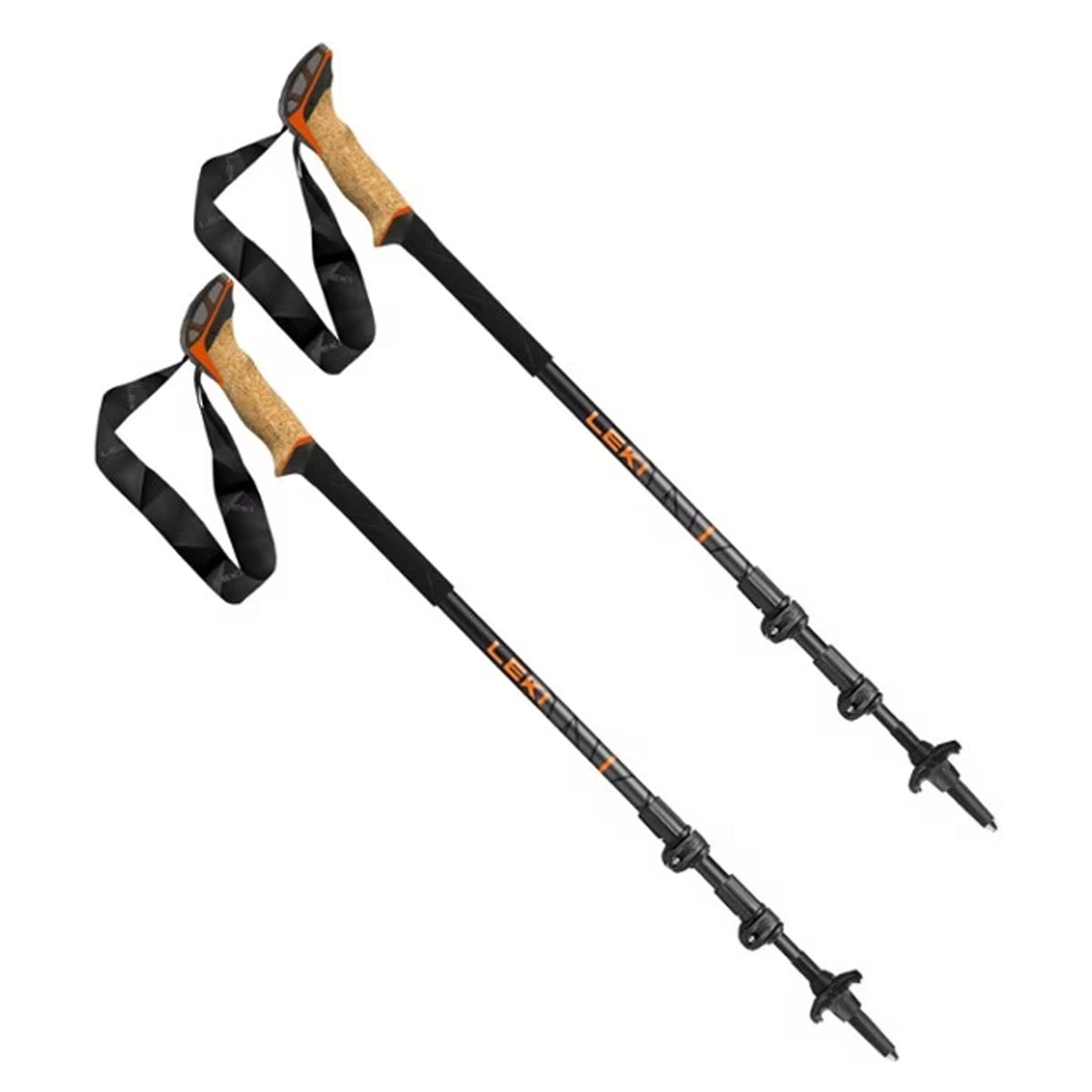
3. Leki Makalu Cork Lite (90 to 120 Dollars)
The Leki Makalu Cork Lite splits the difference between the premium Black Diamond Alpine Carbon and budget options. The cork grip is comfortable and breathable. The aluminum shaft is slightly heavier than carbon but far more durable: it bends instead of shattering when you torque it wrong on a rock.
Leki’s Speed Lock 2 adjustment system rivals Black Diamond’s FlickLock. It holds under load and adjusts with a simple lever. The three-section design packs to 25 inches and extends to 51 inches. At this price point, you are getting 90 percent of the performance of poles costing twice as much.
- Weight: 19 ounces per pair
- Material: Aluminum (HTS 6.5)
- Grip: Natural cork with support strap
- Best for: Regular hikers who want premium feel without premium price
Top pick: Leki Makalu Cork Lite on Amazon — best value in a cork-grip pole.
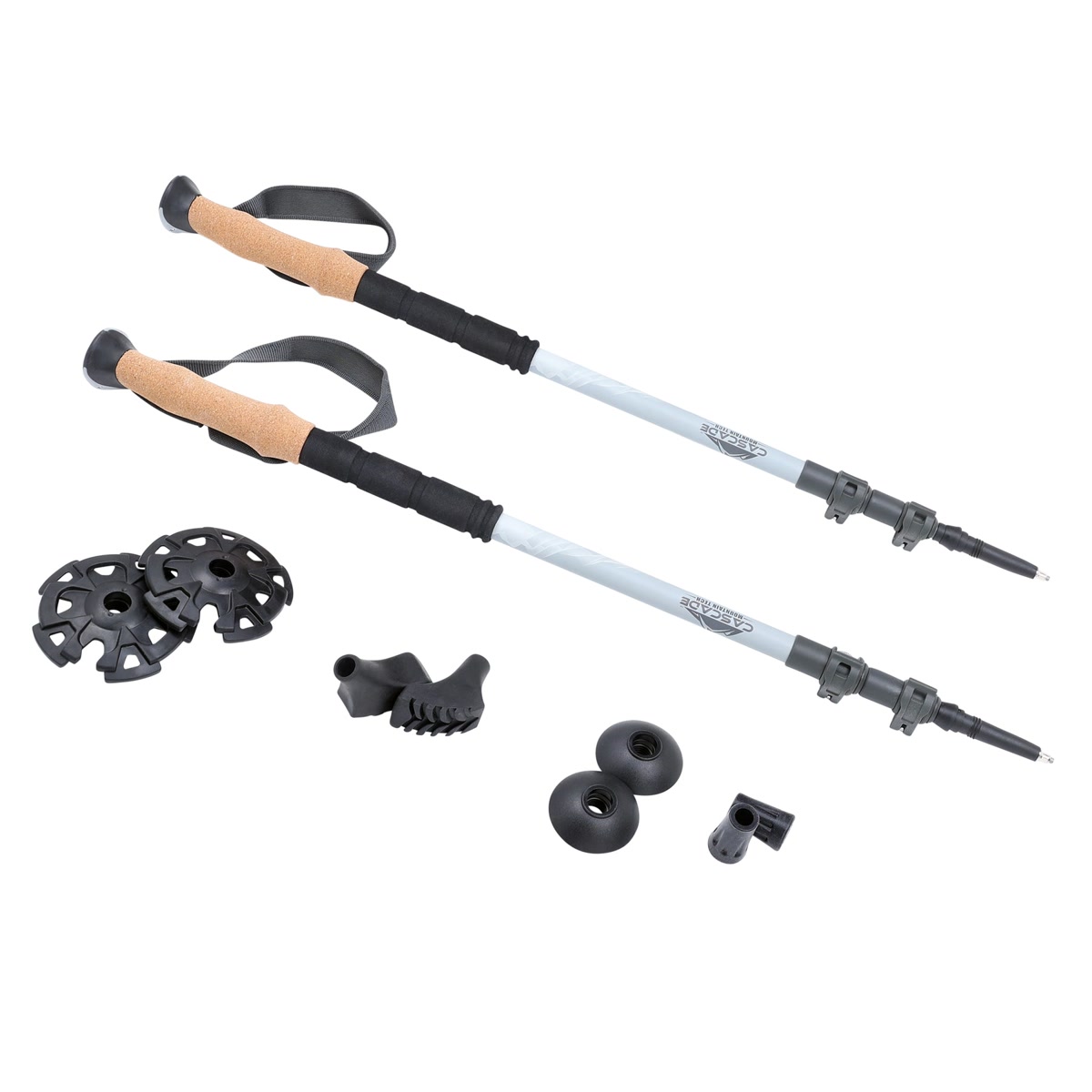
4. Cascade Mountain Tech Carbon Fiber (30 to 45 Dollars)
The Cascade Mountain Tech Carbon Fiber is the budget pole that does not feel like a budget pole. Full carbon fiber shafts, cork grips, and quick-lock adjustment for under 45 dollars a pair. That is less than most people spend on a single hiking sock.
The quick-lock mechanism works well for the price, though it is not as bomber as FlickLock or Speed Lock. The tungsten carbide tips grip rock and hardpack. Included mud baskets and rubber tip protectors round out the package. At this price, you can afford to keep a pair in the car for spontaneous trail stops.
- Weight: 17.6 ounces per pair
- Material: 100% carbon fiber
- Grip: Cork with EVA foam extension
- Best for: Beginners, casual hikers, backup pairs, budget-conscious buyers
Top pick: Cascade Mountain Tech Carbon Fiber on Amazon — the best cheap trekking pole that actually works.
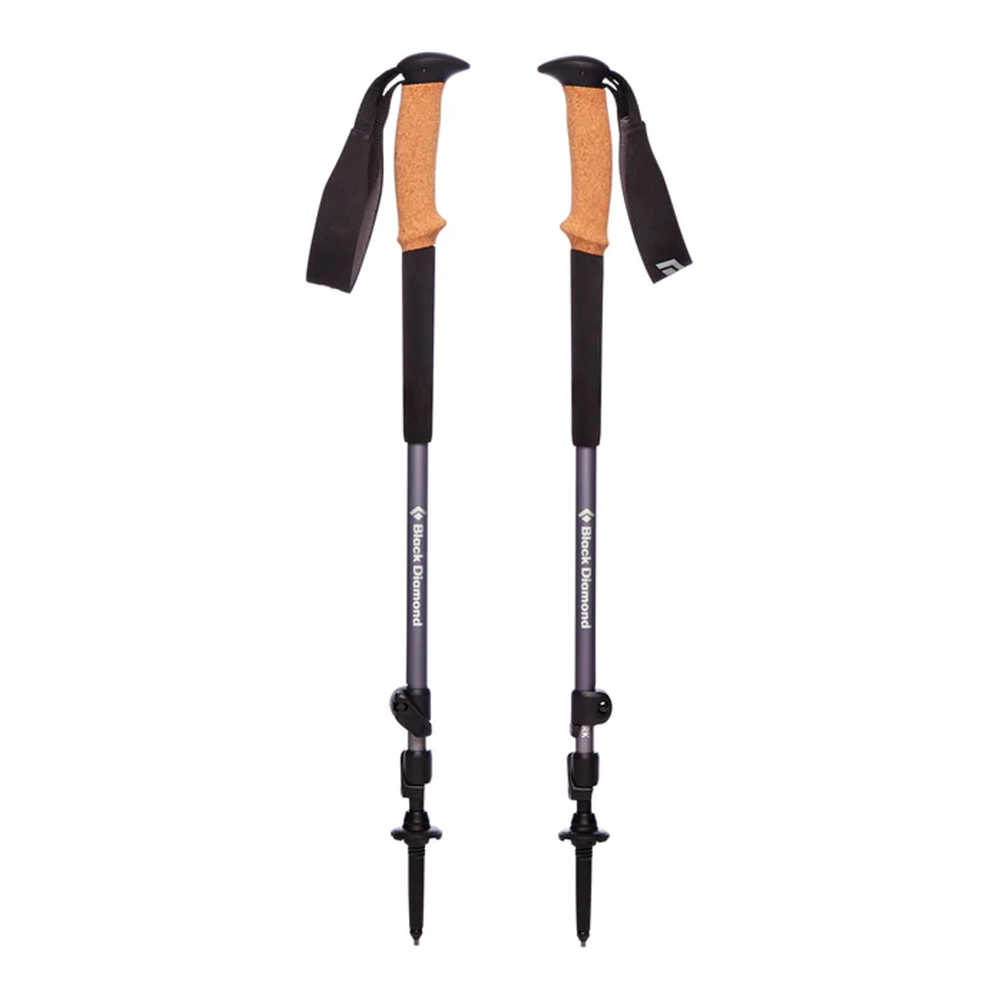
5. Black Diamond Trail Cork (70 to 90 Dollars)
The Black Diamond Trail Cork is the workhorse of the Black Diamond lineup. Aluminum shafts keep the price down while the cork grip provides the comfort of poles costing 50 dollars more. FlickLock adjustment means it actually stays where you set it.
This is the pole for people who hike regularly but do not need the weight savings of carbon fiber. At 19.4 ounces per pair, it is slightly heavier than the Alpine Carbon but nearly half the price. The extended foam grip lets you choke up on steep climbs without adjusting the length.
- Weight: 19.4 ounces per pair
- Material: Aluminum
- Grip: Natural cork with extended EVA foam
- Best for: Day hikers, weekend backpackers, reliable all-around use
Top pick: Black Diamond Trail Cork on Amazon — the reliable daily driver from the brand that invented modern trekking poles.
Trekking Pole Tips That Actually Help
Use both poles. One pole is a walking stick. Two poles are a system. Using both distributes the load evenly and prevents the asymmetric strain that causes more problems than it solves.
Shorten on uphills. Steep climbs are easier with shorter poles because you are pushing from below rather than reaching overhead. Adjust 5-10cm shorter than your flat-ground length.
Lengthen on downhills. Extend 5-10cm longer than flat ground so you can reach the trail surface without bending forward. This is where poles save your knees the most.
Use the wrist straps correctly. Thread your hand up through the strap from below, then grip the handle. The strap should bear the load, not your grip. If your hands are cramped after an hour, you are squeezing too hard.
Swap tips for conditions. Rubber tips for paved trails and rock. Carbide tips for dirt, mud, and ice. Baskets for snow and soft ground. Most poles come with the basics; aftermarket tips are cheap insurance.
The Short Version
The Black Diamond Alpine Carbon Cork is the best trekking pole for anyone who hikes seriously: the cork grip, carbon-aluminum hybrid, and FlickLock system are worth every dollar. On a budget, the Cascade Mountain Tech Carbon Fiber gets you 80 percent of the performance at 20 percent of the price. For fast-and-light missions, the Black Diamond Distance Z is lighter than carrying nothing and hoping for the best.
Your knees are a limited resource. Start using poles before you need them, not after the damage is done.
See also: Best Camping Coolers 2026: 7 Ice Chests That Actually Keep Ice for Days, Best Camping Stoves 2026: 7 Stoves That Actually Cook Like Your Kitchen at Home, Best Hiking Gaiters 2026: Keep Rocks, Mud, and Snow Out of Your Boots.
GearHound is reader-supported. When you buy through links on this site, we may earn an affiliate commission at no extra cost to you.
⛺ Get Your Free Camping with Your Dog Checklist
Join our newsletter and get this free printable plus weekly tips.
Price Check
Prices verified via our product tracker. Updated Sep 27.
| Amazon.com: BLACK DIAMOND Alpine Carbon Cork Hiking Trekki | $229.95 | 4.5★ (421) |
| Amazon.com: BLACK DIAMOND Distance Carbon FLZ-Folding Pole | $229.95 | 4.5★ |
| Amazon.com: LEKI Makalu Cork Lite Trekking Poles-Stone Blu | $159.95 | 4.5★ |
| Amazon.com: CASCADE Trekking Poles Ultra Light 100% Carbon | $65.99 | 4.4★ (2,026) |
| Amazon.com: BLACK DIAMOND Trail Cork Trekking Poles (Pair) | $129.95 | 4.1★ |
As an Amazon Associate we earn from qualifying purchases.