
This article contains affiliate links. We may earn a commission from qualifying purchases.
Some content on this site is AI-assisted and reviewed by our editorial team.
Bear Country Is Dog Country — Know the Risks
If you hike with your dog in the western US, you are hiking in bear country. Black bears range across 40 states, and grizzly populations are growing in Montana, Wyoming, Idaho, and Washington. Most bear encounters end without incident. But a dog changes the equation.
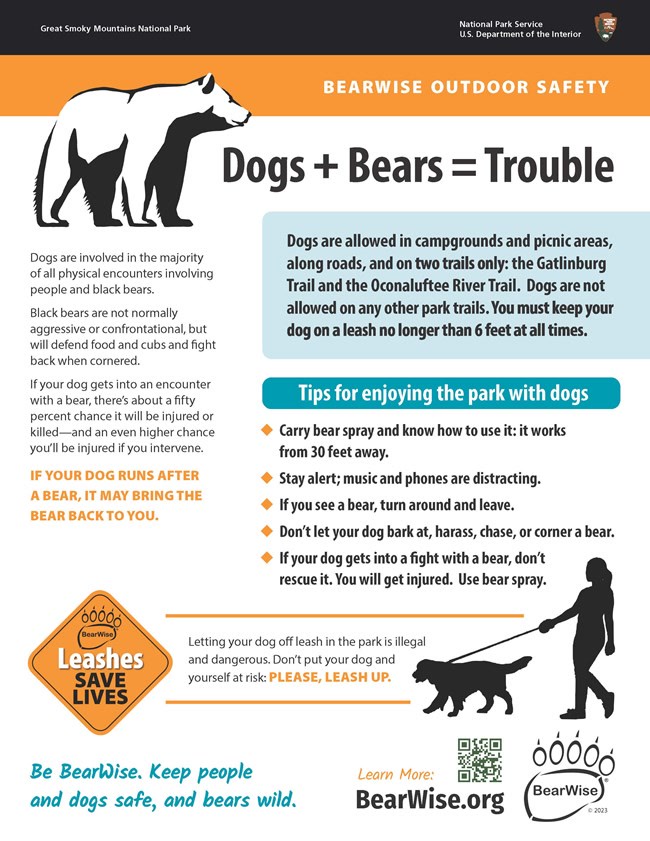
Dogs chase bears. Dogs bark at bears. And in the worst case, a dog runs back to you with an angry bear following right behind. I have talked to enough backcountry rangers to know this is not a hypothetical — it is the most common way hikers get injured in bear encounters. The dog brings the bear to the owner.
Here is what you need to know before you hit the trail with your dog in bear territory.
Black Bears vs. Grizzlies: Different Responses
Black bears are typically skittish. They run from humans and dogs. If your dog barks at a black bear, the bear will usually leave. The danger is if your dog chases it — a cornered black bear will fight. Recall your dog immediately and back away slowly.
Grizzlies are a different story, especially females with cubs. A dog that barks at a grizzly can trigger a charge. If a grizzly charges, you need bear spray — not a dog pulling on a leash. Keep your dog calm and quiet. Do not let them bark or lunge.
Why Dogs Create Bear Problems
To a bear, a dog is a predator — or at least a threat. When a dog barks, the bear does not know it is a domestic animal. It responds the same way it would to a wolf or coyote: fight or flight.
The dangerous scenario goes like this: your dog spots a bear, takes off after it, the bear turns and charges the dog, and the dog runs straight back to you. Now you are standing between a charging bear and your dog. That is how hikers get hurt.
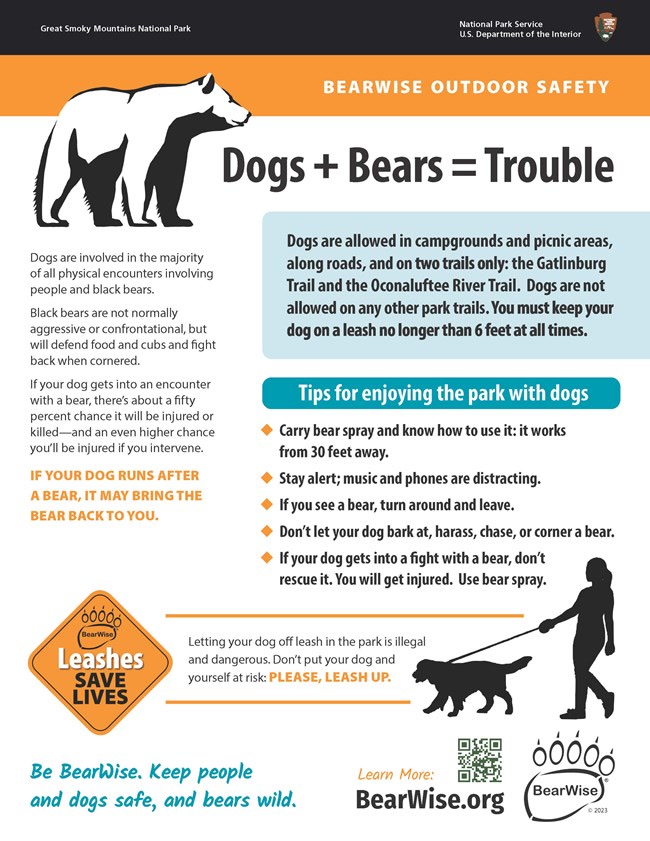
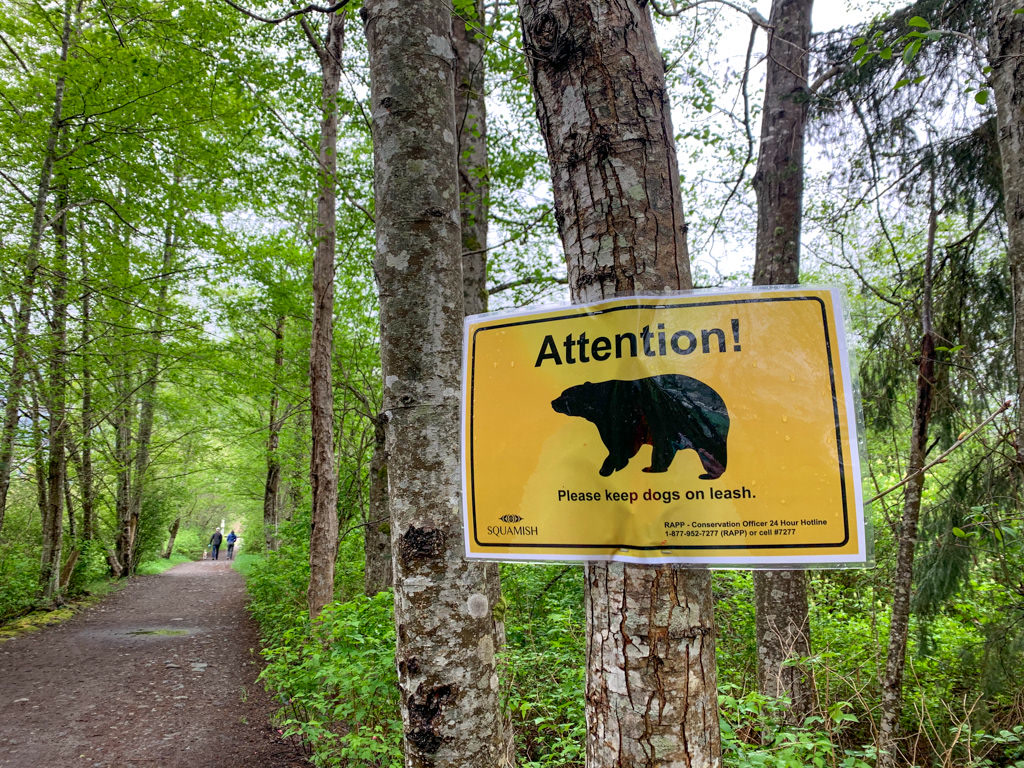
The fix is simple: keep your dog on leash in bear country. A leashed dog cannot chase a bear. National parks and most national forests require leashes in bear habitat for exactly this reason.
Carry Bear Spray — Always
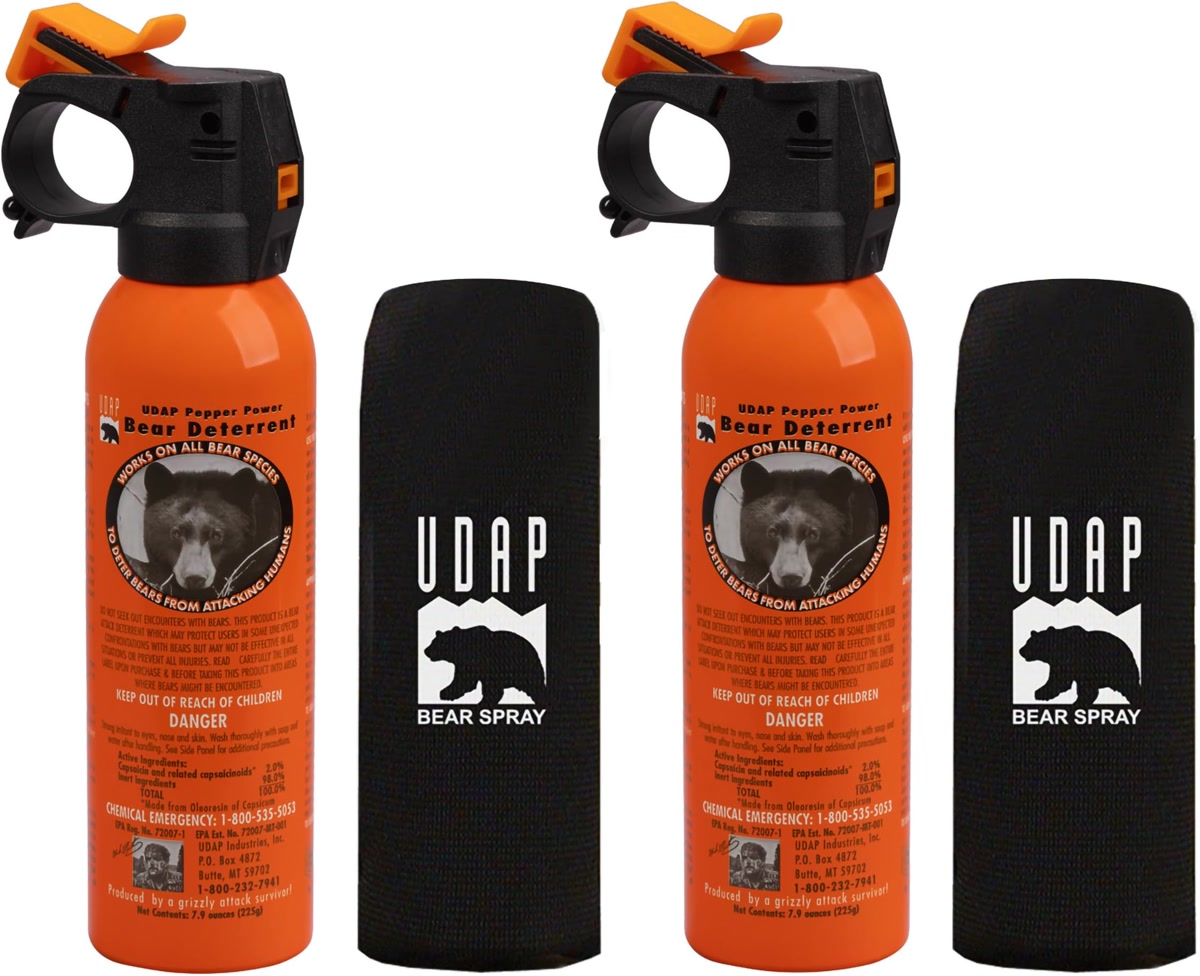
Bear spray is the single most effective bear deterrent available. Studies by the U.S. Fish and Wildlife Service show bear spray stops aggressive bears 92 percent of the time. Firearms stop them 84 percent of the time. Bear spray does not require precise aim — it creates a 30-foot cloud of capsaicin that affects the bear’s eyes, nose, and lungs.
Carry it on your belt or chest strap, not in your backpack. In a bear encounter, you need to deploy it in under 2 seconds. Practice drawing and removing the safety clip at home before you hit the trail.
See Counter Assault Bear Spray on Amazon
If you also carry a bear bell for your dog’s collar, know that bear bells are controversial. Some studies suggest bears associate bells with humans and food, which can actually attract them. Bear spray is proven. Bear bells are a maybe. Carry both if you want, but do not rely on the bell alone.
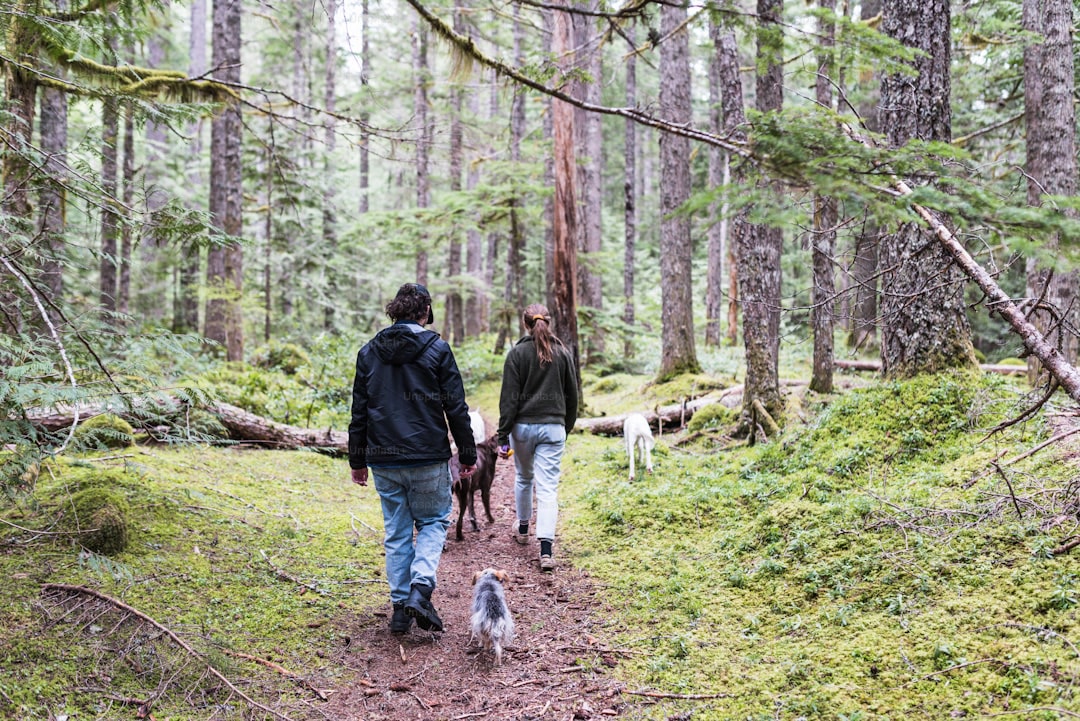
Hiking With Your Dog in Bear Country
Keep your dog on leash. Rule one. Off-leash dogs chase bears, and chasing bears gets people hurt.
Make noise. Bears avoid humans when they hear them coming. Talk to your dog, clap periodically, call out around blind corners. Your voice works better than a bell — bears recognize the human voice and avoid it.
Hike in groups. Bears are less likely to approach a group than a solo hiker with a dog. If you are solo, make extra noise.
Avoid dawn and dusk. Bears are most active at first light and last light. Hike mid-morning to early afternoon to reduce encounter probability.
Stay on the trail. Bears are more likely to be encountered off-trail where they feed on berries and grubs. Stick to established paths.
Secure your food. If you are camping, use a bear canister or hang food 12 feet off the ground and 6 feet from the trunk. Dog food counts as food — bears will eat it. Never keep food or dog treats in your tent.
If You Encounter a Bear
1. Stop. Do not run. Running triggers chase instinct in both bears and dogs.
2. Control your dog. Pull your dog close and keep them quiet. If your dog is barking, grab their muzzle if you can. A barking dog escalates everything.
3. Speak calmly. Talk in a low voice. “Hey bear, whoa bear, easy.” This tells the bear you are human and not a threat.
4. Back away slowly. Do not turn your back. Face the bear and step back. If the bear follows, stop and hold your ground.
5. Deploy bear spray if charged. Aim slightly downward to create a cloud at the bear’s eye level. Spray in 2-second bursts. Most bears turn away within the first burst.
6. If attacked: For black bears, fight back. For grizzlies, play dead — face down, hands behind neck. A leashed dog cannot protect you in a bear attack. Focus on yourself.
The Short Version
Keep your dog on leash. Carry bear spray on your belt, not in your pack. Make noise on the trail so bears hear you coming. If you encounter a bear, control your dog first — a barking dog makes everything worse. Back away slowly, speak calmly, deploy bear spray if charged. Bear spray works 92 percent of the time. Nothing else you can carry comes close to that.
For more trail safety with your dog, see our dog first aid kit guide and this guide to bear canisters for backcountry food storage.
GearHound is reader-supported. When you buy through links on this site, we may earn an affiliate commission at no extra cost to you.
⛺ Get Your Free Camping with Your Dog Checklist
Join our newsletter and get this free printable plus weekly tips.
Price Check
Prices verified via our product tracker. Updated Sep 27.
| Amazon.com: Counter Assault Bear Spray with Holster, 44 ft | $67.99 | 4.6★ (574) |
| Amazon.com : Wilderdog Backcountry Bear Bell for Dog Colla | $32.00 | 4.3★ |
As an Amazon Associate we earn from qualifying purchases.