This article contains affiliate links. We may earn a commission from qualifying purchases.
Some content on this site is AI-assisted and reviewed by our editorial team.
Your Dog Burns 3x More Calories on a Trail Than on a Walk
A 2-hour hike over uneven terrain burns roughly the same energy for your dog as a 6-hour neighborhood walk. Yet most owners bring the same single water bottle and maybe a treat pouch. Underfueling your dog on the trail leads to bonking — sudden energy crash, stumbling, and in severe cases, collapse. I have seen it happen and it is scary. It is also entirely preventable.
How Much Food Does Your Dog Need?
Caloric burn depends on your dog’s weight, the terrain, and how long you are out. As a baseline:
- Easy hike (2 hours, flat trail): Add 25 percent to your dog’s daily food intake
- Moderate hike (4 hours, elevation gain): Add 50 percent
- Hard hike (6+ hours, steep terrain): Double the daily intake
Do not feed this all at once. Break it into small portions every 30-45 minutes. A large meal before or during hiking causes vomiting and cramps — same as a human eating a huge lunch and then running a 10K.
What to Feed on the Trail
Trail food for dogs needs to be calorie-dense, lightweight, and not prone to spoiling. Here is what works:
Freeze-dried dog food is the best option for multi-hour hikes. It is 80 percent lighter than wet food, does not spoil in heat, and rehydrates with a splash of water. A 4-ounce bag delivers 500+ calories. I carry this on every hike over 3 hours.
High-protein treats for energy boosts and reward training. Look for single-ingredient treats like freeze-dried liver, lung, or heart. These pack 20-30 calories per treat and do not melt or spoil.
Regular kibble works for shorter hikes. Bring extra in a ziplock bag. It is not as calorie-dense as freeze-dried, but it is familiar and will not cause stomach upset.
What not to bring: Wet food in pouches (heavy, spoils in heat), raw food (bacteria risk in warm conditions), and human food (most of it is bad for dogs). Also avoid high-fat treats like peanut butter — too much fat on the trail causes pancreatitis.

Feeding Schedule on the Trail
The biggest mistake I see is feeding one big meal at the summit. That causes blood sugar spikes and GI distress on the hike down. Instead:
- Every 30-45 minutes: 2-3 high-protein treats. Steady energy without overloading the stomach.
- Every 90 minutes: Small portion of freeze-dried food (about 1/4 of a meal). Add a splash of water.
- At the summit or turnaround: Slightly larger portion (1/2 meal) and a 15-minute rest before heading down.
- Never feed right before a steep descent. Downhill hiking jostles the stomach and causes vomiting.
Water: The Non-Negotiable
Food matters, but water matters more. A dog can go hours without food on the trail. They cannot go an hour without water in warm conditions.
Dogs need roughly 1 ounce of water per pound of body weight per hour of hiking. A 50-pound dog needs 50 ounces per hour — over 3 cups. Carry enough or plan to filter from streams.
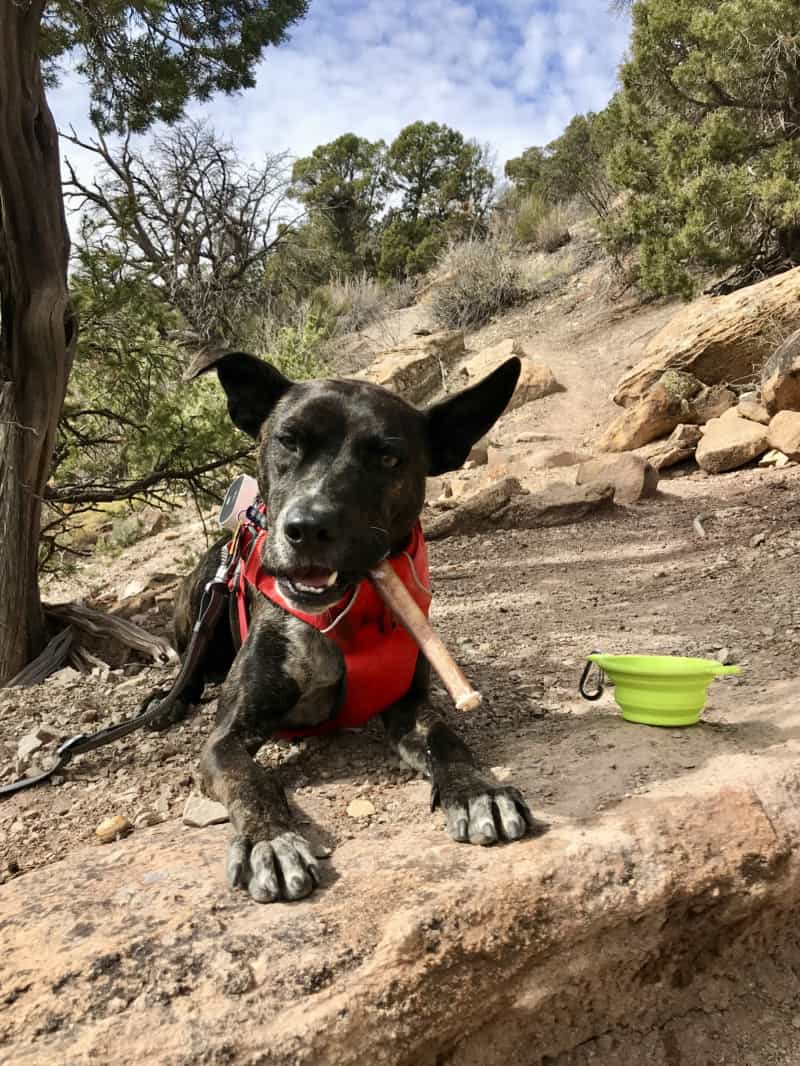
Always carry a collapsible silicone bowl. Dogs cannot drink effectively from a water bottle poured into their mouth. Offer water every 20-30 minutes, and do not let your dog drink from stagnant puddles or warm lakes — blue-green algae is a real risk in summer.
Signs Your Dog Is Underfueled
Dogs are stoic. They will keep going long after they should have stopped. Watch for:
- Lagging behind: Your dog slows or drops to the back of the group. First sign of energy depletion.
- Panting that does not improve with rest: Usually dehydration, not just heat.
- Stumbling or wobbly gait: Your dog is bonking. Stop, give food and water, rest 20 minutes. If it does not improve, head back.
- Refusing treats: A dog who refuses high-value treats is nauseous or exhausted. End the hike.
- Dark red or purple gums: Heat exhaustion plus dehydration. Medical emergency.
What It Comes Down To
Bring a collapsible bowl and enough water for 1 ounce per pound per hour. Feed small portions every 30-45 minutes — do not wait for the summit. Freeze-dried food is the best trail food for dogs: lightweight, calorie-dense, no spoilage. Watch for lagging, stumbling, and treat refusal. The trail is not the place to test your dog’s limits.
For more on trail safety with your dog, see our post-hike recovery guide and our dog first aid kit guide.
GearHound is reader-supported. When you buy through links on this site, we may earn an affiliate commission at no extra cost to you.
⛺ Get Your Free Camping with Your Dog Checklist
Join our newsletter and get this free printable plus weekly tips.