This article contains affiliate links. We may earn a commission from qualifying purchases.
Some content on this site is AI-assisted and reviewed by our editorial team.
A hatchet is the one tool that quietly runs a campsite. It splits the kindling that starts the fire, drives the stakes that hold the tent, and clears the branch blocking the kitchen tarp. Try running a weekend camp without something to make kindling and you end up tearing logs apart with your hands.
For a long time I treated hatchets as a “whatever’s cheap” purchase, and that’s how I ended up with a hardware store hatchet whose head came loose by the second season. When it finally flew off mid-swing — landing six feet from where my dog was lying — I did what I should have done first: looked at what people who actually use these tools buy, and why. Here’s what matters, and the hatchets worth strapping to a pack in 2026.
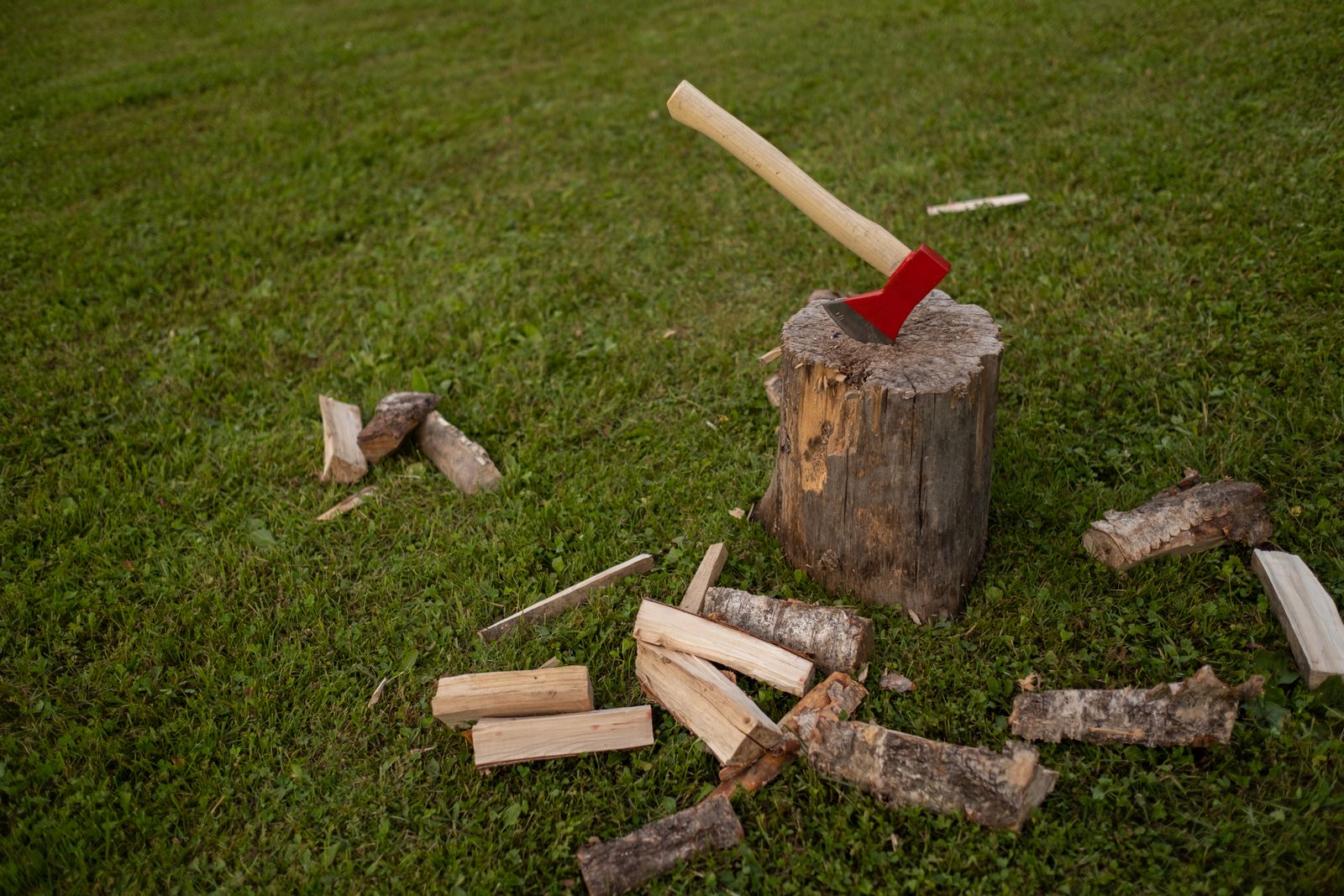
The short version: most campers are best served by a one-pound hatchet with a 14-16 inch handle — light enough to pack, heavy enough to split seasoned kindling in one strike. Everything past that is specialization.
Fiskars X7 — The One Most People Should Buy
Fiskars X7 Small Hatchet (14″) is the hatchet I recommend without a disclaimer, and at about $35 street it’s the value benchmark everything else gets measured against. The head is insert-molded into the FiberComp handle — the handle is molded around the head, so there is no eye, no wedge, and no way for the head to work loose the way my old hardware store hatchet did. Fiskars backs it with a lifetime warranty, and the low-friction blade coating genuinely helps it pull free from pine rounds instead of sticking.
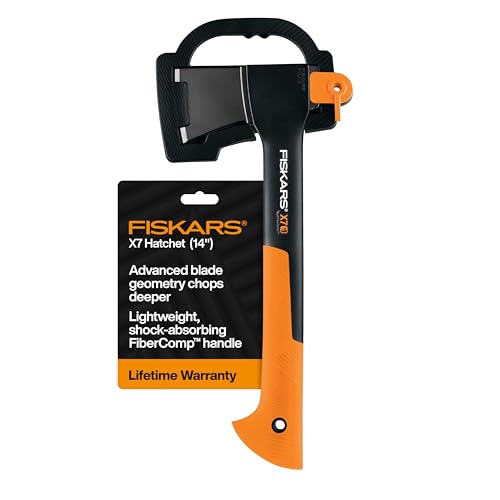
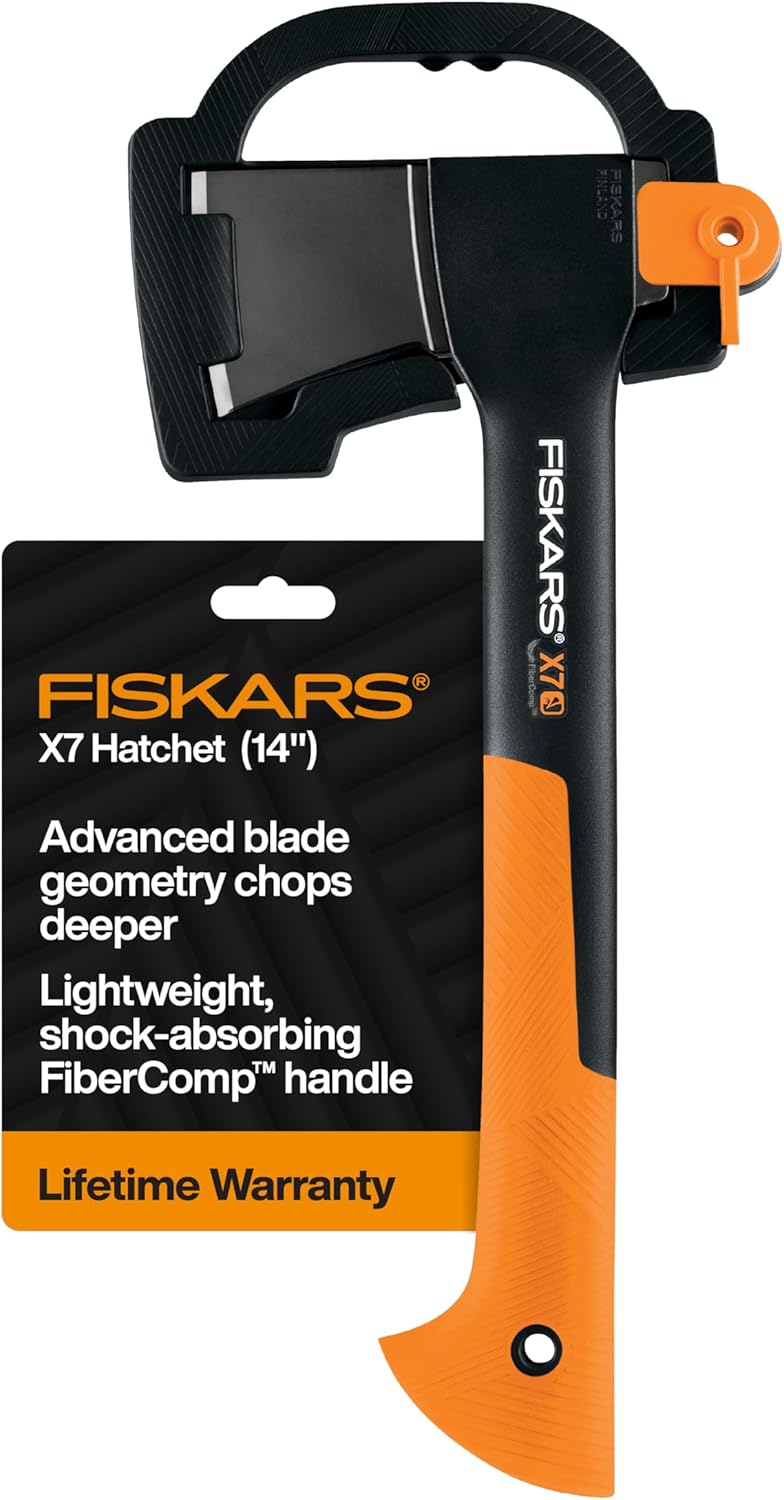
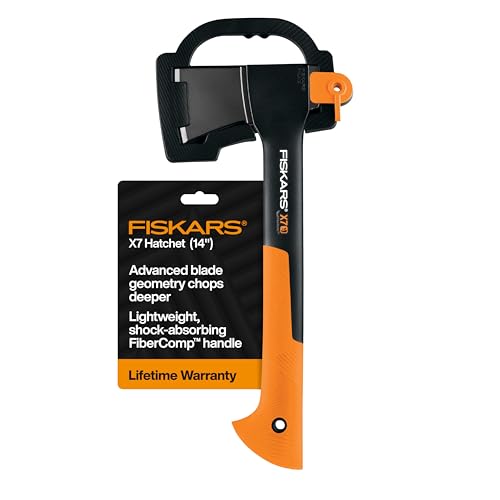
At 1.4 pounds total with a 14-inch handle, it splits four-inch seasoned rounds with one clean strike and packs light enough for a day-hike bag. Cons: the FiberComp handle feels less “tool” than hickory, the molded sheath is serviceable but nothing special, and like every Fiskars blade it arrives sharp enough to use but rewards ten minutes on a puck.
My take: If you’re buying one hatchet for truck, tent, or fire pit, this is it — the durability-to-price ratio is not close.
Estwing Sportsman’s Axe (E24A) — The Indestructible Classic
Estwing’s 14-inch Sportsman’s Axe is the answer to “what if the head and the handle were one piece of American steel?” Forged in Rockford, Illinois since 1923, the E24A has no weak joint anywhere — which is why 70-year-old Estwings still show up at estate sales in working condition. The genuine leather grip, hand-sanded and lacquered, is the best-feeling handle in this field, and the 3.25-inch cutting edge comes tempered and hand-sharpened.
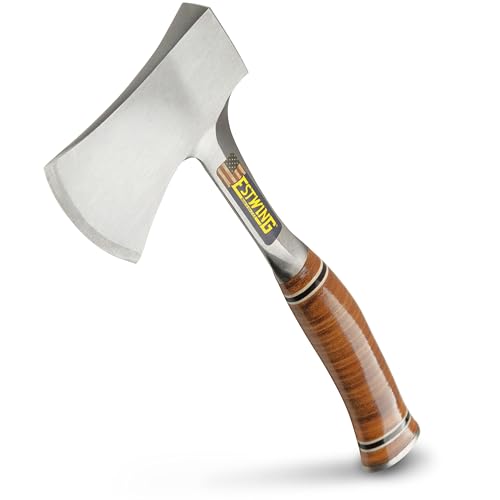
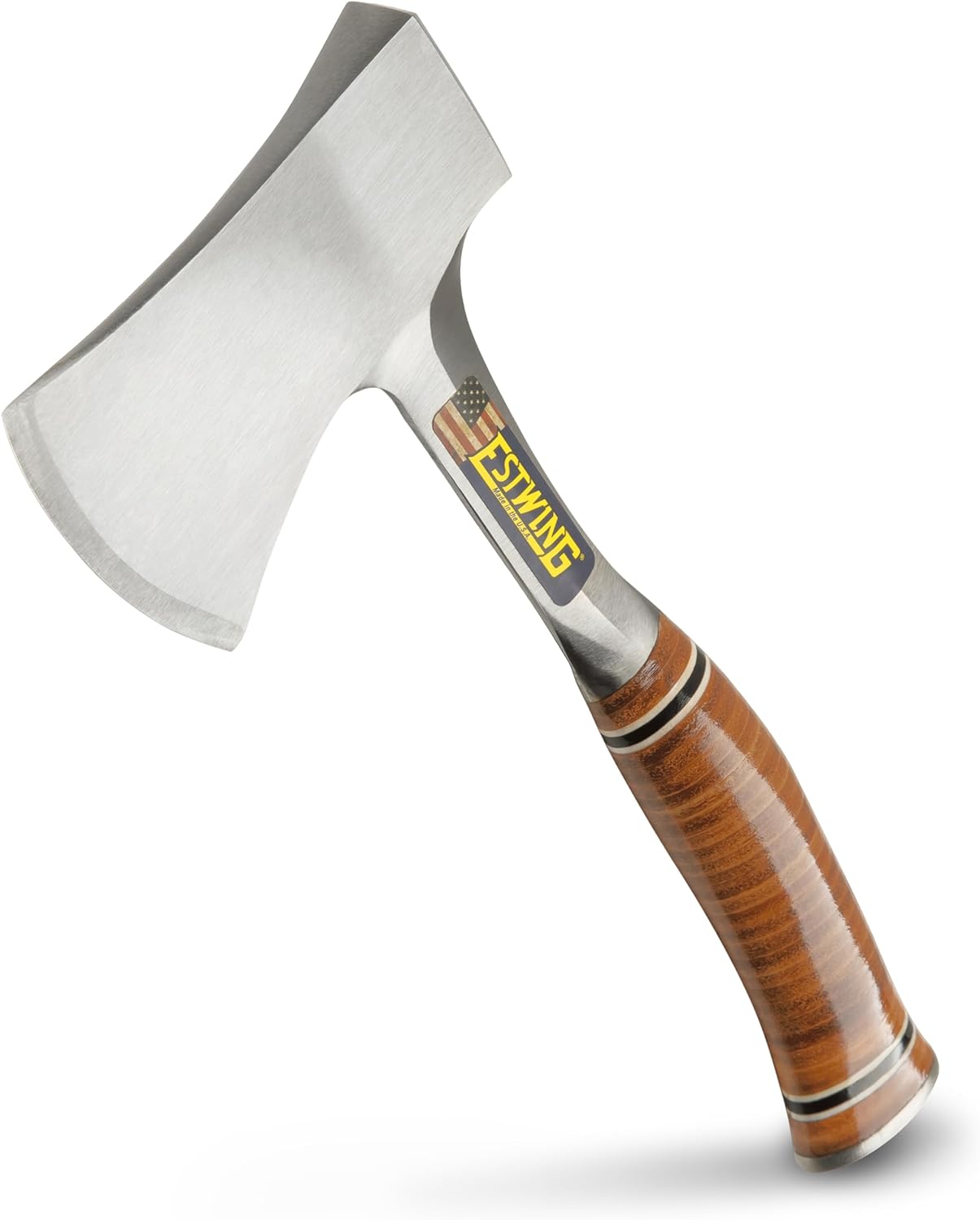
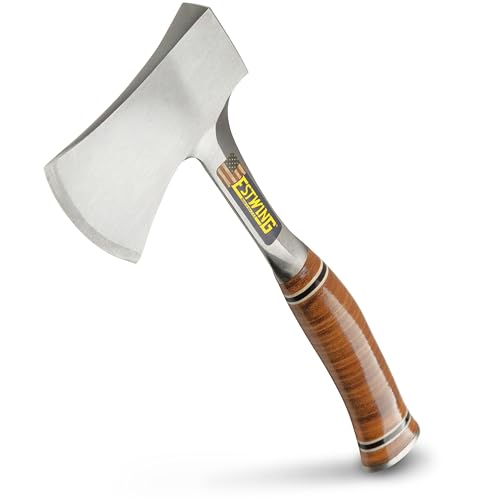
At about $36 it’s priced dead-even with the Fiskars, which makes the choice pure preference: all-steel indestructibility and classic looks versus Fiskars’ lighter synthetic build. Cons: at 1.9 pounds it’s noticeably heavier in a pack, the steel handle transmits more vibration on mis-hits (gloves for long sessions), and the leather grip wants occasional oiling. It ships with a ballistic nylon sheath — fine, though leather-grip purists usually buy a leather mask separately.
My take: The buy-it-for-life pick — if you want the last hatchet you’ll ever need and don’t mind the extra half-pound, this is the one.
Husqvarna Hatchet — The Swedish Steel Value
The Husqvarna 13-inch Hatchet is the sleeper of this list. The 1.32-pound head is hand-forged in Sweden by the Hultafors group — the same forge family behind Hults Bruk axes that sell for $130 to $200 — and it lands at about $75 with a hickory handle and a thick leather sheath with brass rivets. That’s heirloom-axe steel at hardware-store money, and it’s why this hatchet shows up on bushcraft forums constantly.
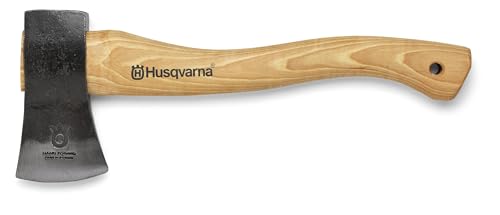
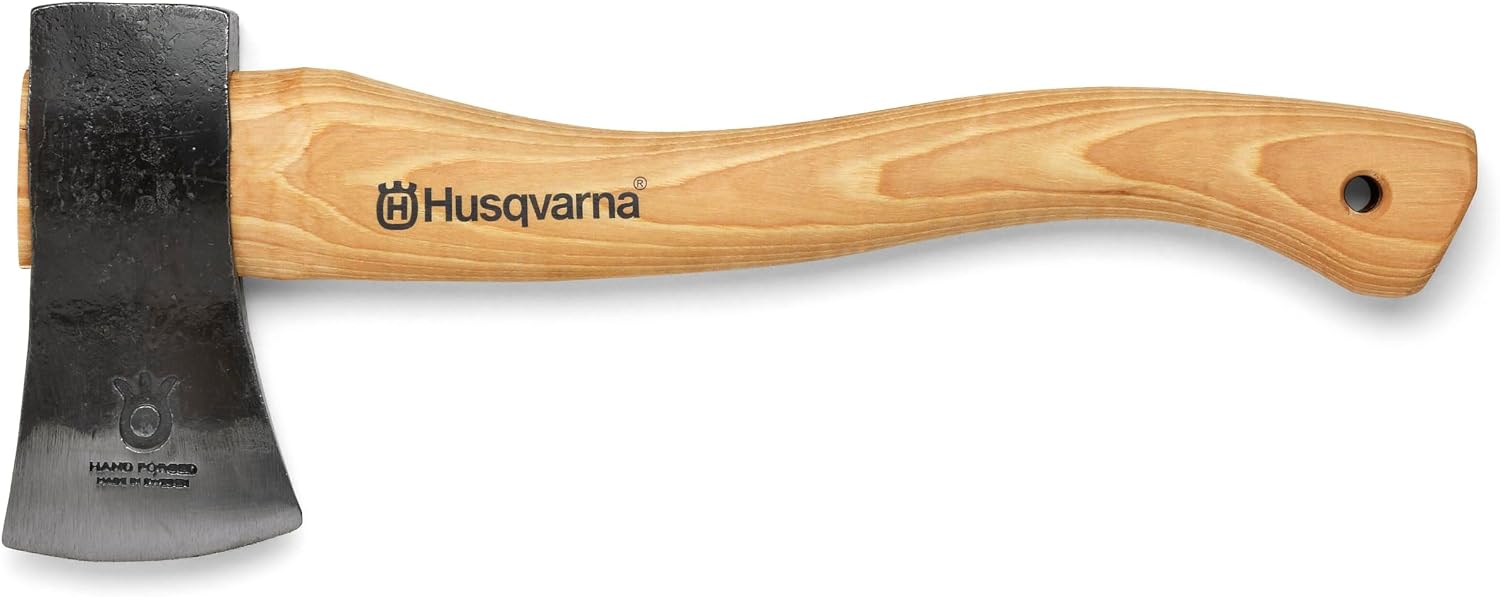
The honest cons: Husqvarna ships it with a wire edge that needs a session on a stone before it performs, the handle arrives lacquered (most owners sand it and re-oil), and the logo is printed on the wood rather than burned in. Quality control varies unit to unit more than with Fiskars or Estwing.
My take: Best steel-per-dollar in the category if you’re willing to spend 30 minutes tuning the edge — the traditionalist’s budget pick.
Hults Bruk Agdor Hatchet — The Step-Up Heirloom
Hults Bruk’s Agdor 15-inch Hand Hatchet is where “buy it for life” becomes “buy it for your grandkid’s life.” Made at a Swedish forge that’s been running since 1697, the 1.25-pound Yankee-pattern head is hand-forged, heat-treated, and hung on a curved American hickory handle. The current street price sits around $116 (list $129) — a real jump from the first three picks, and that’s the honest tradeoff.
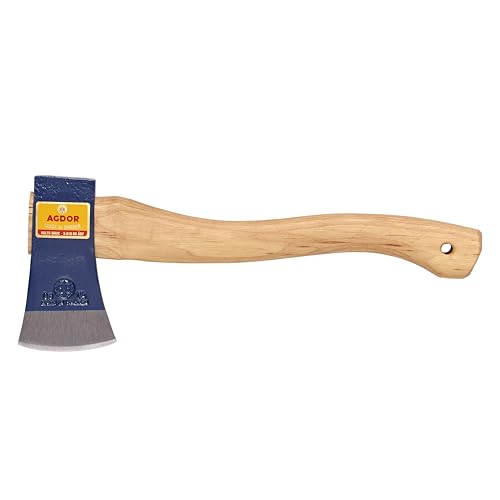
What the money buys: edge geometry that arrives genuinely sharp, a head-to-handle fit with zero gaps, and steel that holds its edge through a full firewood season of touch-ups. The cons beyond price: at 15 inches it’s bigger than a pack hatchet needs to be for some, and like all hickory-handled tools it wants dry storage and occasional linseed oil, or the handle will eventually check.
My take: If the Estwing whispers “buy it for life” to you, this one whispers “buy it for two lifetimes” — worth it only if you’ll actually use it weekly.
Coleman Camp Axe — The Truck-Box Beater
There’s a legitimate case for a hatchet you’re allowed to lose, and that’s the Coleman Camp Axe at about $11. The drop-forged steel head does the camp basics — splitting small kindling, hammering and pulling tent stakes (there’s a stake-puller notch in the head) — and the all-steel build with rubber grip shrugs off being thrown in a truck box with the tow straps.
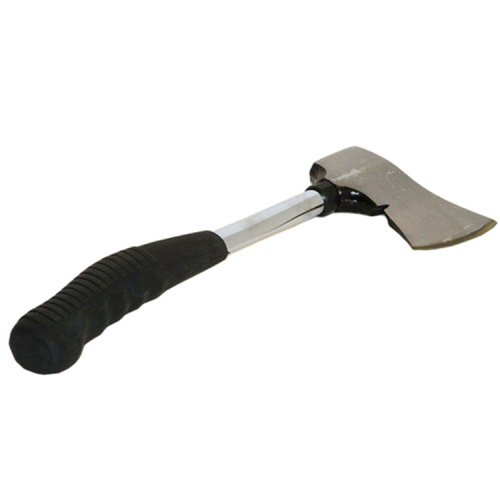
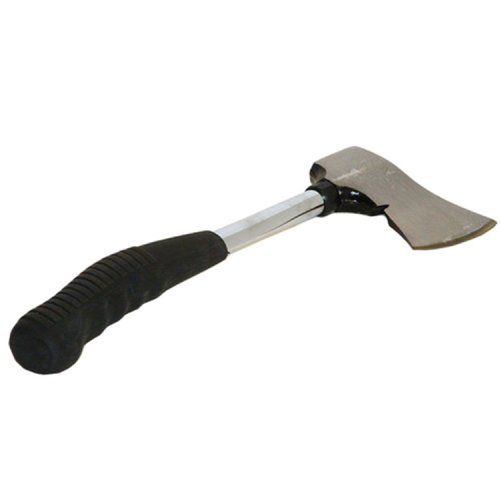
Be clear-eyed about what $11 buys: the edge geometry is crude next to everything above, it will not arrive sharp, and the steel is soft enough that it dings and needs frequent touch-ups. Most listings ship no sheath, so plan for an edge guard. It splits kindling fine. It will not do fine carving work — pretending otherwise is how people get hurt.
My take: The right hatchet for the camp box, the truck, or the emergency kit — and the wrong one for your primary trail tool.
Features That Actually Matter (And Ones That Don’t)
Head-to-handle attachment is everything. A loose head is the only failure that can genuinely hurt you or your dog. Insert-molded (Fiskars) and one-piece forged (Estwing) designs eliminate it; wooden-eye designs (Husqvarna, Hults Bruk) do it right but want occasional handle checks.
One pound of head is the camp sweet spot. Lighter and splitting seasoned rounds takes three strikes instead of one; heavier and it stops being a pack tool.
Sheath quality matters more than people think. An unsheathed hatchet in a pack is a wound waiting to happen. The Husqvarna’s thick leather mask and Estwing’s nylon sheath are the standards here.
Handle length between 14 and 16 inches fits a one-hand swing from a standing split position and still clears your boot when you kneel.
Skip the gimmicks. Hollow handles with survival kits, compass caps, and “tactical” serrations add failure points and remove steel where you need it.
What to Spend Where
- $11 — Coleman Camp Axe: truck box, loaner, emergency kit.
- $35 — Fiskars X7 or Estwing E24A: the answer for 90% of campers. Fiskars for lighter pack weight, Estwing for indestructible tradition.
- $75 — Husqvarna Hatchet: hand-forged Swedish steel for people who enjoy tuning an edge.
- $116+ — Hults Bruk Agdor: the heirloom tier, for weekly users.
Keep reading: the fire starters worth pairing with a hatchet and this year’s camp stoves.
GearHound is reader-supported. As an Amazon Associate, I earn from qualifying purchases. That means if you buy through one of the links above, I get a small commission at no extra cost to you. I only recommend gear I’d actually carry into the field.
Related guides
- Best Hiking Boots 2026: Tested and Reviewed
- Best Dry Bags 2026: Keep Your Gear Dry on the Water and the Trail
- Camping Pillows That Beat the Bunched-Up Fleece
- Summer Dog Safety on the Trail: Heat, Hydration, and When to Turn Around
- Best Camping Tents 2026: Tested and Reviewed
⛺ Get Your Free Camping with Your Dog Checklist
Join our newsletter and get this free printable plus weekly tips.
Frequently Asked Questions
What size hatchet is best for camping?
A one-pound head on a 14-to-16-inch handle. That size splits seasoned kindling in one strike, drives tent stakes, packs on a belt, and still controls well for limbing.
Is a hatchet better than a small axe for camp?
For most camps, yes — hatchets do 90% of camp woodwork at half the weight. A full-size axe only pays off processing lots of firewood at a fixed camp.
How do I keep a hatchet head from coming loose?
Buy a design where it can't — insert-molded handles (Fiskars) or one-piece forged steel (Estwing). For wooden-eye hatchets, store them dry, check the wedge seasonally, and re-seat at the first rattle.
Do I need to sharpen a new hatchet?
Usually a little. Fiskars and Estwing arrive close to working-sharp; Husqvarna ships with a wire edge that wants a stone first.
Liked this guide? Get the next one in your inbox — the camp packing checklist is free too.
✓ You're in — check your inbox.
No spam. Unsubscribe anytime. We never share your email.
Prices move fast. Start your Amazon trip from our Shop & Support page and your purchases support GearHound at no extra cost to you.
Price Check
Prices verified via our product tracker. Updated Oct 31.
| Fiskars X7 Small Hatchet Axe 14", for Camping & Chopping W | $34.98 | 4.8★ (12,156) |
| ESTWING Sportsman's Axe, 14" Leather Grip Hatchet, E24A | | $36.19 | 4.7★ (6,562) |
| Husqvarna Hatchet, Small Axe with Leather Sheath and Hicko | $74.99 | 4.7★ (905) |
| Hults Bruk 840021 Agdor Hand Hatchet 15-1.25 lb Head, 15" | $129.00 | 3.7★ |
| Coleman Axe with Durable Steel Head & Non-Slip Grip Handle | $10.99 | 4.5★ (3,859) |
As an Amazon Associate we earn from qualifying purchases.