This article contains affiliate links. We may earn a commission from qualifying purchases.
Some content on this site is AI-assisted and reviewed by our editorial team.
Winter trails lie about their grip. The crust that held your weight at eight in the morning turns to glass by noon, and summer-planted poles suddenly skate with every plant. Nine times out of ten the pole is fine — it is the setup on the bottom end that is wrong. Summer poles ship with inch-wide trekking baskets meant for dirt and rock. Packed snow and icy crust want a wide powder basket riding on top and a carbide tip that bites when the surface glazes. Winter hikers, ice anglers walking a line out to the shanty, and dog walkers doing the crusty sidewalk loop with a pulling companion all need the same two-part setup, and almost none of them are running it.
I have postholed enough behind a dog who thinks crust is a game to care about the details. I compared five poles on the three things that decide winter performance — the basket-and-tip setup, how the locks behave with gloves on, and the grip when everything is wet. Carbon sits between about $52 and $65 right now, aluminum runs $44 to $88, and the right answer depends less on money than on how hard you are on gear.
The Basket-and-Tip Setup That Holds on Ice
Packed snow ruins a pole two ways. The basket’s job is float: a 2.5-to-3.5-inch powder basket spreads the load so the shaft rides on the crust instead of punching through it. The tip’s job is bite: a carbide point grips glaze and frozen wood when the basket rides on top. Every pole below either ships snow baskets in the box or sells them as a cheap accessory, and swapping them takes ten seconds with no tools. Do it before the first crusty morning.
Cascade Mountain Tech 3K Carbon Fiber Poles (Cork Grip) — The Lightweight Carbon Anchor
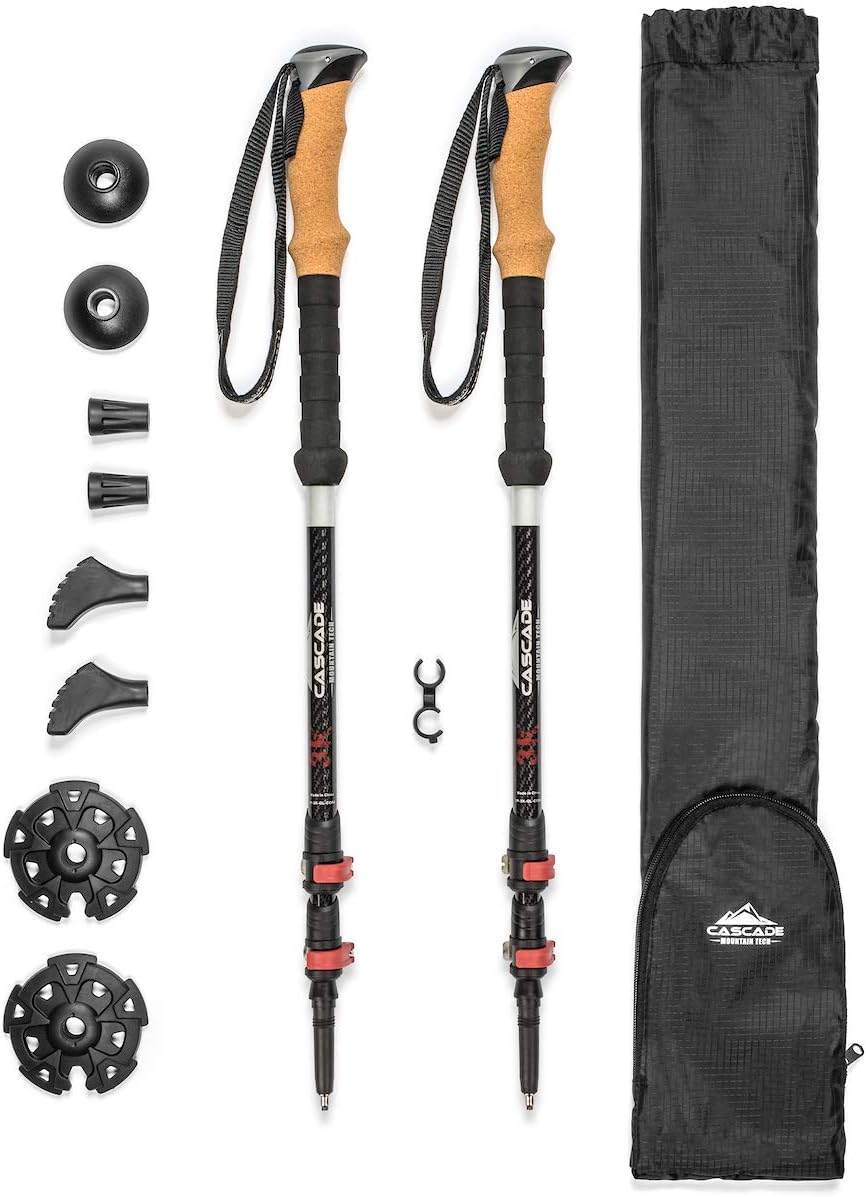
The Cascade Mountain Tech 3K carbon fiber poles with cork grips run about $65 at check time, and they are the pair I grab when the miles matter. Carbon at roughly 8 ounces a pole dampens the thousands of little shocks a frozen trail delivers, where aluminum passes them straight into your elbows. The quick-lock levers adjust from 26 to 54 inches with mittens on, and snow baskets come in the box.
- What it does well: light, quiet, and honest cork — warm in the hand, grippy when wet, no February smell.
- Honest cons: carbon snaps under lateral leverage. Catch a basket between rocks with your full weight moving and it does not bend — it breaks.
My take: the winter default for long days — light enough to actually carry, and the snow baskets are already in the box.
Cascade Mountain Tech Carbon Fiber Poles (EVA Grip Kit) — The Value Twin
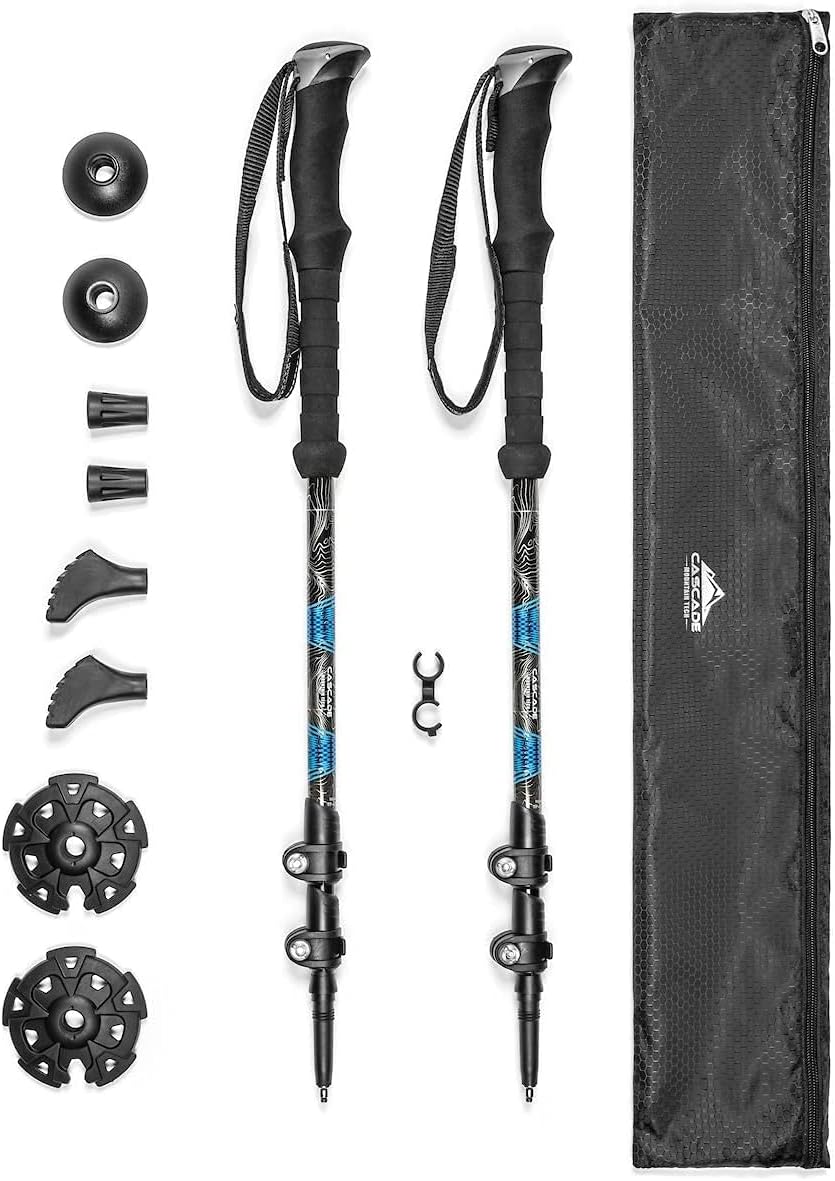
The EVA-grip value kit is the same carbon chassis for about $52 — roughly 20 percent less than the cork version — with EVA foam grips and a carry case included. The lock hardware and the carbon layup are the workhorse parts, and those carry over. The kit is the second-pair answer — for the kid, or the friend who borrows and never returns.
- What it does well: all of the carbon benefit at the lowest price in this ranking, with the case thrown in.
- Honest cons: EVA foam compresses faster than cork and holds odor after a wet dog-hiking season, and stock was thin at check time — under twenty left.
My take: the budget carbon pick — buy it and put the $13 you save toward microspikes, which do more for ice than any pole can.
Black Diamond Trail Trekking Poles (Aluminum) — The Workhorse If Weight Is Second
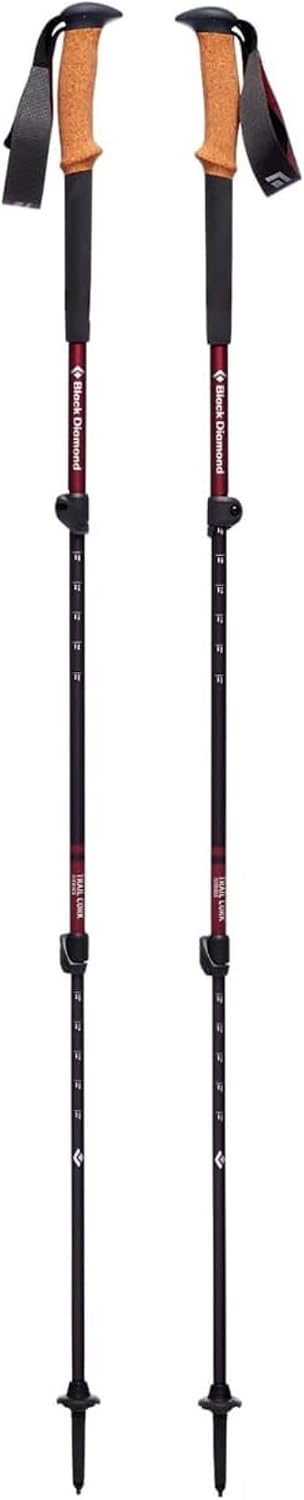
The Black Diamond Trail pair runs about $88 at check time against a $95 typical price. What that money buys is a failure mode: aluminum bends instead of snapping. When a basket catches between granite and a loaded pack on a frozen pitch, that is the only behavior you want. The flick-locks hold their set under load without the slow creep twist locks show in deep cold.
- What it does well: the buy-it-once pair — locks that do not drift, a shaft that survives leverage that kills carbon, and a brand that stocks replacement parts.
- Honest cons: it is the heaviest and most expensive pick here, at roughly $25 to $35 more than any carbon option in this ranking.
My take: the aluminum answer for rocky winter lines and heavy loads — the pair you buy when breaking a pole miles out is not an option.
Montem Ultra Strong Trekking Poles — The Budget Aluminum Tank
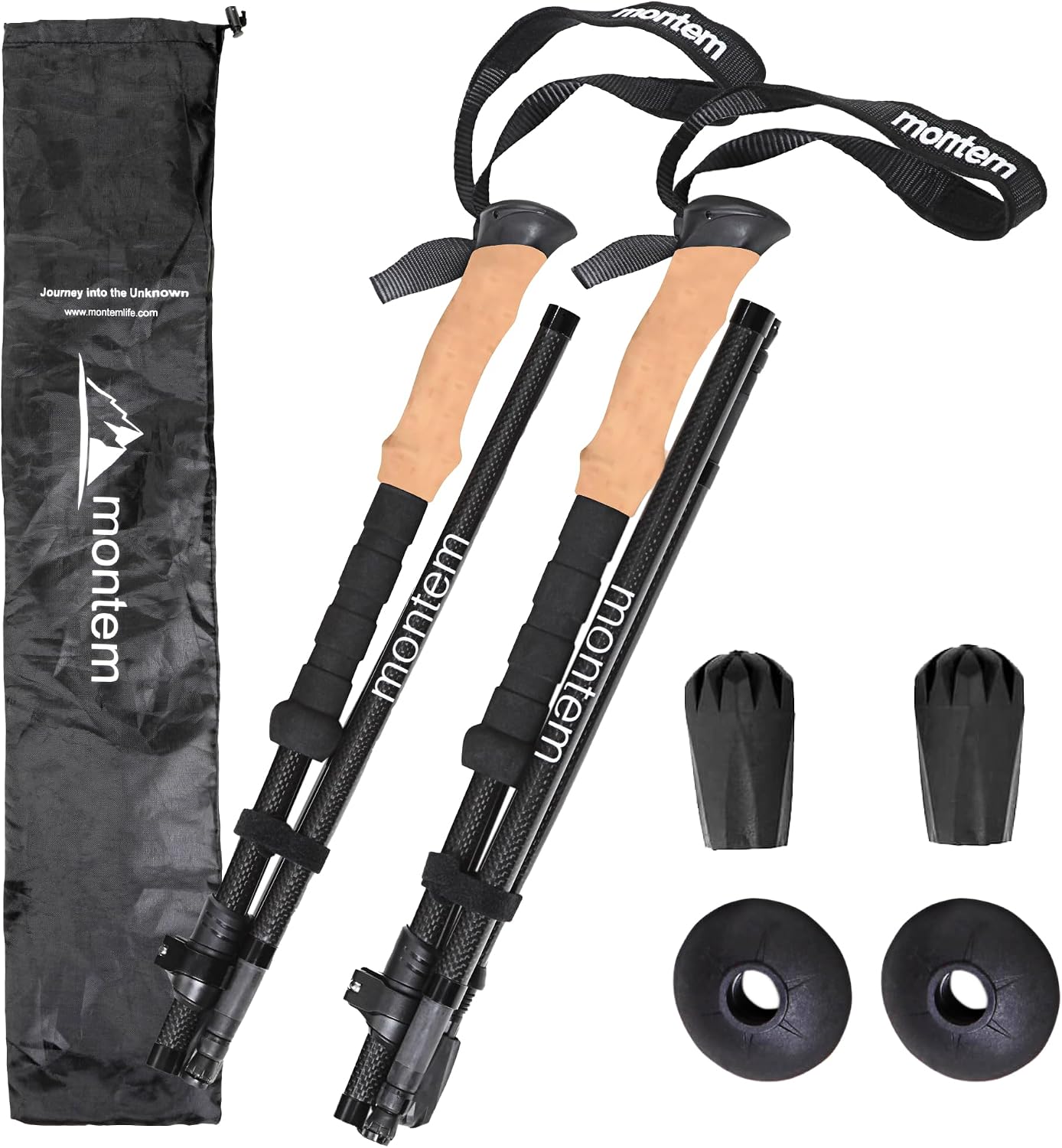
The Montem Ultra Strong pair at about $44 is the price floor of this list, and the name is not marketing. Heavier-wall aluminum, quick-lock adjustment, and a warranty reputation built over years of owner reviews. It plays the same aluminum game — bends before it breaks — at half the Black Diamond’s price.
- What it does well: the cheapest acceptable pair here, and it takes abuse that would end a lighter pole. Nothing about it feels disposable.
- Honest cons: clunkier packed size than the telescoping carbon kits, and the swing weight is noticeable on fast miles.
My take: the pair you hand to the friend who breaks things, and the honest budget aluminum pick if $65 carbon is not in this month’s budget.
Foxelli Carbon Fiber Trekking Poles — The Beginner Kit With Extras
The Foxelli carbon fiber poles land at about $60 at check time, $10 under their list price. The box is the selling point: cork grips, spare tips, and spare baskets in a tidy case — the small parts everyone loses first. At about 7.6 ounces a pole they sit with the Cascade pair on the light end of the carbon lane.
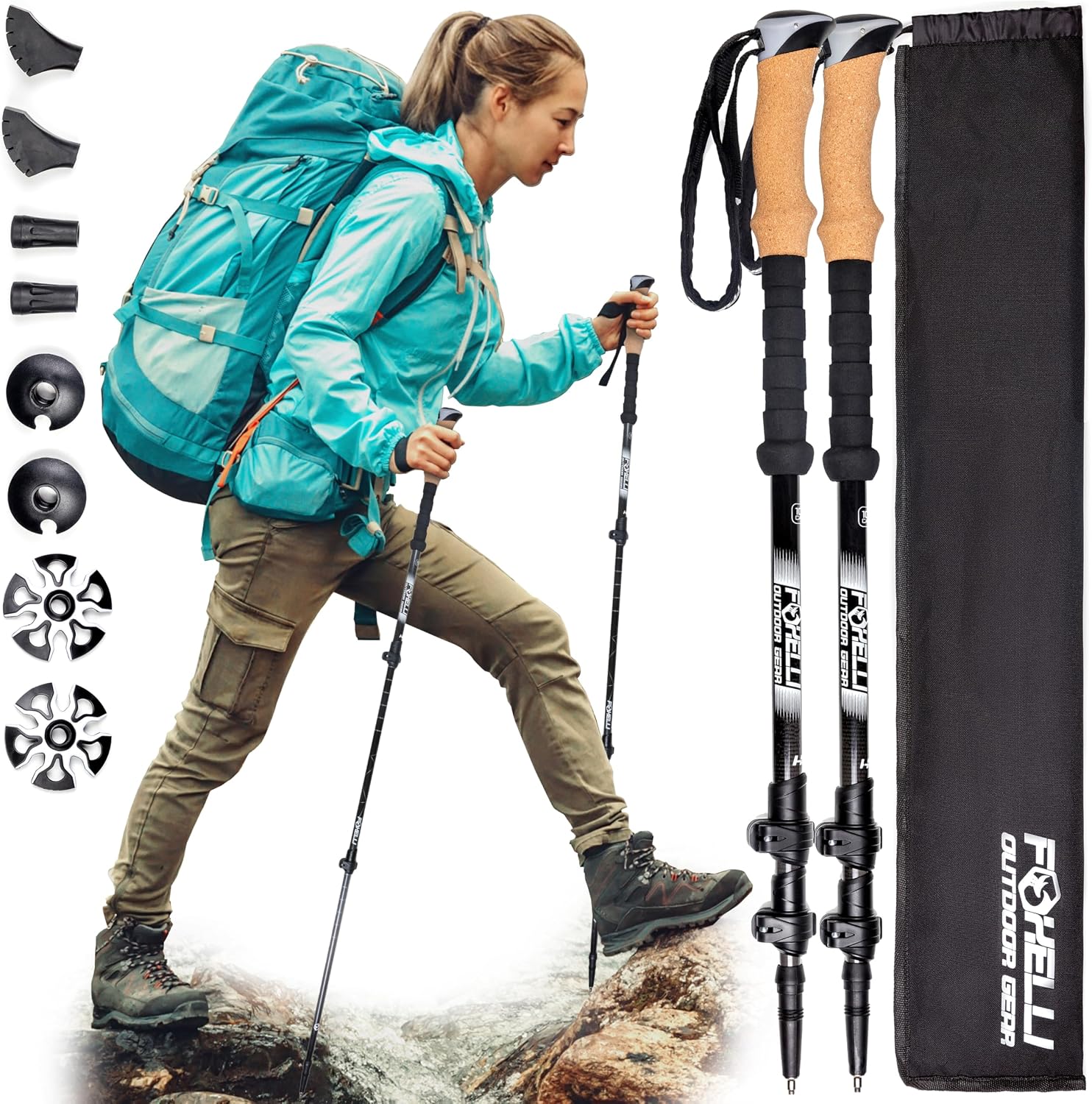
- What it does well: cork at a mid price, and the spares mean a lost basket in January does not end the winter for the pole.
- Honest cons: the tip and basket hardware is lighter duty than the Cascade Mountain Tech kit’s, and it shows after a hard season of crust and rock.
My take: the gift answer for a new winter hiker — nothing else to buy.
Winter gear ships free with Prime. A 30-day free Prime trial covers two-day shipping on any of these poles before the next cold snap. (GearHound is an Amazon Associate, so a trial signup or purchase through that link supports the site at no extra cost to you.)
Features That Actually Matter (And Ones That Don’t)
- Basket width is the winter spec: swap the inch-wide summer basket for a 2.5-to-3.5-inch powder basket before the first packed-snow hike — the cheapest upgrade in winter walking.
- Carbide tips bite, and rubber covers do not: on glaze the carbide point is doing the work. Rubber tip covers are for pavement and wooden decks — take them off before the trailhead or the pole turns into a walking stick.
- Locks with gloves on: flick and quick-lock levers beat twist locks in deep cold, when twisting a frozen sleeve with numb fingers is how poles get left at the wrong length all day.
Where to Spend, and What It Costs
- Budget carbon: the CMT EVA kit, about $52 — the same shafts as the cork pair.
- Best all-round winter pair: the CMT cork poles, about $65.
- Buy-it-once aluminum: the Black Diamond Trail, about $88.
- Cheapest acceptable pair: the Montem Ultra Strong, about $44 — heavier, nearly indestructible.
- Gift or first pair: the Foxelli kit, about $60 — cork plus every spare a beginner will lose.
Which trekking poles hold on packed snow?
For most winter use the Cascade Mountain Tech cork-grip carbon pair — about 8 ounces a pole, glove-friendly quick locks, and snow baskets already in the box for about $65. If you lever poles hard on rocky ground or carry heavy loads, the Black Diamond Trail is the aluminum answer that bends instead of snapping.
Keep reading: winter camp runs on more than poles — the winter stoves that still boil at zero and the winter dog jackets that replaced the Ruffwear Cloud Chaser round out the cold-weather kit.
GearHound is reader-supported. As an Amazon Associate, I earn from qualifying purchases. That means if you buy through one of the links above, I get a small commission at no extra cost to you. I only recommend gear I’d actually carry into the field.
⛺ Get Your Free Camping with Your Dog Checklist
Join our newsletter and get this free printable plus weekly tips.
Frequently Asked Questions
Do trekking poles help on ice, or do I need microspikes?
Poles help with balance and push-off on packed snow, but they are not traction devices — the carbide tip bites crust while your boots still slide. For real ice, wear microspikes and carry the poles for balance; the two work together, not instead of each other.
What size snow basket do I need for packed trails?
Packed trails and crust hold best with a 2.5 to 3.5 inch powder basket, which keeps the pole riding on top instead of punching through. The inch-wide trekking baskets that ship on summer poles are fine for dirt and rock but skate on crust.
Are carbon fiber poles safe in freezing temperatures?
Yes — carbon handles deep cold without getting brittle, and it dampens vibration better than aluminum. The real risk is leverage, not temperature: carbon snaps when a basket catches between rocks, while aluminum bends.
Can I put snow baskets on the poles I already own?
Most poles from Cascade Mountain Tech, Foxelli, and Montem use standard-size tip hardware, and the brands sell replacement baskets for a few dollars. Check your tip diameter before ordering — the common sizes are 8, 10, and 11 millimeters.
Liked this guide? Get the next one in your inbox — the camp packing checklist is free too.
✓ You're in — check your inbox.
No spam. Unsubscribe anytime. We never share your email.