This article contains affiliate links. We may earn a commission from qualifying purchases.
Some content on this site is AI-assisted and reviewed by our editorial team.
First ice is the whole reason this page exists. The season runs 30 to 60 days ahead of the actual freeze — the anglers who do well in December buy their hub shelter while the lakes are still open, practice the deploy in the yard twice, and roll onto safe ice with a shelter that’s already muscle memory. What’s on page one right now is retail listings and spec sheets. Almost nobody honestly compares the three things that decide whether you actually stay out there: insulation, setup time, and fishable area. Insulation thickness never makes the box copy either, and neither does the difference between a thermal tent that holds a heater’s warmth all afternoon and a single-skin windproof that bleeds it by noon. So here are four hub shelters at four price points, from the $430 fast-setup standard to a $1,350 basecamp, plus the budget pop-up that lets you try the whole sport for $152.
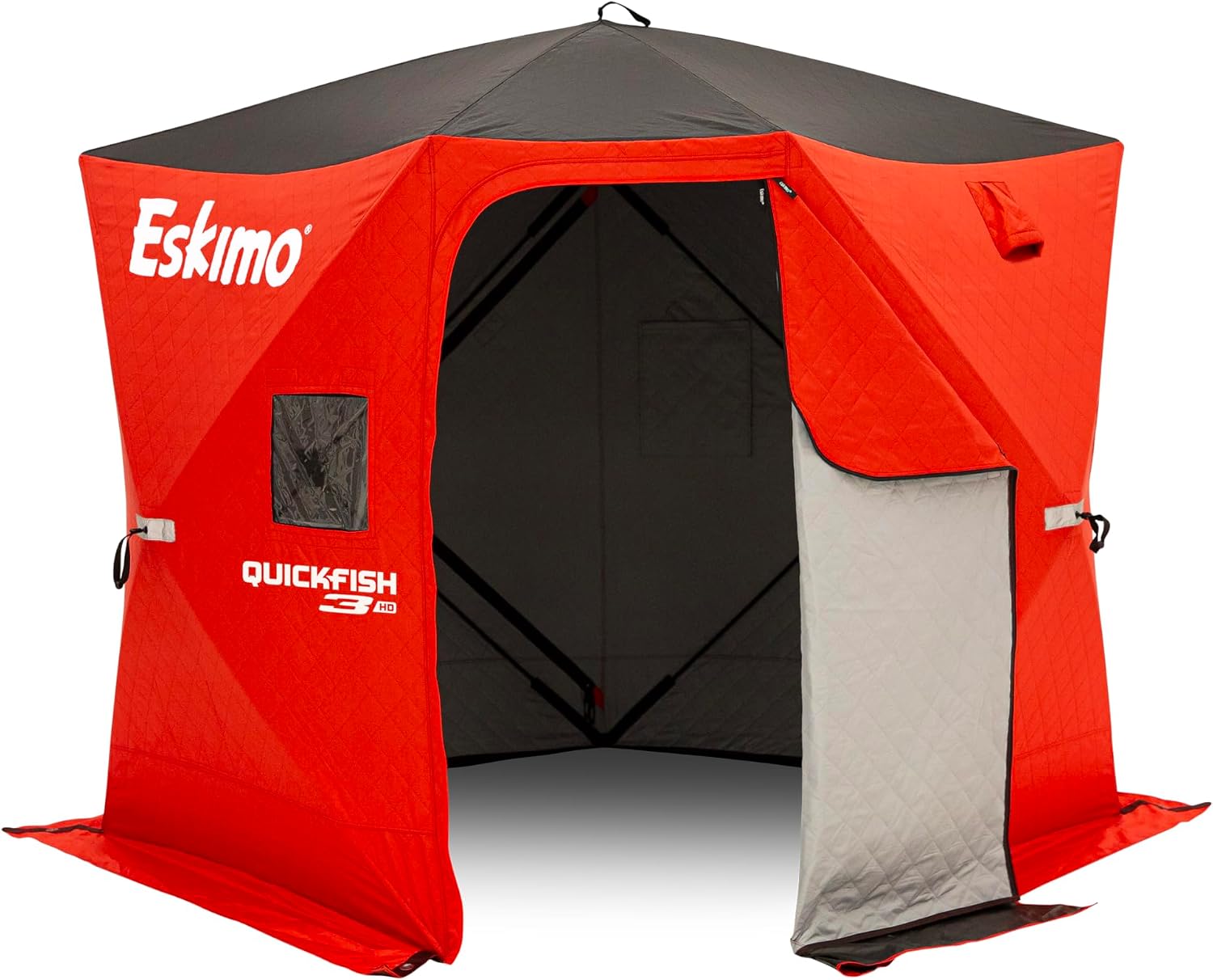
I compared insulation type, deploy time, and fishable footprint across the four hubs that keep coming up in ice-fishing groups this fall. Here’s what actually matters before first freeze.
Eskimo QuickFish 3HD — the fast-setup standard
Eskimo QuickFish 3HD is the shelter most first-freeze anglers should start with, and it’s the one the other brands get measured against. It’s fully insulated — not just windproof fabric — and the no-trip door is the kind of detail you stop appreciating the first time you carry an auger and a bucket through a standard door flap in the dark. About $430 at the moment, it deploys in roughly a minute once you’ve practiced it twice in the yard, and the deluxe ice anchors are the real deal, not an afterthought.
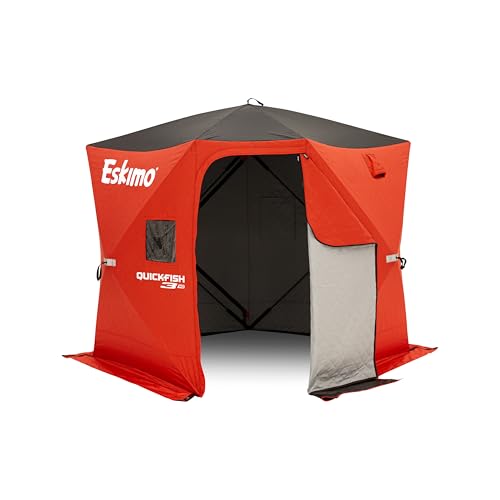
The honest con: that wind note in the anchors is not fine print. An unanchored hub in a November wind is a sail with you attached to it. Budget the ten minutes to set every anchor.
My take: The default buy — insulated, fast, and priced where one bad season can’t ruin you.
Eskimo Outbreak 650XD — the big-day basecamp
Eskimo Outbreak 650XD is what you buy when the trip is the whole point — 94 square feet of fishable space, rated for five to seven people, fully insulated, currently about $622. That’s the buddy-group day trip: two holes per person, a heater running low, cards on the bucket between flags. It’s the same deploy-and-anchor routine as the QuickFish, just with more fabric and more friends.
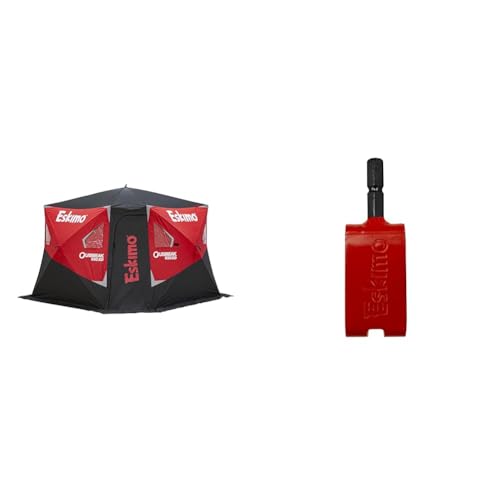
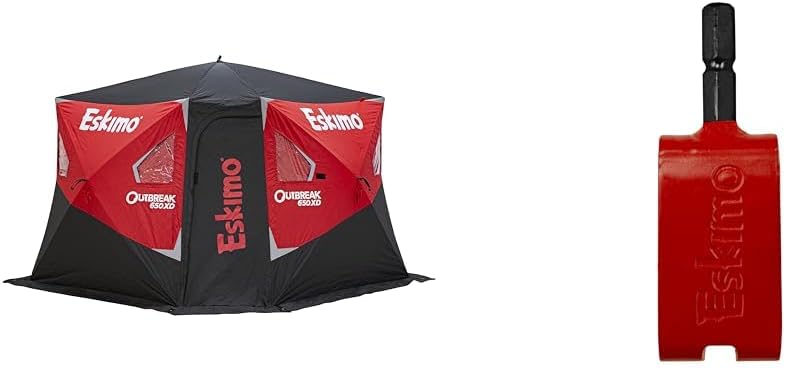
The honest con: a 94-square-foot hub is a two-person job in any wind over a breeze, and packed it eats a real share of a sled. Solo days, this is the wrong shelter.
My take: The group-trip answer — split the cost four ways and it’s cheaper per angler than the solo shelters.
CLAM X-1200 Thermal — the thermal step-up
CLAM’s X-1200 Thermal is the double-hub basecamp of the lineup — 188 square feet of fishable space across a ten-sided floor, about $1,350 on Amazon’s listing (CLAM sells it under the generic “Portable Ice Fishing Hub Shelters” title; the model is 19747, the X-1200 Thermal). The full thermal fabric is the actual upgrade: it holds heat and cuts condensation, which means a small heater runs less and your windows stop frosting over on all-day sits.
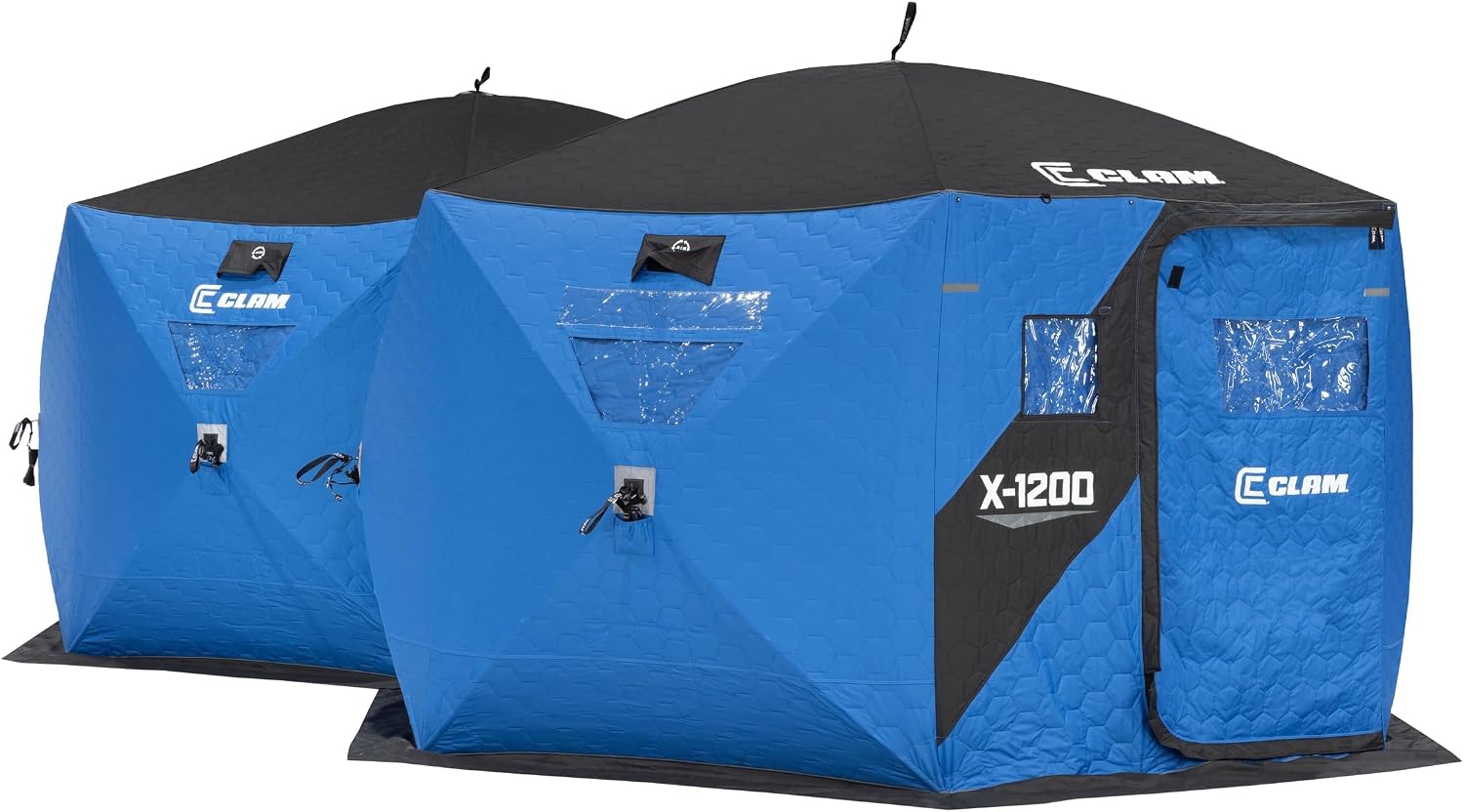
The honest con: 107 pounds packed, and the packed size eats sled space the way a second auger would. This is basecamp money and basecamp logistics — it’s the shelter for a crew that fishes the same lake all winter.
My take: The all-winter basecamp — worth it only if your group actually does multi-day, all-day sits; the Outbreak covers everyone else.
COZONY Pop-Up Insulated Hub — the budget first-timer
COZONY’s pop-up hub shelter is the try-it-first answer at about $152 — roughly a third of the QuickFish price — and it ships with a 49-foot LED light strip included, which is a genuinely useful freebie on a dark-ice evening. It’s insulated, windproof-rated, and it deploys on the same pop-a-couple-of-hubs logic as everything above.
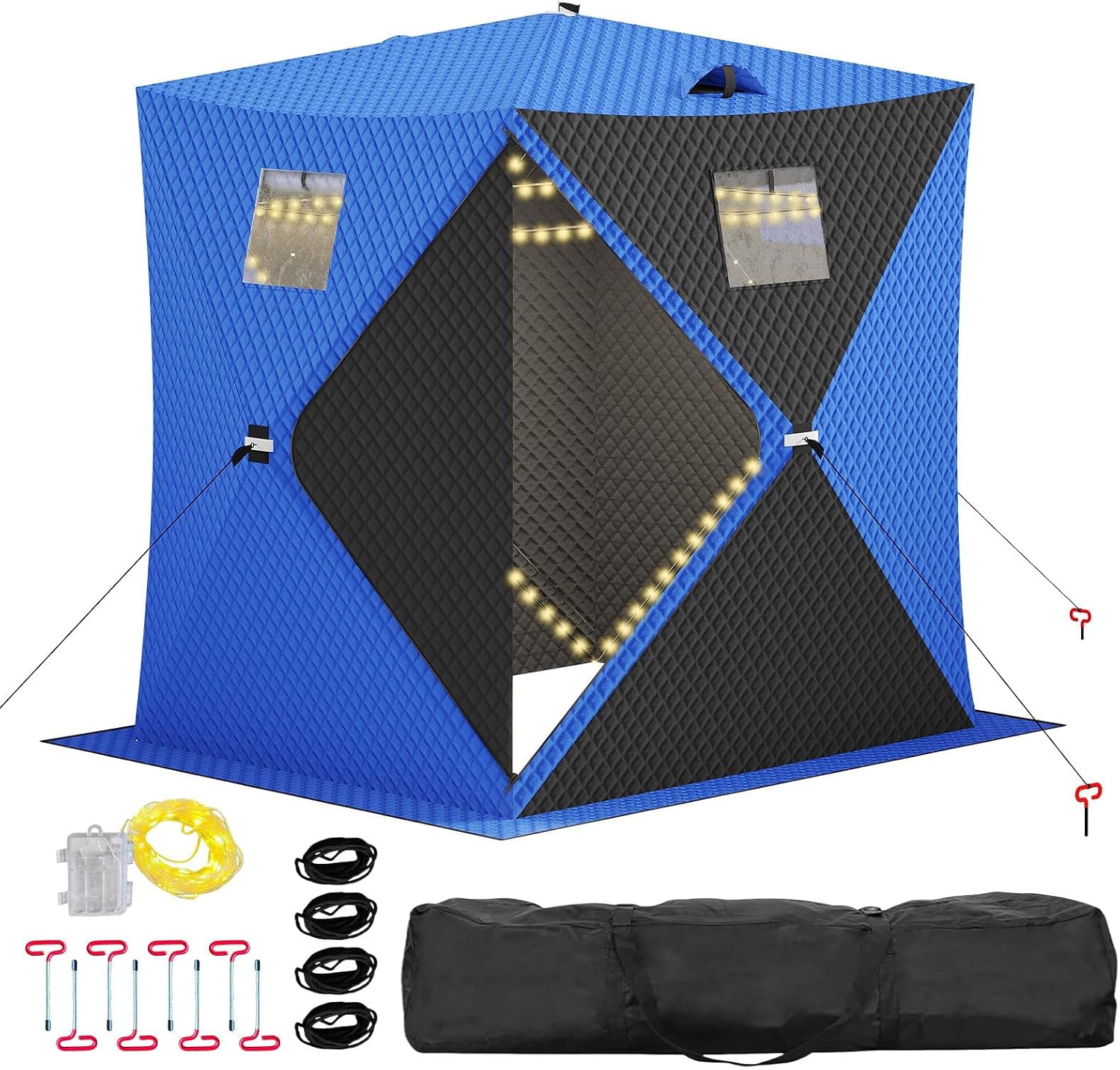
The honest con: the fabric is thinner than the Eskimo and CLAM lanes, and that means a heater on low, not blast. A first season on budget fabric teaches you what you actually need in a shelter — that’s the point.
My take: The right first shelter if you’re not sure ice fishing is your thing yet; upgrade next season with the money you didn’t spend.
Get it shipped free: Most of these shelters ship free with Prime — start a free 30-day Prime trial here and the shelter lands before the first safe ice. You can also start your Amazon trip from our Shop page — it supports the site at no extra cost.
Features That Actually Matter (And Ones That Don’t)
Insulated vs windproof fabric — “windproof” is a fabric coating claim; insulated means a real thermal layer that holds heater warmth. The QuickFish, Outbreak, X-1200, and COZONY are all insulated, and it’s the difference between sitting comfortable at 20 degrees and sitting in a cold tent.
Setup time, honestly — the one-minute hub deploy is real after two practice runs, but the ten minutes of anchoring is the part nobody times. Practice the full cycle in the yard, not just the pop-up.
Fishable area per person — divide the rated square footage by the number of anglers before you buy. Ninety-four square feet is a five-person day; 188 is a crew with gear. Rating a six-person day inside a solo shelter is how trips go bad.
Anchors are safety gear — the difference between a shelter that survives a gust and one that doesn’t. The anchors that ship handle most conditions, but early-ice slush is where cheap anchoring fails; bring ice screws for first freeze. It’s a few dollars that protects a $150-$430 investment.
Person ratings on the box — marketing. A “three person” rating means three seats, not three comfortable anglers with augers, buckets, and a heater. Buy one size up from the rating you think you need.
What to Spend Where
One timing note before the lanes: buy before first freeze if you can. In-season stock on the middle-lane hubs thins out by December, and the listings left standing drift up in price.
- Budget lane (about $152): COZONY — the try-the-sport pick, heater on low, one season of learning.
- Middle lane (about $430-$622): QuickFish 3HD for solo-to-three trips, Outbreak 650XD when the crew is four-plus.
- Basecamp lane (about $1,350): CLAM X-1200 Thermal — the all-winter crew shelter with real thermal fabric.
What’s the best first ice fishing shelter before first freeze?
For most first-time hub buyers it’s the Eskimo QuickFish 3HD — insulated, genuinely fast to deploy, and priced where the sport’s other startup costs don’t stack up against it. If you’re not sure you’ll love ice fishing, the COZONY at about $152 answers that question for a third of the money before you commit.
Keep reading: our down jackets that pack into their own pocket cover the layer you’ll wear standing on the ice all day, and the winter stoves that still boil at zero matter if your heater plan is also your coffee plan.
GearHound is reader-supported. As an Amazon Associate, I earn from qualifying purchases. That means if you buy through one of the links above, I get a small commission at no extra cost to you. I only recommend gear I’d actually carry into the field.
⛺ Get Your Free Camping with Your Dog Checklist
Join our newsletter and get this free printable plus weekly tips.
Frequently Asked Questions
How much should a first ice fishing shelter cost?
Plan on about $150 for a budget pop-up like the COZONY, or $430-$622 for the insulated middle lane where the Eskimo QuickFish 3HD and Outbreak 650XD live. The basecamp double-hubs like the CLAM X-1200 Thermal run about $1,350 and only make sense for a full crew that fishes all winter. Buy one size class above the number of anglers you actually bring.
Are insulated ice shelters worth the extra money?
Yes, if you sit more than a couple of hours. Insulated fabric holds a small heater's warmth and cuts condensation, so a 20-degree day feels like a 35-degree tent. A single-skin windproof shelter is fine for walking on, drilling, and leaving — it bleeds heat by noon on an all-day sit.
How long does a hub shelter take to set up on the ice?
A solo hub like the QuickFish 3HD deploys in about a minute once you have practiced twice, but budget the full cycle: anchoring takes another ten minutes and it is the part nobody times. Big double-hubs like the Outbreak 650XD and X-1200 are a two-person job in any wind.
Liked this guide? Get the next one in your inbox — the camp packing checklist is free too.
✓ You're in — check your inbox.
No spam. Unsubscribe anytime. We never share your email.