
This article contains affiliate links. We may earn a commission from qualifying purchases.
Some content on this site is AI-assisted and reviewed by our editorial team.
Best Dry Bags 2026: Keep Your Gear Dry on the Water and the Trail
By GearHound
I learned the value of a dry bag the hard way. On a canoe trip in the Boundary Waters, my “waterproof” stuff sack turned out to be waterproof in one direction only — it kept water in, not out. My sleeping bag soaked through, and I spent a cold night in a damp bag because I cheaped out on a five-dollar dry sack from a gas station.
A real dry bag is not expensive, but it is one of those pieces of gear you only appreciate when things go wrong. Here is what matters when choosing one, and which bags I recommend for different uses.
What a Dry Bag Actually Does
A dry bag is a waterproof bag with a roll-top closure that seals out water. You fold the top down 3-4 times and buckle it shut, creating an air-tight seal. The bag keeps your gear dry in rain, waves, splashes, and even full submersion (briefly — do not expect it to survive a long swim).
Key things to know:
- Waterproof vs. water-resistant: A true dry bag is fully waterproof. A water-resistant bag sheds light rain but soaks through in a downpour or submersion. Know the difference.
- Roll-top vs. zipper: Roll-top is the standard — simple, reliable, no moving parts to fail. Zipper closures (like Watershed bags) are more expensive but create a better seal.
- Material: PVC is cheap and durable but heavy and stiff. TPU-coated nylon is lighter, more flexible, and more expensive. For most uses, TPU-coated nylon is worth the extra cost.
What to Look For
- Capacity: 5L for electronics and small items, 10-20L for day trips, 30-65L for multi-day trips. Size up if you are unsure — an overstuffed dry bag does not seal properly.
- Strap system: Backpack straps are useful for portaging. Simple carry loops are fine for boat storage. No strap is fine for stuffing inside a larger pack.
- Color: Bright colors (orange, yellow) are easier to spot if your bag goes overboard. Dark colors are fine for trail use where visibility is not a concern.
- Durability: Look for at least 420-denier fabric for regular use, 500+ denier for whitewater or rugged use.
The Best All-Around Dry Bag
Sea to Summit Big River Dry Bag
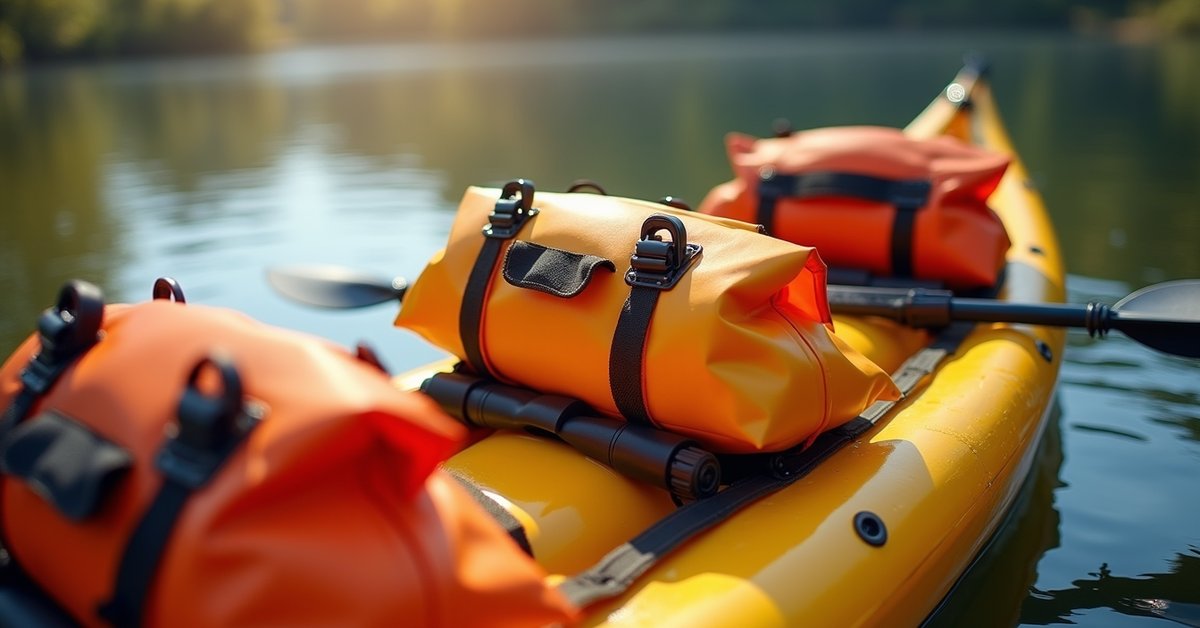
The Big River is the dry bag I recommend to most people. Made from 420-denier nylon with TPU lamination, it is tough enough for whitewater and light enough for backpacking. The roll-top closure is standard and reliable, and the Hypalon lash loops make it easy to strap to a kayak, bike, or pack.
It comes in sizes from 2L to 65L, so you can match the bag to your trip. The 20L is the sweet spot for most day trips — big enough for a change of clothes, phone, snacks, and a small camera. For multi-day canoe or kayak trips, the 35L or 65L works better.
The Big River is not the cheapest dry bag, but it is the best value. It outlasts budget PVC bags by years, and the TPU coating stays flexible in cold weather where PVC gets stiff and cracks.
Compare prices and sizes on Amazon
The Best Budget Dry Bag
Earth Pak Waterproof Dry Bag
If you want a dry bag that works without spending $40+, the Earth Pak is the one. It is made from 500-denier PVC — heavier and stiffer than the Sea to Summit, but genuinely waterproof and tough. It comes with a shoulder strap (not backpack straps, but functional) and includes a waterproof phone case, which is a nice bonus.
For casual use — day paddles, beach trips, car camping — the Earth Pak is more than enough bag. The main downside is weight and stiffness. The PVC material does not pack down small, and it gets brittle in cold weather. For winter use or backpacking, spend more for the Sea to Summit.
See price and color options on Amazon

The Best for Whitewater and Extreme Conditions
Earth Pak Torrent Series
The Torrent is Earth Pak’s heavy-duty line — 500-denier PVC with welded seams and a reinforced bottom. It is built for whitewater, sea kayaking, and situations where your bag will get beaten up by rocks, waves, and gear. The Torrent also has a valve for compressing air out, which makes it easier to pack tight.
If you are running rapids or doing multi-day sea kayak trips where gear failure means a cold, wet night, the Torrent is worth the upgrade over the standard Earth Pak.
Check the latest price on Amazon
How to Use a Dry Bag Properly
A dry bag only works if you seal it right. Here is the sequence:
- Fill the bag no more than 70% full. An overstuffed bag will not seal. Leave room to fold the top.
- Squeeze out excess air. Press down on the contents to push air out before folding. This also makes the bag float lower if it goes overboard.
- Fold the top down 3-4 times. Each fold should be about one inch. The more folds, the better the seal.
- Buckle it shut. The buckle should click firmly. If it feels loose, you did not fold enough times.
- Test it before you trust it. Put a paper towel inside, seal the bag, and submerge it in a sink or pool for 30 seconds. If the paper is dry, you are good.

Dry Bag vs. Dry Sack
People use these terms interchangeably, but they are different things:
- Dry bag: Heavy-duty, fully waterproof, designed for water sports. Made from PVC or TPU-coated nylon. Usually 5L-65L.
- Dry sack: Lightweight, water-resistant (not waterproof), designed for backpacking. Made from silicone-coated nylon. Usually 2L-20L. Cheaper and lighter, but will not survive submersion.
If you are backpacking and just want to keep your sleeping bag dry in your pack, a dry sack is fine. If you are on the water, you need a dry bag.
What I Recommend
For most people: the Sea to Summit Big River. It is the best balance of durability, weight, and price. For a budget option that still works: the Earth Pak. For whitewater and rough conditions: the Earth Pak Torrent.
A dry bag is cheap insurance. Your phone, your sleeping bag, your camera — all the stuff that is expensive or impossible to replace on a trip. Twenty-five dollars for a dry bag is a lot cheaper than a new phone.
For more gear for your next trip, see our guides to camping coolers and hiking boots. Or browse all our camp cooking gear.
GearHound is reader-supported. When you buy through links on this site, we may earn an affiliate commission at no extra cost to you.
⛺ Get Your Free Camping with Your Dog Checklist
Join our newsletter and get this free printable plus weekly tips.