This article contains affiliate links. We may earn a commission from qualifying purchases.
Some content on this site is AI-assisted and reviewed by our editorial team.
Nobody warns you about the ground. You spend $300 on a sleeping bag rated to 20°F, drive four hours, sleep great for two hours — then wake up at 2 AM with cold seeping through your back and your hip searching for a soft spot that does not exist. A sleeping bag is insulation on top of you; the ground below is a heat thief with infinite patience. The pad is what actually decides whether you sleep. I’ve spent cold nights on $20 foam and warm ones on $250 air, and the difference is real — but so is the overlap. Here’s where the money actually goes.
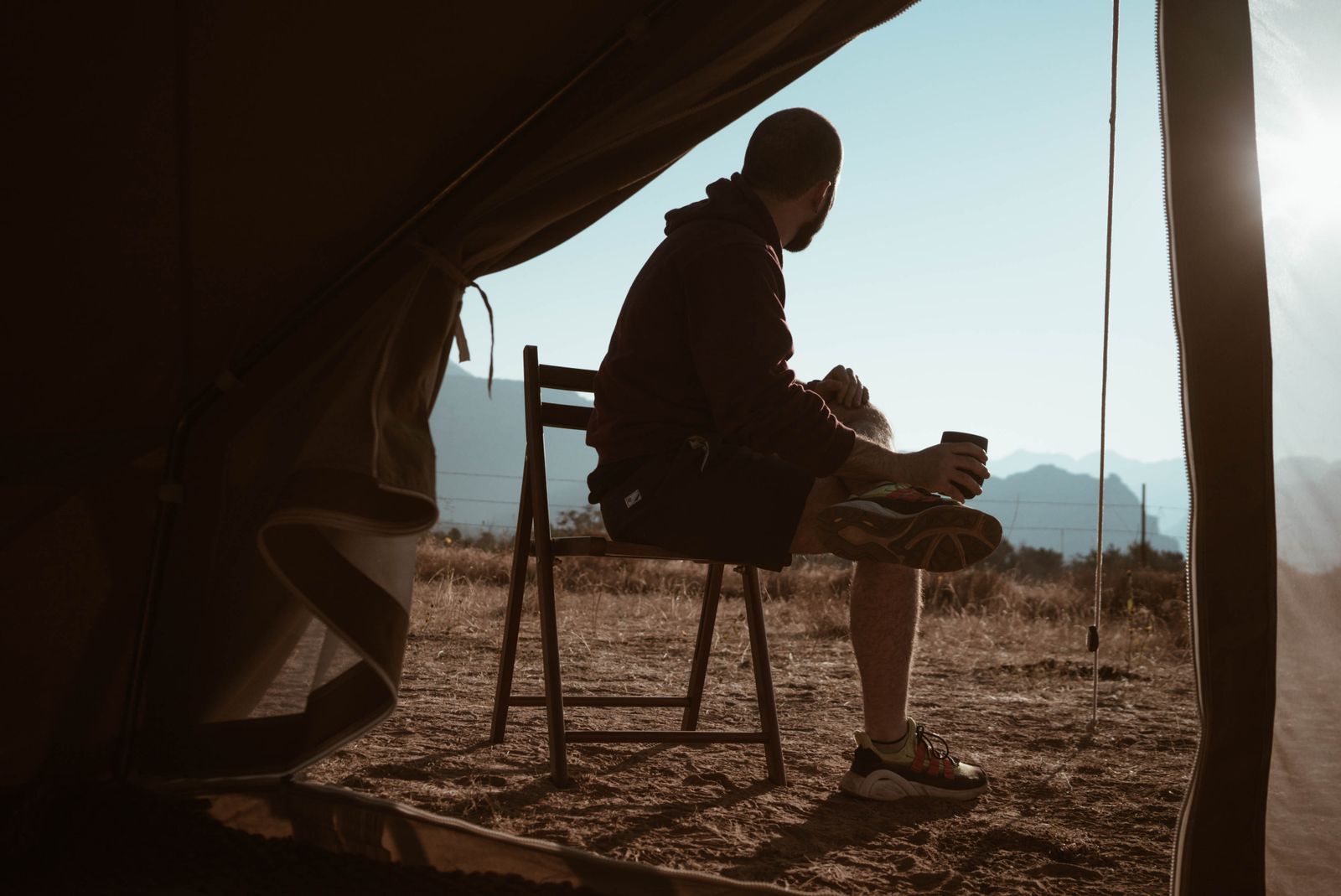
I packed five pads this season — closed-cell foam, self-inflating foam, and three air chambers — and slept on all of them on the same patch of rocky national forest ground. Here’s what held up.
Therm-a-Rest Z Lite Sol — The Bombproof Baseline
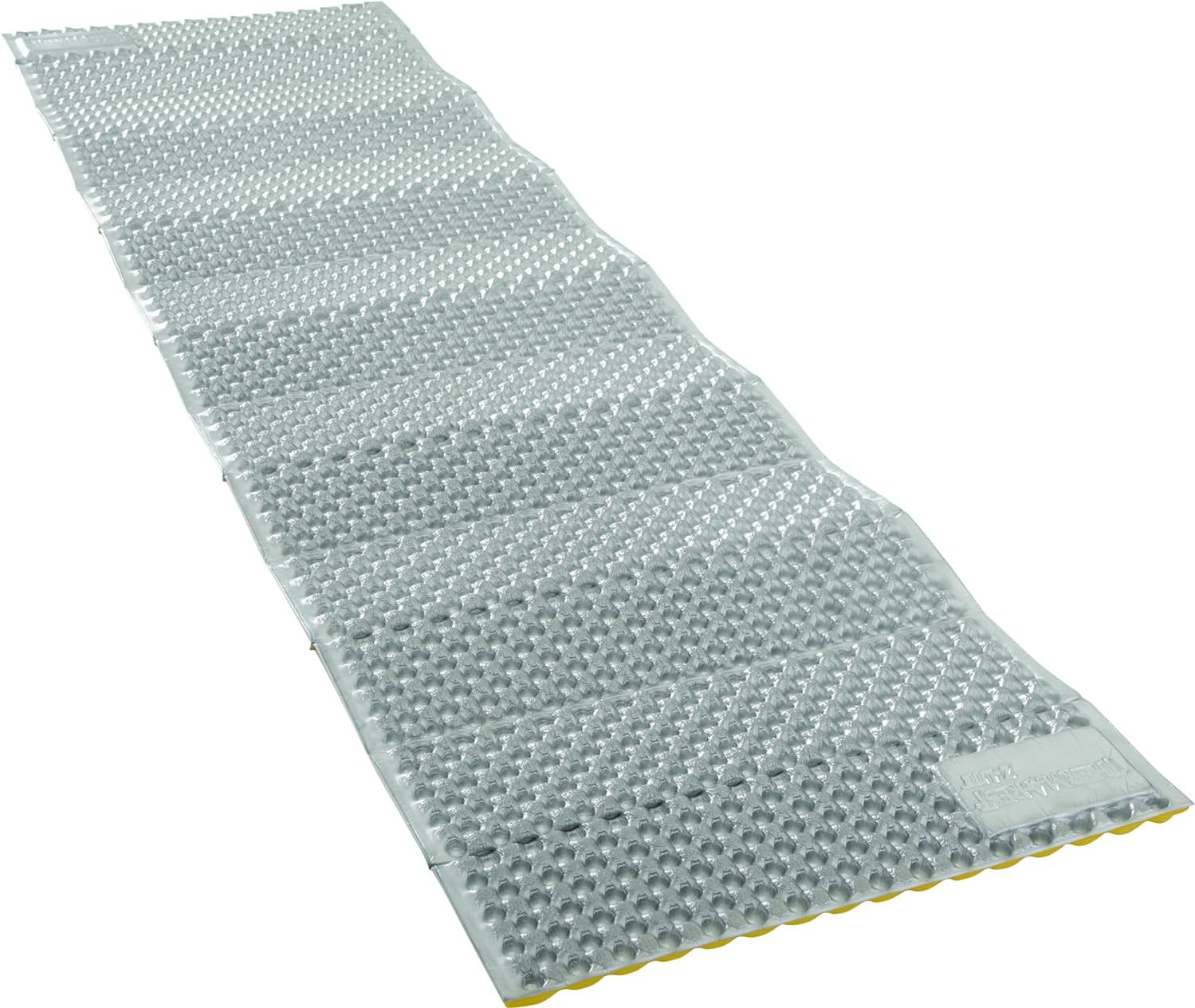
Therm-a-Rest Z Lite Sol ($59.95) is the pad I reach for when failure is not an option: 2.2 inches of closed-cell foam in an accordion fold, no valves, no patches, no moving parts. Stack it under an air pad in winter or use it alone from spring to fall. It survives dog paws, campfire sparks, and being strapped outside a pack for a decade. R-value 2.0 is enough for three seasons; the reflective face adds a bit of warmth. The honest cons: it’s bulky — the folded stack is the size of a small suitcase and it straps outside your pack, not inside it — and 1 lb 13 oz is heavier than any air pad here.
My take: the pad you buy once and inherit to your kids; comfort is adequate, reliability is total.
Exped MegaMat 10 — The Car-Camping Mattress
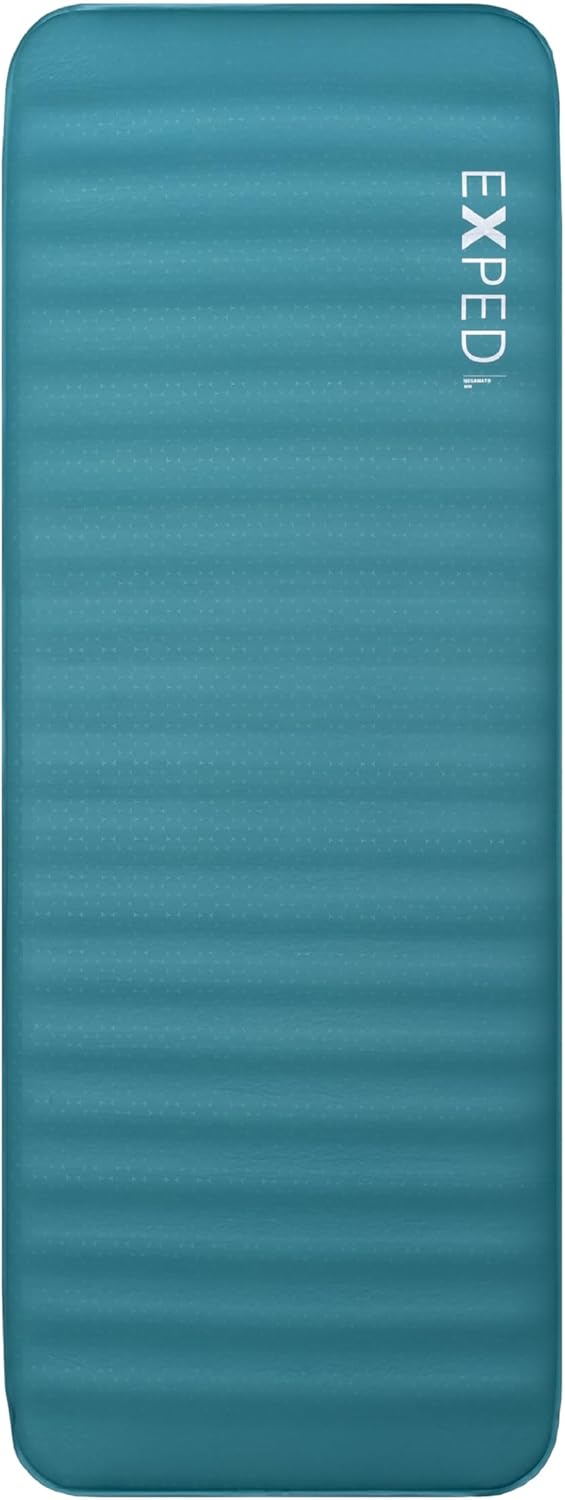
Exped MegaMat 10 (about $260, list $449.95) is not backpacking gear — it’s a mattress that happens to fold. Ten centimeters of open-cell foam with a self-inflating core and flat, sheet-like surface; side sleepers and big frames finally stop rolling into the center. R-value 8.1 means winter is a non-issue. My pick for truck camping, basecamp, and anyone whose back has opinions. The cons are obvious: it weighs over 5 pounds, packs to the size of two rolled sleeping bags, and the price buys a lot of other gear. It’s also the one pad here that can puncture — treat it gently.
My take: if weight doesn’t matter, sleep quality does; this is the closest to a real bed that still fits in a trunk.
Therm-a-Rest NeoAir XLite NXT — The Ultralight Standard
Therm-a-Rest NeoAir XLite NXT ($209.94) is the pad thru-hikers carry: 2.5 inches of air, R-value 4.5, and a packed size smaller than a 1-liter bottle. It crinkles less than the older XLite, and the rectangular regular version is roomier. Cons: every ounce of that 13 oz went somewhere — the fabric is thin and demands care around thorns and camp-stove ash, the price is hard to justify for occasional campers, and it’s warm but the air chamber is noisy when you shift.
My take: the ounce-counter’s answer that doesn’t give up comfort; treat it like a sleeping bag, not a tarp.
Klymit Insulated Static V — The Value Sweet Spot
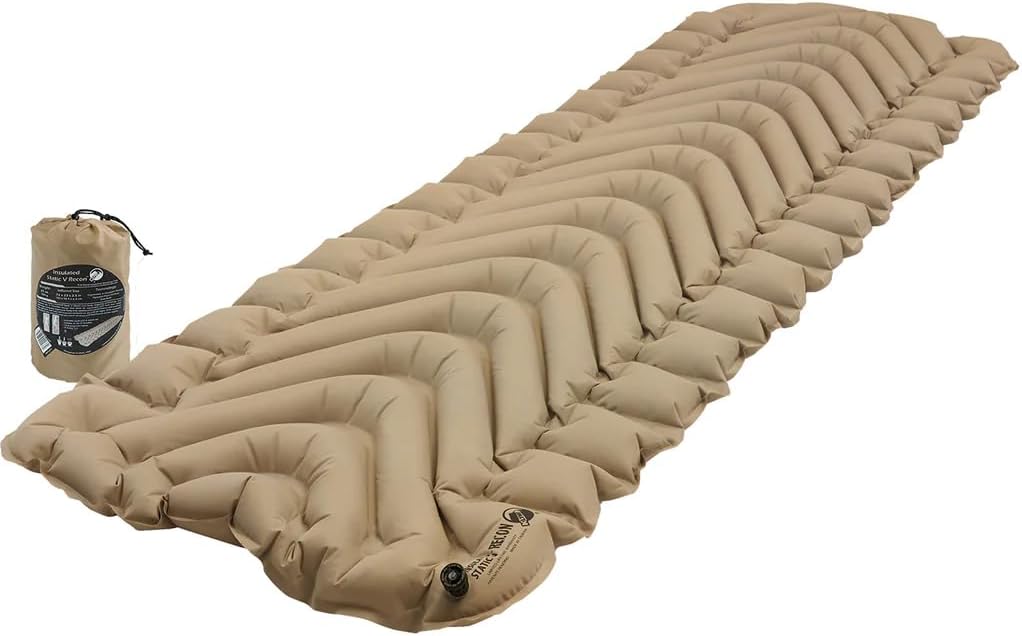
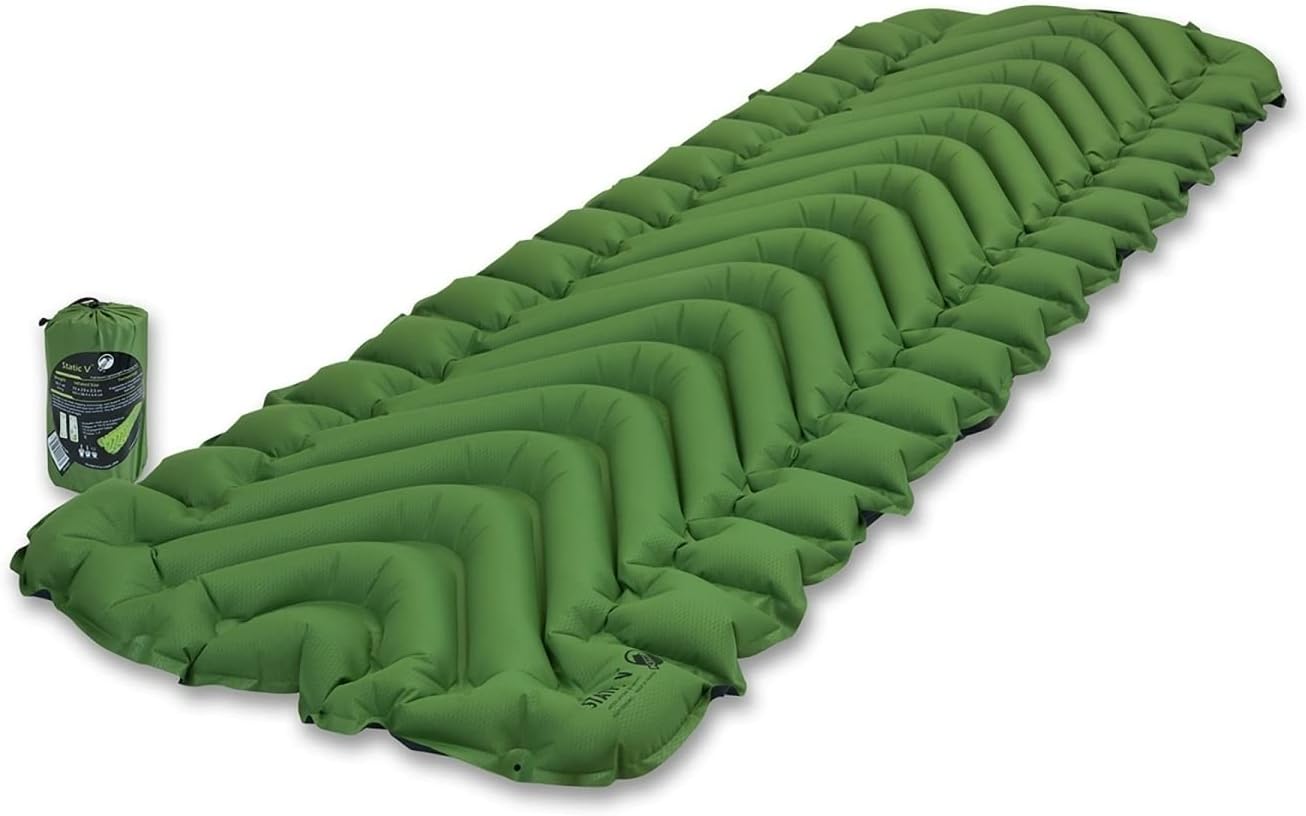
Klymit Insulated Static V (about $48) does 80% of what the air pads above do at a quarter of the price. The V-shaped chambers hold you on the pad and limit air slosh, Klymalite insulation gets it to R-value 4.4 — four-season territory on paper — and it packs to 8 x 5 inches. Cons: it’s a full pound heavier than the XLite, the 75D fabric is heavier but reassuring, and 2.5 inches is thinner than the premium pads; side sleepers feel the ground on frozen camps.
My take: the best dollars-to-sleep ratio on this list — the one I hand people who camp four weekends a year and don’t want to think about pads again.
Amazon Basics Camping Sleeping Pad — The Budget Slot
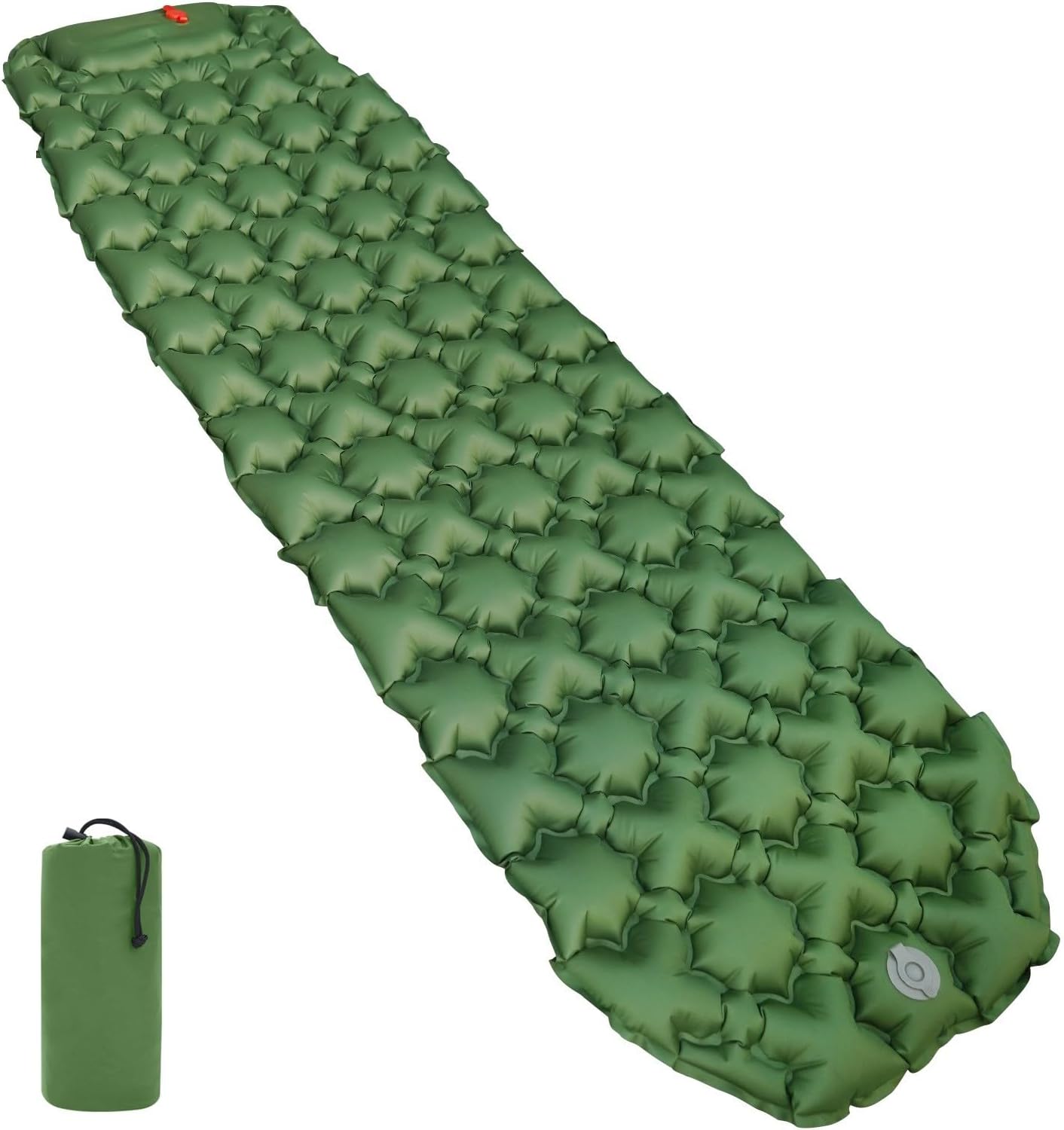
Amazon Basics Camping Sleeping Pad ($22.29) has no R-value rating and no insulation, but it has a trick the expensive pads don’t: a built-in foot pump that inflates it in about a minute with no dizziness. At 1.4 lb and 2.2 inches it’s a summer-and-shoulder-season pad for car campers, kids, and guests. Cons: air retention reports are mixed — some owners find it soft by morning; the fabric is the least durable here; and in cold weather it’s a conductive heat loss with no insulation to slow it down.
My take: the honest $22 answer for summer lawns and living-room forts; don’t take it below freezing.
Shipping note: all of these are cheaper with Prime. If you don’t have it, grab a free 30-day Prime trial before your next order and cancel after your trip — no point paying for a year you might not use.
Features That Actually Matter (And Ones That Don’t)
R-value beats thickness. A 4-inch uninsulated air pad is colder than a 1-inch insulated one below 40°F. If you camp in shoulder season, spend on insulation first, plushness second.
Packed size decides how often it leaves home. The Z Lite is bulletproof but lives strapped to the outside of your pack; air pads that fit in a water-bottle pocket come on more trips.
Valves matter more than brand. Flat valves that mate with a pump sack beat twist valves that hiss all night — check the valve type before the logo.
Noise is a real spec. Crinkly TPU films wake light sleepers; some manufacturers publish it, all of them dodge it. Read owner reviews for the word “crinkle.”
What doesn’t matter: printed “4-season” claims on uninsulated pads, included stuff sacks, and integrated pillows. None of them change how you sleep.
Where to Spend: Budget vs Premium Math
- Summer car camper: Amazon Basics $22 — done. Total: about $22/season.
- 3-season generalist: Klymit Insulated Static V at about $48 — insulated to 4.4 R at a quarter of premium prices.
- Backpacker counting ounces: NeoAir XLite NXT $209.94 — the price is per-ounce-saved, and it’s worth it only if you walk far.
- Basecamp comfort / bad back: MegaMat 10, about $260 — costs more than most tents; sleeps better than most beds.
- Winter / durability insurance: Z Lite Sol $59.95 under anything — doubling up costs $60 and fixes the cold-back problem permanently.
Keep reading: my sleeping bag guide covers the other half of the sleep system, and the rotomolded cooler guide handles the food side of camp.
GearHound is reader-supported. As an Amazon Associate, I earn from qualifying purchases. That means if you buy through one of the links above, I get a small commission at no extra cost to you. I only recommend gear I’d actually carry into the field.
Related guides
- Starlink Roam for Camping With Dogs: Internet Anywhere Your Truck Camps (Plus a Free Month)
- REI Anniversary Sale 2026: The 20 Deals Actually Worth Buying
- Dog Backpack Guide: What Your Dog Can Carry (And What They Shouldn't)
- First-Aid Kits That Earn Their Pack Weight
- Best Solar Chargers for Camping 2026: Panels That Actually Work
⛺ Get Your Free Camping with Your Dog Checklist
Join our newsletter and get this free printable plus weekly tips.
Frequently Asked Questions
What R-value sleeping pad do I need for 3-season camping?
Aim for R-value 2.5 to 4 for spring through fall. Anything under R-2 is summer-only, and insulated pads around R-4.4 (like the Klymit Insulated Static V) already cover early winter.
Is a more expensive sleeping pad actually more comfortable?
Above about 2.5 inches of thickness, extra money buys weight savings and insulation, not more comfort. A $50 insulated air pad sleeps as well as a $200 one; it just weighs more.
Can I use a sleeping pad in cold winter weather?
Yes, but stack: a closed-cell foam pad like the Therm-a-Rest Z Lite Sol under an insulated air pad combines reliability with warmth, which is the standard winter approach.
How long do inflatable sleeping pads last?
With field care - no dragging over rocks, storage loose and dry - a quality air pad lasts 5 to 10 years. The failure point is the valve, so treat it gently and carry the patch kit.
Do I need a sleeping pad if my sleeping bag is warm?
Yes. A bag's underside insulation compresses flat under your weight, so without a pad the ground pulls heat straight out of you regardless of the bag rating.
Liked this guide? Get the next one in your inbox — the camp packing checklist is free too.
✓ You're in — check your inbox.
No spam. Unsubscribe anytime. We never share your email.
Prices move fast. Start your Amazon trip from our Shop & Support page and your purchases support GearHound at no extra cost to you.
Price Check
Prices verified via our product tracker. Updated Oct 31.
| Therm-a-Rest Z Lite Sol Camping and Backpacking Sleeping P | $59.95 | 4.6★ (4,143) |
| Exped MegaMat 10 Sleeping Pad, Medium Wide | $259.95 | 4.4★ (405) |
| Therm-a-Rest NeoAir XLite NXT Ultralight Sleeping Pad | $209.94 | 4.4★ (364) |
| Klymit Static V Lightweight Inflatable Sleeping Pad | Comf | $82.29 | 4.1★ (1,492) |
| Amazon Basics Camping Sleeping Pad with Quick-Inflate Buil | $32.43 | 4.1★ (1,009) |
As an Amazon Associate we earn from qualifying purchases.