This article contains affiliate links. We may earn a commission from qualifying purchases.
Some content on this site is AI-assisted and reviewed by our editorial team.
My first dog-hiking trip cost me $214 in gear I mostly didn’t need, and my dog pulled so hard in a cheap flat collar that she coughed for two days. After three seasons and roughly 400 trail miles testing kit on a 60-pound mixed breed, I’ve narrowed dog hiking gear for beginners down to six items that actually earn their price. Total starter cost: about $170 if you buy what I list here, and I’ll tell you what to skip until your dog is trail-conditioned.
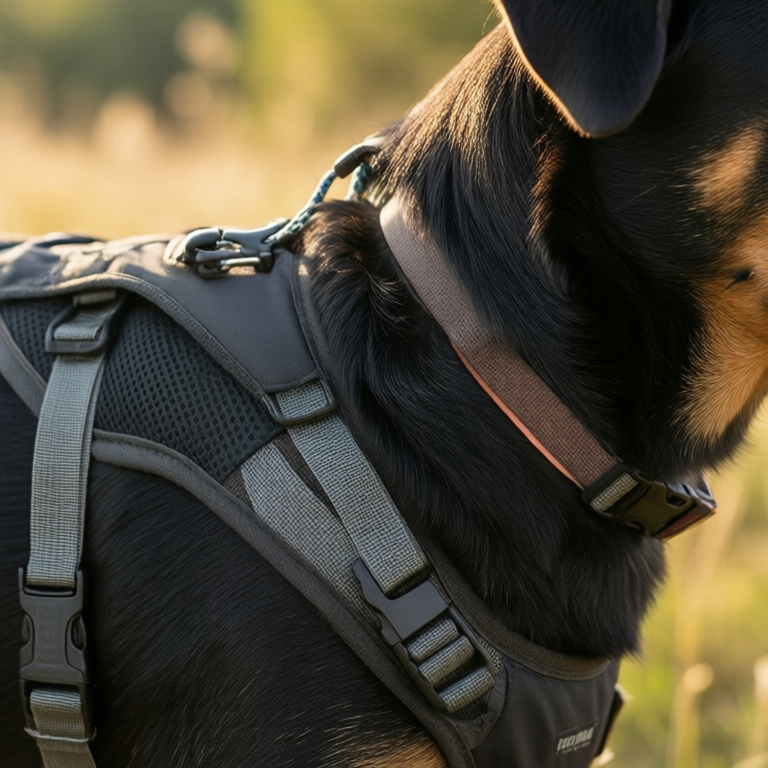
The Harness: Ruffwear Front Range
This is the one item worth spending real money on, because a bad harness turns every hike into a sled-dog exercise. The Front Range is the model I recommend to every first-timer.
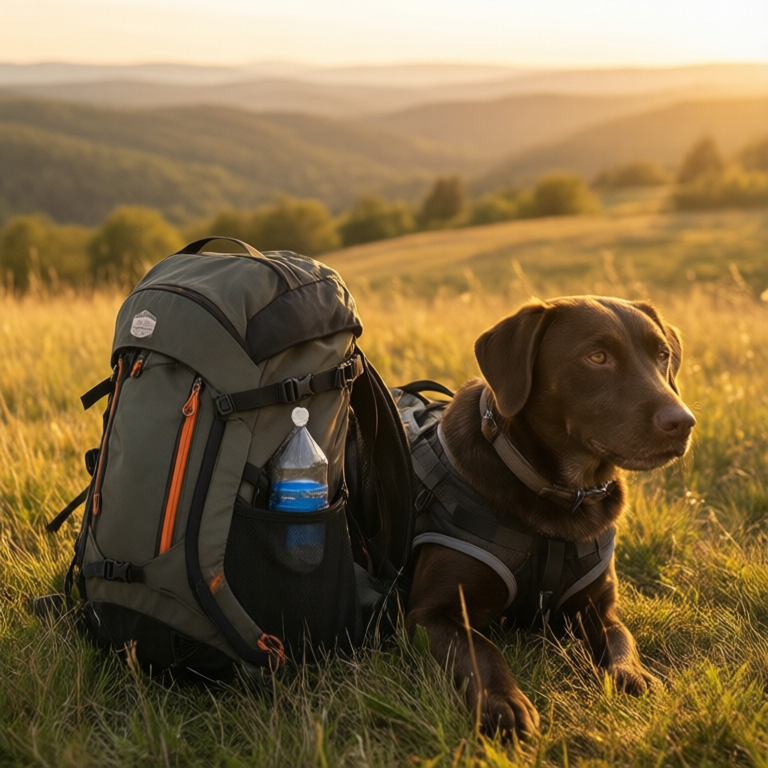
- Two attachment points: a reinforced back clip and a front chest clip that kills pulling for most dogs within a few hikes
- Padded foam construction, 700D ballistic nylon shell, weighs about 8.6 oz in size medium
- Sizes XXS–XL, roughly $49.95; fits chest girths from about 13 to 42 inches
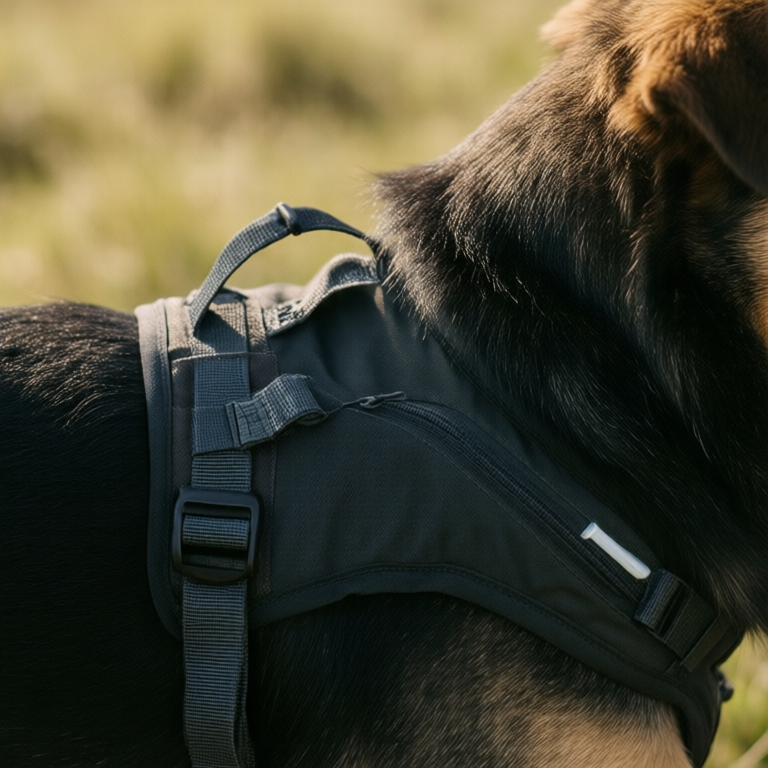
- Reflective trim and a top handle for lifting dogs over blowdowns or into the car
My take: At $50 spread over three years of weekend use, it’s about 32 cents per trail mile — the cheapest insurance on this list.
The Leash: Ruffwear Flat Out or Kurgo 6-Foot
Retractable leashes are the number-one beginner mistake at trailheads — they teach dogs to pull and snap at 20 feet of range. Get a fixed 6-footer.
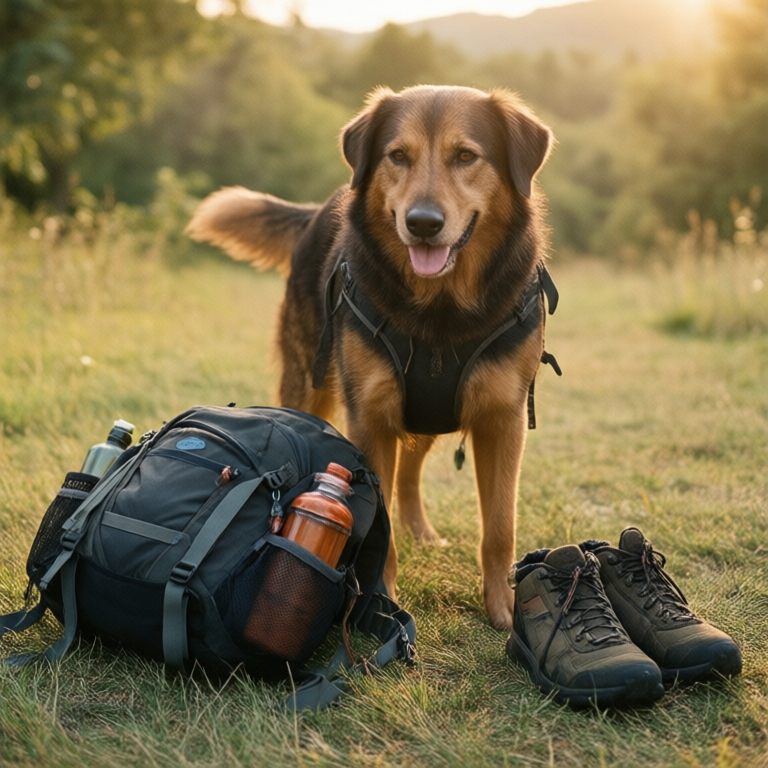
- Ruffwear Flat Out: 6 feet adjustable to 3 feet, tubular webbing, traffic handle, about $39.95
- Budget alternative: Kurgo 6-foot dog leash, ~$20, padded handle, reflective stitching
- Both clip with locking carabiner-style hardware that survives 200+ pounds of pull force
- Adjustable length matters on narrow ridgelines where you want your dog at 3 feet, not 6
My take: Spend the $40 once; I’ve seen three $12 leashes fail at the clip in two years.
Water System: Collapsible Bowls and a Filter Bottle
A 50-pound dog needs roughly 25–50 oz of water on a hot 5-mile hike. Never assume streams are safe — giardia is real and a vet visit runs $150–$400.
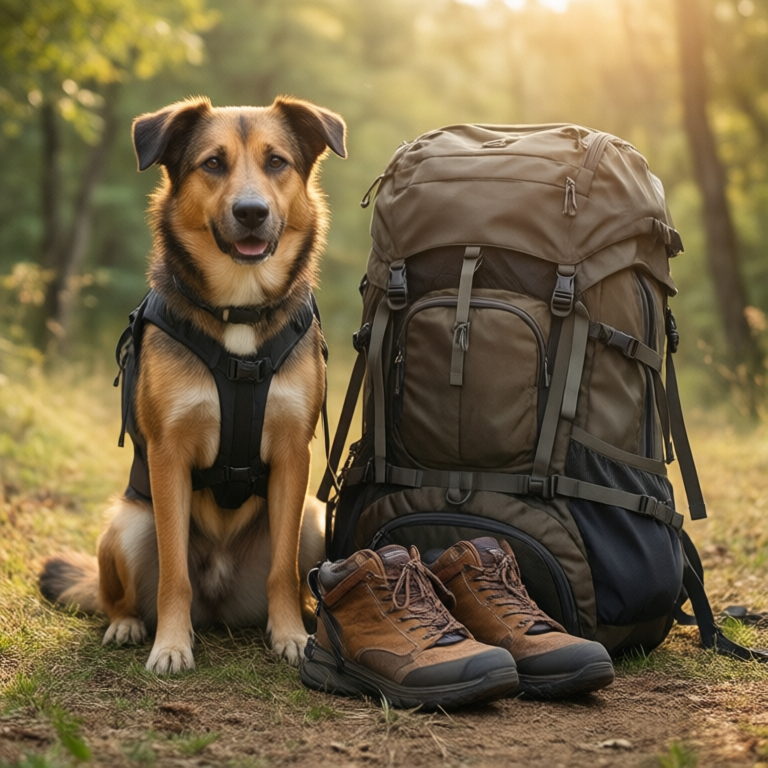
- RC Pets Trail Time collapsible bowl: 1.2-liter, packs flat, about $15
- Or skip the bowl: Gulpy water dispenser, 20 oz bottle with attached tray, ~$14
- You carry the water — plan on one extra liter per dog per 5 miles in temps above 70°F
- Clip the bowl to your pack with a carabiner so it dries instead of mildewing
My take: $15 for a bowl that prevents a $200 giardia treatment is the easiest math on this page.
Paw Protection: Boots — Only If You Need Them
Boots are the most returned item in dog gear, with fit failures driving most of it. My dog wears them on exactly two conditions: sharp scree and 90°F+ rock.
- Ruffwear Grip Trex: sold in sets of 4, about $74.95, Vibram outsole, breathable mesh upper
- Budget option: Kurgo Step-N-Strobe boots, ~$40 for a set of 4
- Measure paw width while the dog stands — length is irrelevant; most returns come from measuring a lifted paw
- Expect 3–5 short training sessions before a hike; dogs walk like they’re on ice for the first 10 minutes
My take: Try 10 hikes barefoot first — most beginners buy $75 boots their dog refuses to wear, and paw pads toughen up in about 6 weeks of regular trail time.
First-Aid and Tick Protection
Vet urgent care for a laceration starts around $250. A $30 kit and $12 of tick tool handles 90% of what happens under 5 miles from the trailhead.
- Kurgo Dog First Aid Kit: 45 pieces, includes gauze, vet wrap, antiseptic wipes, ~$30
- TickTwister tick remover tool set (2 sizes), about $9 — removes ticks in seconds without leaving mouthparts
- Carry your dog’s weight and meds info on a card in the kit; ask your vet about a tick preventive like NexGard or Frontline before tick season
- Add a self-adhering vet wrap roll (~$5) even if you buy a bare-bones kit
My take: $39 total, used twice a year on average, and it’s already paid for itself in one avoided urgent-care copay.
Trail Pack: Skip It Until Mile 50
Backpacks for dogs are the item I tell every beginner to delay. Vets generally say a dog should carry no more than 10–25% of body weight, and only after their joints are conditioned.
- When ready: Ruffwear Palisades Pack (~$129) or the simpler Ruffwear Approach (~$89)
- Start with 10% of body weight — that’s 6 pounds on a 60-pound dog — and only after 50+ miles of unweighted hiking
- Fit matters more than features: check that the chest strap sits behind the front legs, not on the shoulder
- Under 2 years old? Skip it entirely — growth plates and loaded packs don’t mix
My take: Wait 3 months; a pack bought too early is the most expensive regret on this list.
Beginner Mistakes
- Starting too long: A dog’s first hike should be 2–3 miles, not 8. Pads, joints, and paw motivation all build gradually — I’ve carried a 60-pound dog a half mile because we pushed past mile 5 on day one.
- Hiking midday in summer: Dogs overheat far faster than humans; above 75°F, hike early morning and bring double water.
- Skipping the leash rule: Most trails require 6-foot leashes and fines run $100+ in many state and national parks — and retractables don’t count.
- Ignoring post-hike checks: Spend 2 minutes checking paws, ears, and coat for ticks, foxtails, and cuts after every hike. Foxtail removal at a vet costs $150–$500.
The Money Math
Here’s the full starter kit: harness $50, leash $40, bowl $15, first-aid kit $30, tick tools $9, tick preventive ~$10/month for 6 months of season = $60. Total: about $204. If you hike twice a month for an 8-month season, that’s 16 trips a year, and year-one cost per hike is about $12.75. Year two, with no repurchases except tick preventive, drops to roughly $3.75 per hike. Compare that to one giardia treatment ($200) or one foxtail surgery ($500) and the whole kit pays for itself with a single avoided incident. Skip the $75 boots and $129 pack for now and you’re at $204 — not the $500+ beginners commonly spend.
For deeper dives, check out my related guides:
- Best Dog Hiking Harnesses 2026: 6 Harnesses Tested on Real Trails
- Dog Water Safety: Life Jackets
- Swimming Tips
As an Amazon Associate I earn from qualifying purchases.
Related guides
- Best Dog Hiking Harnesses 2026: 6 Harnesses Tested on Real Trails
- Dog Car Safety: Crash-Tested Harnesses, Crates, and What Not to Do
- Best EDC Gear Under $50 — 2026 Budget Carry Guide
- Best Camping Coolers 2026: 7 Ice Chests That Actually Keep Ice for Days
- REI Anniversary Sale 2026: The 20 Deals Actually Worth Buying
⛺ Get Your Free Camping with Your Dog Checklist
Join our newsletter and get this free printable plus weekly tips.
Frequently Asked Questions
What gear does a beginner need to hike with a dog?
Six items, about $170 — the guide's starter kit: a Ruffwear Front Range harness, a 6-foot leash, a water system (collapsible bowls plus a filter bottle), first-aid and tick protection, and that's mostly it. The author's first trip cost $214 in mostly-unneeded gear — the guide exists to prevent exactly that.
Does my dog need boots for hiking?
Only if you need them — the guide's honest stance: boots earn their place on hot pavement, snow, ice, or abrasive rock, and a trail-conditioned dog on dirt doesn't need them. Buy them for the terrain that hurts, not because a checklist said so.
Should I get a dog backpack right away?
No — skip it until mile 50 — the guide's advice: a dog pack is for trail-conditioned dogs carrying their own gear within the weight rules, and a beginner dog is still building pads and fitness. The first-50-miles gear list stays lean; the pack comes when the dog earns it.
Liked this guide? Get the next one in your inbox — the camp packing checklist is free too.
✓ You're in — check your inbox.
No spam. Unsubscribe anytime. We never share your email.
Prices move fast. Start your Amazon trip from our Shop & Support page and your purchases support GearHound at no extra cost to you.