This article contains affiliate links. We may earn a commission from qualifying purchases.
Some content on this site is AI-assisted and reviewed by our editorial team.
Late October is when the first burn bans drop across the Mountain West, and every campground host starts taping red signs to the kiosk. Wood fires go first — then charcoal, then everything with an ember. The one thing that stays legal is a CSA-approved propane fire pit, because there is no spark, no ember, no ash, and the flame is fully controllable. If you have ever sat through a cold October evening in a burn-ban campground watching your propane bowl throw real heat while the wood-burners sulk in their tents, you understand why this category has exploded. The question is not whether to buy one. It is which one, and how much fuel you will burn through.
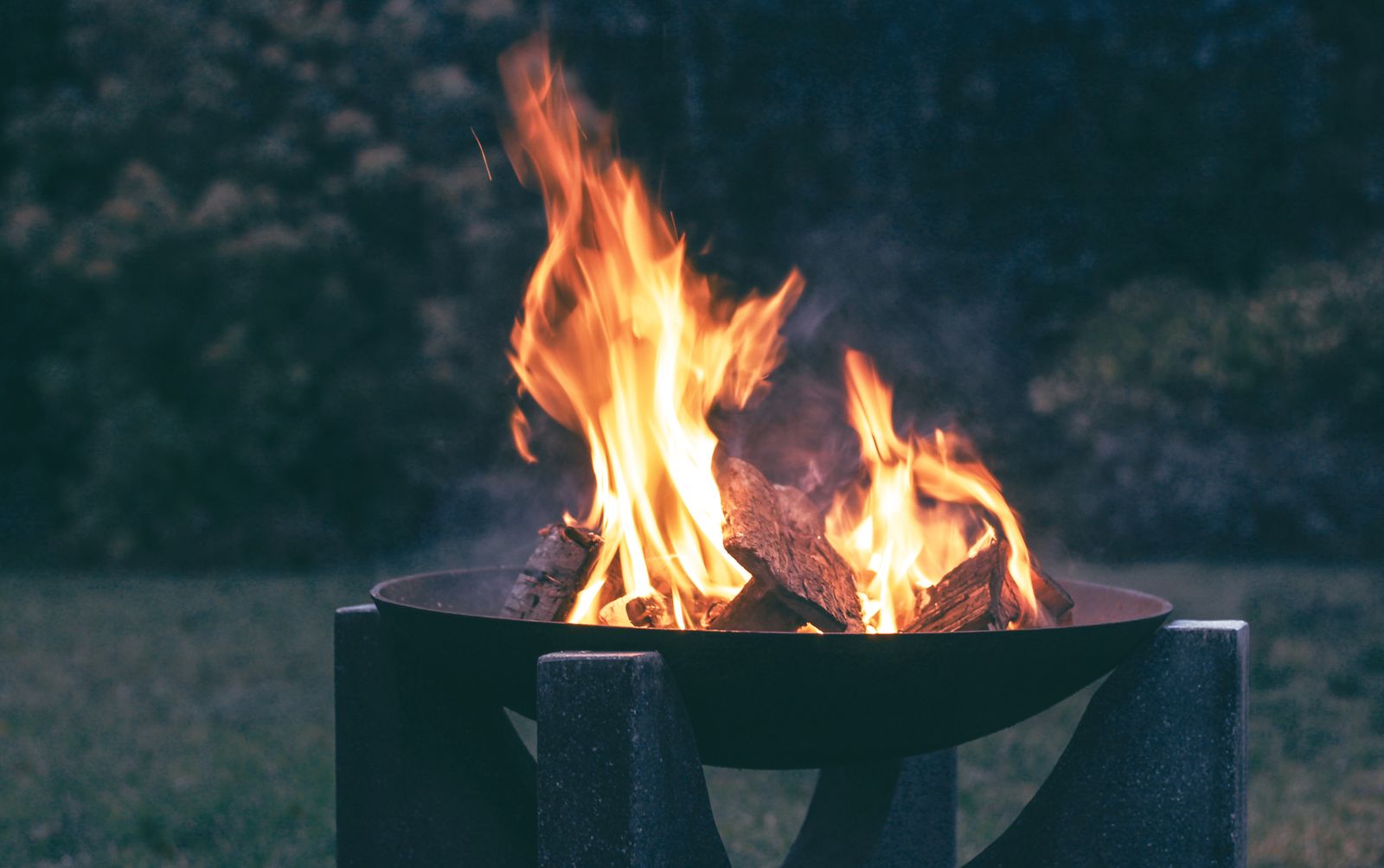
I compared five propane fire bowls on the specs that actually matter in the field: BTU output, weight, pack size, and how fast they drain a 20-pound tank. Here is what I found.
Outland Living Firebowl 893 Deluxe — The 58,000-BTU Benchmark
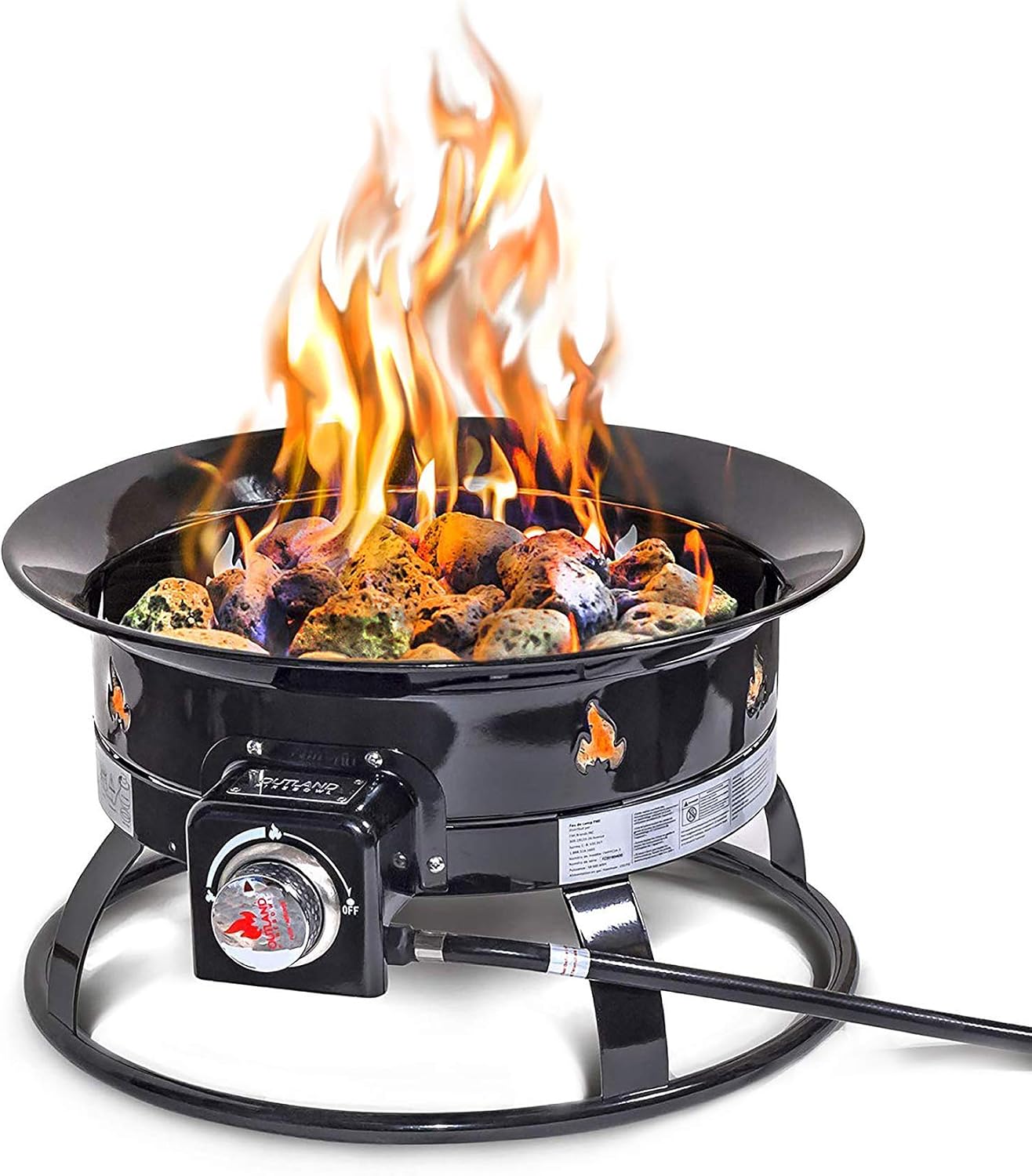
The Outland Living Firebowl 893 Deluxe is the pit every other propane bowl gets compared to, and it earned that position by being first to market with a CSA-approved burner that satisfies most burn-ban restrictions. About $150 to $250 depending on the sale cycle gets you 58,000 BTU, the full Deluxe carry kit with cover, a 10-foot hose, and a regulator. The lava rocks come pre-packed and ready to light. It throws serious heat — you will feel it eight to ten feet out on a still night. The trade-off is fuel: on high, a 20-pound tank lasts about four to six hours, which means a long evening plus a morning warm-up will empty it. The steel near the base gets hot enough to burn a kid’s hand, so the perimeter matters if small people are circling.
My take: The safest default pick in the category — deepest owner track record, CSA-approved, and the Deluxe kit means nothing extra to buy.
Ignik FireCan — The Packable Ammo-Can
The Ignik FireCan does not have an Amazon ASIN at time of writing, but it is widely available direct and at outdoor retailers for about $200. What makes it different is the form factor: an 11.5-pound ammo-can design that packs to roughly 12 by 6 by 8 inches and runs on a 5-pound tank instead of a 20. That is the only true overlanding pick in this list — it fits behind a seat, in a rack, or in a pannier, and a 5-pound tank will carry it across two evenings of moderate use. The trade-off is output: 38,000 BTU means the heat radius ends about four feet out. If your camp circle is six people deep, the folks on the outside are not feeling much.
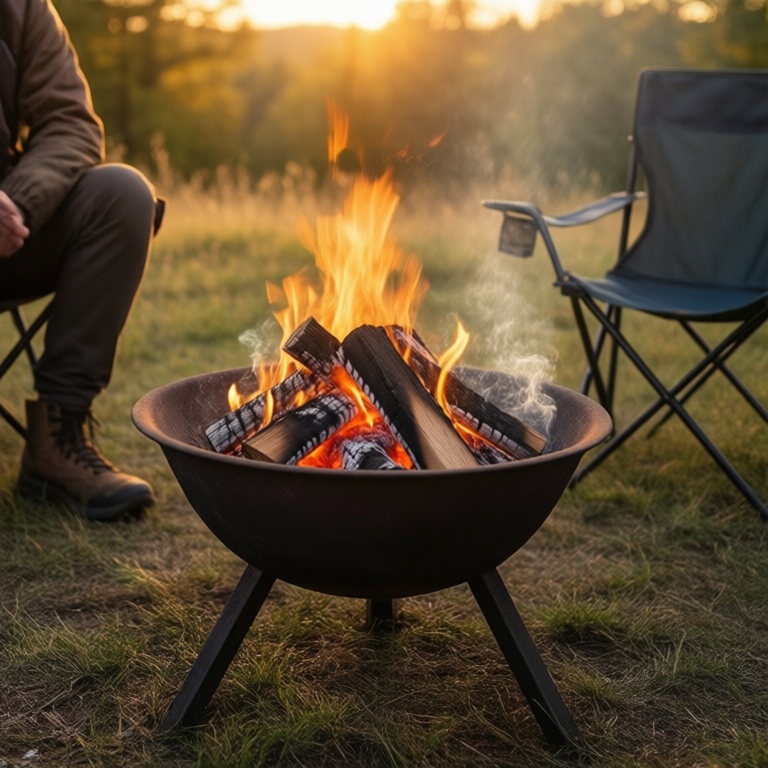
My take: The only pick that actually travels — buy it if your fire pit needs to hike in farther than the tailgate.
Flame King 24-inch Smokeless Propane Fire Pit — The Push-Button Value
The Flame King 24-inch comes in at about $230 and matches the Outland’s 58,000 BTU across a wider 24-inch bowl, with one feature the Outland lacks: a piezo push-button self-igniter. No matches, no lighter — just click and light. The wider arc distributes heat a bit more evenly across a group. The honest trade-off is build quality: the bowl steel runs lighter-gauge than Outland’s, and piezo igniters are historically the first component that fails on budget fire pits. When the igniter dies, you are back to a match like everyone else — but the bowl itself keeps working.
My take: Worth it for the push-button convenience and wider heat spread, but do not expect decade-long durability at this price.
Amazon Basics Portable Propane Fire Pit — Cheapest Acceptable
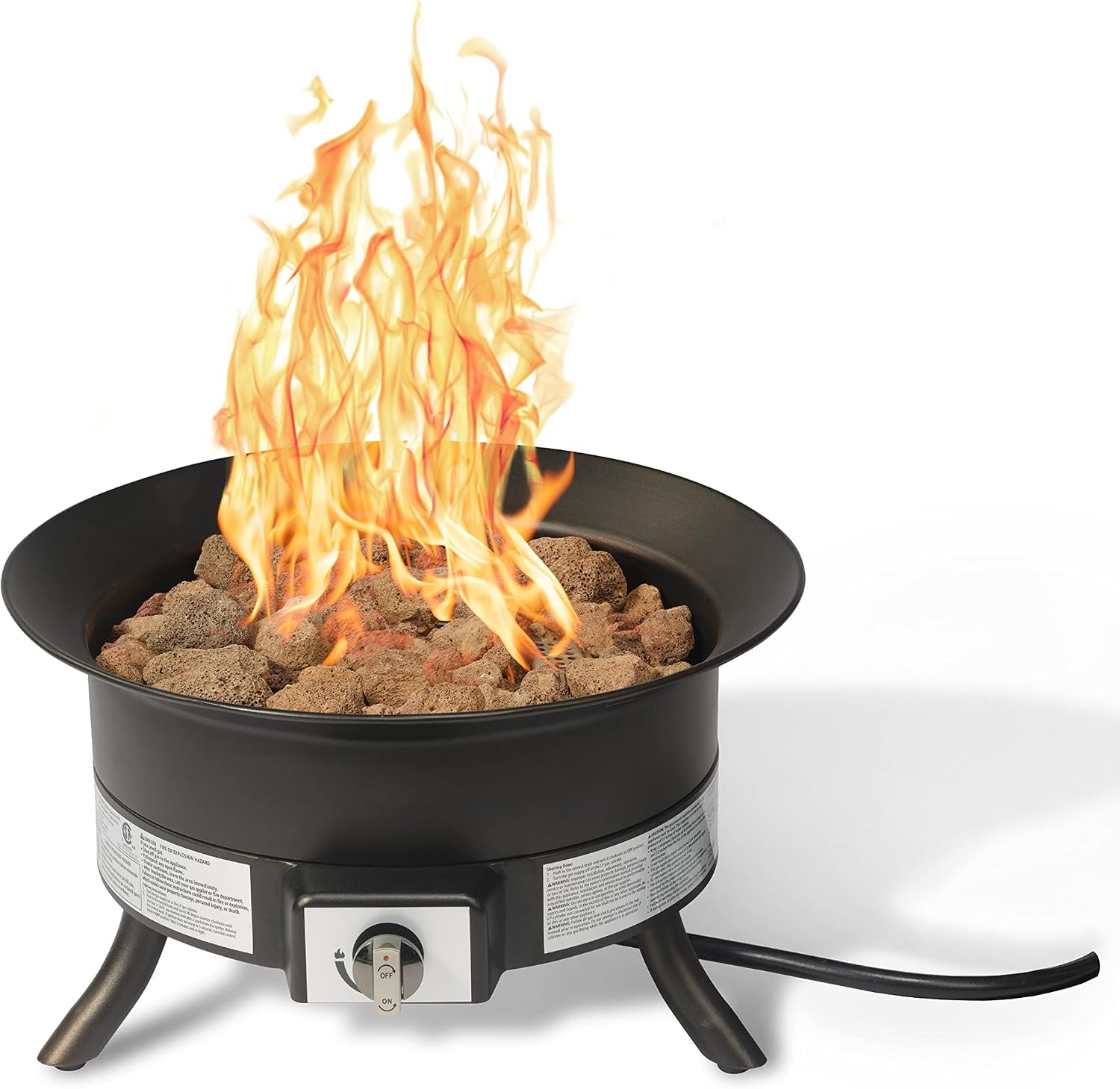
The Amazon Basics Portable Propane Fire Pit is the budget entry at about $140 to $170, and it gives you 55,000 BTU with the hose, regulator, lava rock, lid, and carry strap all in the box. Nothing extra to buy, nothing extra to break. There is no igniter — you light it with a match or lighter through the lava rock. There is no grate, and the powder-coat finish shows wear faster than the big-name brands after a season of being shoved in and out of a truck bed. But the burner works, the heat is real, and the CSA certification is printed on the label.
My take: The honest budget pick — no frills, but it does the one job a propane fire pit exists to do, and it costs half what the premium tier does.
GasBRUH 19-inch Propane Fire Pit — The 60,000-BTU Wildcard
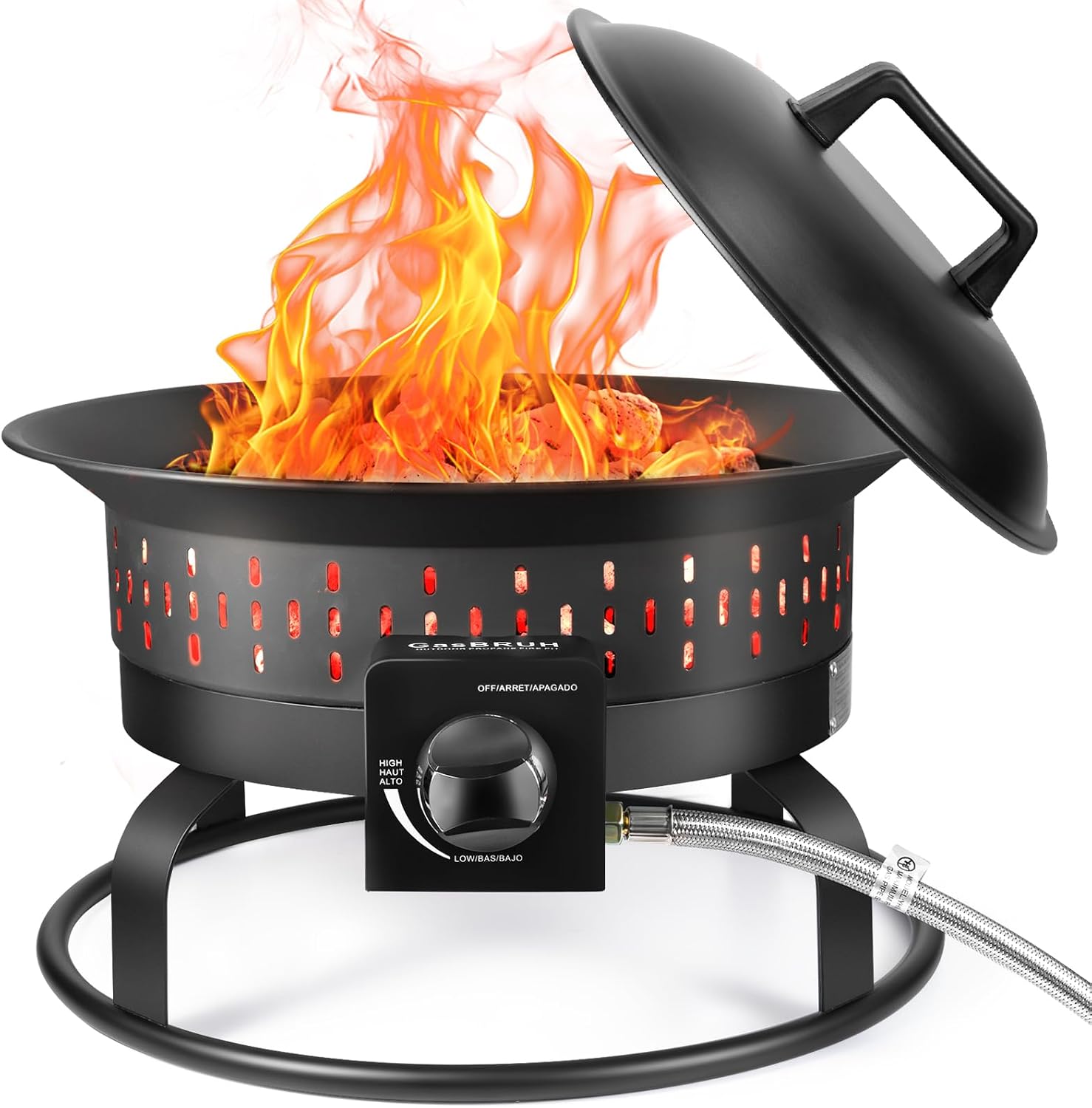
The GasBRUH 19-inch claims 60,000 BTU — the highest in this class — at about $120 with a rainproof steel build and cover included. On paper, that is the most heat per dollar in the lineup. The honest caveat: GasBRUH has a short market history and a review base about a tenth the size of Outland’s. The build is solid for the price, but nobody has a five-year track record with one yet. If you are the type who trusts a decade of owner reviews over a spec sheet, this is the gamble.
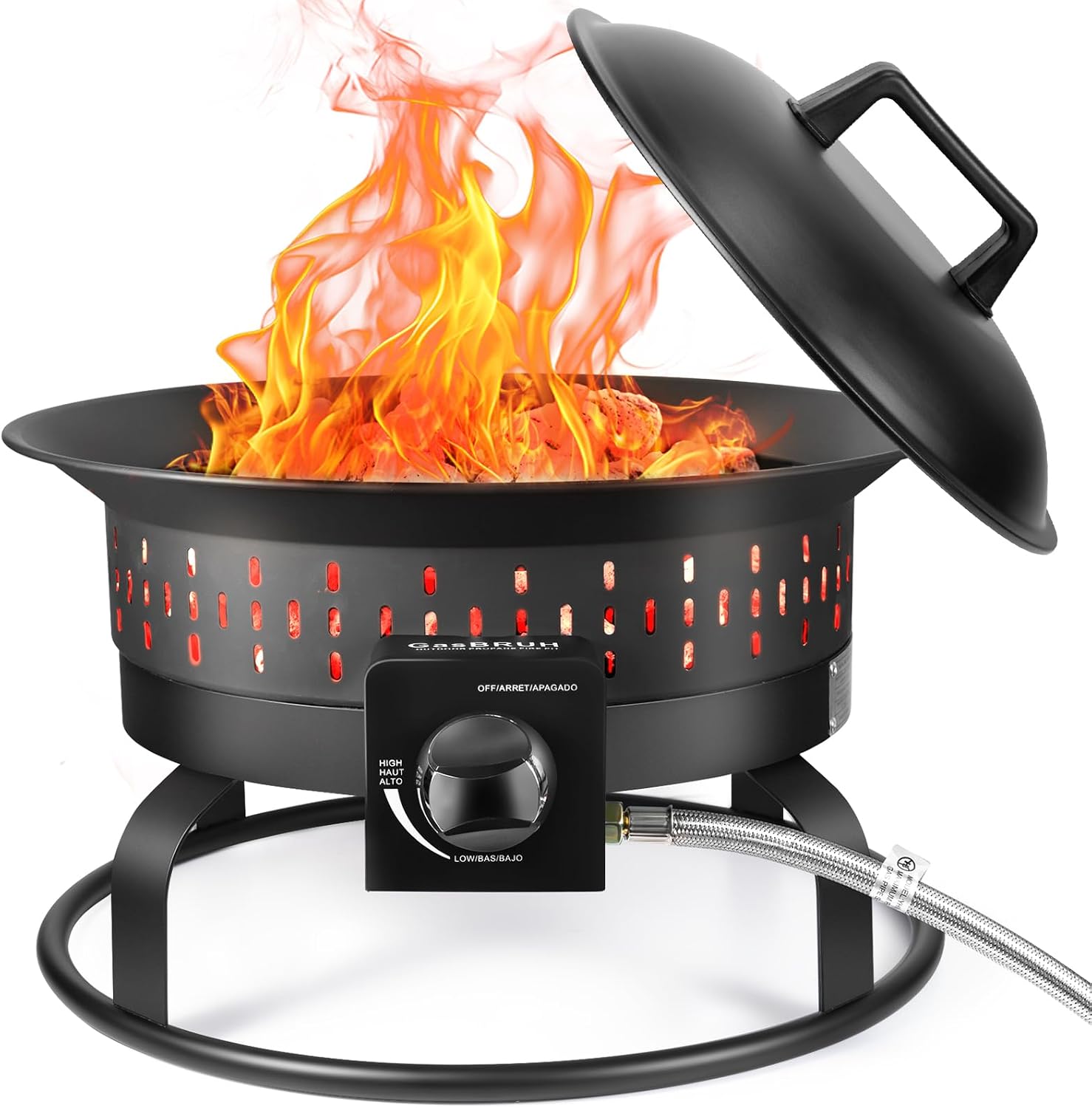
My take: The highest BTU-per-dollar in the class, but you are betting on a newer brand — buy it if price-to-output is your only metric.
Free shipping on fire pit season: Most of these pits ship Prime. If you are not a member, grab a free 30-day Prime trial and get it delivered before your next trip — cancel anytime.
Features That Actually Matter (And Ones That Don’t)
CSA certification: This is the line between legal and not-legal in a burn-ban zone. Every pit on this list carries it. If you find a propane pit without CSA approval stamped on the label, skip it — the ranger will not care how many BTUs it puts out.
BTU output: 55,000 to 60,000 BTU is the sweet spot for a group of four to six. Below 40,000 (the Ignik), the heat radius shrinks to about four feet. Above 60,000, you are burning fuel faster for diminishing returns.
Tank size compatibility: Most pits run on a standard 20-pound tank. The Ignik is the exception — it is designed for 5-pound or 10-pound tanks, which is great for packing in and expensive per hour of run time.
Lava rocks vs glass: Lava rocks come with every pit here and radiate heat well. Fire glass is a cosmetic upgrade that costs $20 to $40 extra and does not change performance. Skip it unless aesthetics matter to your camp.
The igniter question: Piezo igniters are convenient until they break, and they break. A match or lighter costs nothing and never fails. Treat the igniter as a bonus, not a deciding factor.
What to Spend Where
- Budget pick ($140): Amazon Basics — 55,000 BTU, everything in the box, no igniter to break.
- Best all-around ($150-250): Outland 893 Deluxe — the benchmark, CSA-approved, deepest track record.
- Overlanding ($200): Ignik FireCan — the only one that packs small and runs on a 5-pound tank.
- Most heat per dollar ($120): GasBRUH — 60,000 BTU, newest brand, bet accordingly.
Fuel math: A 20-pound propane tank refill costs about $18 to $25 at most stations. At 58,000 BTU on high, that tank runs roughly 4 to 6 hours. That is about 60 to 80 cents per hour of campfire — against $8-plus for a campground firewood bundle that lasts about the same time and gets confiscated in a burn ban.
Keep reading: Campfire cookers that turn bread into dinner · Hot tents with stove jacks for winter camping · Camping pillows that beat the bunched-up fleece
GearHound is reader-supported. As an Amazon Associate, I earn from qualifying purchases. That means if you buy through one of the links above, I get a small commission at no extra cost to you. I only recommend gear I’d actually carry into the field.
Related guides
- Dog First Aid Kit Guide: 12 Essentials Every Trail Dog Needs
- Best Dog Seat Covers 2026: Protect Your Car from Mud, Fur, and Claws
- Best Trekking Poles 2026: Tested and Reviewed
- Dog First Aid Kit Guide: What to Pack for Hiking and Camping With Your Trail Dog
- Camping Gear Worth the Money: 10 Items That Earn Their Place in Your Pack
⛺ Get Your Free Camping with Your Dog Checklist
Join our newsletter and get this free printable plus weekly tips.
Frequently Asked Questions
Are propane fire pits allowed during burn bans?
Yes — CSA-approved propane fire pits are legal under most burn-ban restrictions because they produce no sparks, embers, or ash. The flame is fully controllable and there is no airborne particulate. Always check the specific county or forest service regulation, but propane pits are the one campfire that typically stays legal when wood fires are banned.
How long does a 20 lb tank last in a propane fire pit?
A 20-pound propane tank runs a 58,000-BTU fire pit about 4 to 6 hours on high. On lower settings, you can stretch that to 8 to 10 hours. At about $20 per tank refill, that works out to roughly 60 to 80 cents per hour of run time on high.
Do propane fire pits give off real heat?
Yes. A 55,000 to 60,000-BTU propane fire pit throws heat you can feel 8 to 10 feet away on a still night. It is not identical to a wood fire — the radiant heat is less intense and there is no coal bed — but for sitting around in a camp circle, the heat is real and comfortable.
Liked this guide? Get the next one in your inbox — the camp packing checklist is free too.
✓ You're in — check your inbox.
No spam. Unsubscribe anytime. We never share your email.
Prices move fast. Start your Amazon trip from our Shop & Support page and your purchases support GearHound at no extra cost to you.
Price Check
Prices verified via our product tracker. Updated Oct 31.
| Outland Living Portable Propane Fire Pit, 19-inch, 58,000 | $159.99 | 4.8★ (17,815) |
| Amazon Basics Portable Propane Fire Pit, 19 inch Round Gas | $131.99 | 4.5★ (334) |
| GasBRUH Outdoor Portable Propane Fire Pit, 19-Inch,60,000 | $69.99 | 4.7★ (460) |
As an Amazon Associate we earn from qualifying purchases.